
Chapter 6 Section 1 Human Inheritance Patterns of
- Slides: 10
Chapter 6, Section 1 Human Inheritance
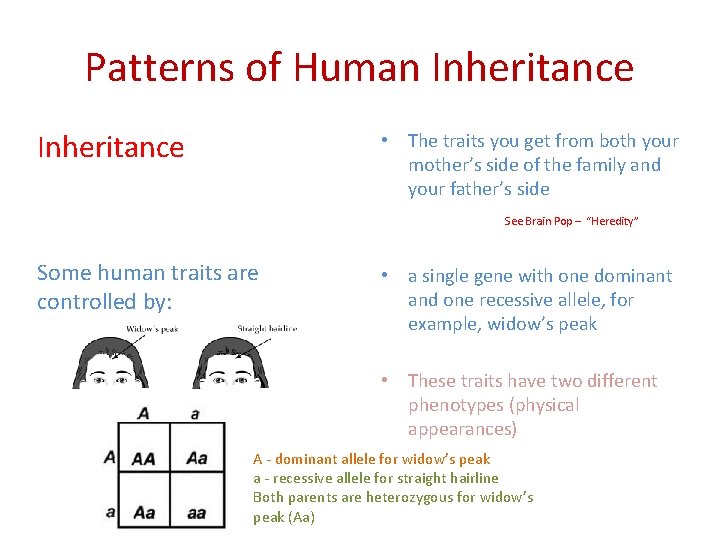
Patterns of Human Inheritance • The traits you get from both your mother’s side of the family and your father’s side See Brain Pop – “Heredity” Some human traits are controlled by: • a single gene with one dominant and one recessive allele, for example, widow’s peak • These traits have two different phenotypes (physical appearances) A - dominant allele for widow’s peak a - recessive allele for straight hairline Both parents are heterozygous for widow’s peak (Aa)
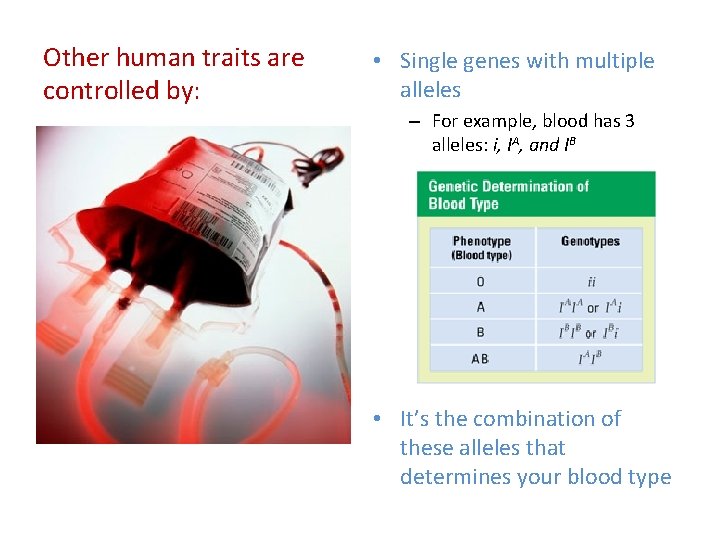
Other human traits are controlled by: • Single genes with multiple alleles – For example, blood has 3 alleles: i, IA, and IB • It’s the combination of these alleles that determines your blood type
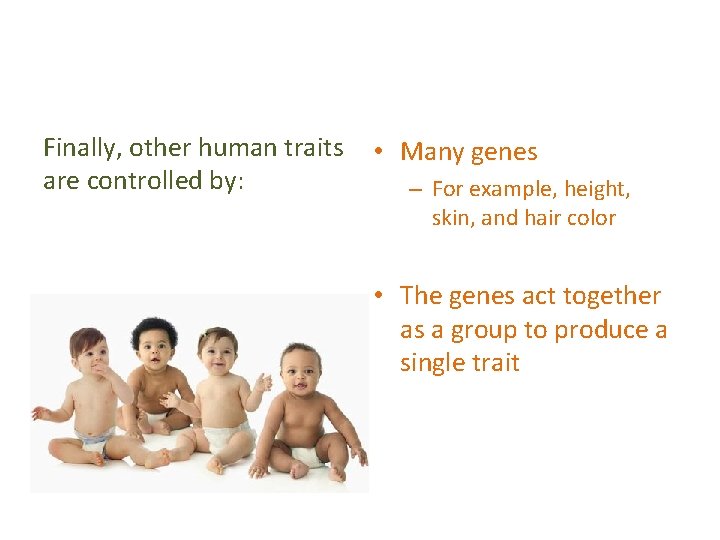
Finally, other human traits are controlled by: • Many genes – For example, height, skin, and hair color • The genes act together as a group to produce a single trait
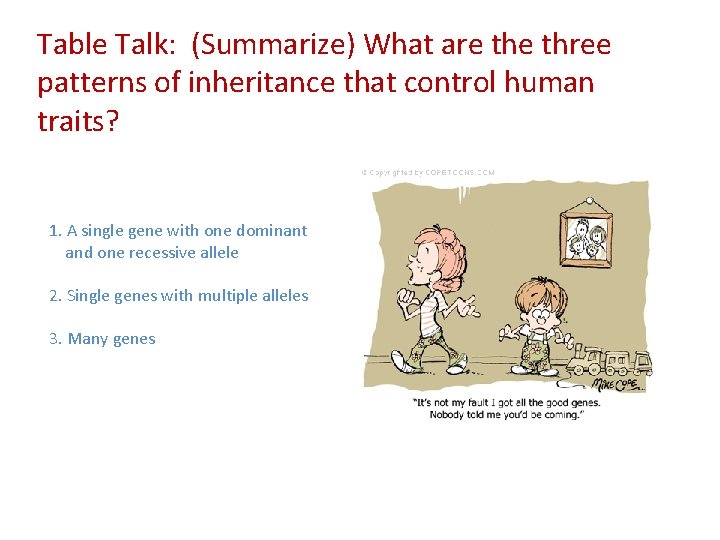
Table Talk: (Summarize) What are three patterns of inheritance that control human traits? 1. A single gene with one dominant and one recessive allele 2. Single genes with multiple alleles 3. Many genes
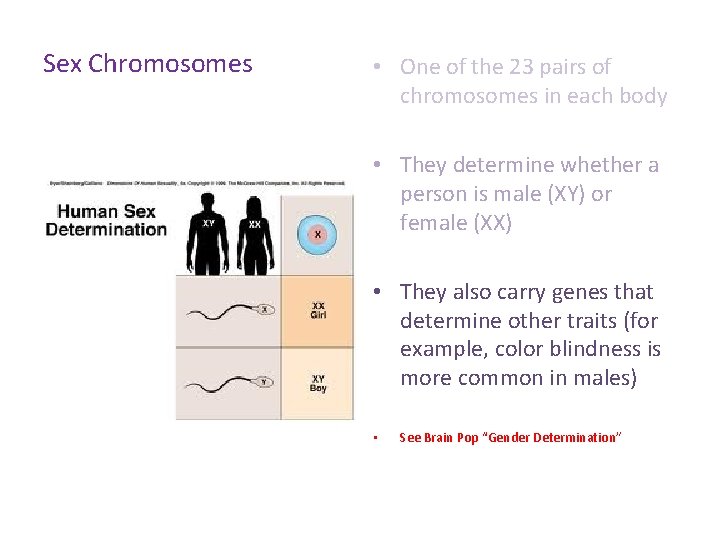
Sex Chromosomes • One of the 23 pairs of chromosomes in each body • They determine whether a person is male (XY) or female (XX) • They also carry genes that determine other traits (for example, color blindness is more common in males) • See Brain Pop “Gender Determination”
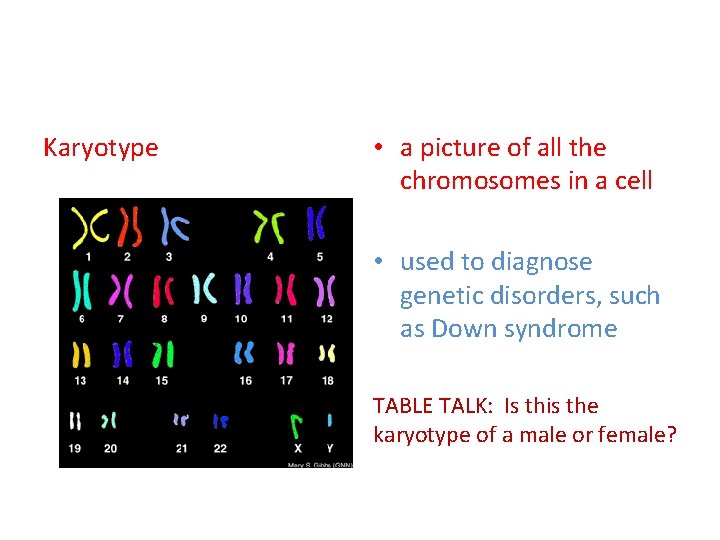
Karyotype • a picture of all the chromosomes in a cell • used to diagnose genetic disorders, such as Down syndrome TABLE TALK: Is this the karyotype of a male or female?
Quick Write: What is the difference between genotype, phenotype and karyotype?
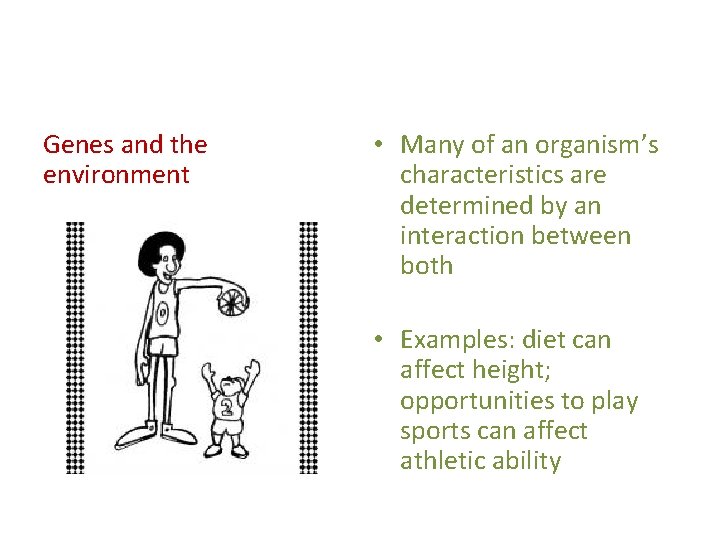
Genes and the environment • Many of an organism’s characteristics are determined by an interaction between both • Examples: diet can affect height; opportunities to play sports can affect athletic ability
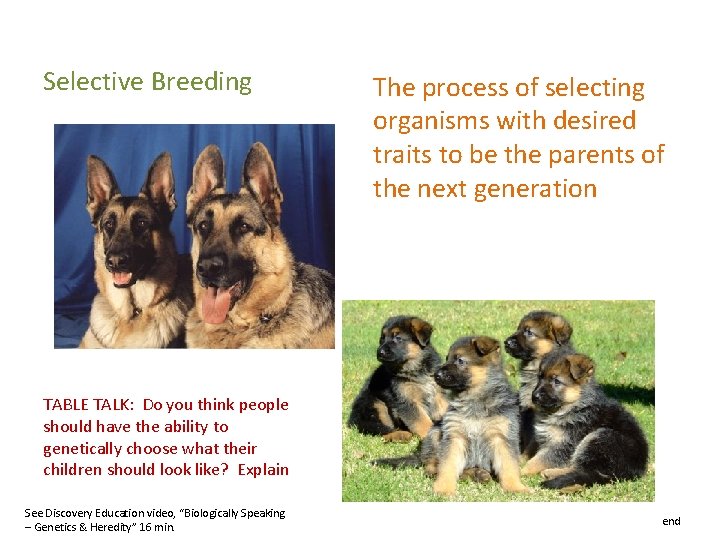
Selective Breeding The process of selecting organisms with desired traits to be the parents of the next generation TABLE TALK: Do you think people should have the ability to genetically choose what their children should look like? Explain See Discovery Education video, “Biologically Speaking – Genetics & Heredity” 16 min. end