
Chapter 6 Rocks Cornell Ch NotesPg 6 Rocks

- Slides: 48
Chapter 6 Rocks Cornell. Ch. Notes-Pg. 6 Rocks 32
Purpose To learn about the world around us, and how this dynamic and changing world affects society.
Essential Question How are rocks formed, and how do they change over time to look like what we see all around us today?
What is a Rock? • Rocks = Naturally-occurring mixtures of minerals, mineraloids, glass or organic matter. • Mineraloid=opal, Amber, coal, etc.
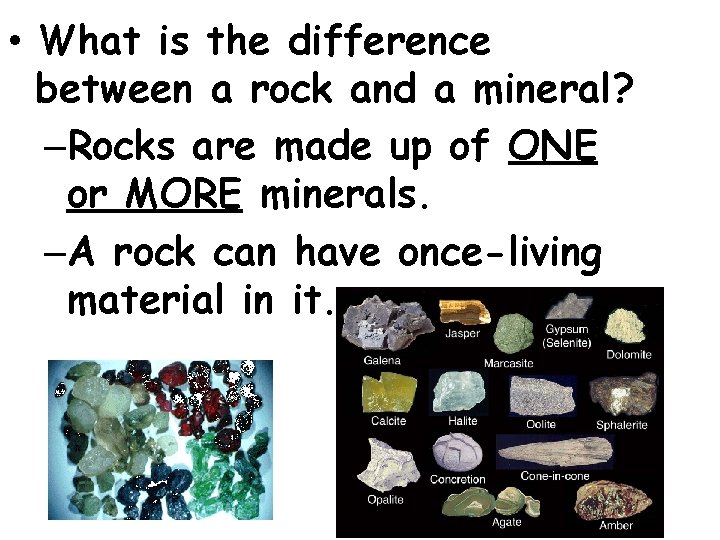
• What is the difference between a rock and a mineral? –Rocks are made up of ONE or MORE minerals. –A rock can have once-living material in it.
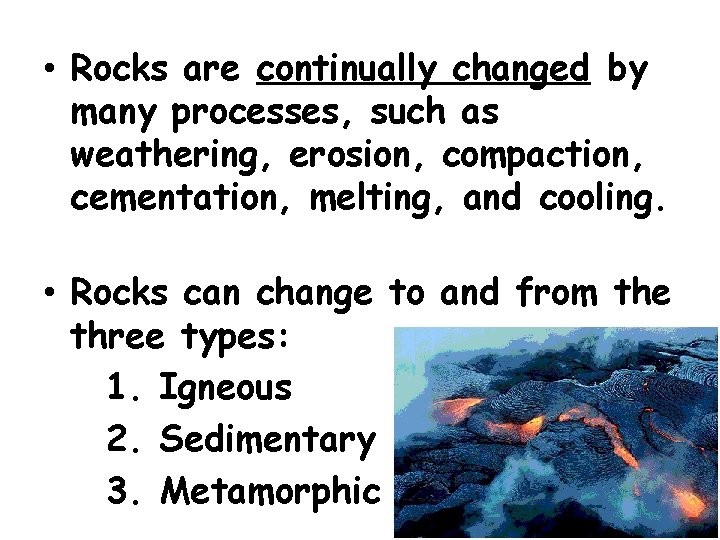
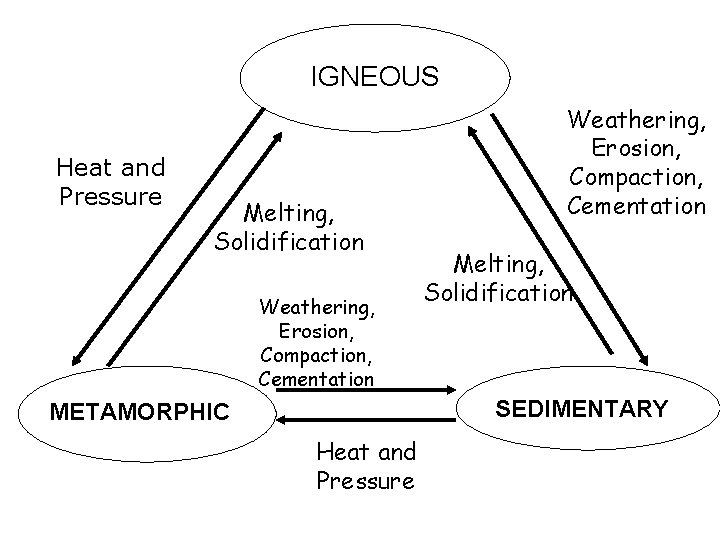
• Rocks are continually changed by many processes, such as weathering, erosion, compaction, cementation, melting, and cooling. • Rocks can change to and from the three types: 1. Igneous 2. Sedimentary 3. Metamorphic
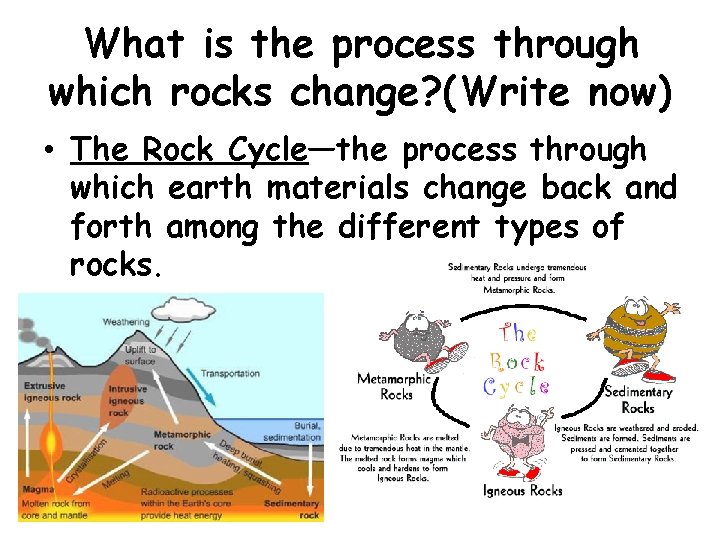
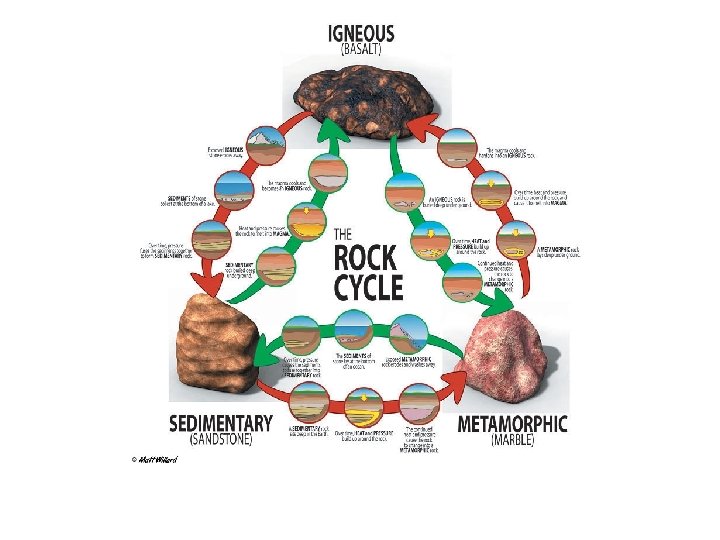
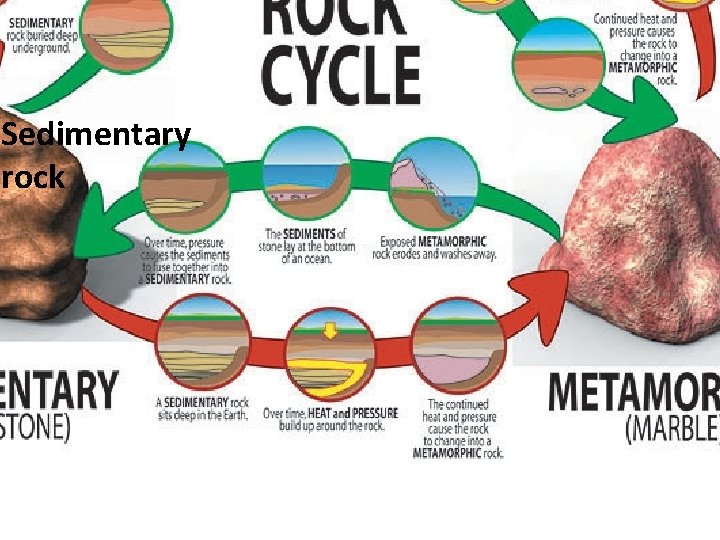
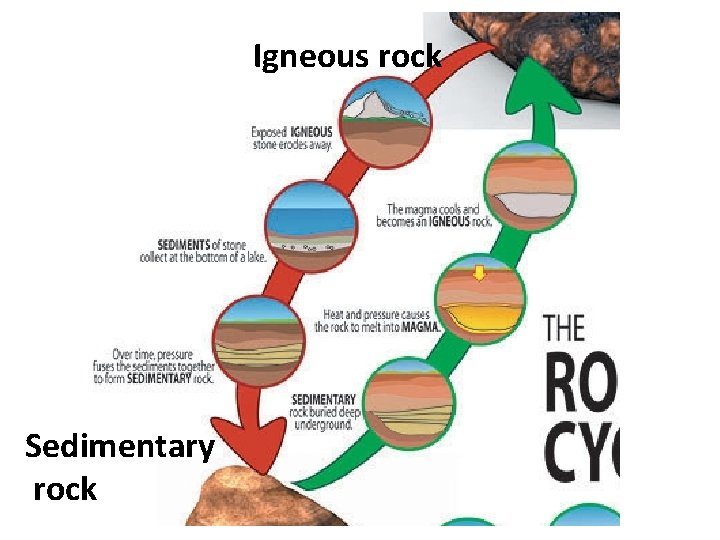
What is the process through which rocks change? (Write now) • The Rock Cycle—the process through which earth materials change back and forth among the different types of rocks.
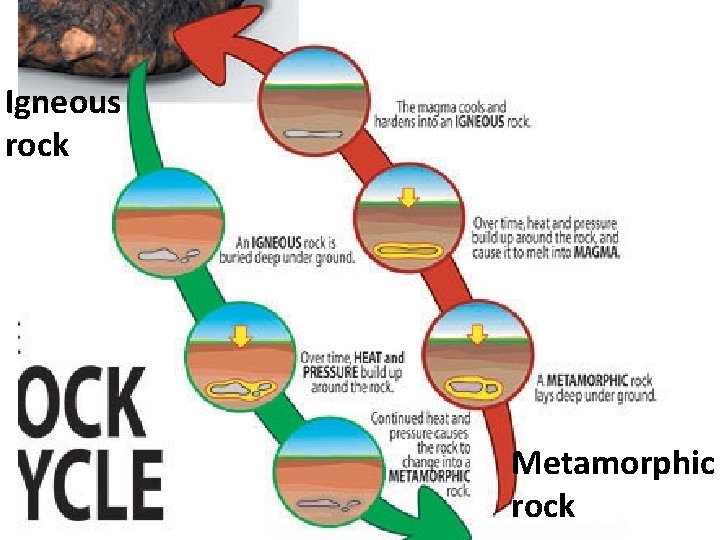
Igneous rock Metamorphic rock
Sedimentary rock
Igneous rock Sedimentary rock
IGNEOUS Heat and Pressure Melting, Solidification Weathering, Erosion, Compaction, Cementation Melting, Solidification SEDIMENTARY METAMORPHIC Heat and Pressure
Chapter 6 Rocks Cornell Notes Ch. 6 Rocks Igneous Rocks
What are the types of rocks? • IGNEOUS • SEDIMENTARY • METAMORPHIC • Rocks are divided into 3 groups based on how they were formed
• “Ignis” = Latin for “fire”. • Formed from the cooling of either magma or lava. • The most abundant type of rock. • Classified according to their origin and composition.
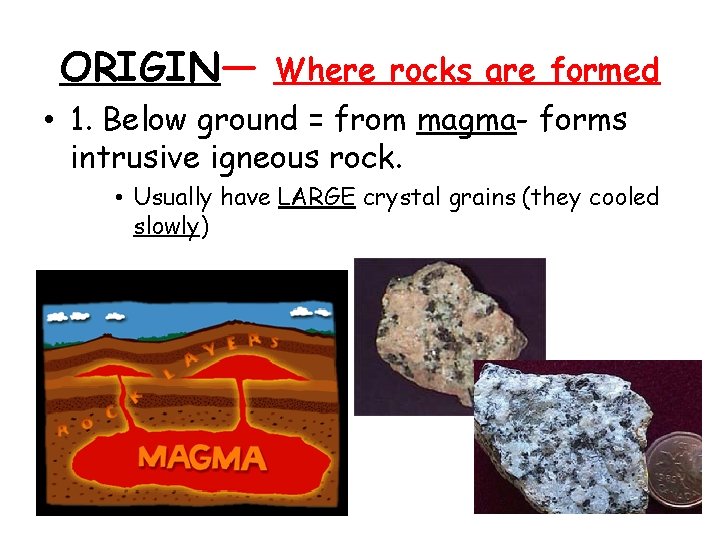
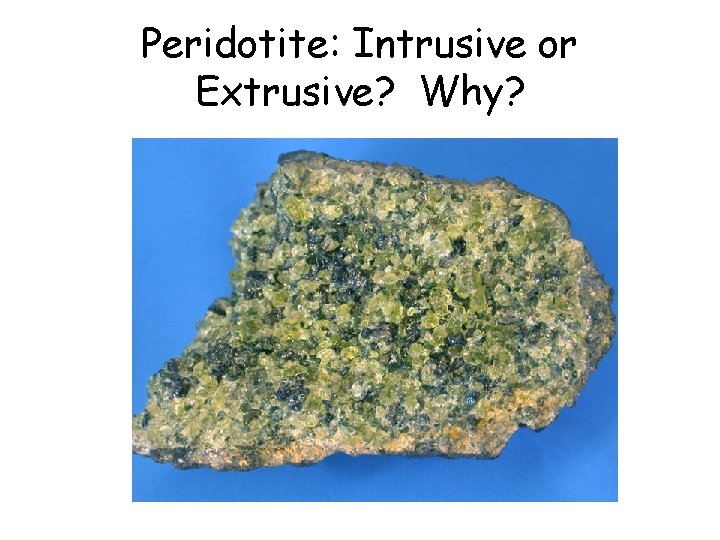
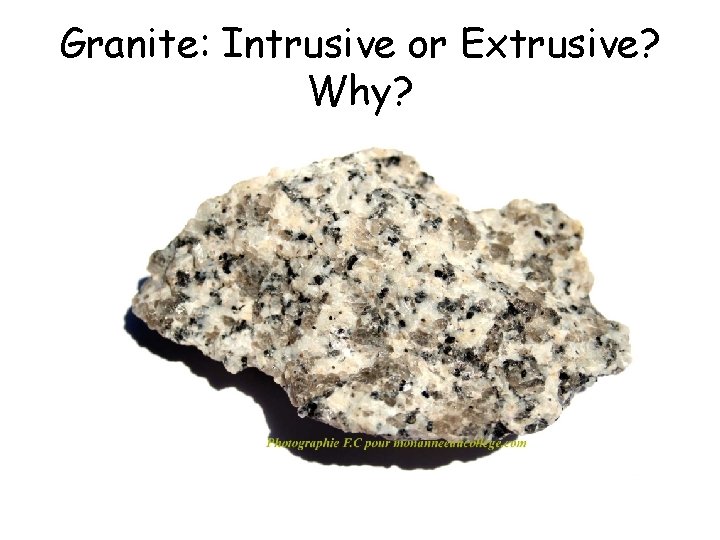
ORIGIN— Where rocks are formed • 1. Below ground = from magma- forms intrusive igneous rock. • Usually have LARGE crystal grains (they cooled slowly)
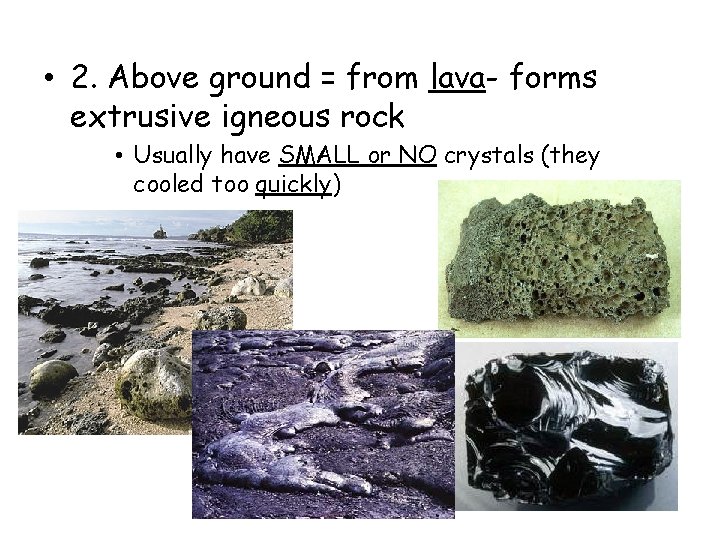
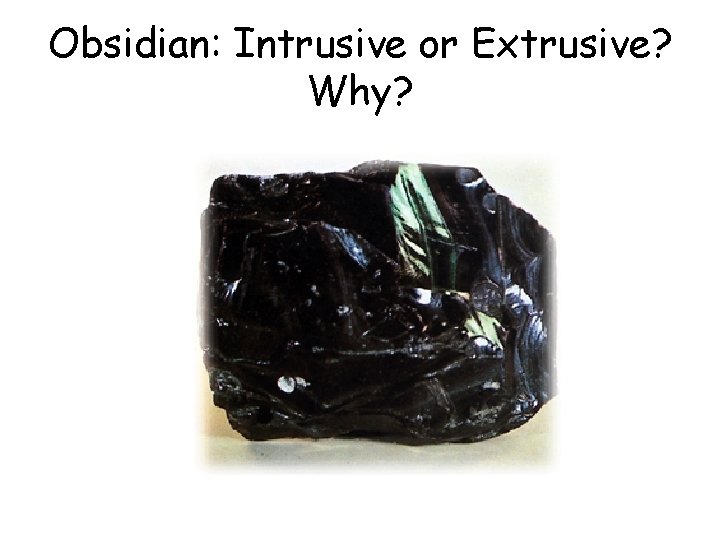
• 2. Above ground = from lava- forms extrusive igneous rock • Usually have SMALL or NO crystals (they cooled too quickly)
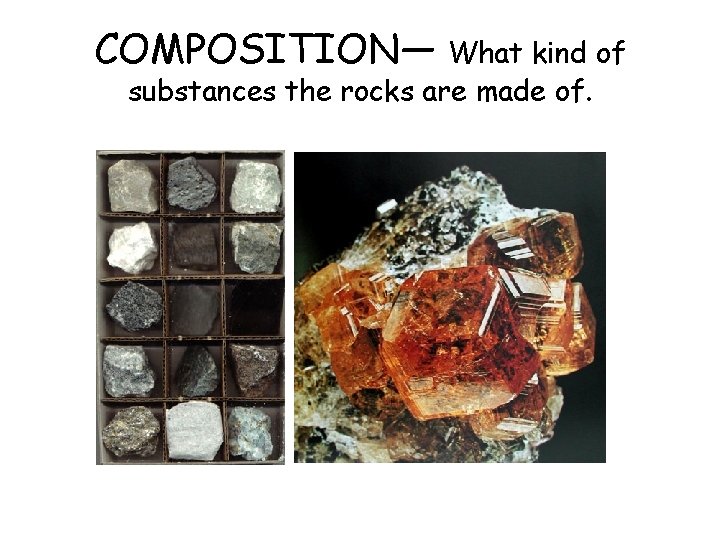
COMPOSITION— What kind of substances the rocks are made of.
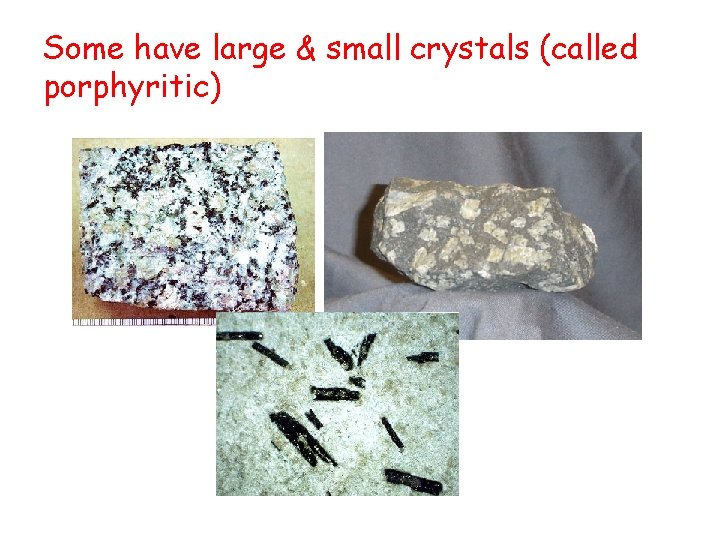
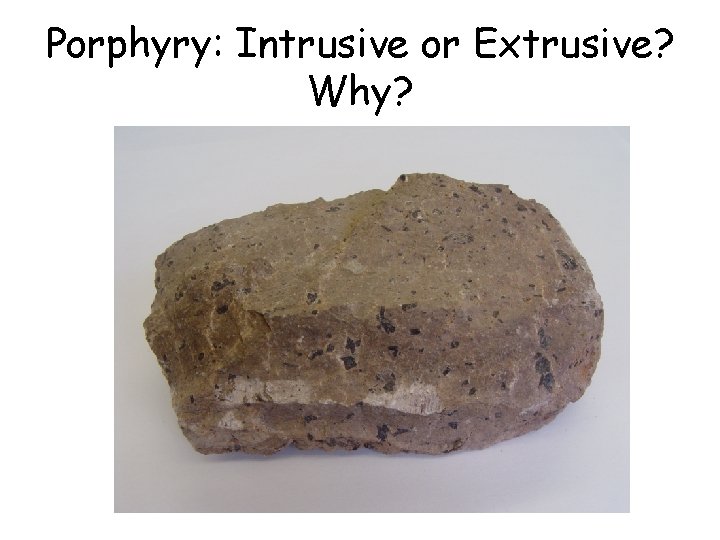
Some have large & small crystals (called porphyritic)
Peridotite: Intrusive or Extrusive? Why?
Granite: Intrusive or Extrusive? Why?
Porphyry: Intrusive or Extrusive? Why?
Obsidian: Intrusive or Extrusive? Why?
Chapter 6 Rocks Cornell Notes Ch. 6 Rocks Sedimentary Rocks
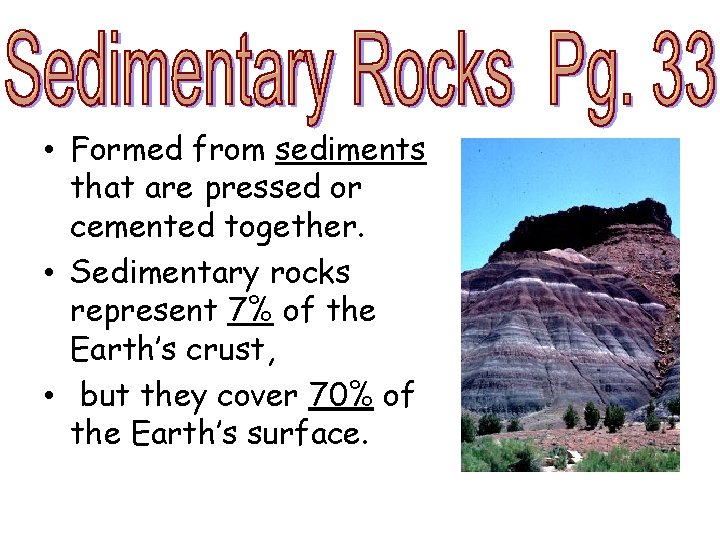
• Formed from sediments that are pressed or cemented together. • Sedimentary rocks represent 7% of the Earth’s crust, • but they cover 70% of the Earth’s surface.
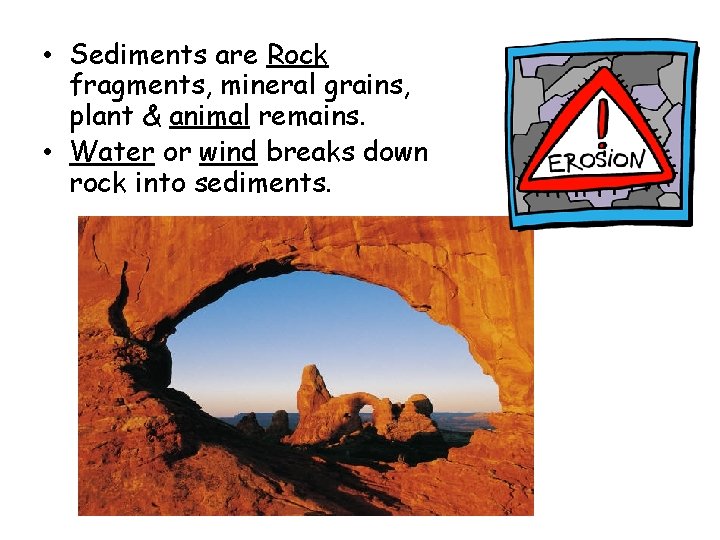
• Sediments are Rock fragments, mineral grains, plant & animal remains. • Water or wind breaks down rock into sediments.
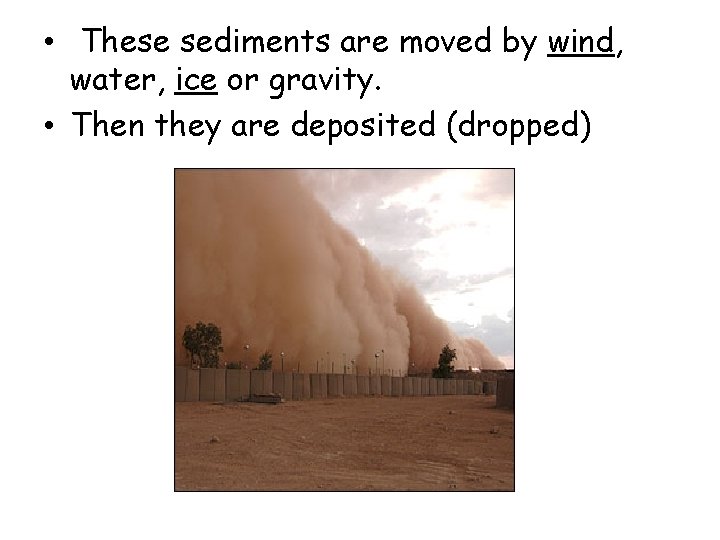
• These sediments are moved by wind, water, ice or gravity. • Then they are deposited (dropped)
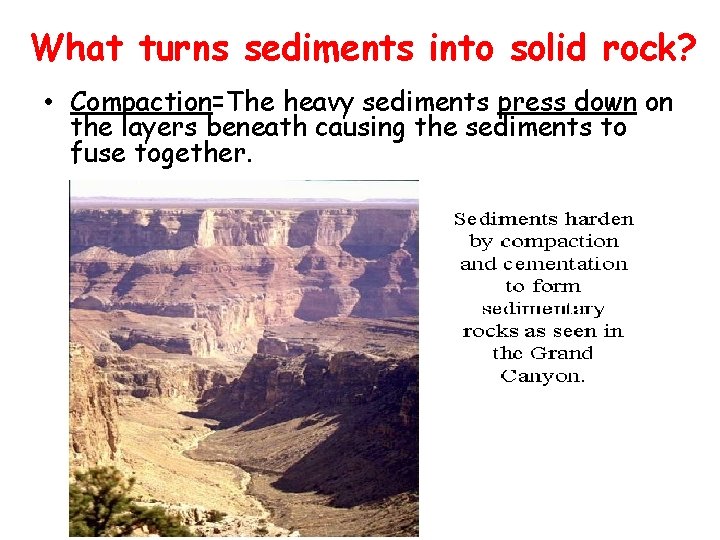
What turns sediments into solid rock? • Compaction=The heavy sediments press down on the layers beneath causing the sediments to fuse together.
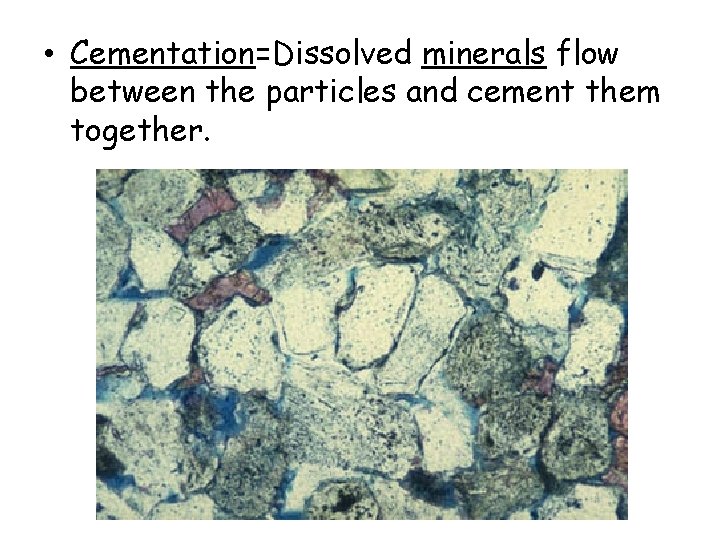
• Cementation=Dissolved minerals flow between the particles and cement them together.
Chapter 6 Rocks Cornell Notes Ch. 6 Rocks Metamorphic Rocks
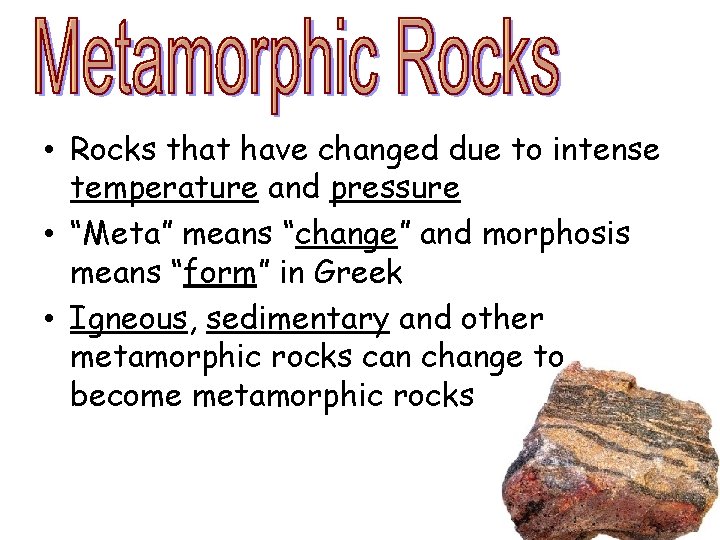
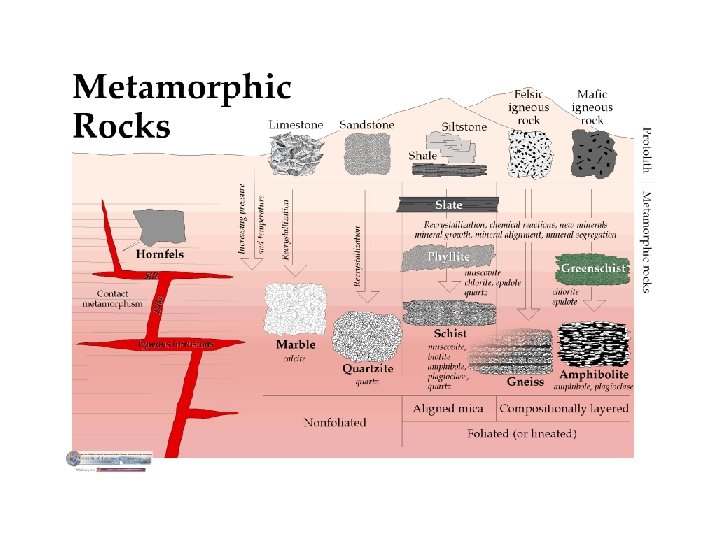
• Rocks that have changed due to intense temperature and pressure • “Meta” means “change” and morphosis means “form” in Greek • Igneous, sedimentary and other metamorphic rocks can change to become metamorphic rocks
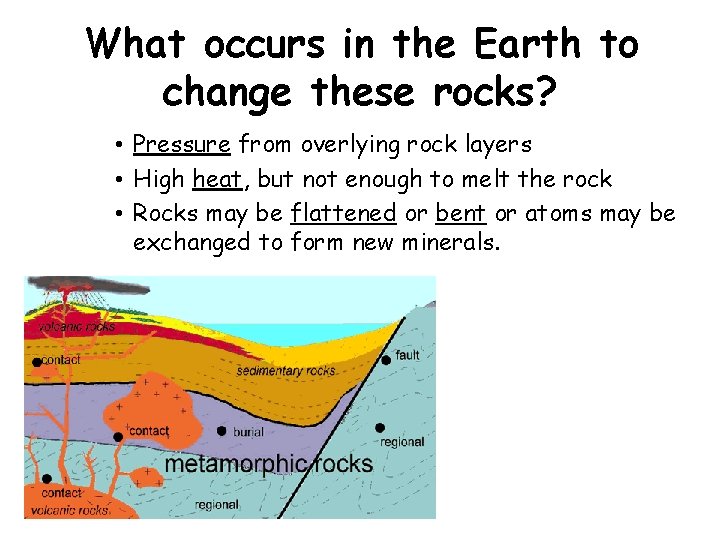
What occurs in the Earth to change these rocks? • Pressure from overlying rock layers • High heat, but not enough to melt the rock • Rocks may be flattened or bent or atoms may be exchanged to form new minerals.
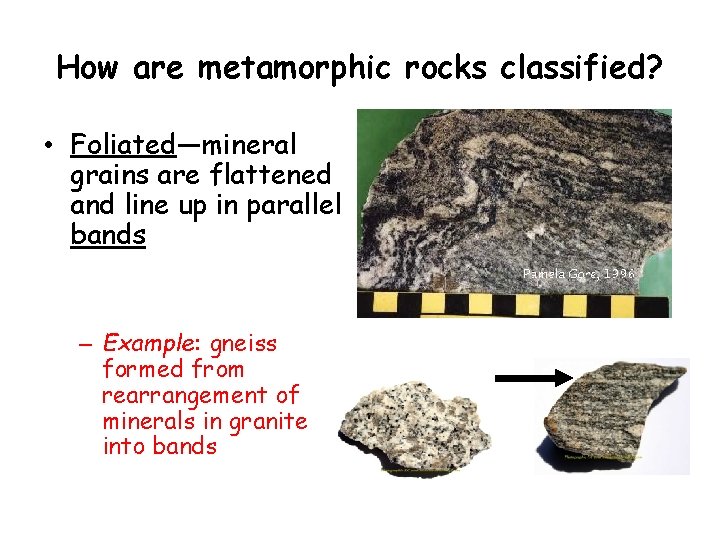
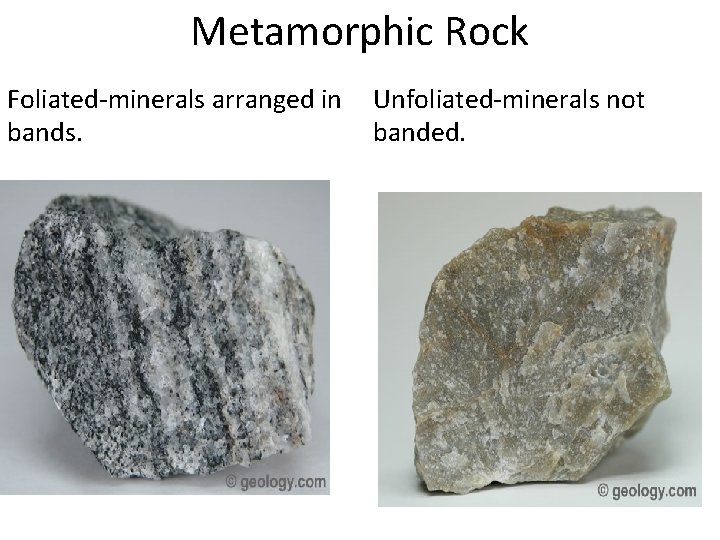
How are metamorphic rocks classified? • Foliated—mineral grains are flattened and line up in parallel bands – Example: gneiss formed from rearrangement of minerals in granite into bands
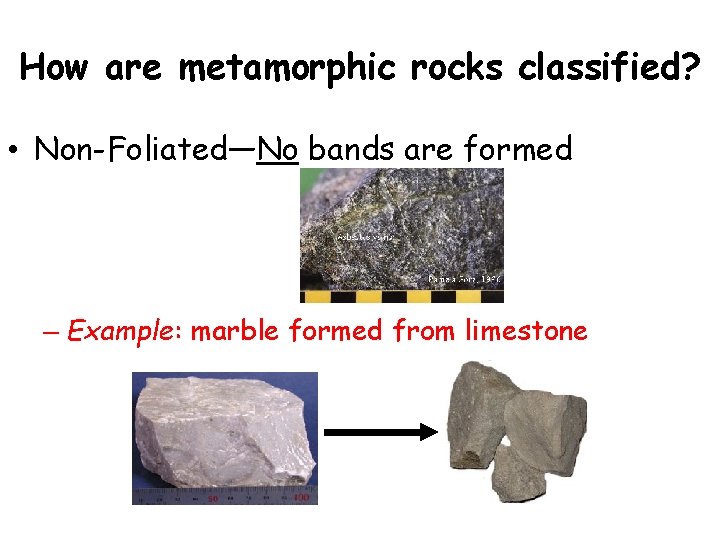
How are metamorphic rocks classified? • Non-Foliated—No bands are formed – Example: marble formed from limestone
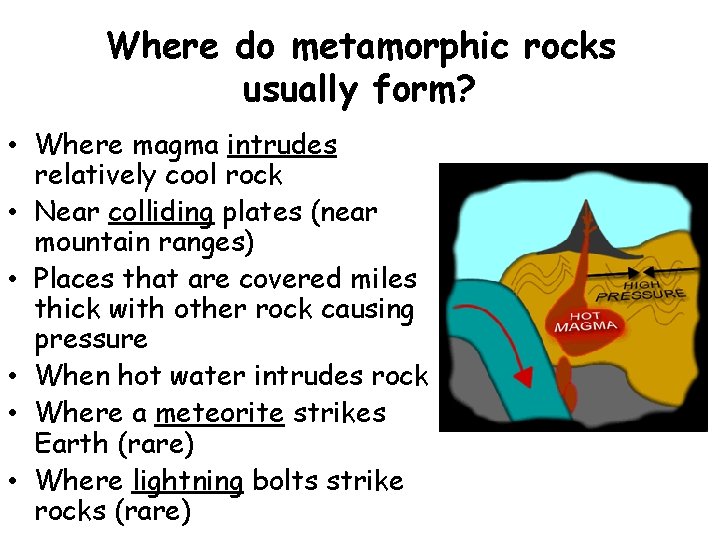
Where do metamorphic rocks usually form? • Where magma intrudes relatively cool rock • Near colliding plates (near mountain ranges) • Places that are covered miles thick with other rock causing pressure • When hot water intrudes rock • Where a meteorite strikes Earth (rare) • Where lightning bolts strike rocks (rare)
Chapter 6 Rocks Cornell Notes Ch. 6 Rocks Review
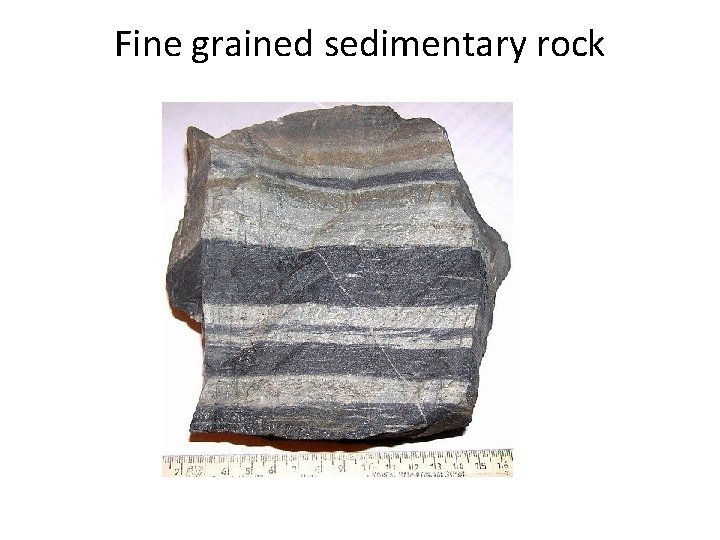
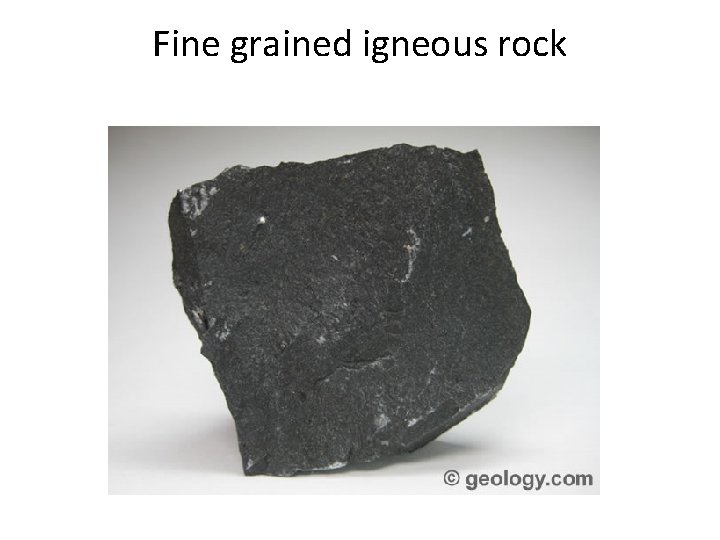
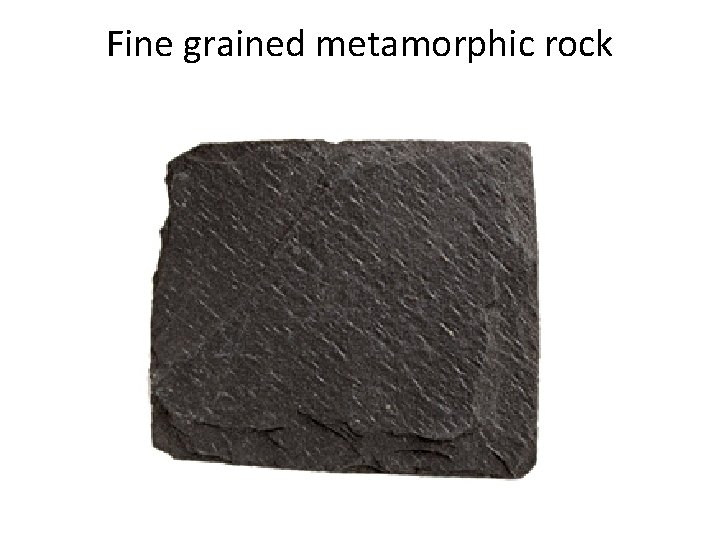
Rock Identification Characteristics Fine Grain • Smooth appearance • In igneous and metamorphic rock=no or very small crystals • Sedimentary rock=small particles Coarse Grain • Rough or grainy appearance • In igneous and metamorphic rock=larger crystals • Sedimentary rock=larger particles
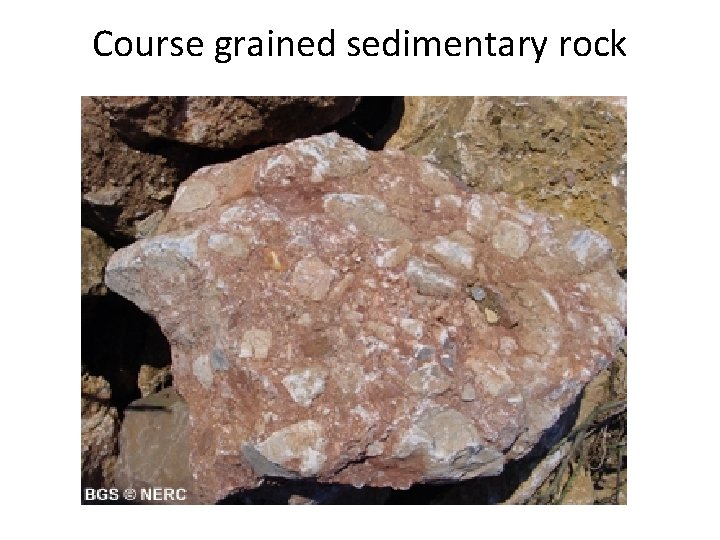
Course grained sedimentary rock
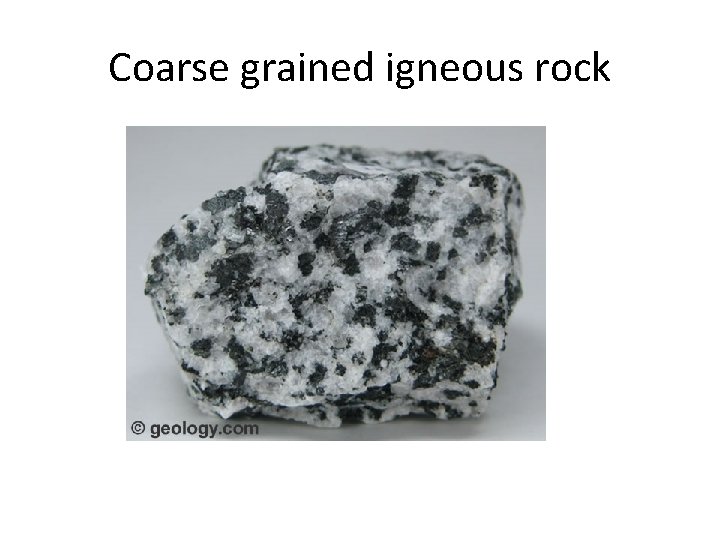
Coarse grained igneous rock
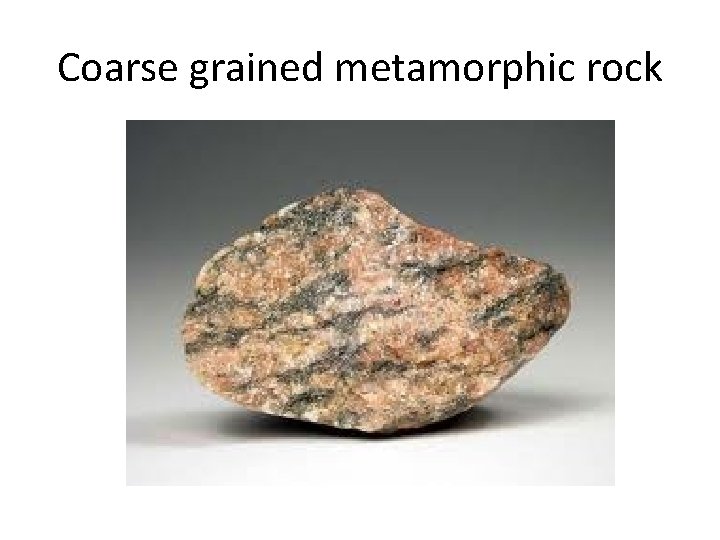
Coarse grained metamorphic rock
Fine grained sedimentary rock
Fine grained igneous rock
Fine grained metamorphic rock
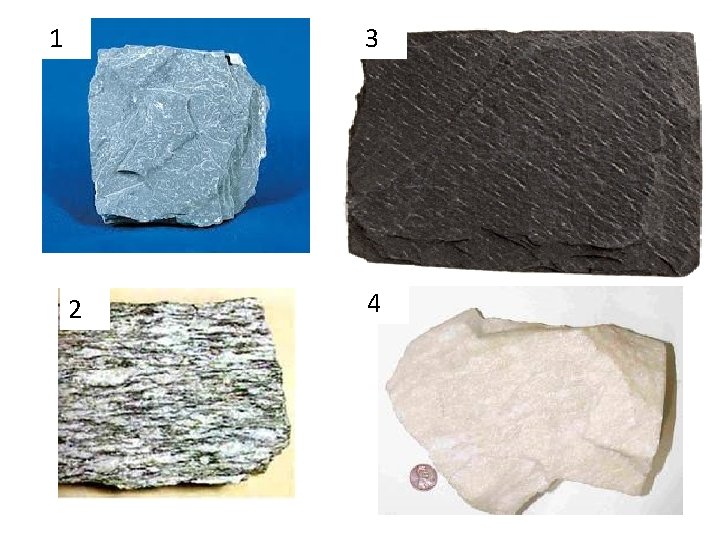
Metamorphic Rock Foliated-minerals arranged in bands. Unfoliated-minerals not banded.
In: Pg. 37 On the next slide are 4 metamorphic rocks. Tell me if they are foliated or unfoliated. 1. 2. 3. 4.
1 3 2 4
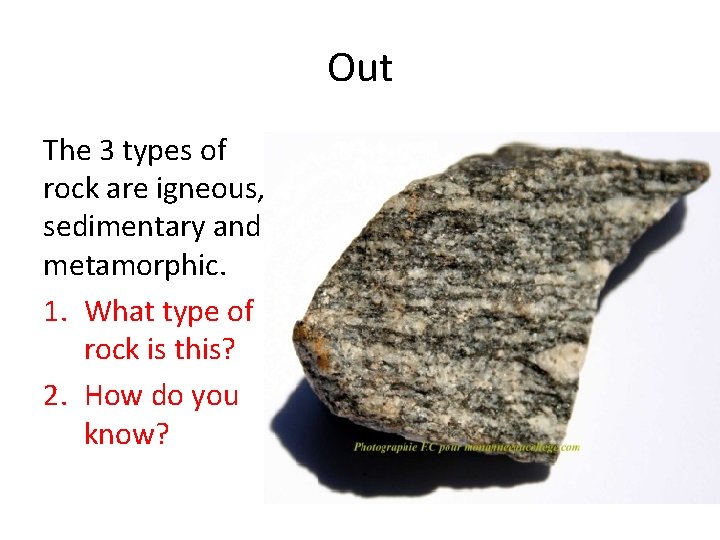
Out The 3 types of rock are igneous, sedimentary and metamorphic. 1. What type of rock is this? 2. How do you know?