
Chapter 6 Repetition Objectives To understand basic loop
Chapter 6 Repetition Objectives ❏ To understand basic loop concepts: ■ pretest loops and post-test loops ■ loop initialization and updating ■ event and counter controlled loops ❏ To understand be able to select the best loop construct for a given problem. ❏ To write programs that use the while, for, or do. . . while statements. ❏ To understand the basic concepts and usage of recursion algorithms. ❏ To understand be able to determine the efficiency of an algorithm through an analysis of its looping constructs. 1
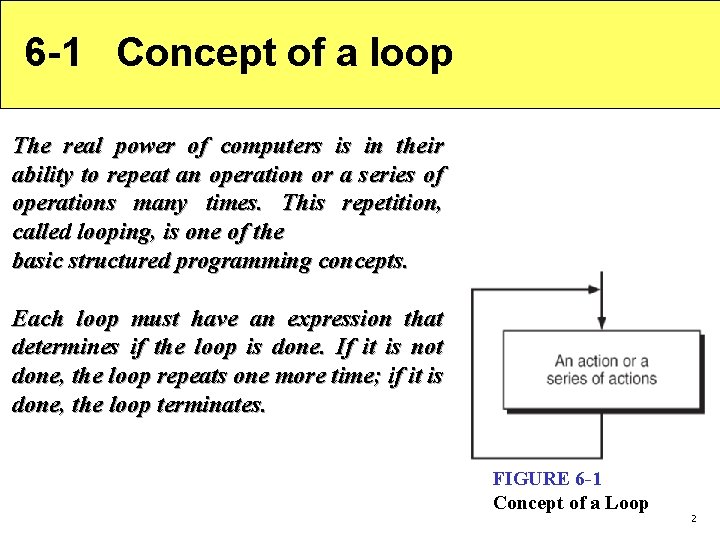
6 -1 Concept of a loop The real power of computers is in their ability to repeat an operation or a series of operations many times. This repetition, called looping, is one of the basic structured programming concepts. Each loop must have an expression that determines if the loop is done. If it is not done, the loop repeats one more time; if it is done, the loop terminates. FIGURE 6 -1 Concept of a Loop 2
6 -2 Pretest and Post-test Loops We need to test for the end of a loop, but where should we check it—before or after each iteration? We can have either a pre- or a post-test terminating condition. In a pretest loop (前測迴圈), the condition is checked at the beginning of each iteration. In a post-test loop (後測迴圈), the condition is checked at the end of each iteration. 3
FIGURE 6 -2 Pretest and Post-test Loops 4
FIGURE 6 -4 Minimum Number of Iterations in Two Loops 5
6 -3 Initialization and Updating In addition to the loop control expression, two other processes, initialization and updating, are associated with almost all loops. Topics discussed in this section: Loop Initialization Loop Update 6
FIGURE 6 -5 Loop Initialization and Updating 7

6 -4 Event- and Counter-Controlled Loops All the possible expressions that can be used in a loop limit test can be summarized into two general categories: event-controlled loops and counter-controlled loops. Topics discussed in this section: Event-Controlled Loops Counter-Controlled Loops Loop Comparison 8
FIGURE 6 -7 Event-controlled Loop Concept 9
FIGURE 6 -8 Counter-controlled Loop Concept 10
6 -5 Loops in C C has three loop statements: the while, the for, and the do…while. The first two are pretest loops, and the third is a post-test loop. We can use all of them for event-controlled and counter-controlled loops. Topics discussed in this section: The while Loop The for Loop The do…while Loop The Comma Expression 11
FIGURE 6 -9 C Loop Constructs 12
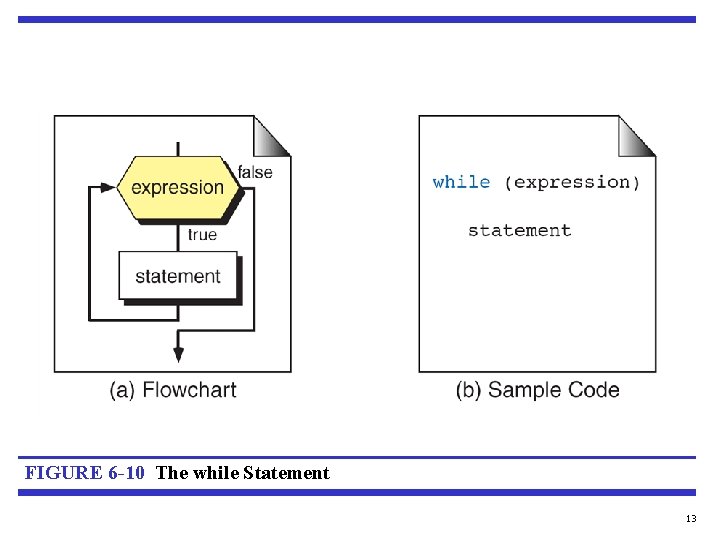
FIGURE 6 -10 The while Statement 13
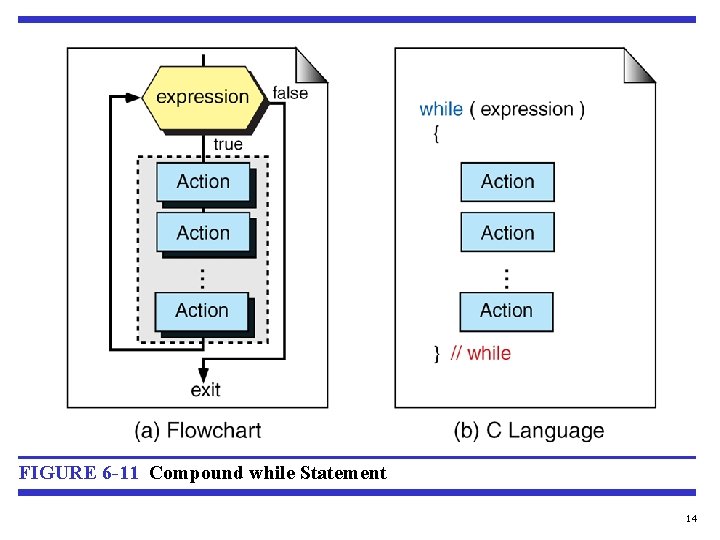
FIGURE 6 -11 Compound while Statement 14
PROGRAM 6 -1 Process-control System Example 15
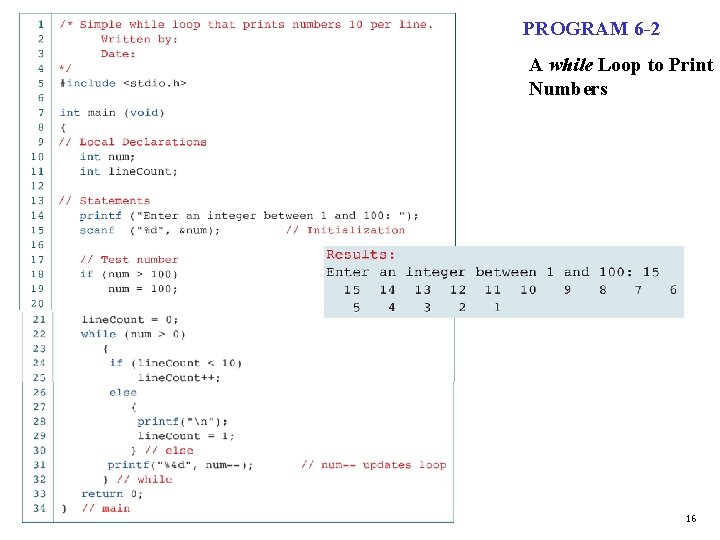
PROGRAM 6 -2 A while Loop to Print Numbers 16
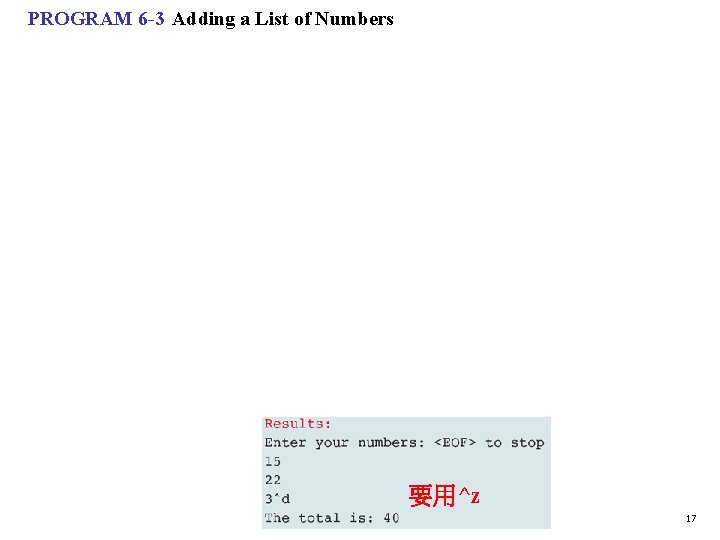
PROGRAM 6 -3 Adding a List of Numbers 要用^z 17
FIGURE 6 -12 for Statement 18
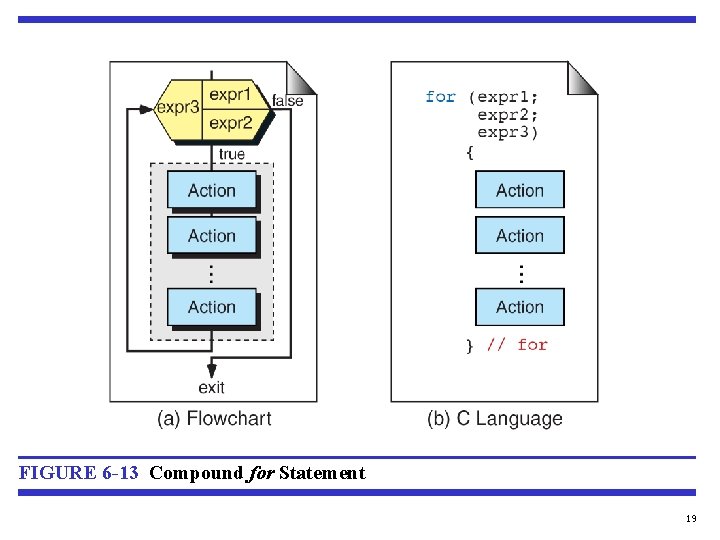
FIGURE 6 -13 Compound for Statement 19
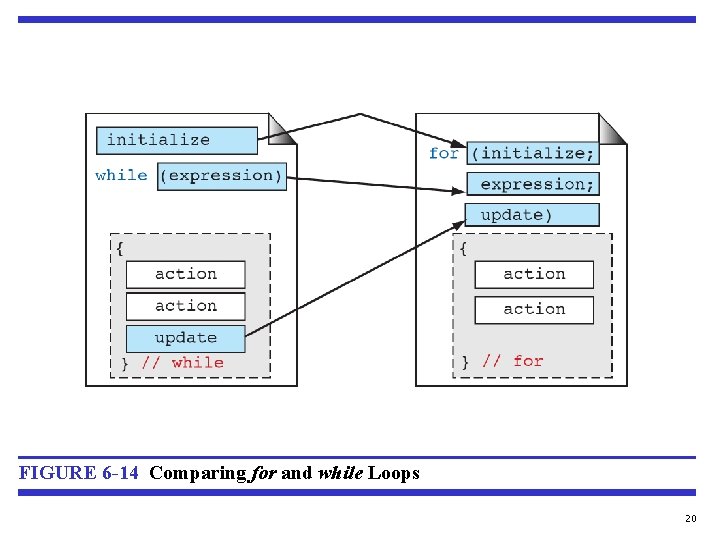
FIGURE 6 -14 Comparing for and while Loops 20
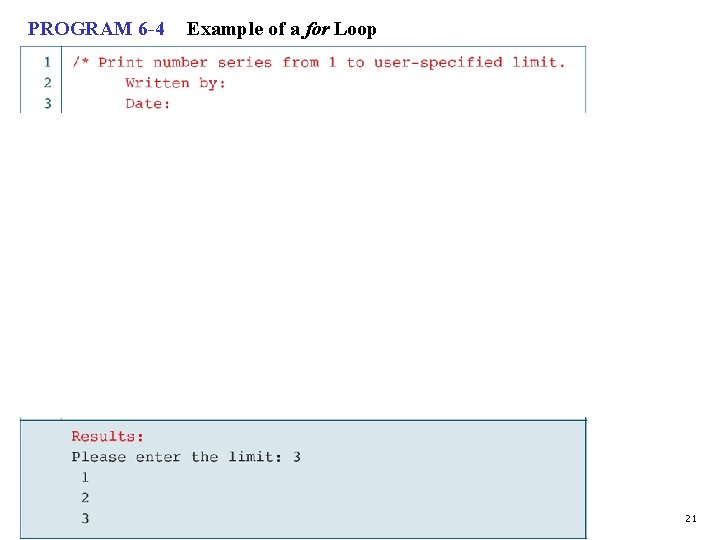
PROGRAM 6 -4 Example of a for Loop 21
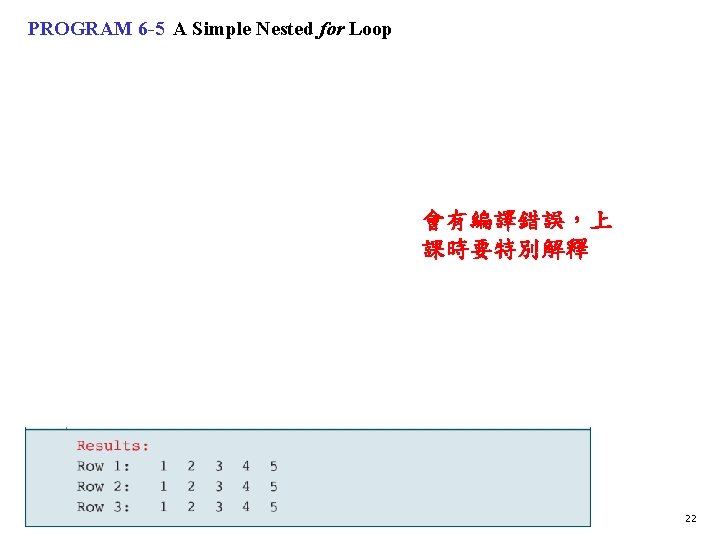
PROGRAM 6 -5 A Simple Nested for Loop 會有編譯錯誤,上 課時要特別解釋 22
FIGURE 6 -15 do…while Statement 23
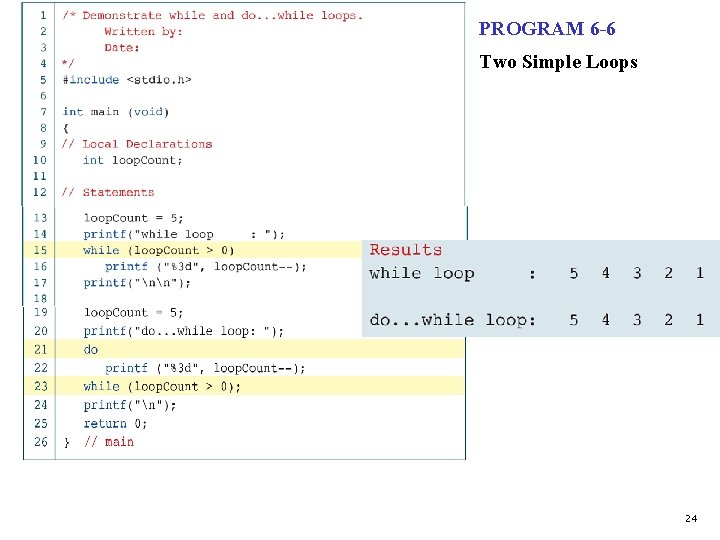
PROGRAM 6 -6 Two Simple Loops 24
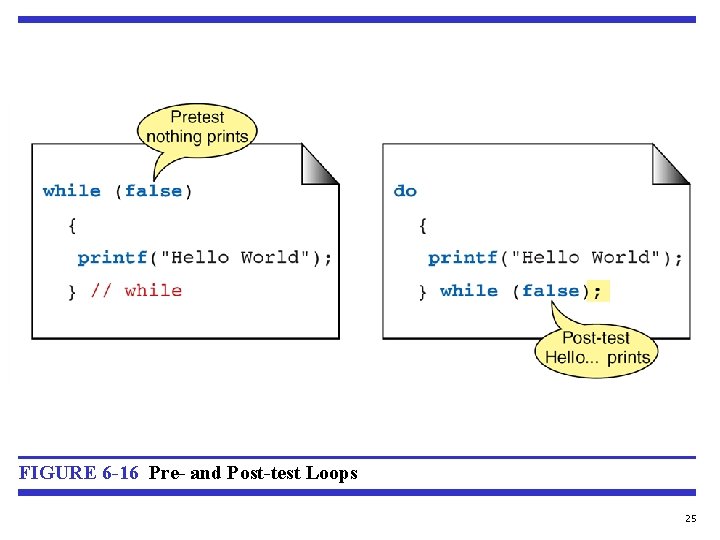
FIGURE 6 -16 Pre- and Post-test Loops 25
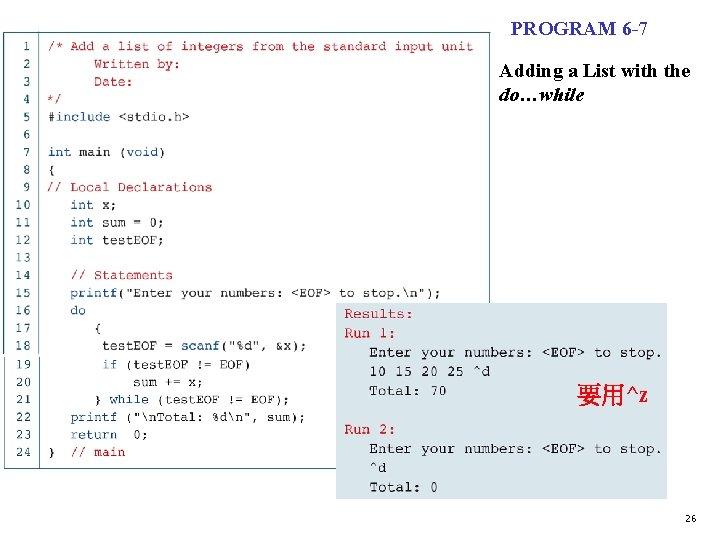
PROGRAM 6 -7 Adding a List with the do…while 要用^z 26
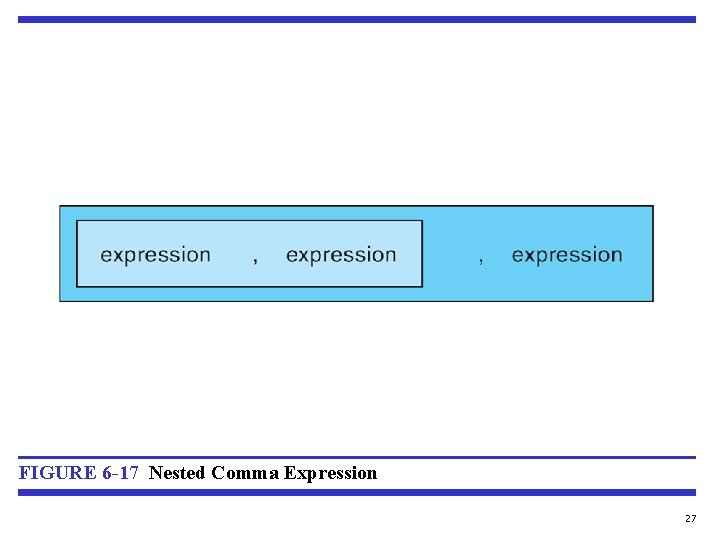
FIGURE 6 -17 Nested Comma Expression 27
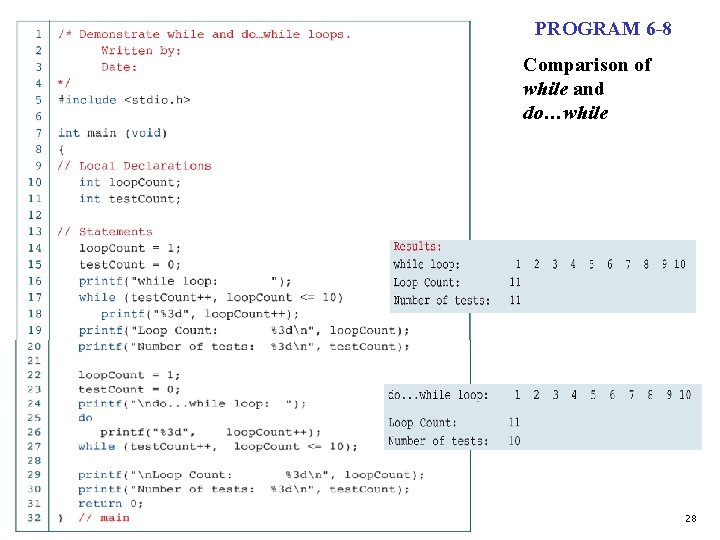
PROGRAM 6 -8 Comparison of while and do…while 28
6 -6 Loop Examples This section contains several short examples of loop applications. Each program demonstrates one or more programming concepts that you will find helpful in solving other problems. Topics discussed in this section: for Loops while LOOPS do…while LOOPS 29
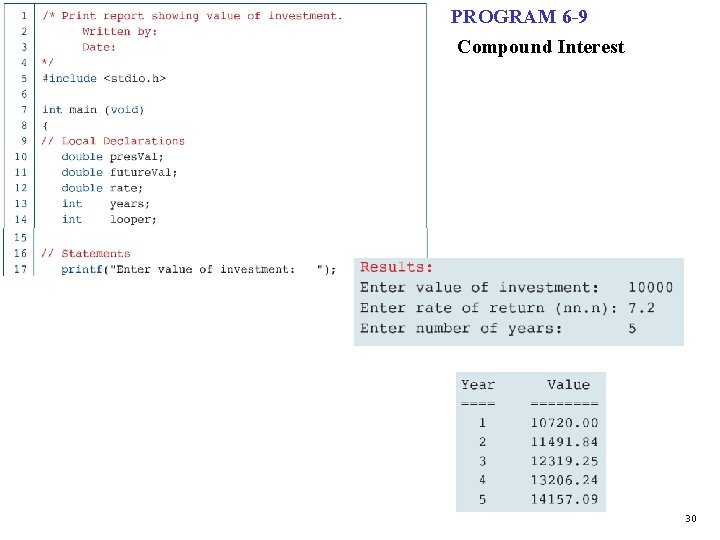
PROGRAM 6 -9 Compound Interest 30
FIGURE 6 -18 Print Right Triangle Flowchart and Pseudocode 31
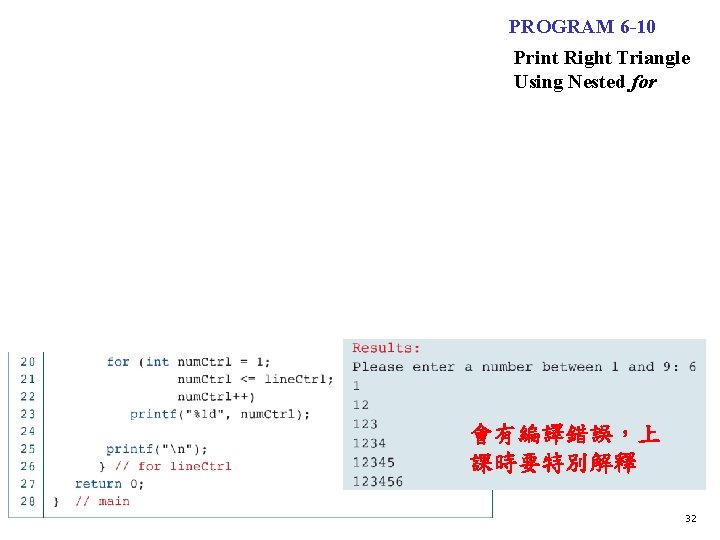
PROGRAM 6 -10 Print Right Triangle Using Nested for 會有編譯錯誤,上 課時要特別解釋 32
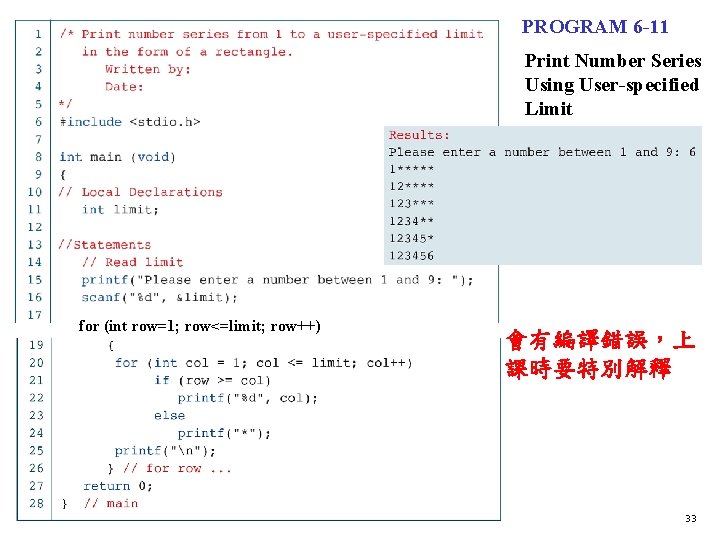
PROGRAM 6 -11 Print Number Series Using User-specified Limit for (int row=1; row<=limit; row++) 會有編譯錯誤,上 課時要特別解釋 33
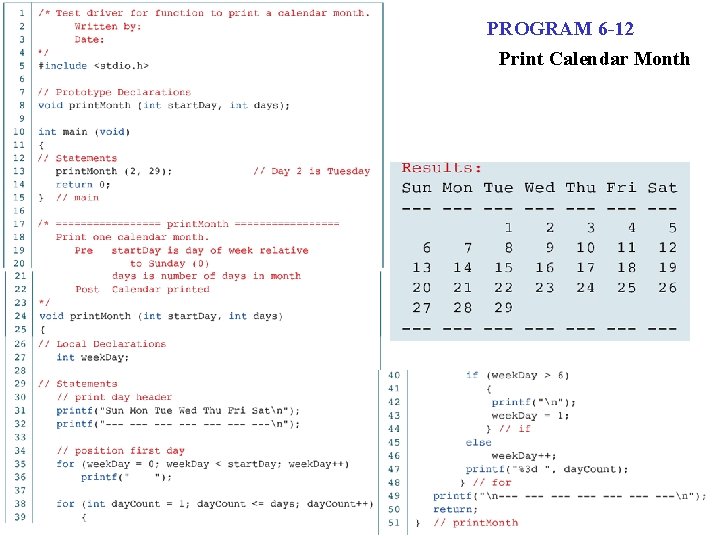
PROGRAM 6 -12 Print Calendar Month 34
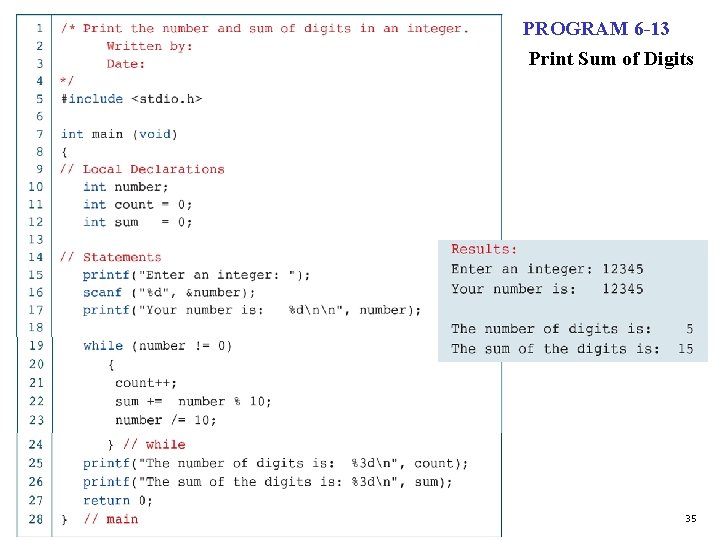
PROGRAM 6 -13 Print Sum of Digits 35
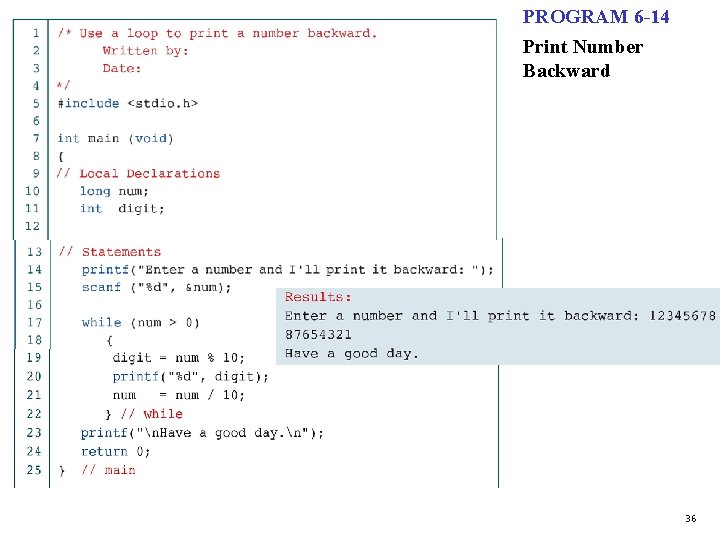
PROGRAM 6 -14 Print Number Backward 36
6 -7 Other Statements Related to Looping Three other C statements are related to loops: break, continue, and goto. The last statements, the goto, is not valid for structured programs and therefore is not discussed in this text. Topics discussed in this section: break continue 37
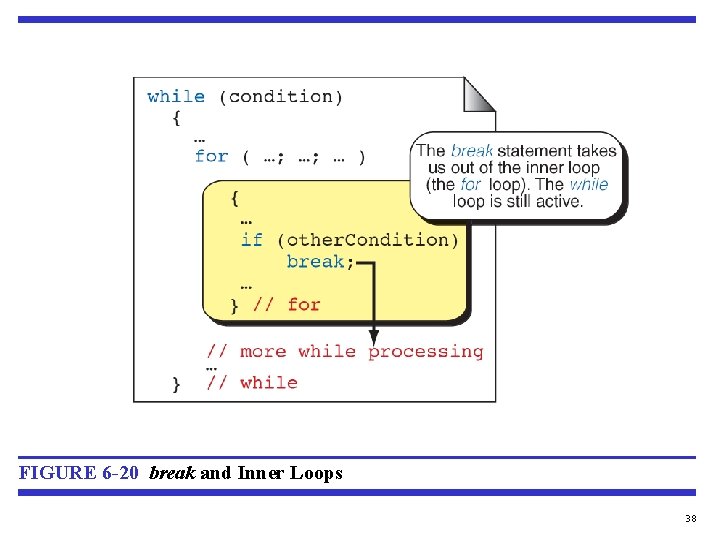
FIGURE 6 -20 break and Inner Loops 38
PROGRAM 6 -16 The for and while as Perpetual Loops 39
PROGRAM 6 -17 Using a break Flag 40
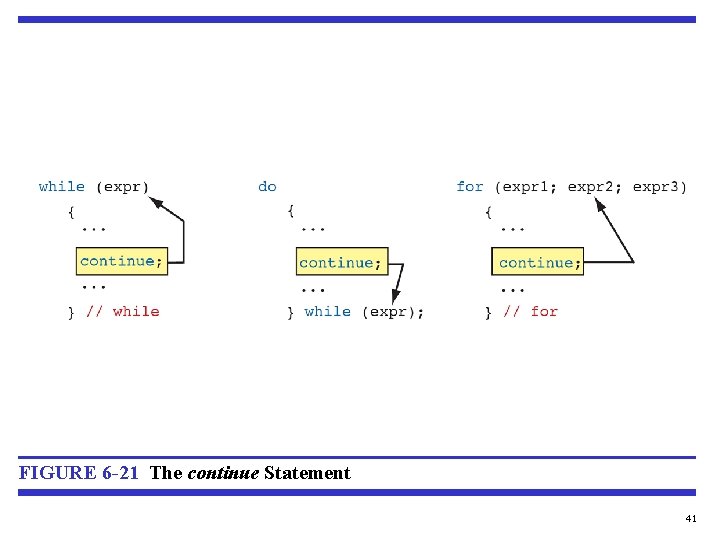
FIGURE 6 -21 The continue Statement 41
PROGRAM 6 -18 continue Example 42
6 -8 Looping Applications In this section, we examine four common applications for loops: summation, product, smallest and largest, and inquiries. Although the uses for loops are virtually endless, these problems illustrate many common applications. Topics discussed in this section: Summation Powers Smallest and Largest Inquiries 視進度需而訂 43
FIGURE 6 -22 Summation and Product Loops 44
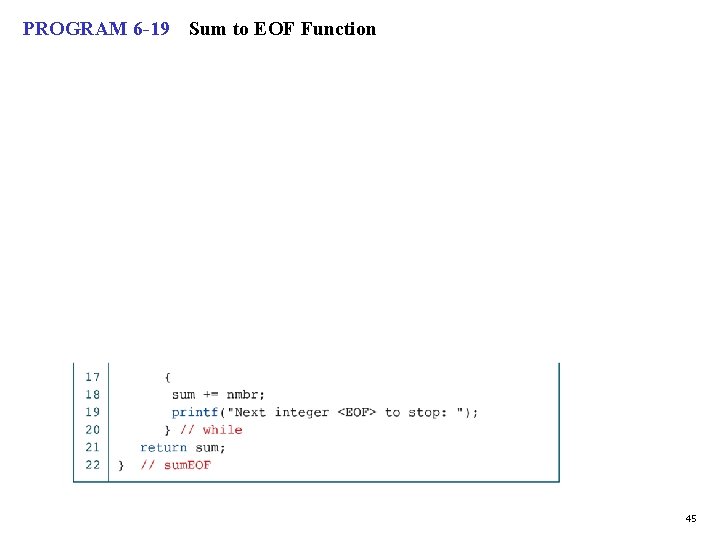
PROGRAM 6 -19 Sum to EOF Function 45
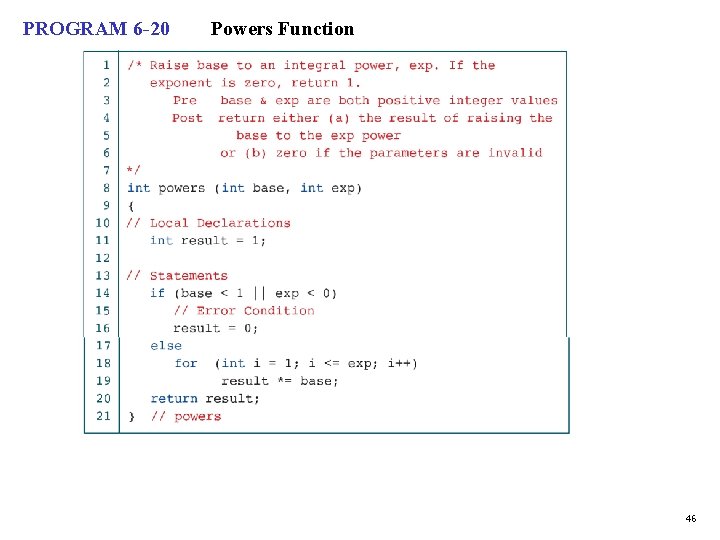
PROGRAM 6 -20 Powers Function 46
FIGURE 6 -23 Smallest and Largest Loops 47
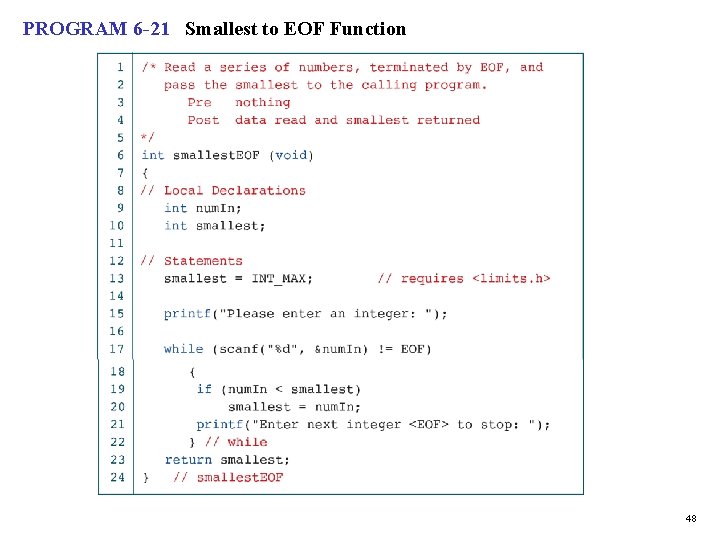
PROGRAM 6 -21 Smallest to EOF Function 48
Note To find the largest, we need to initialize the smallest variable to a very small number, such as INT_MIN. To find the smallest, we need to initialize the result to a very large number, such as INT_MAX. 49
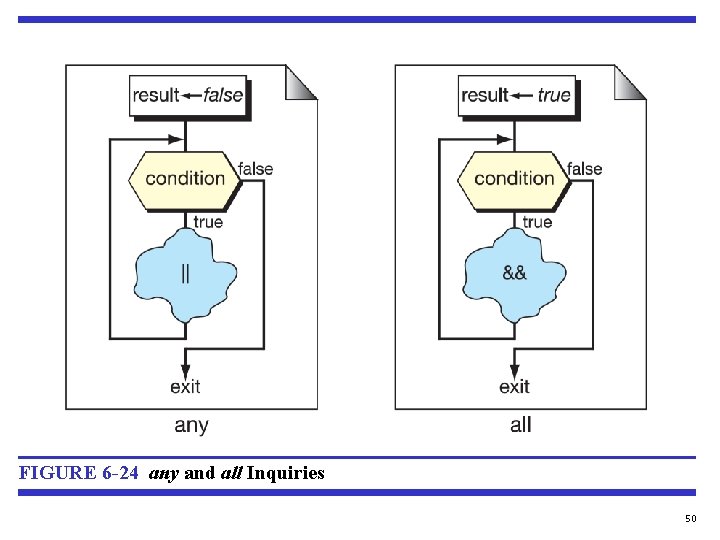
FIGURE 6 -24 any and all Inquiries 50
PROGRAM 6 -22 any. Positive to EOF Function 51
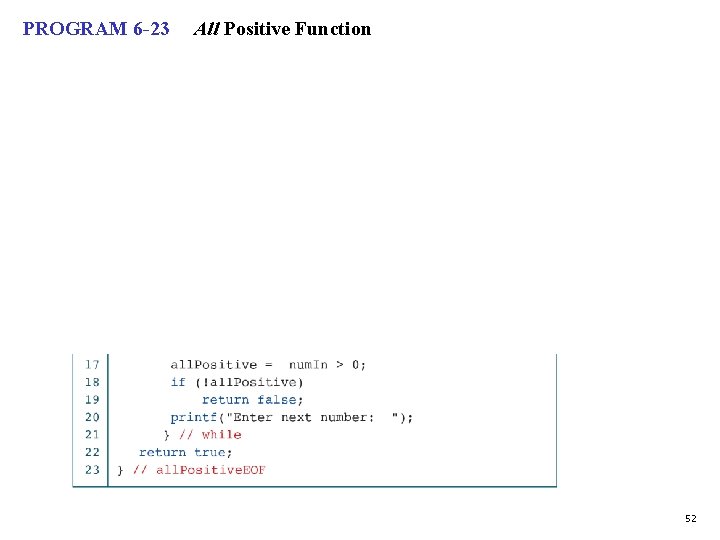
PROGRAM 6 -23 All Positive Function 52
- Slides: 52