
Chapter 6 Regulation of Prokaryotic Gene Expression 6



- Slides: 34
Chapter 6 Regulation of Prokaryotic Gene Expression
6. 1 Overview 1. What are Gene Expression and Regulation? (1) Gene expression Constitutive Expression Regulated/Adaptive Expression (2) Gene regulation/control
2. Influencing factors Nutritional status Environmental factors Hormone level Developmental stage
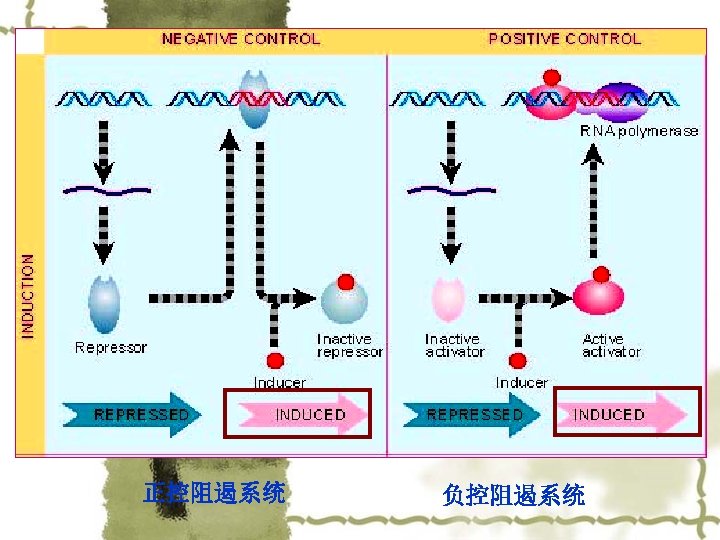
3. Operon (1) What is an operon? (2) Operon types Inducible operon Repressible operon (3) Gene regulation of operon Negative regulation Positive regulation
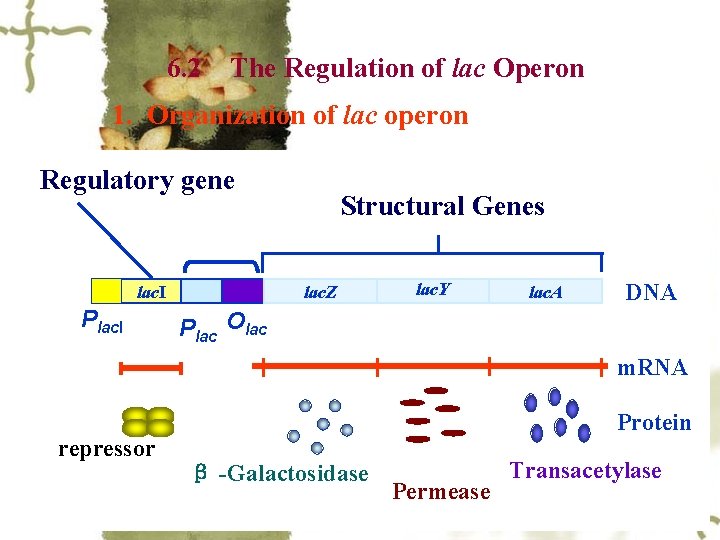
6. 2 The Regulation of lac Operon 1. Organization of lac operon Regulatory gene lac. I Plac. I Structural Genes lac. Z lac. Y lac. A DNA Plac Olac m. RNA repressor Protein β -Galactosidase Permease Transacetylase
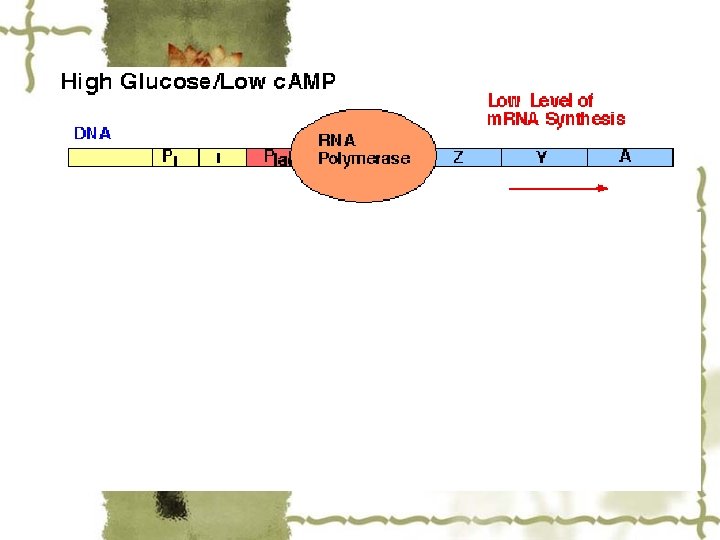
3. Positive control of lac operon c. AMP CAP (catabolite activator protein) or c. AMP receptor protein (CRP)
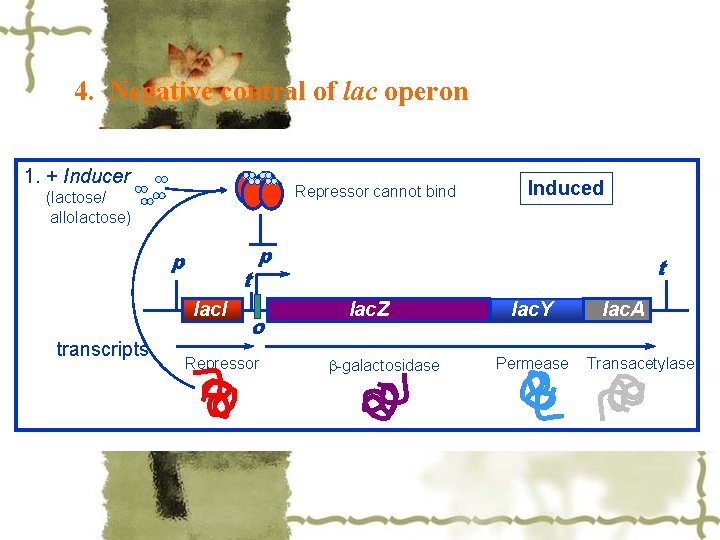
4. Negative contral of lac operon 1. + Inducer Repressor cannot bind (lactose/ allolactose) p t lac. I transcripts Induced p o Repressor t lac. Z -galactosidase lac. Y Permease lac. A Transacetylase
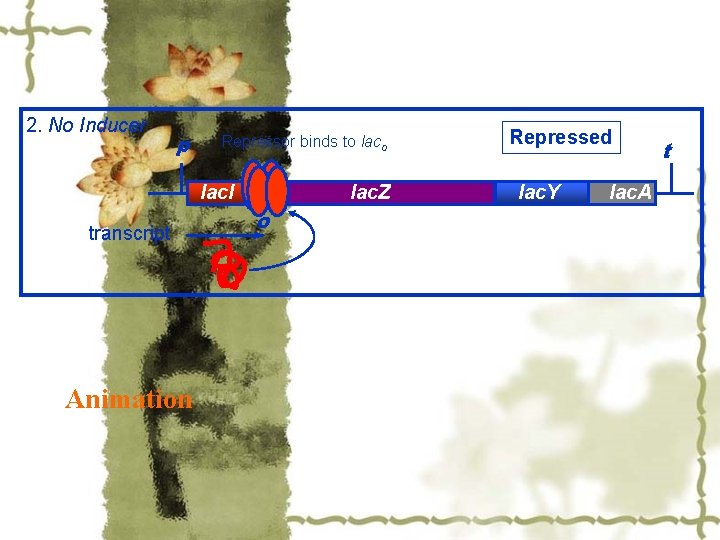
2. No Inducer p Repressor binds to lac. I transcript Animation lac. Z o Repressed lac. Y lac. A t
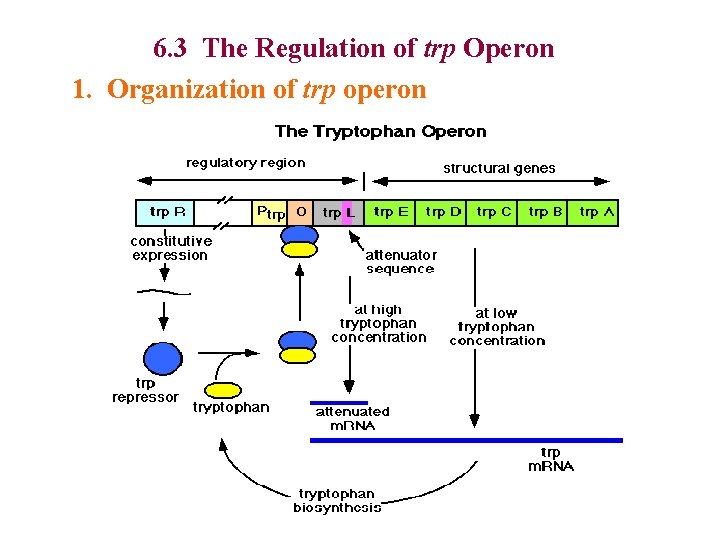
6. 3 The Regulation of trp Operon 1. Organization of trp operon
2. The Repression of trp Operon trp. R → Repressor Corepressor
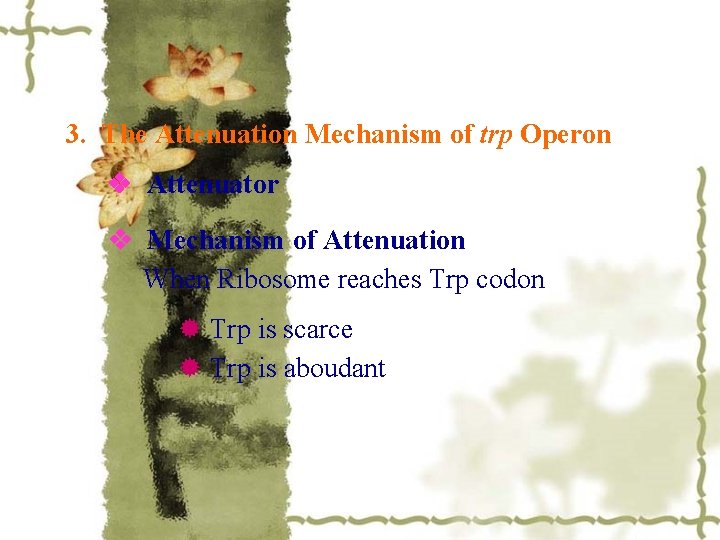
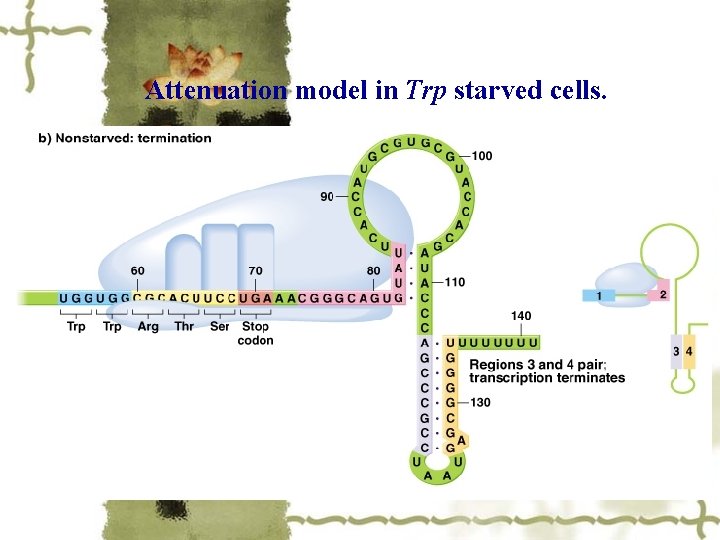
3. The Attenuation Mechanism of trp Operon Attenuator Mechanism of Attenuation When Ribosome reaches Trp codon Trp is scarce Trp is aboudant
Attenuation model in Trp starved cells.
Attenuation model in Trp non-starved cells Animation
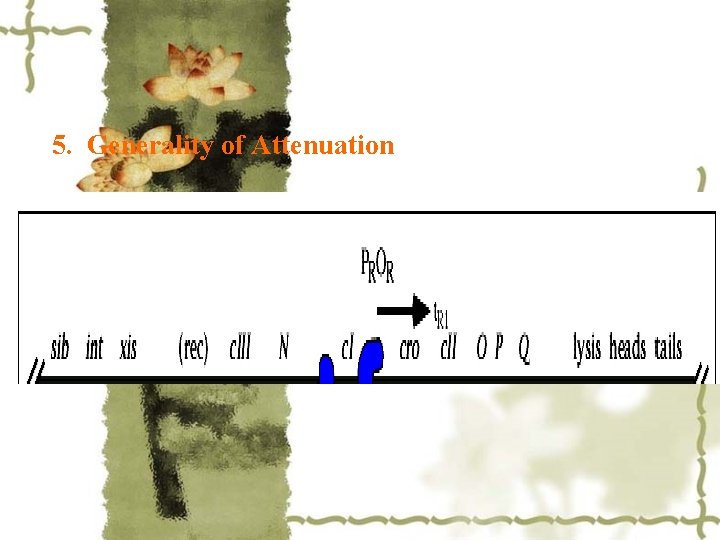
5. Generality of Attenuation
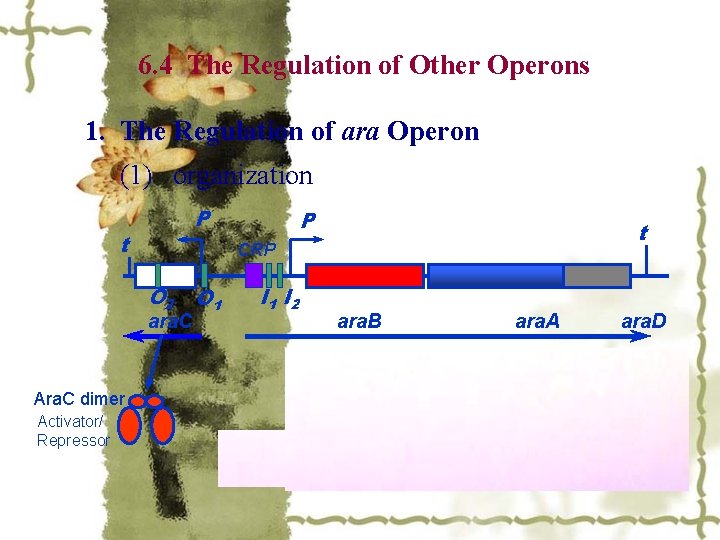
6. 4 The Regulation of Other Operons 1. The Regulation of ara Operon (1) organization P t ara. C Activator/ Repressor t CRP O 2 Ara. C dimer P O 1 I 2 ara. B ara. A ara. D
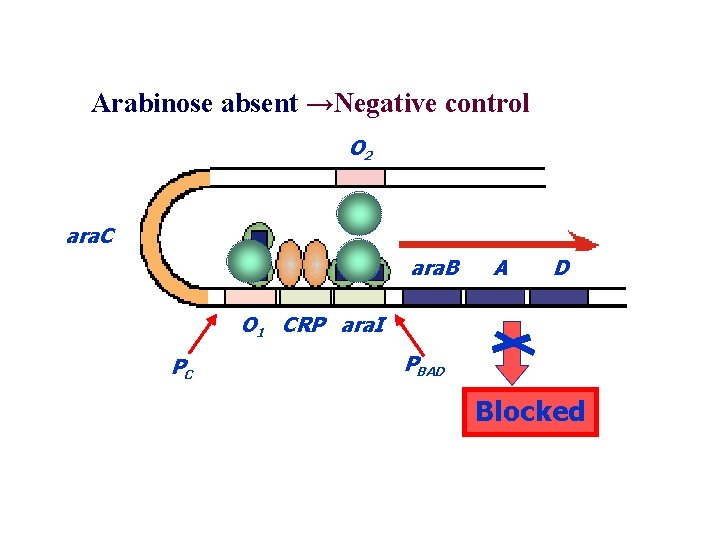
Arabinose absent →Negative control O 2 ara. C ara. B A D O 1 CRP ara. I PC PBAD Blocked
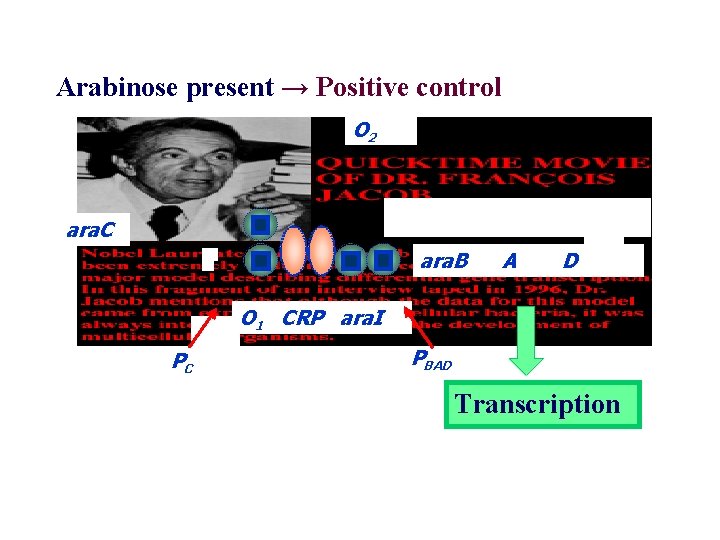
Arabinose present → Positive control O 2 ara. C ara. B A D O 1 CRP ara. I PC PBAD Transcription
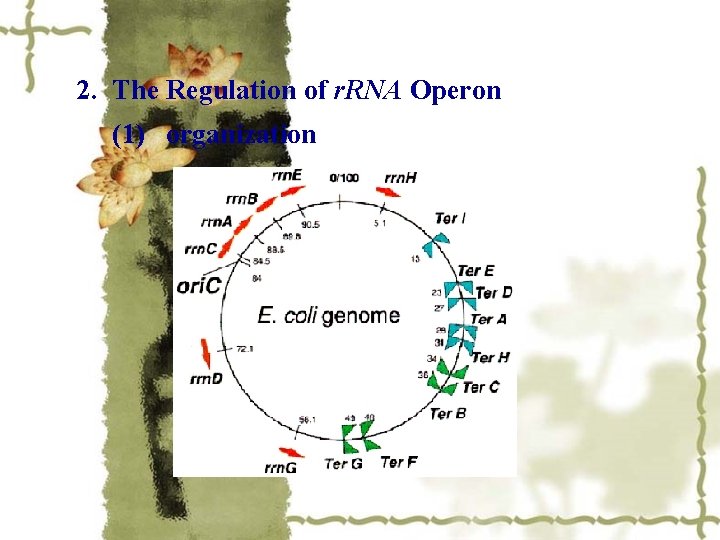
2. The Regulation of r. RNA Operon (1) organization
6. 5 Riboswitches 1. What is a riboswitch? Riboswitches have two important domains: an aptamer an expression platform
2. Mechanism of Riboswitches (1) Inhibition of Translation Initiation (2) Transcription termination (3) Auto-cleavage
3. Tempting Targets
4. Riboswitches and the RNA World hypothesis 5. Riboswitches as Antibiotic Targets Brantl, S. Bacterial gene regulation: from transcription attenuation to riboswitches and ribozymes. Trends Microbiol, 2004, 12: 473 -475. Mandal, M. and R. R. Breaker. Gene Regulation by Riboswitches. Nat Rev Mol Cell Biol, 2004, 5: 451 -463. Blount KF, Breaker RR. Riboswitches as antibacterial drug targets". Nat Biotechnol, 2006, 24 (12): 1558 -64.
6. 6 Time Regulation 1. Time Regulation of Sigma Factors Different sigma factors recognize different promoters and thus, the availability of sigma factors can regulate the transcription of genes associated with these promoters.
Early Middle Late
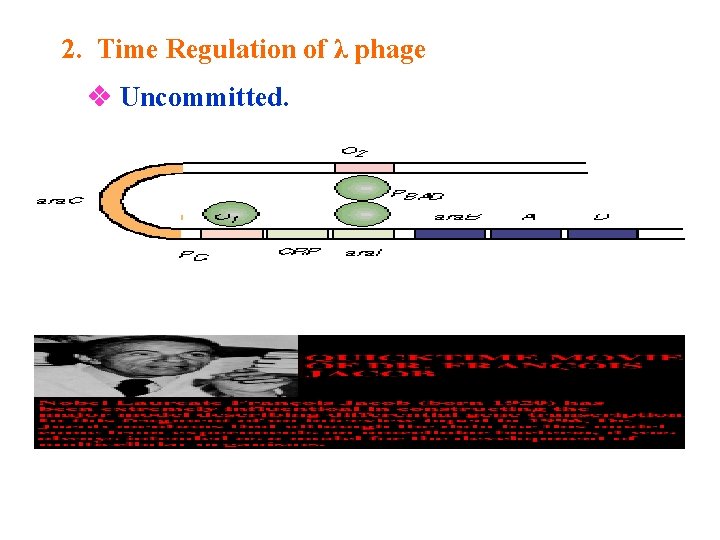
2. Time Regulation of λ phage Uncommitted.
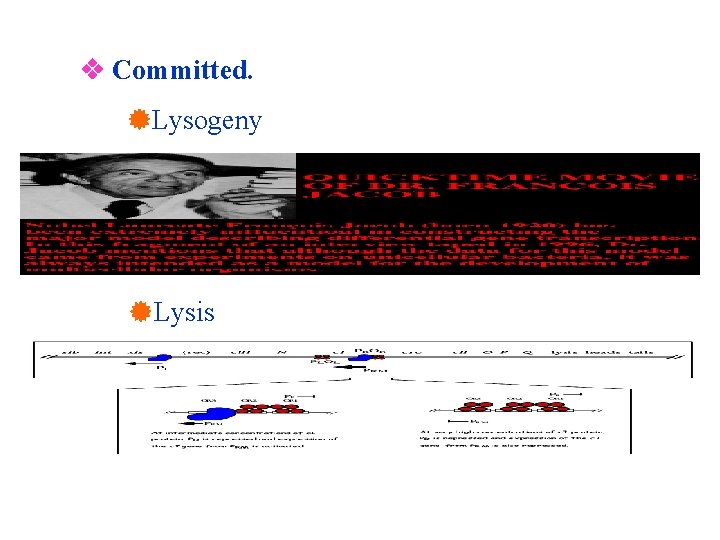
Committed. Lysogeny Lysis
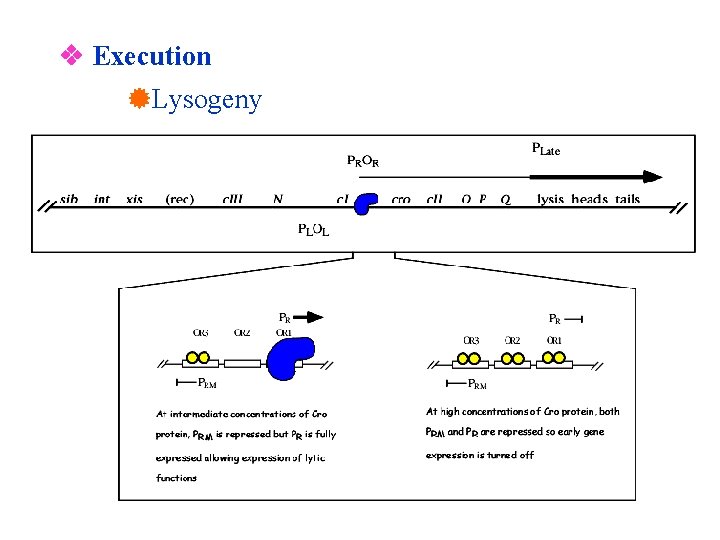
Execution Lysogeny
Lysis
6. 7 Post-Transcriptional Regulation 1. Translation Initiation of Regulation (1) Ribosome binding site (rbs) (2) SD sequencing 1. (3) m. RNA secondary structure (4) Initiational codon 2. Regulation of Rare Codon 3. Transcriptional Regulation of Overlapping Gene 4. Translational Repression
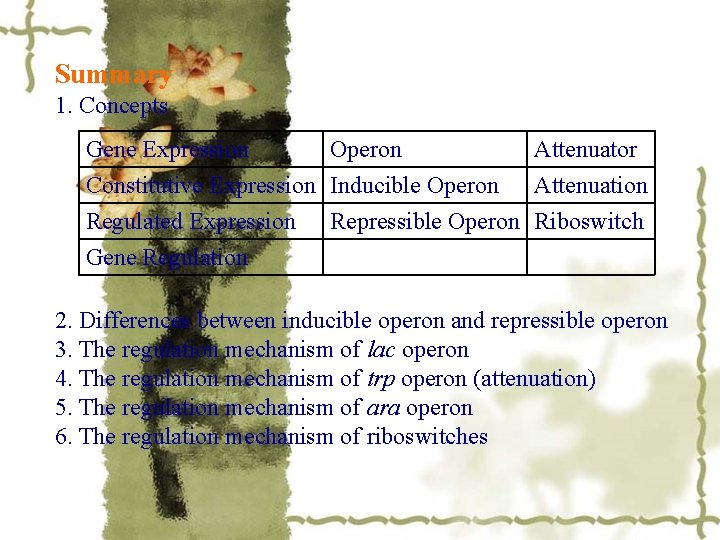
Summary 1. Concepts Gene Expression Operon Attenuator Constitutive Expression Inducible Operon Attenuation Regulated Expression Repressible Operon Riboswitch Gene Regulation 2. Differences between inducible operon and repressible operon 3. The regulation mechanism of lac operon 4. The regulation mechanism of trp operon (attenuation) 5. The regulation mechanism of ara operon 6. The regulation mechanism of riboswitches