
Chapter 6 Production Exchange Objectives Identify and describe
Chapter 6: Production & Exchange Objectives: ¡ ¡ Identify and describe the four modes of subsistence Distinguish between the three systems of exchange Compare and contrast formalist and substantivist economic theories Appreciate the variety of economic systems described in Scripture
Modes of Subsistence Definition: Key Concepts Culturally created means of securing food ¡ ¡ ¡ foraging [hunting and gathering] horticulture pastoralism agriculture market exchange (not a subsistence strategy; combines with agriculture)
Subsistence system Foraging Horticulture Pastoralism Agriculture Definition Examples in the chapter a subsistence strategy based on gathering plants that grow wild in the environment and hunting available animals Inuit Ju/'hoansi Waorani A subsistence strategy in which people cultivate varieties of wild or domesticated crops, primarily for their own use, using relatively little technology Ikalahan Yanamamo Koyfar A subsistence strategy based on the use of domesticated herd animals A subsistence strategy that requires constant and intensive use of permanent fields for plant cultivation Maasai Nuer Samburu United States Latin American plantations Southeast Asian plantations
Subsistence Strategies Foraging ¡ ¡ ¡ Gathering/hunting based on ecology Production refers to identifying, locating, and securing food in environment Found in wide variety of environments Social Forms ¡ Egalitarian l ¡ Low population density l l ¡ division of labor only based on gender; all adults do what other adults do sufficient land mobility “Affluence” based on wants, not supplies
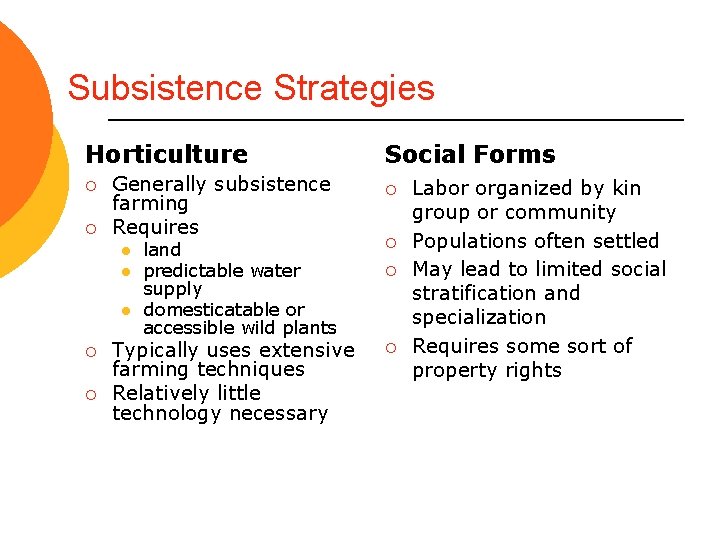
Subsistence Strategies Horticulture ¡ ¡ Generally subsistence farming Requires l l l ¡ ¡ land predictable water supply domesticatable or accessible wild plants Typically uses extensive farming techniques Relatively little technology necessary Social Forms ¡ ¡ Labor organized by kin group or community Populations often settled May lead to limited social stratification and specialization Requires some sort of property rights

Subsistence Strategies Pastoralism ¡ ¡ Production located in herd animals Requires l l l ¡ accessible food for animals accessible water domesticatable animals Relatively little technology necessary Social Forms ¡ ¡ Labor organized by kin group or community Populations may be settled (for transhumant) or nomadic May lead to limited social stratification and specialization Requires some sort of property rights
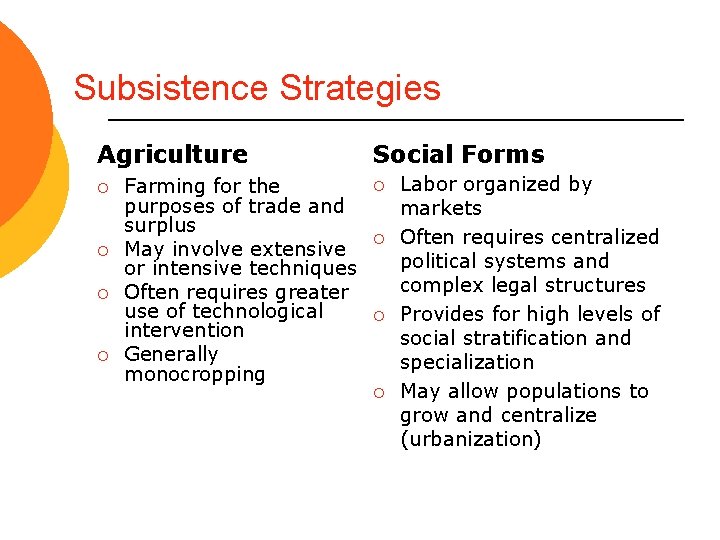
Subsistence Strategies Agriculture ¡ ¡ Farming for the purposes of trade and surplus May involve extensive or intensive techniques Often requires greater use of technological intervention Generally monocropping Social Forms ¡ ¡ Labor organized by markets Often requires centralized political systems and complex legal structures Provides for high levels of social stratification and specialization May allow populations to grow and centralize (urbanization)
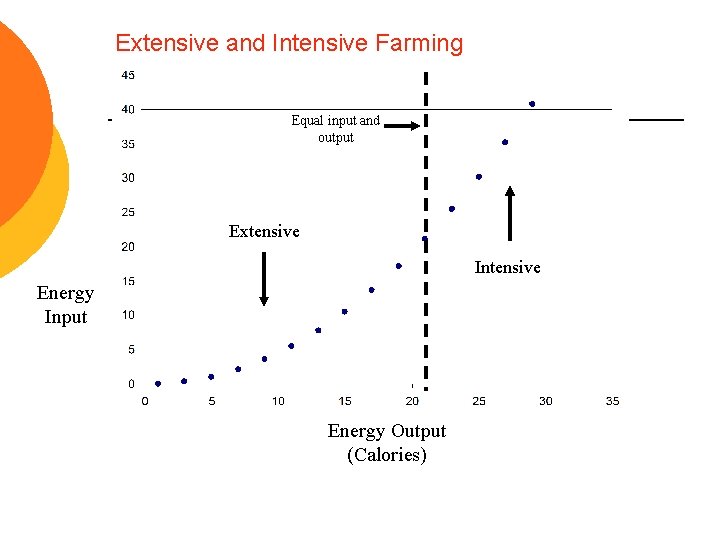
Extensive and Intensive Farming Equal input and output Extensive Intensive Energy Input Energy Output (Calories)
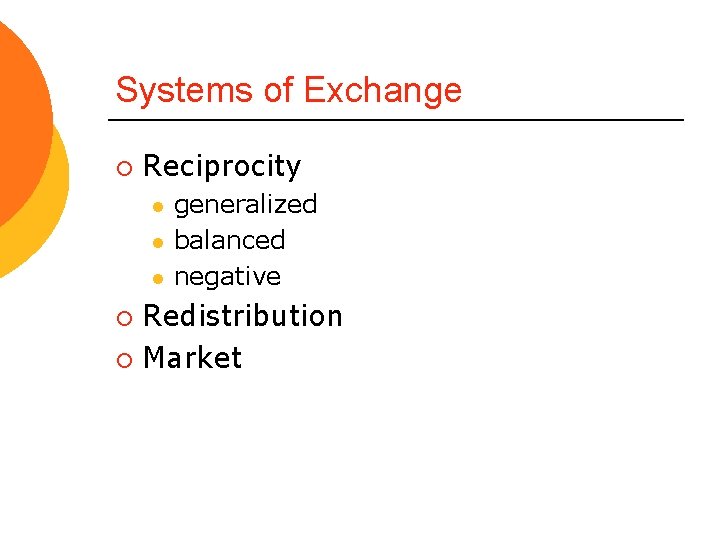
Systems of Exchange ¡ Reciprocity l l l generalized balanced negative Redistribution ¡ Market ¡
Economic Theories Formalist ¡ All economic systems can be understood in terms of neoclassical economics Substantivist ¡ Local economic life must be understood in its own terms
Economic Systems in the Bible ¡ Foraging, horticulture, pastoralism, agriculture, and market systems are all depicted in Scripture in positive and negative ways. ¡ God calls people to be generous in every system, caring for the poor and economically vulnerable.
- Slides: 11