
Chapter 6 PRODUCTION AND PRODUCTIVITY PRODUCTIVITY AND PRODUCTION


- Slides: 31
Chapter 6 PRODUCTION AND PRODUCTIVITY
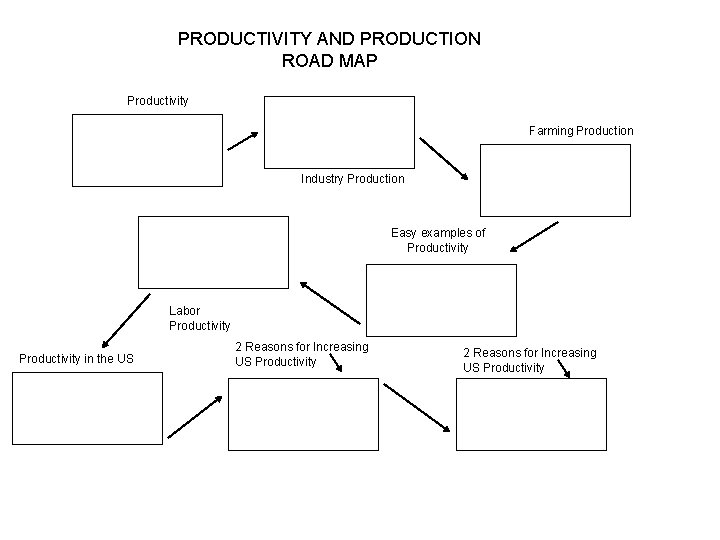
PRODUCTIVITY AND PRODUCTION ROAD MAP Productivity Farming Production Industry Production Easy examples of Productivity Labor Productivity in the US 2 Reasons for Increasing US Productivity
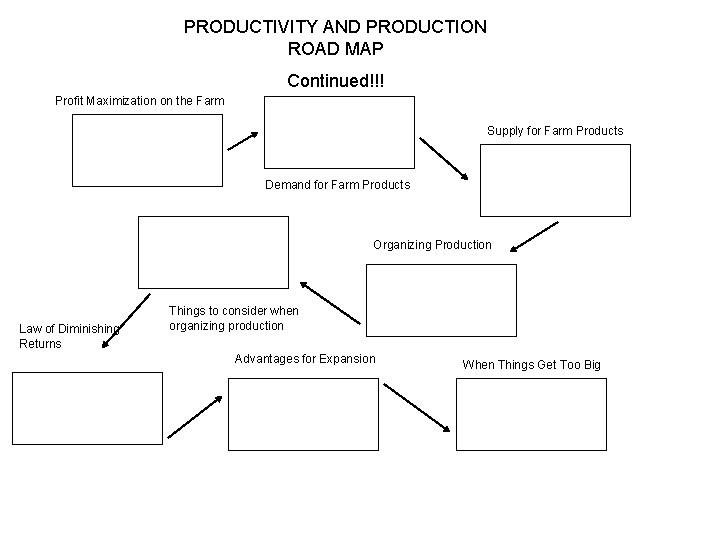
PRODUCTIVITY AND PRODUCTION ROAD MAP Continued!!! Profit Maximization on the Farm Supply for Farm Products Demand for Farm Products Organizing Production Law of Diminishing Returns Things to consider when organizing production Advantages for Expansion When Things Get Too Big
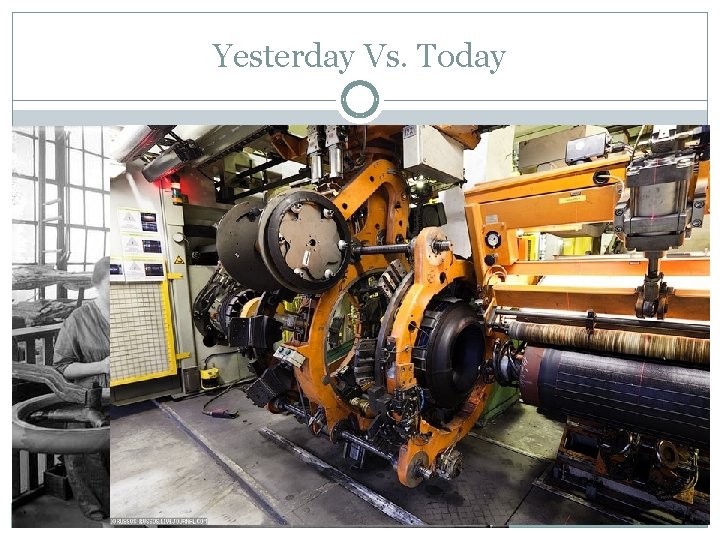
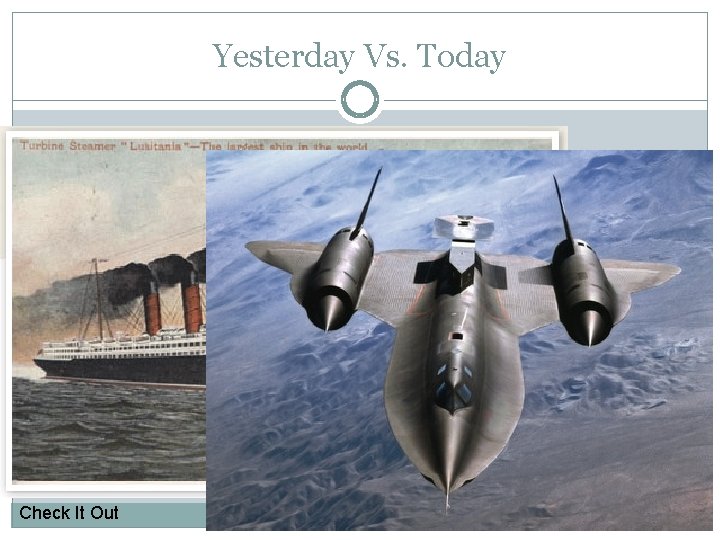
Productivity can be measured as the level of output per unit of input BUT WAIT!!!!!!!!! In economics, productivity measures the efficiency with which we produce goods and services Productivity increases have enabled today’s factory workers, transportation services, and other entities to produce more in fewer hours then in years gone by. For example…
Yesterday Vs. Today VS
Yesterday Vs. Today VS Check It Out
Industry Production Industry production has changed significantly since the first half of 1800’s how?
Farming Production Farming production has changed significantly since the first half of 1800’s how?
Easy Examples of Productivity, again, is the efficiency of a factor of production, measured in terms of units of output per every unit of input Examples include…
Labor Productivity is expressed as the output per unit per worker This is the measure that is most frequently used to gauge economic efficiency Example: People fed by one US Farmer In 1900 - 7 people were fed by 1 farmer In 1950 - 16 People were fed by 1 farmer In 2011 - At least 142 people were fed by 1 farmer WHY? ? ?
Productivity in the US The US experienced the longest period of prosperity in peacetime history from 1991 -2000 All economic progress had an upward trend Every year from 1900, US productivity has increased almost 2% every single year. Why? 4 Reasons
Reasons for the US Increasing in Productivity The Quality of the Work Force: 1. Since 1980, the average US worker has been better educated and has more experience then his or her predecessors Trade schools, the military, colleges/universities, internships, apprenticeships, government funding, charitable funding etc are all reasons why. Increasing capital investment per worker 2. Labor productivity increases when workers have more capital, human or physical capital, to work with. Since 1995, much money from the American GDP has been used as investment in businesses and industries.
Reasons for the US Increasing in Productivity 3. Infrastructure: The record shows that investment in infrastructure: items used to communicate and transport in a country, have contributed to the growth of the US Airports Fiber Optical Wires Cell Phone Towers
Reasons for the US Increasing in Productivity 4. Innovations Since its early colonial day, the US has always been an incredibly gifted country of innovators and inventors To keep that tradition going, the federal and private spending on research and development of goods and services is equal to 2. 5 % of the total US GDP That is more money then Japan, Germany, and France… ALL COMBINED http: //en. wikipedia. org/wiki/Timeline_of_United_States_inv entions_(1890%E 2%80%931945)
Profit Maximization on the Farm We already know a farmer today produces enough food for 142 people, where in 1940 that same average farmer produced just enough for 12 How is this possible? Like all entrepreneurs, farmers strive to maximize profits Unlike other entrepreneurs, farmers have very little control on the supply of, demand for, and the price of their products A main reason for this lack of control is there is both inelastic supply and inelastic demand for farming products…
Inelastic Demand for Farm Products Although people will buy more farm products at a lower price, there is a limit to how much any of us can eat at a particular time How is this possible? For example: it is unlikely that your family will buy twice as much bread, milk, or lettuce if the prices are reduced by half Your family is likely to buy more bread, milk, and lettuce, but definitely not enough to make up for the price decrease for farmers
Inelastic Supply for Farm Products Once crops are planted or the size of a farmer’s herd is established, there is little that farmer can do to increase or decrease production until the next season How is this seen? Farmers follow a “Boom or Bust” pattern where they make it, expand, and become successful or can be “busted” by their farms Regardless of an optimal price or not, farmers have little choice but to plant their crops and hope for the best instead of not planting their crops at all
Organizing Production As entrepreneurs get their business plans together, they look to organize Land, Labor, Human Capital, and Physical Capital (Factors of Production) to create the maximum size profit they can make. Organizing production could mean huge profits, which is the life blood of private enterprise With this organization comes some things to consider…
Things to Consider When Organizing Production Take a new factory for example: Land/Building: Should we buy or rent, build/move into a new building? Machinery: Should we have unskilled laborers hand making these products or machinery and skilled laborers operating them Raw Materials: Should we buy enough to carry us through for a few years or reorder from week to week? (Bulk Orders to save money) Products: Should we manufacture plastic and/or metal models? How many different models will we offer?
Law of Diminishing Returns When we additional factors of production such as workers or machinery, productivity usually increases However, there is a point where the addition of input no longer helps and ends up costing more then if it wasn’t added at all For example: A new item on a menu that doesn’t sell
Law of Diminishing Returns when this point is reached and output per worker begins to decline. This can happen with adding more workers, machinery, stores, locations, delivery trucks etc.
Expansion As a company grows, expansion occurs. Expansion is not only with buildings, or additional goods/services offered but can also mean a “Division of Labor” throughout a company.
Expansion Division of Labor is one of the principle advantages of expansion Division of Labor refers to taking the total production process and now breaking it down into a series of simpler tasks
Expansion (Division of Labor) Simplifying these tasks means expansion has the following advantages: As the tasks become simpler, training becomes simpler With the task being subdivided its easier to perform Simple tasks means management can hire less skilled workers for lower wages. Management can now simplify and focus to specialties such as Quality control Communications Advertising International Sales
Other Advantages of Expansion Quantity Discounts- Large firms can obtain their raw materials at a lower cost then small ones. Suppliers are eager to keep their bigger customers and may offer them quantity discounts. For example: AND
Other Advantages of Expansion Availability of Specialized Material- Large scale production and specialized divisions of labor make more the practical use of specialized machinery. For example: large automobile manufacturers can afford to buy very expensive laser equipment to weld joints onto an automobile frame. A small firm would not be able to
Other Advantages of Expansion Research- can lead to the development of many new products and methods of production Development- development can lead to finding uses for products that go beyond the intentional use of the company’s original products By-Products- Formerly discarded products, such as orange peels for fertilizer, or meat packing waste into glues, fertilizers, and soaps, are sold to other companies for materials and the parent company makes more profit from their waste
When Things Get Too Big… Companies are always looking to grow, but unit production costs are key measurements on a companies success. Unit Production Costs- are the costs of producing an item. When these stop decreasing, and start increasing a company has “over-expanded” and needs to cut back.
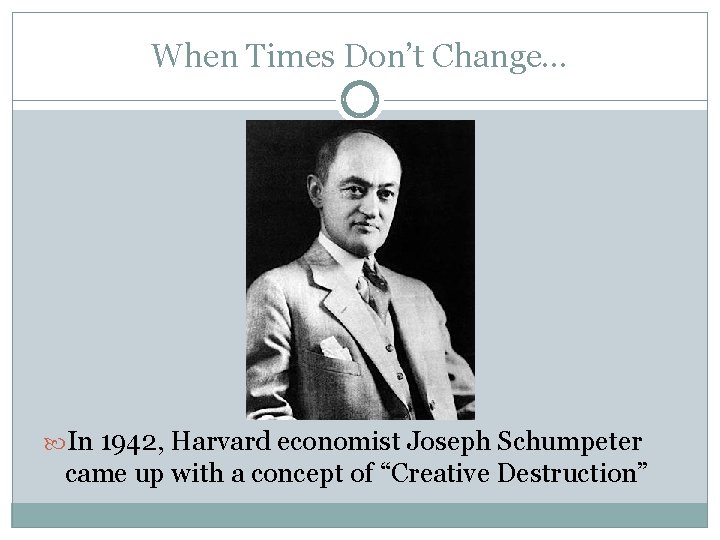
When Times Don’t Change… In 1942, Harvard economist Joseph Schumpeter came up with a concept of “Creative Destruction”
“Creative Destruction” Creative Destruction is the idea that capitalism is in a constant state of change in which innovation destroys established enterprises and yields new ones “Problems arise when successful firms devote their energies to defending their old operations rather than adapting to change. ” Such as these items…
Ghosts of Products Past