
Chapter 6 PRESENT TENSE SUMPOSSUM COMPLEMENTARY INFINITIVE TRANSITIVEINTRANSITIVE
- Slides: 7
Chapter 6 PRESENT TENSE SUM/POSSUM COMPLEMENTARY INFINITIVE TRANSITIVE/INTRANSITIVE VERBS
Present Tense of Sum ALL Romance languages have irregular forms of the verb “to be” The principle parts of sum: Sum, esse, fui, -----�Because sum has no fourth principle part, it cannot be conjugated into the passive voice. Present Active Infinitive of Sum esse “to be”
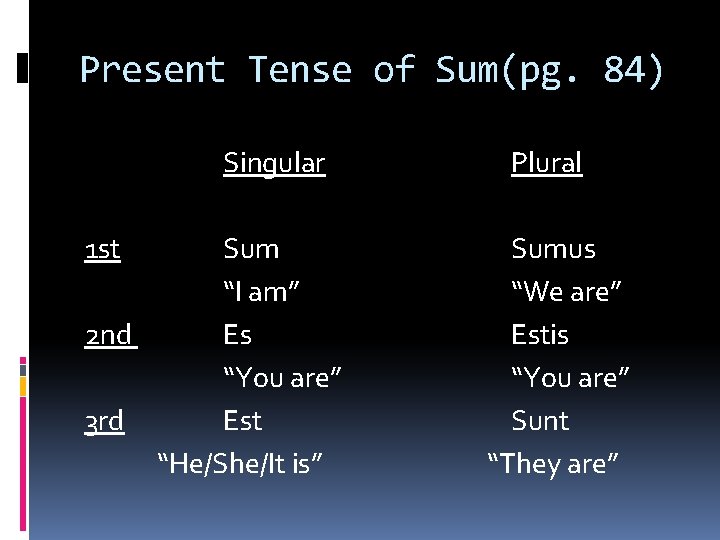
Present Tense of Sum(pg. 84) Singular 1 st Sum “I am” 2 nd Es “You are” 3 rd Est “He/She/It is” Plural Sumus “We are” Estis “You are” Sunt “They are”
Present Tense of Possum If you know the present tense of sum, then possum is very simple. Principle parts of possum. Possum, Posse, Posui, ------�Since possum has no fourth principle part, it cannot be conjugated in the passive voice �Present active infinitive of Possum �Posse = to be able
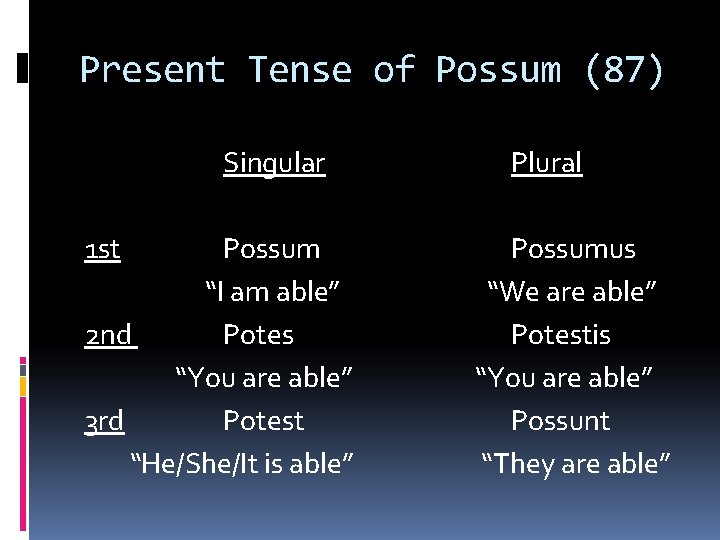
Present Tense of Possum (87) Singular 1 st Possum “I am able” 2 nd Potes “You are able” 3 rd Potest “He/She/It is able” Plural Possumus “We are able” Potestis “You are able” Possunt “They are able”
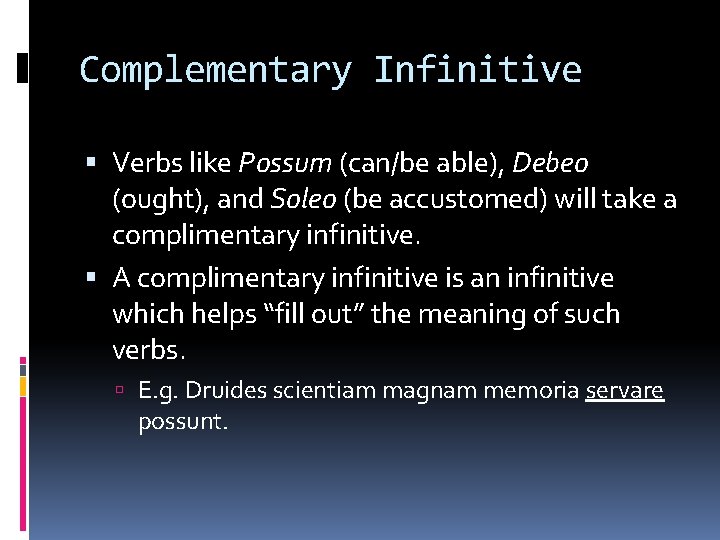
Complementary Infinitive Verbs like Possum (can/be able), Debeo (ought), and Soleo (be accustomed) will take a complimentary infinitive. A complimentary infinitive is an infinitive which helps “fill out” the meaning of such verbs. E. g. Druides scientiam magnam memoria servare possunt.
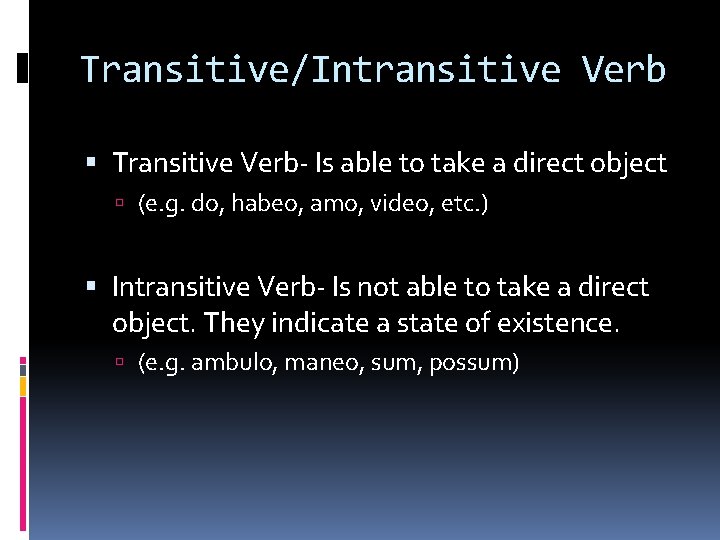
Transitive/Intransitive Verb Transitive Verb- Is able to take a direct object (e. g. do, habeo, amo, video, etc. ) Intransitive Verb- Is not able to take a direct object. They indicate a state of existence. (e. g. ambulo, maneo, sum, possum)