
Chapter 6 Population Growth and Economic Development Causes
- Slides: 37
Chapter 6 Population Growth and Economic Development: Causes, Consequences, and Controversies Copyright © 2009 Pearson Addison-Wesley. All rights reserved.
The Basic Issue: Population Growth and Quality of Life • Six major issues: – Will developing countries be able to improve levels of living given anticipated population growth? – How will developing countries deal with the vast increases in their labor forces? – How will higher population growth rates affect poverty? Copyright © 2009 Pearson Addison-Wesley. All rights reserved. 2
The Basic Issue: Population Growth and Quality of Life • Six major issues (cont’d): – Will developing countries be able to extend the coverage and improve the quality of health care and education in the face of rapid population growth? – Is there a relationship between poverty and family size? – How does affluence in the developed world affect the ability of developing countries to provide for their people? Copyright © 2009 Pearson Addison-Wesley. All rights reserved. 3
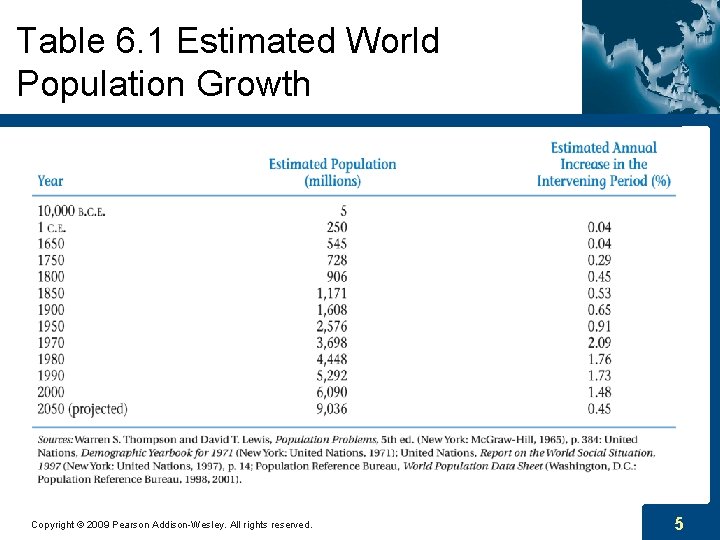
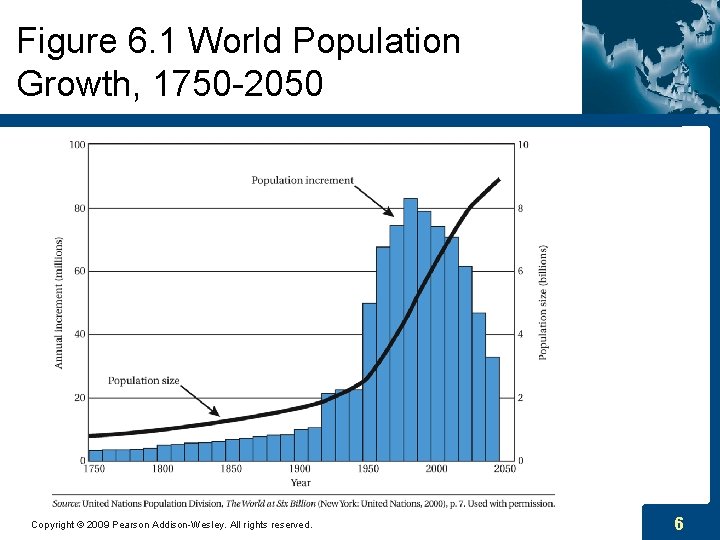
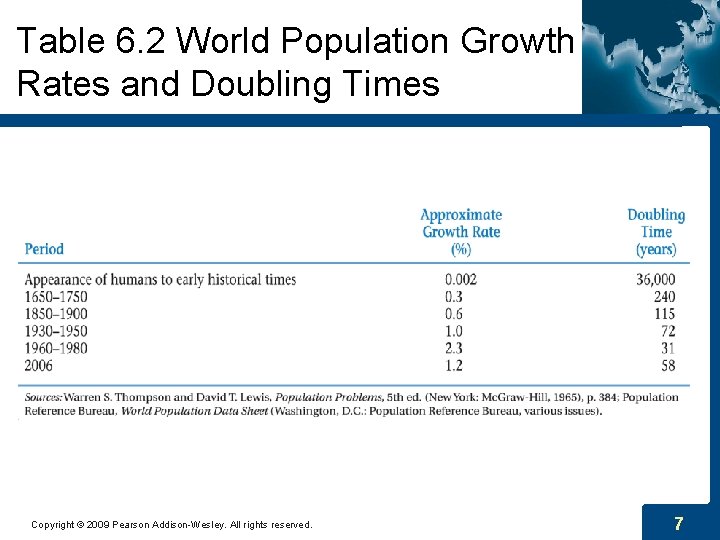
Population Growth—Past, Present, and Future • World population growth through history Copyright © 2009 Pearson Addison-Wesley. All rights reserved. 4
Table 6. 1 Estimated World Population Growth Copyright © 2009 Pearson Addison-Wesley. All rights reserved. 5
Figure 6. 1 World Population Growth, 1750 -2050 Copyright © 2009 Pearson Addison-Wesley. All rights reserved. 6
Table 6. 2 World Population Growth Rates and Doubling Times Copyright © 2009 Pearson Addison-Wesley. All rights reserved. 7
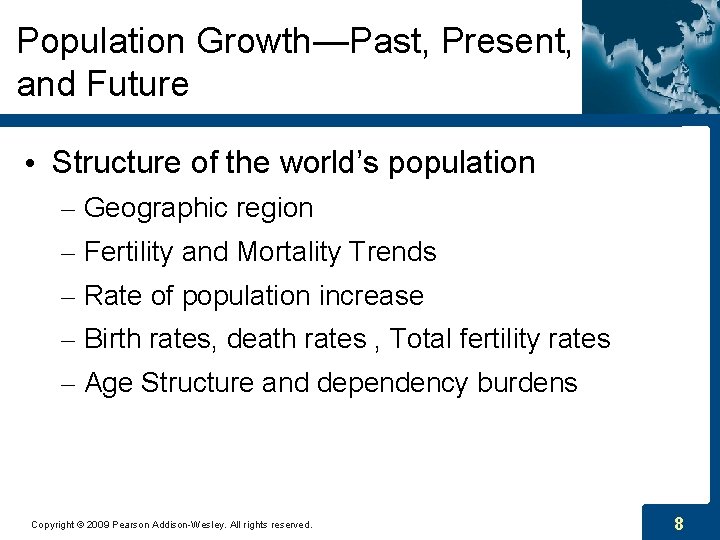
Population Growth—Past, Present, and Future • Structure of the world’s population – Geographic region – Fertility and Mortality Trends – Rate of population increase – Birth rates, death rates , Total fertility rates – Age Structure and dependency burdens Copyright © 2009 Pearson Addison-Wesley. All rights reserved. 8
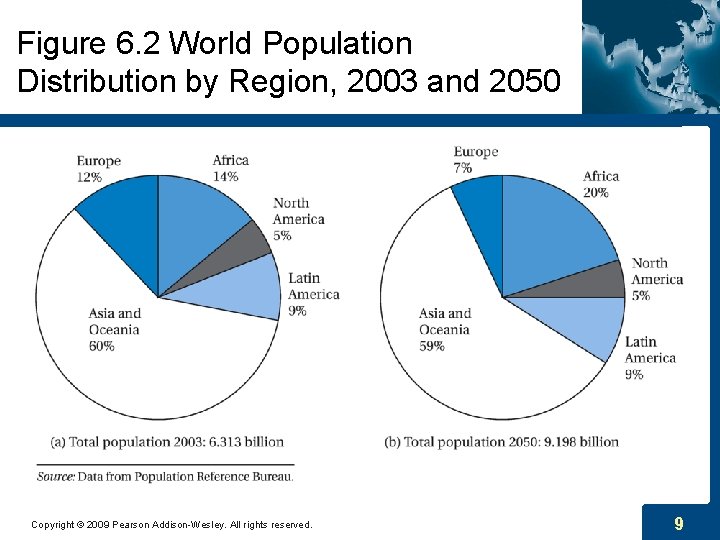
Figure 6. 2 World Population Distribution by Region, 2003 and 2050 Copyright © 2009 Pearson Addison-Wesley. All rights reserved. 9
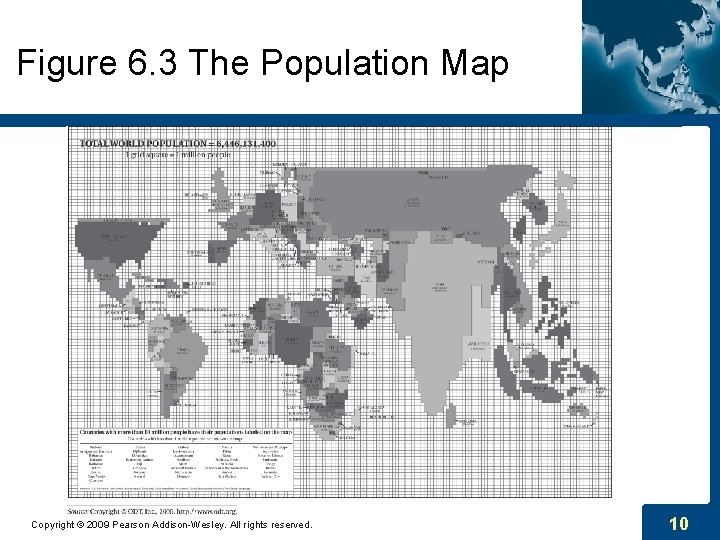
Figure 6. 3 The Population Map Copyright © 2009 Pearson Addison-Wesley. All rights reserved. 10
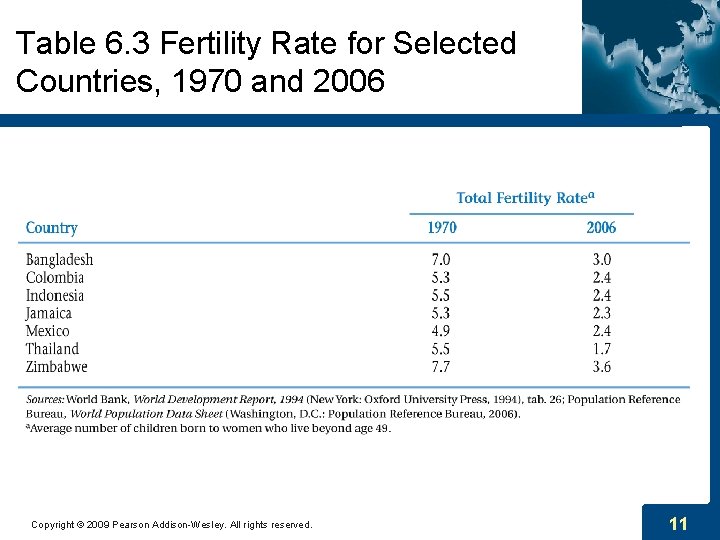
Table 6. 3 Fertility Rate for Selected Countries, 1970 and 2006 Copyright © 2009 Pearson Addison-Wesley. All rights reserved. 11
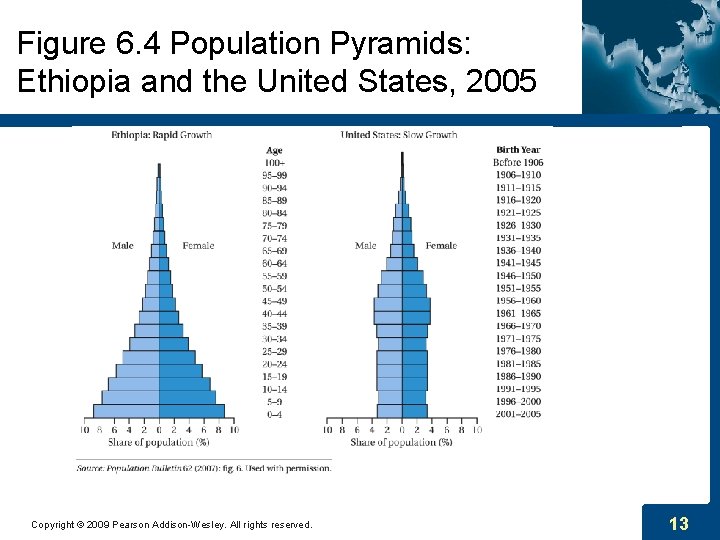
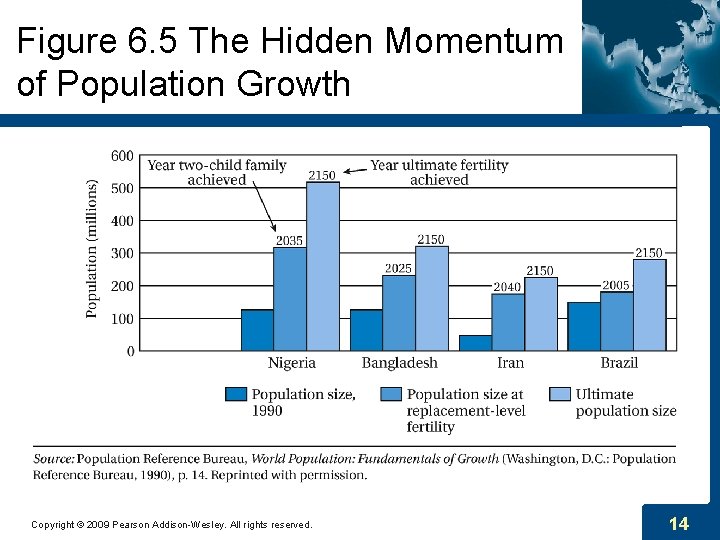
Population Growth—Past, Present, and Future • The Hidden Momentum of Population Growth – High birth rates cannot be altered overnight – Age structure of LDC populations Copyright © 2009 Pearson Addison-Wesley. All rights reserved. 12
Figure 6. 4 Population Pyramids: Ethiopia and the United States, 2005 Copyright © 2009 Pearson Addison-Wesley. All rights reserved. 13
Figure 6. 5 The Hidden Momentum of Population Growth Copyright © 2009 Pearson Addison-Wesley. All rights reserved. 14
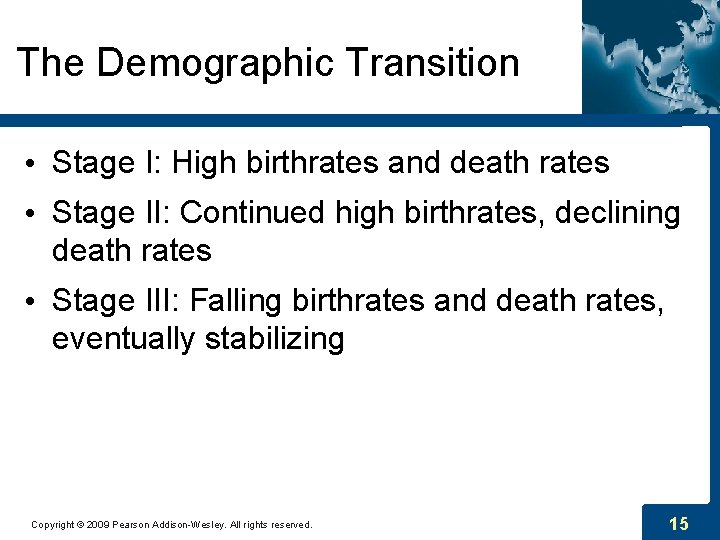
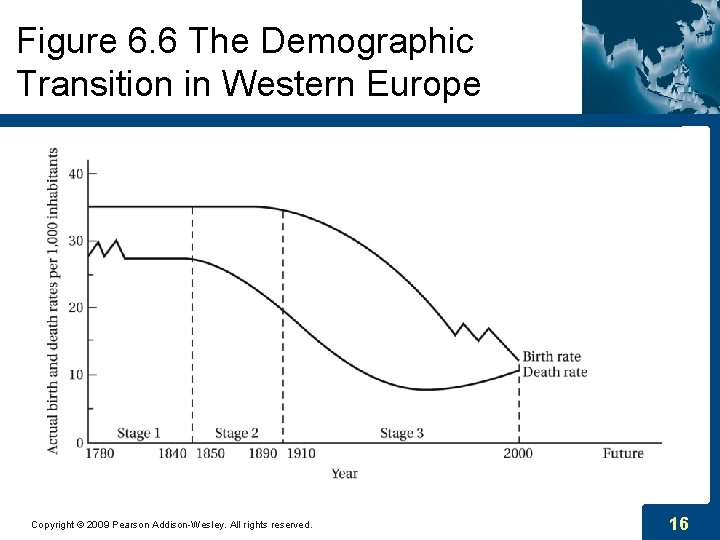
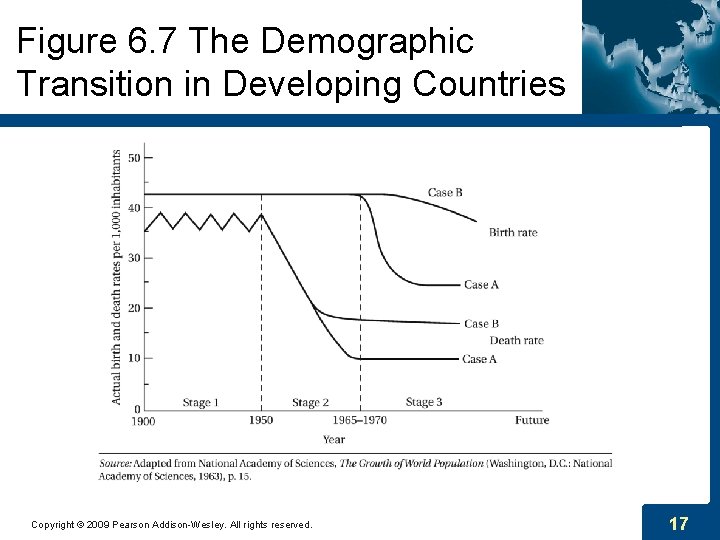
The Demographic Transition • Stage I: High birthrates and death rates • Stage II: Continued high birthrates, declining death rates • Stage III: Falling birthrates and death rates, eventually stabilizing Copyright © 2009 Pearson Addison-Wesley. All rights reserved. 15
Figure 6. 6 The Demographic Transition in Western Europe Copyright © 2009 Pearson Addison-Wesley. All rights reserved. 16
Figure 6. 7 The Demographic Transition in Developing Countries Copyright © 2009 Pearson Addison-Wesley. All rights reserved. 17
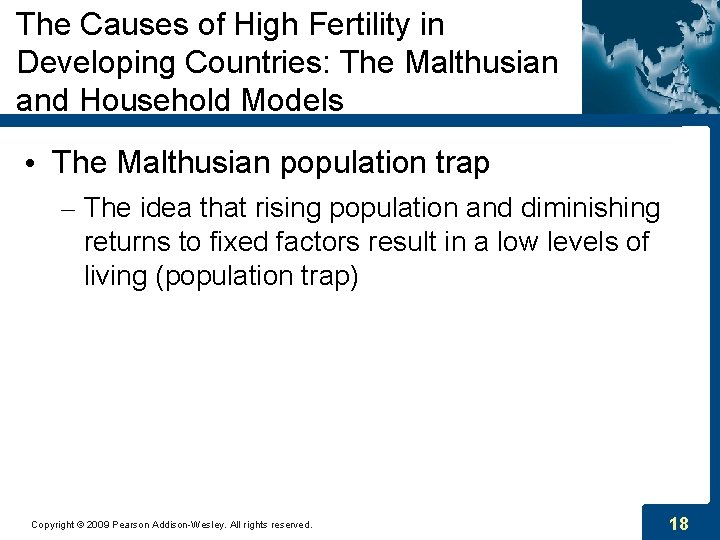
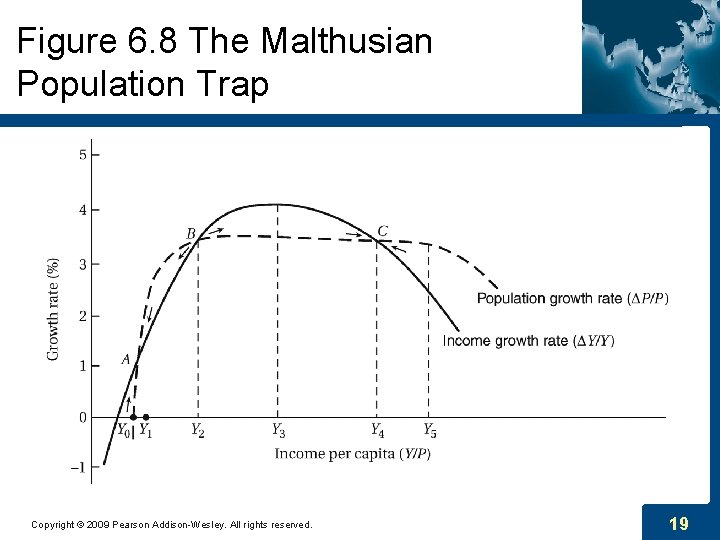
The Causes of High Fertility in Developing Countries: The Malthusian and Household Models • The Malthusian population trap – The idea that rising population and diminishing returns to fixed factors result in a low levels of living (population trap) Copyright © 2009 Pearson Addison-Wesley. All rights reserved. 18
Figure 6. 8 The Malthusian Population Trap Copyright © 2009 Pearson Addison-Wesley. All rights reserved. 19
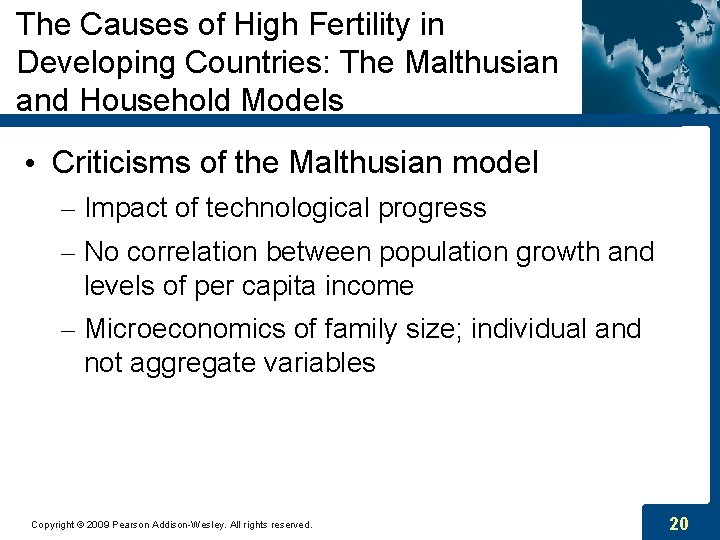
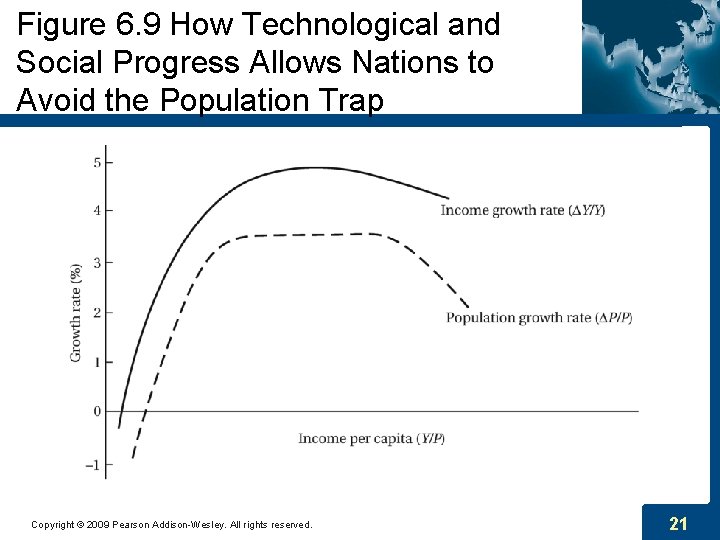
The Causes of High Fertility in Developing Countries: The Malthusian and Household Models • Criticisms of the Malthusian model – Impact of technological progress – No correlation between population growth and levels of per capita income – Microeconomics of family size; individual and not aggregate variables Copyright © 2009 Pearson Addison-Wesley. All rights reserved. 20
Figure 6. 9 How Technological and Social Progress Allows Nations to Avoid the Population Trap Copyright © 2009 Pearson Addison-Wesley. All rights reserved. 21
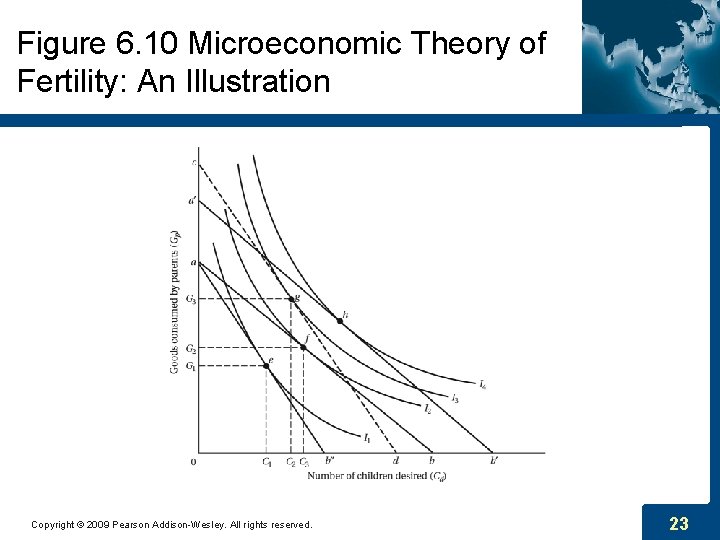
The Causes of High Fertility in Developing Countries: The Malthusian and Household Models • The microeconomic household theory of fertility • The demand for children in developing countries – First two or three as “consumer goods” – Additional children as “investment goods” Copyright © 2009 Pearson Addison-Wesley. All rights reserved. 22
Figure 6. 10 Microeconomic Theory of Fertility: An Illustration Copyright © 2009 Pearson Addison-Wesley. All rights reserved. 23
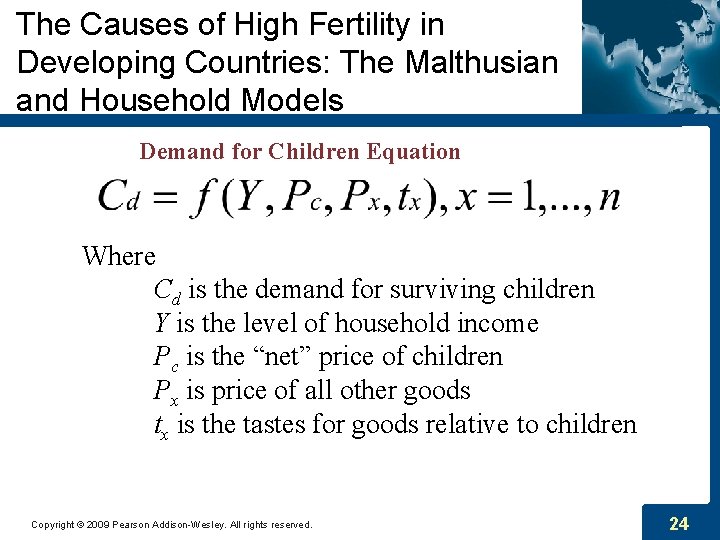
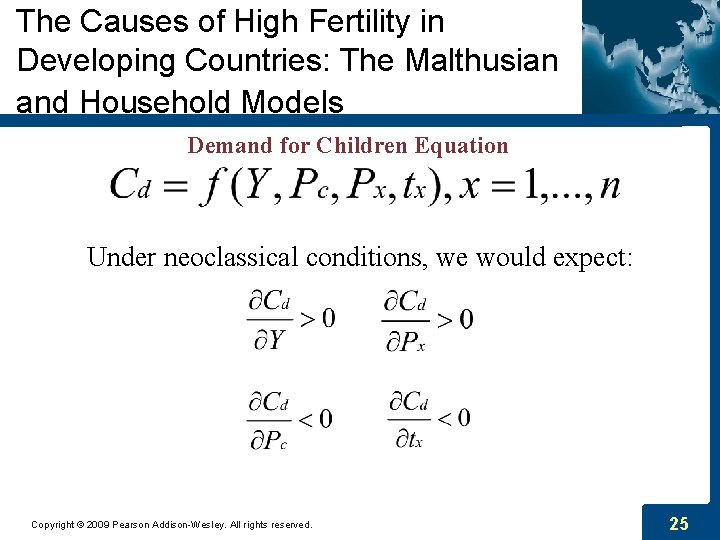
The Causes of High Fertility in Developing Countries: The Malthusian and Household Models Demand for Children Equation Where Cd is the demand for surviving children Y is the level of household income Pc is the “net” price of children Px is price of all other goods tx is the tastes for goods relative to children Copyright © 2009 Pearson Addison-Wesley. All rights reserved. 24
The Causes of High Fertility in Developing Countries: The Malthusian and Household Models Demand for Children Equation Under neoclassical conditions, we would expect: Copyright © 2009 Pearson Addison-Wesley. All rights reserved. 25
The Causes of High Fertility in Developing Countries: The Malthusian and Household Models • Some empirical evidence • Implications for development and fertility – Women’s Education, role , and status – Female nonagricultural wage employment – Rise in family income levels – Reduction in infant mortality – Development of old-age and social security – Expanded schooling opportunities Copyright © 2009 Pearson Addison-Wesley. All rights reserved. 26
The Consequences of High Fertility: Some Conflicting Opinions • Population growth isn’t a real problem – The real problem is not population growth but the following, • • Underdevelopment World resource depletion and environmental destruction Population Distribution Subordination of women • Overpopulation is a deliberately contrived false issue • Population growth is a desirable phenomenon Copyright © 2009 Pearson Addison-Wesley. All rights reserved. 27
The Consequences of High Fertility: Some Conflicting Opinions • Population Growth is a real problem – Extremist arguments – Theoretical arguments – Empirical arguments • • Lower economic growth Poverty and Inequality Adverse impact on education Adverse impact on health Food issues Impact on the environment International migration Copyright © 2009 Pearson Addison-Wesley. All rights reserved. 28
Goals and Objectives: Toward a Consensus • Despite the conflicting opinions, there is some common ground on the following – Population is not the primary cause of lower living levels – It’s not numbers but quality of life – Population intensifies underdevelopment Copyright © 2009 Pearson Addison-Wesley. All rights reserved. 29
Goals and Objectives: Toward a Consensus • Some Policy Approaches – Attend to underlying socioeconomic conditions that impact development – Family planning programs should provide education and technological means to regulate fertility – Developed countries have responsibilities too Copyright © 2009 Pearson Addison-Wesley. All rights reserved. 30
Some Policy Approaches • What developing countries can do – Persuasion through education – Family planning programs – Manipulate incentives and disincentives for having children – Coercion may not be a good option – Raise the socioeconomic status of women Copyright © 2009 Pearson Addison-Wesley. All rights reserved. 31
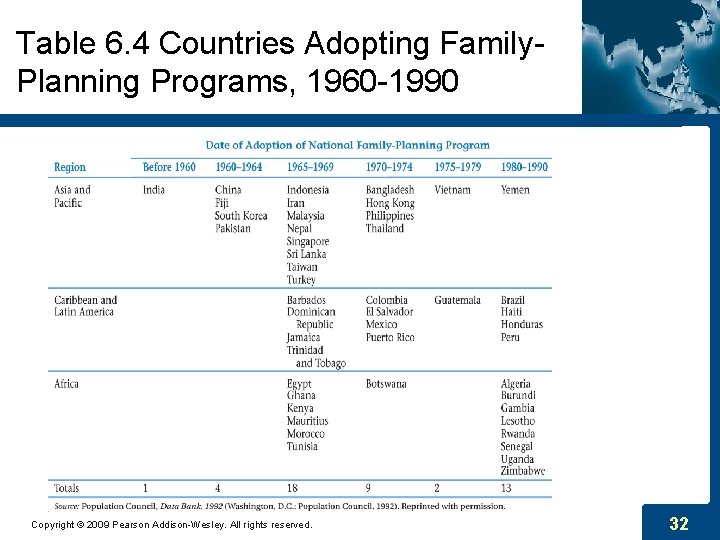
Table 6. 4 Countries Adopting Family. Planning Programs, 1960 -1990 Copyright © 2009 Pearson Addison-Wesley. All rights reserved. 32
Some Policy Approaches • What the developed countries can do – Address resources use inequities – Migration policies • Hoe Developed countries can assist developing countries with their population programs – International economic relations – Research into technology of fertility control – Financial assistance for family planning programs Copyright © 2009 Pearson Addison-Wesley. All rights reserved. 33
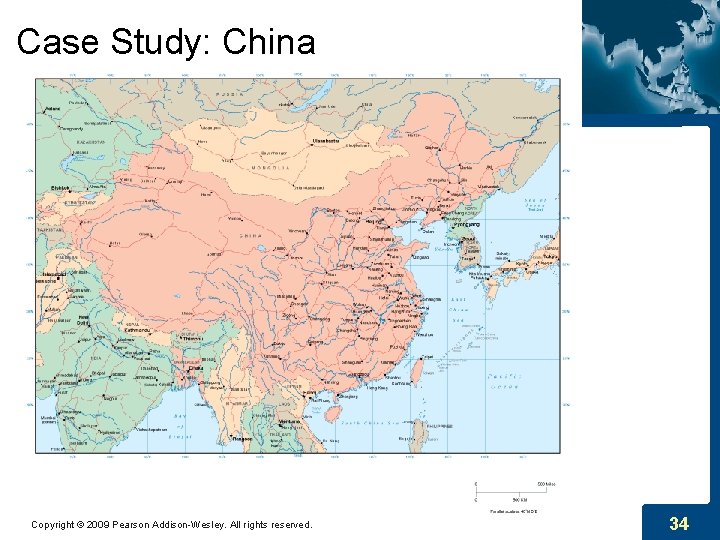
Case Study: China Copyright © 2009 Pearson Addison-Wesley. All rights reserved. 34
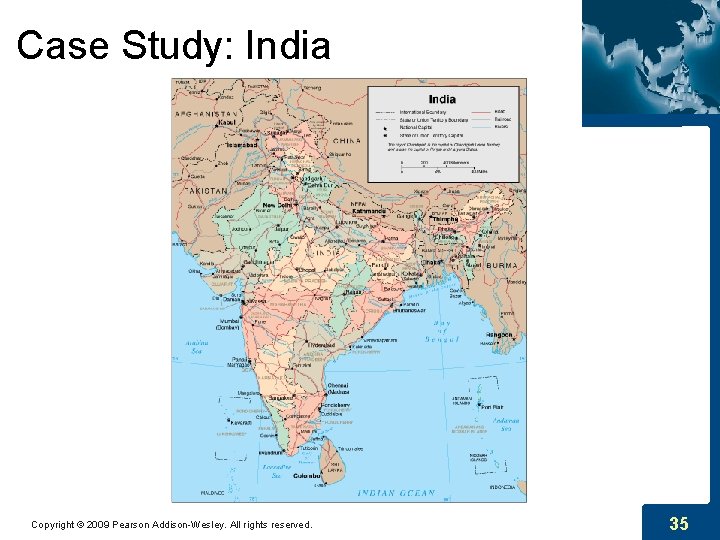
Case Study: India Copyright © 2009 Pearson Addison-Wesley. All rights reserved. 35
Concepts for Review • Birthrate • Fertility • Death rate • Hidden momentum of population growth • Demographic transition • Infant mortality rate • Doubling time • Life expectancy at birth • Empowerment of women • Family-planning programs Copyright © 2009 Pearson Addison-Wesley. All rights reserved. • Malthusian population trap 36
Concepts for Review (cont’d) • Microeconomic theory of fertility • Positive checks • Mortality • Rate of population increase • Natural increase • Preventative checks • Net international migration • Reproductive choice • Population-poverty cycle • Youth dependency ratio • Total fertility rate • Population pyramid Copyright © 2009 Pearson Addison-Wesley. All rights reserved. 37