
Chapter 6 Physiological Responses and Adaptations to Aerobic
Chapter 6: Physiological Responses and Adaptations to Aerobic Endurance Training By: Allan Keo

What The purpose of this Chapter? • The purpose is to show the effects of aerobic exercise on the body’s physiological systems and to explain the adaptations that occur. • Acute responses occur immediately during a single exercise. • The effect of acerbic exercise is regulated by the intensity, duration, and frequency of the activity.
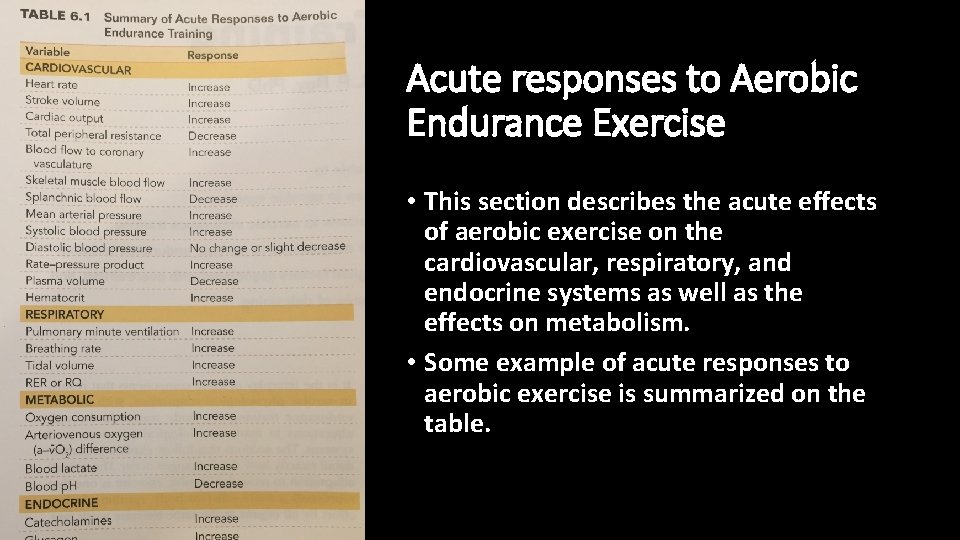
Acute responses to Aerobic Endurance Exercise • This section describes the acute effects of aerobic exercise on the cardiovascular, respiratory, and endocrine systems as well as the effects on metabolism. • Some example of acute responses to aerobic exercise is summarized on the table.
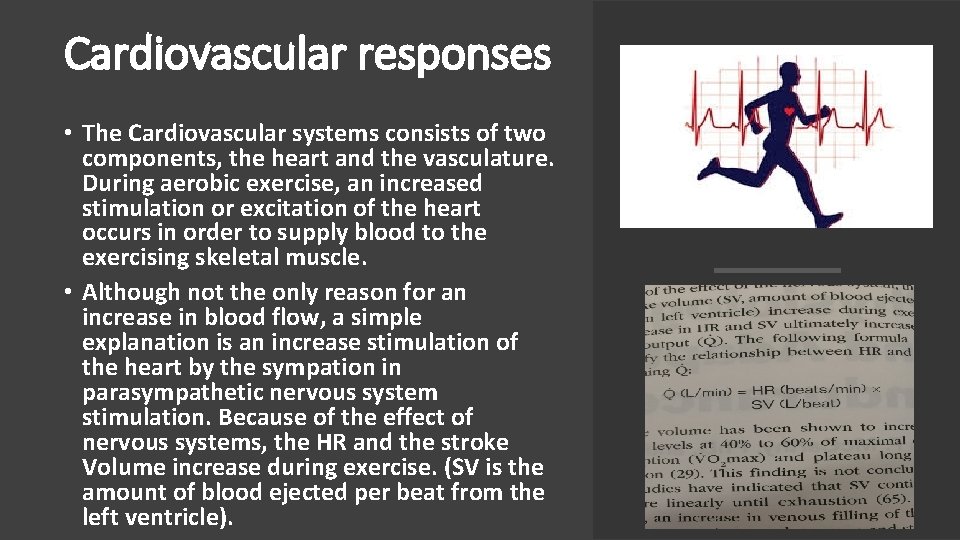
Cardiovascular responses • The Cardiovascular systems consists of two components, the heart and the vasculature. During aerobic exercise, an increased stimulation or excitation of the heart occurs in order to supply blood to the exercising skeletal muscle. • Although not the only reason for an increase in blood flow, a simple explanation is an increase stimulation of the heart by the sympation in parasympathetic nervous system stimulation. Because of the effect of nervous systems, the HR and the stroke Volume increase during exercise. (SV is the amount of blood ejected per beat from the left ventricle).
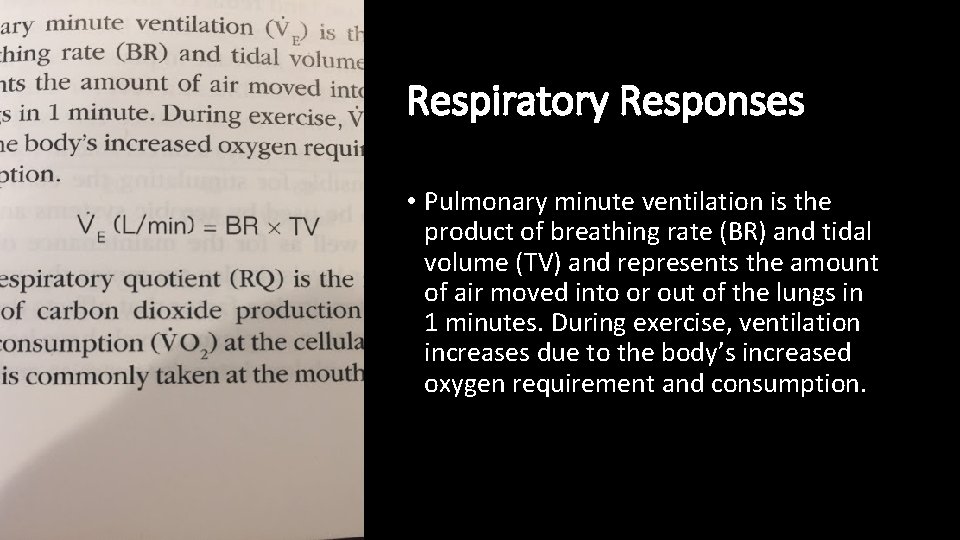
Respiratory Responses • Pulmonary minute ventilation is the product of breathing rate (BR) and tidal volume (TV) and represents the amount of air moved into or out of the lungs in 1 minutes. During exercise, ventilation increases due to the body’s increased oxygen requirement and consumption.
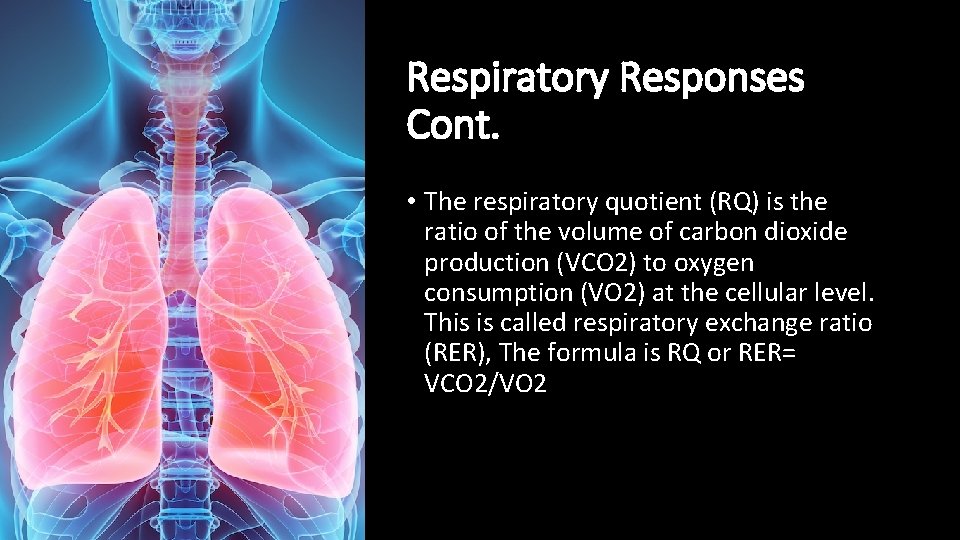
Respiratory Responses Cont. • The respiratory quotient (RQ) is the ratio of the volume of carbon dioxide production (VCO 2) to oxygen consumption (VO 2) at the cellular level. This is called respiratory exchange ratio (RER), The formula is RQ or RER= VCO 2/VO 2
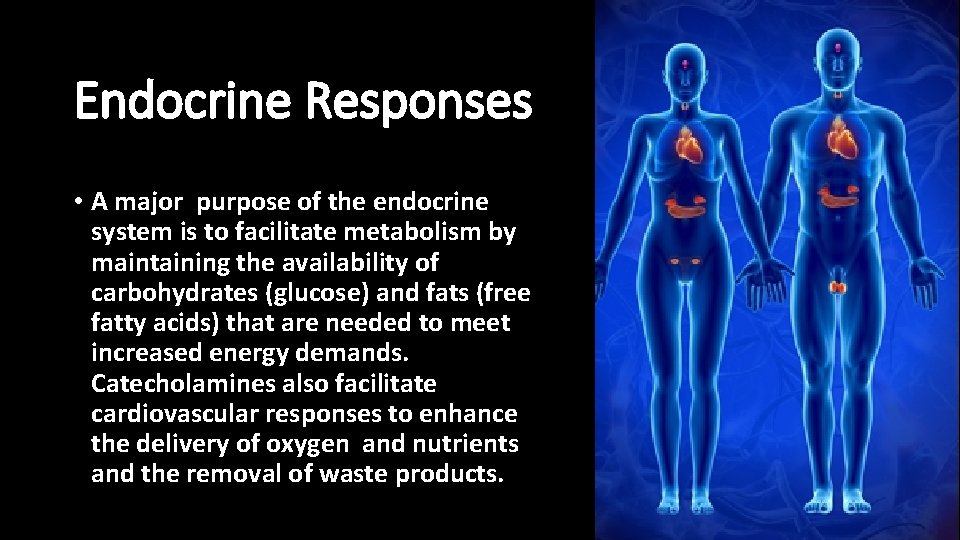
Endocrine Responses • A major purpose of the endocrine system is to facilitate metabolism by maintaining the availability of carbohydrates (glucose) and fats (free fatty acids) that are needed to meet increased energy demands. Catecholamines also facilitate cardiovascular responses to enhance the delivery of oxygen and nutrients and the removal of waste products.
Question #1 • Which of the following measures decrease during an acute exercise bout? • A- rate-pressure products, stroke volume, mean arterial pressure, hematocrit. • B- Oxygen consumption, a-v. O 2 difference, systolic blood pressure, RER. • C- Blood p. H, blood flow to splanchnic region, plasma volume, insulin. • D- Catecholamines, glucagon, stroke volume, tidal volume.
Answer #1 • C, The training causes a reduction in the rise of plasma volume, insulin, blood p. H, and blood flow to splanchnic
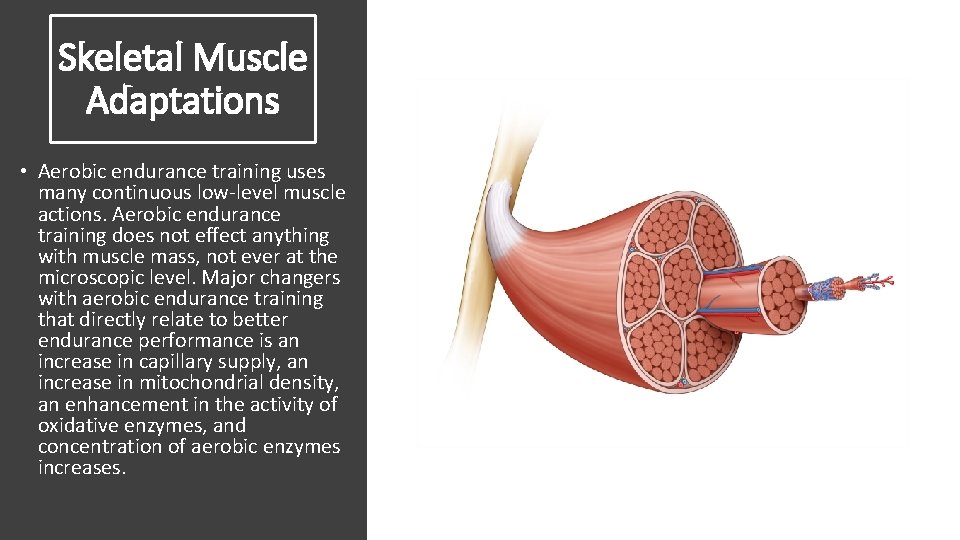
Skeletal Muscle Adaptations • Aerobic endurance training uses many continuous low-level muscle actions. Aerobic endurance training does not effect anything with muscle mass, not ever at the microscopic level. Major changers with aerobic endurance training that directly relate to better endurance performance is an increase in capillary supply, an increase in mitochondrial density, an enhancement in the activity of oxidative enzymes, and concentration of aerobic enzymes increases.

Question #2 • Which of the following changes in trained skeletal muscle is an adaptation to chronic aerobic exercise? • A- Decreased mitochondria density • B-Increased concentration of Aerobic enzymes • C- Increased cross-sectional area of type IIa fibers • D- Decreased capillary density
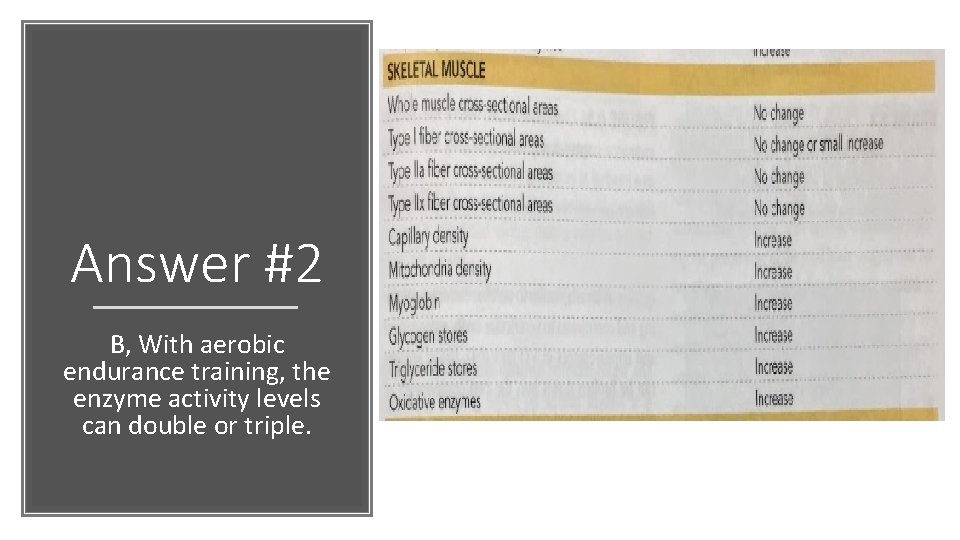
Answer #2 B, With aerobic endurance training, the enzyme activity levels can double or triple.
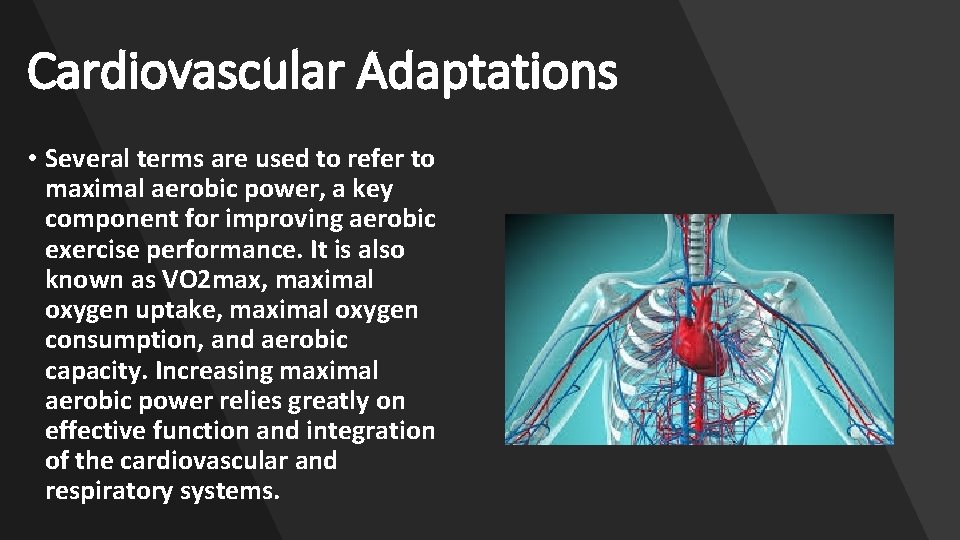
Cardiovascular Adaptations • Several terms are used to refer to maximal aerobic power, a key component for improving aerobic exercise performance. It is also known as VO 2 max, maximal oxygen uptake, maximal oxygen consumption, and aerobic capacity. Increasing maximal aerobic power relies greatly on effective function and integration of the cardiovascular and respiratory systems.

Question #3 • A 35 -year-old female began an exercise program four months ago in which she has been running on the treadmill four days per week. Which of the following describes the adaptations that are most likely to occur with this program? • A- An increase in maximal exercise HR and decrease in capillary density. • B- An increase in resting SBP and decrease in maximal a-VO 2 difference. • C- An increase in mitochondrial density and decrease in submaximal HR. • D- An increase in blood volume and a decrease in insulin sensitivity.
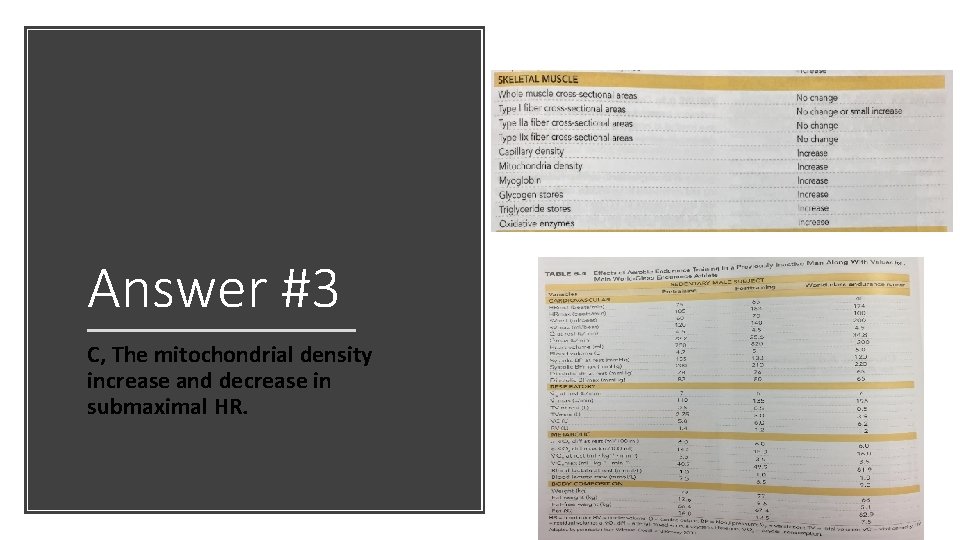
Answer #3 C, The mitochondrial density increase and decrease in submaximal HR.
Question #4 • Which Of the following is most likely to occur as a result of aerobic endurance overtraining? • A- Decreased VO 2 Max • B- Increased muscle glycogen stores • C- Increased body fat percentage • D- Decreased blood volume
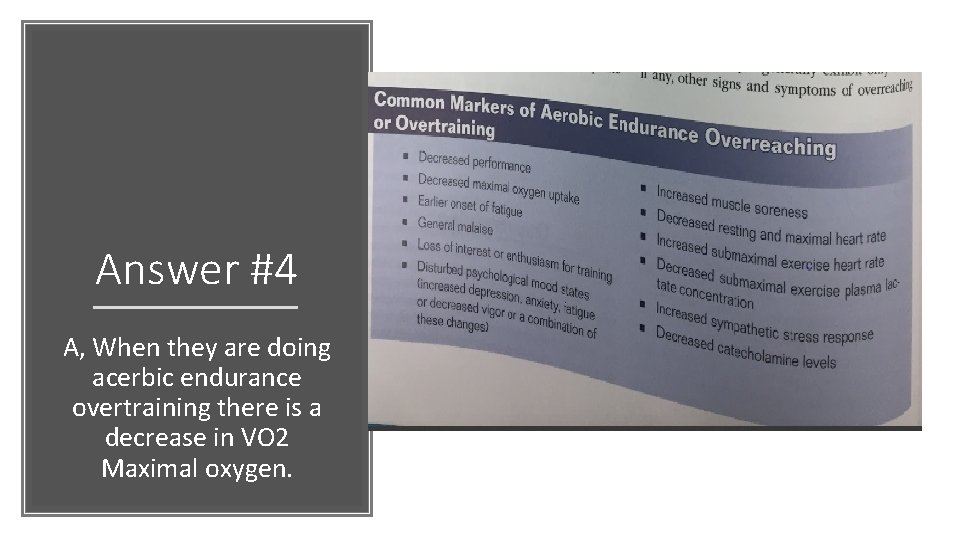
Answer #4 A, When they are doing acerbic endurance overtraining there is a decrease in VO 2 Maximal oxygen.

- Slides: 18