
Chapter 6 Physical Development I Growth Patterns Top


- Slides: 43
Chapter 6 – Physical Development I. Growth Patterns Top down - cephalocaudal - head develops first - vital functions first (survival)
Center outward – proximodistal - internal organs first - trunk faster than arms & legs - BUT in adolescence, hands & feet fastest (awkward)
II. Phases of growth Infancy/early childhood (0 -5) • Rapid growth • Nervous system • Body size
Middle/late childhood (6 -12) • Slower growth • 2" & 6 lbs/year Adolescence (13 -20) • Rapid growth • Body size (3 -6" & 10 -15 lbs) • Reproductive system
Puberty: • girls: breast enlargement, growth spurt • boys: testicle enlargement Individual variability
Population trends 1. Bigger & heavier 100 years ago man = 5'7" woman= 5'3" Today: man = 5'9" woman = 5'4"
2. Growth is earlier • Average for menarche - 100 years ago = 15 - today = 13 3. Industrialized vs. 3 rd-world • Better medical care • Nutrition
III. Environmental Effects on Growth A. Nutrition Provides energy - Basic body functions - Physical activity - Growth, especially after birth
Special needs of infants - higher proportion of calories - more vitamins & minerals
Malnutrition (50% of kids) - failure to grow normally - delayed & smaller growth spurt - critical period of 1 -3
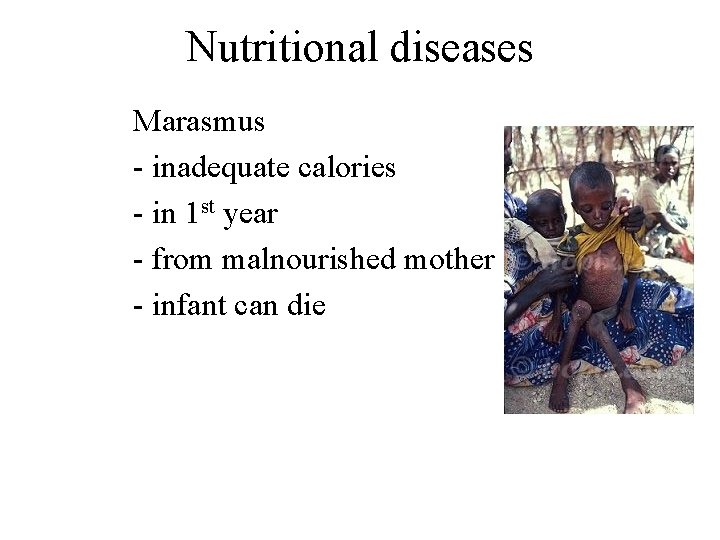
Nutritional diseases Marasmus - inadequate calories - in 1 st year - from malnourished mother - infant can die
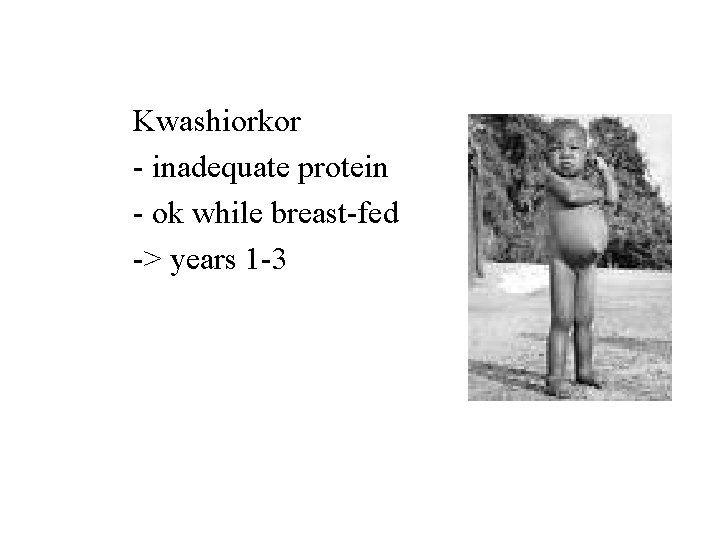
Kwashiorkor - inadequate protein - ok while breast-fed -> years 1 -3
childhood illnesses - weakened immune system -> smaller, lower IQ, etc.
Over-nutrition - heredity + environment - physical illness - social problems
B. Climate Body types adapted to climates east Africans vs. northern Asians Seasonal variations in growth - grow faster in spring & summer
C. Psychosocial Effects 1. Emotional stress - “Failure to thrive” - emotional traumas reduce growth hormone - some catch up
2. Popularity & timing of puberty Boys - early maturation = better during adolescence - late-maturing boys benefit later; more sensitive & flexible
Girls - mixed results in girls - disadvantages to early maturation - but differences disappear
II. Central Nervous System (CNS) • CNS = Brain & spinal cord
Neuron Structure • Cell body - nucleus • Dendrites - receive information • Axon - sends information • Myelin sheath - conductance
Neuron Function • Impulse is carried across synapse by neurotransmitters
Brain structures & functions Cerebrum/cortex • Higher functions • 2 hemispheres (separated by corpus callosum) • Left = language • Right = visual-spatial, humor, perceiving emotions
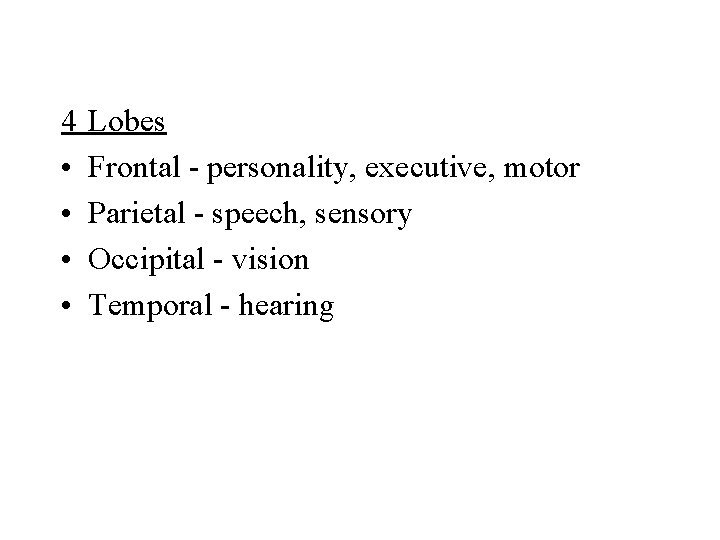
4 • • Lobes Frontal - personality, executive, motor Parietal - speech, sensory Occipital - vision Temporal - hearing
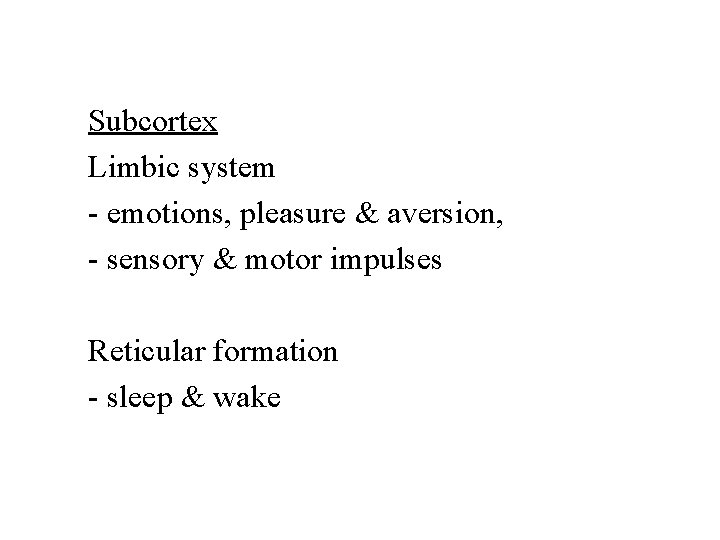
Subcortex Limbic system - emotions, pleasure & aversion, - sensory & motor impulses Reticular formation - sleep & wake
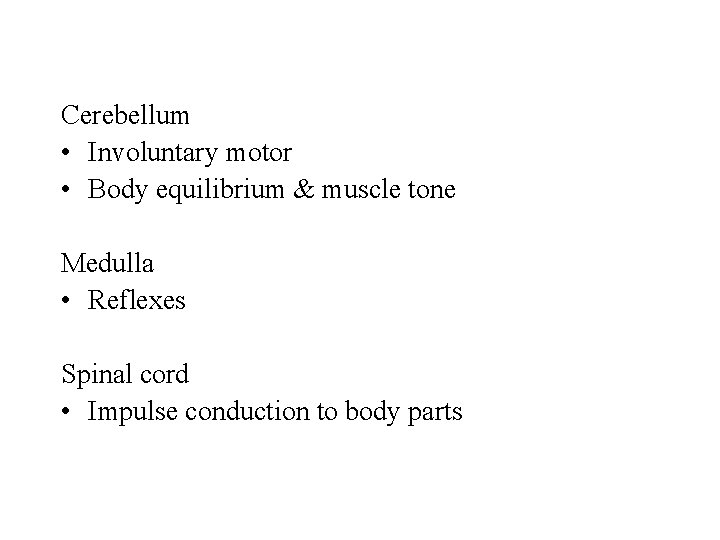
Cerebellum • Involuntary motor • Body equilibrium & muscle tone Medulla • Reflexes Spinal cord • Impulse conduction to body parts
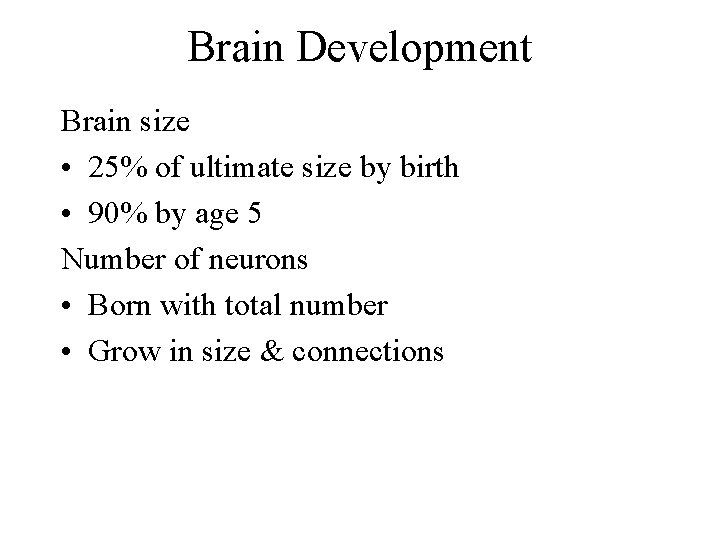
Brain Development Brain size • 25% of ultimate size by birth • 90% by age 5 Number of neurons • Born with total number • Grow in size & connections
Lateralization development • left: language from roughly birth • right: inconsistent research
III. Motor Development Principles 1. Gross before fine Coordination of large muscle groups before small muscle groups
2. Differentiation • Learn to control specific muscles to enact specific behaviors 3. Integration • Put individual, differentiated actions together into complex movements
Gross Motor Control (large muscles) Control over upper body • Holds chest/head up (3 mos) Control over whole body • Sits unsupported (5 mos)
Gets into sitting position (7 mos • Spontaneous kicking • Alternating leg movements Pulls to standing (7 -8 mos) Crawls - 10 months
• Stands alone (11 mos) • Walks (> 1 year) • Refines walking (1 -2 yrs)
• Uses 2 feet together (2 yrs) • Full body control (6 yrs) - boys better by 12 • Cultural differences in milestones
Fine Motor Control (small muscles) Newborns: grasping reflex - & sometimes hand to mouth 1 -2 months - decline in grasping reflex - visually-guided reaching (good by 3 months) - but touch objects only on same side of body as arm
4 months - reach inward to body midline - use 2 hands simultaneously 5 months - coordinated actions with both hands
7 -8 months - sequence of behaviors with hands 18 months - improved finger control 8 -10 years - skills close to adults
Handedness • 90% = right hand; 7 -8% = left hand • Across cultures & 50 centuries • Preference by age 1 • Consistent by age 3
Reasons for Right-Handedness Environmental • R-handed world • Lefties forced to use right hand • But R-hand consistency across cultures
Age-Handedness Correlation: • With increase in age = fewer lefties • Because older folks forced to use R hand? • BUT - lefties die at earlier ages • Women = 5 years Men= 10 years • Safety
Genetic: recessive trait? • But only 35% kids of 2 lefty parents are L-handed • MZ twins not more alike than DZ twins • DZ twins not more alike than unrelated people
Other biological • Related L-hemisphere dominance • Unknown mechanisms • Birth-related trauma? disrupt normal hemispheric organization? - greater neurological problems & birth stress • More lefties develop Alzheimers
Determinants of Motor Development Physical maturation - Nature • Cross-cultural similarity • Perform many behaviors without learning/practice EX Navajos & walking
Learning - Nurture • Activity changes brain • Many behaviors must be practiced - Ache • Some cultural differences • Training can speed motor development Conclusion: biology + environment