
Chapter 6 PHOTOSYNTHESIS BIOCHEMICAL PATHWAY Defined asare series
Chapter 6 PHOTOSYNTHESIS
BIOCHEMICAL PATHWAY Defined as--are series of chemical reactions occurring within a cell. • In each pathway, a principal chemical is modified by chemical reactions. • Because of the many chemicals that may be involved, pathways can be quite elaborate
Metabolism Defined as--is a step-by-step modification of the initial molecule to shape it into another product. The result can be used in one of three ways: • To be stored by the cell • To be used immediately, as a metabolic product • To initiate another metabolic pathway, called a flux generating step.
Photosynthesis in Overview • Process by which plants and other autotrophs store the energy of sunlight into sugars. • Requires sunlight, water, and carbon dioxide. • Overall equation: 6 CO 2 + 6 H 20 C 6 H 12 O 6 + 6 O 2 • Occurs in the leaves of plants in organelles called chloroplasts.
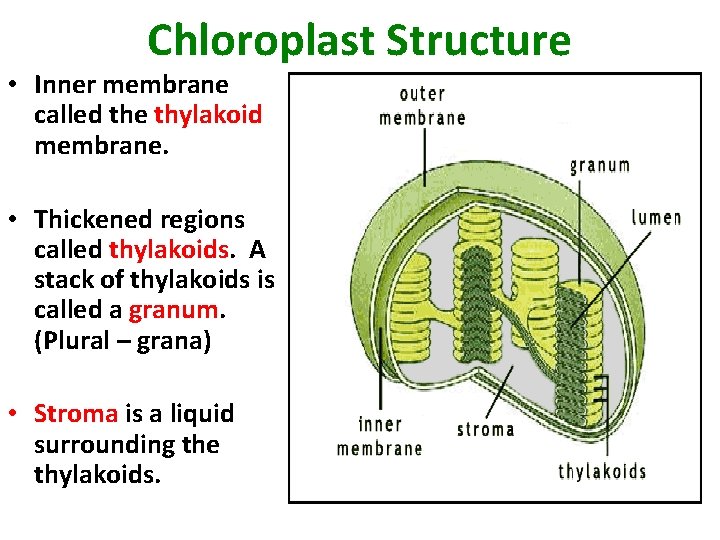
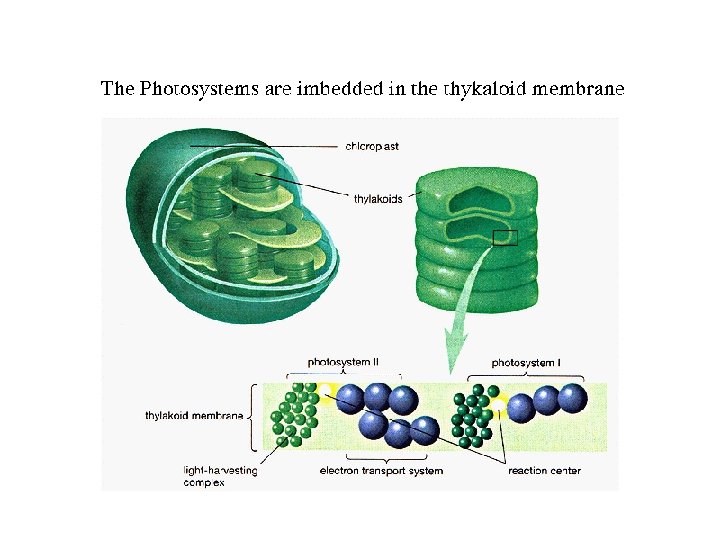
Chloroplast Structure • Inner membrane called the thylakoid membrane. • Thickened regions called thylakoids. A stack of thylakoids is called a granum. (Plural – grana) • Stroma is a liquid surrounding the thylakoids.

Pigments • is a material that changes the color of reflected or transmitted light as the result of wavelength absorption.
VISIBLE SPECTRUM • is the portion of the electromagnetic spectrum that is visible to (can be detected by) the human eye. • this range of wavelengths is called visible light or simply light. • Primary colors include R O Y G B I V
Photosynthetic Pigments • Chlorophyll A • chlorophyll B • Accessory pigments: – Carotenoids • Each pigment absorbs a particular wavelength of light in the visible spectrum
Pigments • Chlorophyll A is the most important photosynthetic pigment. • Other pigments called antenna or accessory pigments are also present in the leaf. – Chlorophyll B – Carotenoids (orange / red) – Xanthophylls (yellow / brown) • These pigments are embedded in the membranes of the chloroplast in groups called photosystems.
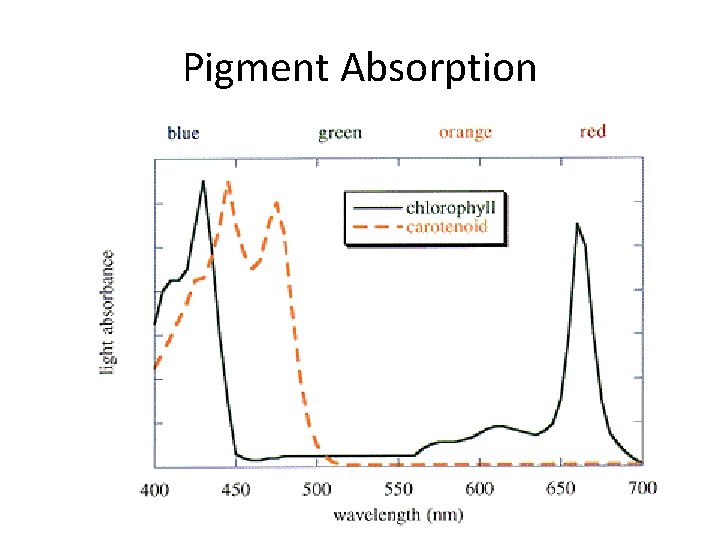
Pigment Absorption

Photosynthesis: The Chemical Process • Occurs in two main phases. – Light reactions – Dark reactions (aka – the Calvin Cycle) • Light reactions are the “photo” part of photosynthesis. Light is absorbed by pigments. • Dark reactions are the “synthesis” part of photosynthesis. Trapped energy from the sun is converted to the chemical energy of sugars.
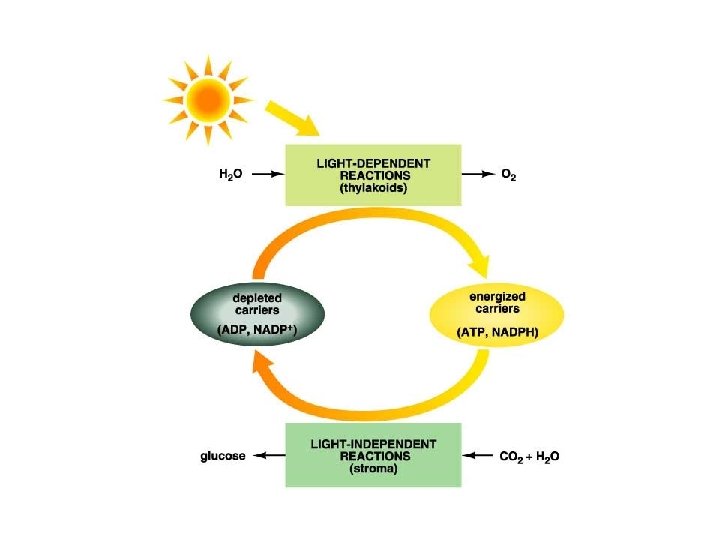
Step I: Light Reactions • Light-dependent reactions occur on the thylakoid membranes. • Involves the splitting of water (photolysis) • 12 H 2 O + Energy 6 O 2 + 24 H+ + 24 e • Requires light for the energy to split the water molecule • Energy storage molecules are formed. (ATP and NADPH) • Oxygen gas is made as a waste product.
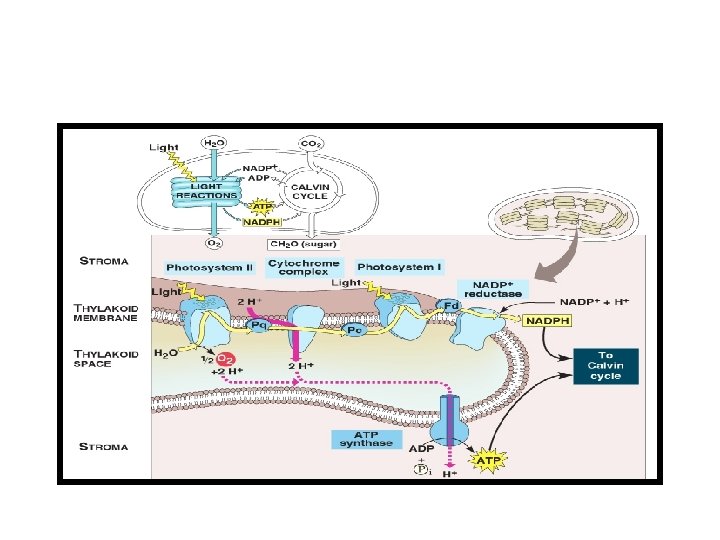
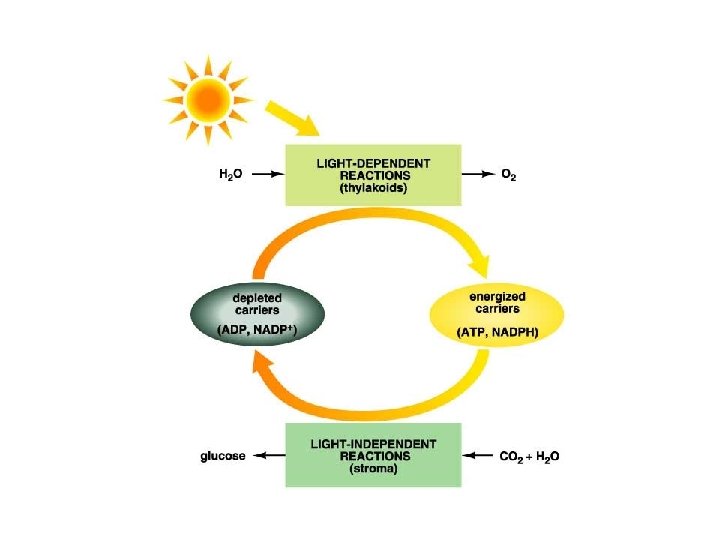
Dark Reactions • Dark reactions (light-independent) occur in the stroma. – Carbon dioxide is “fixed” into the sugar glucose. – ATP and NADPH molecules created during the light reactions power the production of this glucose.
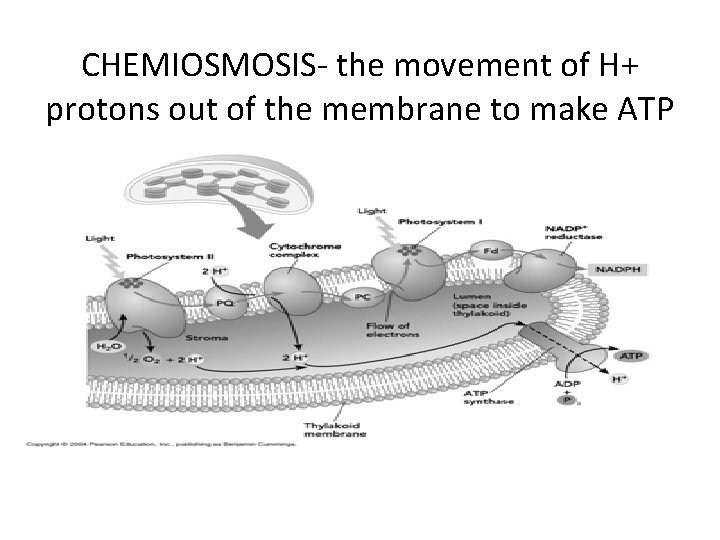
CHEMIOSMOSIS- the movement of H+ protons out of the membrane to make ATP
Step II: Dark Reactions Light Independent • Does not require light but can happen at any time of day. • The energy from NADPH and ATP is used for carbon fixation • 6 CO 2 + 24 H+ + 24 e- ------> C 6 H 12 O 6 + 6 H 2 O • The chemical bonds present in glucose also contain a considerable amount of stored (potential) energy.
CALVIN CYCLE or C 3 pathway Occurs in the stroma
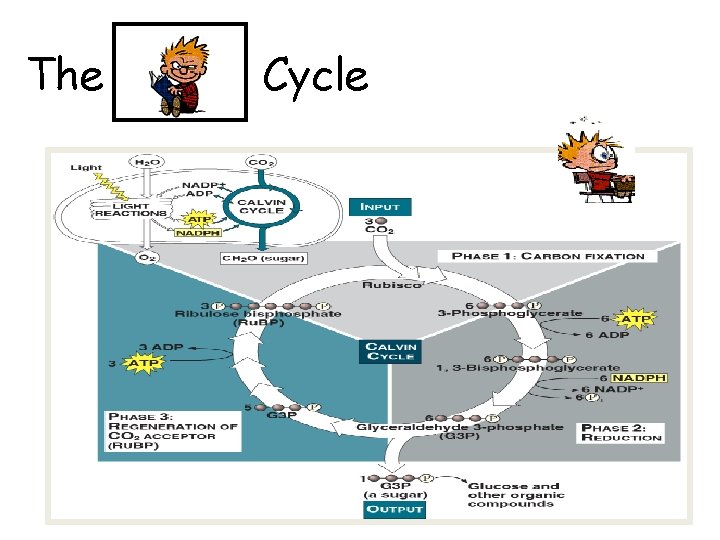
The Calvin Cycle
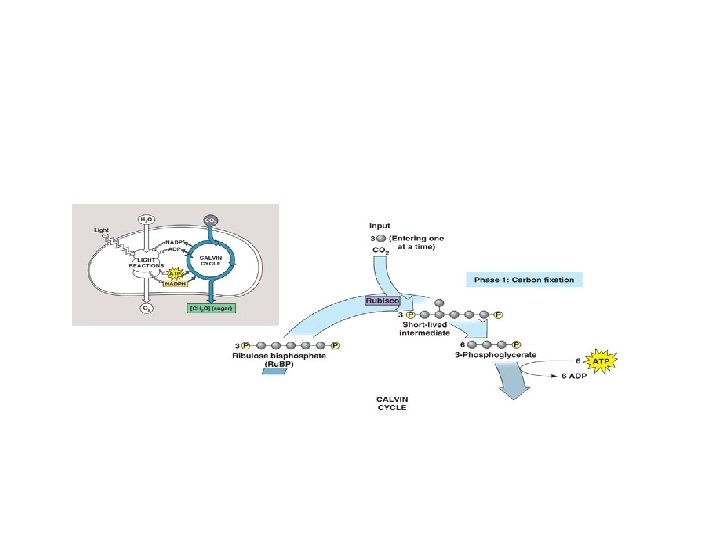
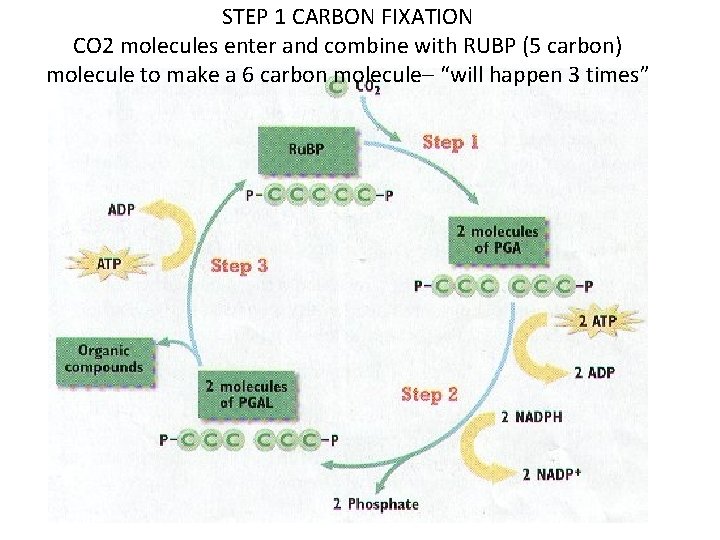
STEP 1 CARBON FIXATION CO 2 molecules enter and combine with RUBP (5 carbon) molecule to make a 6 carbon molecule– “will happen 3 times”
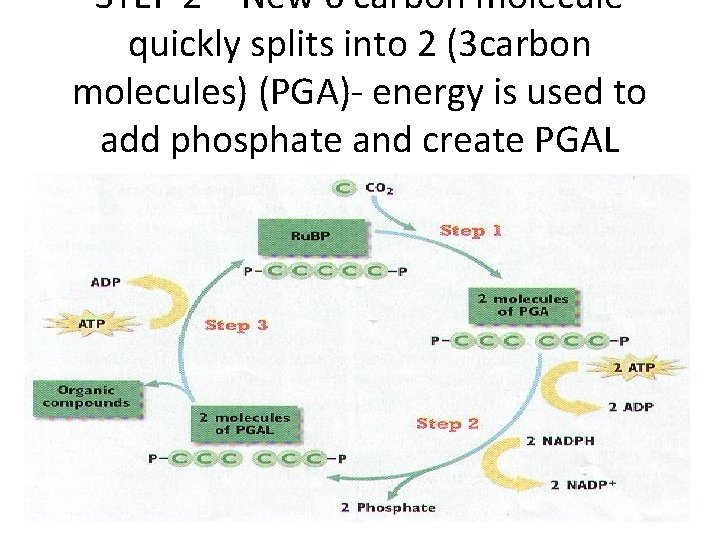
STEP 2 – New 6 carbon molecule quickly splits into 2 (3 carbon molecules) (PGA)- energy is used to add phosphate and create PGAL
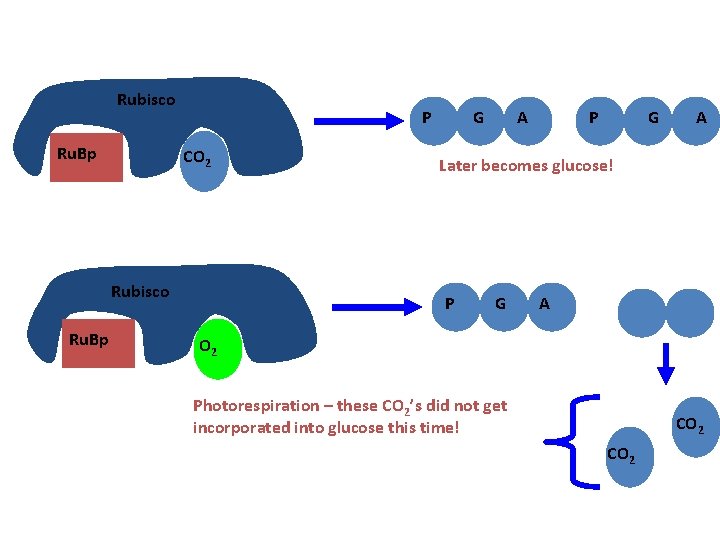
Rubisco Ru. Bp P CO 2 Rubisco Ru. Bp G A P G A Later becomes glucose! P G A O 2 Photorespiration – these CO 2’s did not get incorporated into glucose this time! CO 2
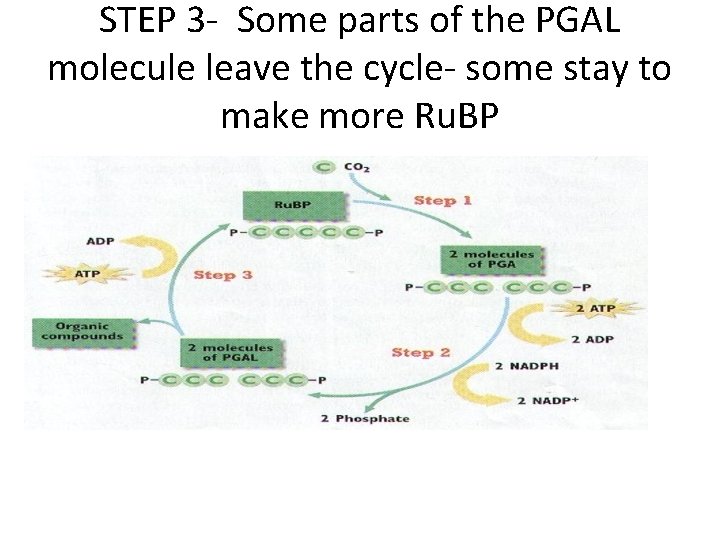
STEP 3 - Some parts of the PGAL molecule leave the cycle- some stay to make more Ru. BP
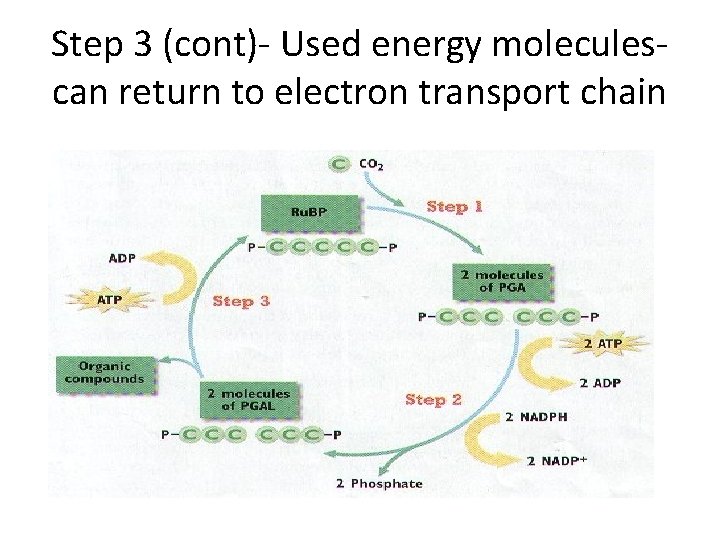
Step 3 (cont)- Used energy moleculescan return to electron transport chain

- Slides: 28