
Chapter 6 Pathogenic Microorganisms Learning Objectives Explain Characteristics
Chapter 6 Pathogenic Microorganisms
Learning Objectives • Explain – Characteristics of bacteria – Major groups of pathogenic bacteria • Describe – Inhibition of microbial growth by antibiotics – Adverse effects of antibiotics – Antibiotic sensitivity testing and interpretation of results • Explain – Mode of action of viruses – Body’s response to viral infections • Discuss infections caused by chlamydiae, mycoplasma, rickettsiae, and fungi

Pathogenic Microorganisms • • • Bacteria Chlamydiae Rickettsiae and Ehrlichiae Mycoplasma Viruses Fungi
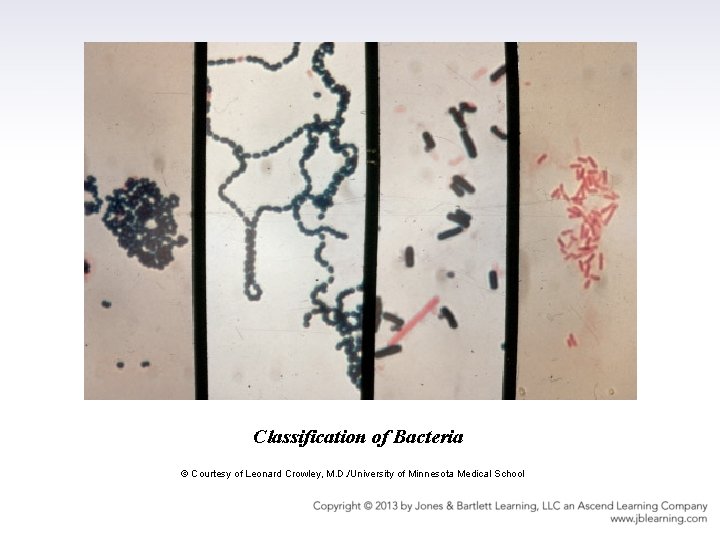
Classification of Bacteria • Classified according to four major characteristics: 1. Shape and arrangement: coccus, bacillus, spiral 2. Gram stain reaction: gram-positive and gramnegative 3. Biochemical and growth characteristics • Aerobic and anaerobic • Spore formation • Biochemical profile 4. Antigenic structure: antigens in cell body, capsule, flagella

Shape and Arrangement • Coccus (spherical) – Clusters: staphylococci – Chains: streptococci – Pairs: diplococci – Kidney bean-shaped, in pairs: Neisseriae


Shape and Arrangement • Bacillus (rod-shaped) – Square ends: bacillus anthracis – Rounded ends: mycobacterium tuberculosis – Club-shaped: corynebacteria – Fusiform: fusobacteria – Comma-shaped: vibrio • Spiral Organisms – Tightly-coiled: treponema pallidum – Relaxed coil: borrelia
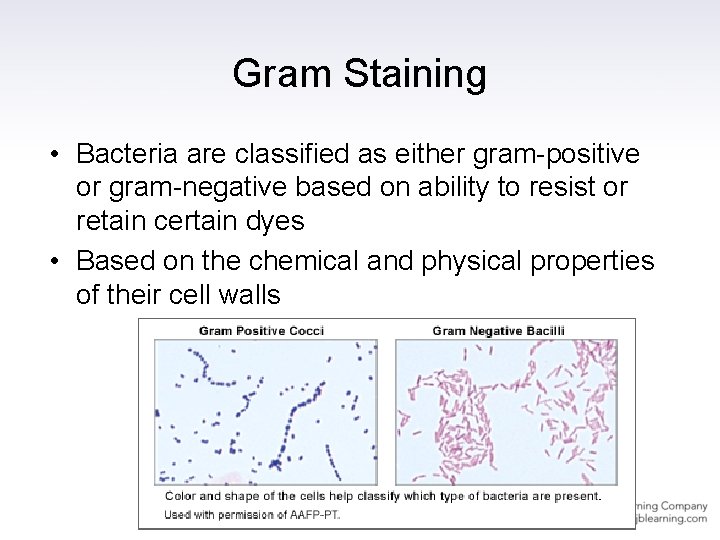
Gram Staining • Bacteria are classified as either gram-positive or gram-negative based on ability to resist or retain certain dyes • Based on the chemical and physical properties of their cell walls
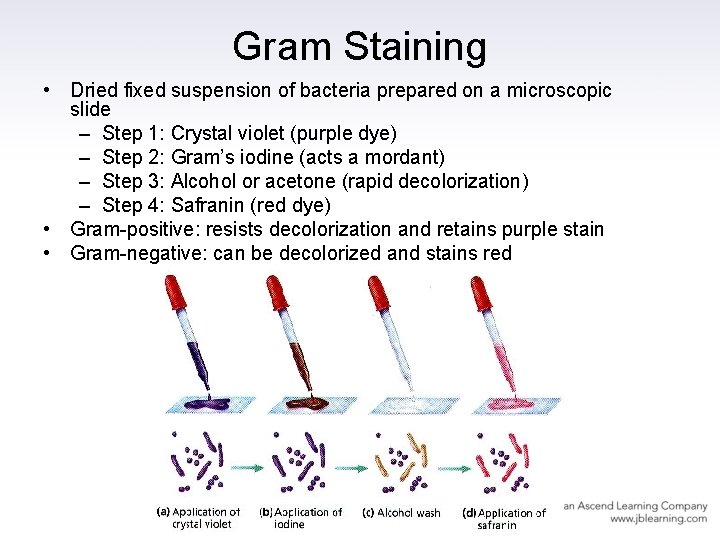
Gram Staining • Dried fixed suspension of bacteria prepared on a microscopic slide – Step 1: Crystal violet (purple dye) – Step 2: Gram’s iodine (acts a mordant) – Step 3: Alcohol or acetone (rapid decolorization) – Step 4: Safranin (red dye) • Gram-positive: resists decolorization and retains purple stain • Gram-negative: can be decolorized and stains red
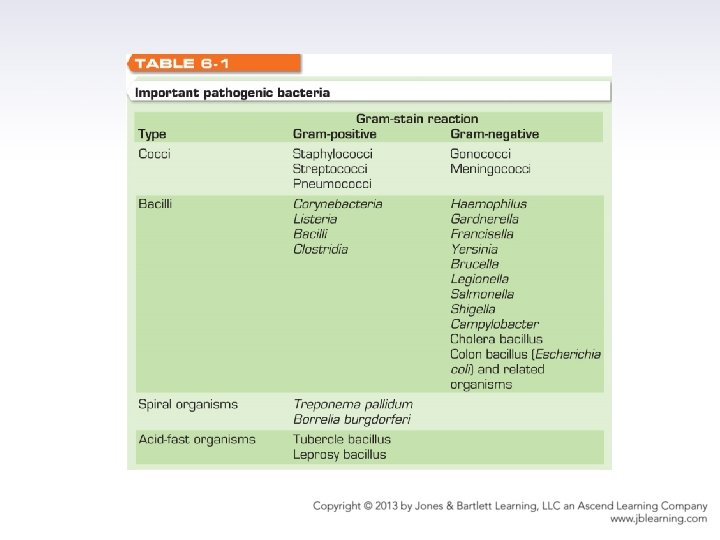
Readily Gram-Stained Organisms (1 of 3) • Gram-positive cocci: Staphylococcus, Streptococcus, Enterococcus • Gram-negative cocci: Neisseria (meningitis, gonorrhea) • Gram-positive rods: Bacillus, Corynebacterium, Clostridium, Listeria, Actinomyces, Nocardia
Readily Gram-Stained Organisms (2 of 3) • Gram-negative rods • Pathogenic inside and outside intestinal tract: Escherichia Salmonella • Pathogenic inside intestinal tract: Shigella, Vibrio, Campylobacter, Helicobacter
Readily Gram-Stained Organisms (3 of 3) • Pathogenic outside intestinal tract: Klebsiella, Enterobacter, Serratia, Pseudomonas, Proteus, Providencia, Morganella, Bacteroides • Respiratory tract organisms: Hemophilus, Legionella, Bordetella • Organisms from animal sources: Brucella, Francisella, Pasteurella, Yersinia
Not Readily Gram-Stained Organisms • Not Obligate Intracellular Parasites – Mycobacterium – Mycoplasma – Treponema – Leptospira • Obligate Intracellular Parasites – Chlamydia – Rickettsia
Classification of Bacteria © Courtesy of Leonard Crowley, M. D. /University of Minnesota Medical School
Biochemical and Growth Characteristics (1 of 3) • Type of culture media • Oxygen requirements: obligate and facultative organisms • Nutritional requirements – Fastidious organisms: can be grown only on enriched media under carefully controlled conditions of temperature and acidity (p. H) – Hardy organisms: can grow on relatively simple culture media under a wide variety of conditions – Most bacteria have distinct biochemical characteristics, or “biochemical profile” that aids in identification
Biochemical and Growth Characteristics (2 of 3) • Aerobic organisms: bacteria that grow best in the presence of oxygen (O 2) • Anaerobic organismsbacteria that only grow in the absence of oxygen (O 2) or under extremely low oxygen tension • Other bacteria grow equally well under either conditions • Flagella: hair-like processes covering the surface of some bacteria; responsible for the organism’s motility
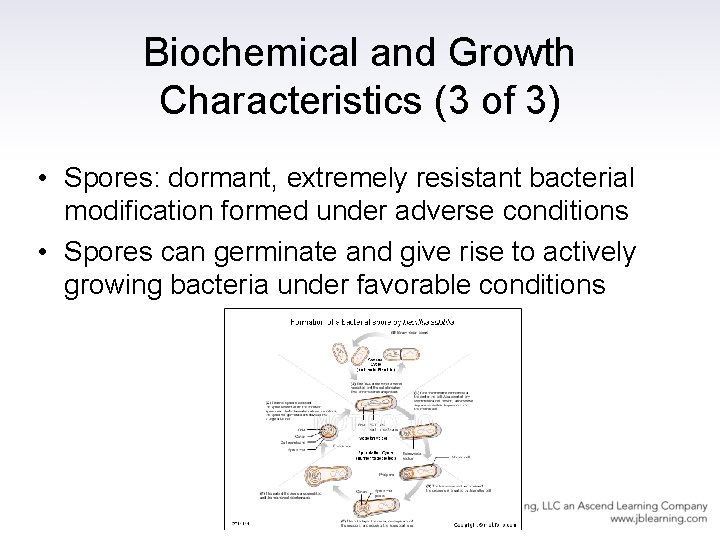
Biochemical and Growth Characteristics (3 of 3) • Spores: dormant, extremely resistant bacterial modification formed under adverse conditions • Spores can germinate and give rise to actively growing bacteria under favorable conditions

Antigen Structure • Contained in: – Cell body – Capsule – Flagella • The antigenic structure can be determined by special methods, defining a system of antigens unique for each group of bacteria
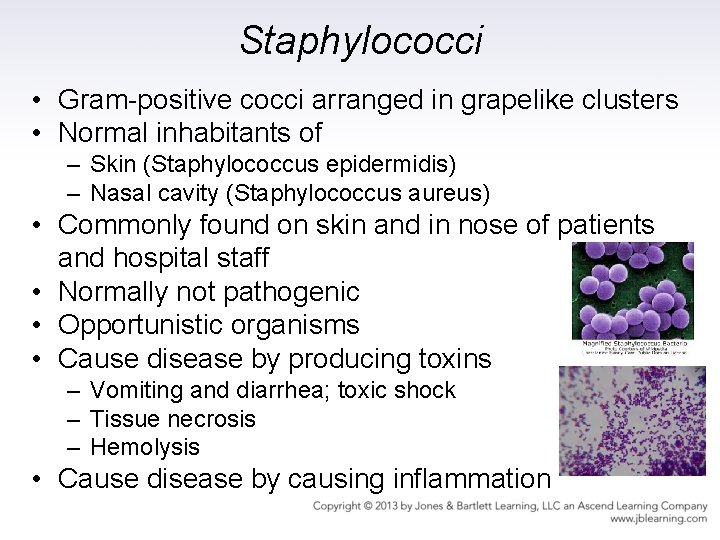
Staphylococci • Gram-positive cocci arranged in grapelike clusters • Normal inhabitants of – Skin (Staphylococcus epidermidis) – Nasal cavity (Staphylococcus aureus) • Commonly found on skin and in nose of patients and hospital staff • Normally not pathogenic • Opportunistic organisms • Cause disease by producing toxins – Vomiting and diarrhea; toxic shock – Tissue necrosis – Hemolysis • Cause disease by causing inflammation
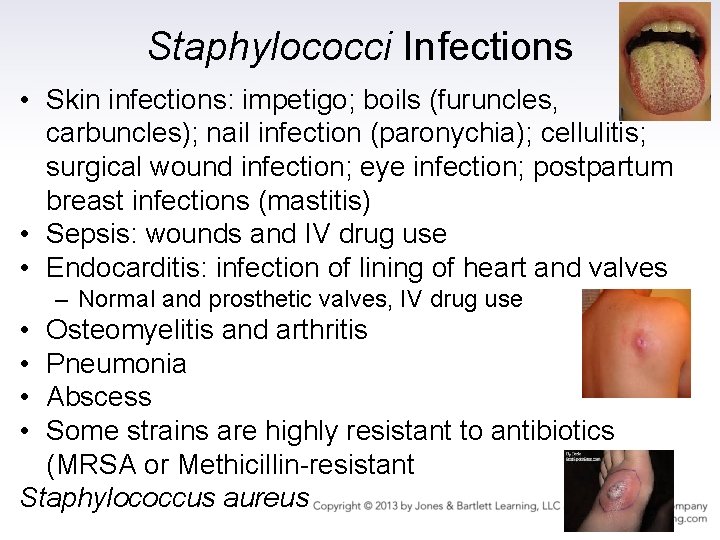
Staphylococci Infections • Skin infections: impetigo; boils (furuncles, carbuncles); nail infection (paronychia); cellulitis; surgical wound infection; eye infection; postpartum breast infections (mastitis) • Sepsis: wounds and IV drug use • Endocarditis: infection of lining of heart and valves – Normal and prosthetic valves, IV drug use • • Osteomyelitis and arthritis Pneumonia Abscess Some strains are highly resistant to antibiotics (MRSA or Methicillin-resistant Staphylococcus aureus
Streptococci Classification • Based on type of hemolysis and differences in carbohydrate antigens in the cell walls or C carbohydrate (Lancefield Classification Groups A to U) • Beta hemolysis: complete lysis of red cells – Group A (Streptococcus pyogenes): causes pharyngitis – Group B (Streptococcus agalactiae): genital tract of women, neonatal meningitis, sepsis – Group D (Enterococcus faecalis, Streptococcus bovis) urinary, biliary, cardiovascular infections
Streptococci • Gram-positive cocci arranged in chains or pairs – Normal inhabitants of skin, mouth, pharynx (Viridans strep), gut, female genital tract (Peptostreptococci) – Opportunistic organisms • Diseases: – Pyogenic: pharyngitis, cellulitis, endocarditis, UTI – Toxigenic: scarlet fever, toxic shock syndrome – Immunologic: rheumatic fever, glomerulonephritis

Pathogenic Bacteria • Pneumococci – Common cause of bacterial pneumonia • Gram-Negative Cocci – Nonpathogenic members of the genus Neisseria – Meningococcus – causes meningitis – Gonococcus – cause gonorrhea • Gram-Positive Bacilli – Corynebacteria – Lysteria – Bacilli – Clostridia

Pathogenic Bacteria • Aerobic non-spore-forming gram-positive organisms – Corynebacteria – nonpathogenic inhabitants of the skin and squamous body surfaces – Listeria monocytogenes – contaminant • Aerobic spore-forming gram-positive organisms – Bacilli anthracis - anthrax
Pathogenic Bacteria • Anaerobic spore-forming gram-positive organisms – Clostridia • Gas gangrene • Tetanus • Botulism • Intestinal infection
Pathogenic Bacteria • Spiral organisms – Syphilis – Lime disease • Acid-Fast Bacteria – Tuberculosis – Leprosy
Antibiotics • One of the great discoveries and advances in medicine • Antibiotic resistance – Over-prescribing – Inappropriate prescribing – Overuse as feed supplement for livestock – Improper use – Spread of resistant strains worldwide
Antibiotics: Mechanisms of Action • Inhibits synthesis of bacterial cell wall and cell membrane – Penicillin family: penicillin, methicillin, nafcillin, oxacillin, amoxicillin, ampicillin, piperacillin, ticarcillin – Cephalosporin: cephalexin, cefoxitin, ceftazidime, ceftriaxone; vancomycin, bacitracin • Inhibits synthesis microbial proteins – Chloramphenicol; tetracycline; macrolide: erythromycin, azithromycin, clarithromycin; clindamycin, gentamicin, netilmicin, streptomycin
Antibiotics: Mechanisms of Action • Inhibits bacterial metabolic functions – Inhibit folic acid synthesis: sulfonamides, trimethoprim • Inhibits bacterial DNA synthesis – ciprofloxacin, norfloxacin, ofloxacin, sparfloxacin • Competitive inhibition
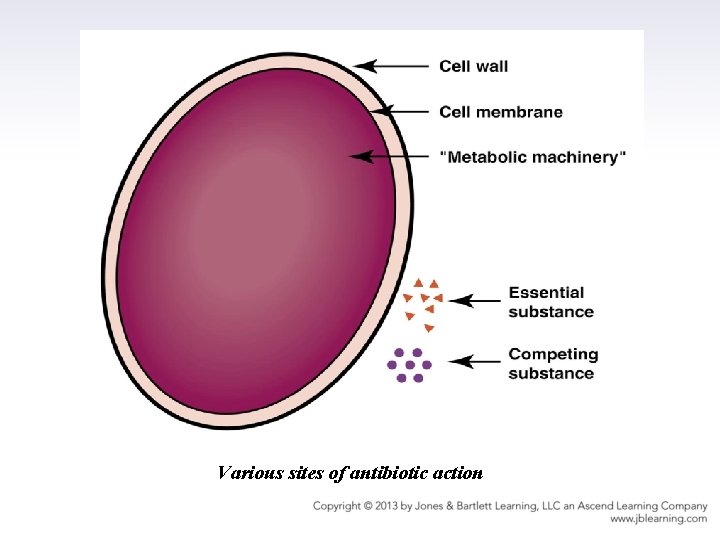
Various sites of antibiotic action
Antibiotic Sensitivity Tests • Tube dilution: measures the highest dilution inhibiting growth in test tube • Disk method: inhibition of growth around disk indicates sensitivity to antibiotic
Antibiotics: Adverse Effects • • Toxicity Hypersensitivity Alteration of normal bacterial flora Development of resistant strains – Spontaneous mutation – Plasmid-acquired resistance • Mechanisms for circumventing effects of antibiotics – Develop enzymes (penicillinase) – Change cell wall structure – Change internal metabolic machinery
Chlamydiae (1 of 2) • • Gram-negative, nonmotile bacteria Form inclusion bodies in infected cells Obligate intracellular parasites With rigid cell wall and reproduce by a distinct intracellular cycle • Susceptible to tetracycline and erythromycin • No vaccine available
Chlamydiae (2 of 2) • Diseases – Psittacosis (pneumonia): inhalation of dried bird feces – Trachoma (C. trachomatis A, B, C): chronic conjunctivitis, blindness – Non-gonococcal urethritis (men): spread to other areas – Cervicitis (women) • Lead to salpingitis, PID, infertility, ectopic pregnancy – Neonatal inclusion conjunctivitis: • Newborn from infected mom – Lymphogranuloma Venereum: sexually transmitted disease
Rickettsiae and Ehrlichiae (1 of 2) • Disease: damage to small blood vessels of skin; leakage of blood into surrounding tissues (rash and edema) • Rocky Mountain Spotted Fever (ticks) – East Coast spring and early summer; flu-like – Rash after 2 -6 days, hands/feet then trunk, CNS • Rickettsialpox (mites) • Typhus: flu-like, rash (epidemic: lice; endemic: fleas; scrub: mites) • Q Fever (aerosol): pneumonia-hepatitis combination, rash is rare • Erliochiosis – Susceptible to tetracycline or chloramphenicol
Rickettsiae and Ehrlichiae (2 of 2) • Obligate intracellular parasites • Parasite of insects transmitted to humans • Transmitted via bite of an arthropod vector (ticks, mites, lice, fleas) except in Q Fever (aerosol) • Rickettsiae multiply in endothelial cells of blood vessels while Ehrlichiae multiply in neutrophils or monocytes • Cause febrile illness with skin rash • Respond to some antibiotics • Most rickettsial diseases are zoonoses (animal-borne) except epidemic typhus (humans) • Transmission enhanced by poor hygiene, overcrowding, wars, poverty
Mycoplasma • Smallest, wall-less, free-living bacteria – About the size of a virus (0. 3 micrometer) • With cell membrane (cholesterol), no cell wall – Medical implications: Stain poorly • Penicillin and cephalosporin are not effective – Can reproduce outside living cells, can grow on artificial media • Primary Atypical Pneumonia: Mycoplasma pneumoniae – Most common in winter, young adults, outbreaks in groups – Cough, sore throat, fever, headache, malaise, myalgia – Resolves spontaneously in 10 -14 days – Responds to antibiotics: tetracycline and erythromycin
Virus (1 of 4) • Classification – Nucleic acid structure: Either DNA or RNA, with an outer envelope made of lipoprotein – Size and complexity of genome varies – Smaller than cells (20 -300 nm diameter) – Cannot be seen under a light microscope • Nucleoid: genetic material, DNA and RNA, not both • Capsid: protective protein membrane surrounding genetic material
Virus (2 of 4) • Obligate intracellular parasites – Must reproduce or replicate within cells – Lack metabolic enzymes; rely on host’s metabolic processes for survival – Do not have nucleus, ribosomes, mitochondria, and lysosomes; cannot synthesize proteins or generate energy – Do not multiply by binary fission or mitosis
Virus (3 of 4) • Mode of action – Invasion of susceptible cell • Asymptomatic latent viral infection • Acute cell necrosis and degeneration • Cell hyperplasia and proliferation • Slowly progressive cell injury • Neoplasia – Formation of inclusion bodies
Virus (4 of 4) • Bodily defenses against viral infections – Formation of interferon: “broad-spectrum” antiviral agent – Cell-mediated immunity – Humoral defenses • Treatment with antiviral agents – Block viral multiplication – Prevent virus from invading cell – Limited application: toxicity and limited effectiveness
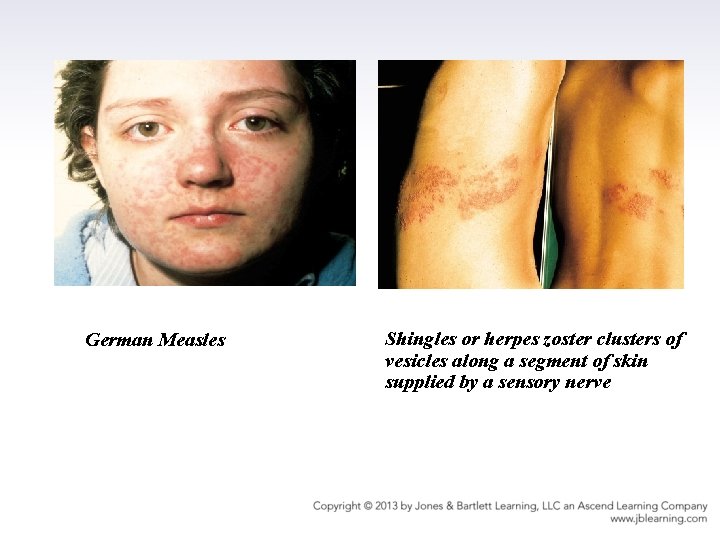
German Measles Shingles or herpes zoster clusters of vesicles along a segment of skin supplied by a sensory nerve
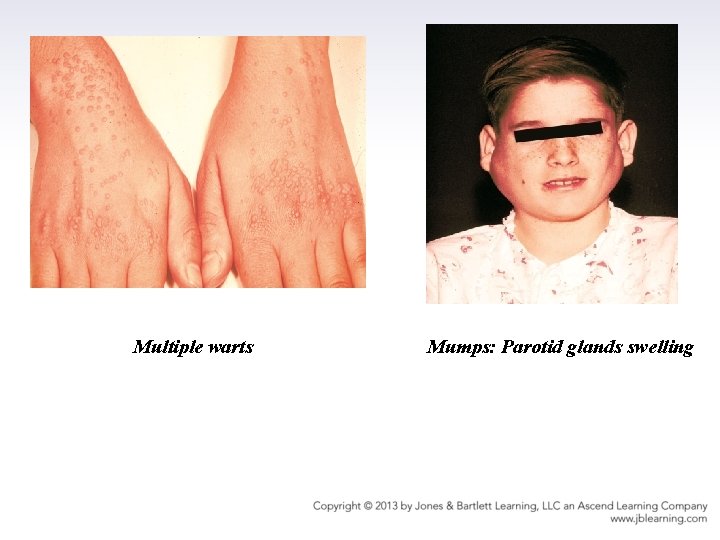
Multiple warts Mumps: Parotid glands swelling
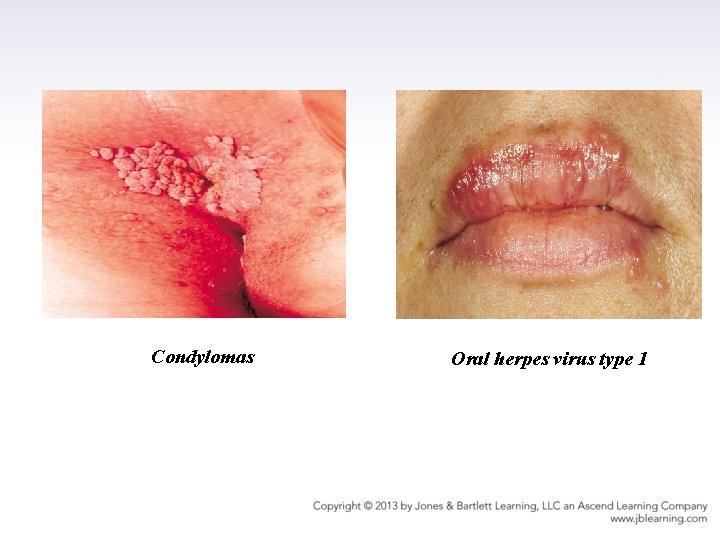
Condylomas Oral herpes virus type 1
Fungi (1 of 2) • • • Plantlike organisms without chlorophyll Two types: yeasts and molds Most are obligate aerobes, opportunistic Natural habitat: environment, except Candida Cell wall: chitin vs. peptidoglycan Cell membrane: ergosterol and zymosterol vs. cholesterol
Fungi (2 of 2) • Growth factors: high humidity (moist), heat, dark areas with oxygen supply • Treatment: antifungal drugs • Other fungi: bread, cheese, wine, beer production – Frequently associated with decaying matter – Molds: spoilage of foods (fruits, grains, vegetables, jams) • Infections – – Superficial fungal infections Mucous membranes (Candida) Histoplasmosis, Coccidioidomycosis Blastomycosis, Cryptococcus
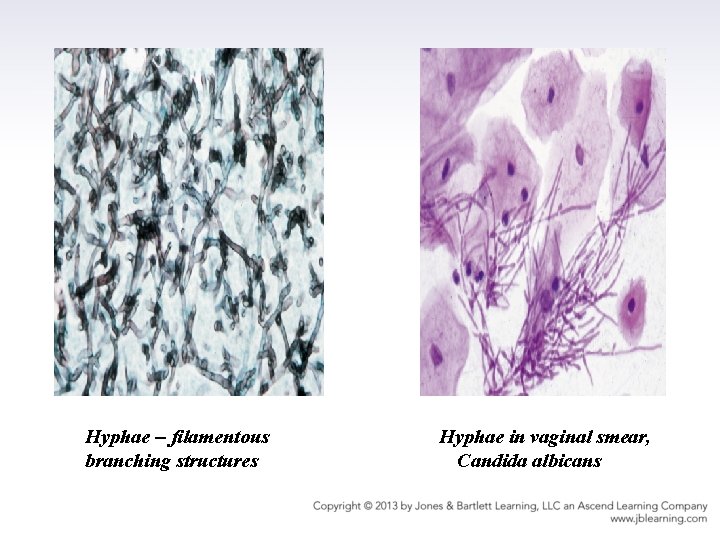
Hyphae – filamentous branching structures Hyphae in vaginal smear, Candida albicans
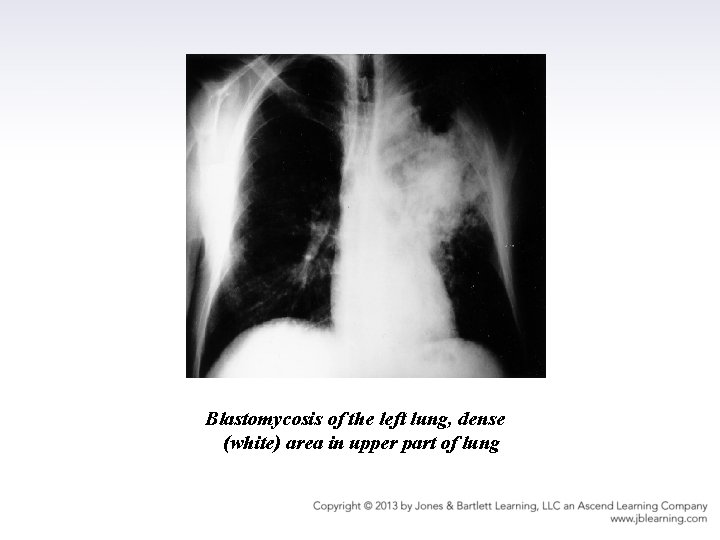
Blastomycosis of the left lung, dense (white) area in upper part of lung
Discussion • A young woman receives a course of antibiotics and soon afterward develops a vaginal infection caused by a fungus. Why? • What factors render a patient susceptible to an infection by a fungus of low pathogenicity? • How do antibiotics inhibit the growth of bacteria? • How does penicillin kill bacteria?
- Slides: 50