
Chapter 6 Muscular System What is the Muscular
- Slides: 18
Chapter 6 Muscular System
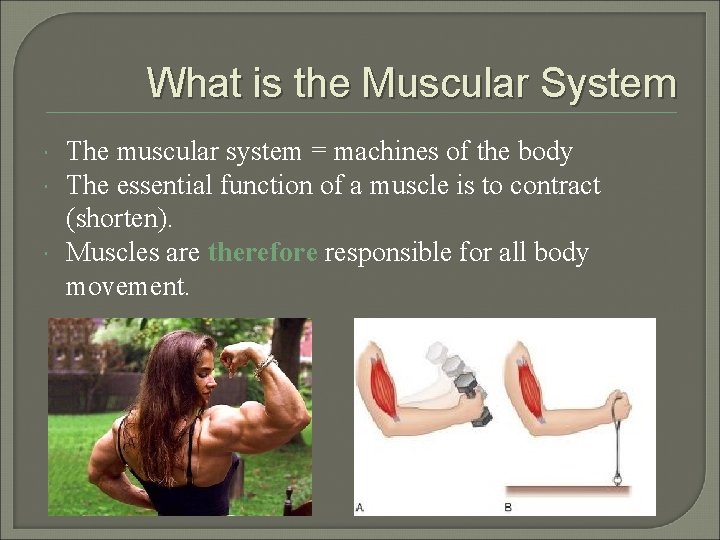
What is the Muscular System The muscular system = machines of the body The essential function of a muscle is to contract (shorten). Muscles are therefore responsible for all body movement.
Functions of Muscles Produce movement Maintain posture Stabilize joints Generate heat Copyright © 2003 Pearson Education, Inc. publishing as Benjamin Cummings Slide 6. 8
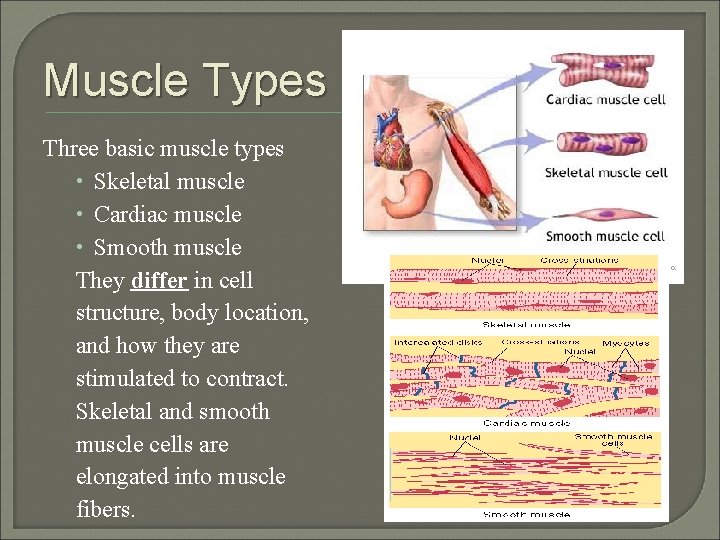
Muscle Types Three basic muscle types • Skeletal muscle • Cardiac muscle • Smooth muscle They differ in cell structure, body location, and how they are stimulated to contract. Skeletal and smooth muscle cells are elongated into muscle fibers.
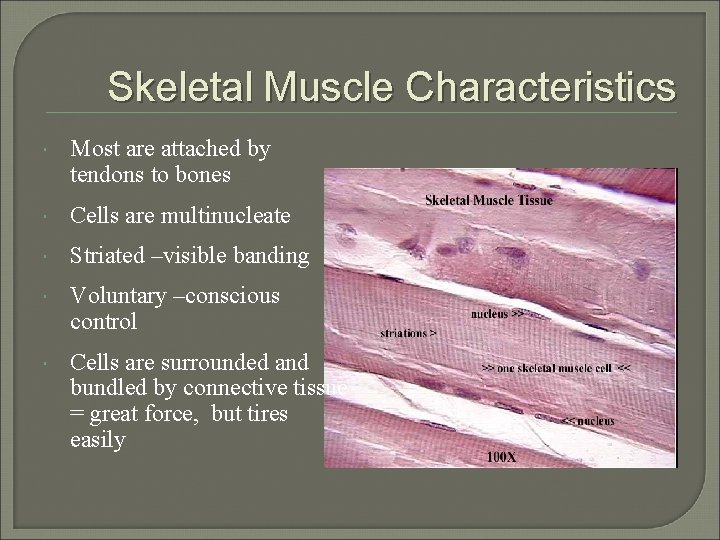
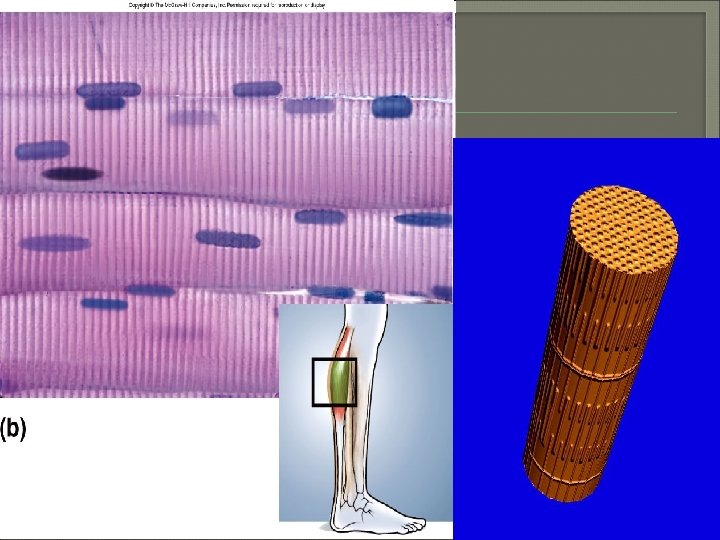
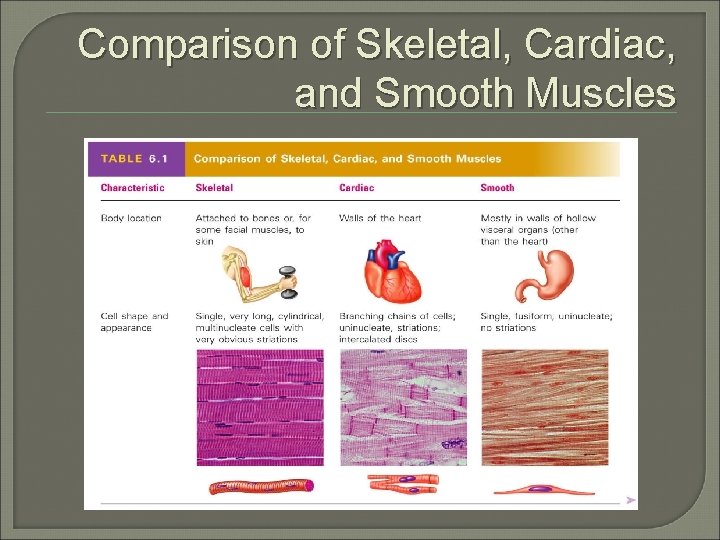
Skeletal Muscle Characteristics Most are attached by tendons to bones Cells are multinucleate Striated –visible banding Voluntary –conscious control Cells are surrounded and bundled by connective tissue = great force, but tires easily
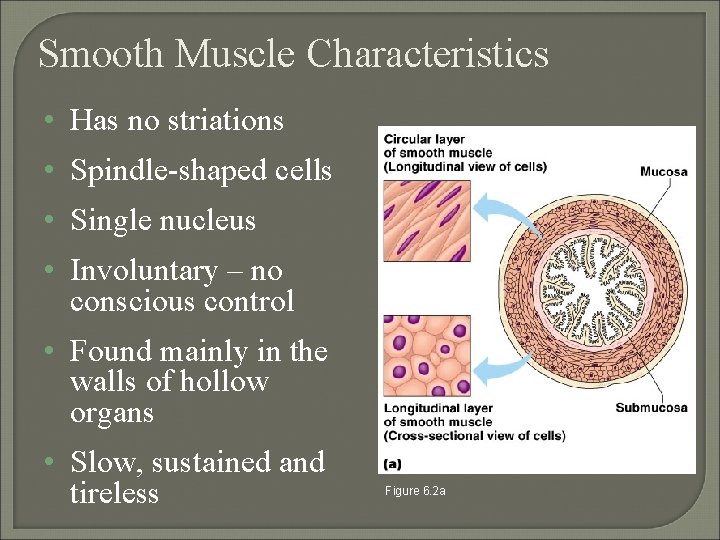
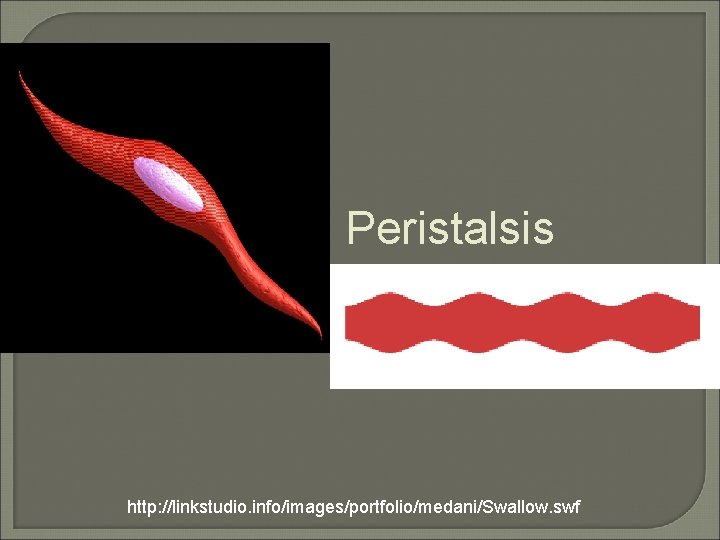
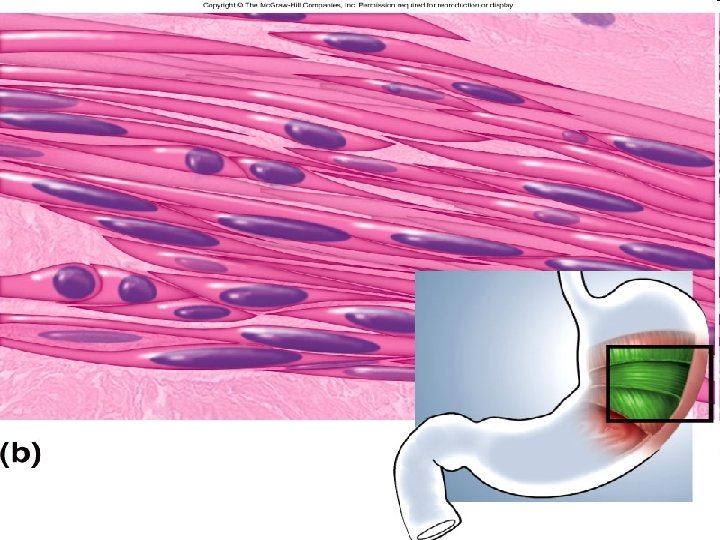
Smooth Muscle Characteristics • Has no striations • Spindle-shaped cells • Single nucleus • Involuntary – no conscious control • Found mainly in the walls of hollow organs • Slow, sustained and tireless Figure 6. 2 a
Peristalsis http: //linkstudio. info/images/portfolio/medani/Swallow. swf
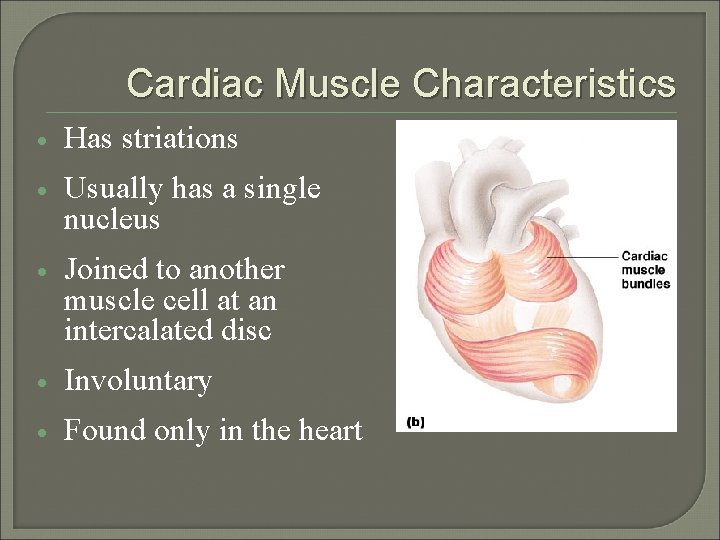
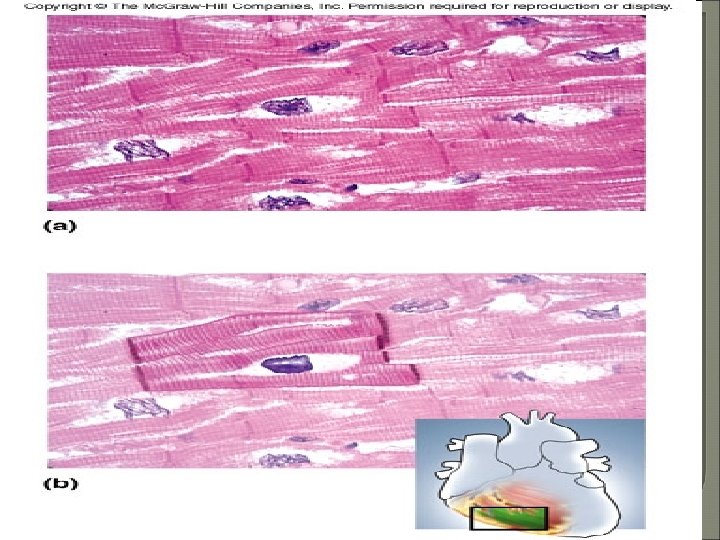
Cardiac Muscle Characteristics · Has striations · Usually has a single nucleus · Joined to another muscle cell at an intercalated disc · Involuntary · Found only in the heart
Comparison of Skeletal, Cardiac, and Smooth Muscles
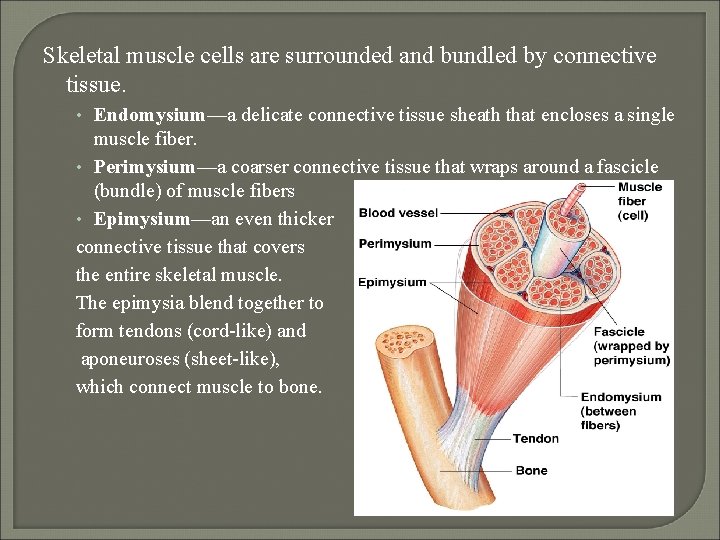
Skeletal muscle cells are surrounded and bundled by connective tissue. • Endomysium—a delicate connective tissue sheath that encloses a single muscle fiber. • Perimysium—a coarser connective tissue that wraps around a fascicle (bundle) of muscle fibers • Epimysium—an even thicker connective tissue that covers the entire skeletal muscle. The epimysia blend together to form tendons (cord-like) and aponeuroses (sheet-like), which connect muscle to bone.
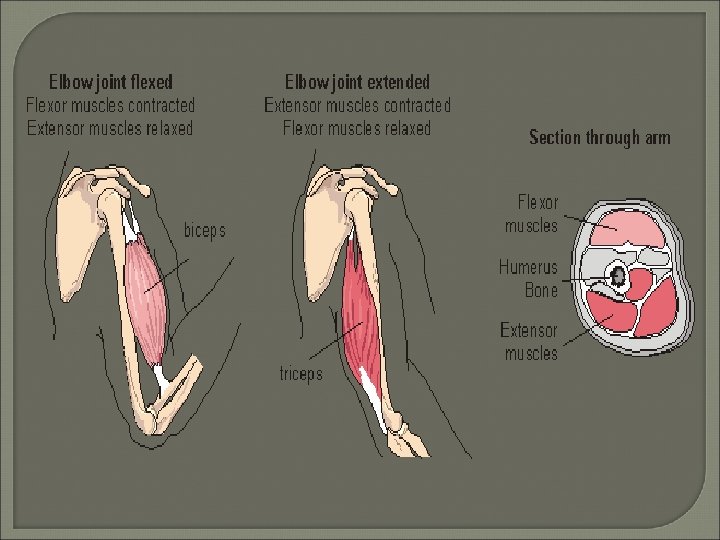
Interactions of Skeletal Muscle • Prime mover (agonists) – muscle with the major responsibility for a certain movement • Antagonist – muscle that opposes or reverses a prime mover. When prime mover is active its antagonist is stretched and relaxed. • Synergist – muscle that aids a prime mover in a movement and helps prevent rotation
Skeletal Muscle Attachments Sites of muscle attachment • Bones • Cartilages • Connective tissue coverings