
Chapter 6 Multicellular Primary Producers Seaweeds and Plants
- Slides: 15
Chapter 6 Multicellular Primary Producers: Seaweeds and Plants
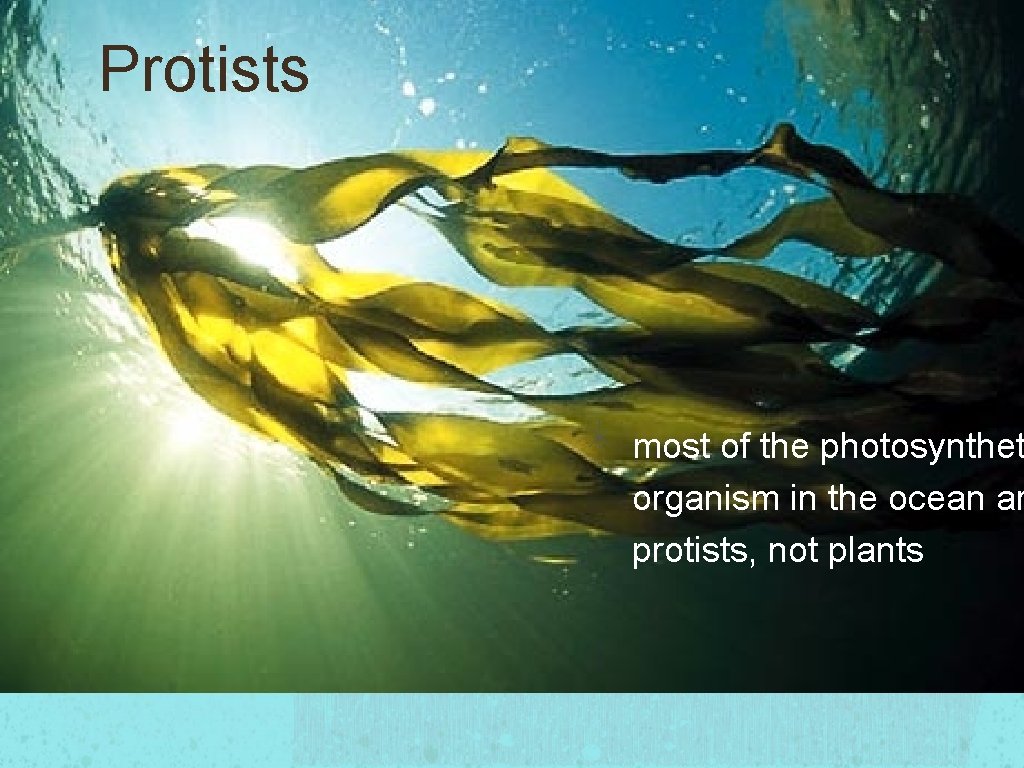
Protists most of the photosynthet organism in the ocean ar protists, not plants
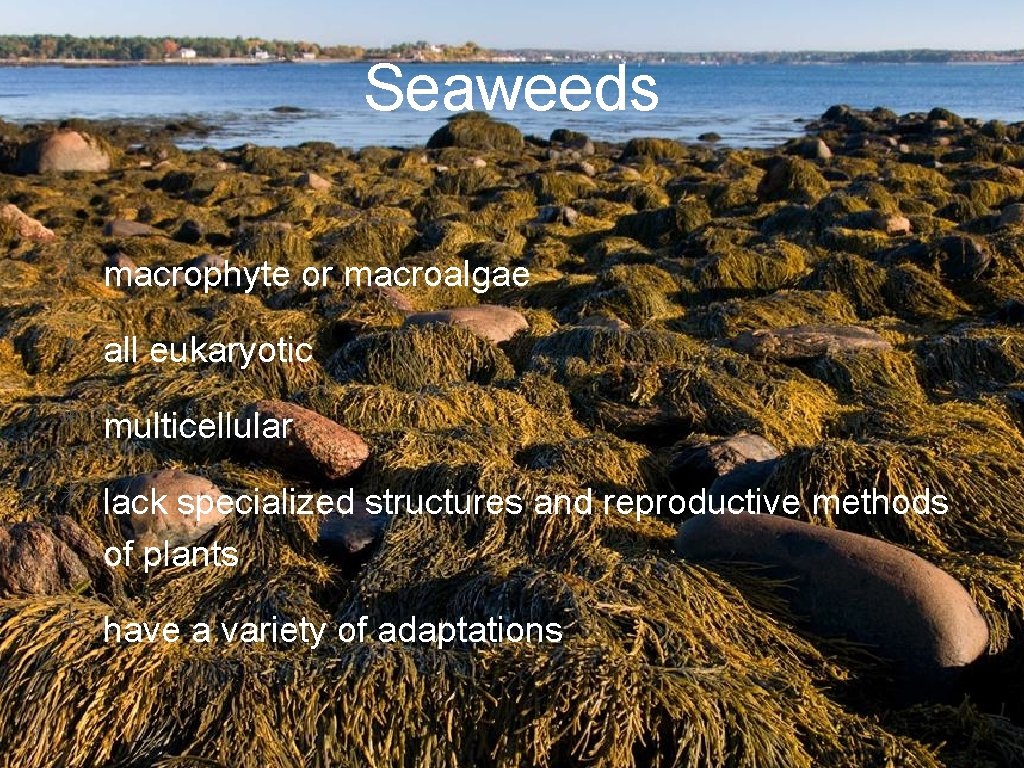
Seaweeds macrophyte or macroalgae all eukaryotic multicellular lack specialized structures and reproductive methods of plants have a variety of adaptations
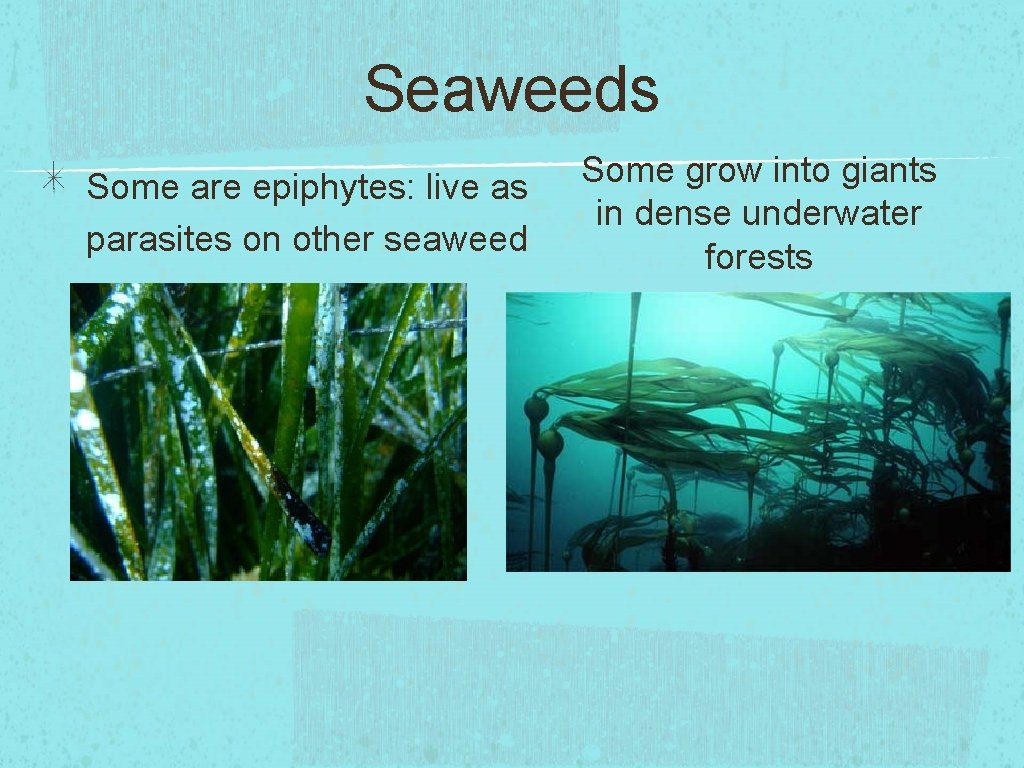
Seaweeds Some are epiphytes: live as parasites on other seaweed Some grow into giants in dense underwater forests
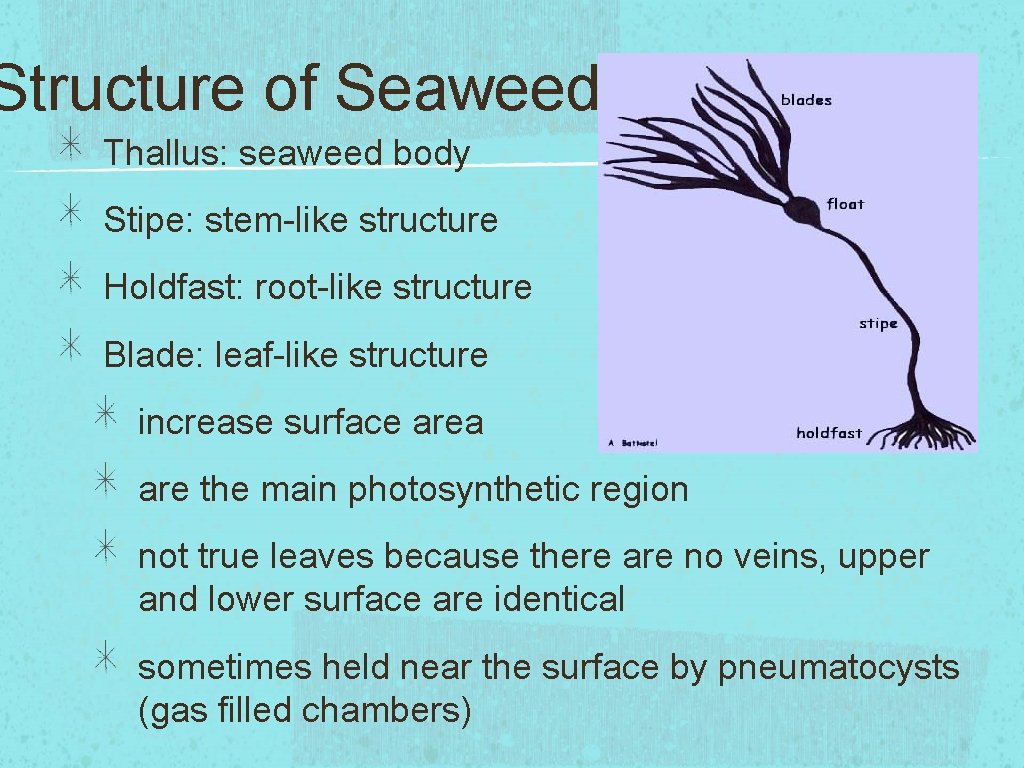
Structure of Seaweeds Thallus: seaweed body Stipe: stem-like structure Holdfast: root-like structure Blade: leaf-like structure increase surface area are the main photosynthetic region not true leaves because there are no veins, upper and lower surface are identical sometimes held near the surface by pneumatocysts (gas filled chambers)
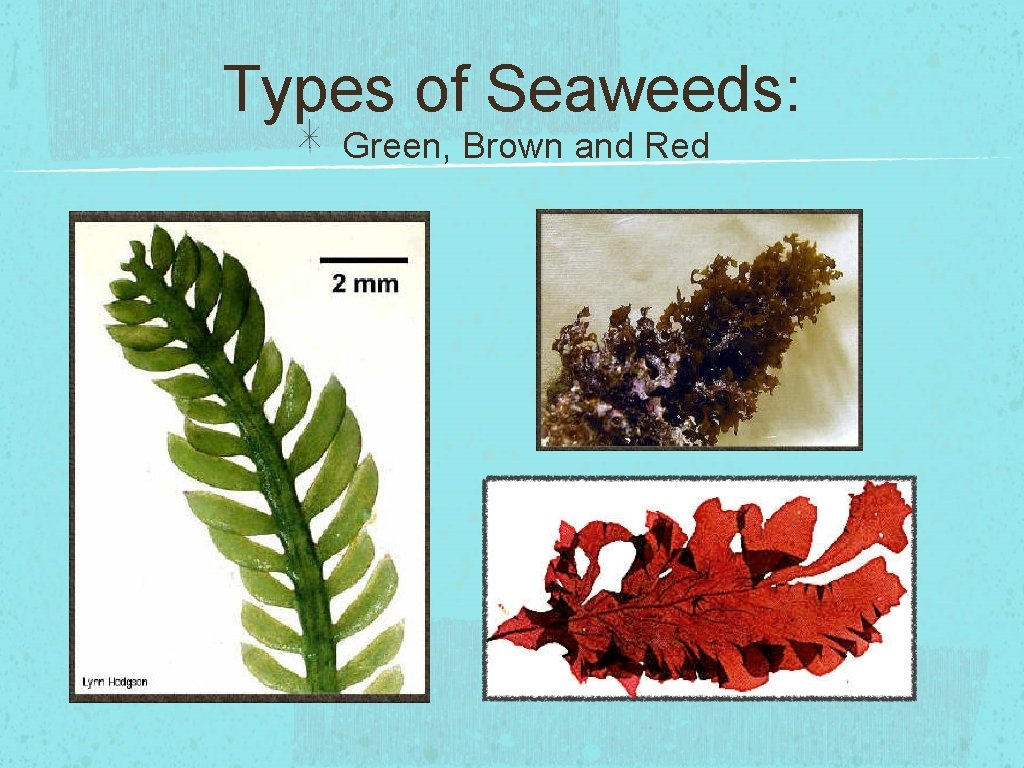
Types of Seaweeds: Green, Brown and Red
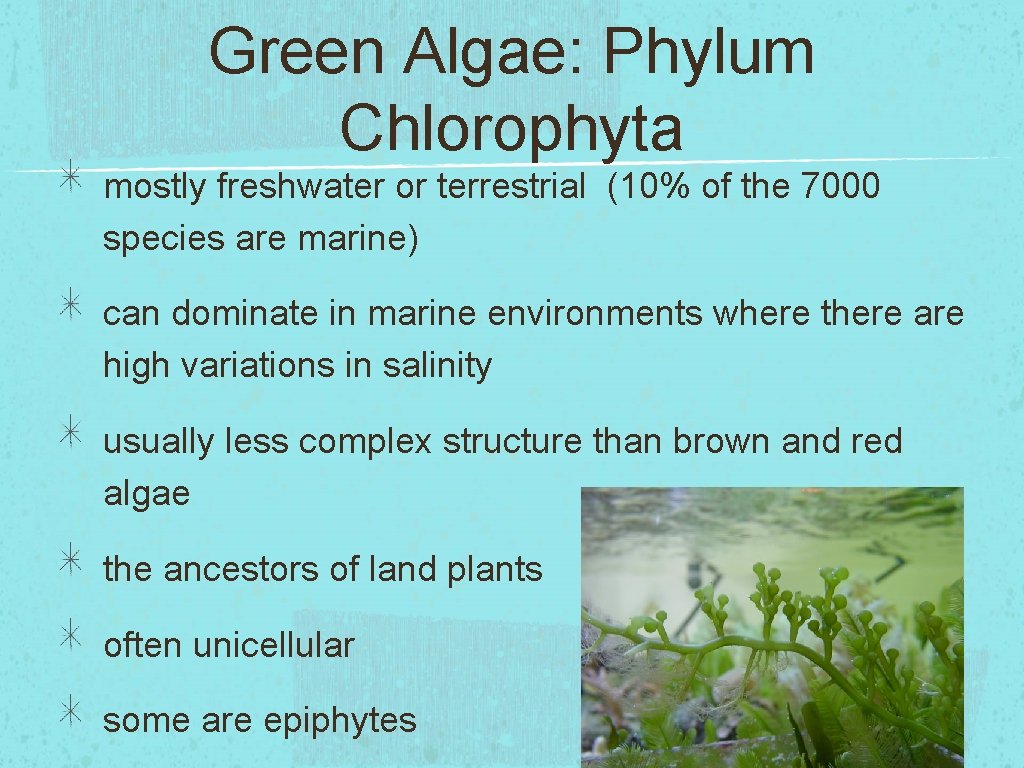
Green Algae: Phylum Chlorophyta mostly freshwater or terrestrial (10% of the 7000 species are marine) can dominate in marine environments where there are high variations in salinity usually less complex structure than brown and red algae the ancestors of land plants often unicellular some are epiphytes
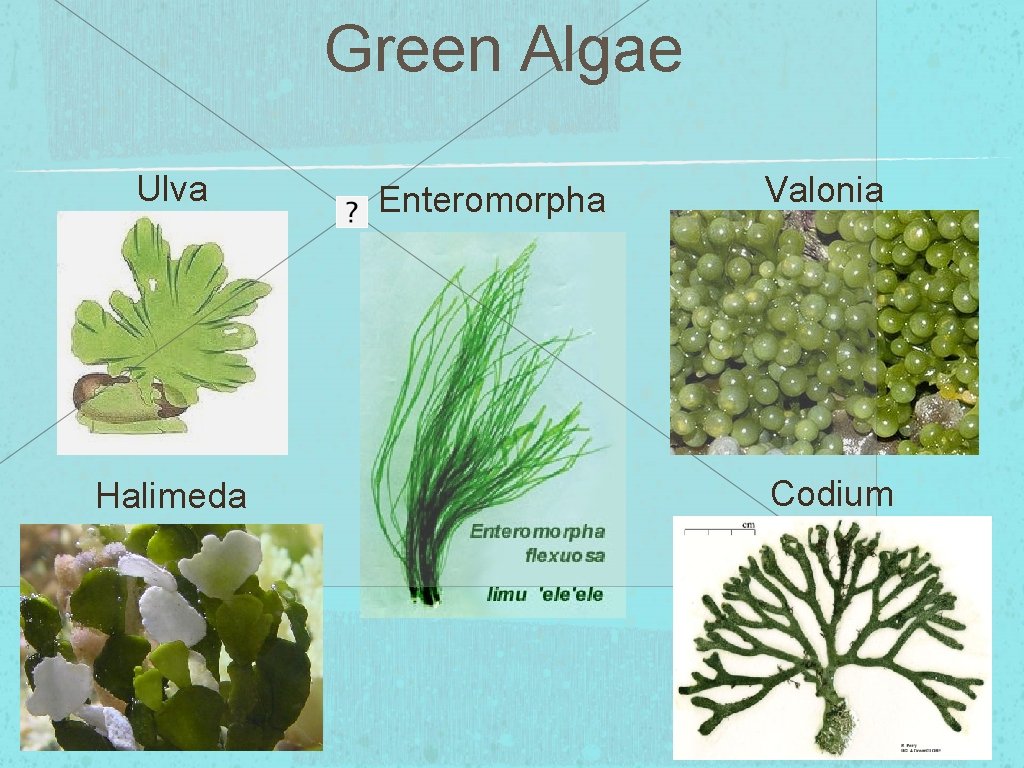
Green Algae Ulva Halimeda Enteromorpha Valonia Codium
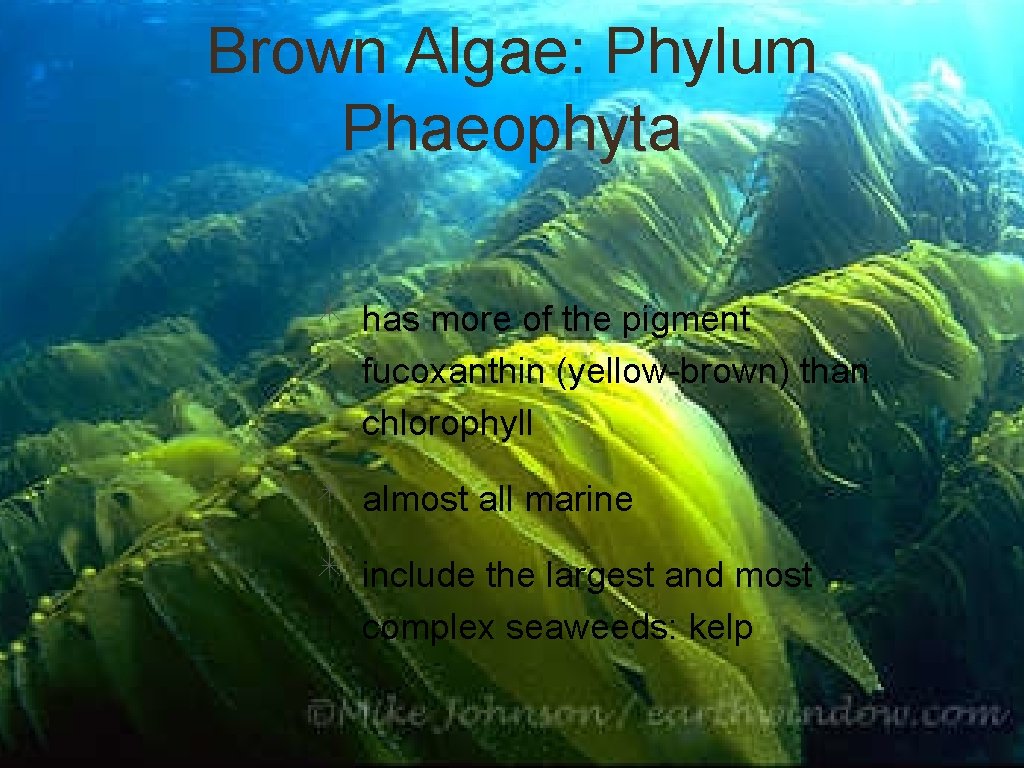
Brown Algae: Phylum Phaeophyta has more of the pigment fucoxanthin (yellow-brown) than chlorophyll almost all marine include the largest and most complex seaweeds: kelp
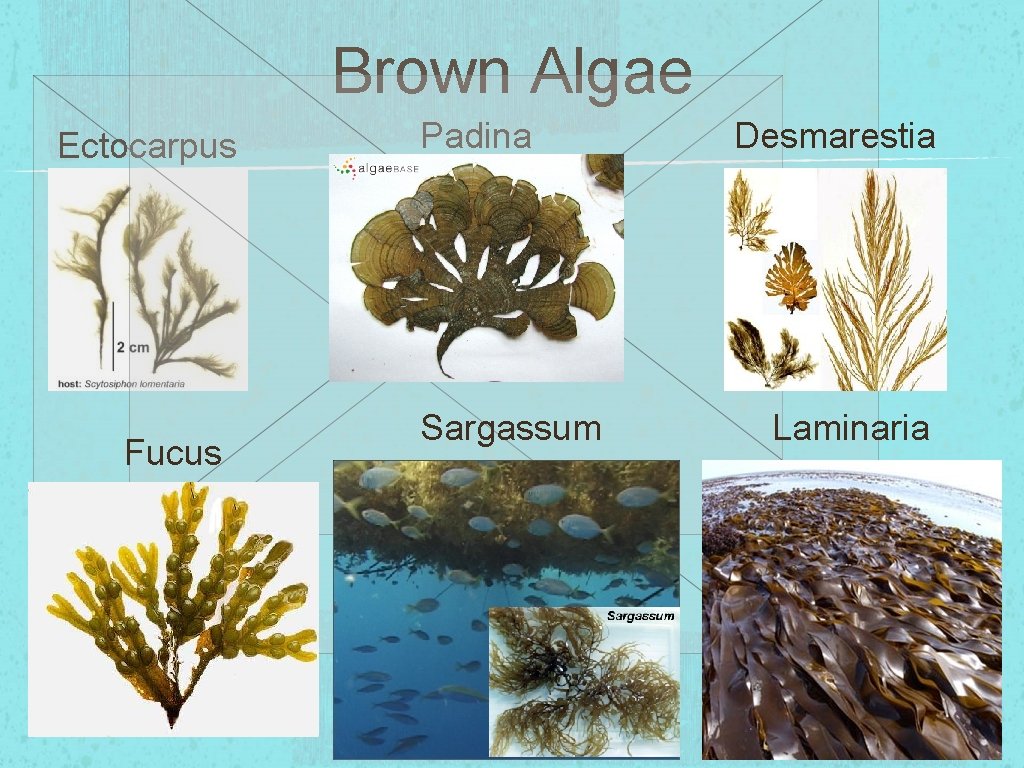
Brown Algae Ectocarpus Fucus Padina Sargassum Desmarestia Laminaria
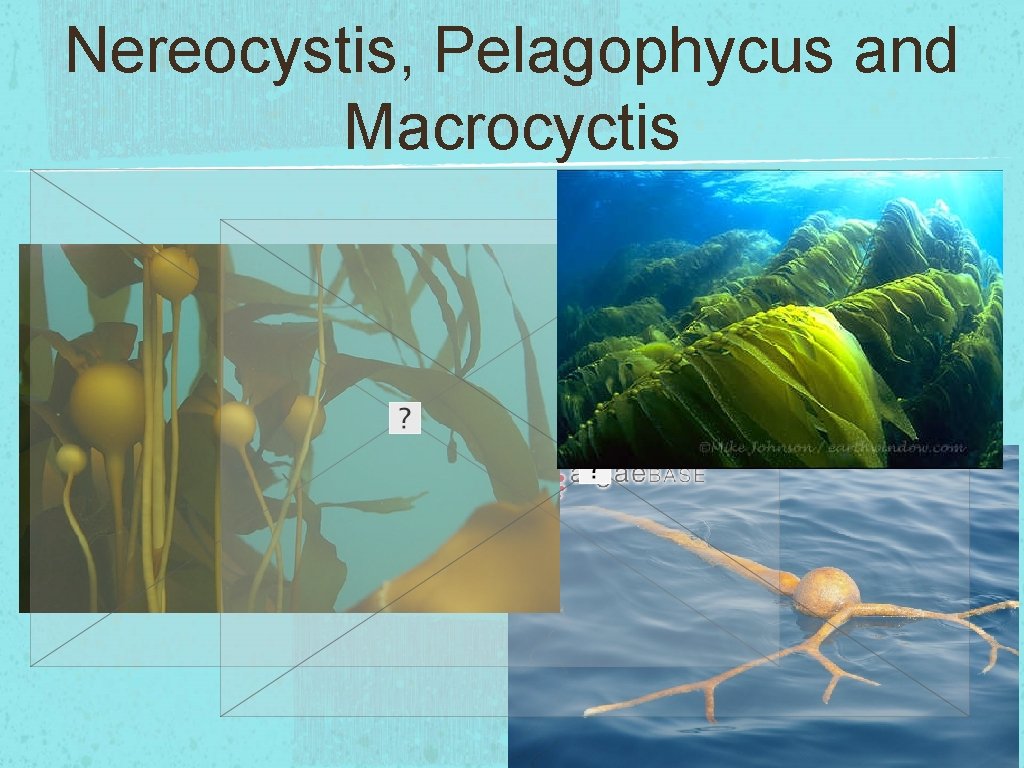
Nereocystis, Pelagophycus and Macrocyctis
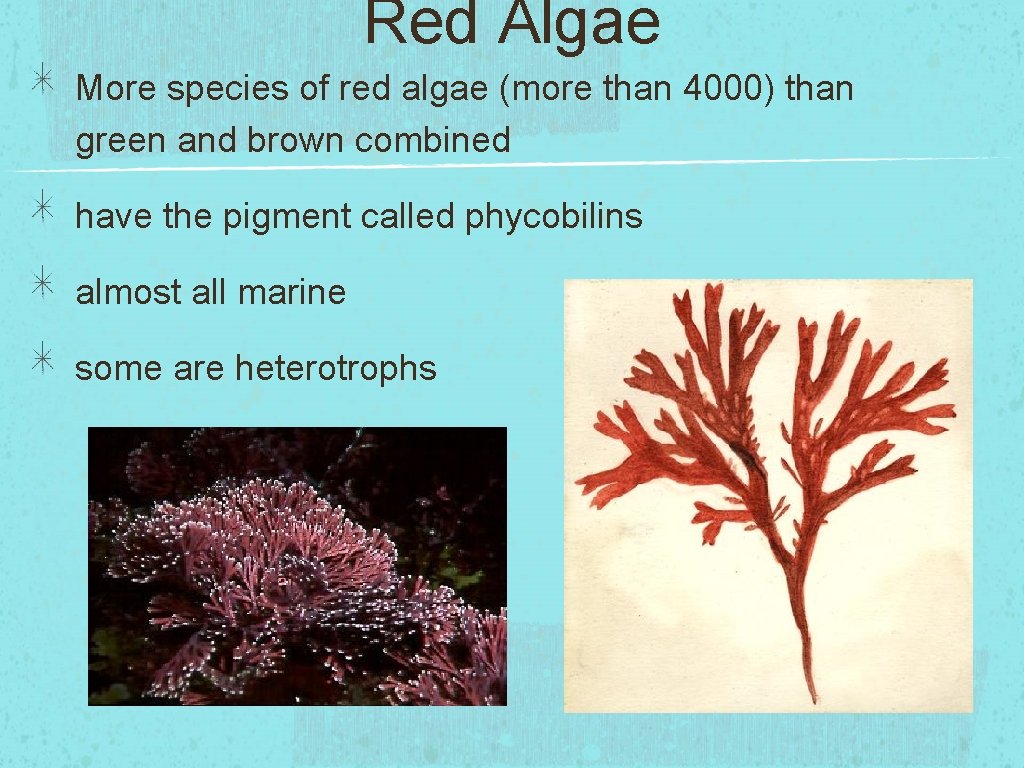
Red Algae More species of red algae (more than 4000) than green and brown combined have the pigment called phycobilins almost all marine some are heterotrophs
Life History produce both sexually and asexually asexual: vegetative fragments develop into new individuals Spores: asexual, single celled stages zoospores: have flagella for locomotion
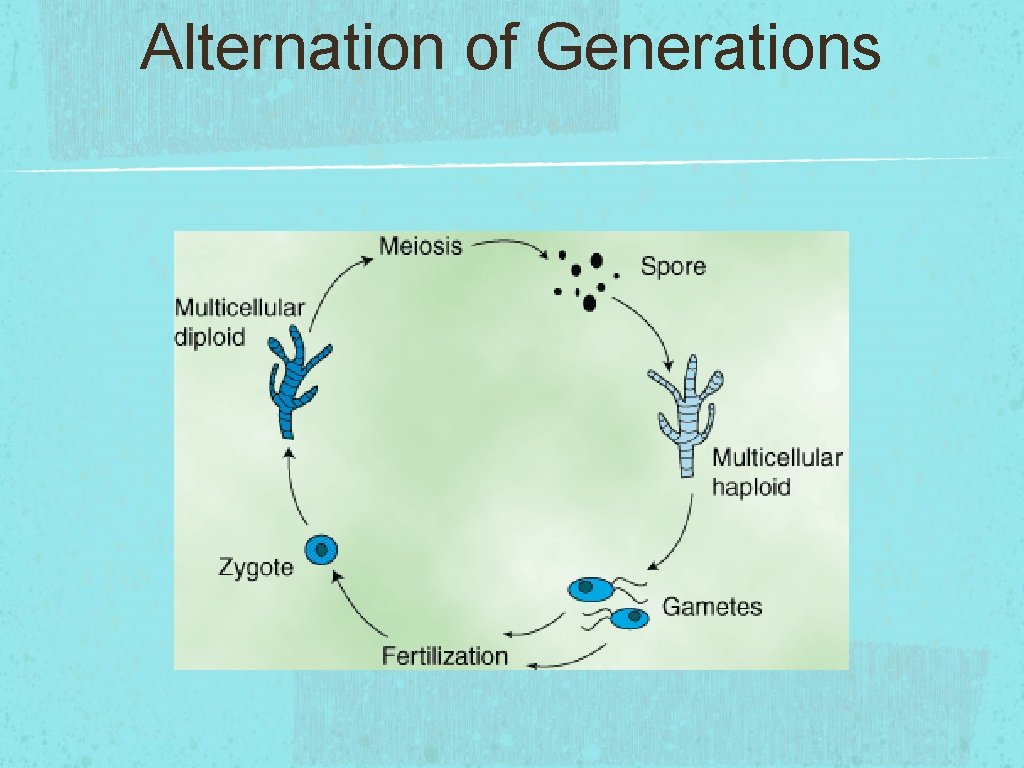
Sexual Reproduction in Seaweeds mitosis: cells divide and reproduce identical cells meiosis: production of haploid spores/cells production of gametes may be mobile or non-motile may be formed in the same thallus
Alternation of Generations