
Chapter 6 Major Ecosystems of the World Overview
- Slides: 43
Chapter 6 Major Ecosystems of the World
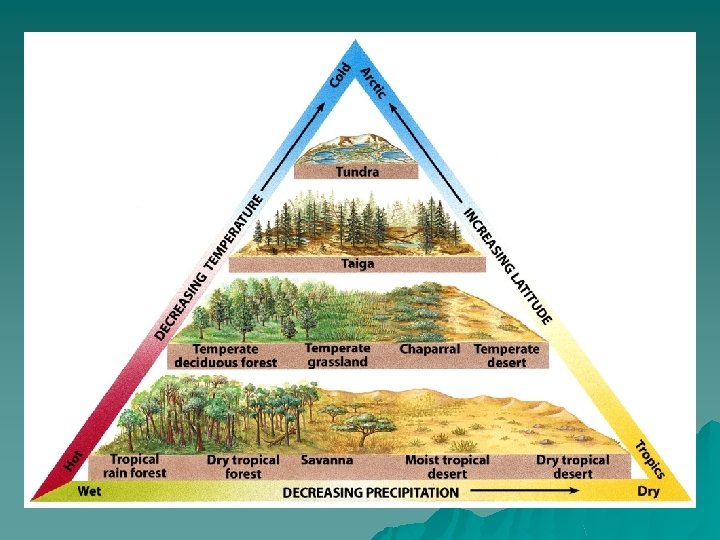
Overview of Chapter 6 o Earth’s Major Biomes • • o Aquatic Ecosystems • • o o Tundra, Boreal Forests, Temperate Rainforest, Temperate Deciduous Forests, Grasslands, Chaparral, Deserts, Savanna, & Tropical Rainforests Vertical Zonation Freshwater ecosystems Estuaries Marine Ecosystems Interaction of Life Zones and Humans
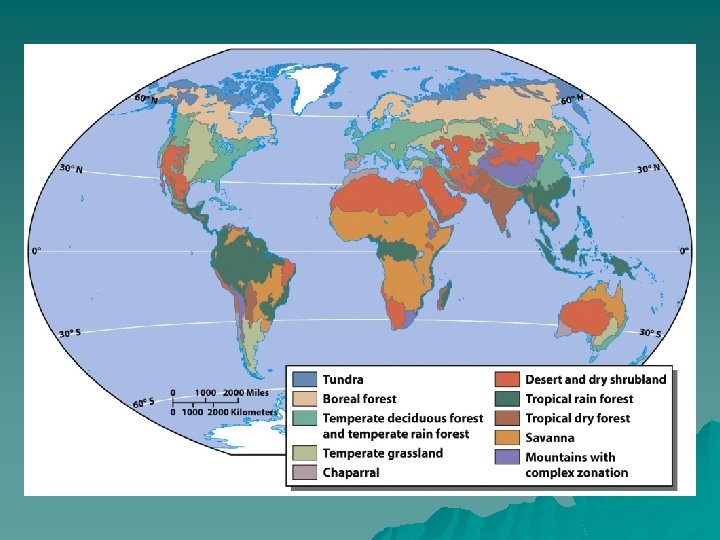
Earth’s Major Biomes o Biome • • o Location of each biome is primarily determined by: • • o A large, relatively distinct terrestrial region with a similar climate soil, plants, and animals, regardless of where it occurs in the world Nine major biomes Temperature (varies with both latitude and elevation) Precipitation Biomes can also be defined by • Winds, rapid temperature changes, fires, floods, etc.
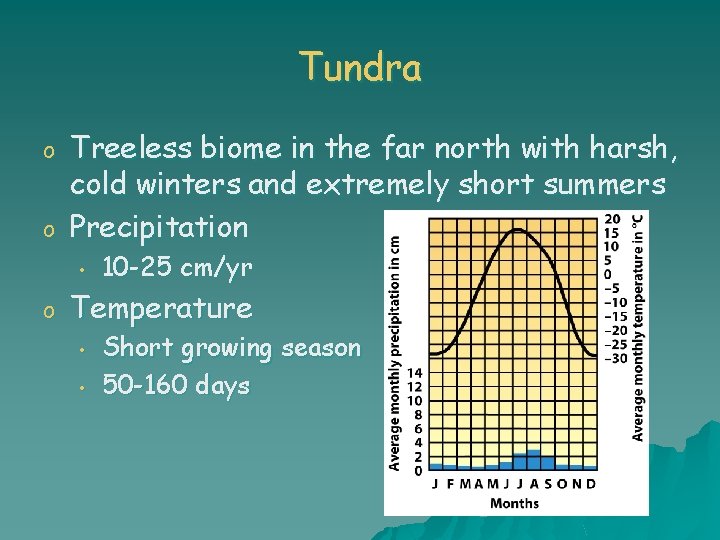
Tundra o o Treeless biome in the far north with harsh, cold winters and extremely short summers Precipitation • o 10 -25 cm/yr Temperature • • Short growing season 50 -160 days
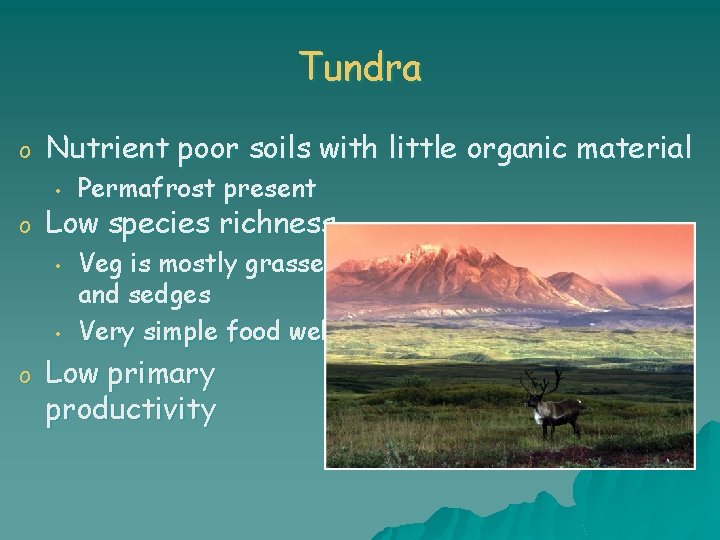
Tundra o Nutrient poor soils with little organic material • o Low species richness • • o Permafrost present Veg is mostly grasses and sedges Very simple food web Low primary productivity
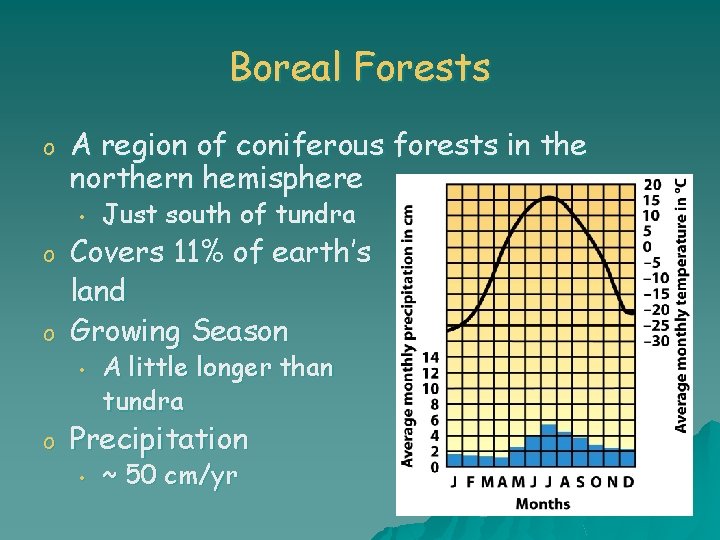
Boreal Forests o A region of coniferous forests in the northern hemisphere • o o Covers 11% of earth’s land Growing Season • o Just south of tundra A little longer than tundra Precipitation • ~ 50 cm/yr
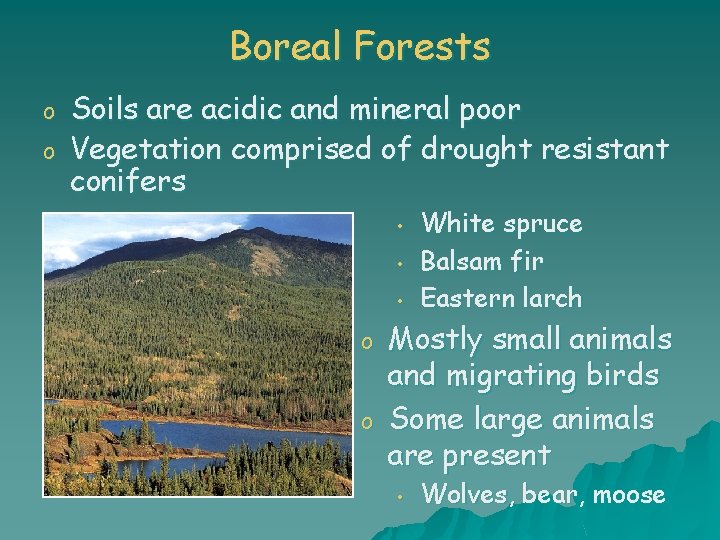
Boreal Forests o o Soils are acidic and mineral poor Vegetation comprised of drought resistant conifers • • • o o White spruce Balsam fir Eastern larch Mostly small animals and migrating birds Some large animals are present • Wolves, bear, moose
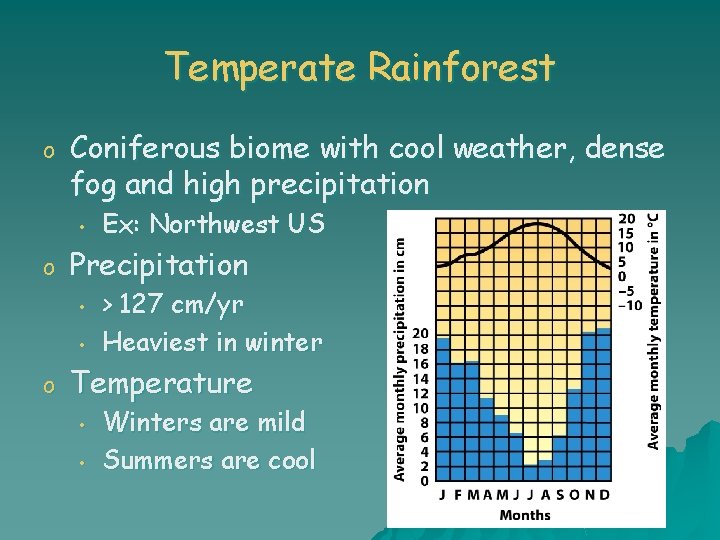
Temperate Rainforest o Coniferous biome with cool weather, dense fog and high precipitation • o Precipitation • • o Ex: Northwest US > 127 cm/yr Heaviest in winter Temperature • • Winters are mild Summers are cool
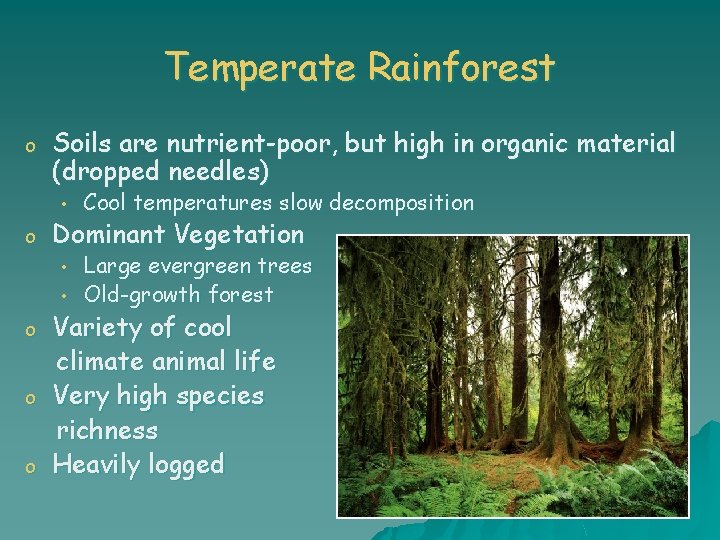
Temperate Rainforest o Soils are nutrient-poor, but high in organic material (dropped needles) • o Dominant Vegetation • • o o o Cool temperatures slow decomposition Large evergreen trees Old-growth forest Variety of cool climate animal life Very high species richness Heavily logged
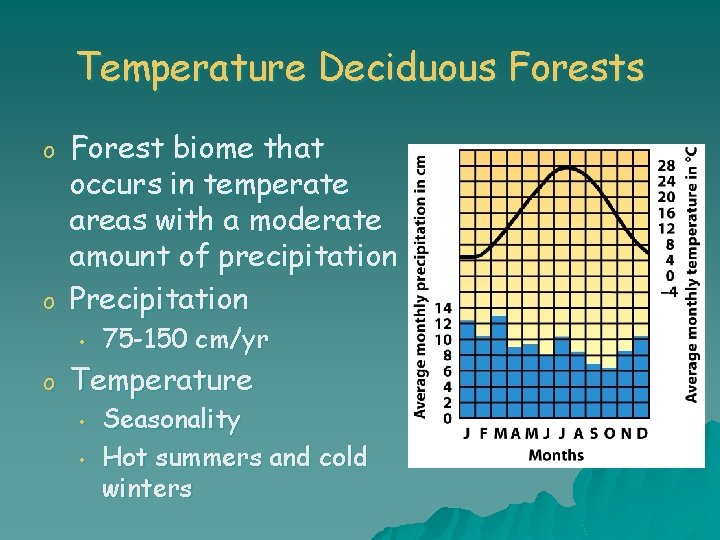
Temperature Deciduous Forests o o Forest biome that occurs in temperate areas with a moderate amount of precipitation Precipitation • o 75 -150 cm/yr Temperature • • Seasonality Hot summers and cold winters
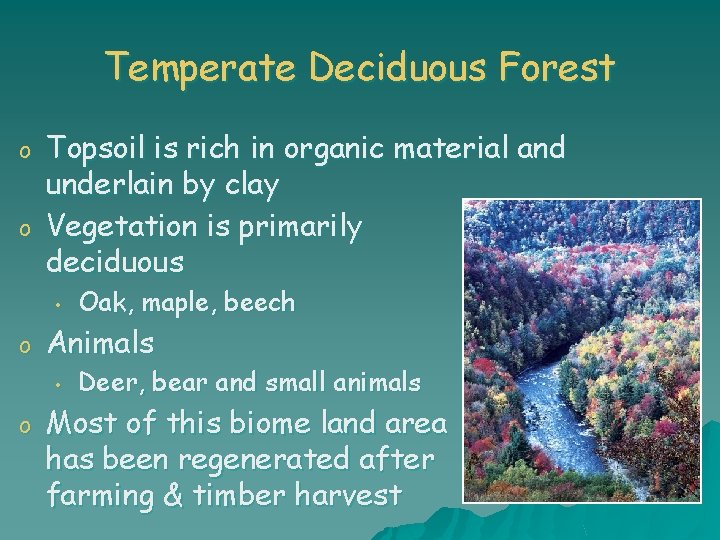
Temperate Deciduous Forest o o Topsoil is rich in organic material and underlain by clay Vegetation is primarily deciduous • o Animals • o Oak, maple, beech Deer, bear and small animals Most of this biome land area has been regenerated after farming & timber harvest
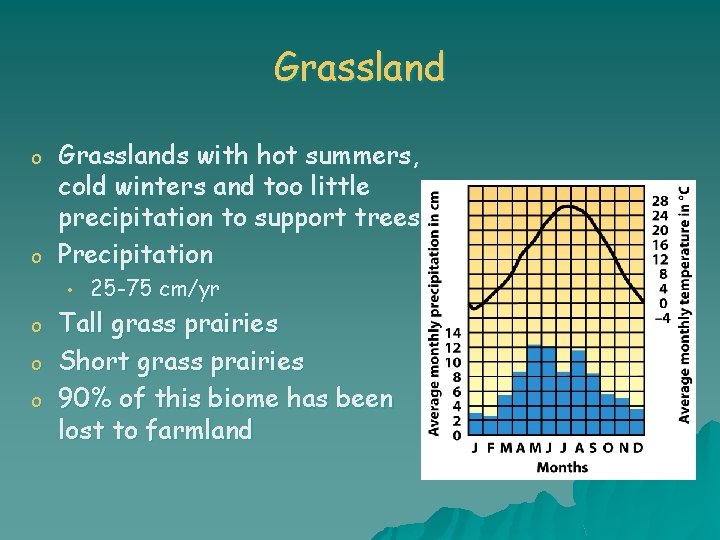
Grassland o o Grasslands with hot summers, cold winters and too little precipitation to support trees Precipitation • o o o 25 -75 cm/yr Tall grass prairies Short grass prairies 90% of this biome has been lost to farmland
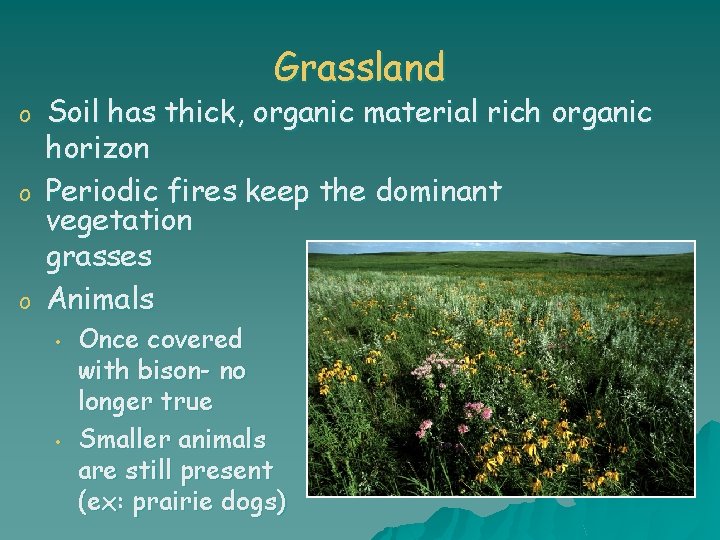
Grassland o o o Soil has thick, organic material rich organic horizon Periodic fires keep the dominant vegetation grasses Animals • • Once covered with bison- no longer true Smaller animals are still present (ex: prairie dogs)
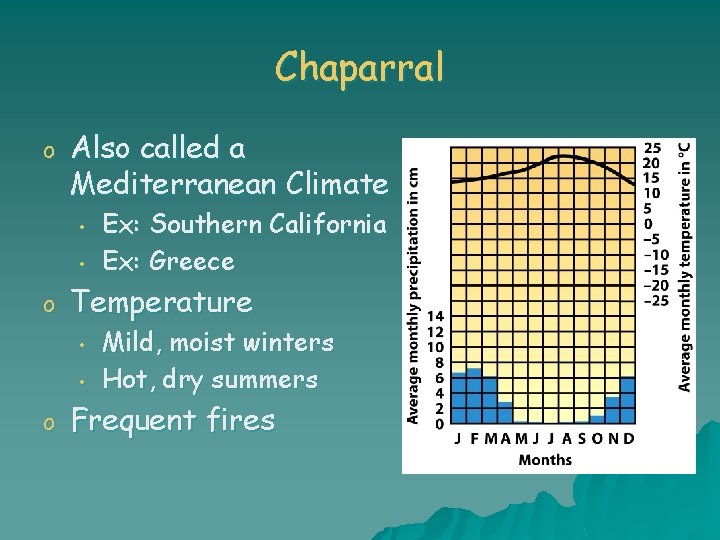
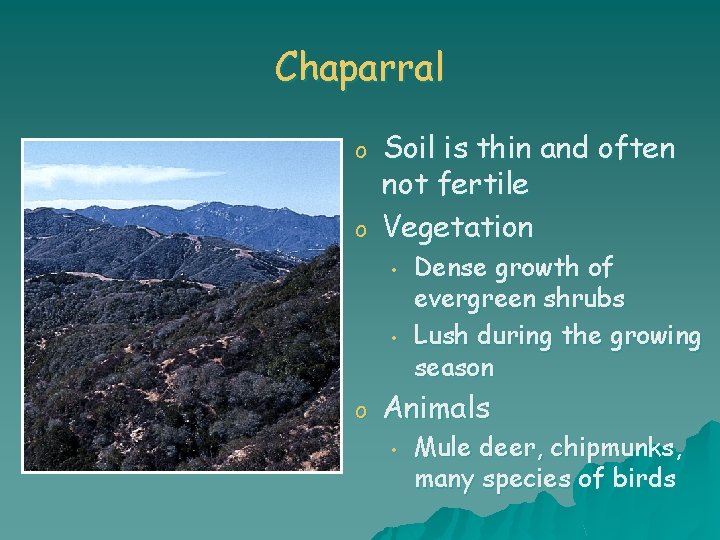
Chaparral o Also called a Mediterranean Climate • • o Temperature • • o Ex: Southern California Ex: Greece Mild, moist winters Hot, dry summers Frequent fires
Chaparral o o Soil is thin and often not fertile Vegetation • • o Dense growth of evergreen shrubs Lush during the growing season Animals • Mule deer, chipmunks, many species of birds
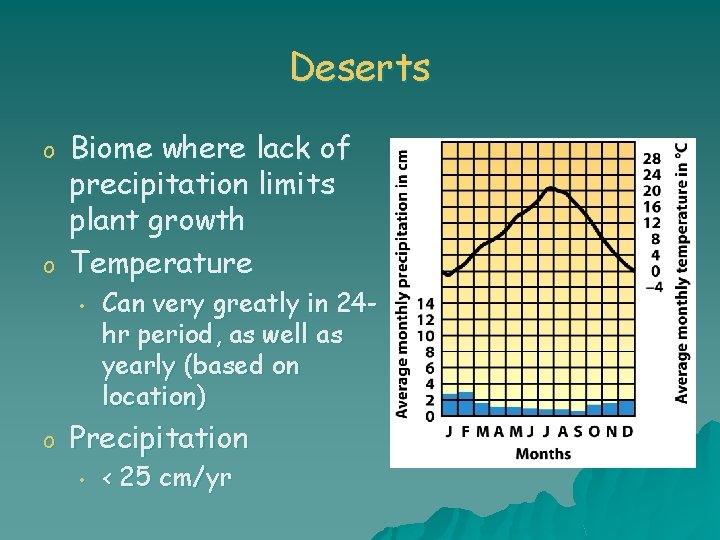
Deserts o o Biome where lack of precipitation limits plant growth Temperature • o Can very greatly in 24 hr period, as well as yearly (based on location) Precipitation • < 25 cm/yr
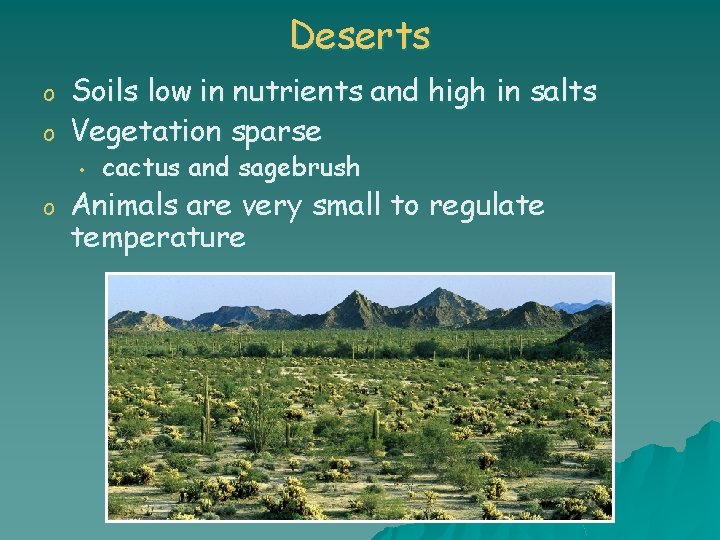
Deserts o o Soils low in nutrients and high in salts Vegetation sparse • o cactus and sagebrush Animals are very small to regulate temperature
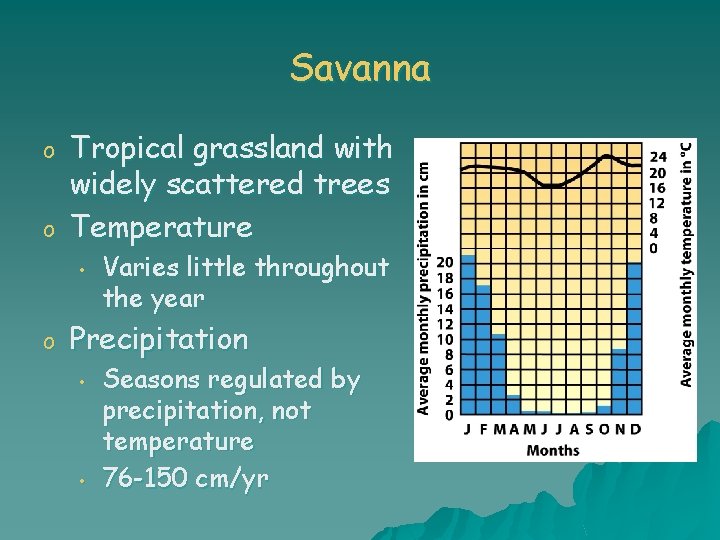
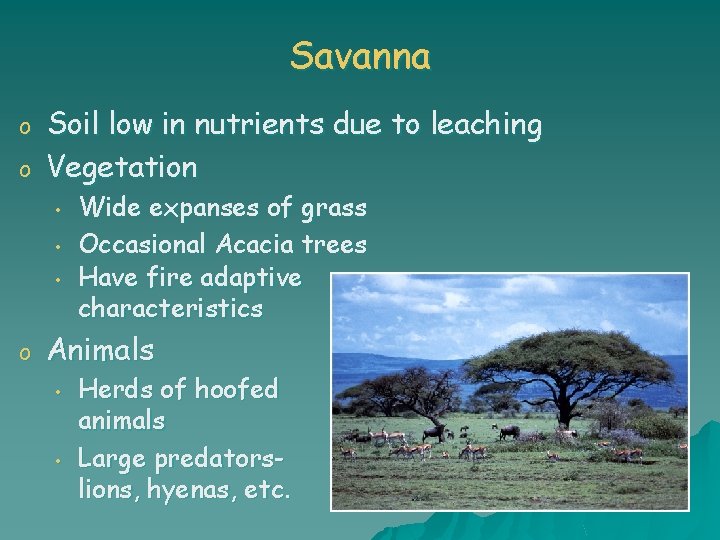
Savanna o o Tropical grassland with widely scattered trees Temperature • o Varies little throughout the year Precipitation • • Seasons regulated by precipitation, not temperature 76 -150 cm/yr
Savanna o o Soil low in nutrients due to leaching Vegetation • • • o Wide expanses of grass Occasional Acacia trees Have fire adaptive characteristics Animals • • Herds of hoofed animals Large predatorslions, hyenas, etc.
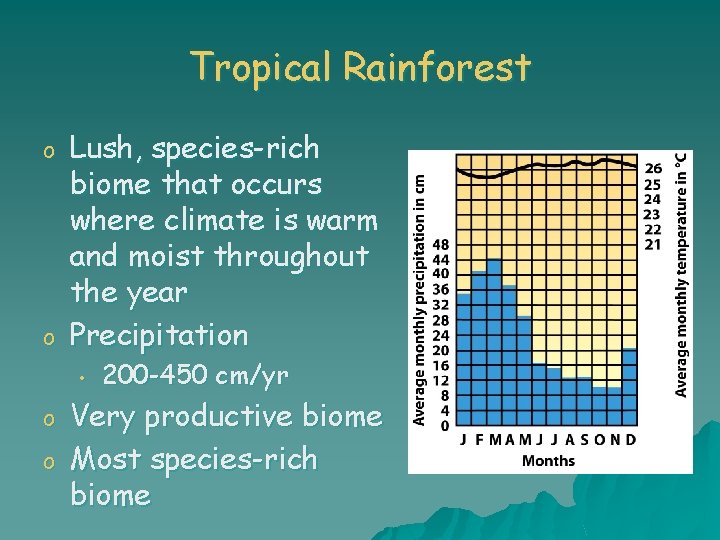
Tropical Rainforest o o Lush, species-rich biome that occurs where climate is warm and moist throughout the year Precipitation • o o 200 -450 cm/yr Very productive biome Most species-rich biome
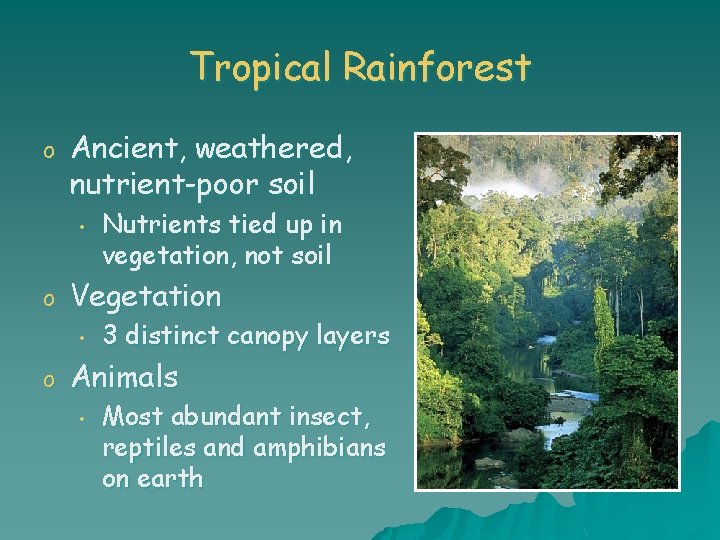
Tropical Rainforest o Ancient, weathered, nutrient-poor soil • o Vegetation • o Nutrients tied up in vegetation, not soil 3 distinct canopy layers Animals • Most abundant insect, reptiles and amphibians on earth
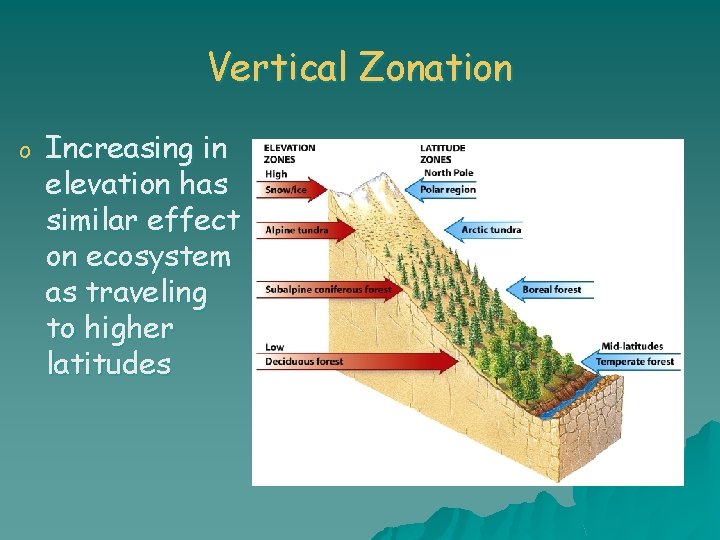
Vertical Zonation o Increasing in elevation has similar effect on ecosystem as traveling to higher latitudes
Aquatic Ecosystem o Fundamental Division • • o Aquatic Ecosystems also affected by • o Freshwater Saltwater Dissolved oxygen level, light penetration, p. H, presence/absence of currents Three main ecological categories of organisms • • • Plankton- free floating Nekton- strong swimming Benthos- bottom dwelling
Freshwater Ecosystems o Includes: • • • o o Rivers and streams Lakes and ponds Marshes and swamps Represent 2% of earth’s surface Assist in recycling water back to the oceans
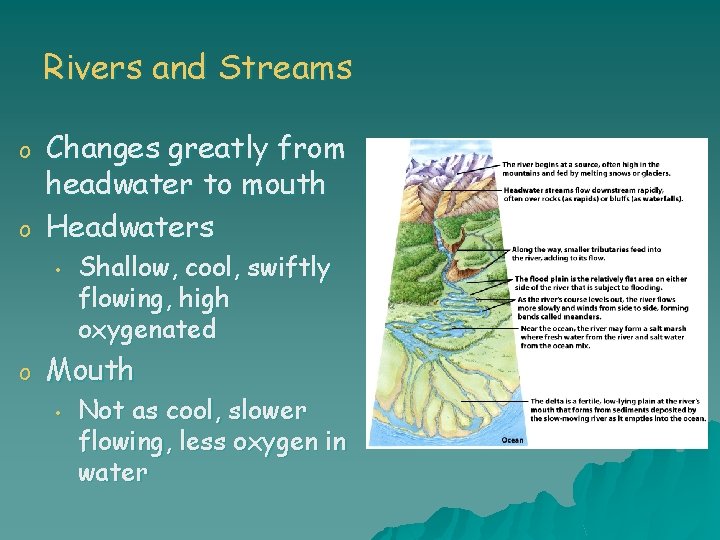
Rivers and Streams o o Changes greatly from headwater to mouth Headwaters • o Shallow, cool, swiftly flowing, high oxygenated Mouth • Not as cool, slower flowing, less oxygen in water
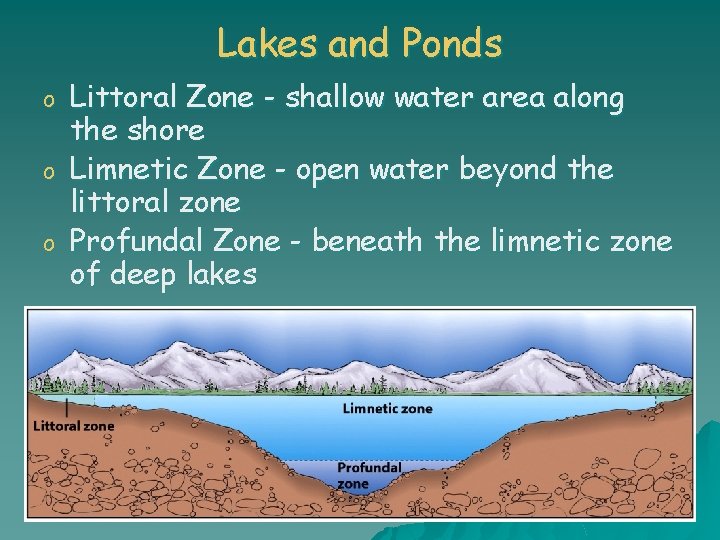
Lakes and Ponds o o Body of freshwater that does not flow Three zones • • • o Littoral Limnetic Profundal Experience thermal stratification (depending on depth)
Lakes and Ponds o o o Littoral Zone - shallow water area along the shore Limnetic Zone - open water beyond the littoral zone Profundal Zone - beneath the limnetic zone of deep lakes
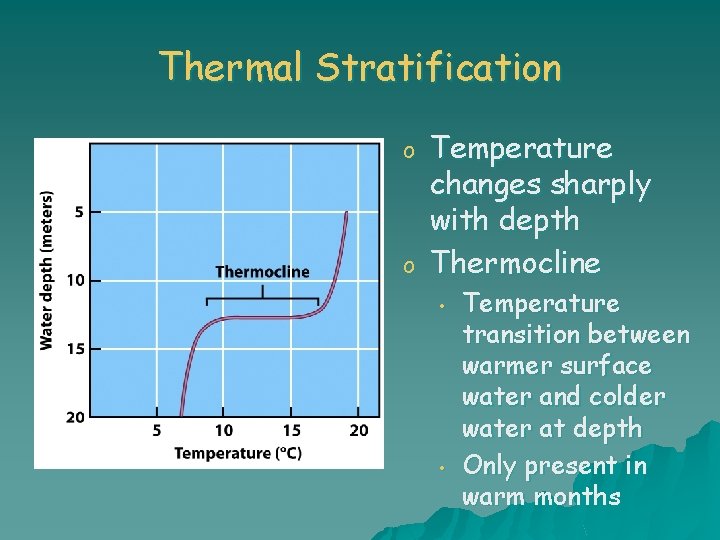
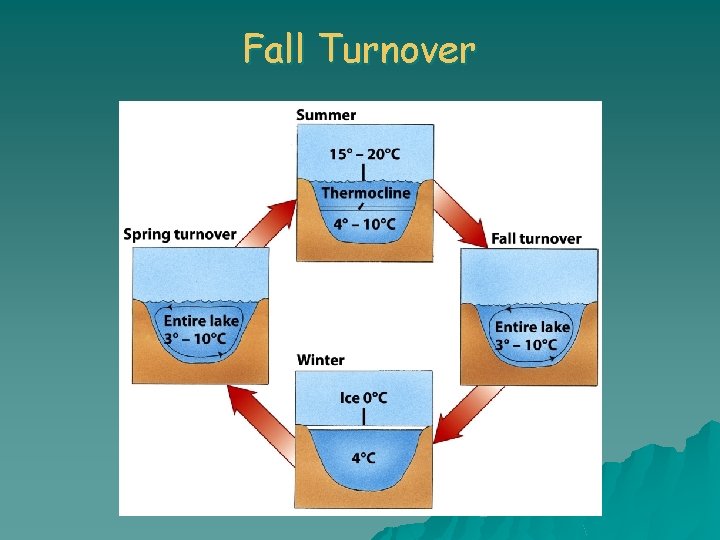
Thermal Stratification o o Temperature changes sharply with depth Thermocline • • Temperature transition between warmer surface water and colder water at depth Only present in warm months
Fall Turnover
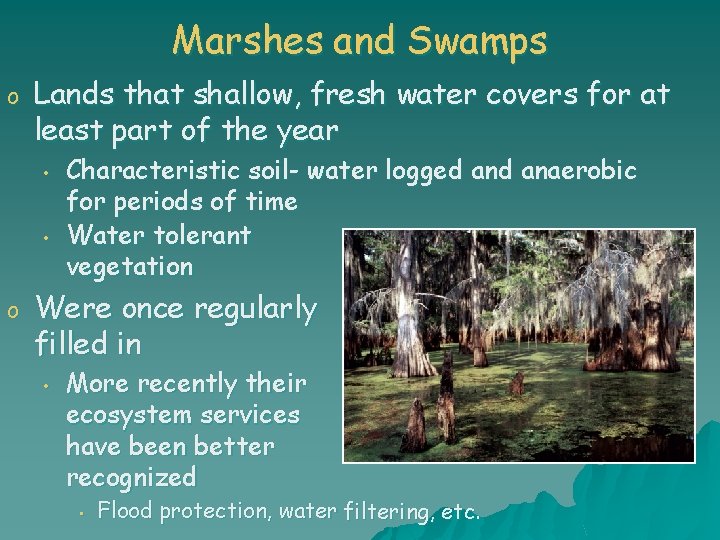
Marshes and Swamps o Lands that shallow, fresh water covers for at least part of the year • • o Characteristic soil- water logged anaerobic for periods of time Water tolerant vegetation Were once regularly filled in • More recently their ecosystem services have been better recognized • Flood protection, water filtering, etc.
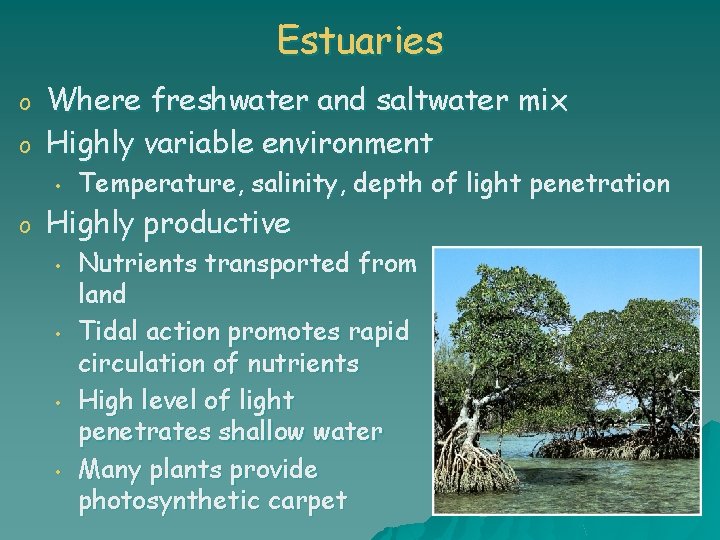
Estuaries o o Where freshwater and saltwater mix Highly variable environment • o Temperature, salinity, depth of light penetration Highly productive • • Nutrients transported from land Tidal action promotes rapid circulation of nutrients High level of light penetrates shallow water Many plants provide photosynthetic carpet
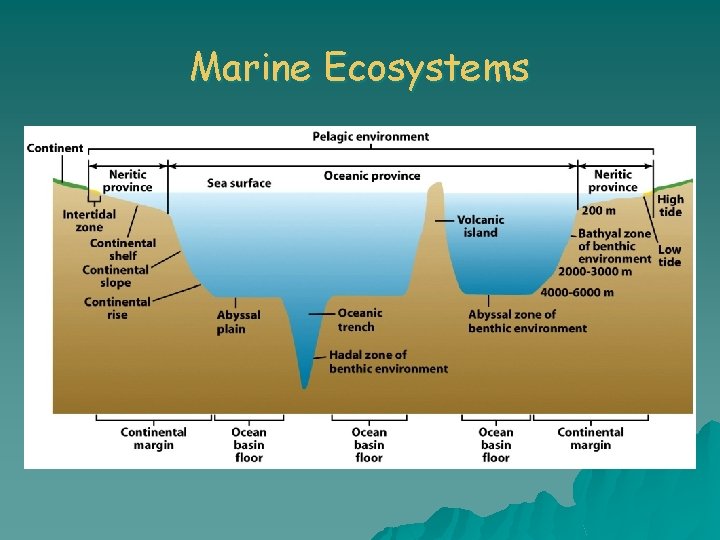
Marine Ecosystems o Subdivided into life zones • • • Intertidal zone Benthic zone Pelagic environment • • Neritic Province Oceanic Province
Marine Ecosystems
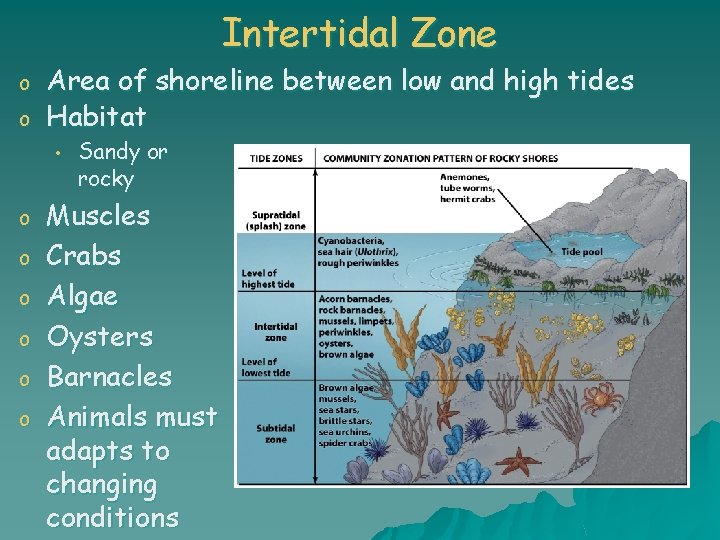
Intertidal Zone o o Area of shoreline between low and high tides Habitat • o o o Sandy or rocky Muscles Crabs Algae Oysters Barnacles Animals must adapts to changing conditions
Benthic Zone o o Ocean floor, extending from tidal zone to deep sea trenches Sediment is mostly mud • o Burrowing worms and clams Three zone • • • Bathyal: 200 m - 4000 m deep Abyssal: 4000 m -6000 m deep Hadal: 6000 m – bottom of deep sea trenches
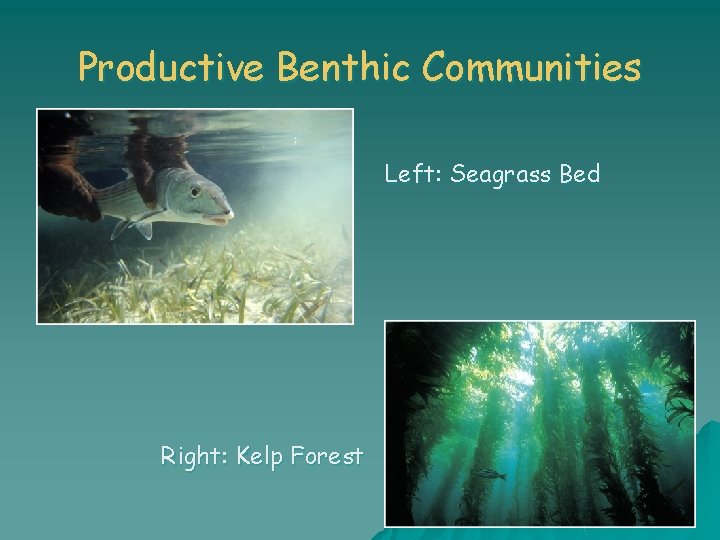
Productive Benthic Communities o Seagrass Beds • • o Kelp Forest • • o Present to depth of 10 m Provide food and habitat to ecosystem 60 -m long brown algae found off rocky shores Diversity of life supported by kelp, rivals coral reefs Coral Reefs • Built from accumulated layers of Ca. CO 3 • • • Colonies of millions of tiny coral animals Found in shallow warm water Most diverse of all marine environments
Productive Benthic Communities Left: Seagrass Bed Right: Kelp Forest
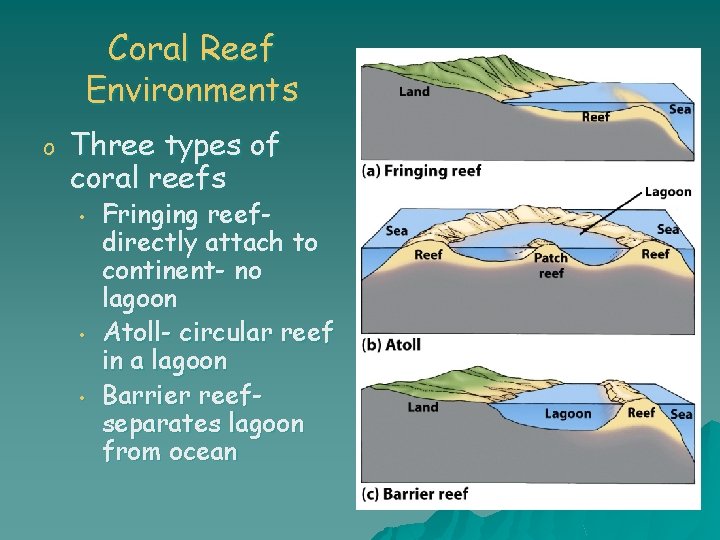
Coral Reef Environments o Three types of coral reefs • • • Fringing reefdirectly attach to continent- no lagoon Atoll- circular reef in a lagoon Barrier reefseparates lagoon from ocean
Human Impact on Coral Reefs o Sedimentation • o o From clear-cutting upstream Overfishing Coral bleaching Mining of corals as building materials Runoff pollution
Pelagic Environment o o All the open ocean water Two main divisions • Neritic Province • • • Water that overlies the continental shelf (to depth of 200 m) Organisms are all floaters or swimmers Oceanic Province • • Water that overlies depths greater than 200 m 75% of world’s ocean Most organisms are dependent on marine snow Organisms are filter feeders, scavengers and predators
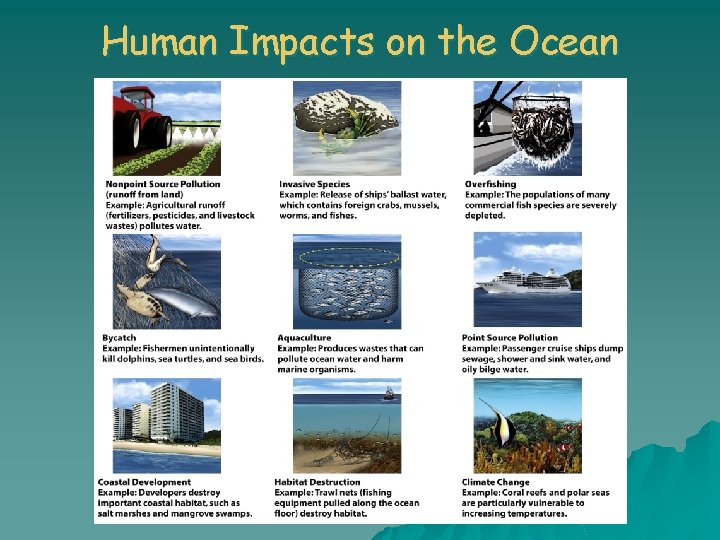
Human Impacts on the Ocean