
Chapter 6 Lesson 2 What are Vertebrates and
Chapter 6 Lesson 2 What are Vertebrates and Invertebrates?
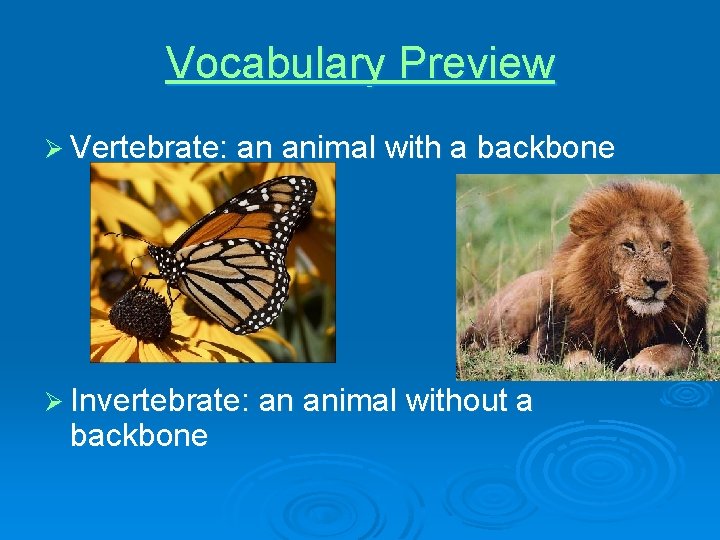
Vocabulary Preview Ø Vertebrate: an animal with a backbone Ø Invertebrate: an animal without a backbone
Animals With A Backbone What do a giraffe and snake have in common? Ø How are they different Ø At first, you might think there is nothing at all. Ø However, both of these animals have a backbone. Ø Snakes: cold-blooded, scales, lay eggs Ø Giraffes: warm-blooded, fur, give birth to live young Ø
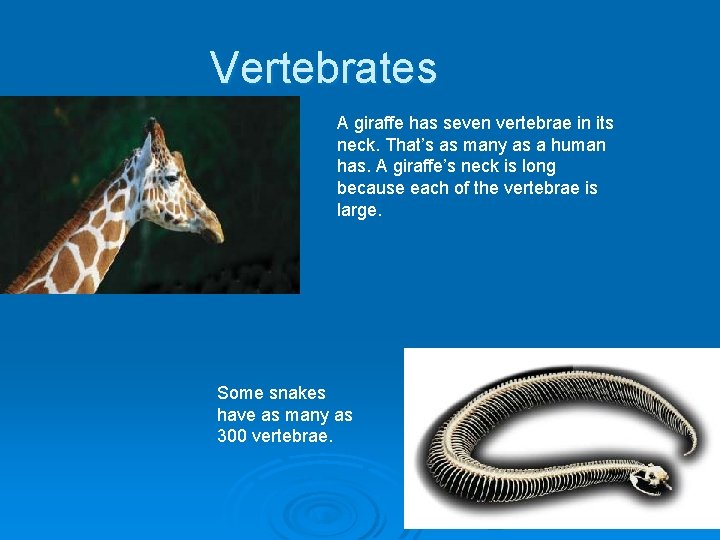
Vertebrates A giraffe has seven vertebrae in its neck. That’s as many as a human has. A giraffe’s neck is long because each of the vertebrae is large. Some snakes have as many as 300 vertebrae.

Animals With A Backbone Ø Ø Ø 1. 2. 3. 4. 5. Scientists divide the animal kingdom into 2 large groups, based on a backbone. An animal with a backbone: vertebrate Scientists classify vertebrates into at least five phyla. Mammals Birds Reptiles Amphibians Fish

Animals With a Backbone Ø Mammals: have hair/produce milk for babies Ø Birds: have feathers/keeps them warm/helps them fly Ø Reptiles: have scaly skin/lay eggs on land Ø Amphibians: begin life in water/but when adults live on land Ø Fish: have scales/life whole life in water
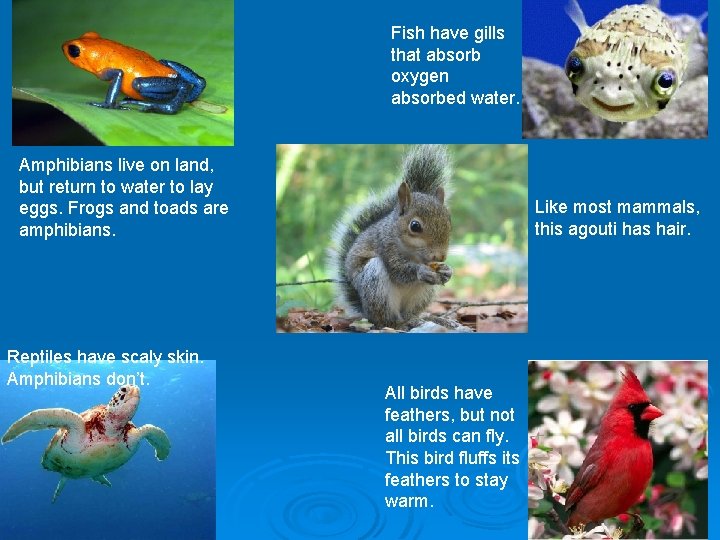
Fish have gills that absorb oxygen absorbed water. Amphibians live on land, but return to water to lay eggs. Frogs and toads are amphibians. Reptiles have scaly skin. Amphibians don’t. Like most mammals, this agouti has hair. All birds have feathers, but not all birds can fly. This bird fluffs its feathers to stay warm.

Animals Without A Backbone Ø Vertebrates are the animals most familiar to us, but they are the smallest part of the animal kingdom. Ø Most species of animals are invertebrates. Ø An invertebrate is an animal without a backbone.
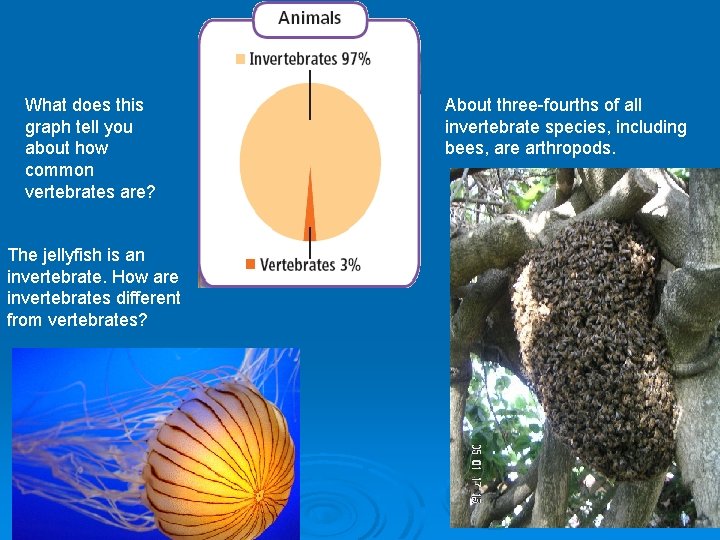
What does this graph tell you about how common vertebrates are? The jellyfish is an invertebrate. How are invertebrates different from vertebrates? About three-fourths of all invertebrate species, including bees, are arthropods.
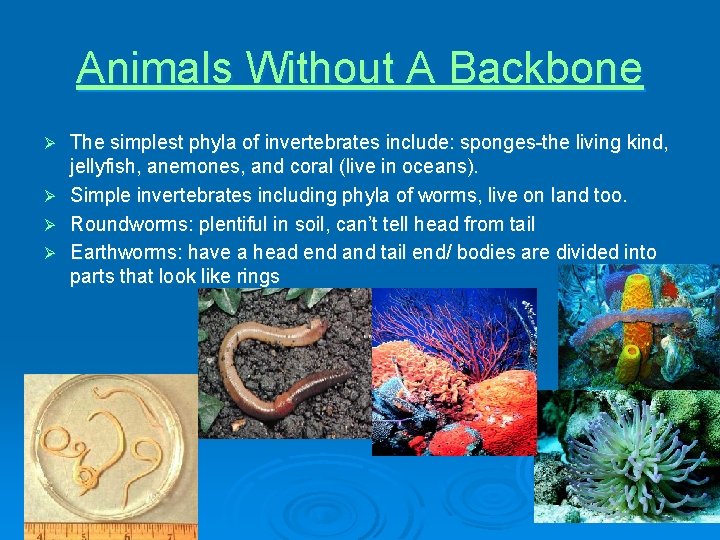
Animals Without A Backbone Ø Ø The simplest phyla of invertebrates include: sponges-the living kind, jellyfish, anemones, and coral (live in oceans). Simple invertebrates including phyla of worms, live on land too. Roundworms: plentiful in soil, can’t tell head from tail Earthworms: have a head end and tail end/ bodies are divided into parts that look like rings
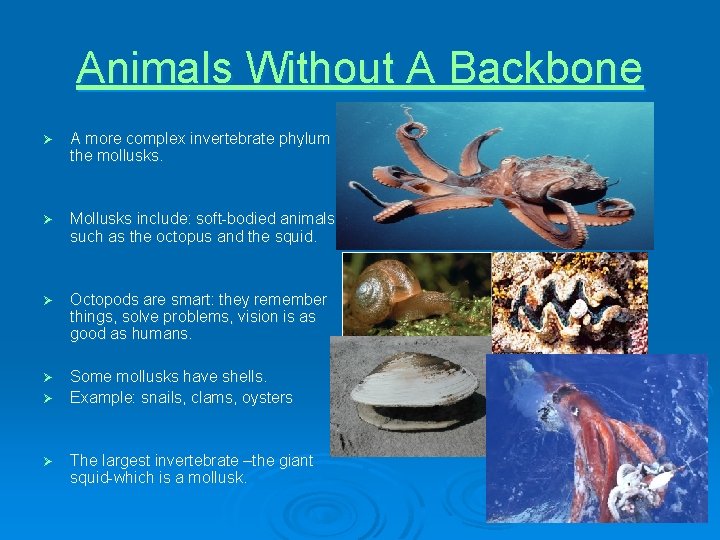
Animals Without A Backbone Ø A more complex invertebrate phylum is the mollusks. Ø Mollusks include: soft-bodied animals such as the octopus and the squid. Ø Octopods are smart: they remember things, solve problems, vision is as good as humans. Some mollusks have shells. Ø Example: snails, clams, oysters Ø Ø The largest invertebrate –the giant squid-which is a mollusk.
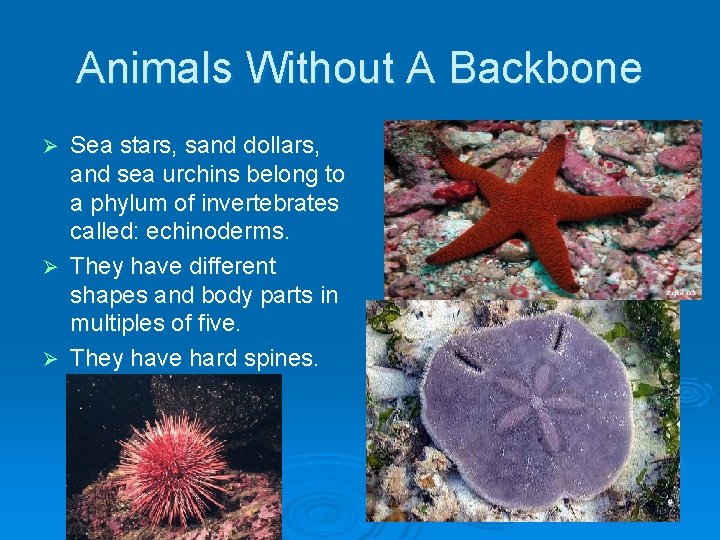
Animals Without A Backbone Sea stars, sand dollars, and sea urchins belong to a phylum of invertebrates called: echinoderms. Ø They have different shapes and body parts in multiples of five. Ø They have hard spines. Ø
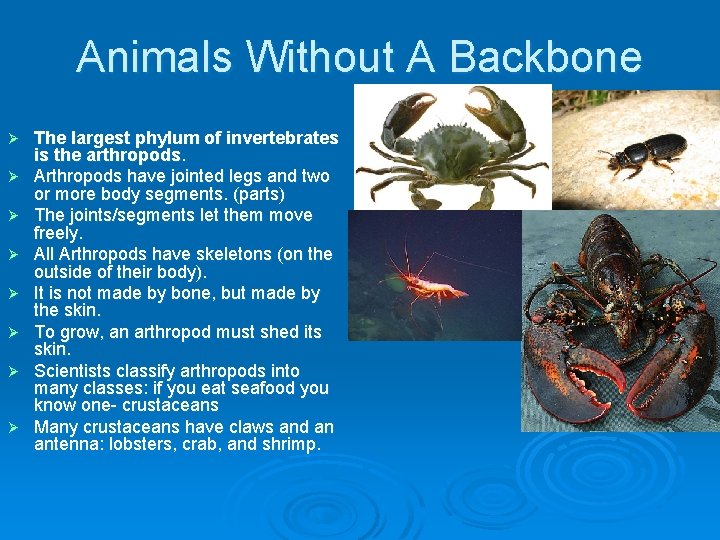
Animals Without A Backbone Ø Ø Ø Ø The largest phylum of invertebrates is the arthropods. Arthropods have jointed legs and two or more body segments. (parts) The joints/segments let them move freely. All Arthropods have skeletons (on the outside of their body). It is not made by bone, but made by the skin. To grow, an arthropod must shed its skin. Scientists classify arthropods into many classes: if you eat seafood you know one- crustaceans Many crustaceans have claws and an antenna: lobsters, crab, and shrimp.
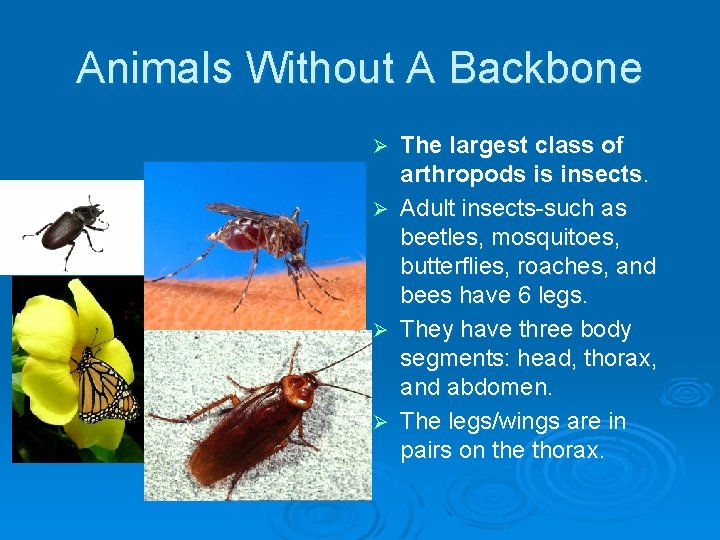
Animals Without A Backbone The largest class of arthropods is insects. Ø Adult insects-such as beetles, mosquitoes, butterflies, roaches, and bees have 6 legs. Ø They have three body segments: head, thorax, and abdomen. Ø The legs/wings are in pairs on the thorax. Ø
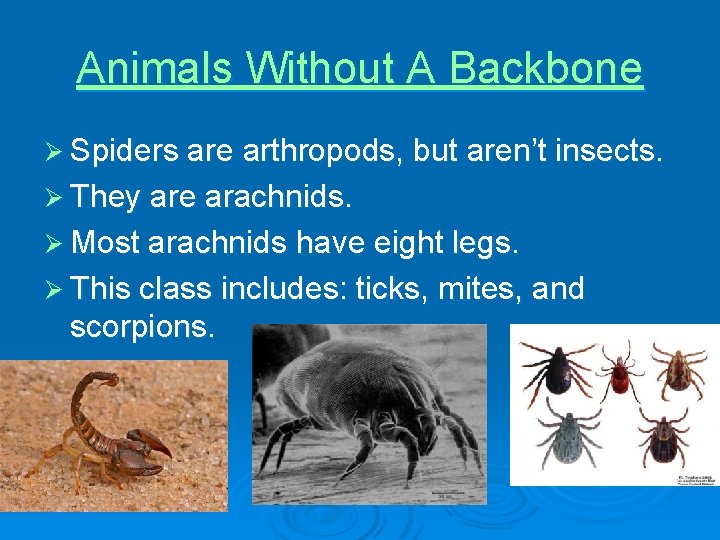
Animals Without A Backbone Ø Spiders are arthropods, but aren’t insects. Ø They are arachnids. Ø Most arachnids have eight legs. Ø This class includes: ticks, mites, and scorpions.
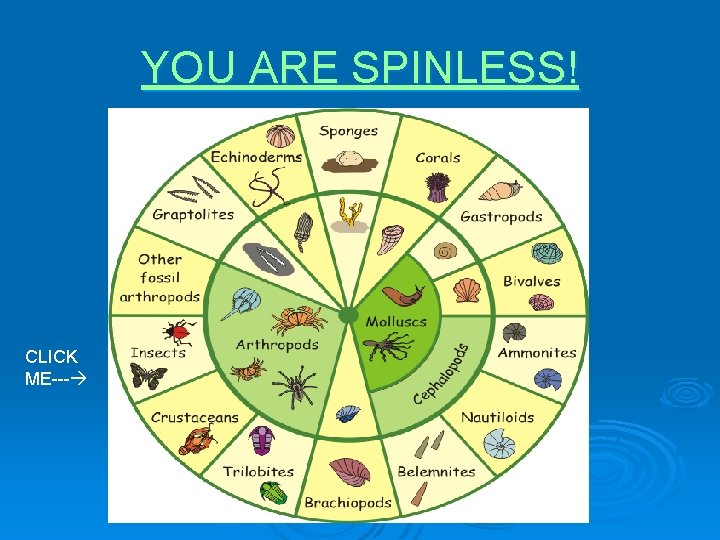
YOU ARE SPINLESS! CLICK ME---
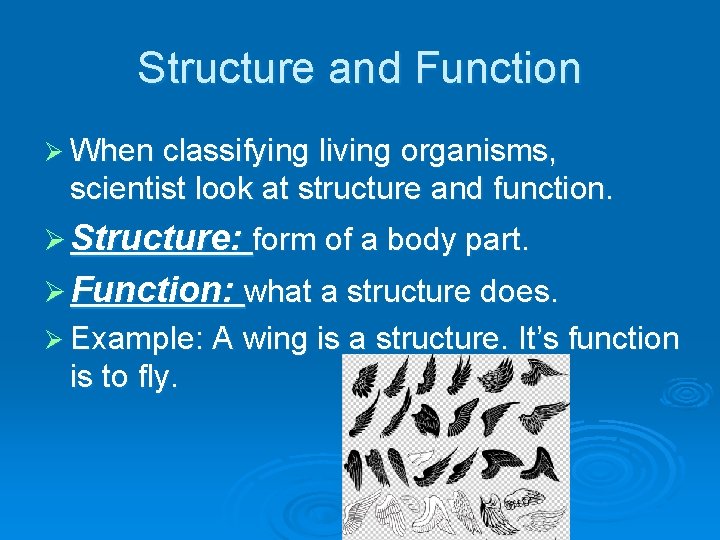
Structure and Function Ø When classifying living organisms, scientist look at structure and function. Ø Structure: form of a body part. Ø Function: what a structure does. Ø Example: A wing is a structure. It’s function is to fly.
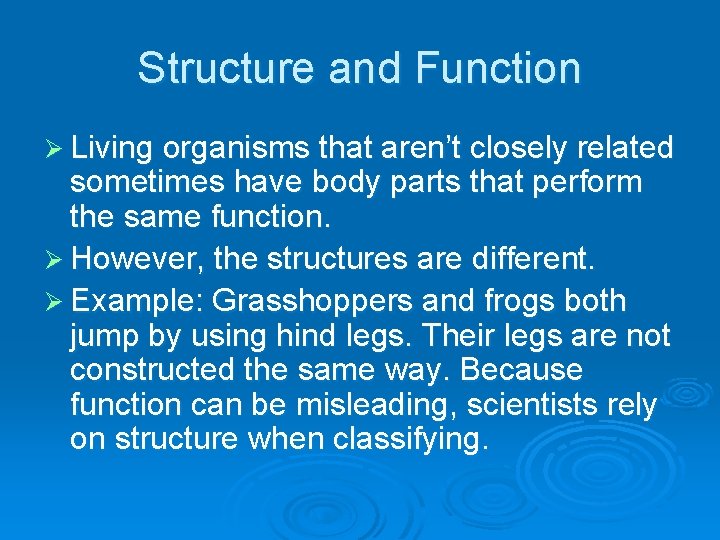
Structure and Function Ø Living organisms that aren’t closely related sometimes have body parts that perform the same function. Ø However, the structures are different. Ø Example: Grasshoppers and frogs both jump by using hind legs. Their legs are not constructed the same way. Because function can be misleading, scientists rely on structure when classifying.
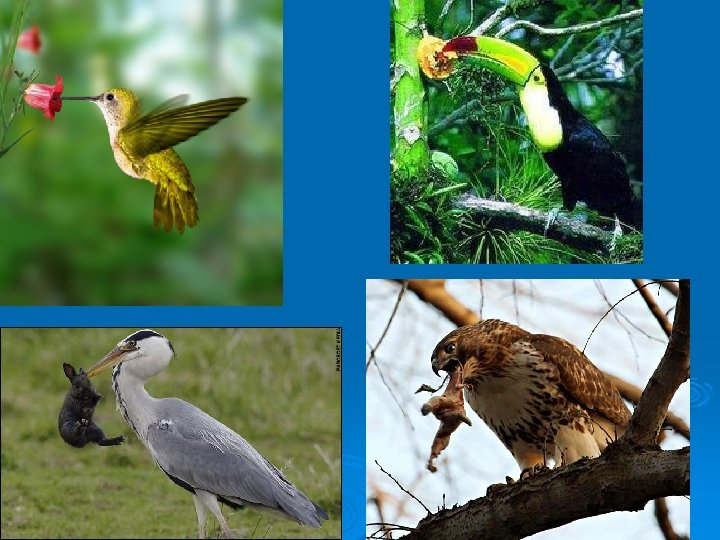
Structure and Function Ø Ø Ø Bird beaks are a perfect example of this. Look at the birds: All four have beaks that are specialized for the types of food they eat. Scientists have to look at structure for classifying each. Ø Ø Hummingbird: long thin beaks for nectar Toucan: large powerful beak for opening nuts Hawks: eat live prey, like mice (designed for tearing). Herons: are water birds, pointed beaks allow them to catch fish and other prey underwater.
- Slides: 21