
CHAPTER 6 LEARNING Whats In This Chapter Objectives
CHAPTER 6 LEARNING
What’s In This Chapter? (Objectives for this Unit) • This chapter on learning is the perspective known as Behavioral • Essential Questions to be asked: • What is learning? • Which part of our behavior is learned? • What are the types of learning?
"The object of teaching a child is to enable the child to get along without the teacher. " unknown
What is Learning? • A relatively permanent change in an organism’s behavior or knowledge due to experience.
Association § We learn by association § Our minds naturally connect events that occur in sequence § Aristotle 2000 years ago § John Locke and David Hume 200 years ago § Associative Learning § learning that two events occur together § two stimuli § a response and its consequences

Conditioning • Conditioning: – The acquisition of specific patterns of behavior in the presence of well-defined stimuli. • Acquisition refers to the initial stage of Learning something • Classical Conditioning(C. C. ): – a response naturally elicited by one stimulus comes to be elicited by a different, formerly neutral stimulus
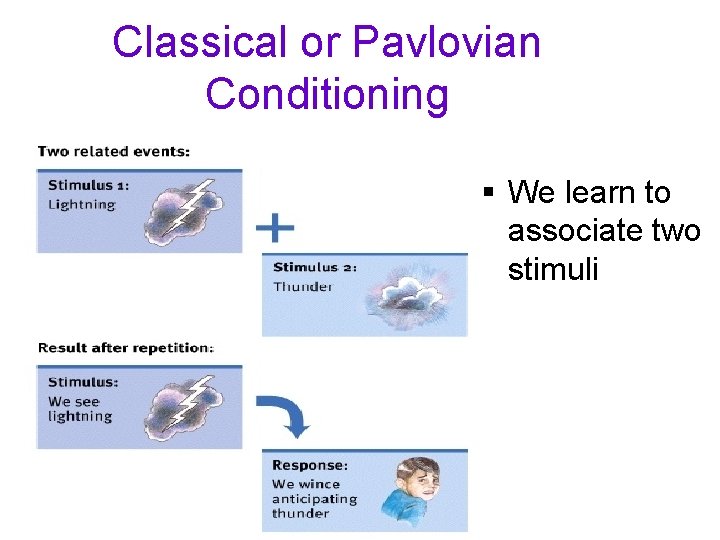
Classical or Pavlovian Conditioning § We learn to associate two stimuli
Classical Conditioning Terms • Neutral stimulus: – A stimulus that does not elicit a specific response. • Conditioned stimulus (CS): – A neutral stimulus that acquires the ability to elicit a specific response • Conditioned response (CR): – A response similar to the UR that is elicited by the CS.
Classical Conditioning Terms • Unconditioned stimulus (US): – A stimulus that always elicits a specific response in the absence of any training. • Unconditioned response (UR): – A response that is always elicited by a specific stimulus in the absence of any training.
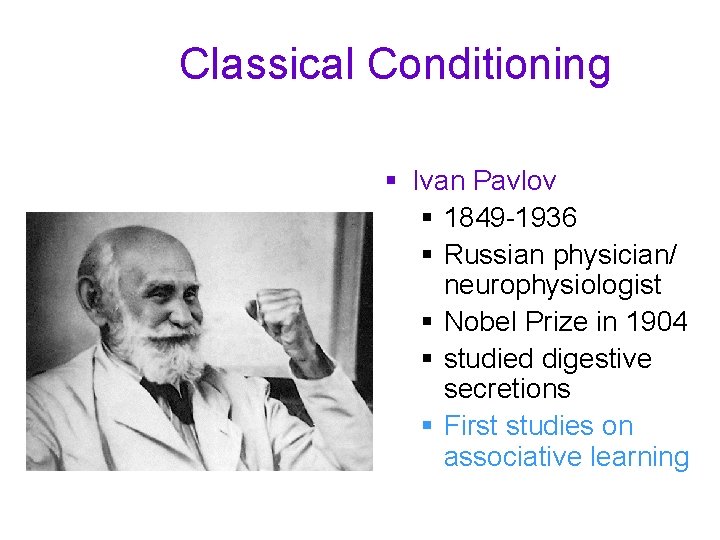
Classical Conditioning § Ivan Pavlov § 1849 -1936 § Russian physician/ neurophysiologist § Nobel Prize in 1904 § studied digestive secretions § First studies on associative learning
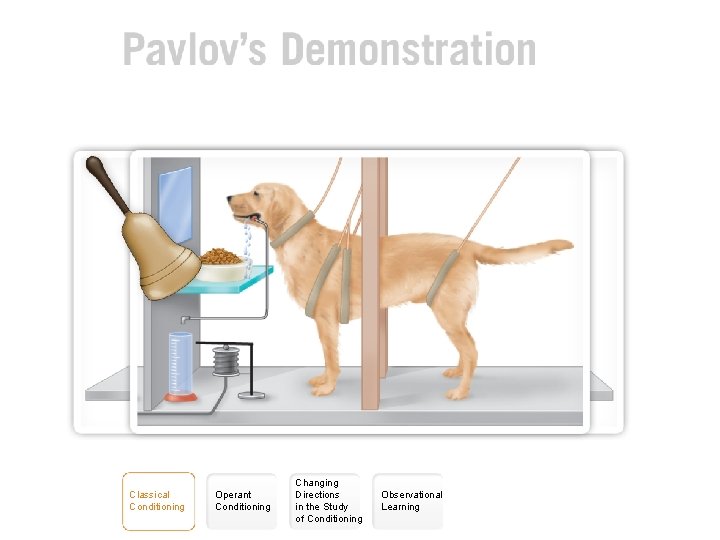
Classical Conditioning Operant Conditioning Changing Directions in the Study of Conditioning Observational Learning
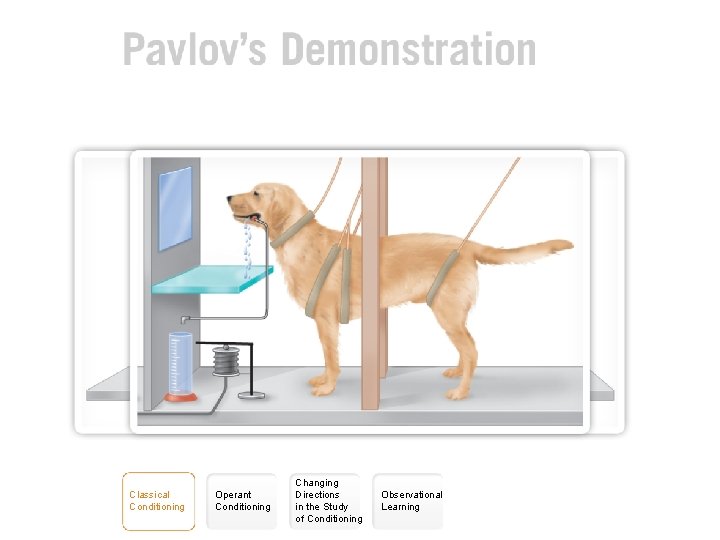
Classical Conditioning Operant Conditioning Changing Directions in the Study of Conditioning Observational Learning

(NS) Neutral Stimulus Classical Conditioning Operant Conditioning (NR) No Response Changing Directions in the Study of Conditioning Observational Learning
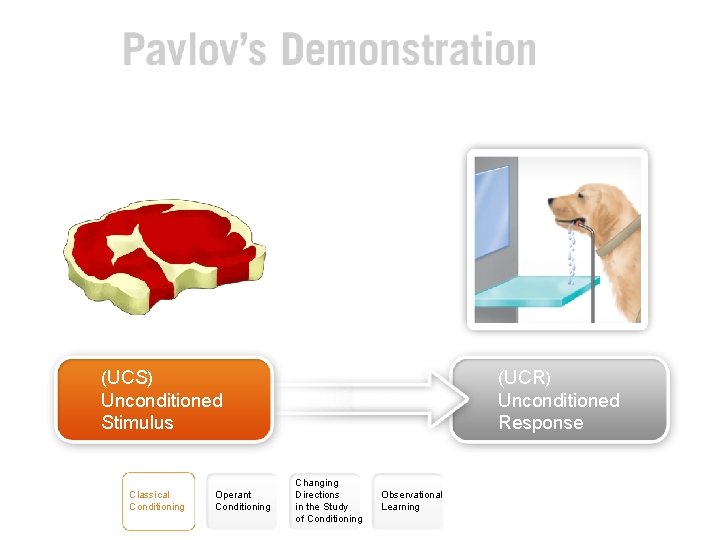
(UCS) Unconditioned Stimulus Classical Conditioning Operant Conditioning (UCR) Unconditioned Response Changing Directions in the Study of Conditioning Observational Learning
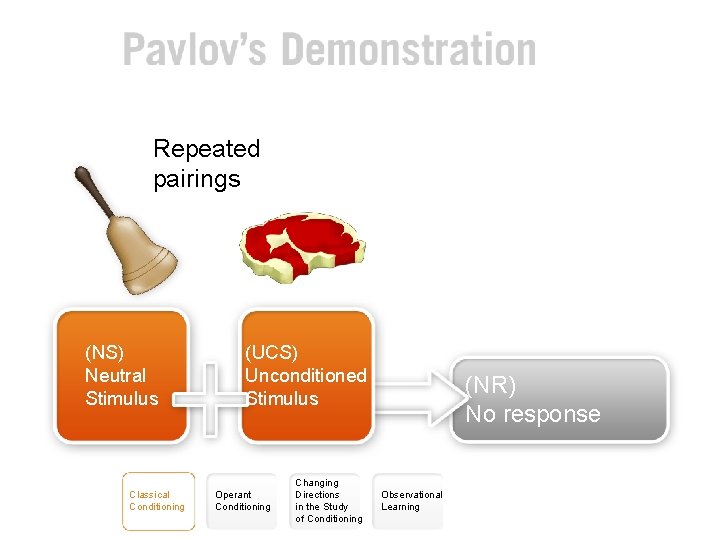
Repeated pairings (NS) Neutral Stimulus Classical Conditioning (UCS) Unconditioned Stimulus Operant Conditioning Changing Directions in the Study of Conditioning (NR) No response Observational Learning
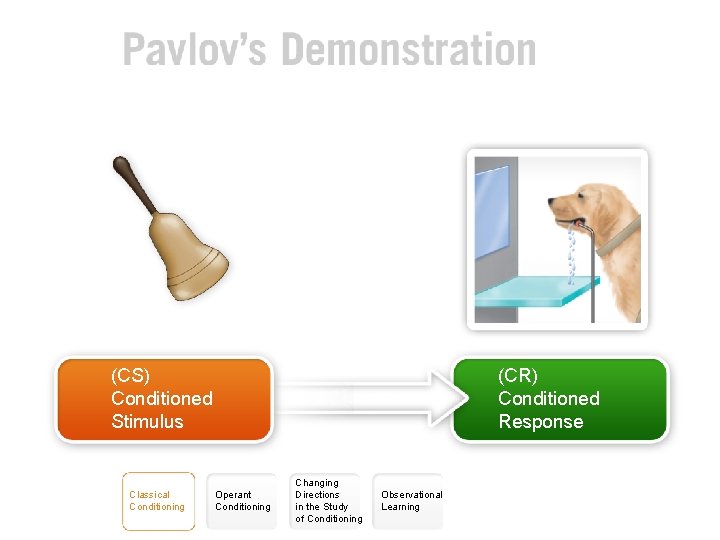
(CR) Conditioned Response (CS) Conditioned Stimulus Classical Conditioning Operant Conditioning Changing Directions in the Study of Conditioning Observational Learning
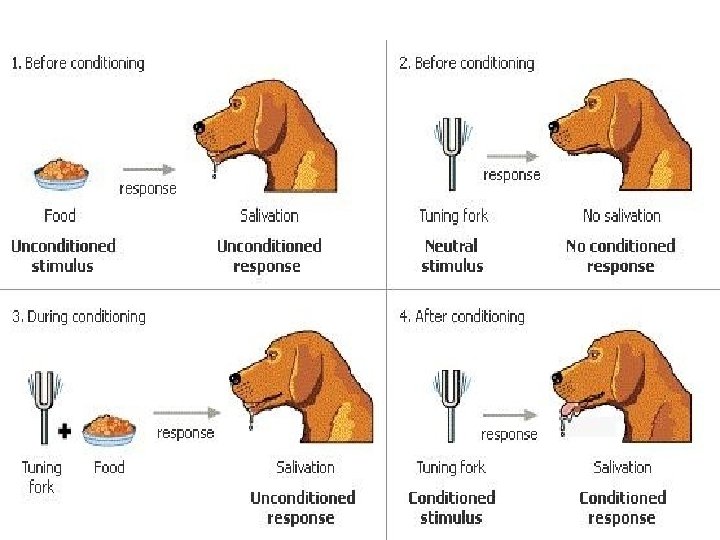
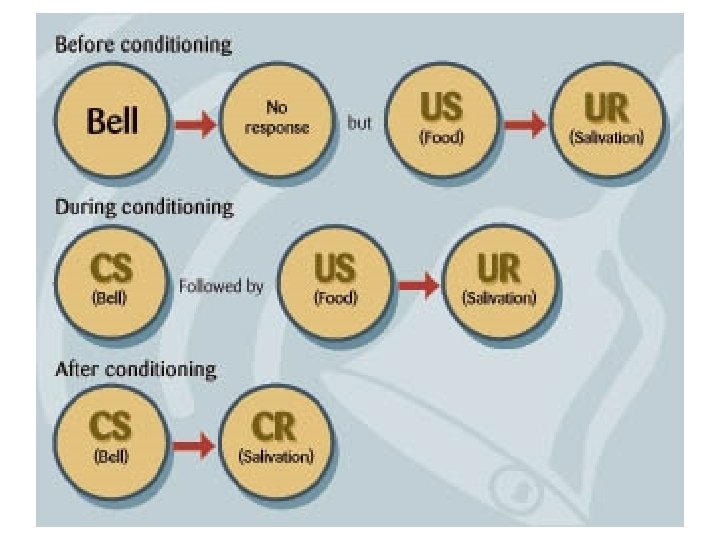
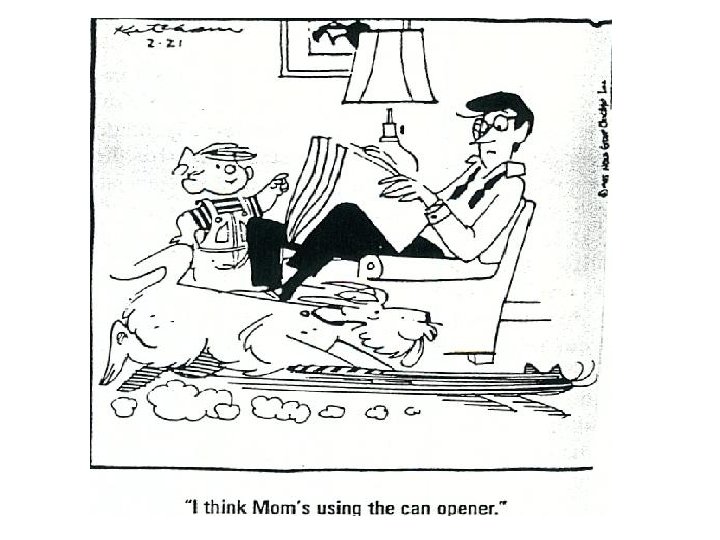
CLASSICAL CONDITIONING • Nearly all automatic, involuntary responses (UR) can become a conditioned response: – heartbeat, sweating, stomach secretion, blood pressure, brain waves etc. • For conditioning to be effective, the conditioned stimulus should occur before the unconditioned stimulus, not after. • the conditioned stimulus becomes a kind of signal for the unconditioned stimulus.
CLASSICAL CONDITIONING • The Office
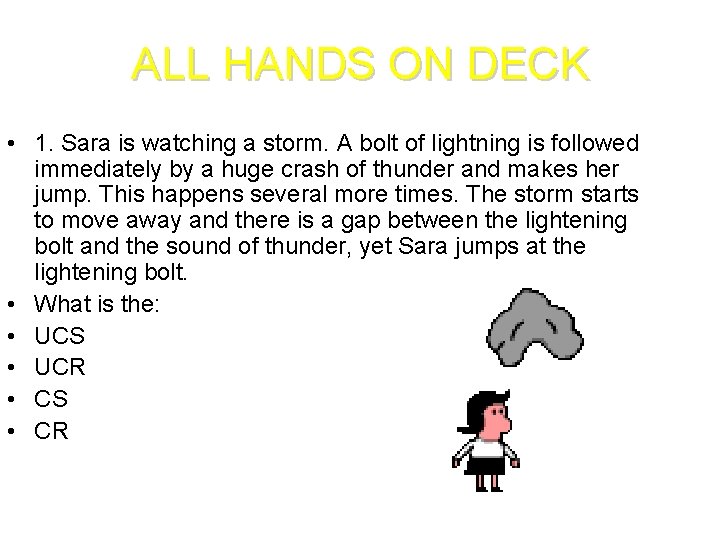
ALL HANDS ON DECK • 1. Sara is watching a storm. A bolt of lightning is followed immediately by a huge crash of thunder and makes her jump. This happens several more times. The storm starts to move away and there is a gap between the lightening bolt and the sound of thunder, yet Sara jumps at the lightening bolt. • What is the: • UCS • UCR • CS • CR
ALL HANDS ON DECK • Steve's mouth waters whenever he eats anything with lemon in. One day, while seeing an advertisement showing lemons, his mouth begins to water. • What is the: • UCS • UCR • CS • CR
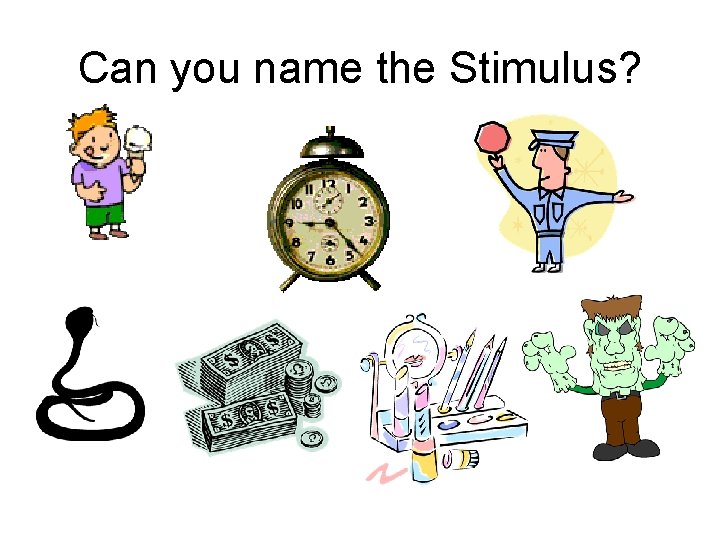
Can you name the Stimulus?
Classical Conditioning in Real Life • Learning to like • Evaluative Conditioning: changes in liking of a stimulus that result from pairing that stimulus with other positive or negative stimuli • Learning to fear • Accounting for Taste • Reacting to Medical Treatment

Classical Conditioning UCS (passionate kiss) CS (onion breath) UCR (sexual arousal) UCS (passionate Kiss) CR (sexual arousal) UCR (sexual arousal)
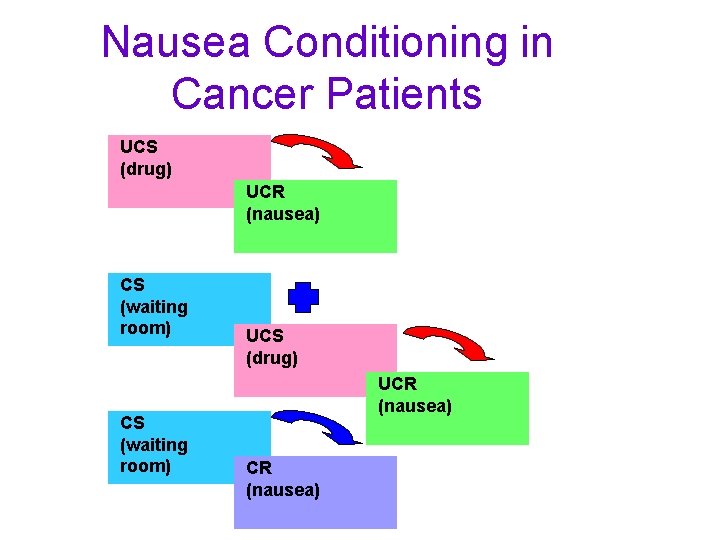
Nausea Conditioning in Cancer Patients UCS (drug) UCR (nausea) CS (waiting room) UCS (drug) UCR (nausea)
Acquisition • Initial stage of classical conditioning with associating a neutral stimulus with an unconditional stimulus so that the neutral stimulus comes to elicit a conditioned response. – Ex. Flatworms
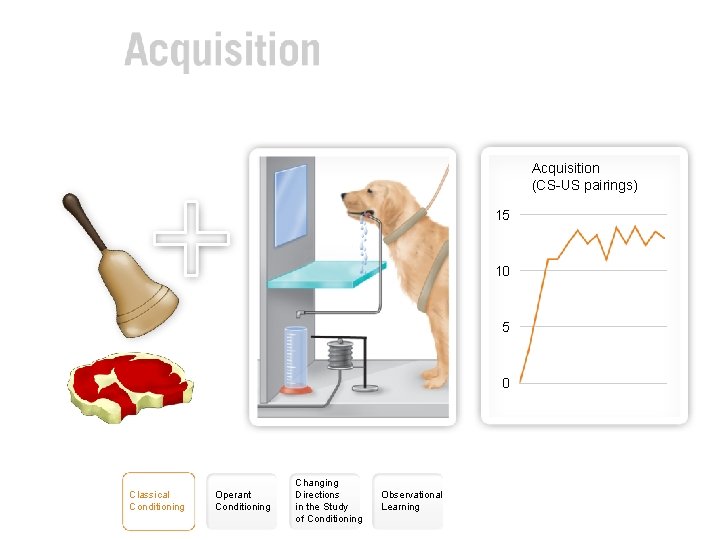
Acquisition (CS-US pairings) 15 10 5 0 Classical Conditioning Operant Conditioning Changing Directions in the Study of Conditioning Observational Learning
Principles of Conditioning • • Discrimination Generalization Extinction Spontaneous recovery
Classical Conditioning § Discrimination § in classical conditioning, the learned ability to distinguish between a CS and other stimuli (even one similar to the CS) that do not signal a UCS § Ex. Different types of dogs or snakes
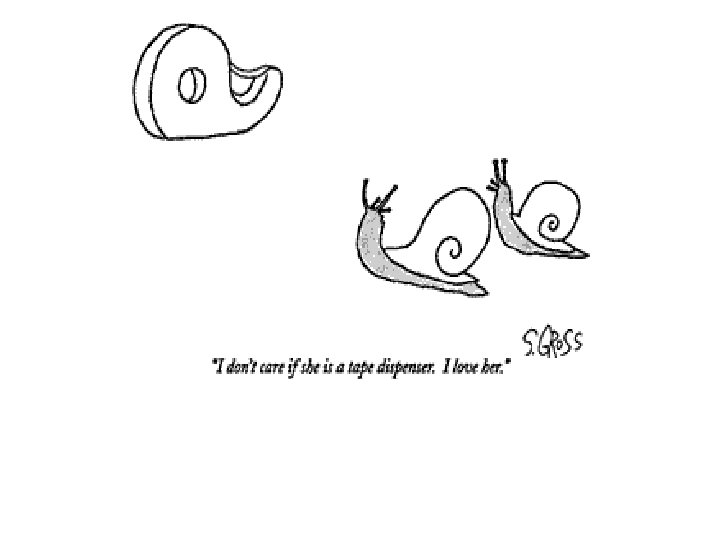
Classical Conditioning § Generalization § tendency for stimuli similar to CS to elicit similar responses § the extension of the conditioned response from the original stimulus to similar stimuli. § Ex. Children fear cars, truck, and other moving vehicles
Modification of Original Classical Conditioning • Response generalization: • Stimulus discrimination:
Classical Conditioning § Extinction § diminishing of a CR § in classical conditioning, when a UCS does not follow a CS Cases of Resistance to Extinction do occur
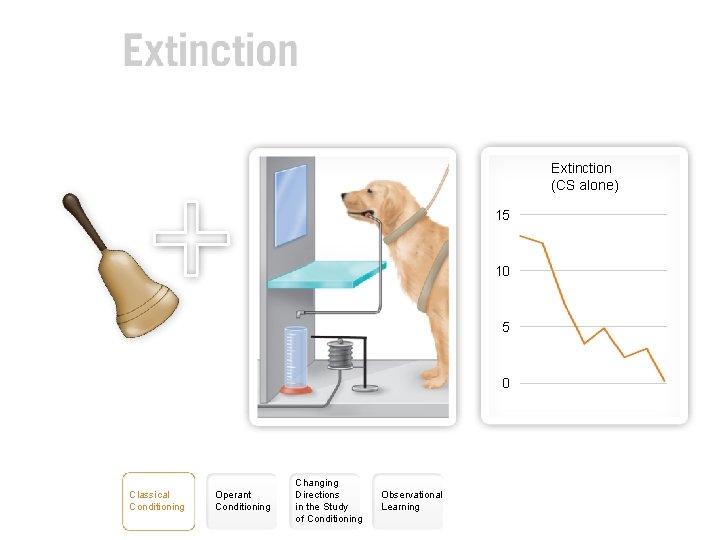
Extinction (CS alone) 15 10 5 0 Classical Conditioning Operant Conditioning Changing Directions in the Study of Conditioning Observational Learning
Persistence of Classical Conditioning • Spontaneous recovery: the reappearance of the CR after a pause in extinction trials • Renewal effect: if a response is extinguished in a different environment than where it was acquired, the extinguished response will reappear if the animal is returned to the original environment where acquisition took place
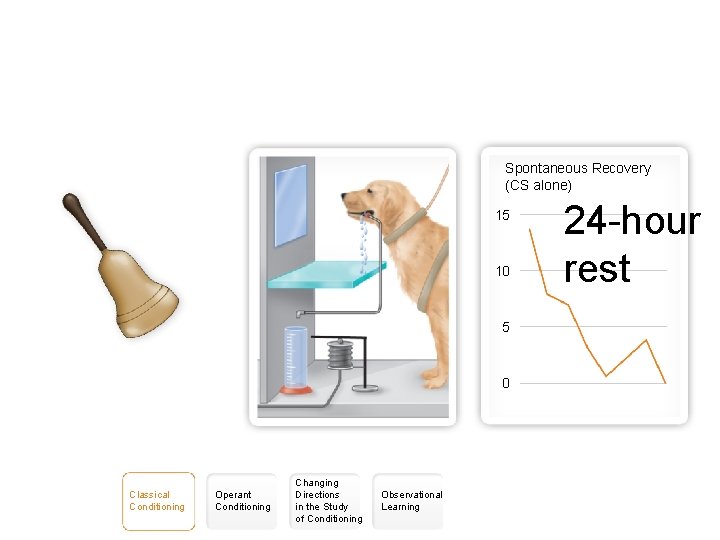
Spontaneous Recovery (CS alone) 15 10 5 0 Classical Conditioning Operant Conditioning Changing Directions in the Study of Conditioning Observational Learning 24 -hour rest
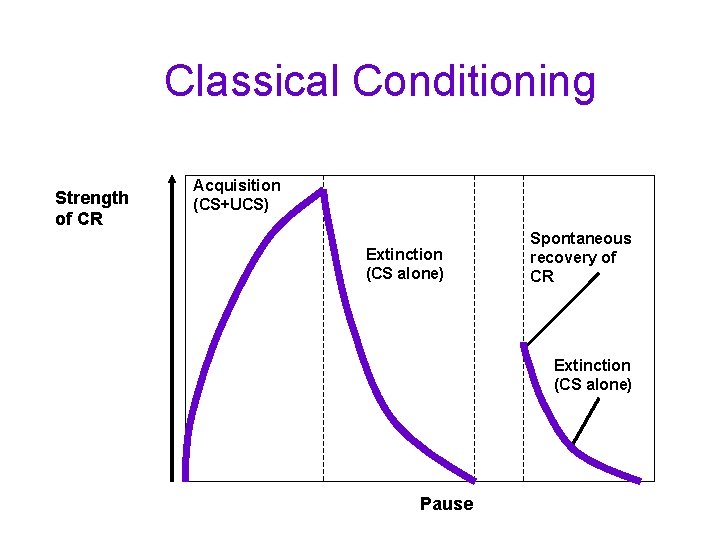
Classical Conditioning Strength of CR Acquisition (CS+UCS) Extinction (CS alone) Spontaneous recovery of CR Extinction (CS alone) Pause
ALL HANDS ON DECK • Think about the following scenarios and try to apply some of the aspects of classical conditioning: • 1. How we acquire likes or dislikes for certain foods. • 2. How classical conditioning may be used to treat conditions such as alcoholism. • 3. How advertisers use classical conditioning. • 4. How phobias and fears can be acquired. • 5. How phobias and fears could be treated.
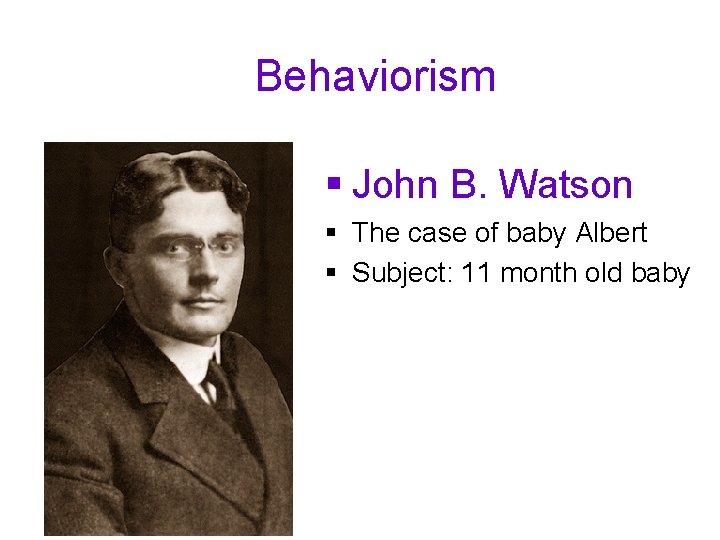
Behaviorism § John B. Watson § The case of baby Albert § Subject: 11 month old baby
Classical Conditioning in Humans • J. B. Watson classically conditions “Little Albert” to fear white rats. • Case study • Identify the u. s. , u. r. , c. s. , c. r. • Discrimination and generalization
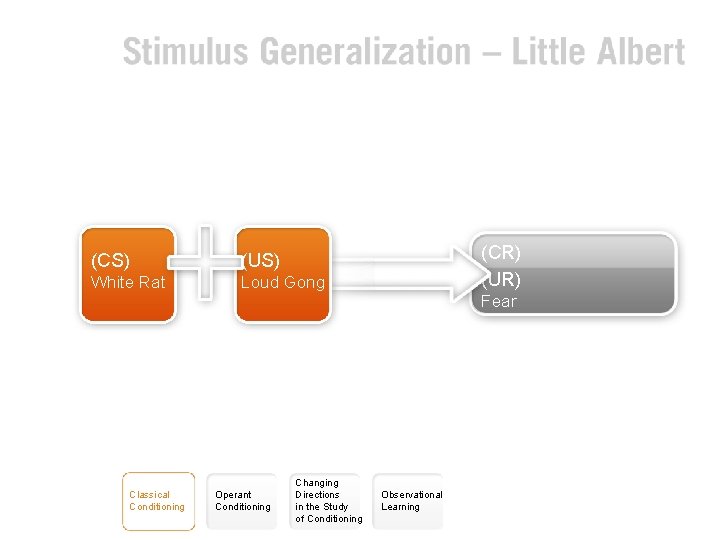
(CS) (US) White Rat Loud Gong Classical Conditioning Operant Conditioning Changing Directions in the Study of Conditioning (CR) (UR) Fear Observational Learning
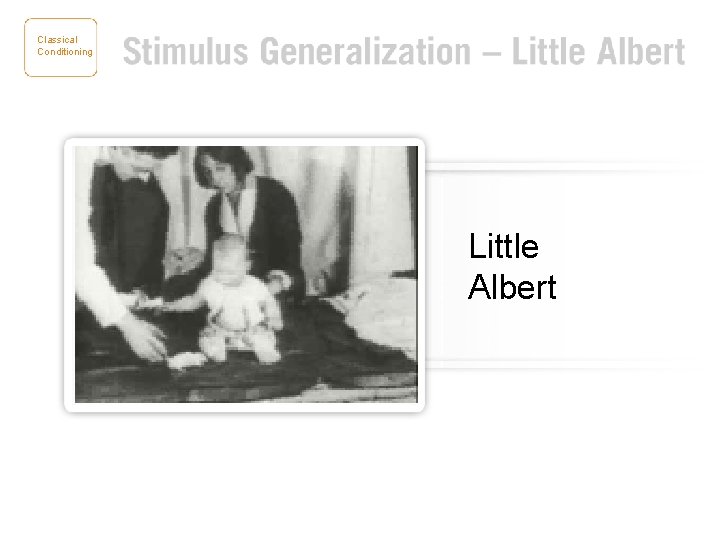
Classical Conditioning Little Albert
Classical Conditioning in Humans • Mary Cover Jones reconditions “Peter” to not fear rabbits. • This procedure evolved into desensitization therapy. • The Case of Baby Peter • Ucs, ucr, cr
Common Examples of Classical Conditioning • Phobias: – Irrational fears • Conditioned food (taste) aversion: – Classically conditioning a novel flavor to illness – Biological predispositions serve as protective measures (Preparedness) • Species-specific predispositions to be Conditioned in certain ways and not others
Classical Conditioning Is Selective • Martin Seligman has used the concept of preparedness to account for the fact that certain conditioned responses are acquired very easily. • The ease with which we develop conditioned taste aversions illustrates preparedness.
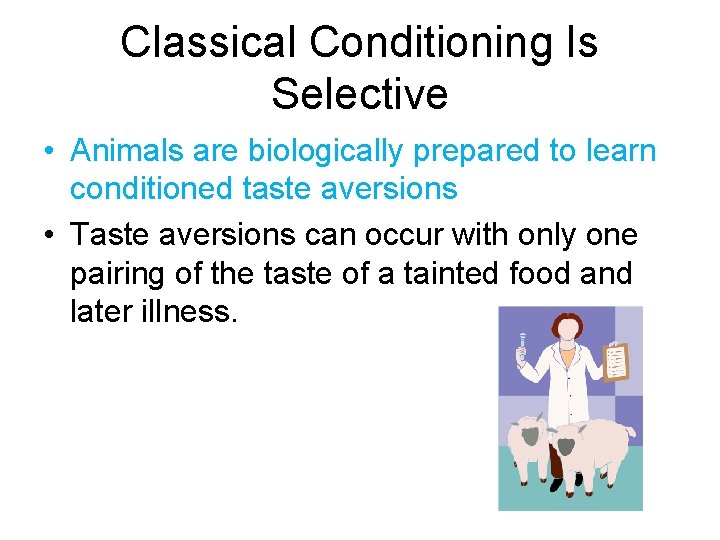
Classical Conditioning Is Selective • Animals are biologically prepared to learn conditioned taste aversions • Taste aversions can occur with only one pairing of the taste of a tainted food and later illness.
Reasons Taste Aversion Is Unique • Taste aversion only requires one pairing of the NS with the US. • Several hours can occur between the presentation of the NS and the US and the association between the two stimuli will occur.
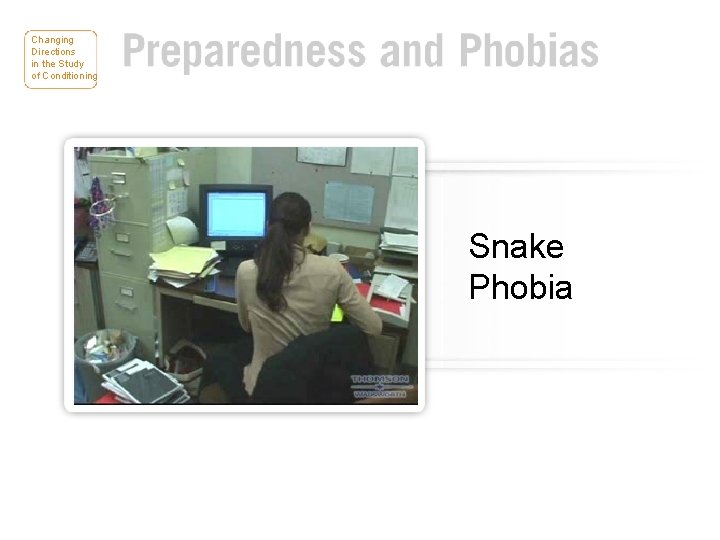
Changing Directions in the Study of Conditioning Snake Phobia
OPERANT CONDITIONING Learning By Consequences
Thorndike’s Law of Effect • Behavior consistently rewarded will become learned behavior. • Contemporary psychologists refer to this as the principle of reinforcement
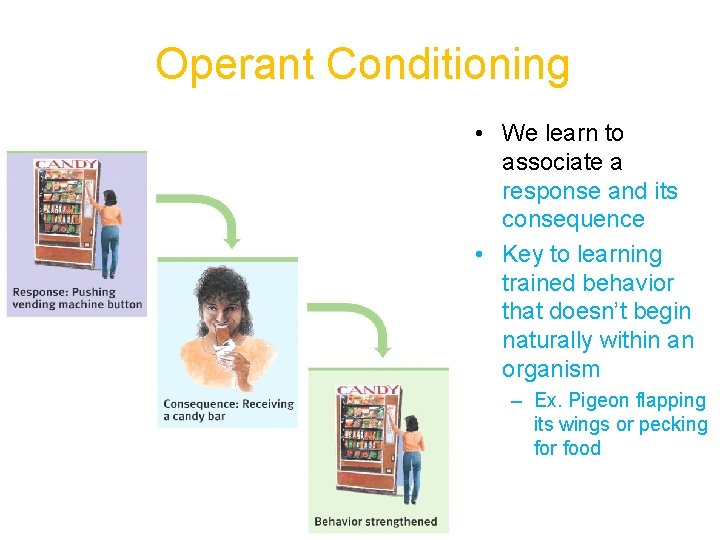
Operant Conditioning • We learn to associate a response and its consequence • Key to learning trained behavior that doesn’t begin naturally within an organism – Ex. Pigeon flapping its wings or pecking for food
Operant Conditioning • The behavior is more likely or less likely to occur based on its consequences. • B. F. Skinner modified Pavlov’s concept and Thorndike’s law of effect. • Skinner used reinforcement and punishment to enhance learning.
Operant/Instrumental Conditioning • Operant or instrumental conditioning is learning to make or withhold a certain response because of its consequences. • Operant behaviors are different from the responses involved in classical conditioning – They are voluntarily emitted – Those involved in classical conditioning are elicited by stimuli.
Operant Conditioning: Shaping • Shaping: procedure in which reinforcers guide behavior closer and closer approximations of a desired goal – The organism is learning associations between its behavior and resulting events – Ex. breaking in a horse, getting a dog to “go” outside in a certain spot
Operant Conditioning Terms • Reinforcer: – An event or stimulus that makes the behavior it follows more likely to occur again. – Best when not delayed but immediately following the behavior
Types of Reinforcement • • Primary reinforcers Secondary reinforcers Positive reinforcers Negative reinforcers
A Closer Look At Reinforcement • Primary reinforcer: – A reinforcer that is rewarding in itself, such as food, water, and sex. • Secondary reinforcer: – A reinforcer that acquires its reinforcing power through association with a primary reinforcer. – Money: #1 secondary reinforcer
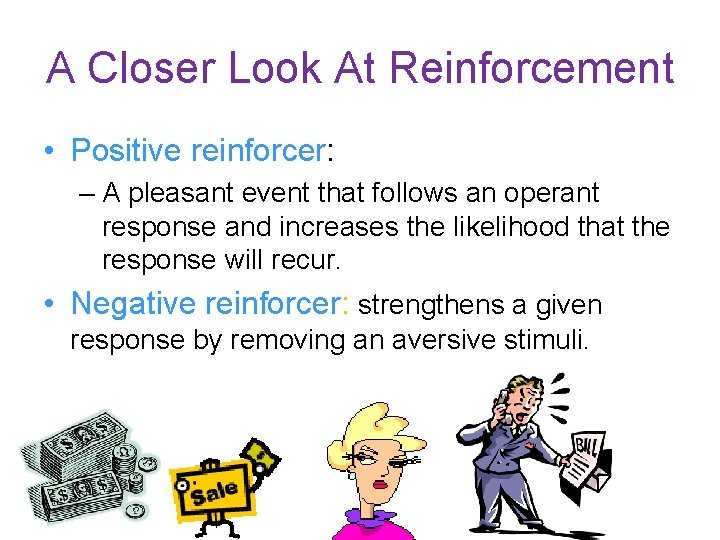
A Closer Look At Reinforcement • Positive reinforcer: – A pleasant event that follows an operant response and increases the likelihood that the response will recur. • Negative reinforcer: strengthens a given response by removing an aversive stimuli.
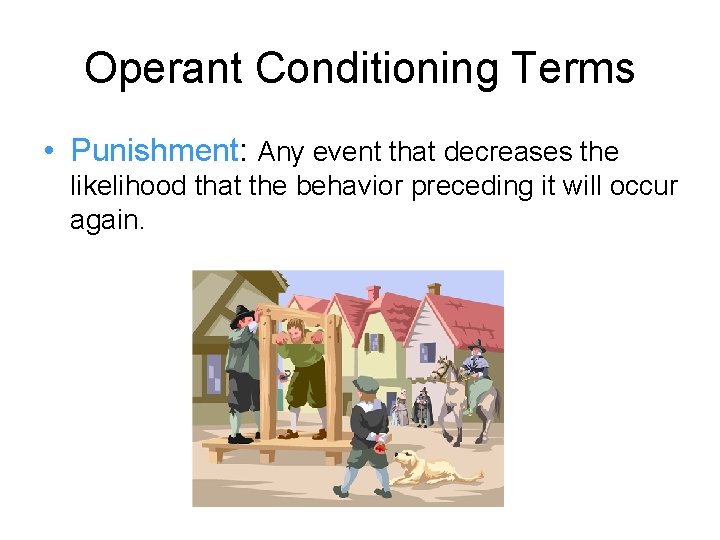
Operant Conditioning Terms • Punishment: Any event that decreases the likelihood that the behavior preceding it will occur again.
What Is Punishment? • The aim of punishment is to decrease the likelihood that an ongoing behavior will recur. • Punishment must be swift, sufficient, and certain for it to be effective. – Positive Punishment • Add something negative – Negative Punishment • Take away something positive
A Closer Look at Punishment • Punishment is generally not as effective as the skillful application of reinforcement. • Avoidance training is an alternative strategy to using punishment. • Avoidance training: – Learning a particular behavior to prevent the occurrence of something unpleasant.
Negative side effects of punishment • Slows down learning; punishing for errors • May suppress good behavior too; why should I try at all • Cat’s away syndrome • I’m a bad person • Only training method used only training method learned; cyclical effect • Unfortunate effect on the punisher
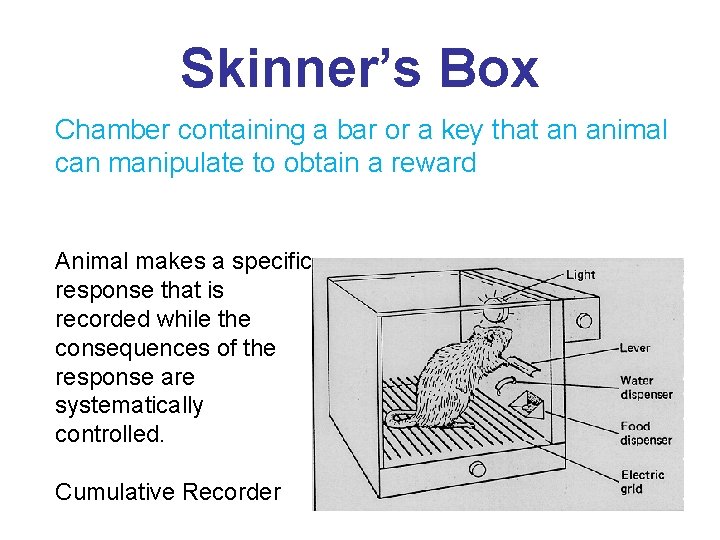
Skinner’s Box Chamber containing a bar or a key that an animal can manipulate to obtain a reward Animal makes a specific response that is recorded while the consequences of the response are systematically controlled. Cumulative Recorder
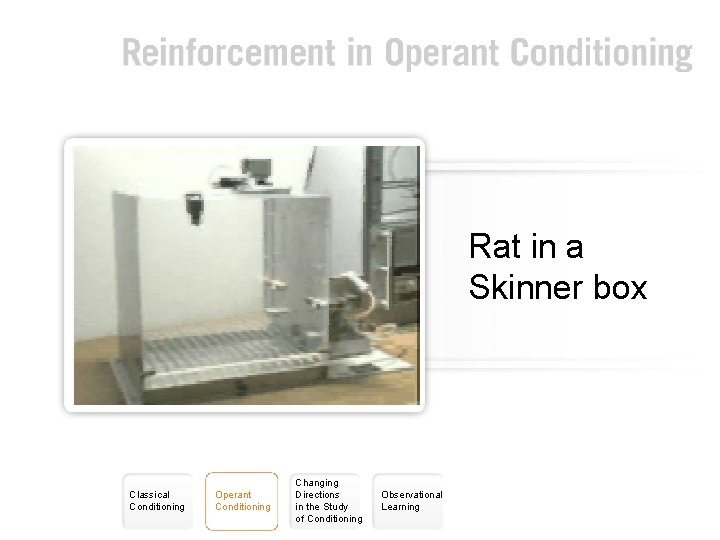
Rat in a Skinner box Classical Conditioning Operant Conditioning Changing Directions in the Study of Conditioning Observational Learning
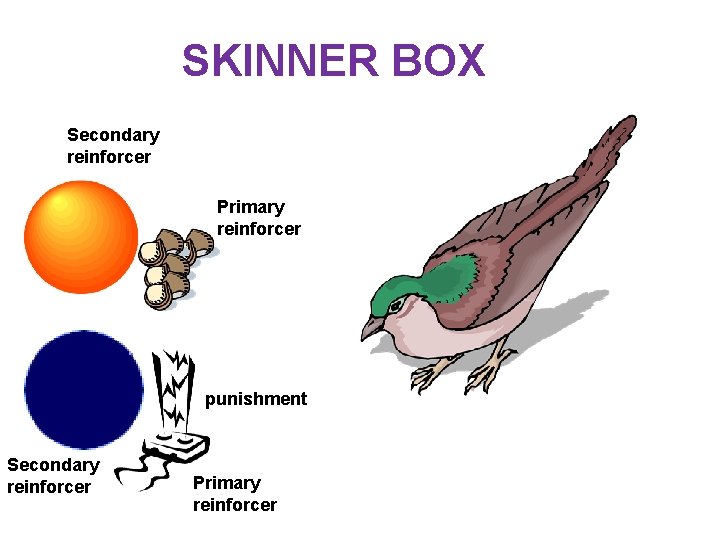
SKINNER BOX Secondary reinforcer Primary reinforcer punishment Secondary reinforcer Primary reinforcer
Reinforcement vs. Punishment • Reinforcement increases the rate of responding. • Punishment decreases the rate of responding.
Two Major Types of Reinforcement • • Interval: time/clock: 7 am-12 pm-6 pm Ratio: amount: 1: 1, 2: 1, 3: 1 Schedules can be: Continuous: – each response is reinforced and thus learned more quickly but not as long lasting • Intermittent/partial: – reinforcement does not follow every response but the behavior lasts longer
Schedules of Reinforcement • Intermittent reinforcement: stronger schedule – Reinforcement which rewards are given for some correct responses but not for every one; – This generates behavior that persists longer than behavior learned by continuous reinforcement and thus is more resistant to extinction (behavior no longer occurs). • Partial reinforcement encourages learners to keep "testing" for a reward. • The type of partial reinforcement schedule also matters.
Schedules of Reinforcement Interval Schedules • A fixed-interval schedule: – Reinforcement given for the first correct response after a fixed time period, tends to result in a flurry of responding right before a reward is due. • A variable-interval schedule: – Reinforces the first correct response after an unpredictable period of time, tends to result in a slow but steady pattern of responding as the learner keeps testing for the next payoff.
Schedules of Reinforcement Ratio Schedules • A fixed-ratio schedule: – behavior is rewarded after a fixed number of correct responses, – so the result is usually a high rate of responding because faster responses yield quicker payoffs.
Schedules of Reinforcement • A variable-ratio schedule: – Provides reinforcement after a varying number of correct responses. – Encourages a high rate of response that is especially persistent because the person keeps harboring the hope that the next response will bring a reward.
Examples of Schedules • Continuous reinforcement: – Putting money in a parking meter to avoid a parking ticket • Fixed-ratio schedule: – Being paid for producing a specific number of items (as in a factory setting)
Examples of Schedules • Variable-ratio schedule: – Playing a slot machine • Fixed-interval schedule: – Receiving a salary paycheck every two weeks • Variable-interval schedule: – Surprise quizzes
Other Types of Learning • • Cognitive learning Learned Helplessness Latent learning Cognitive maps Insight Learning sets Social learning theory
Learned Helplessness • Failure to take steps to avoid or escape from an unpleasant or aversive stimulus that occurs as a result of previous exposure to unavoidable painful stimuli.
Cognitive Learning • Cognitive learning: – Learning that depends on mental processes that are not directly observable • Latent learning: – Learning that is not immediately reflected in a behavioral change – Occurs once there is incentive to demonstrate the behavior
Cognitive Learning • Extrinsic motivation: a desire to perform a behavior due to promised rewards or threats of punishment • Intrinsic motivation: a desire to perform a behavior for its own sake and to be effective – Bribing people to do this they already enjoy doing will reduce their level of intrinsic motivation…. when this happens it is called the over-justfication effect
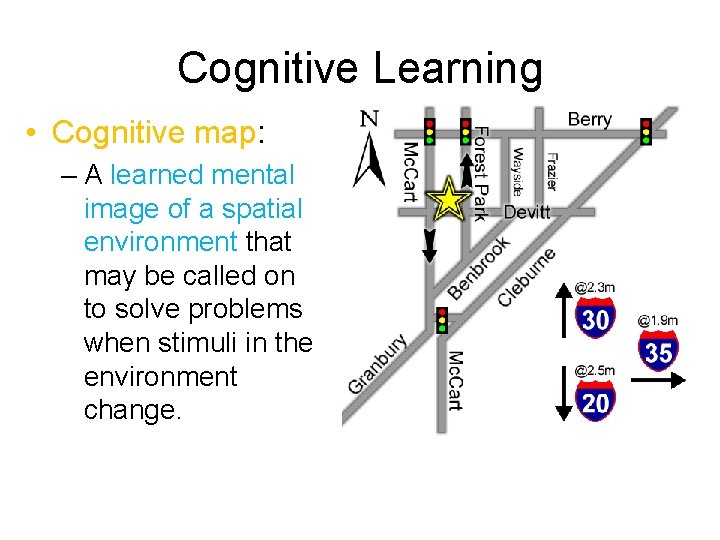
Cognitive Learning • Cognitive map: – A learned mental image of a spatial environment that may be called on to solve problems when stimuli in the environment change.
Insight Learning • Insight: – Learning that occurs rapidly as a result of understanding all the elements of a problem.
Learning Sets • The ability to become increasingly more effective in solving problems as more problems are solved. – i. e. , “learning how to learn”
Social Learning Theory • A view of learning that emphasizes the ability to learn by observing or witnessing/imitating a model or receiving instructions, without firsthand experience by the observer. • Observational learning: Albert Bandura
Social Learning Theory • Modeling: the process of observing and imitating a specific behavior – Ex. Little brother wearing his shorts like older brother – Ex. Bandura’s research on aggression, Bobo Dolls – Ex. Prosocial behavior: positive, constructive, an helpful behavior • Mirror neurons: frontal lobe neurons that fire when performing certain actions or when observing another doing so. – Has to do with learning language as well
Chapter 6 Practice Test
1. After repeatedly pairing a tone with meat powder, Pavlov found that a dog will salivate when the tone is presented. Salvation to the tone is a(n) A. B. C. D. Unconditioned stimulus Unconditioned response Conditioned stimulus Conditioned response
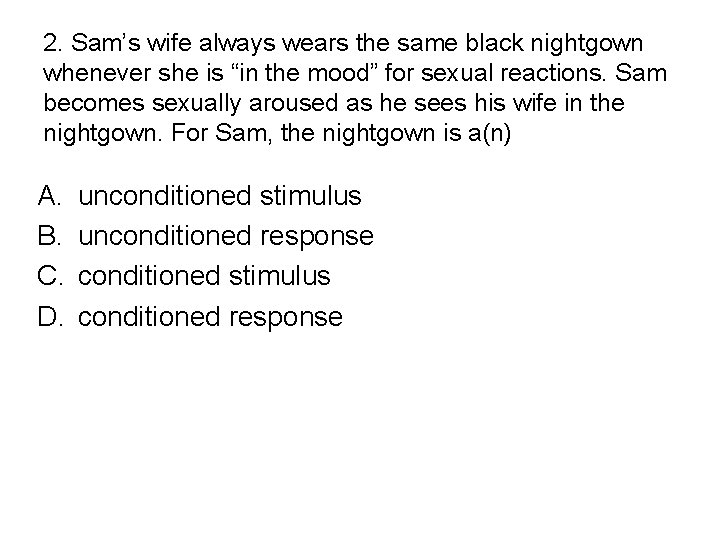
2. Sam’s wife always wears the same black nightgown whenever she is “in the mood” for sexual reactions. Sam becomes sexually aroused as he sees his wife in the nightgown. For Sam, the nightgown is a(n) A. B. C. D. unconditioned stimulus unconditioned response conditioned stimulus conditioned response
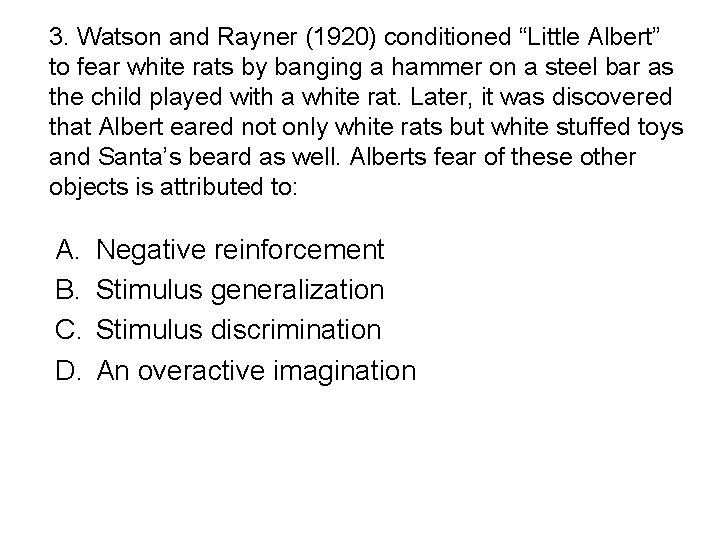
3. Watson and Rayner (1920) conditioned “Little Albert” to fear white rats by banging a hammer on a steel bar as the child played with a white rat. Later, it was discovered that Albert eared not only white rats but white stuffed toys and Santa’s beard as well. Alberts fear of these other objects is attributed to: A. B. C. D. Negative reinforcement Stimulus generalization Stimulus discrimination An overactive imagination
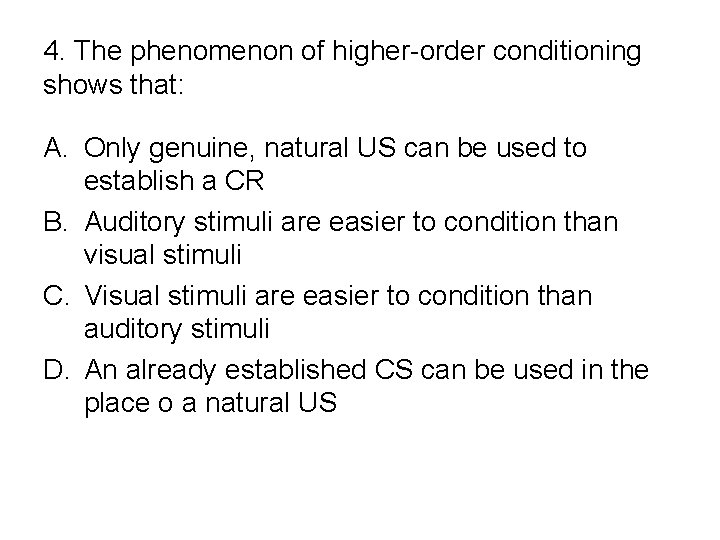
4. The phenomenon of higher-order conditioning shows that: A. Only genuine, natural US can be used to establish a CR B. Auditory stimuli are easier to condition than visual stimuli C. Visual stimuli are easier to condition than auditory stimuli D. An already established CS can be used in the place o a natural US
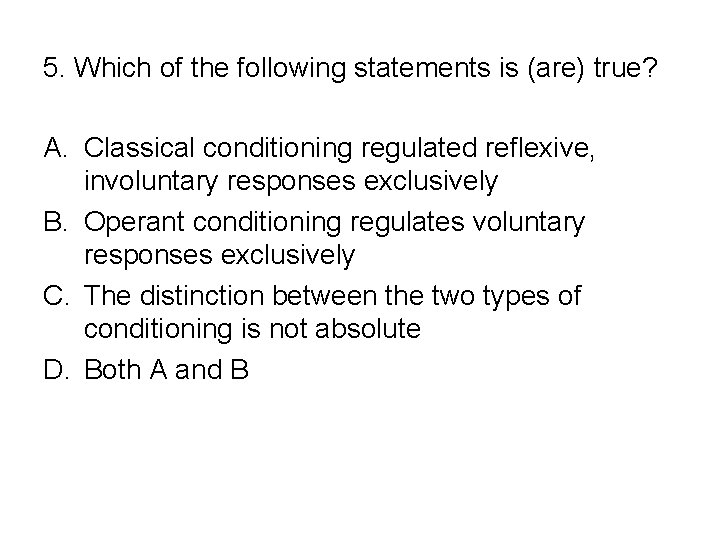
5. Which of the following statements is (are) true? A. Classical conditioning regulated reflexive, involuntary responses exclusively B. Operant conditioning regulates voluntary responses exclusively C. The distinction between the two types of conditioning is not absolute D. Both A and B
6. A pigeon in a Skinner box is pecking the disk at a high, steady rate. The graph portraying this pigeon’s responding will have: A. B. C. D. A steep, unchanging slope A shallow, unchanging slope A progressively steeper slope A progressively shallower slope
7. A primary reinforcer has ______ reinforcing properties; a secondary reinforcer has _______ reinforcing properties. A. B. C. D. biological; aquired conditioned; unconditioned weak; potent immediate; delayed
8. The steady, rapid responding of a person playing a slot machine is an example of the pattern of responding typically generated on a _______ schedule. A. B. C. D. Fixed-ratio Variable-ratio Fixed-interval Variable-interval
9. Positive reinforcement _____ the rate of responding; negative reinforcement _____ the rate of responding. A. B. C. D. Increases; decreases Decreases; increases Increases; increases Decreases; decreases
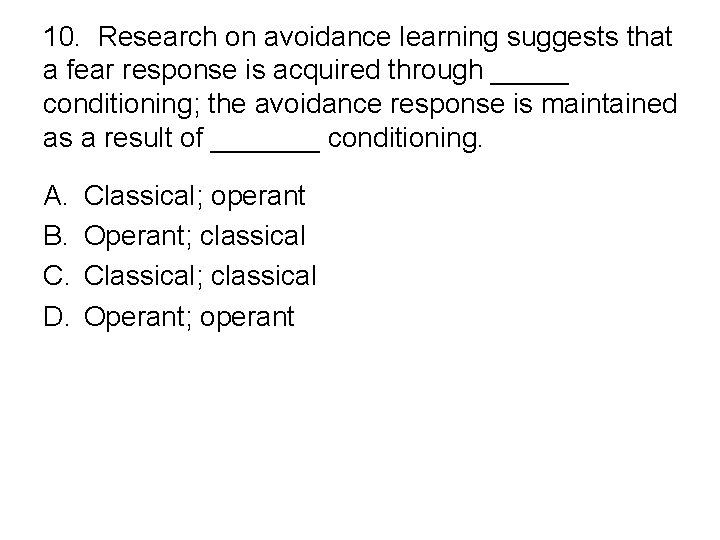
10. Research on avoidance learning suggests that a fear response is acquired through _____ conditioning; the avoidance response is maintained as a result of _______ conditioning. A. B. C. D. Classical; operant Operant; classical Classical; classical Operant; operant
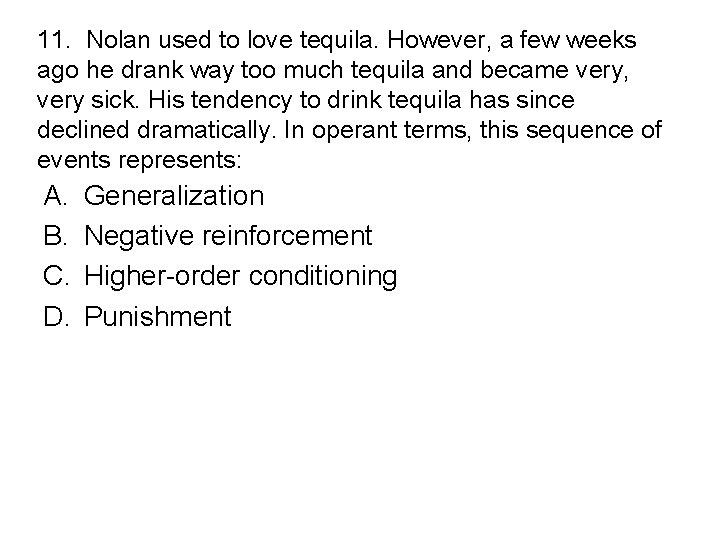
11. Nolan used to love tequila. However, a few weeks ago he drank way too much tequila and became very, very sick. His tendency to drink tequila has since declined dramatically. In operant terms, this sequence of events represents: A. B. C. D. Generalization Negative reinforcement Higher-order conditioning Punishment
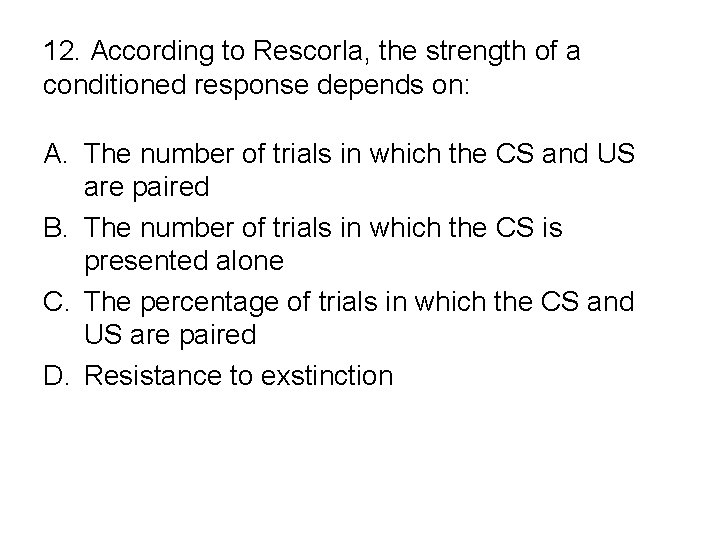
12. According to Rescorla, the strength of a conditioned response depends on: A. The number of trials in which the CS and US are paired B. The number of trials in which the CS is presented alone C. The percentage of trials in which the CS and US are paired D. Resistance to exstinction
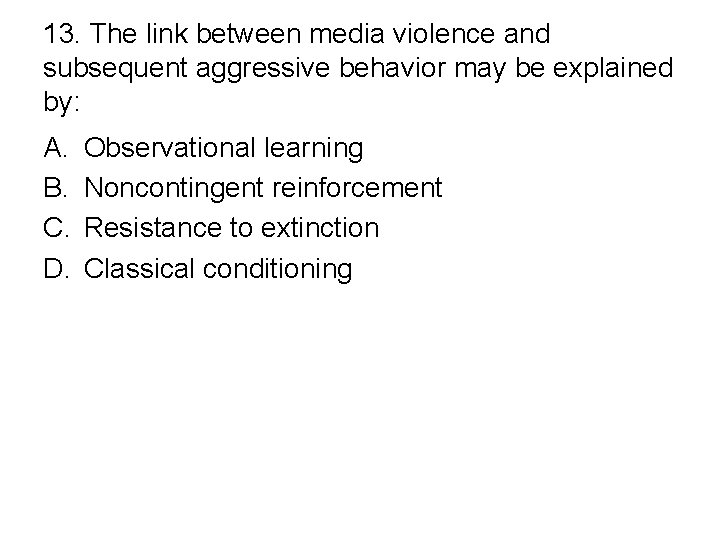
13. The link between media violence and subsequent aggressive behavior may be explained by: A. B. C. D. Observational learning Noncontingent reinforcement Resistance to extinction Classical conditioning
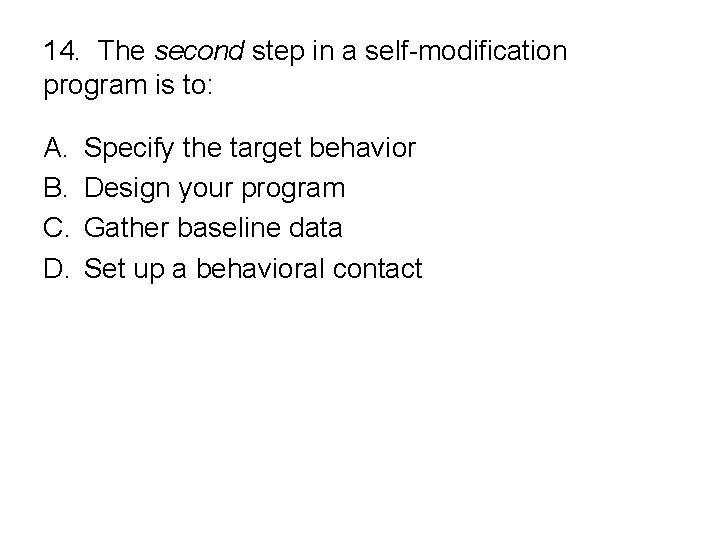
14. The second step in a self-modification program is to: A. B. C. D. Specify the target behavior Design your program Gather baseline data Set up a behavioral contact
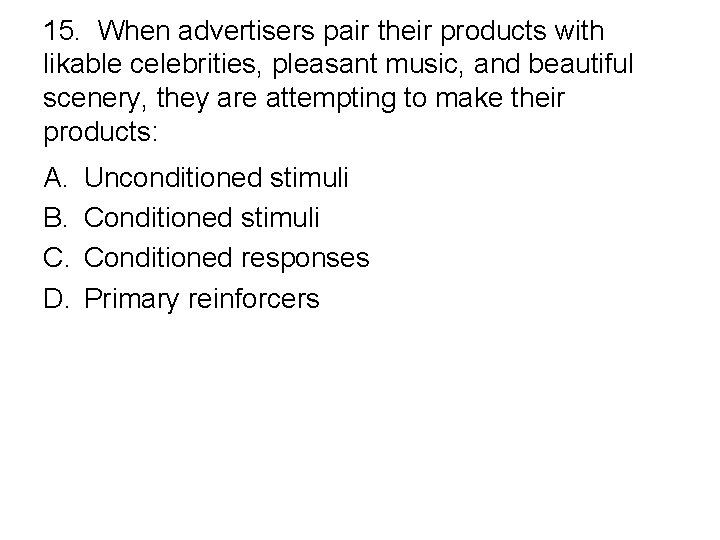
15. When advertisers pair their products with likable celebrities, pleasant music, and beautiful scenery, they are attempting to make their products: A. B. C. D. Unconditioned stimuli Conditioned responses Primary reinforcers
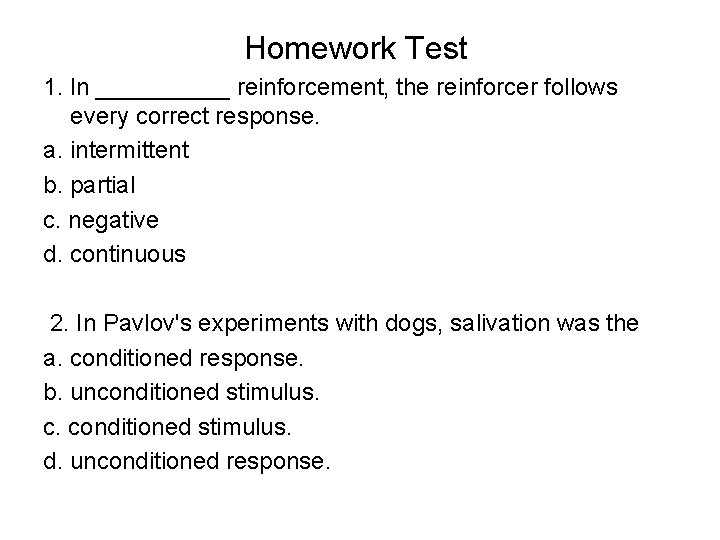
Homework Test 1. In _____ reinforcement, the reinforcer follows every correct response. a. intermittent b. partial c. negative d. continuous 2. In Pavlov's experiments with dogs, salivation was the a. conditioned response. b. unconditioned stimulus. c. conditioned stimulus. d. unconditioned response.
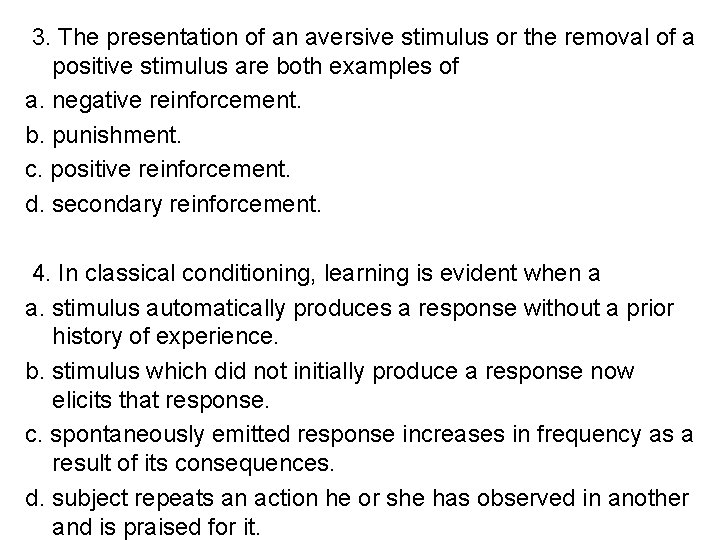
3. The presentation of an aversive stimulus or the removal of a positive stimulus are both examples of a. negative reinforcement. b. punishment. c. positive reinforcement. d. secondary reinforcement. 4. In classical conditioning, learning is evident when a a. stimulus automatically produces a response without a prior history of experience. b. stimulus which did not initially produce a response now elicits that response. c. spontaneously emitted response increases in frequency as a result of its consequences. d. subject repeats an action he or she has observed in another and is praised for it.
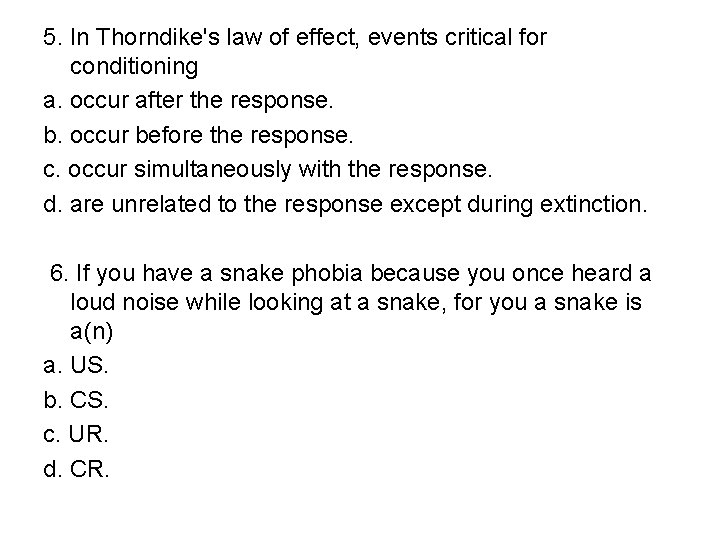
5. In Thorndike's law of effect, events critical for conditioning a. occur after the response. b. occur before the response. c. occur simultaneously with the response. d. are unrelated to the response except during extinction. 6. If you have a snake phobia because you once heard a loud noise while looking at a snake, for you a snake is a(n) a. US. b. CS. c. UR. d. CR.
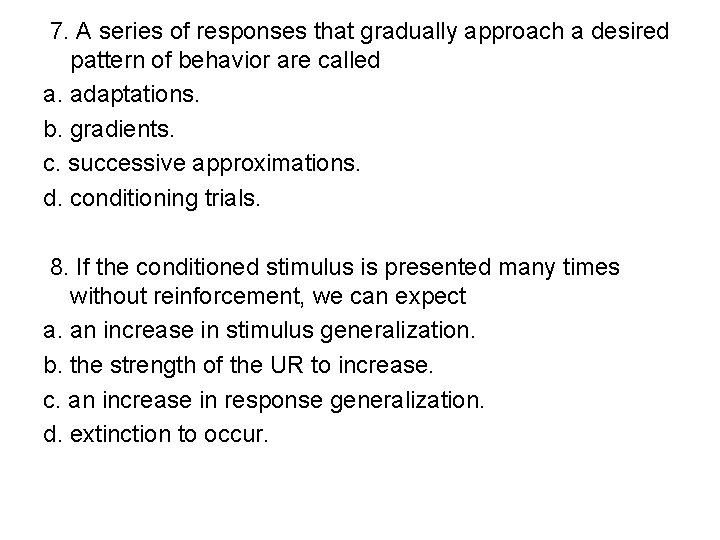
7. A series of responses that gradually approach a desired pattern of behavior are called a. adaptations. b. gradients. c. successive approximations. d. conditioning trials. 8. If the conditioned stimulus is presented many times without reinforcement, we can expect a. an increase in stimulus generalization. b. the strength of the UR to increase. c. an increase in response generalization. d. extinction to occur.
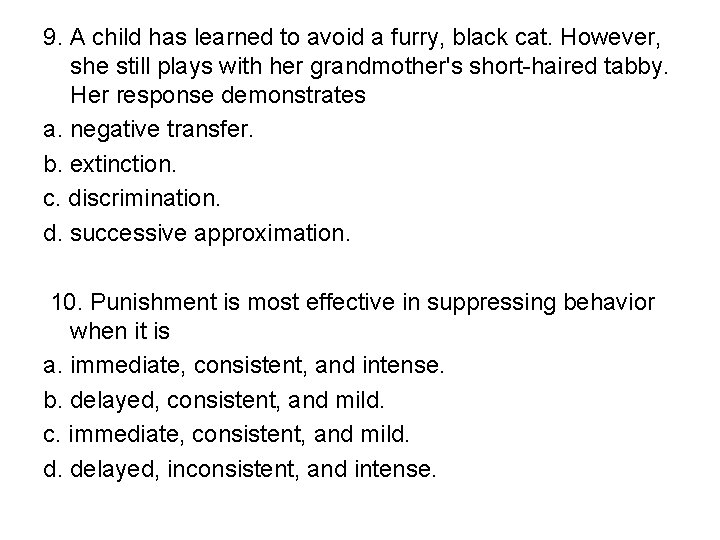
9. A child has learned to avoid a furry, black cat. However, she still plays with her grandmother's short-haired tabby. Her response demonstrates a. negative transfer. b. extinction. c. discrimination. d. successive approximation. 10. Punishment is most effective in suppressing behavior when it is a. immediate, consistent, and intense. b. delayed, consistent, and mild. c. immediate, consistent, and mild. d. delayed, inconsistent, and intense.
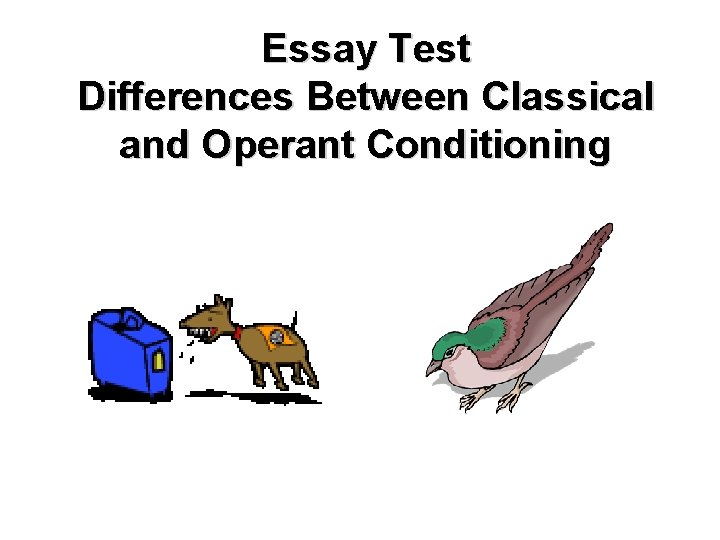
Essay Test Differences Between Classical and Operant Conditioning
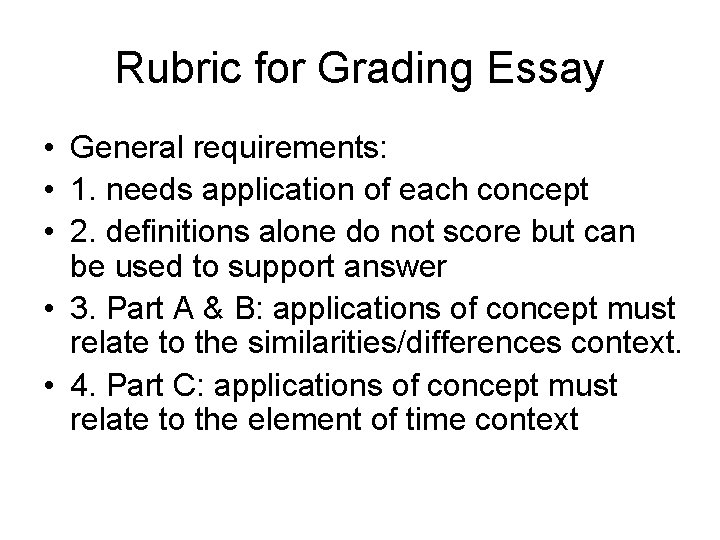
Rubric for Grading Essay • General requirements: • 1. needs application of each concept • 2. definitions alone do not score but can be used to support answer • 3. Part A & B: applications of concept must relate to the similarities/differences context. • 4. Part C: applications of concept must relate to the element of time context
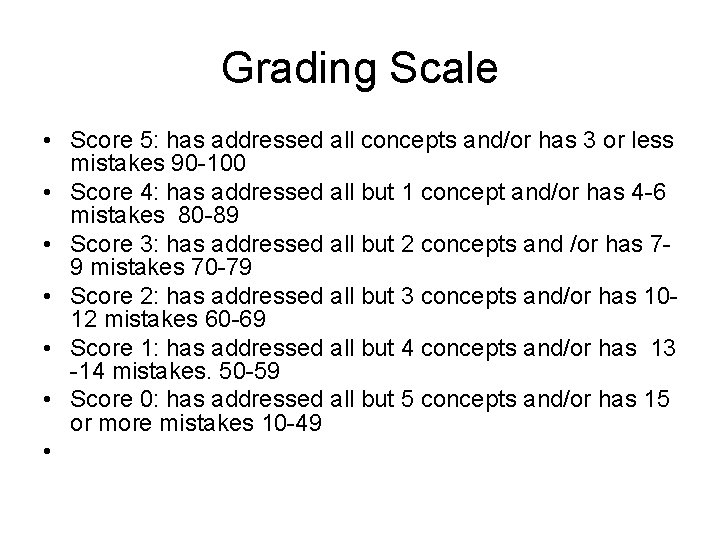
Grading Scale • Score 5: has addressed all concepts and/or has 3 or less mistakes 90 -100 • Score 4: has addressed all but 1 concept and/or has 4 -6 mistakes 80 -89 • Score 3: has addressed all but 2 concepts and /or has 79 mistakes 70 -79 • Score 2: has addressed all but 3 concepts and/or has 1012 mistakes 60 -69 • Score 1: has addressed all but 4 concepts and/or has 13 -14 mistakes. 50 -59 • Score 0: has addressed all but 5 concepts and/or has 15 or more mistakes 10 -49 •
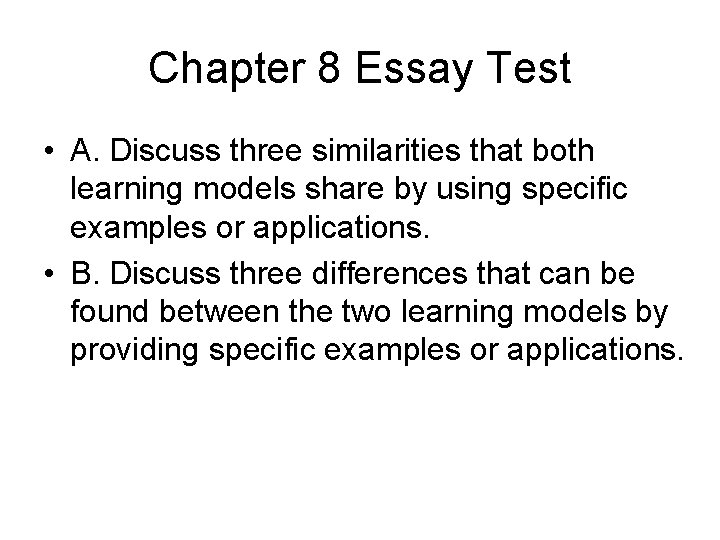
Chapter 8 Essay Test • A. Discuss three similarities that both learning models share by using specific examples or applications. • B. Discuss three differences that can be found between the two learning models by providing specific examples or applications.
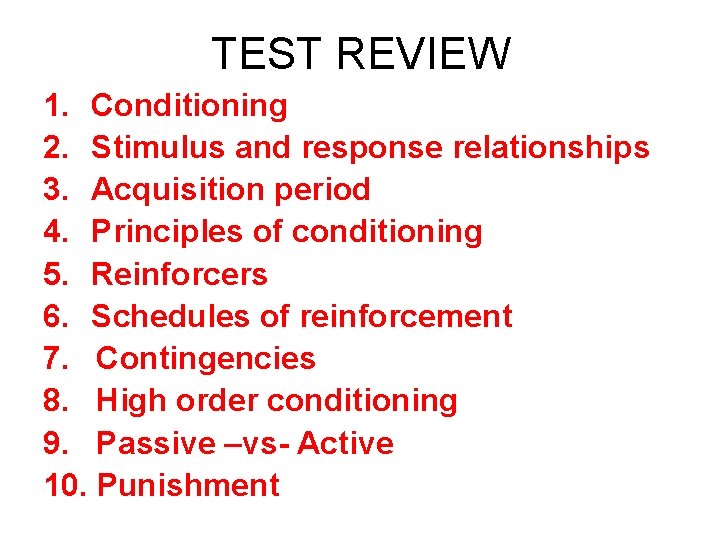
TEST REVIEW 1. Conditioning 2. Stimulus and response relationships 3. Acquisition period 4. Principles of conditioning 5. Reinforcers 6. Schedules of reinforcement 7. Contingencies 8. High order conditioning 9. Passive –vs- Active 10. Punishment
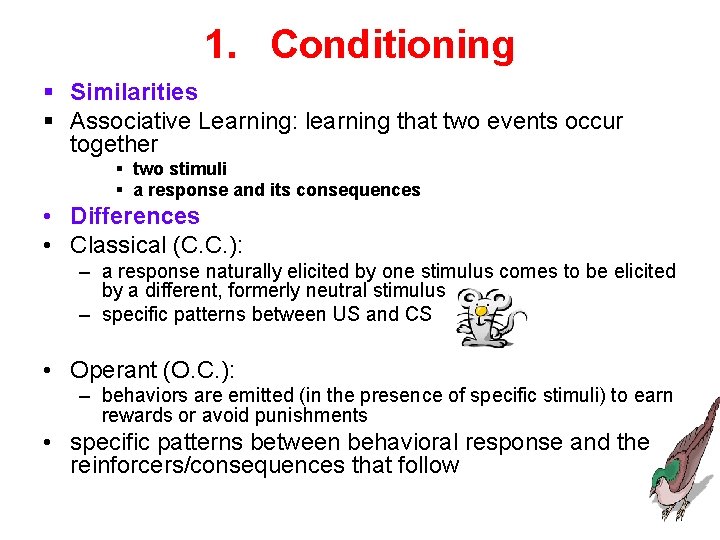
1. Conditioning § Similarities § Associative Learning: learning that two events occur together § two stimuli § a response and its consequences • Differences • Classical (C. C. ): – a response naturally elicited by one stimulus comes to be elicited by a different, formerly neutral stimulus – specific patterns between US and CS • Operant (O. C. ): – behaviors are emitted (in the presence of specific stimuli) to earn rewards or avoid punishments • specific patterns between behavioral response and the reinforcers/consequences that follow
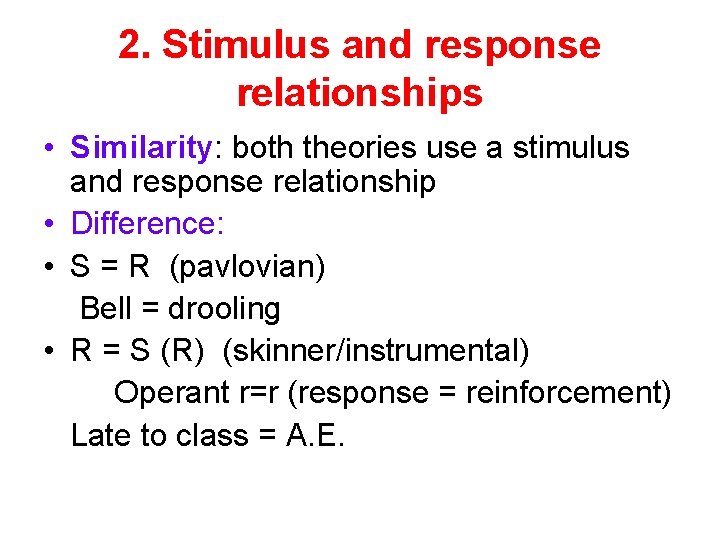
2. Stimulus and response relationships • Similarity: both theories use a stimulus and response relationship • Difference: • S = R (pavlovian) Bell = drooling • R = S (R) (skinner/instrumental) Operant r=r (response = reinforcement) Late to class = A. E.
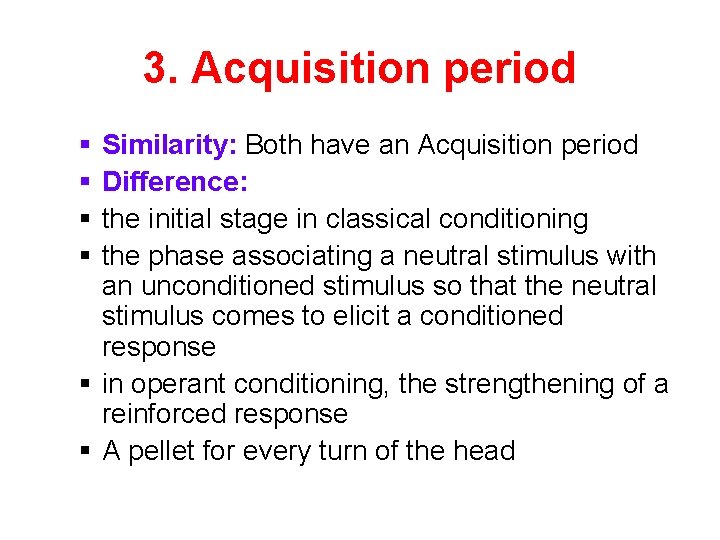
3. Acquisition period § § Similarity: Both have an Acquisition period Difference: the initial stage in classical conditioning the phase associating a neutral stimulus with an unconditioned stimulus so that the neutral stimulus comes to elicit a conditioned response § in operant conditioning, the strengthening of a reinforced response § A pellet for every turn of the head
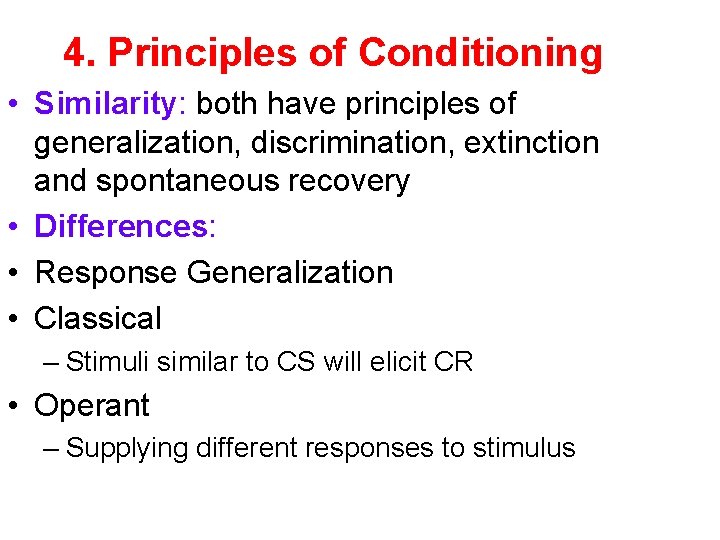
4. Principles of Conditioning • Similarity: both have principles of generalization, discrimination, extinction and spontaneous recovery • Differences: • Response Generalization • Classical – Stimuli similar to CS will elicit CR • Operant – Supplying different responses to stimulus
Stimulus Discrimination • Classical – CR is specific to a certain CS-US pairing – Reaction to sirens, school bell tones • Operant – Reinforcing only specific responses – Pushing lever only if green light appears
• Extinction • Classical – Occurs when CS-US pairing lapses • Operant – Occurs when reinforcing is withheld • spontaneous recovery • CC: occurs when cs and ucs are paired again • OC: occurs when reinforcement is reapplied to response.
5. Reinforcers • Similarities • Although Classical conditioning does not provide incentives or reinforcers, there is similarity. • value in itself: primary Reinforcer (oc) and Unconditional stimulus (cc) • Secondary reinforcers: means to an end (oc) and Conditional stimulus: signal (cc) • Positive reinforcers: pleasurable stimuli (oc) unconditional stimulus (cc) • Negative reinforcers: unpleasurable stimuli that strengthens desired response (oc) unconditional stimulus (cc)
Reinforcers cont. • Difference: • In operant conditioning reinforcers act as incentives for learning. • Classical conditioning, on the other hand, does not provide incentives. Associations are made or they are not.
6. Schedules of reinforcement • Similarities: none • Differences: occur within operant conditioning only • Two types of schedules • Interval: time between reinforcements /clock: 7 am-12 pm-6 pm • Ratio: amount of responses required to get a reinforcement: 1: 1, 2: 1, 3: 1 • Schedules can be: • Fixed: – each response is reinforced – Time schedule is same • Variable: – reinforcement does not follow every response – Time schedule changes
7. Contingencies • Similarities • In both classical and operant conditioning, an "if-then" relationship or contingency exists. • Differences • The contingency can be either between two stimuli (classical) or between a stimulus (reinforcement) and a response (operant).
8. punishment • Similarities: none; no punishment in cc • Differences: occur within oc alone • Punishment is different than neg. reinforcement because neg. reinf. Strengthens a response while punishment decreases the likelihood that the behavior preceding it will occur again. Electric shock, failing grade, isolation
9. High Order conditioning • • • • Similarity Both have high order conditioning based on previous learning Difference Classical: an earlier CS becomes the US for further learning Operant conditioning secondary reinforcer can become a primary reinforcer classical S=R=S baby hunger pains= crying= mom brings food Baby is bored cries (former UR)= Mom’s attention Operant r to sr = pr ring is secondary reinforcer to marriage ring size becomes primary to marriage (secondary) to get the ring I need money to buy food (sr) I want to be rich (pr)
10. Passive –vs- Active • Similarities: none • Differences: • Classical conditioning is passive on the part of the learner S=R • Operant conditioning relies on the learner to actively participate in the learning process. R=S
• Part C: • Discuss five reasons to support that Operant and Classical Conditioning are affected by the element of time
Element of Time 1. 2. 3. 4. 5. 6. 7. Conditioning: associations must be paired close enough in space and time to make the connection stimulus response relationships. Timing; classical cond. Cs precedes us for best results, OC; response precedes stimulus (reinforcer) Acquisition: the period of time necessary to make an association between a neutral stimulus and an unconditioned stimulus; food aversion 1 time phenomenon other cs take more time. extinction: over time learned responses sometimes weaken and may even disappear, lose meaning, spontaneous recovery; 1 time would generate immediate response, or response may come back on it’s own after a period of time with no re-pairing of the stimuli. variable time schedules seem to generate behavior that persists longer over time A fixed-ratio schedule can create a high rate of responding because faster responses yield quicker payoffs.
8. variable-interval schedule that reinforces a response after an unpredictable period of time tends to result in a slow but steady pattern of responding as the learner keeps testing for the next payoff. 9. fixed-interval schedule: Reinforcement given for a response after a fixed time period tends to result in a flurry of responding right before a reward is due. 10. High order learning results over time based on previous learning 11. Punishment can slow down learning
- Slides: 127