
Chapter 6 Language Language communication people feel passionate

- Slides: 62
Chapter 6 Language
Language- communication • people feel passionate about their own language • 5000 -6000 languages spoken today (very debatable) • not static, change continually • most societies have a “standard language”
Standard languages • published, widely distributed and purposefully taught in modernized countries. Sets quality. People with power and influence decide what the standard language will be • State exams • Civil service exams • SATs
Language v. Vocalization • What is Language? using signs, gestures, change continuously • Vocalization: communication sound- speech • Language and Culture: cornerstones of culture (redefines and reinforces our culture) – assimilation: peoples who were colonized were forced to give up their native language (Native Americans, Aborigines, Africans, etc. )
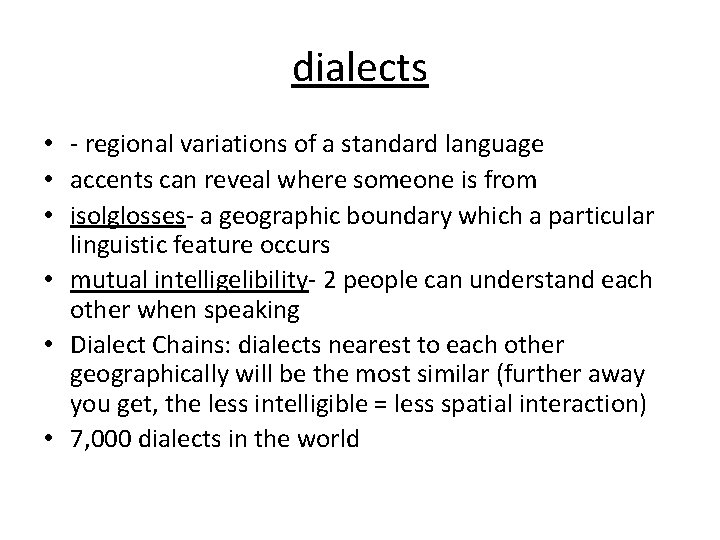
dialects • - regional variations of a standard language • accents can reveal where someone is from • isolglosses- a geographic boundary which a particular linguistic feature occurs • mutual intelligelibility- 2 people can understand each other when speaking • Dialect Chains: dialects nearest to each other geographically will be the most similar (further away you get, the less intelligible = less spatial interaction) • 7, 000 dialects in the world
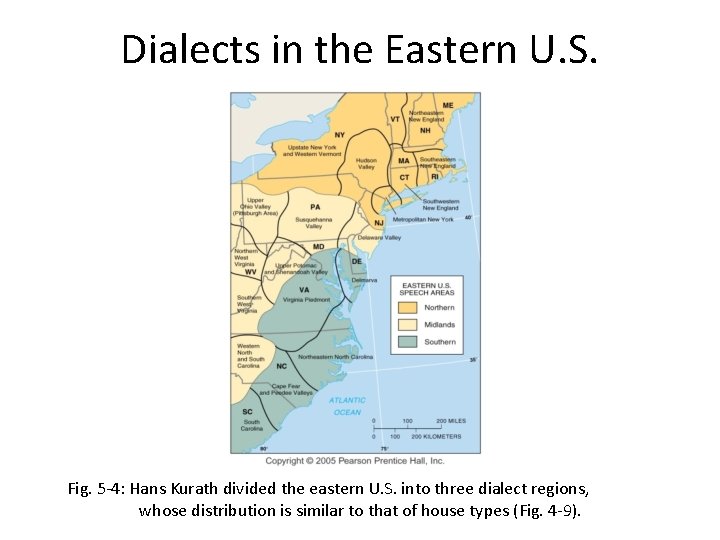
Dialects in the Eastern U. S. Fig. 5 -4: Hans Kurath divided the eastern U. S. into three dialect regions, whose distribution is similar to that of house types (Fig. 4 -9).
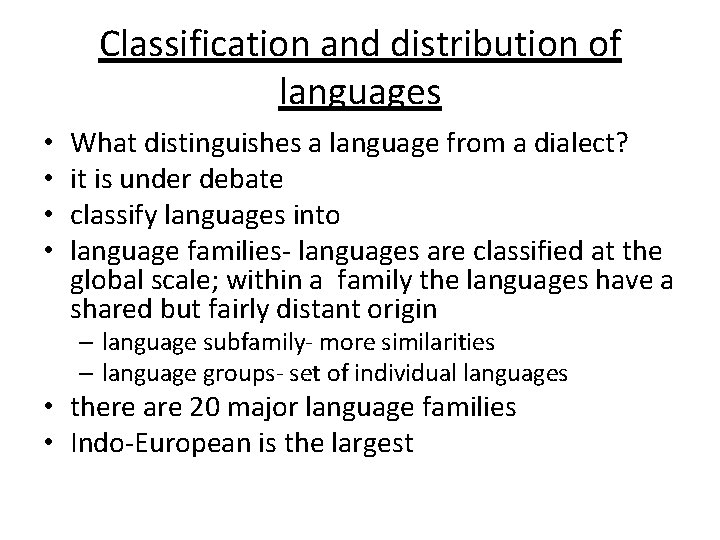
Classification and distribution of languages • • What distinguishes a language from a dialect? it is under debate classify languages into language families- languages are classified at the global scale; within a family the languages have a shared but fairly distant origin – language subfamily- more similarities – language groups- set of individual languages • there are 20 major language families • Indo-European is the largest
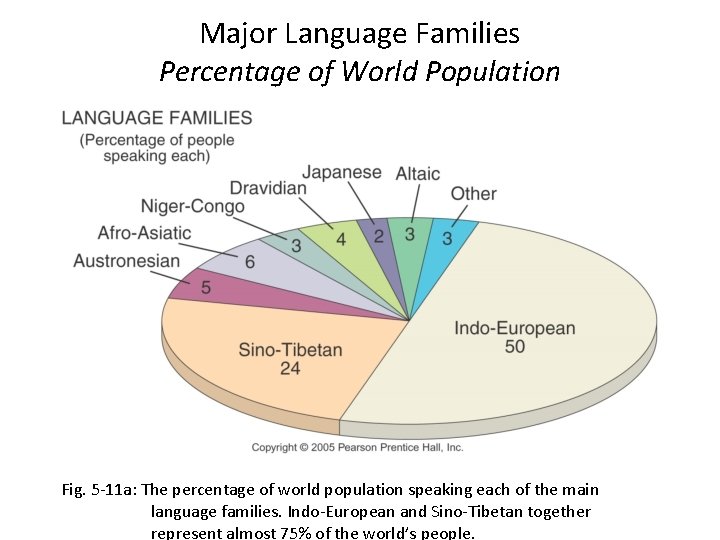
Major Language Families Percentage of World Population Fig. 5 -11 a: The percentage of world population speaking each of the main language families. Indo-European and Sino-Tibetan together represent almost 75% of the world’s people.
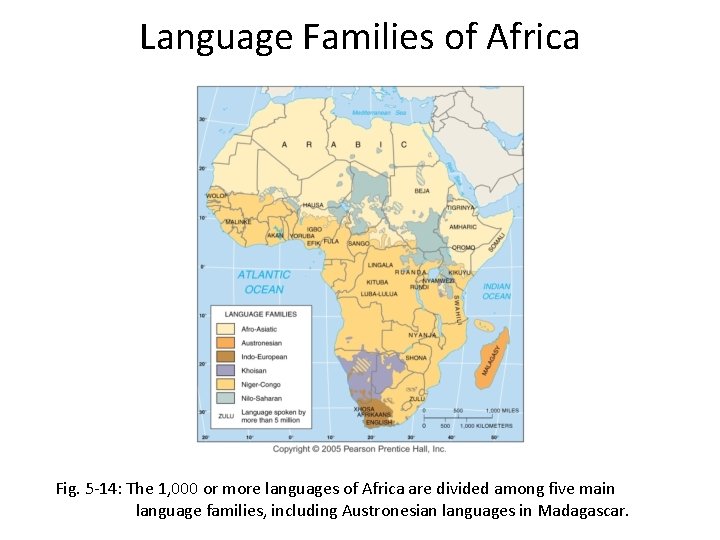
Major World Languages • Chinese has the most speakers • 2 nd is English (also has many speakers as a second language) – Sub-Saharan Africa has over 1000 languages • in Madagascar people speak a language not in African language family but in the Malay. Polynesian family because many people sailed from southeast Asia and settled in Madagascar
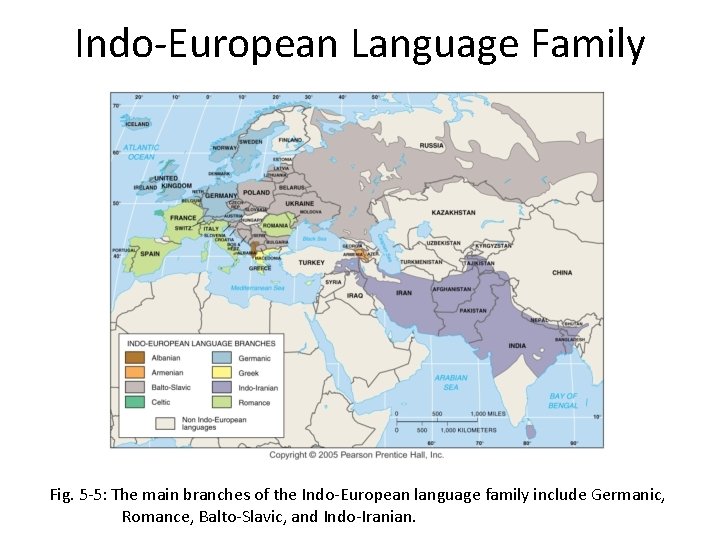
Languages of Europe • Indo-European language family is the predominant family • exceptions include: – Uralic in Hungary and Finland – Altaic in Turkey
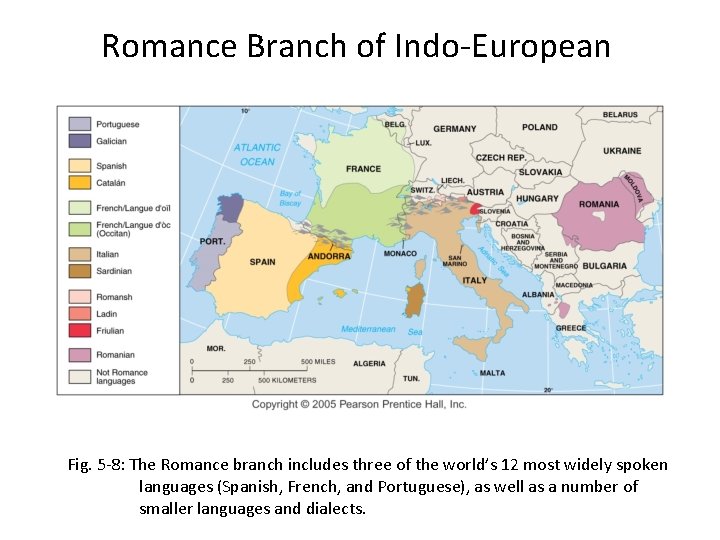
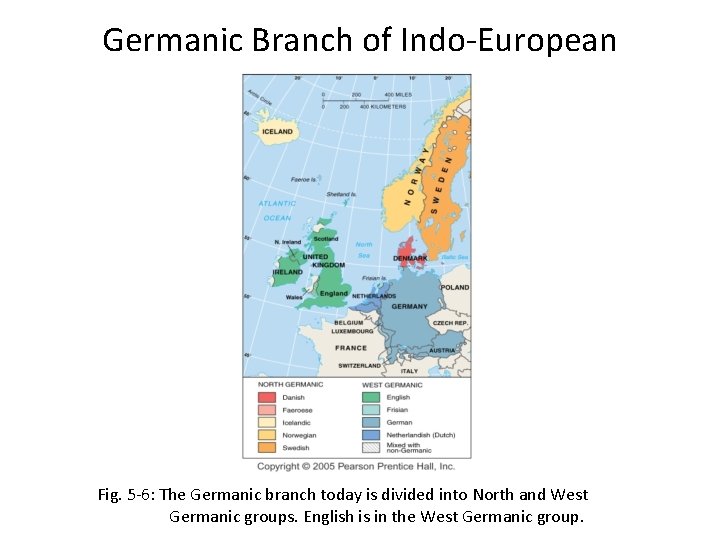
Other European Languages Romance languages • French, Spanish, Italian, Romanian and Portuguese • found in regions once dominated by the Roman empire Germanic • English, German, Danish, Norwegian and Swedish • this shows the expansion out of northern Europe to the west and south • some Germanic people moved into edges of the Roman empire and their language took over • other Germanic people moved into areas never part of an empire (Sweden, Norway and Denmark)
Romance Branch of Indo-European Fig. 5 -8: The Romance branch includes three of the world’s 12 most widely spoken languages (Spanish, French, and Portuguese), as well as a number of smaller languages and dialects.
Germanic Branch of Indo-European Fig. 5 -6: The Germanic branch today is divided into North and West Germanic groups. English is in the West Germanic group.
European Languages Cont. Slavic languages • (Russian, Polish, Czech, Slovak, Ukrainian, Slovenian, Serbo-Croatian and Bulgarian) • spread as Slavic people migrated out of Ukraine 2000 years ago to eastern Europe and took over the language of the Roman empire • in Europe there is a high correlation between language spoken and a countries borders (with a few exceptions where language extend into parts of other countries
Indo-European Language Family Fig. 5 -5: The main branches of the Indo-European language family include Germanic, Romance, Balto-Slavic, and Indo-Iranian.
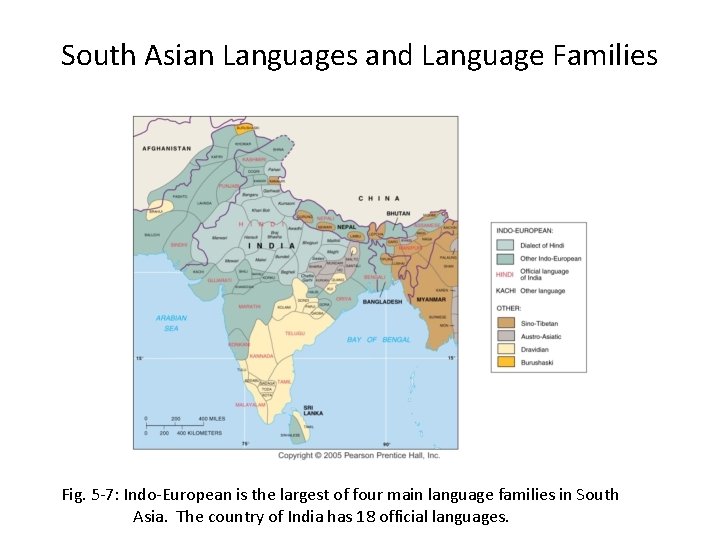
Languages of India • 4 main language families: – The 2 main ones: • Indo-European (Hindi is the main language) • Dravidian – The 2 lesser ones • Sino-Tibetan • Austro-Asiatic • there are 15 major languages spoken • 11/15 are Indo-European • 1600 other languages but only with a few speakers
South Asian Languages and Language Families Fig. 5 -7: Indo-European is the largest of four main language families in South Asia. The country of India has 18 official languages.
Languages of Africa • • over 1000 languages spoken most are unwritten 4 major language families Largest is Niger-Congo
Language Families of Africa Fig. 5 -14: The 1, 000 or more languages of Africa are divided among five main language families, including Austronesian languages in Madagascar.
Chinese- One language or many? • Chinese is spoken by more people • but they have many dialects of Chinese that are very different (almost like another language) • Mandarin is the dominant dialect
Linguistic Diversification – Language diversification is charted through sound shifts – Linguists can recreate extinct languages using: • backward reconstruction- used to track sound shifts and hardening of consonants “backward” toward the original language • deep reconstruction- recreate language that preceded current ones – William Jones and Jacob Grimm hypothesized the existence of an ancestral language. – (Proto) Indo-European is the predecessor of Latin, Greek, and Sanskrit.
The Language Tree – August Schleicher suggested the basic process of language formation is language divergence. • Divergence- dialects to other languages when isolated – Languages branch into dialects. – Isolated dialects become a separate language. – When people move and languages come into contact, this causes language convergence. • Language replacement occurs when smaller groups are affected by cultural events- modification of language by stronger invaders of a less advanced people
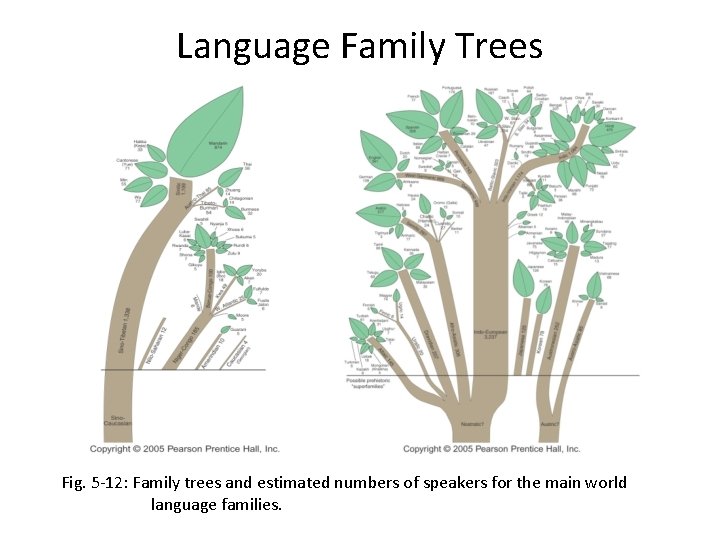
Language Family Trees Fig. 5 -12: Family trees and estimated numbers of speakers for the main world language families.
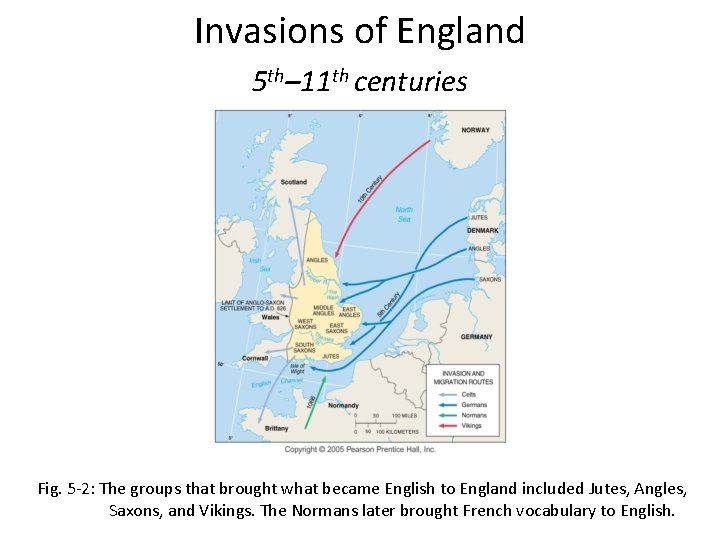
Invasions of England 5 th– 11 th centuries Fig. 5 -2: The groups that brought what became English to England included Jutes, Angles, Saxons, and Vikings. The Normans later brought French vocabulary to English.
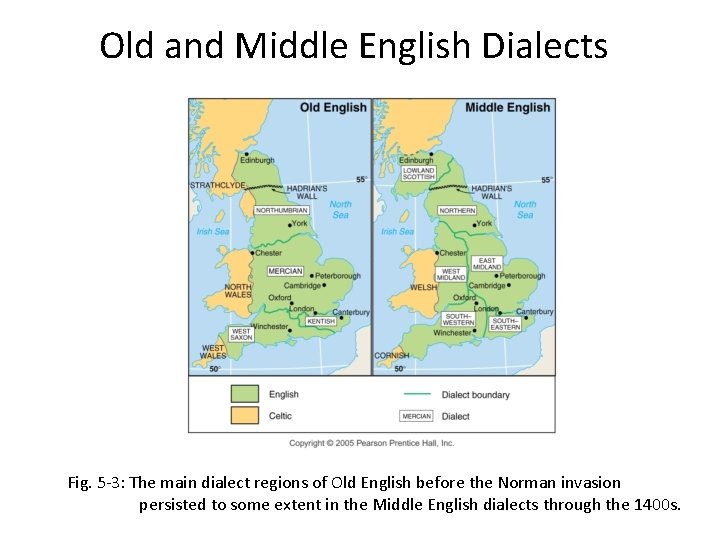
Old and Middle English Dialects Fig. 5 -3: The main dialect regions of Old English before the Norman invasion persisted to some extent in the Middle English dialects through the 1400 s.
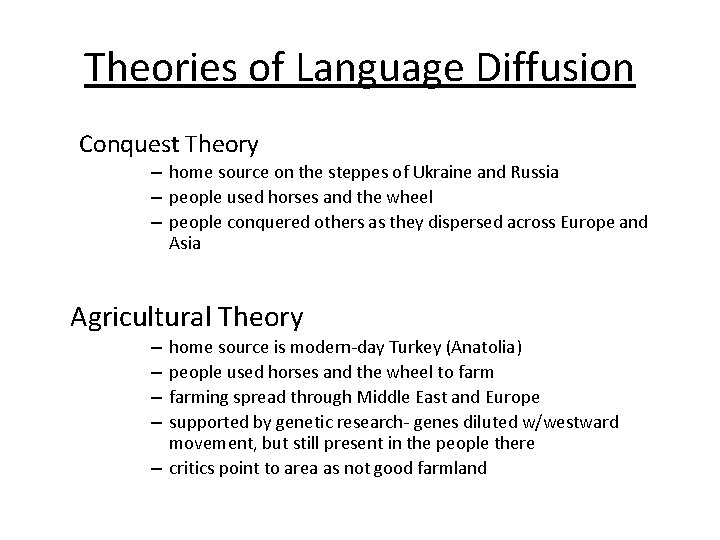
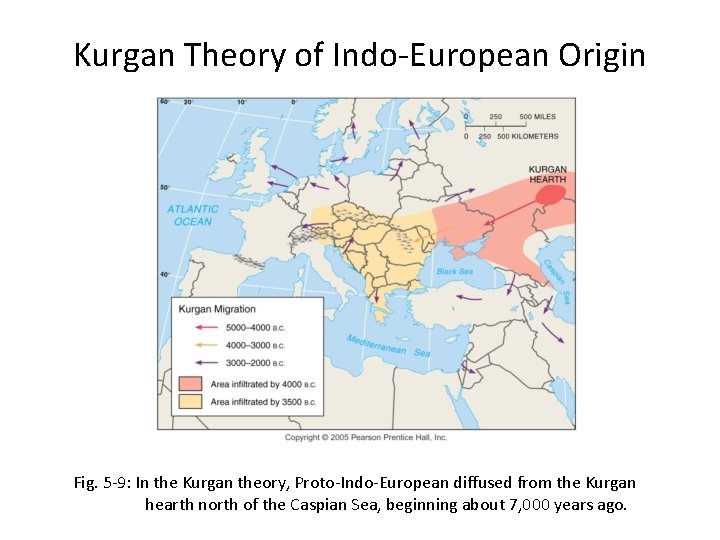
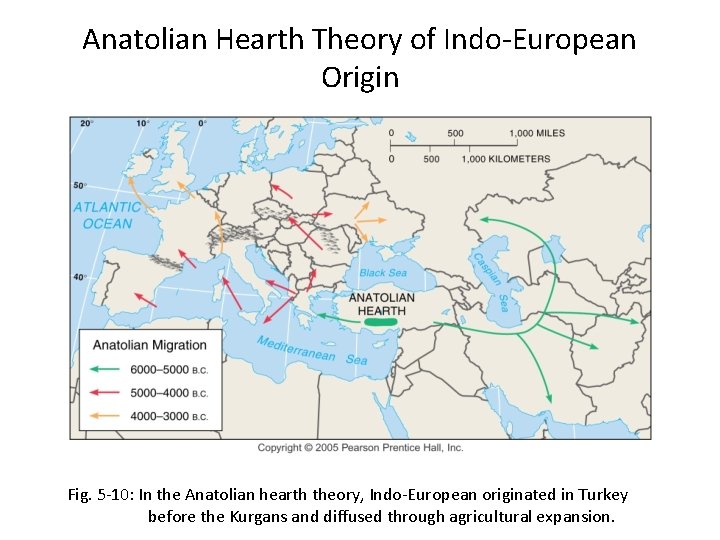
Theories of Language Diffusion Conquest Theory – home source on the steppes of Ukraine and Russia – people used horses and the wheel – people conquered others as they dispersed across Europe and Asia Agricultural Theory home source is modern-day Turkey (Anatolia) people used horses and the wheel to farming spread through Middle East and Europe supported by genetic research- genes diluted w/westward movement, but still present in the people there – critics point to area as not good farmland – –
Kurgan Theory of Indo-European Origin Fig. 5 -9: In the Kurgan theory, Proto-Indo-European diffused from the Kurgan hearth north of the Caspian Sea, beginning about 7, 000 years ago.
Anatolian Hearth Theory of Indo-European Origin Fig. 5 -10: In the Anatolian hearth theory, Indo-European originated in Turkey before the Kurgans and diffused through agricultural expansion.
Language Super-family – Russian scholars found common words and established an more ancient language – The pre-Proto-Indo-European language is called Nostratic. – Nostratic existed at least 14, 000 years before the present.
American Diffusion – The Native American population was very small, yet contained the most number of languages (200). – The Greenberg Hypothesis breaks the languages into three families. – These families are Amerind, Na-Dene, and Eskimo. Aleut. – The hypothesis states divergence must have occurred more than 12, 000 -13, 000 years ago. – New archeological discoveries support the dating.
Official Languages • in the US, we don’t have an official language • due to high numbers of Spanish immigrant many feel we should also use Spanish • there are many opponents to this • English has become the main language of international communication • often countries will make English the official language, not the indigenous language
Esperanto • in early 20 th century, an attempt to make a world language called Esperanto • this eventually failed – Europeans already multi-lingual – Too much time to learn – Unfair to non-Indo-European speakers
Lingua franca • a common language to communicate for speakers of different languages • started with traders • Arabic was the lingua franca during the spread of Islam • English during colonial times
Creolization • when language spread through relocation diffusion, it often changes • pidgin- simplified, modified form of a language - a language revised and simplified through contract with other languages) • creolization- when the pidgin form replaces an original language
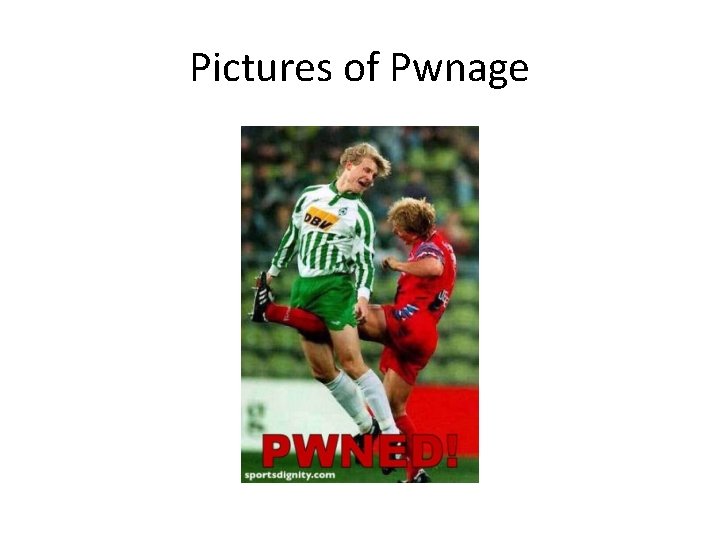
Pwned The best word ever!
Definition • Pwned means to take complete control over someone or something.
Origin • The word pwned derived from the word “owned”, which was a common gaming word. However, gamers frequently typed a P instead of an O by accident causing the word “pwned” to become popular.
Pictures of Pwnage
Multilingualism • very few monolingual states (Japan, Portugal) • but they still have other languages spoken (many Koreans live in Japan) • some are bilingual (Canada and Belgium) • others have many (Switzerland)
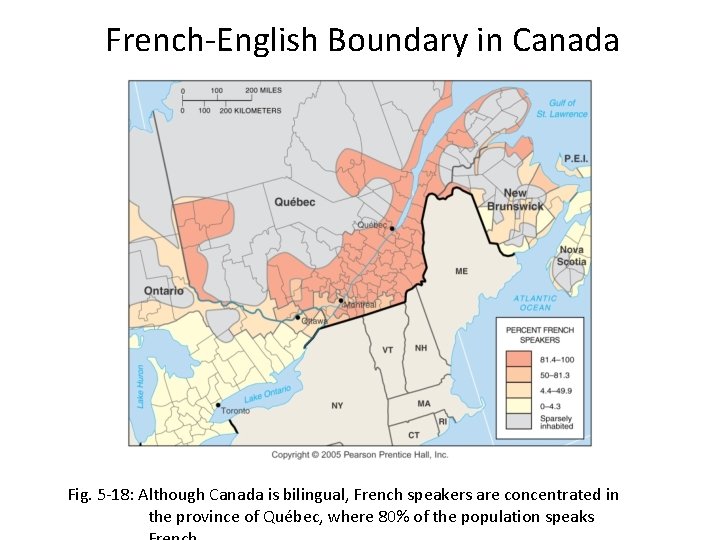
Canada • when Canada was formed, Quebec remained a French speaking region • now laws say all signs in Quebec must be in French • non French speaking Canadians don’t like this
French-English Boundary in Canada Fig. 5 -18: Although Canada is bilingual, French speakers are concentrated in the province of Québec, where 80% of the population speaks
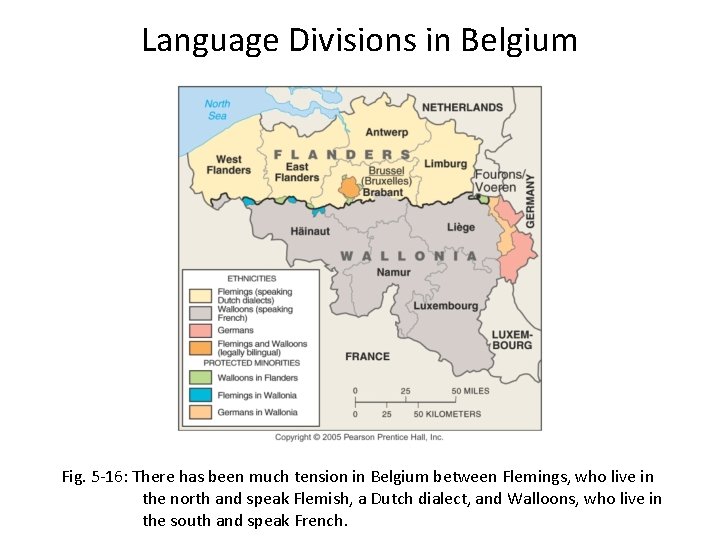
Belgium • divided into Dutch and French speaking regions • in 19 th century, French became the official language • Dutch speakers protested this (want to use Dutch in school, court etc) • the debate continues
Language Divisions in Belgium Fig. 5 -16: There has been much tension in Belgium between Flemings, who live in the north and speak Flemish, a Dutch dialect, and Walloons, who live in the south and speak French.
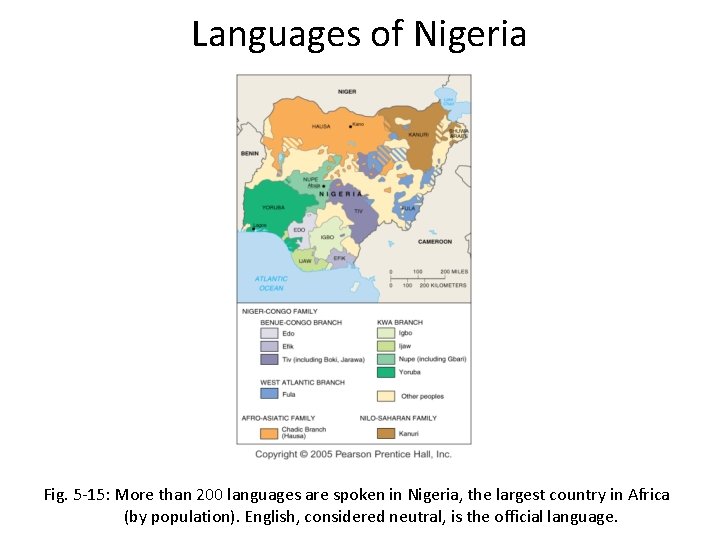
Nigeria • • many languages spoken made English the official language kids must are taught in English teachers don’t like this because it takes away from instruction time and does not prepare the kids for life in a local village
Languages of Nigeria Fig. 5 -15: More than 200 languages are spoken in Nigeria, the largest country in Africa (by population). English, considered neutral, is the official language.
Official languages • many countries adopted the language of their colonizers to unify the many languages spoken • India adopted both Hindi and English • some resent have the language of their oppressors • South Africa has 11 official languages- the most
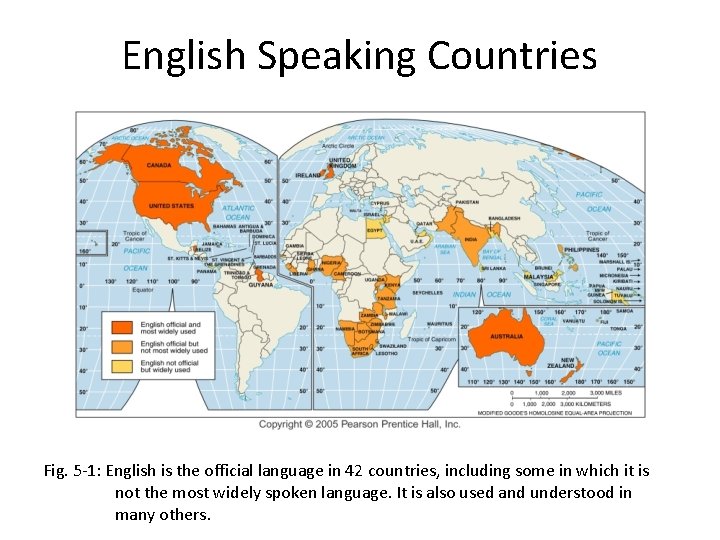
English Speaking Countries Fig. 5 -1: English is the official language in 42 countries, including some in which it is not the most widely spoken language. It is also used and understood in many others.
toponymy • study of names can give clues about a culture – Part of the cultural landscape – Streets usually named using Toponyms – The South has removed confederate symbols & lots of streets are named after Martin Luther King Jr. (See map on P. 174) • Football stadiums also named after commodified toponyms – Fed. Ex Field, MCI Center, Coors Field (near brewery in Colorado) – Future could mean instead of Lincoln Tunnel, it could be Target Tunnel- Times Square could be Disney Times Square!
Top Twenty U. S. Place Names • Ah! Wilderness, CO • Aloha, OR • Belt Buckle, TN
• Black Cat, DE • Blue Eyes, AK • Red Eye, VA • Nameless, TN
• No Name, CO • Nothing, AZ • Purgatory, CO
• Peculiar, MO • Resume Speed, TX • Total Wreck, AZ • Tranquility, CA
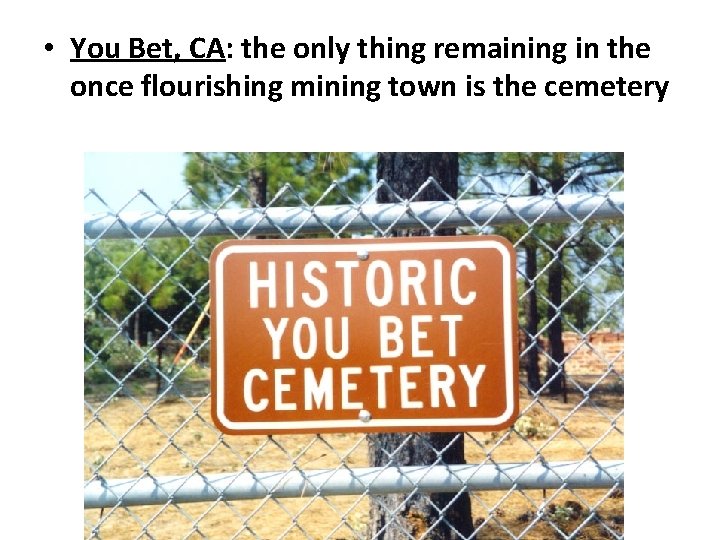
• You Bet, CA: the only thing remaining in the once flourishing mining town is the cemetery
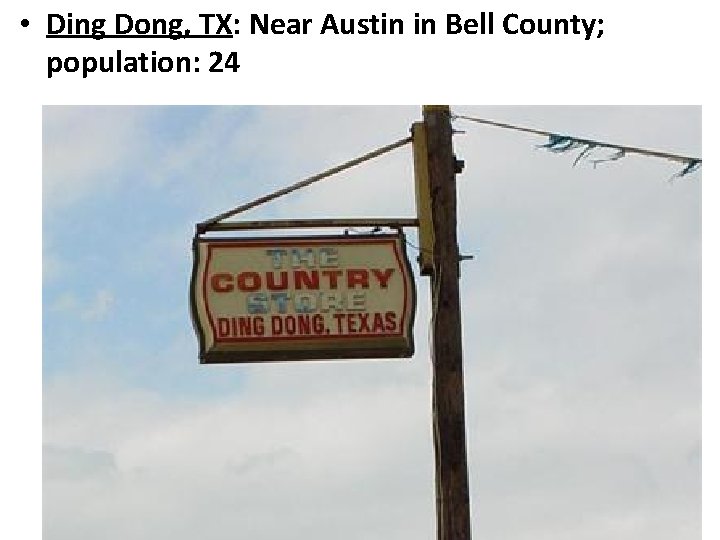
• Ding Dong, TX: Near Austin in Bell County; population: 24
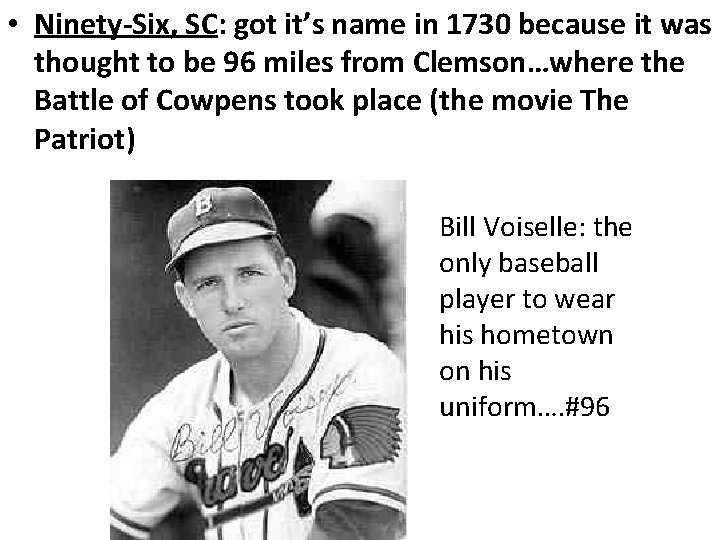
• Ninety-Six, SC: got it’s name in 1730 because it was thought to be 96 miles from Clemson…where the Battle of Cowpens took place (the movie The Patriot) Bill Voiselle: the only baseball player to wear his hometown on his uniform…. #96
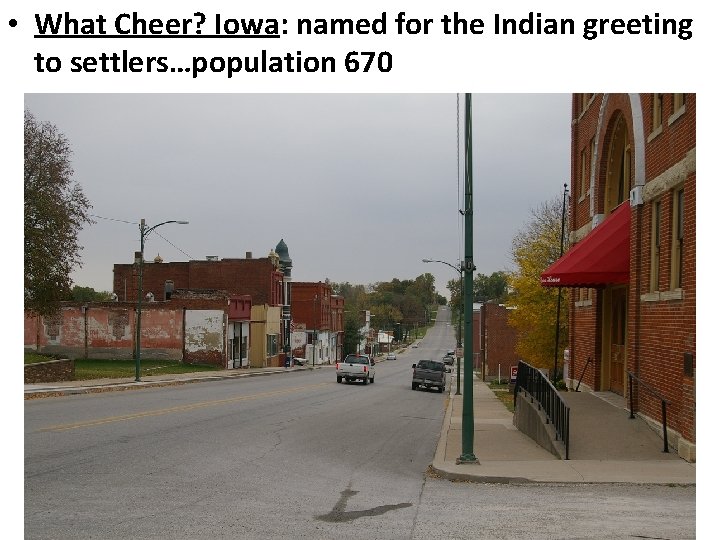
• What Cheer? Iowa: named for the Indian greeting to settlers…population 670
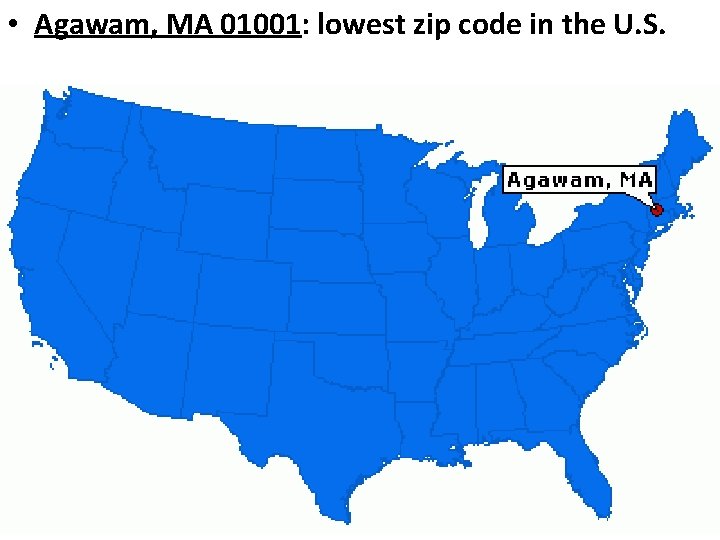
• Agawam, MA 01001: lowest zip code in the U. S.
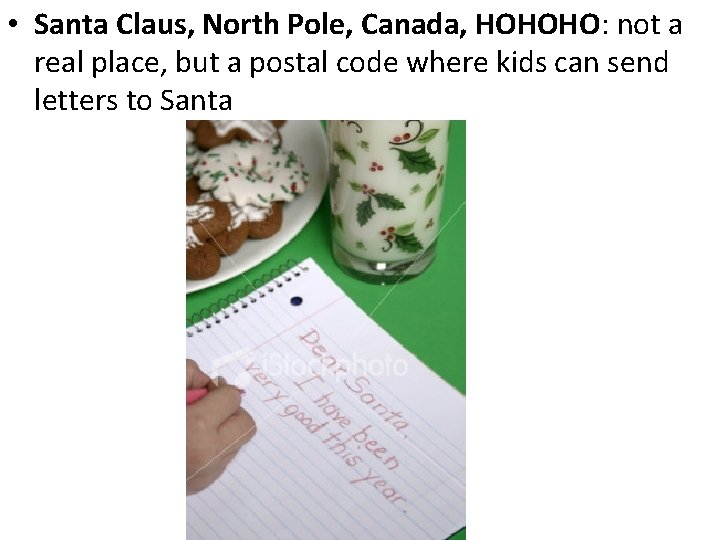
• Santa Claus, North Pole, Canada, HOHOHO: not a real place, but a postal code where kids can send letters to Santa