
Chapter 6 International Trade and Investment Theory International


- Slides: 46
Chapter 6: International Trade and Investment Theory International Business, 4 th Edition Griffin & Pustay 6 -1 © 2004 Prentice Hall
Chapter Objectives_1 § Understand the motivation for international trade § Summarize and discuss the differences among the classical country-based theories of international trade § Use the modern firm-based theories of international trade to describe global strategies adopted by businesses 6 -2 © 2004 Prentice Hall
Chapter Objectives_2 § Describe and categorize the different forms of international investment § Explain the reasons foreign direct investment § Summarize how supply, demand, and political factors influence foreign direct investment 6 -3 © 2004 Prentice Hall
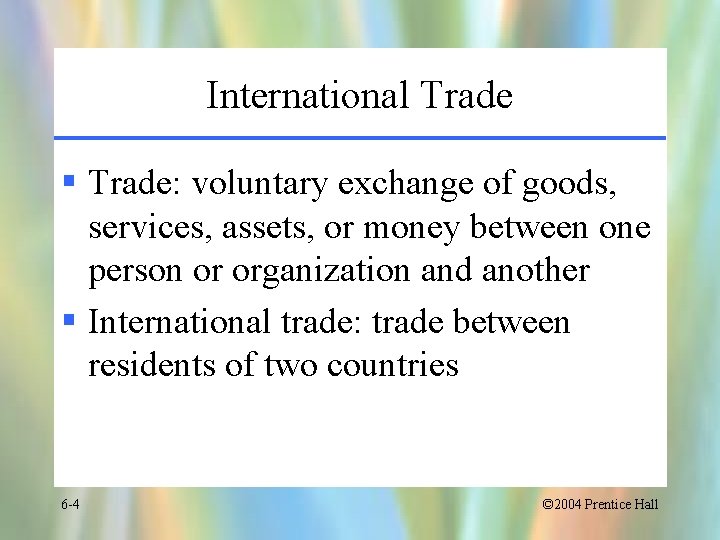
International Trade § Trade: voluntary exchange of goods, services, assets, or money between one person or organization and another § International trade: trade between residents of two countries 6 -4 © 2004 Prentice Hall
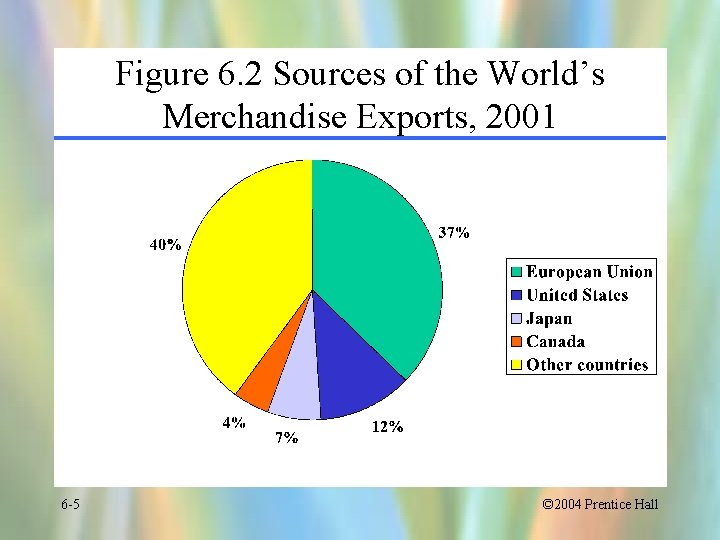
Figure 6. 2 Sources of the World’s Merchandise Exports, 2001 6 -5 © 2004 Prentice Hall
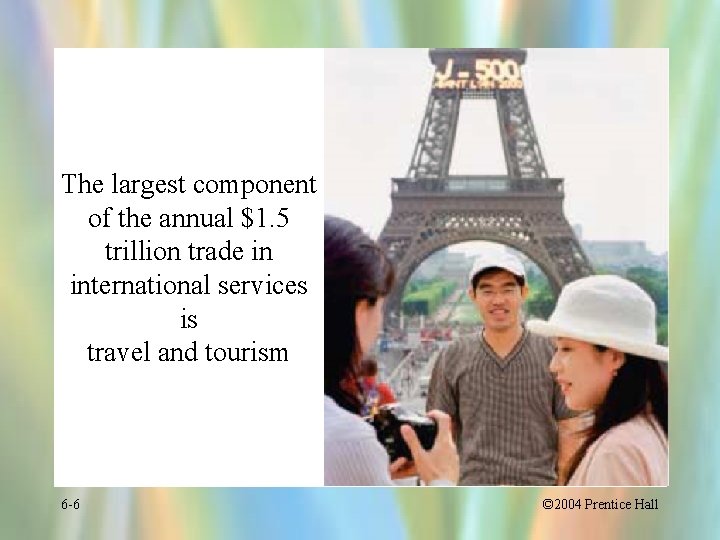
The largest component of the annual $1. 5 trillion trade in international services is travel and tourism 6 -6 © 2004 Prentice Hall
Classical Country-Based Trade Theories § Mercantilism § Absolute Advantage § Comparative Advantage with Money § Relative Factor Endowments 6 -7 © 2004 Prentice Hall
Mercantilism § A country’s wealth is measured by its holdings of gold and silver § A country’s goal should be to enlarge holdings of gold and silver by – Promoting exports – Discouraging imports 6 -8 © 2004 Prentice Hall
Modern Mercantilism § Neomercantilists or protectionists – American Federation of Labor-Congress of Industrial Organizations – Textile manufacturers – Steel companies – Sugar growers – Peanut farmers 6 -9 © 2004 Prentice Hall
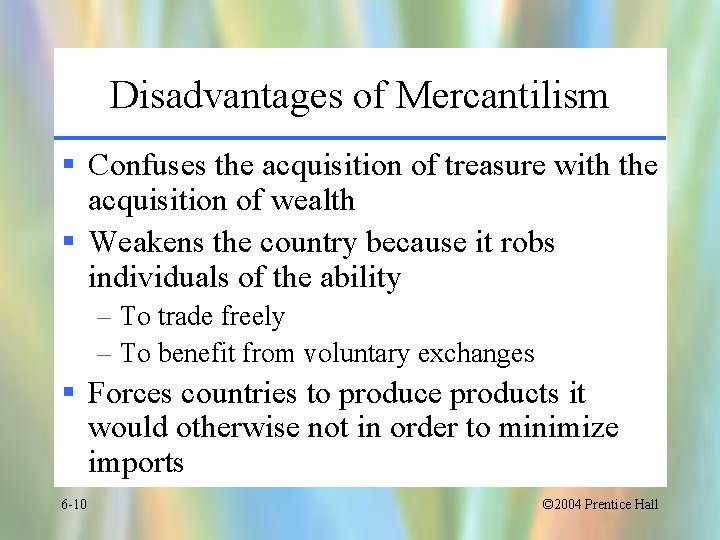
Disadvantages of Mercantilism § Confuses the acquisition of treasure with the acquisition of wealth § Weakens the country because it robs individuals of the ability – To trade freely – To benefit from voluntary exchanges § Forces countries to produce products it would otherwise not in order to minimize imports 6 -10 © 2004 Prentice Hall
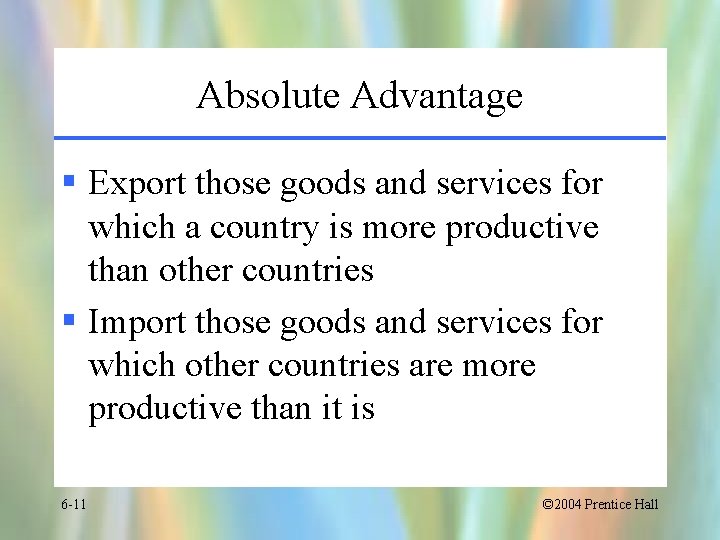
Absolute Advantage § Export those goods and services for which a country is more productive than other countries § Import those goods and services for which other countries are more productive than it is 6 -11 © 2004 Prentice Hall
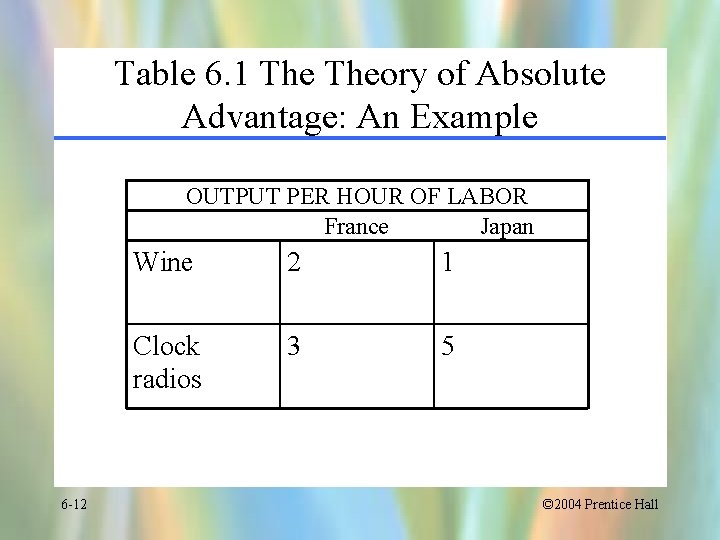
Table 6. 1 Theory of Absolute Advantage: An Example OUTPUT PER HOUR OF LABOR France Japan 6 -12 Wine 2 1 Clock radios 3 5 © 2004 Prentice Hall
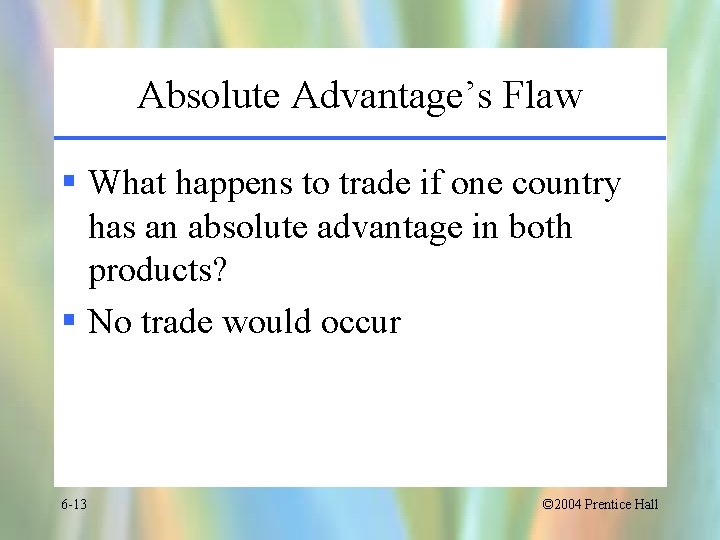
Absolute Advantage’s Flaw § What happens to trade if one country has an absolute advantage in both products? § No trade would occur 6 -13 © 2004 Prentice Hall
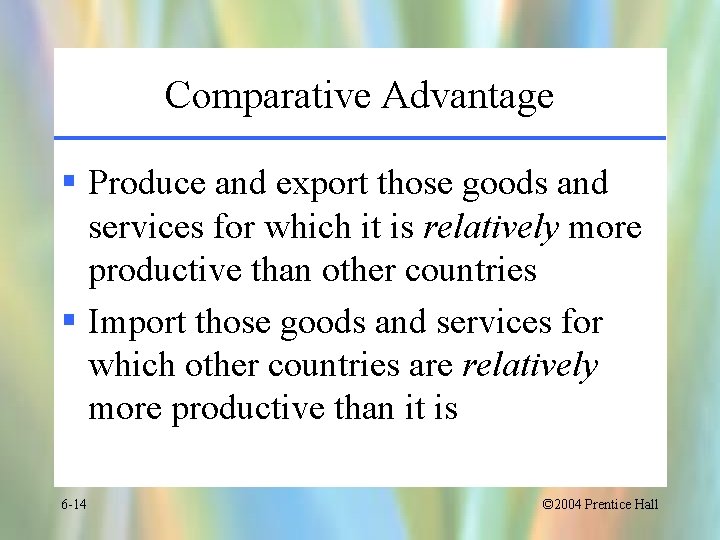
Comparative Advantage § Produce and export those goods and services for which it is relatively more productive than other countries § Import those goods and services for which other countries are relatively more productive than it is 6 -14 © 2004 Prentice Hall
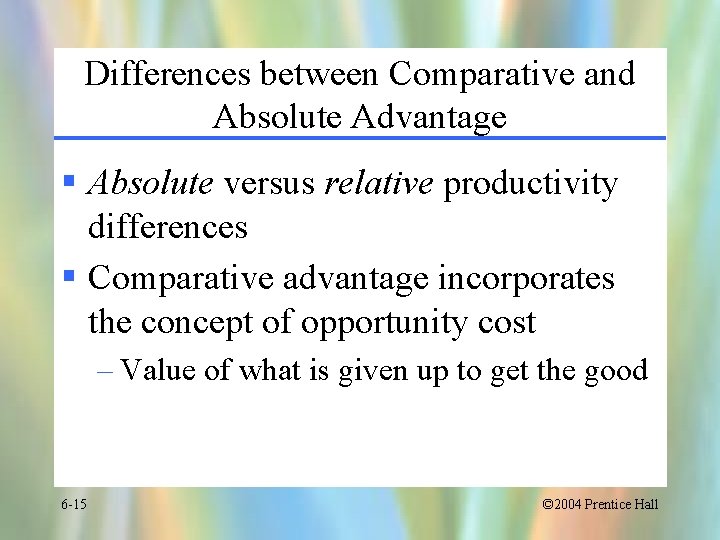
Differences between Comparative and Absolute Advantage § Absolute versus relative productivity differences § Comparative advantage incorporates the concept of opportunity cost – Value of what is given up to get the good 6 -15 © 2004 Prentice Hall
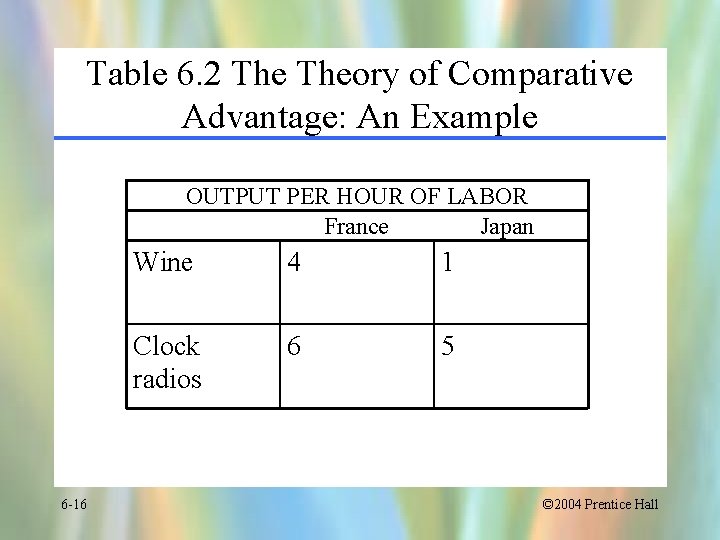
Table 6. 2 Theory of Comparative Advantage: An Example OUTPUT PER HOUR OF LABOR France Japan 6 -16 Wine 4 1 Clock radios 6 5 © 2004 Prentice Hall
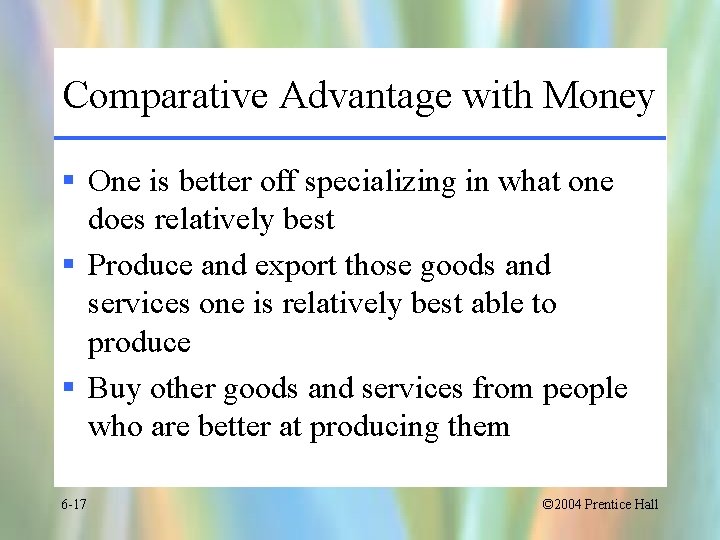
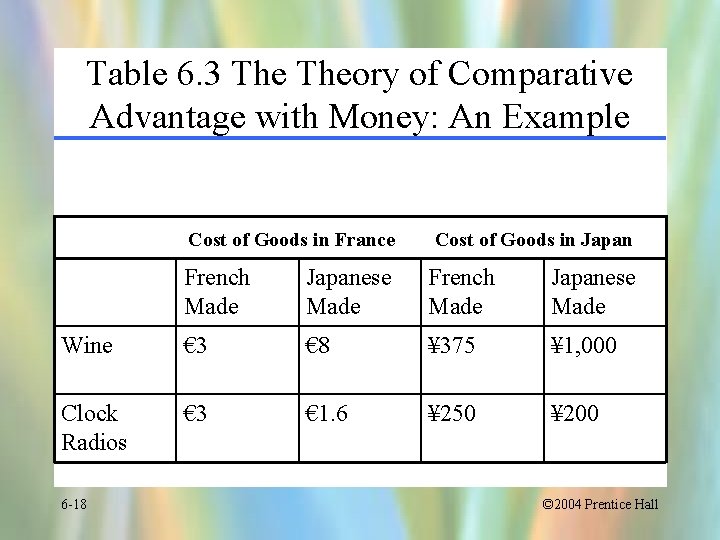
Comparative Advantage with Money § One is better off specializing in what one does relatively best § Produce and export those goods and services one is relatively best able to produce § Buy other goods and services from people who are better at producing them 6 -17 © 2004 Prentice Hall
Table 6. 3 Theory of Comparative Advantage with Money: An Example Cost of Goods in France Cost of Goods in Japan French Made Japanese Made Wine € 3 € 8 ¥ 375 ¥ 1, 000 Clock Radios € 3 € 1. 6 ¥ 250 ¥ 200 6 -18 © 2004 Prentice Hall
Relative Factor Endowments § Heckscher-Ohlin Theory § What determines the products for which a country will have a comparative advantage? – Factor endowments vary among countries – Goods differ according to the types of factors that are used to produce them 6 -19 © 2004 Prentice Hall
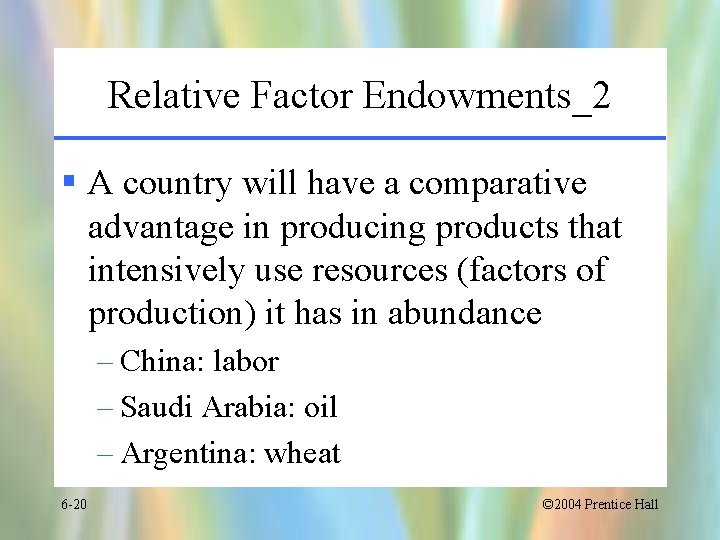
Relative Factor Endowments_2 § A country will have a comparative advantage in producing products that intensively use resources (factors of production) it has in abundance – China: labor – Saudi Arabia: oil – Argentina: wheat 6 -20 © 2004 Prentice Hall
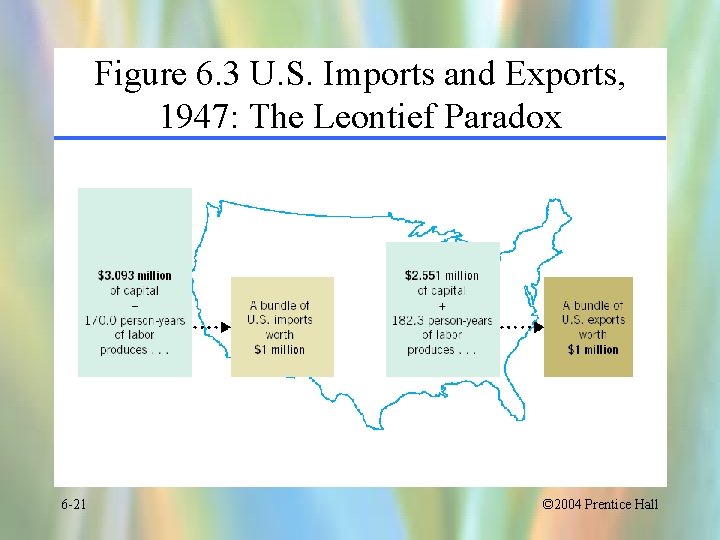
Figure 6. 3 U. S. Imports and Exports, 1947: The Leontief Paradox 6 -21 © 2004 Prentice Hall
Modern Firm-Based Trade Theories § Country Similarity Theory § Product Life Cycle Theory § Global Strategic Rivalry Theory § Porter’s National Competitive Advantage 6 -22 © 2004 Prentice Hall
Growth of Firm-Based Theories § Growing importance of MNCs § Inability of the country-based theories to explain and predict the existence and growth of intraindustry trade § Failure of Leontief and others to empirically validate country-based Heckscher-Ohlin Theory 6 -23 © 2004 Prentice Hall
Firm-Based Trade Theories § Incorporate additional factors into explanations of trade flows – Quality – Technology – Brand names – Customer quality 6 -24 © 2004 Prentice Hall
Country Similarity Theory § Explains the phenomenon of intraindustry trade – Trade between two countries of goods produced by the same industry • Japan exports Toyotas to Germany • Germany exports BMWs to Japan 6 -25 © 2004 Prentice Hall
Country Similarity Theory_2 § Trade results from similarities of preferences among consumers in countries that are at the same stage of economic development § Most trade in manufactured goods should be between countries with similar per capita incomes 6 -26 © 2004 Prentice Hall
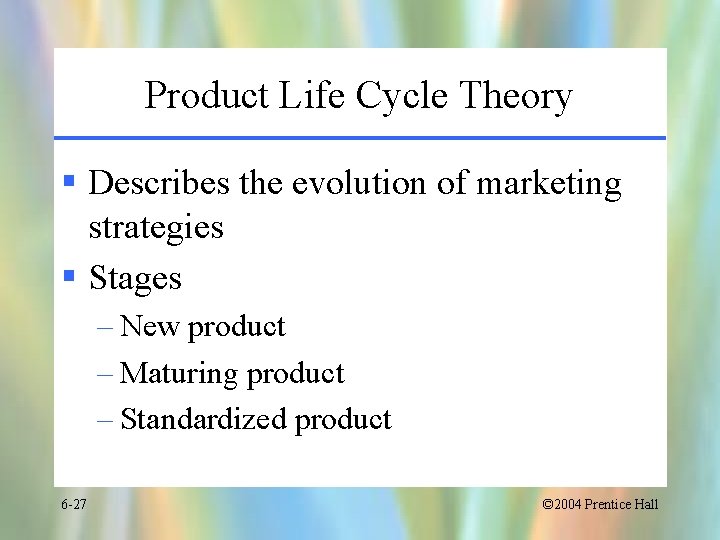
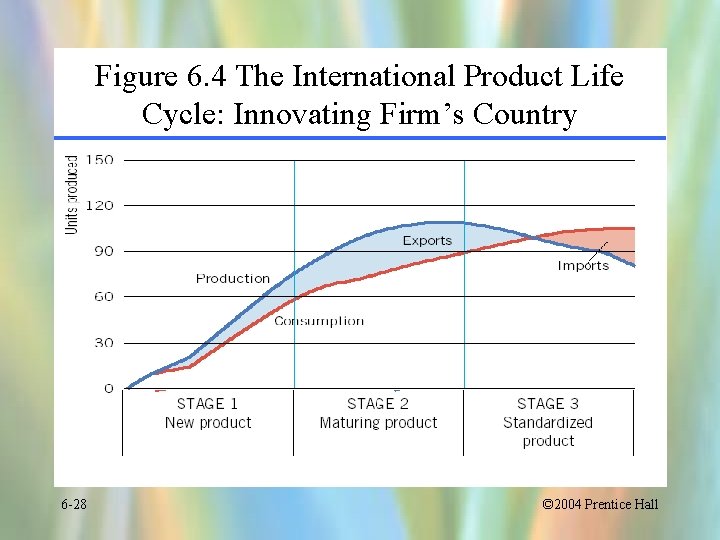
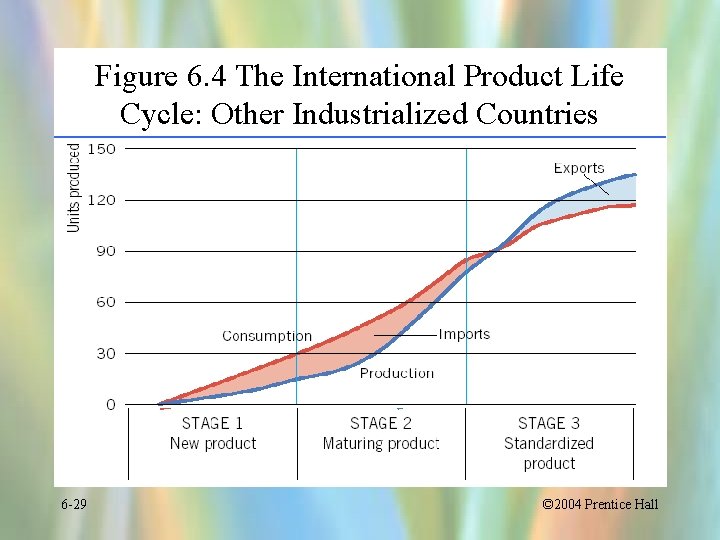
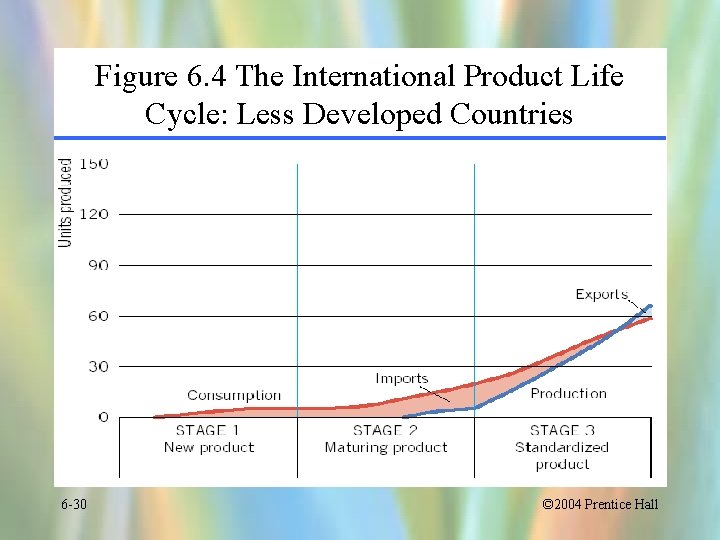
Product Life Cycle Theory § Describes the evolution of marketing strategies § Stages – New product – Maturing product – Standardized product 6 -27 © 2004 Prentice Hall
Figure 6. 4 The International Product Life Cycle: Innovating Firm’s Country 6 -28 © 2004 Prentice Hall
Figure 6. 4 The International Product Life Cycle: Other Industrialized Countries 6 -29 © 2004 Prentice Hall
Figure 6. 4 The International Product Life Cycle: Less Developed Countries 6 -30 © 2004 Prentice Hall
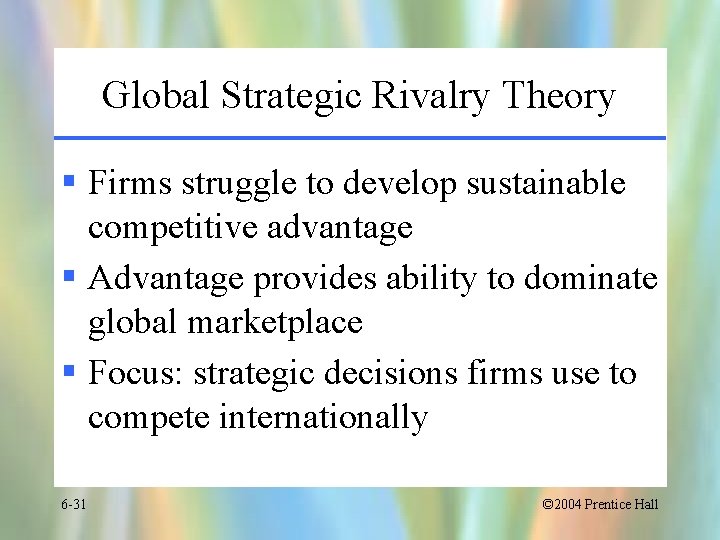
Global Strategic Rivalry Theory § Firms struggle to develop sustainable competitive advantage § Advantage provides ability to dominate global marketplace § Focus: strategic decisions firms use to compete internationally 6 -31 © 2004 Prentice Hall
Sustaining Competitive Advantage § Owning intellectual property rights § Investing in research and development § Achieving economies of scale or scope § Exploiting the experience curve 6 -32 © 2004 Prentice Hall
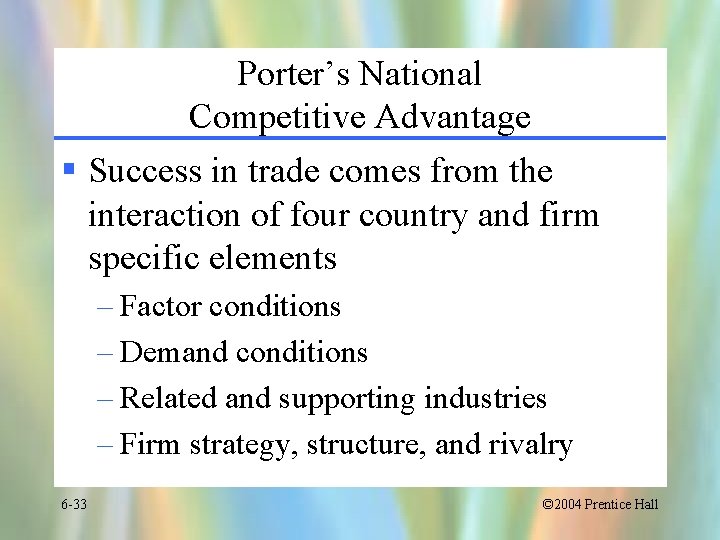
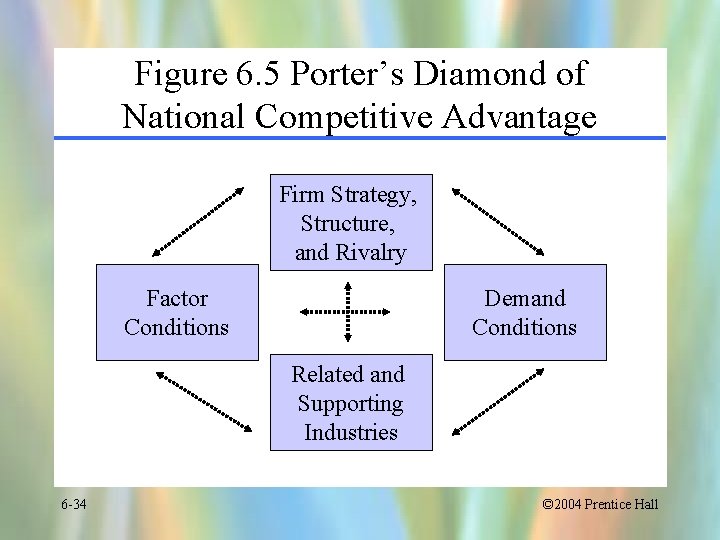
Porter’s National Competitive Advantage § Success in trade comes from the interaction of four country and firm specific elements – Factor conditions – Demand conditions – Related and supporting industries – Firm strategy, structure, and rivalry 6 -33 © 2004 Prentice Hall
Figure 6. 5 Porter’s Diamond of National Competitive Advantage Firm Strategy, Structure, and Rivalry Factor Conditions Demand Conditions Related and Supporting Industries 6 -34 © 2004 Prentice Hall
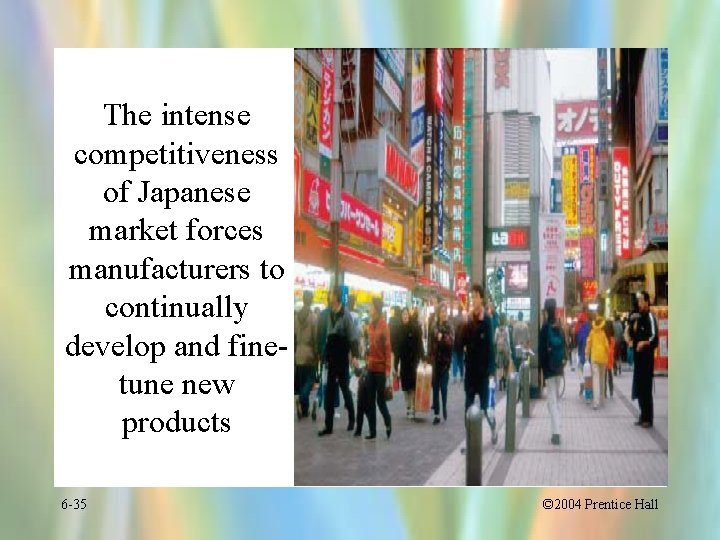
The intense competitiveness of Japanese market forces manufacturers to continually develop and finetune new products 6 -35 © 2004 Prentice Hall
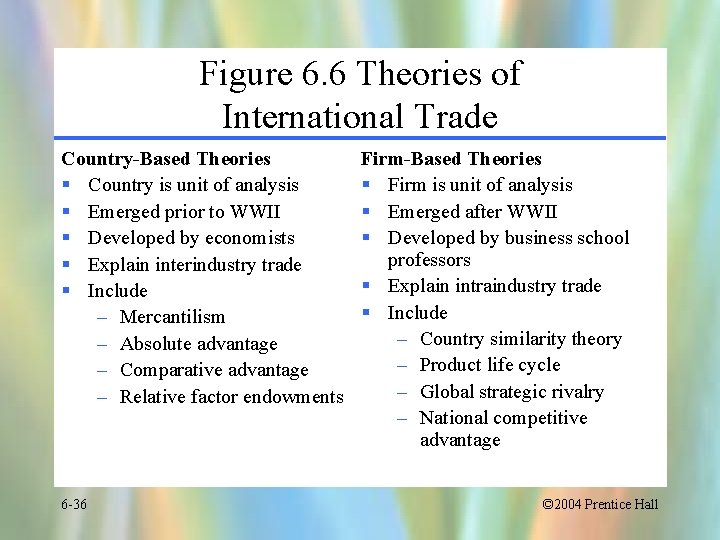
Figure 6. 6 Theories of International Trade Country-Based Theories § Country is unit of analysis § Emerged prior to WWII § Developed by economists § Explain interindustry trade § Include – Mercantilism – Absolute advantage – Comparative advantage – Relative factor endowments 6 -36 Firm-Based Theories § Firm is unit of analysis § Emerged after WWII § Developed by business school professors § Explain intraindustry trade § Include – Country similarity theory – Product life cycle – Global strategic rivalry – National competitive advantage © 2004 Prentice Hall
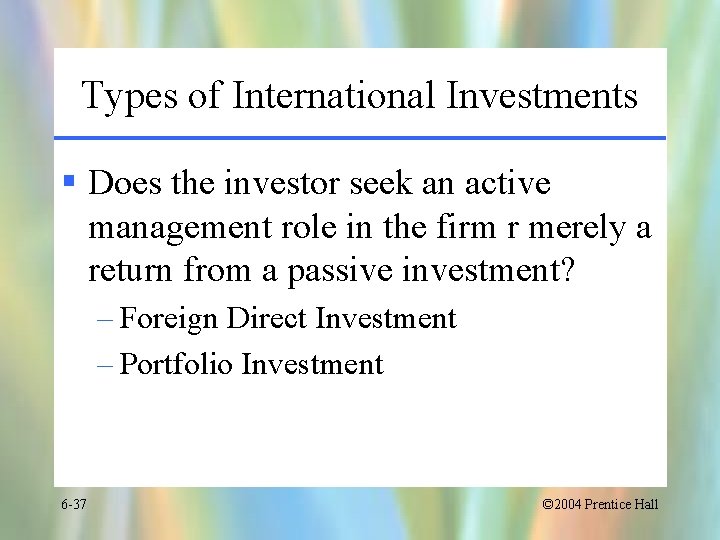
Types of International Investments § Does the investor seek an active management role in the firm r merely a return from a passive investment? – Foreign Direct Investment – Portfolio Investment 6 -37 © 2004 Prentice Hall
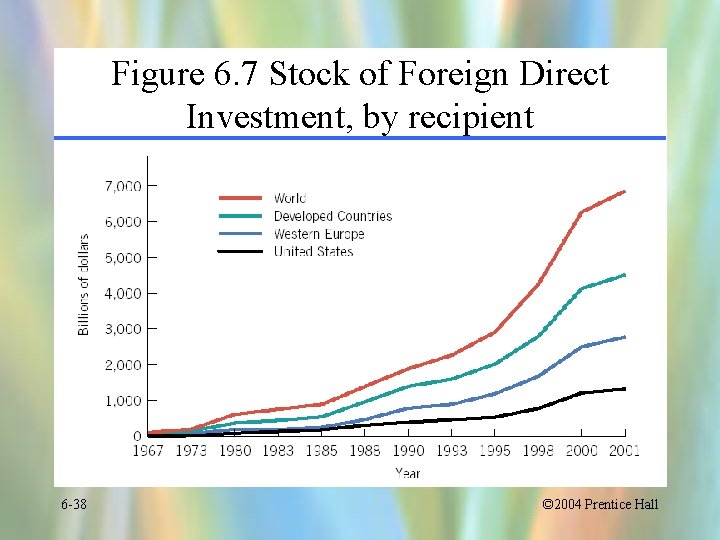
Figure 6. 7 Stock of Foreign Direct Investment, by recipient 6 -38 © 2004 Prentice Hall
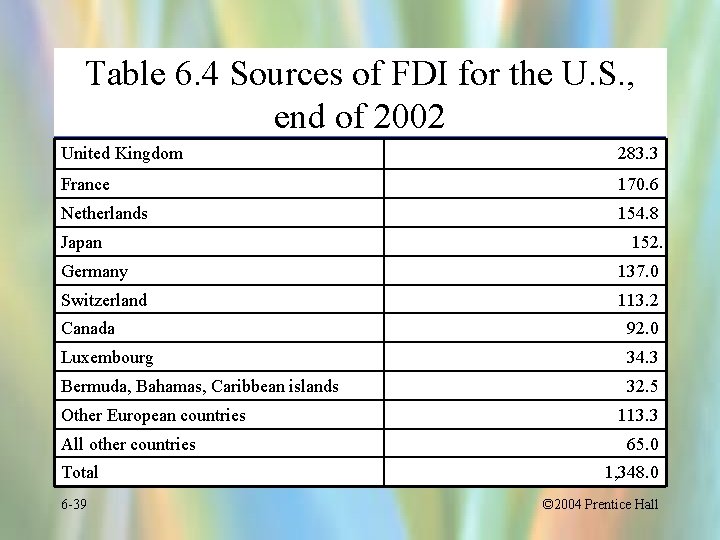
Table 6. 4 Sources of FDI for the U. S. , end of 2002 United Kingdom 283. 3 France 170. 6 Netherlands 154. 8 Japan 152. Germany 137. 0 Switzerland 113. 2 Canada 92. 0 Luxembourg 34. 3 Bermuda, Bahamas, Caribbean islands 32. 5 Other European countries All other countries Total 6 -39 113. 3 65. 0 1, 348. 0 © 2004 Prentice Hall
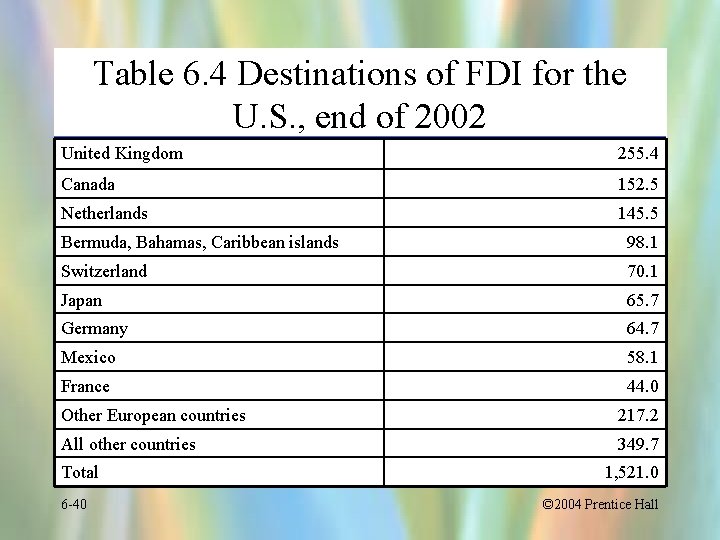
Table 6. 4 Destinations of FDI for the U. S. , end of 2002 United Kingdom 255. 4 Canada 152. 5 Netherlands 145. 5 Bermuda, Bahamas, Caribbean islands 98. 1 Switzerland 70. 1 Japan 65. 7 Germany 64. 7 Mexico 58. 1 France 44. 0 Other European countries 217. 2 All other countries 349. 7 Total 6 -40 1, 521. 0 © 2004 Prentice Hall
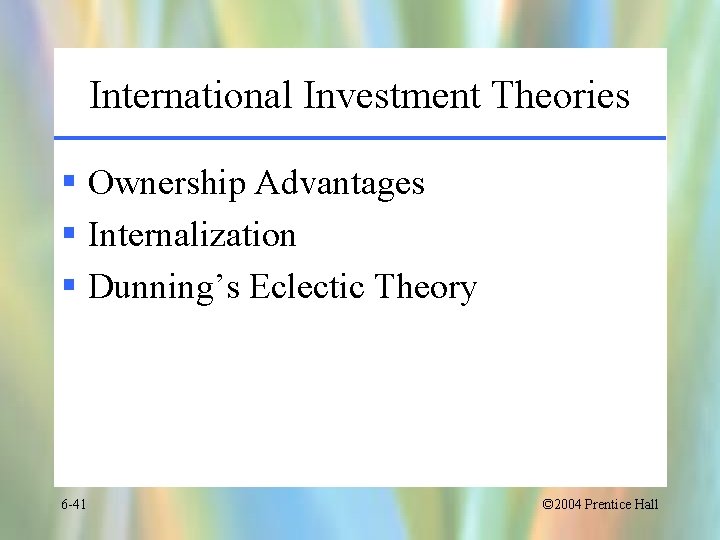
International Investment Theories § Ownership Advantages § Internalization § Dunning’s Eclectic Theory 6 -41 © 2004 Prentice Hall
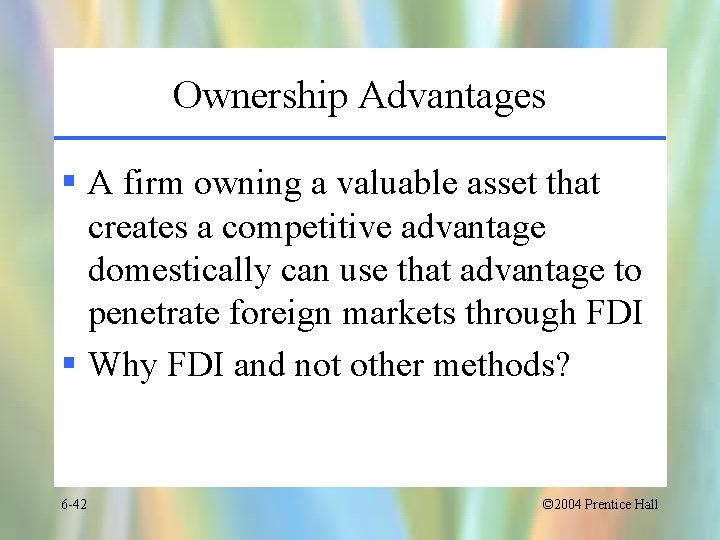
Ownership Advantages § A firm owning a valuable asset that creates a competitive advantage domestically can use that advantage to penetrate foreign markets through FDI § Why FDI and not other methods? 6 -42 © 2004 Prentice Hall
Internalization Theory § FDI is more likely to occur when transaction costs with a second firm are high § Transaction costs: costs associated with negotiating, monitoring, and enforcing a contract 6 -43 © 2004 Prentice Hall
Dunning’s Eclectic Theory § FDI reflects both international business activity and business activity internal to the firm § 3 conditions for FDI – Ownership advantage – Location advantage – Internalization advantage 6 -44 © 2004 Prentice Hall
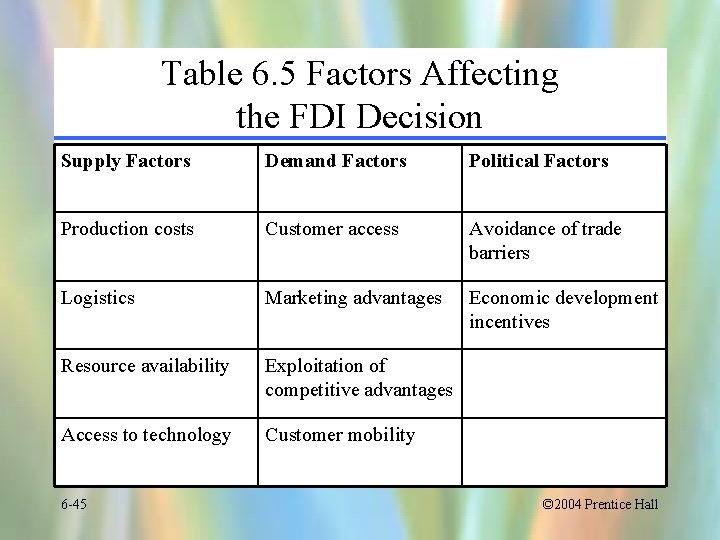
Table 6. 5 Factors Affecting the FDI Decision Supply Factors Demand Factors Political Factors Production costs Customer access Avoidance of trade barriers Logistics Marketing advantages Economic development incentives Resource availability Exploitation of competitive advantages Access to technology Customer mobility 6 -45 © 2004 Prentice Hall
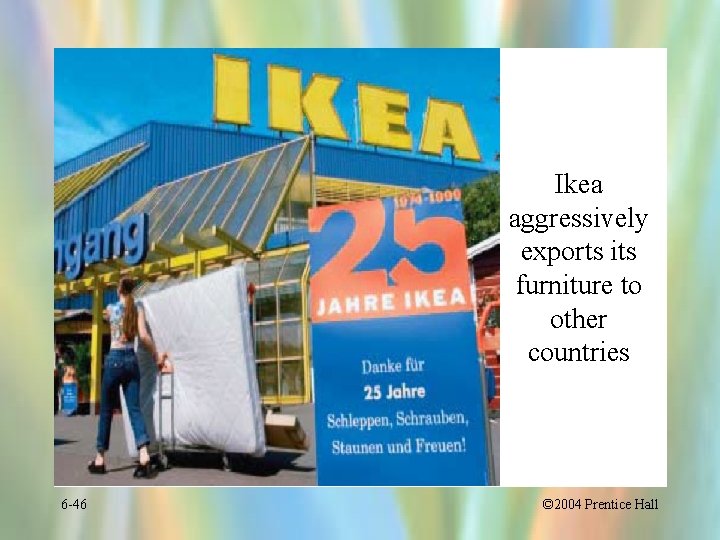
Ikea aggressively exports its furniture to other countries 6 -46 © 2004 Prentice Hall