
Chapter 6 International Parity Conditions Learning Objectives Examine

Chapter 6 International Parity Conditions
Learning Objectives • Examine how price levels and price level changes (inflation) in countries determine the exchange rates at which their currencies are traded • Show interest rates reflect inflationary forces within each country and currency • Explain how forward markets for currencies reflect expectations held by market participants about the future spot exchange rate • Analyze how, in equilibrium, the spot and forward currency markets are aligned with interest differentials and differentials in expected inflation 6 -2 © 2016 Pearson Education, Ltd. All rights reserved.
International Parity Conditions • Some fundamental questions managers of MNEs, international portfolio investors, importers, exporters and government officials must deal with every day are: – What are the determinants of exchange rates? – Are changes in exchange rates predictable? • The economic theories that link exchange rates, price levels, and interest rates together are called international parity conditions. • These international parity conditions form the core of the financial theory that is unique to international finance. 6 -3 © 2016 Pearson Education, Ltd. All rights reserved.
International Parity Conditions • These theories do not always work out to be “true” when compared to what students and practitioners observe in the real world, but they are central to any understanding of how multinational business is conducted and funded in the world today. • The mistake is often not with theory itself, but with the interpretation and application of said theories. 6 -4 © 2016 Pearson Education, Ltd. All rights reserved.
Prices and Exchange Rates • If the identical product or service can be: – sold in two different markets; and – no restrictions exist on the sale; and – transportation costs of moving the product between markets are equal, then – the product’s price should be the same in both markets. • This is called the law of one price. 6 -5 © 2016 Pearson Education, Ltd. All rights reserved.
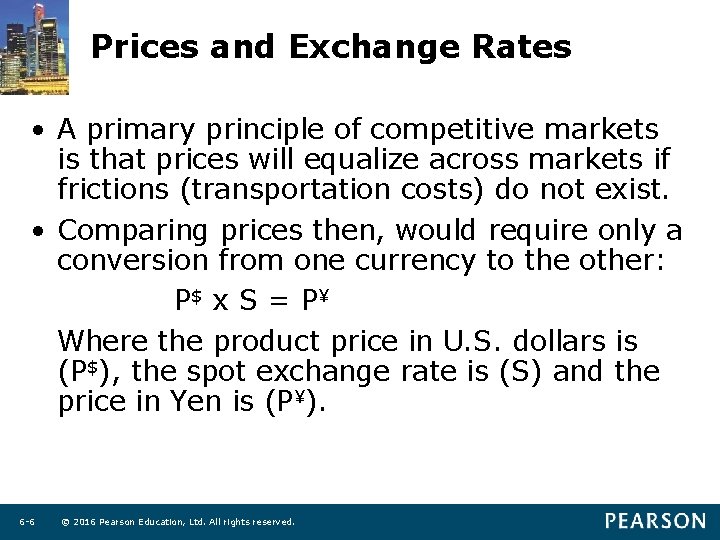
Prices and Exchange Rates • A primary principle of competitive markets is that prices will equalize across markets if frictions (transportation costs) do not exist. • Comparing prices then, would require only a conversion from one currency to the other: P$ x S = P ¥ Where the product price in U. S. dollars is (P$), the spot exchange rate is (S) and the price in Yen is (P¥). 6 -6 © 2016 Pearson Education, Ltd. All rights reserved.
Prices and Exchange Rates • If the law of one price were true for all goods and services, the purchasing power parity (PPP) exchange rate could be found from any individual set of prices. • By comparing the prices of identical products denominated in different currencies, we could determine the “real” or PPP exchange rate that should exist if markets were efficient. • This is the absolute version of the PPP theory. • A fun example is the Big Mac Index published annually by the Economist. Exhibit 6. 1 illustrates. 6 -7 © 2016 Pearson Education, Ltd. All rights reserved.
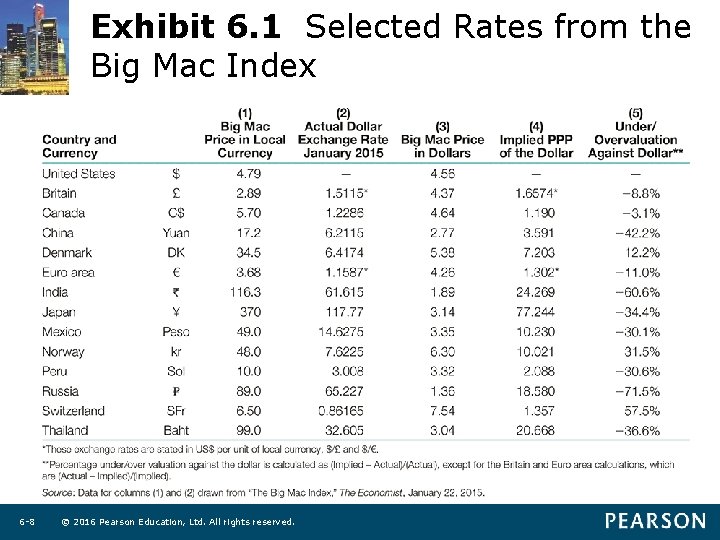
Exhibit 6. 1 Selected Rates from the Big Mac Index 6 -8 © 2016 Pearson Education, Ltd. All rights reserved.
Prices and Exchange Rates • If the assumptions of the absolute version of the PPP theory are relaxed a bit more, we observe what is termed relative purchasing power parity (RPPP). • RPPP holds that PPP is not particularly helpful in determining what the spot rate is today, but that the relative change in prices between two countries over a period of time determines the change in the exchange rate over that period. • See Exhibit 6. 2 6 -9 © 2016 Pearson Education, Ltd. All rights reserved.
Prices and Exchange Rates • More specifically, with regard to RPPP: “If the spot exchange rate between two countries starts in equilibrium, any change in the differential rate of inflation between them tends to be offset over the long run by an equal but opposite change in the spot exchange rate. ” 6 -10 © 2016 Pearson Education, Ltd. All rights reserved.
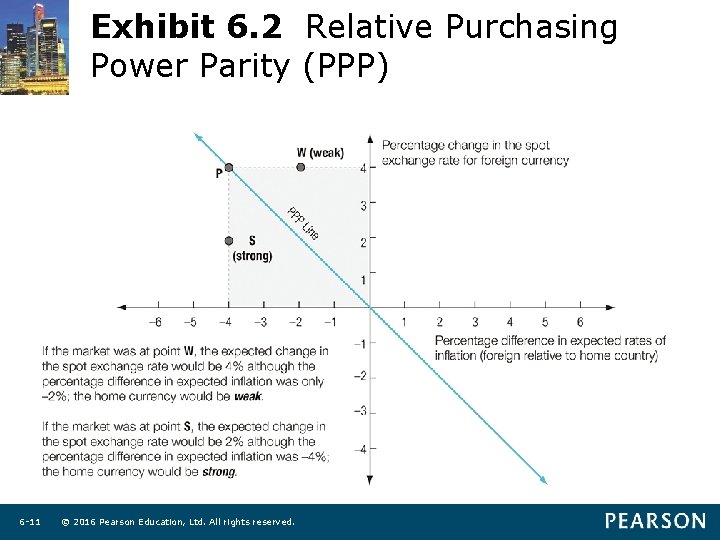
Exhibit 6. 2 Relative Purchasing Power Parity (PPP) 6 -11 © 2016 Pearson Education, Ltd. All rights reserved.
Prices and Exchange Rates • Empirical testing of PPP and the law of one price has been done, but has not proved PPP to be accurate in predicting future exchange rates. • Two general conclusions can be made from these tests: – PPP holds up well over the very long run but poorly for shorter time periods; and, – theory holds better for countries with relatively high rates of inflation and underdeveloped capital markets. 6 -12 © 2016 Pearson Education, Ltd. All rights reserved.
Exchange Rate Pass-Through • Exchange rate pass-through is a measure of the response of imported and exported product prices to changes in exchange rates. 6 -13 © 2016 Pearson Education, Ltd. All rights reserved.
Prices and Exchange Rates • Price elasticity of demand is an important factor when determining pass-through levels. • The own-price elasticity of demand for any good is the percentage change in quantity of the good demanded as a result of the percentage change in the good’s own price. 6 -14 © 2016 Pearson Education, Ltd. All rights reserved.
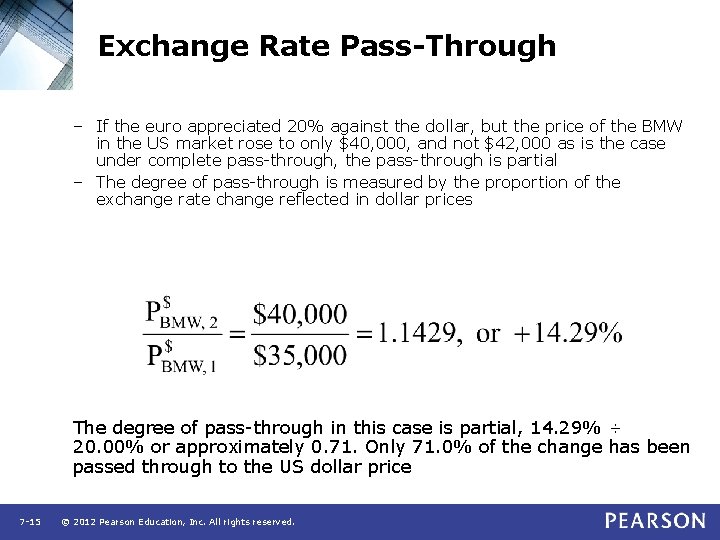
Exchange Rate Pass-Through – If the euro appreciated 20% against the dollar, but the price of the BMW in the US market rose to only $40, 000, and not $42, 000 as is the case under complete pass-through, the pass-through is partial – The degree of pass-through is measured by the proportion of the exchange rate change reflected in dollar prices The degree of pass-through in this case is partial, 14. 29% ÷ 20. 00% or approximately 0. 71. Only 71. 0% of the change has been passed through to the US dollar price 7 -15 © 2012 Pearson Education, Inc. All rights reserved.
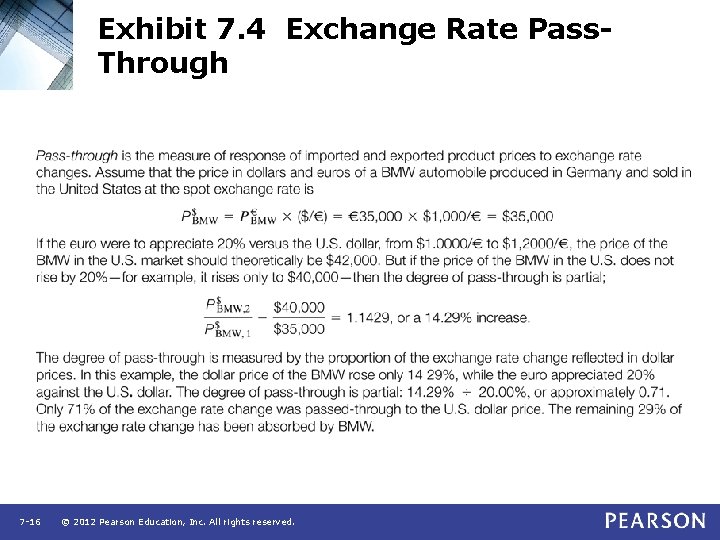
Exhibit 7. 4 Exchange Rate Pass. Through 7 -16 © 2012 Pearson Education, Inc. All rights reserved.
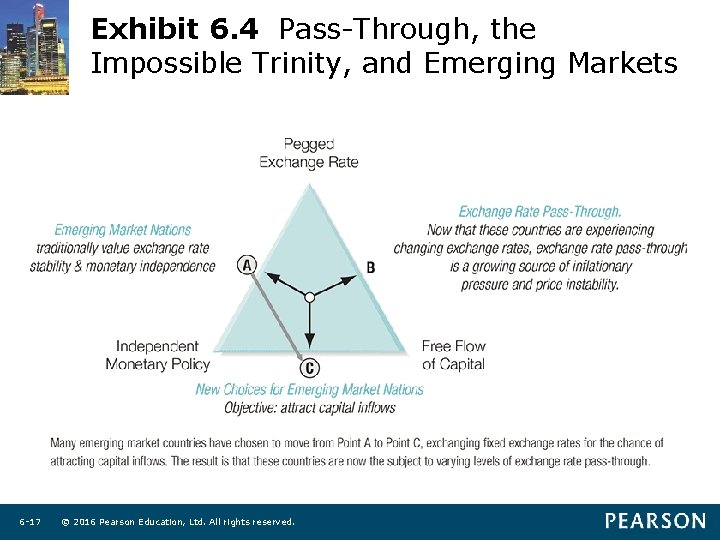
Exhibit 6. 4 Pass-Through, the Impossible Trinity, and Emerging Markets 6 -17 © 2016 Pearson Education, Ltd. All rights reserved.
Interest Rates and Exchange Rates • The Fisher effect states that nominal interest rates in each country are equal to the required real rate of return plus compensation for expected inflation. • This equation reduces to (in approximate form): i=r+ Where i = nominal interest rate, r = real interest rate and = expected inflation. • Empirical tests (using ex-post) national inflation rates have shown the Fisher effect usually exists for short-maturity government securities (treasury bills and notes). 6 -18 © 2016 Pearson Education, Ltd. All rights reserved.
Interest Rates and Exchange Rates • The relationship between the percentage change in the spot exchange rate over time and the differential between comparable interest rates in different national capital markets is known as the international Fisher effect. • “Fisher-open, ” as it is termed, states that the spot exchange rate should change in an equal amount but in the opposite direction to the difference in interest rates between two countries. 6 -19 © 2016 Pearson Education, Ltd. All rights reserved.
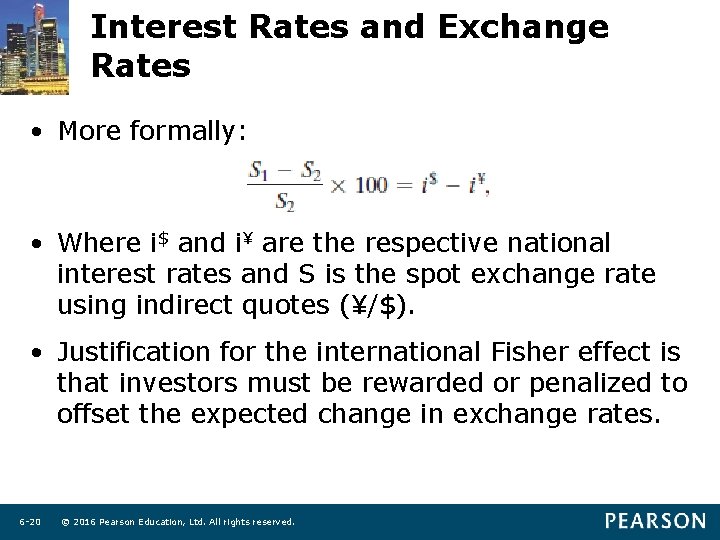
Interest Rates and Exchange Rates • More formally: • Where i$ and i¥ are the respective national interest rates and S is the spot exchange rate using indirect quotes (¥/$). • Justification for the international Fisher effect is that investors must be rewarded or penalized to offset the expected change in exchange rates. 6 -20 © 2016 Pearson Education, Ltd. All rights reserved.
The Forward Rate • A forward rate is an exchange rate quoted for settlement at some future date. • A forward exchange agreement between currencies states the rate of exchange at which a foreign currency will be bought forward or sold forward at a specific date in the future. 6 -21 © 2016 Pearson Education, Ltd. All rights reserved.
The Forward Rate • The forward rate is calculated for any specific maturity by adjusting the current spot exchange rate by the ratio of eurocurrency interest rates of the same maturity for the two subject currencies. • For example, the 90 -day forward rate for the Swiss franc/U. S. dollar exchange rate (FSF/$90) is found by multiplying the current spot rate (SSF/$) by the ratio of the 90 -day euro-Swiss franc deposit rate (i. SF) over the 90 -day eurodollar deposit rate (i$). 6 -22 © 2016 Pearson Education, Ltd. All rights reserved.
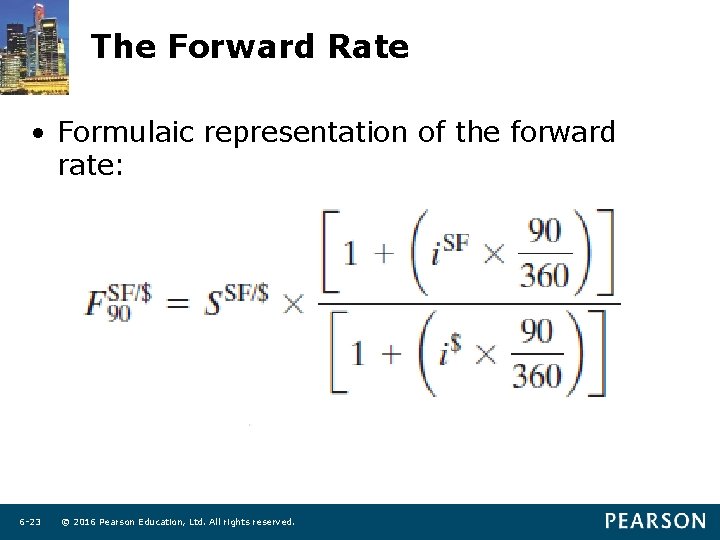
The Forward Rate • Formulaic representation of the forward rate: 6 -23 © 2016 Pearson Education, Ltd. All rights reserved.
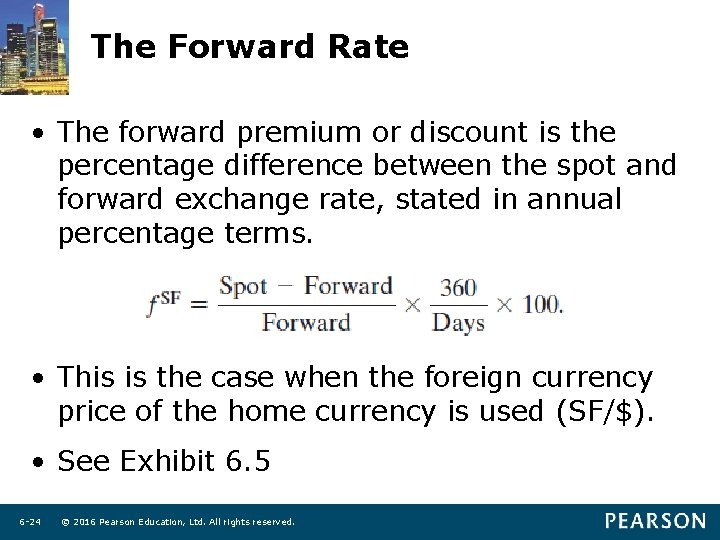
The Forward Rate • The forward premium or discount is the percentage difference between the spot and forward exchange rate, stated in annual percentage terms. • This is the case when the foreign currency price of the home currency is used (SF/$). • See Exhibit 6. 5 6 -24 © 2016 Pearson Education, Ltd. All rights reserved.
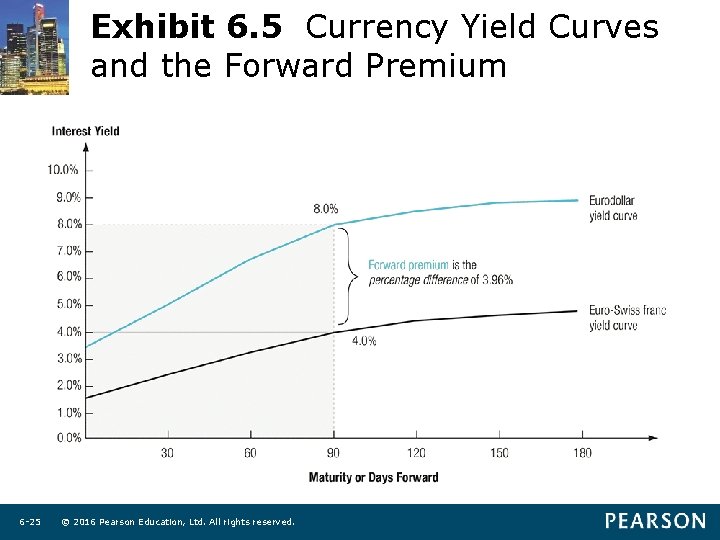
Exhibit 6. 5 Currency Yield Curves and the Forward Premium 6 -25 © 2016 Pearson Education, Ltd. All rights reserved.

Interest Rate Parity (IRP) • The theory of Interest Rate Parity (IRP) provides the linkage between the foreign exchange markets and the international money markets. • The theory states: The difference in the national interest rates for securities of similar risk and maturity should be equal to, but opposite in sign to, the forward rate discount or premium for the foreign currency, except for transaction costs. • See Exhibit 6. 6 6 -26 © 2016 Pearson Education, Ltd. All rights reserved.
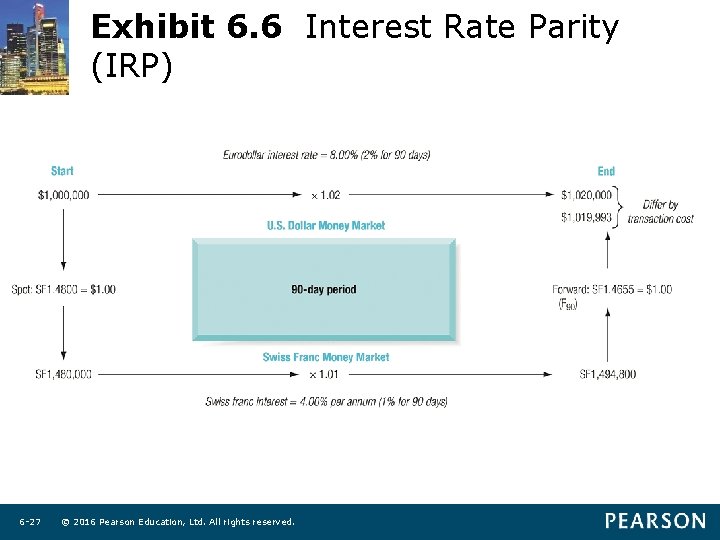
Exhibit 6. 6 Interest Rate Parity (IRP) 6 -27 © 2016 Pearson Education, Ltd. All rights reserved.
Covered Interest Arbitrage • The spot and forward exchange rates are not, however, constantly in the state of equilibrium described by interest rate parity. • When the market is not in equilibrium, the potential for “risk-less” or arbitrage profit exists. • The arbitrager will exploit the imbalance by investing in whichever currency offers the higher return on a covered basis. • See Exhibit 6. 7 6 -28 © 2016 Pearson Education, Ltd. All rights reserved.
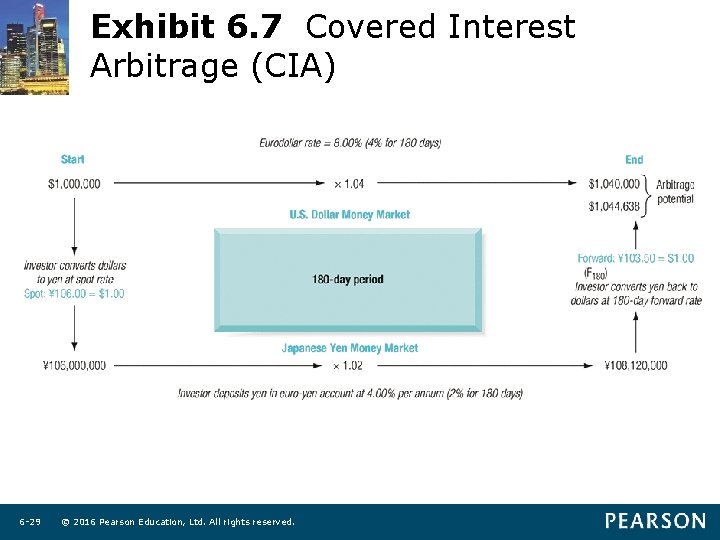
Exhibit 6. 7 Covered Interest Arbitrage (CIA) 6 -29 © 2016 Pearson Education, Ltd. All rights reserved.
Uncovered Interest Arbitrage (UIA) • In the case of uncovered interest arbitrage (UIA), investors borrow in countries and currencies exhibiting relatively low interest rates and convert the proceed into currencies that offer much higher interest rates (Exhibit 6. 8). • The transaction is “uncovered” because the investor does not sell the higher yielding currency proceeds forward, choosing to remain uncovered and accept the currency risk of exchanging the higher yield currency into the lower yielding currency at the end of the period. 6 -30 © 2016 Pearson Education, Ltd. All rights reserved.
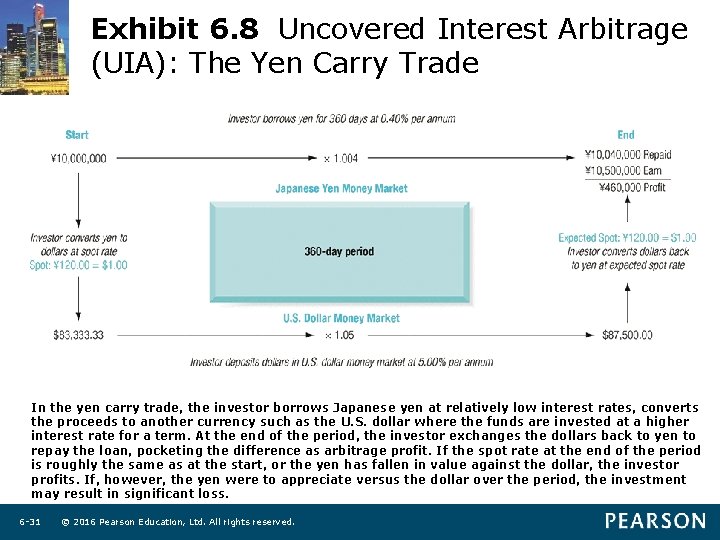
Exhibit 6. 8 Uncovered Interest Arbitrage (UIA): The Yen Carry Trade In the yen carry trade, the investor borrows Japanese yen at relatively low interest rates, converts the proceeds to another currency such as the U. S. dollar where the funds are invested at a higher interest rate for a term. At the end of the period, the investor exchanges the dollars back to yen to repay the loan, pocketing the difference as arbitrage profit. If the spot rate at the end of the period is roughly the same as at the start, or the yen has fallen in value against the dollar, the investor profits. If, however, the yen were to appreciate versus the dollar over the period, the investment may result in significant loss. 6 -31 © 2016 Pearson Education, Ltd. All rights reserved.
Equilibrium between Interest Rates and Exchange Rates • Exhibit 6. 9 illustrates the conditions necessary for equilibrium between interest rates and exchange rates. • The disequilibrium situation, denoted by point U, is located off the interest rate parity line. • However, the situation represented by point U is unstable because all investors have an incentive to execute the same covered interest arbitrage, which is virtually risk-free. 6 -32 © 2016 Pearson Education, Ltd. All rights reserved.
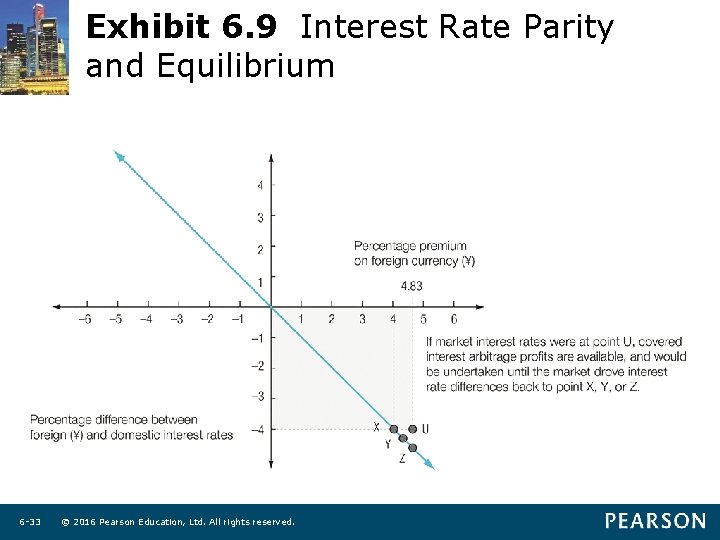
Exhibit 6. 9 Interest Rate Parity and Equilibrium 6 -33 © 2016 Pearson Education, Ltd. All rights reserved.
Equilibrium between Interest Rates and Exchange Rates • Some forecasters believe that forward exchange rates are unbiased predictors of future spot exchange rates. • Intuitively this means that the distribution of possible actual spot rates in the future is centered on the forward rate. • Unbiased prediction simply means that the forward rate will, on average, overestimate and underestimate the actual future spot rate in equal frequency and degree. • Exhibit 6. 10 illustrates this theory. • Exhibit 6. 11 illustrates all of the fundamental parity conditions. 6 -34 © 2016 Pearson Education, Ltd. All rights reserved.
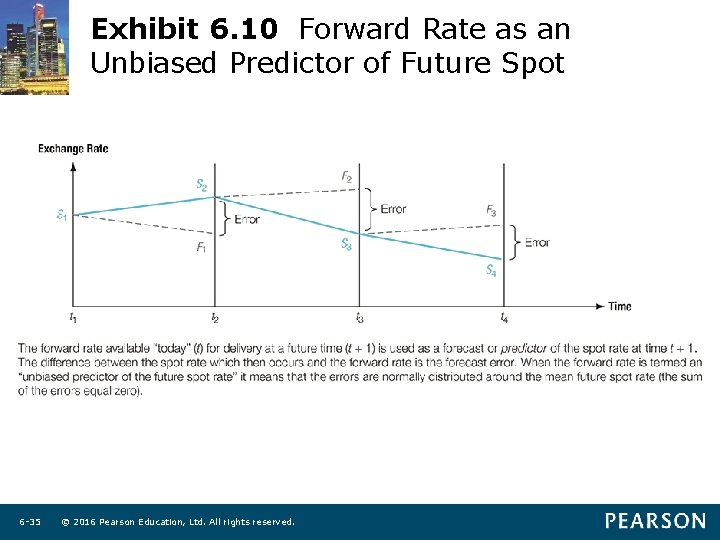
Exhibit 6. 10 Forward Rate as an Unbiased Predictor of Future Spot 6 -35 © 2016 Pearson Education, Ltd. All rights reserved.
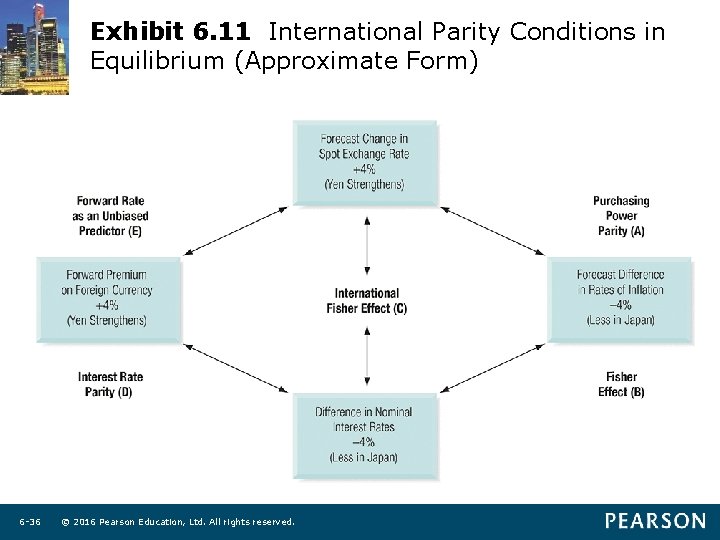
Exhibit 6. 11 International Parity Conditions in Equilibrium (Approximate Form) 6 -36 © 2016 Pearson Education, Ltd. All rights reserved.
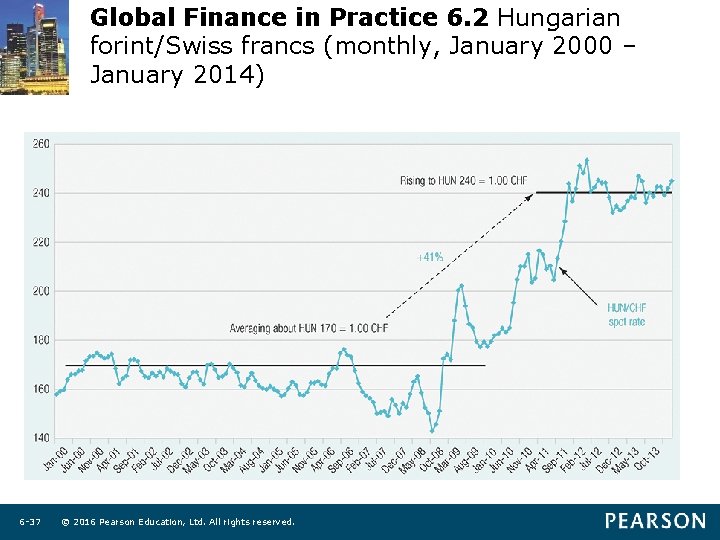
Global Finance in Practice 6. 2 Hungarian forint/Swiss francs (monthly, January 2000 – January 2014) 6 -37 © 2016 Pearson Education, Ltd. All rights reserved.
- Slides: 37