
Chapter 6 Group Discussion Developing the Right Attitude
- Slides: 33
Chapter 6 Group Discussion Developing the Right Attitude for Group Work
The Right Attitude for Group Work , What is the definition of “discussion”?
The Right Attitude for Group Work , Discussion is a cooperative exchange of information, opinions and ideas.
Define the difference between cooperative manner rather than a competitive manner.
The difference between cooperative manner rather than a competitive manner is… , This is not a debate , Working towards same goal
How can you be successful in a group?
How to be successful in a group , Be patient. , You can't just let things happen you have to participate. , Be committed to listen, think and reason with others.
What are three kinds of Discussion Formats?
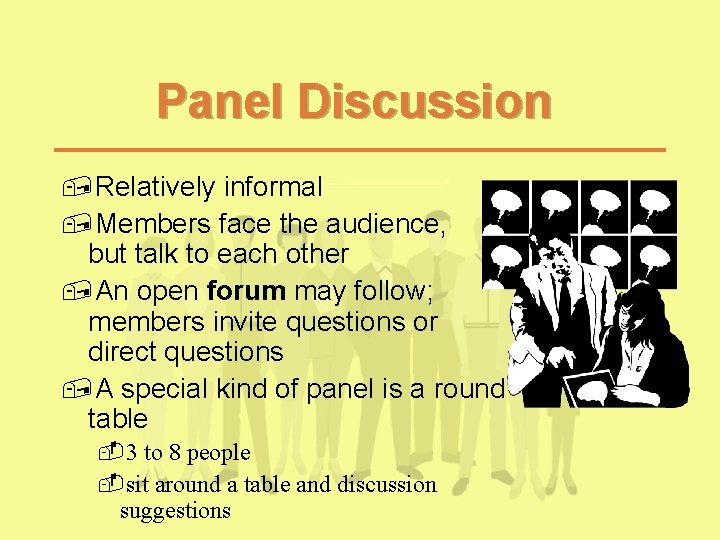
Panel Discussion , Relatively informal , Members face the audience, but talk to each other , An open forum may follow; members invite questions or direct questions , A special kind of panel is a round table -3 to 8 people -sit around a table and discussion suggestions
Symposium - More formal - Present opposing points of view - Experts deliver short speeches on a specific topic - Discussion leader +Introduces each +Gives a brief statement at end of each presentation to link together +At end of session, directs an questions and answers
Town Hall Meeting -Dates back to the colonies -At that time a vote was taken after the town discussion -Today used by TV where people in the audience and at home speak their minds and ask experts questions
What are Factors of a Successful Meeting?
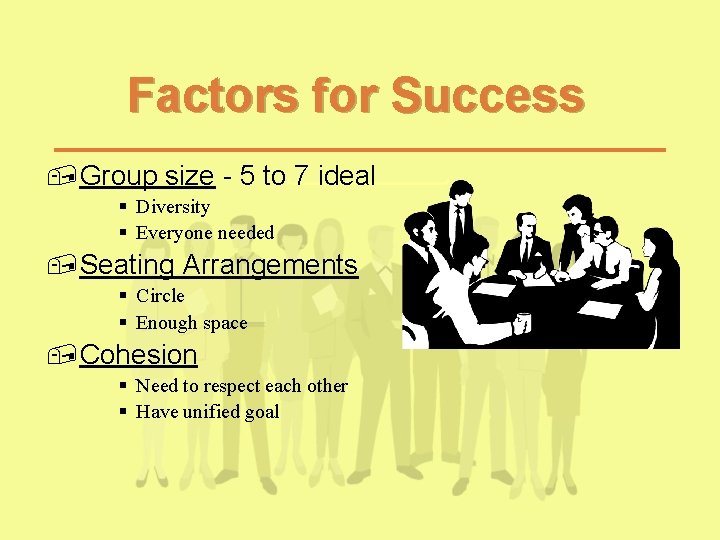
Factors for Success , Group size - 5 to 7 ideal § Diversity § Everyone needed , Seating Arrangements § Circle § Enough space , Cohesion § Need to respect each other § Have unified goal
Group Problem Solving , John Dewey - Philosopher and educator - Thought groups should cultivate vital habits of democracy - Stick to a Pattern § Discussions should follow a logical, sequential flow - Six main steps
1. Define the Problem. , Understand it , Limit the problem , Record what you have decided
2. Establish Criteria for Workable Solution. , Determine set of standards for a solution to meet
3. Analyze the Problem. , Break the problem down
4. Suggest Possible Solutions. , Brainstorm , Write down everything , Don't cut off discussion
5. Evaluate Each Solution and Select the Best. , Make careful comparison of each potential solution. , How does it match the criteria?
6. Suggest way for Testing. , Find a way to test it out. , Make sure the solution is practical.
Managing Conflict , What is constructive conflict?
Managing Conflict , Constructive conflict is using ideas to make suggestions better.
Managing Conflict , What is disruptive conflict?
Managing Conflict , Disruptive Conflict is… - Polarizing - Nitpickers - Eager beavers - Fence sitters - Wisecrackers - Superior Beings - Dominators
How to Contribute , Be clear and simple. Reinforce what you say with looks and gestures , Encourage members to react to your ideas -"Was that clear? " or "Do you have any questions? " - Be interesting , Be animated - Offer reasons for what you say - Think before you speak - Actively listen - Prepare for the Discussion
What a Leader Should Know , How to run a meeting , The people in the group , The issues the group will discuss
The leader should be the moderator. , Gets the meeting started , Sets the agenda -Ask the group to recall information on the business at hand - Questions of fact -Ask them to give opinions on what the information means - Questions of Interpretation -Ask members to agree or disagree on possible solutions Questions of evaluation
Leaders anticipate questions. , Know that good questions of interpretation - Contain doubt - Can be answered - Likely will interest the group
Leaders Keep the Discussion Going. , Set an Example , Close the Discussion , Seek Consensus , Handle problem members
Name types of Problem Members
Types of Problem Members -Monopolizers - They interrupt, ramble and repeat. § Don't argue, but confront them § Invite others to comment -Distracters - They seek attention, and to get it, they will bring up irrelevant topics. § Restate the meeting's purpose ask specific questions -Skeptics - They find fault with everything. § Have a friendly talk with them before the meeting § If that doesn't work cut them off with "We want solutions, not criticism”
Recalling the Facts , What is group discussion? , Why is group discussion so valuable? , What are the types of public group forms? , What is the size of the ideal group? , Who is John Dewey and what did he do? , How should differences in a group be treated? , Is conflict helpful or harmful? , Active listeners watch and talk when…. , Why do all groups need a leader? , What does a leader do at the meeting? , What does groupthink do to a group? Look back on page 166 of textbook
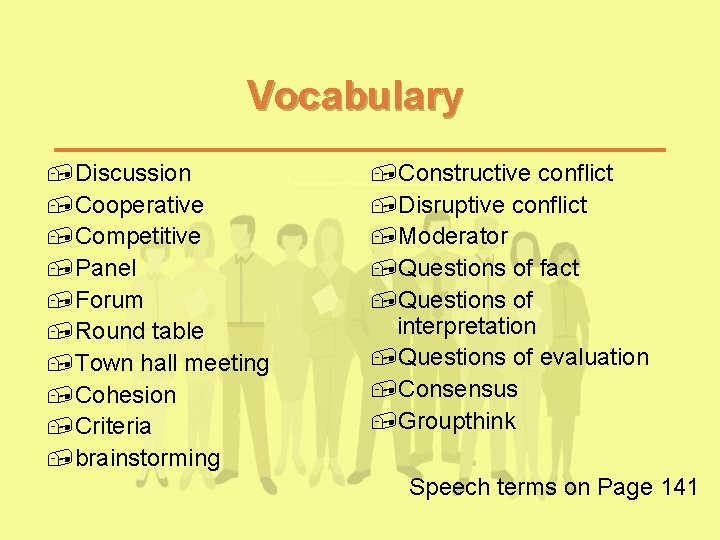
Vocabulary , Discussion , Cooperative , Competitive , Panel , Forum , Round table , Town hall meeting , Cohesion , Criteria , brainstorming , Constructive conflict , Disruptive conflict , Moderator , Questions of fact , Questions of interpretation , Questions of evaluation , Consensus , Groupthink Speech terms on Page 141