
Chapter 6 Genome and Chromosomes Eukaryotic Cell contains
- Slides: 18
Chapter 6
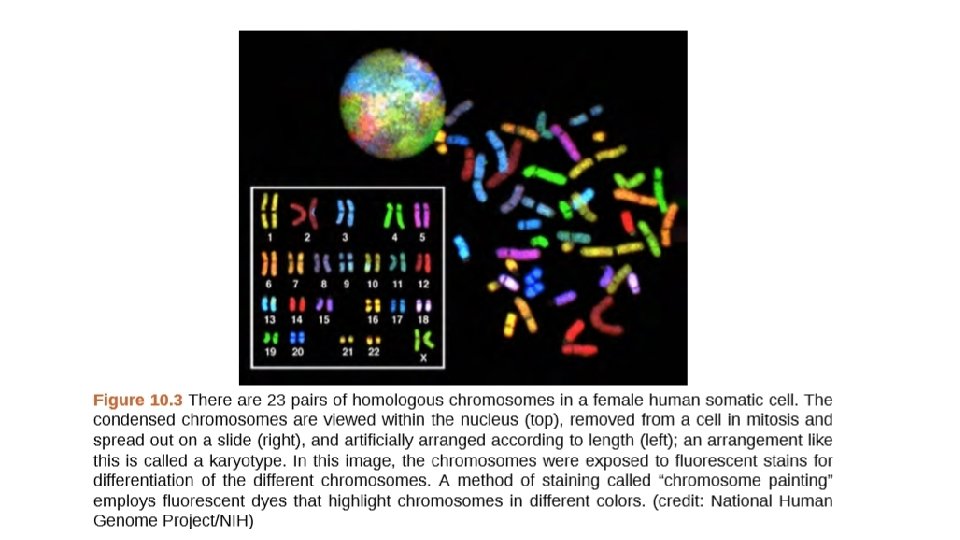
Genome and Chromosomes • Eukaryotic Cell contains all DNA in chromosomes • Human body cells are diploid (two of each chromosomes) • Homologous chromosomes: have the same length, shape, and genes • Different forms of the same gene are called alleles
Cell Cycle • Most cells spend most of its life in interphase, between mitotic divisions. • Three stages of interphase: • G 1: Metabolic activities • S: Chromosomes are duplicated • G 2: Protein synthesis needed for cell division
Mitosis • Mitosis: process of nuclear division that maintains chromosome number • Cells division produces two genetically identical daughter cells • Developmental processes (growth, repair and tissue remodeling) • Eukaryotic asexual reproduction (offspring are produced by one parent)
• Cell divison is controlled by genes • Inhibitors of the cell cycle normally keep cells in G 1 • “Checkpoint genes” monitor if a cell is ready for division
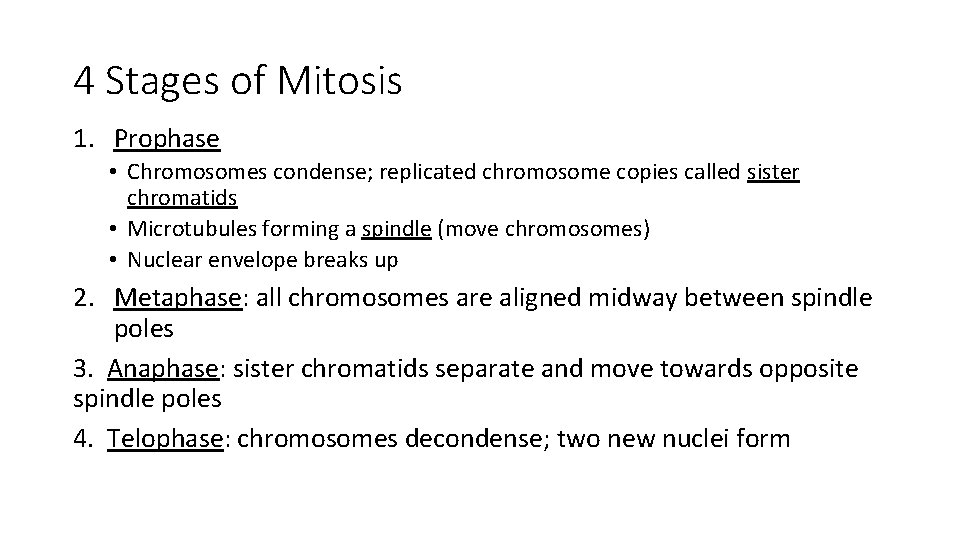
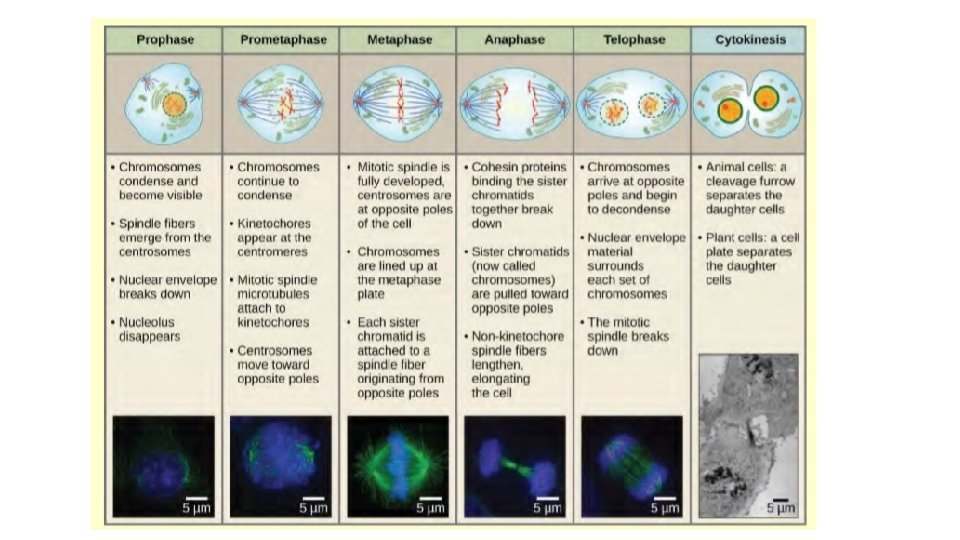
4 Stages of Mitosis 1. Prophase • Chromosomes condense; replicated chromosome copies called sister chromatids • Microtubules forming a spindle (move chromosomes) • Nuclear envelope breaks up 2. Metaphase: all chromosomes are aligned midway between spindle poles 3. Anaphase: sister chromatids separate and move towards opposite spindle poles 4. Telophase: chromosomes decondense; two new nuclei form
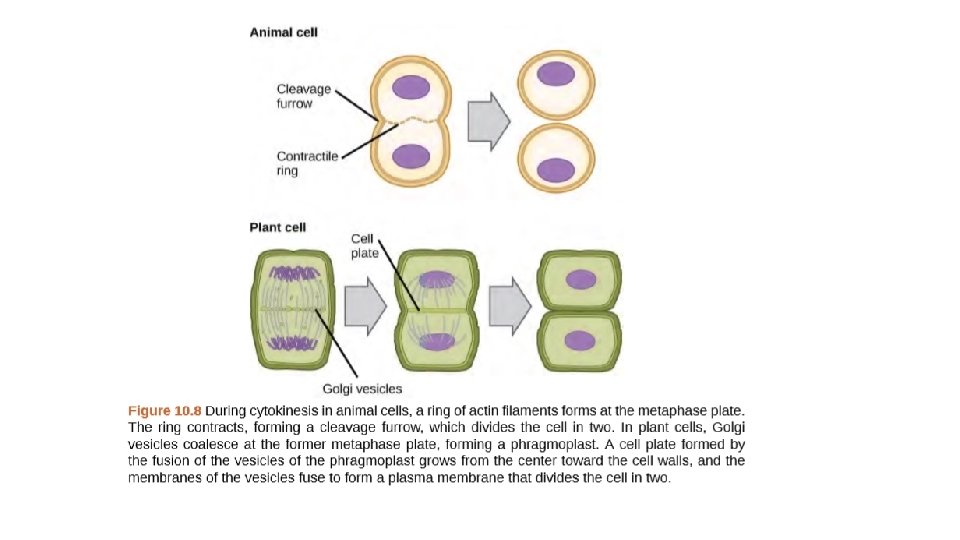
Cell Division • In most eukaryotes, cytokinesis (cytoplasmic division) occurs between late anaphase and the end of telophase • Microtubules pull membrane towards the center • Animal cell cytokinesis: Cleavage furrow forms • Plant cell cytokinesis: Disk-shaped cell plate forms and partitions with two new cell walls
Telomeres • Telomeres are noncoding repeat DNA sequences found at the ends of eukaryotic chromosomes • Telomeres provide a buffer against the loss of more valuable internal DNA • Telomeres shorten with each replication • Checkpoint gene halt the cell cycle and if telomeres are too short
Cancer • Neoplasm: accumulation of abnormally dividing cells • Tumor: neoplasm that forms a lump • Proto-oncogenes: gene that, by mutation, can become an oncogene • Oncogene: gene that helps transform a normal cell into a tumor cell • Example: growth factors – molecules that stimulate mitosis and differentiation
Cancer • Benign neoplasms such as warts are not usually dangerous • Multiple checkpoint genes mutations are required to form a malignant cell • Metastasis: process in which malignant cells spread from one part of the body to another
Chapter 7 Sexual Reproduction
Sexual Reproduction • Sexual reproduction recombines the genes of two parents during fertilization. • Genetic diversity offers a better chance of surviving environmental change than clones • Meiosis: occurs in reproductive cells of eukaryotes • Gametes: cells that are the basis of sexual reproduction • All gametes (egg and sperm) are haploid (n). • Derive from diploid reproductive cells • Fertilization: two haploid gametes fuse - a zygote is formed • The diploid chromosome number is restored
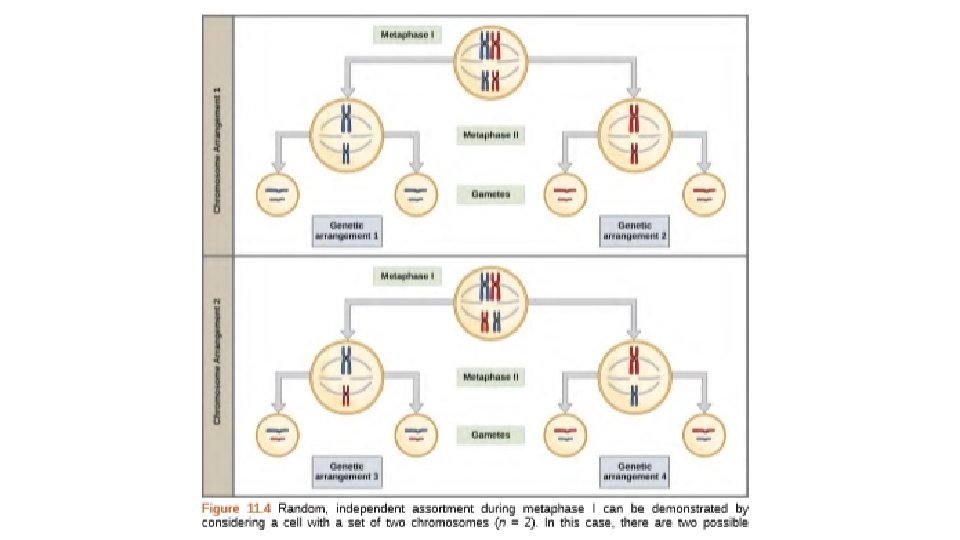
Meiosis I • Prophase I • Homologous chromosomes condense, pair up, and swap segments • Spindle attach to chromosomes; nuclear envelope breaks up • Metaphase I - homologous chromosome pairs are aligned midway between spindle poles • Anaphase I: The homologous chromosomes separate and begin heading toward the spindle poles • Telophase I: clusters of chromosomes reach the spindle poles; new nuclear envelope forms
Meiosis II • More like mitosis • Crossing over in prophase I • Sister chromatids of the unpaired chromosomes separate during Anaphase II • Meiosis introduces novel combinations of alleles into gametes creates genetic variation.