
CHAPTER 6 Enzymes Key topics about enzyme function
CHAPTER 6 Enzymes Key topics about enzyme function: – Physiological significance of enzymes – Origin of catalytic power of enzymes – Chemical mechanisms of catalysis – Description of enzyme kinetics and inhibition
What are enzymes? • Enzymes are catalysts • Increase reaction rates without being used up • Most enzymes are globular proteins • However, some RNA (ribozymes and ribosomal RNA) also catalyze reactions • Study of enzymatic processes is the oldest field of biochemistry, dating back to late 1700 s • Study of enzymes has dominated biochemistry in the past and continues to do so
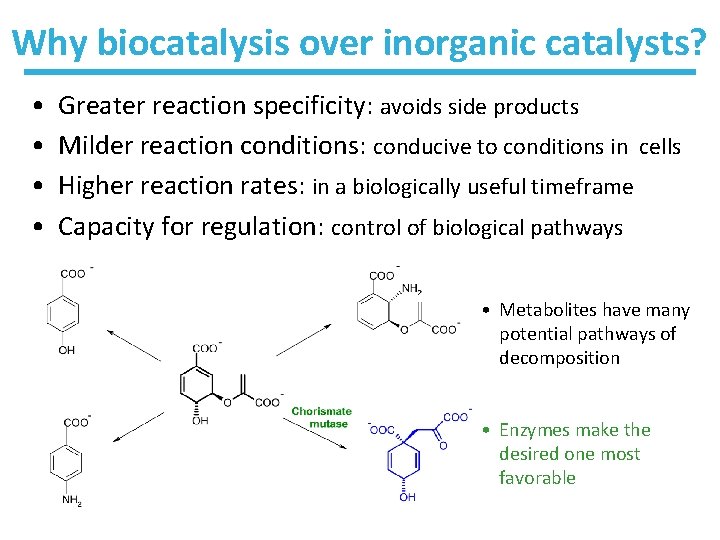
Why biocatalysis over inorganic catalysts? • • Greater reaction specificity: avoids side products Milder reaction conditions: conducive to conditions in cells Higher reaction rates: in a biologically useful timeframe Capacity for regulation: control of biological pathways • Metabolites have many potential pathways of decomposition • Enzymes make the desired one most favorable
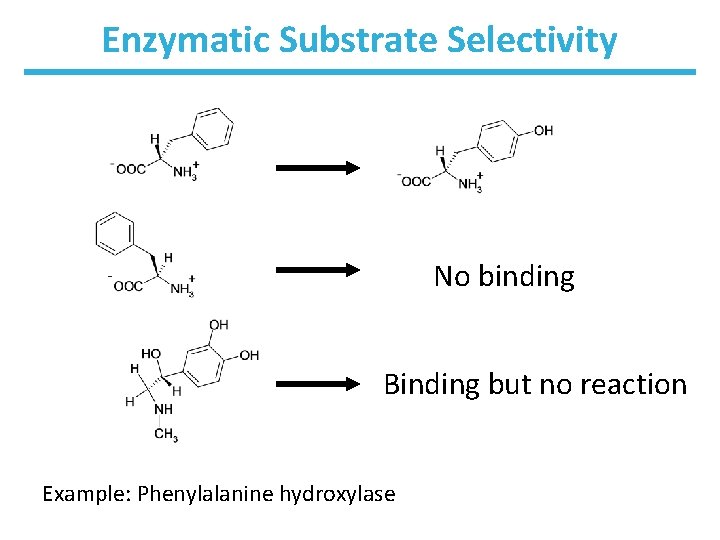
Enzymatic Substrate Selectivity No binding Binding but no reaction Example: Phenylalanine hydroxylase
Reaction Conditions Compatible with Life Ø 37˚C Ø p. H ≈7
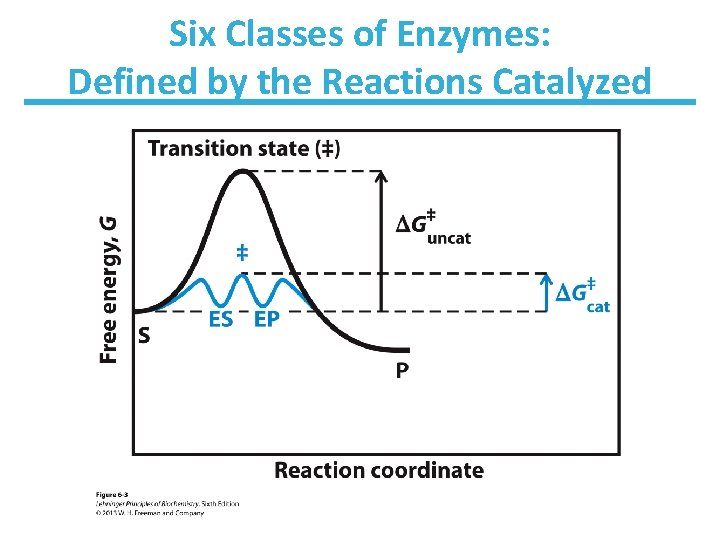
Six Classes of Enzymes: Defined by the Reactions Catalyzed
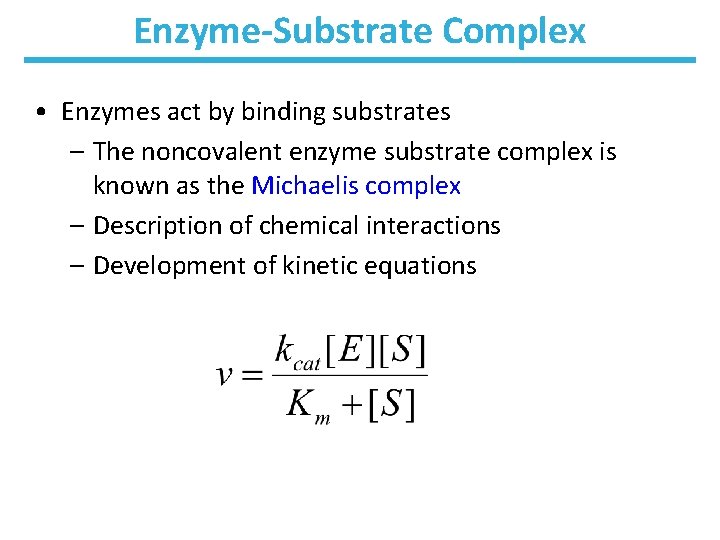
Enzyme-Substrate Complex • Enzymes act by binding substrates – The noncovalent enzyme substrate complex is known as the Michaelis complex – Description of chemical interactions – Development of kinetic equations
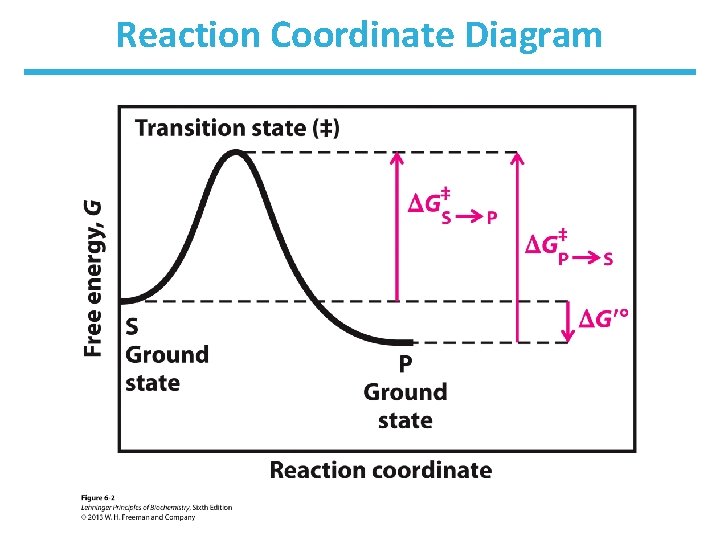
Reaction Coordinate Diagram
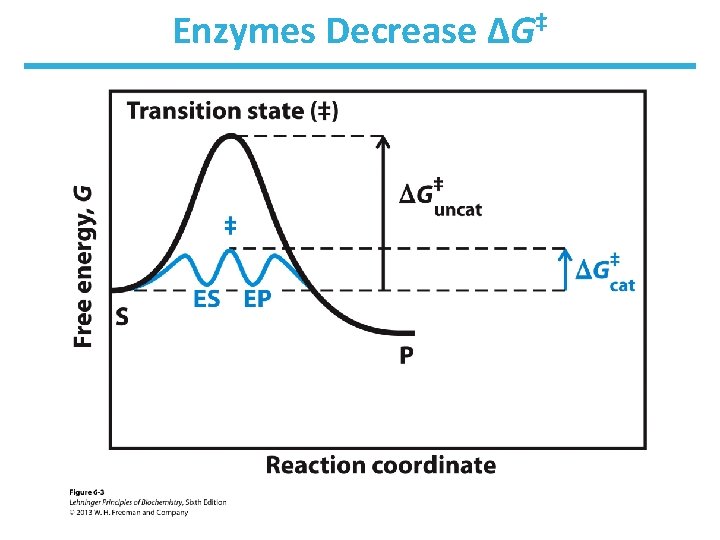
Enzymes Decrease ΔG‡
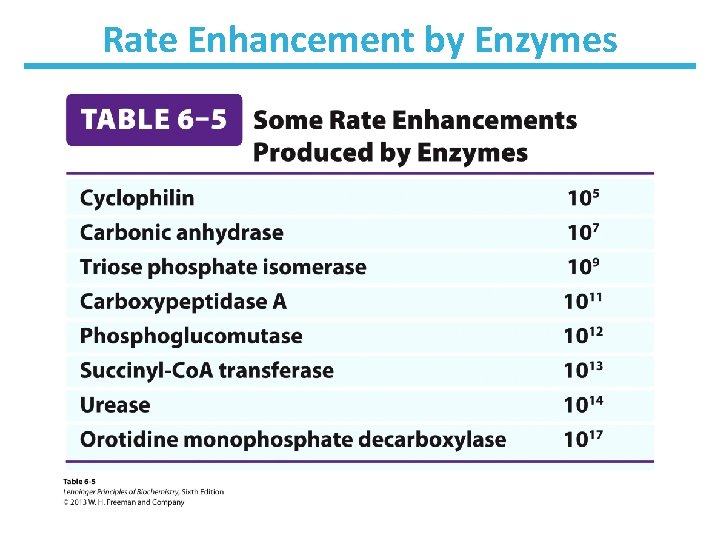
Rate Enhancement by Enzymes
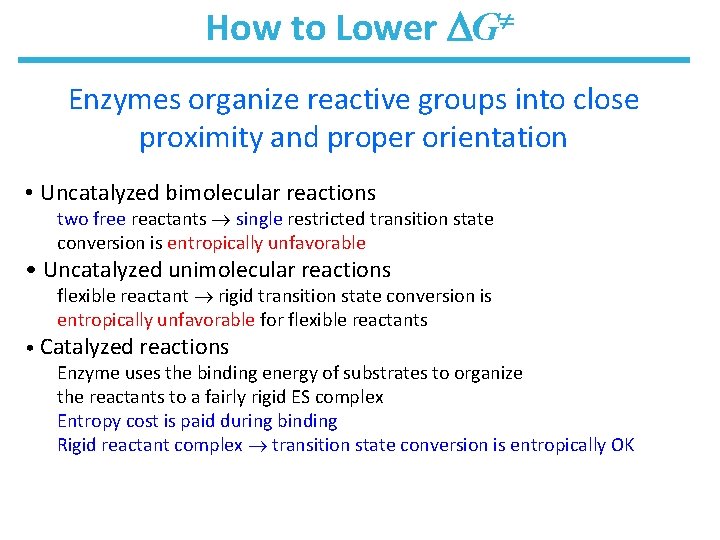
How to Lower G Enzymes organize reactive groups into close proximity and proper orientation • Uncatalyzed bimolecular reactions two free reactants single restricted transition state conversion is entropically unfavorable • Uncatalyzed unimolecular reactions flexible reactant rigid transition state conversion is entropically unfavorable for flexible reactants • Catalyzed reactions Enzyme uses the binding energy of substrates to organize the reactants to a fairly rigid ES complex Entropy cost is paid during binding Rigid reactant complex transition state conversion is entropically OK
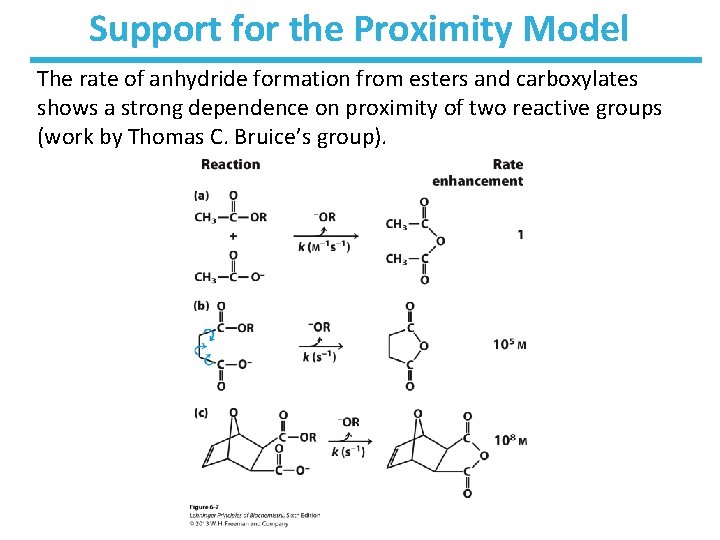
Support for the Proximity Model The rate of anhydride formation from esters and carboxylates shows a strong dependence on proximity of two reactive groups (work by Thomas C. Bruice’s group).
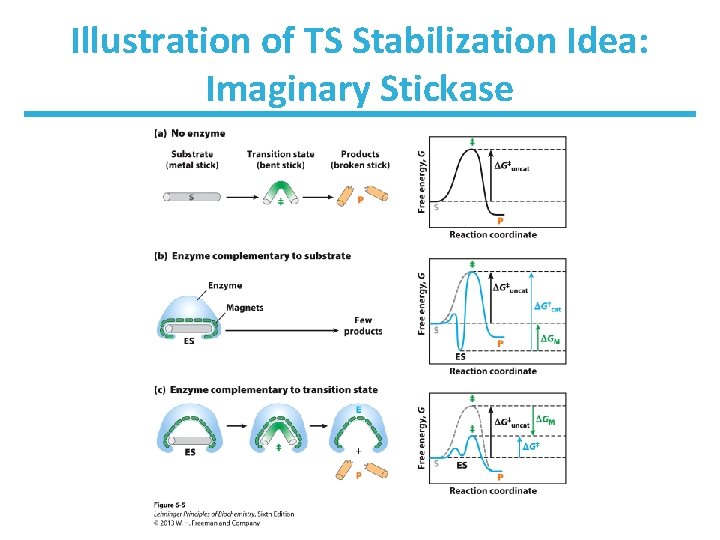
Illustration of TS Stabilization Idea: Imaginary Stickase
Peptidoglycan and Lysozyme • Peptidoglycan is a polysaccharide found in many bacterial cell walls • Cleavage of the cell wall leads to the lysis of bacteria • Lysozyme is an antibacterial enzyme
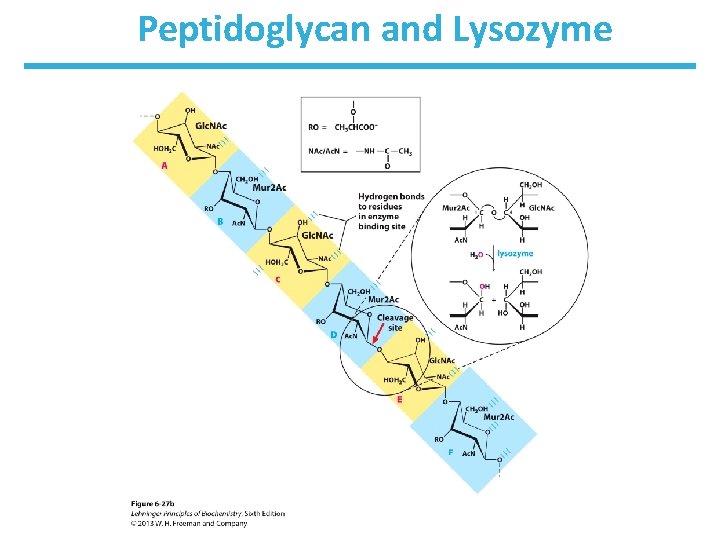
Peptidoglycan and Lysozyme
What is enzyme kinetics? • Kinetics is the study of the rate at which compounds react • Rate of enzymatic reaction is affected by: – enzyme – substrate – effectors – temperature
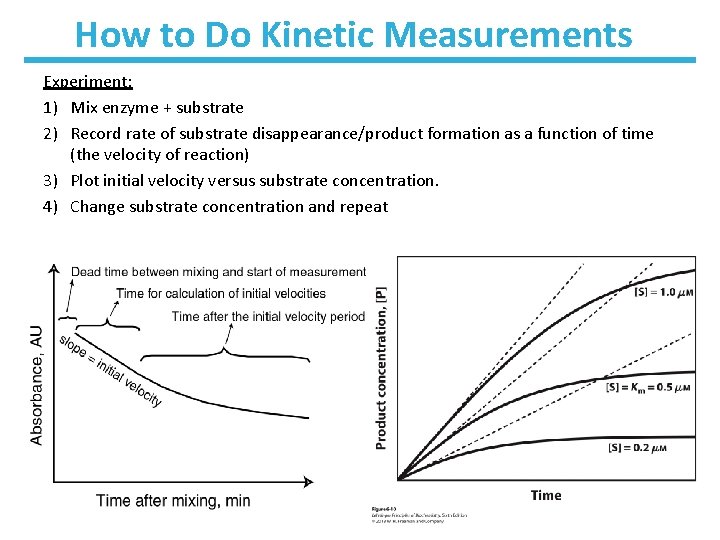
How to Do Kinetic Measurements Experiment: 1) Mix enzyme + substrate 2) Record rate of substrate disappearance/product formation as a function of time (the velocity of reaction) 3) Plot initial velocity versus substrate concentration. 4) Change substrate concentration and repeat
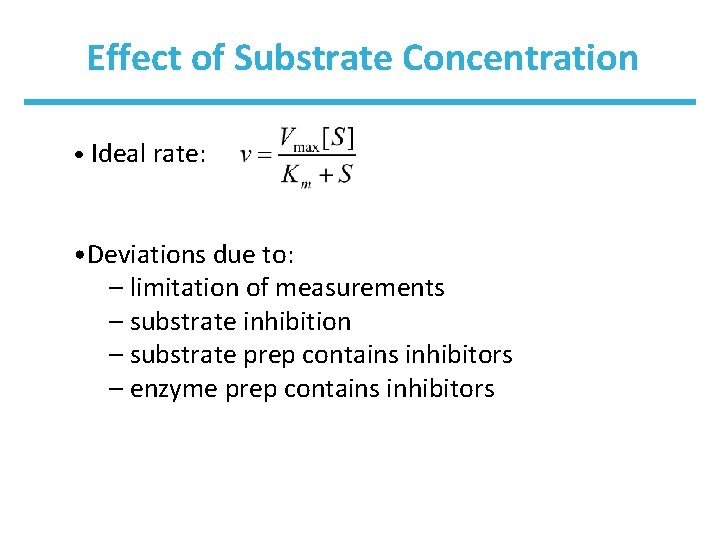
Effect of Substrate Concentration • Ideal rate: • Deviations due to: – limitation of measurements – substrate inhibition – substrate prep contains inhibitors – enzyme prep contains inhibitors
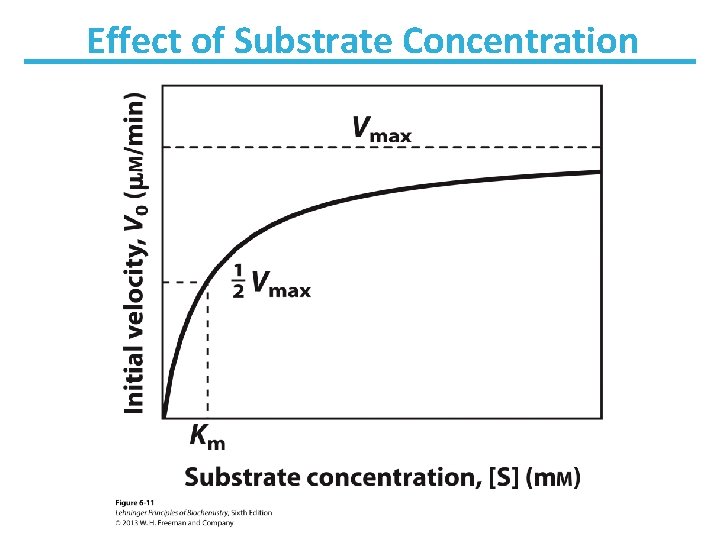
Effect of Substrate Concentration
![Saturation Kinetics: At high [S] velocity does not depend on [S]](http://slidetodoc.com/presentation_image_h2/957c020c7f43bc8b24671e53dd423c3d/image-22.jpg "Saturation Kinetics: At high [S] velocity does not depend on [S]")
Saturation Kinetics: At high [S] velocity does not depend on [S]
Determination of Kinetic Parameters Nonlinear Michaelis-Menten plot should be used to calculate parameters Km and Vmax. Linearized double-reciprocal plot is good for analysis of two-substrate data or inhibition.
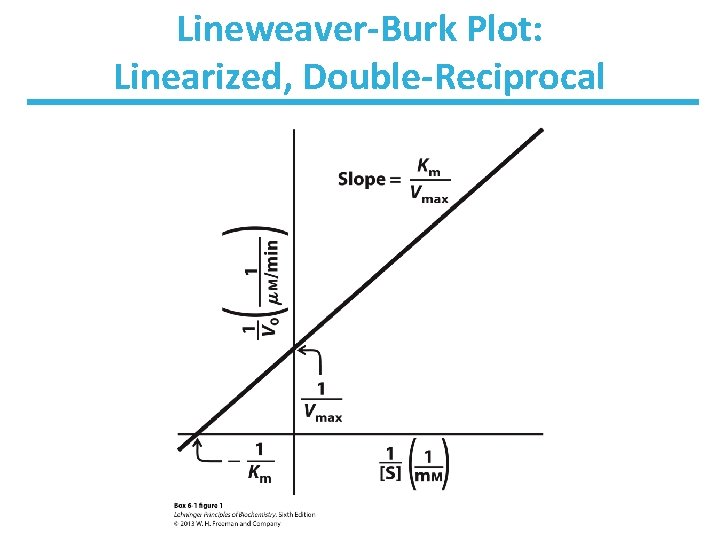
Lineweaver-Burk Plot: Linearized, Double-Reciprocal
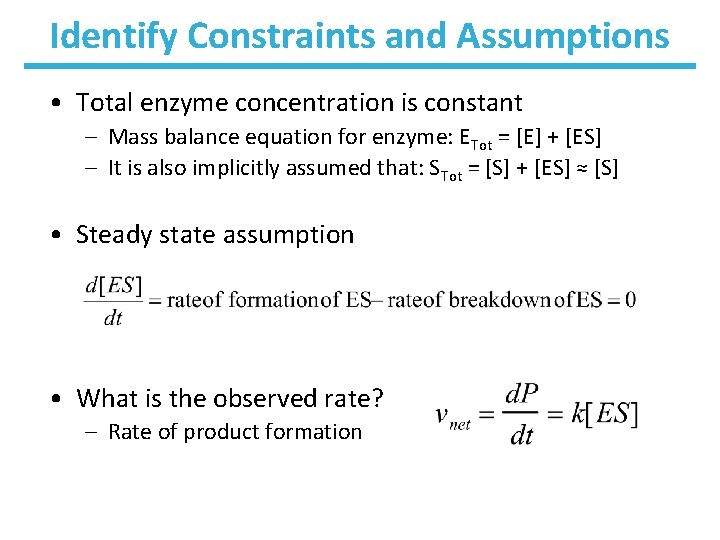
Identify Constraints and Assumptions • Total enzyme concentration is constant – Mass balance equation for enzyme: ETot = [E] + [ES] – It is also implicitly assumed that: STot = [S] + [ES] ≈ [S] • Steady state assumption • What is the observed rate? – Rate of product formation
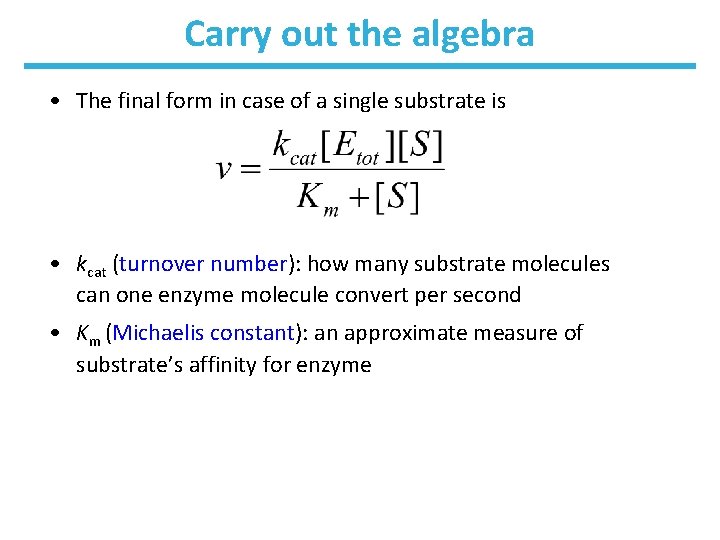
Carry out the algebra • The final form in case of a single substrate is • kcat (turnover number): how many substrate molecules can one enzyme molecule convert per second • Km (Michaelis constant): an approximate measure of substrate’s affinity for enzyme
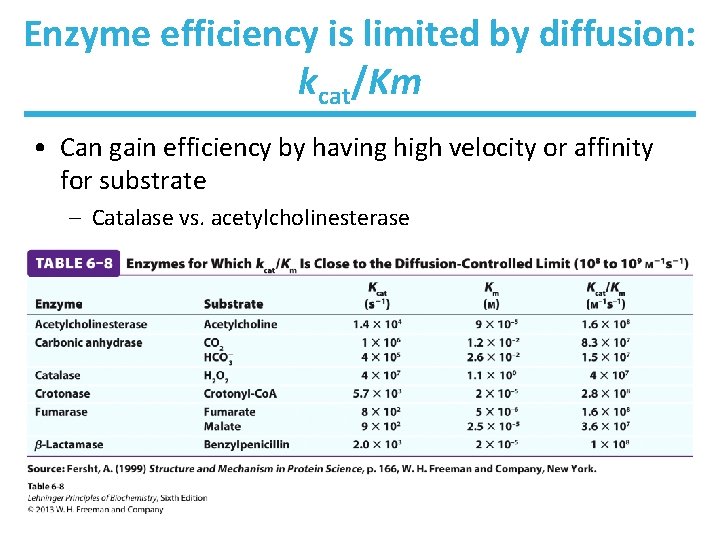
Enzyme efficiency is limited by diffusion: kcat/Km • Can gain efficiency by having high velocity or affinity for substrate – Catalase vs. acetylcholinesterase
Enzyme Inhibition Inhibitors are compounds that decrease enzyme’s activity • Irreversible inhibitors (inactivators) react with the enzyme • One inhibitor molecule can permanently shut off one enzyme molecule • They are often powerful toxins but also may be used as drugs • Reversible inhibitors bind to and can dissociate from the enzyme • They are often structural analogs of substrates or products • They are often used as drugs to slow down a specific enzyme • Reversible inhibitor can bind: • to the free enzyme and prevent the binding of the substrate • to the enzyme-substrate complex and prevent the reaction
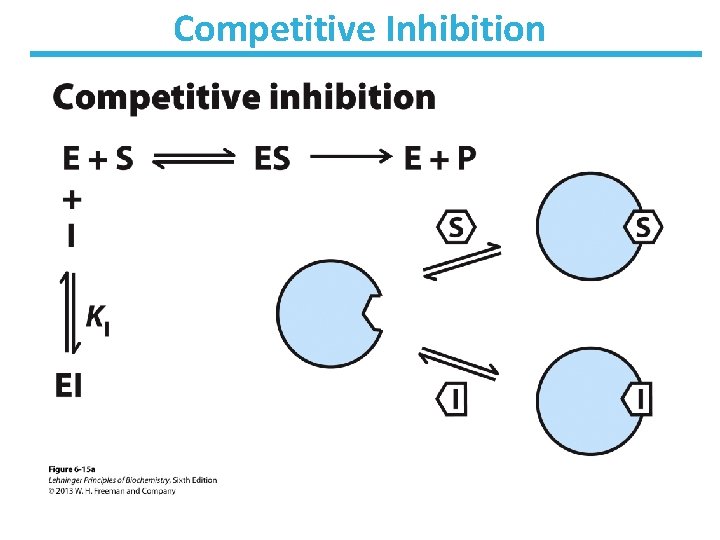
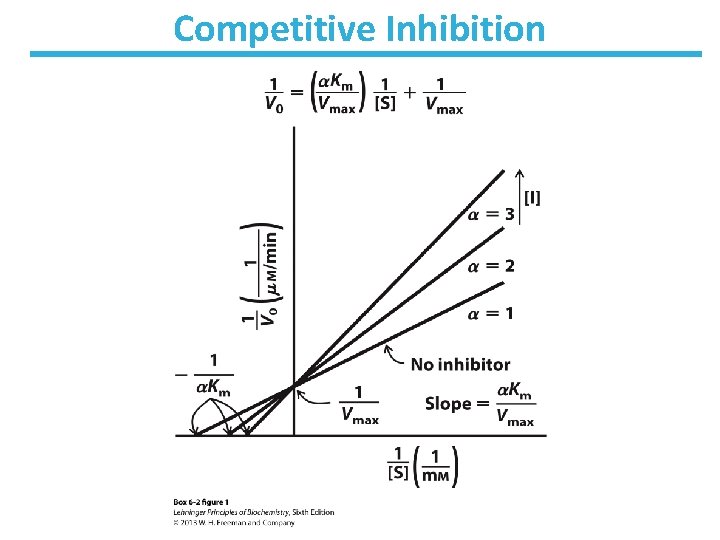
Competitive Inhibition • Competes with substrate for binding – Binds active site – Does not affect catalysis • No change in Vmax; apparent increase in KM • Lineweaver-Burk: lines intersect at the y-axis
Competitive Inhibition
Competitive Inhibition
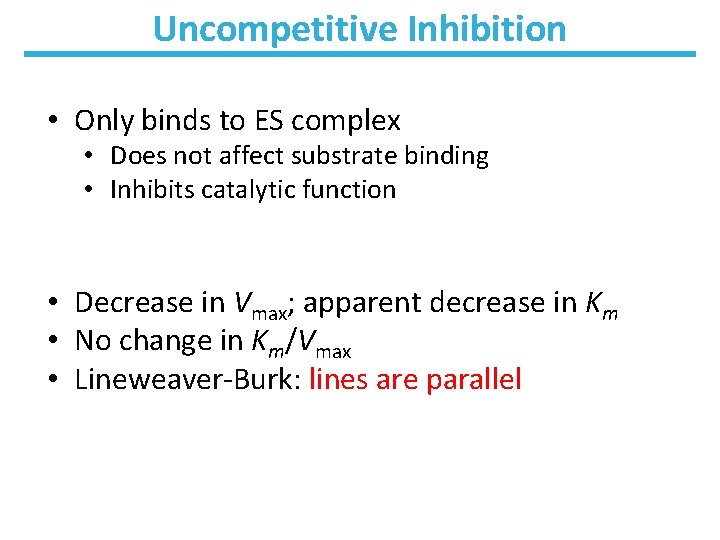
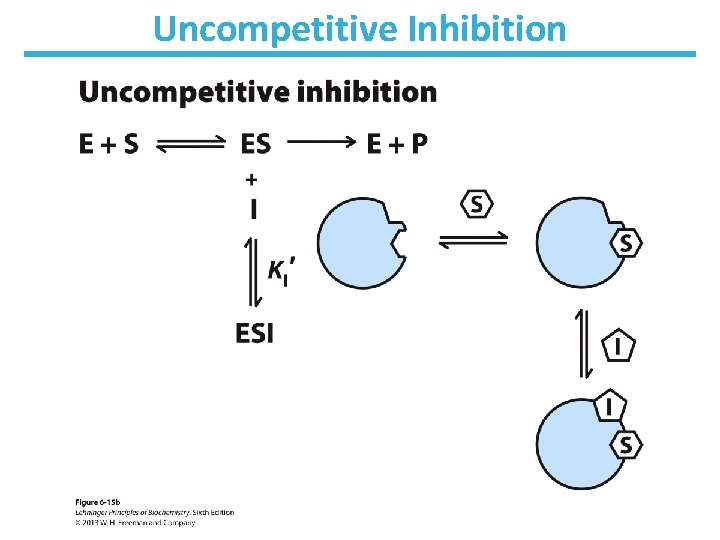
Uncompetitive Inhibition • Only binds to ES complex • Does not affect substrate binding • Inhibits catalytic function • Decrease in Vmax; apparent decrease in Km • No change in Km/Vmax • Lineweaver-Burk: lines are parallel
Uncompetitive Inhibition
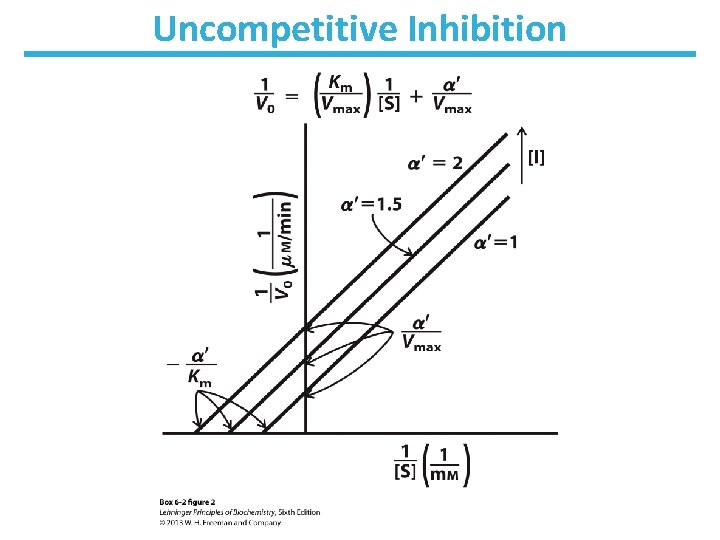
Uncompetitive Inhibition
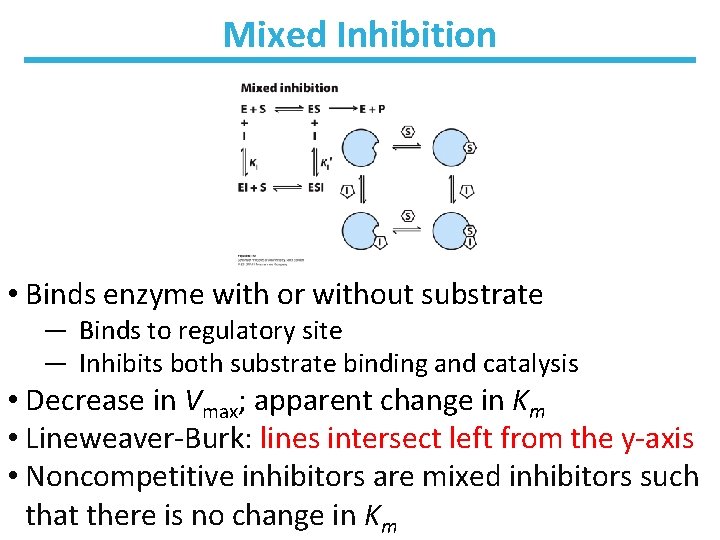
Mixed Inhibition • Binds enzyme with or without substrate ― Binds to regulatory site ― Inhibits both substrate binding and catalysis • Decrease in Vmax; apparent change in Km • Lineweaver-Burk: lines intersect left from the y-axis • Noncompetitive inhibitors are mixed inhibitors such that there is no change in Km
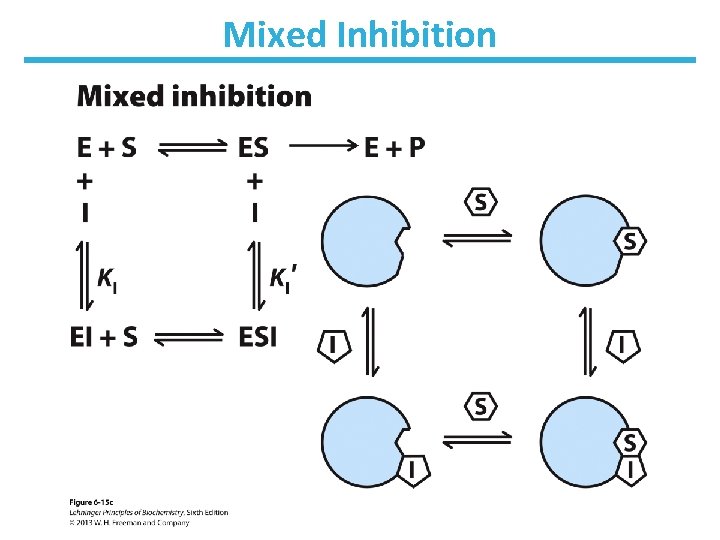
Mixed Inhibition
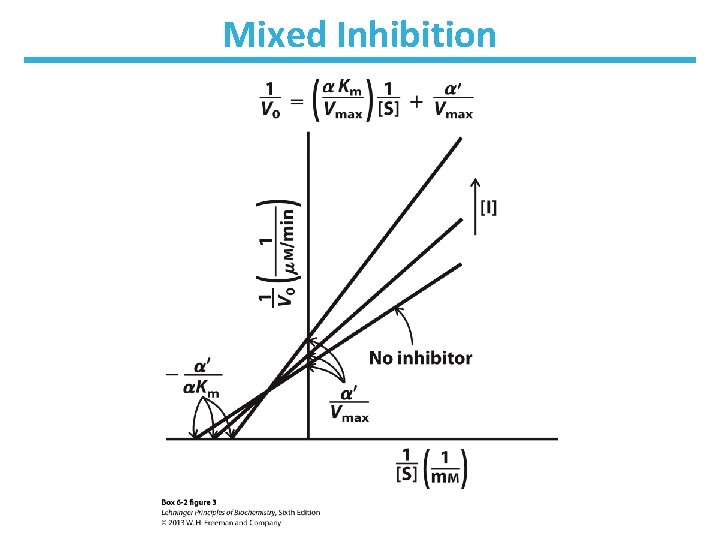
Mixed Inhibition
Enzyme activity can be regulated • Regulation can be: – noncovalent modification – irreversible – reversible
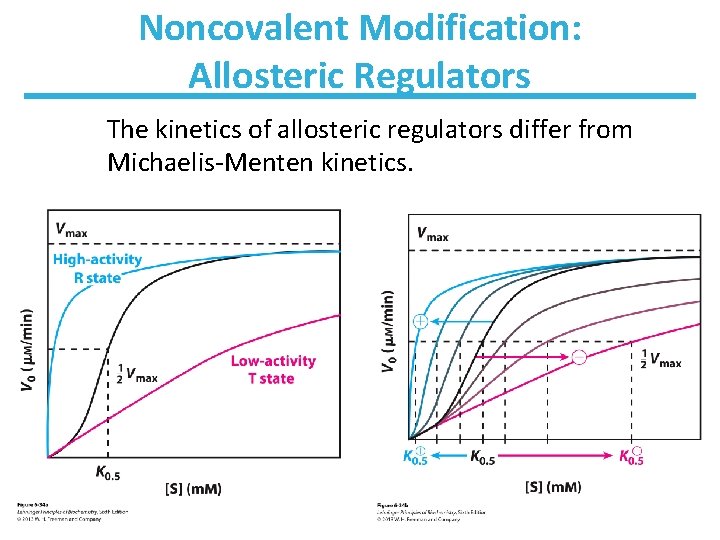
Noncovalent Modification: Allosteric Regulators The kinetics of allosteric regulators differ from Michaelis-Menten kinetics.
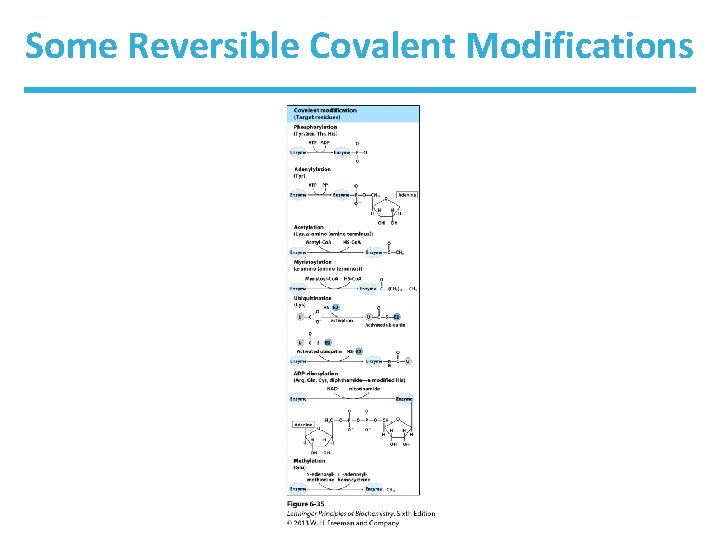
Some Reversible Covalent Modifications
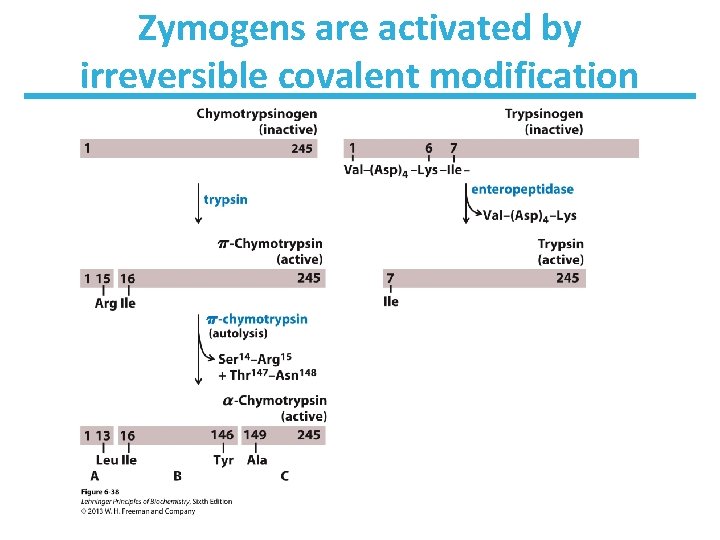
Zymogens are activated by irreversible covalent modification
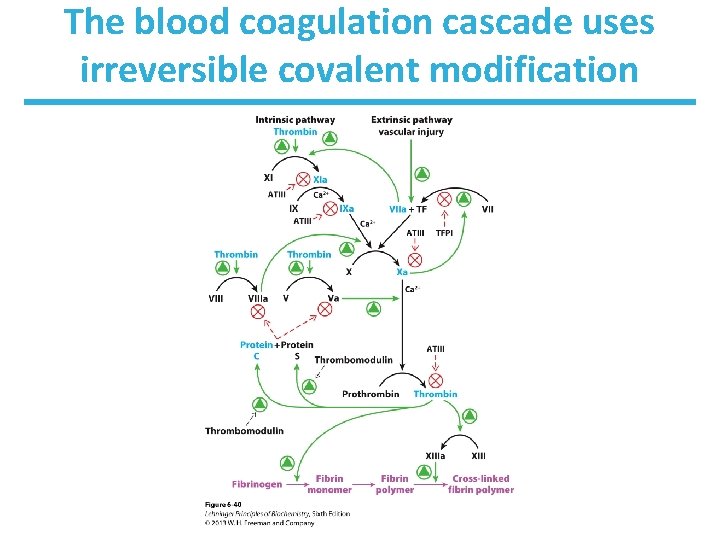
The blood coagulation cascade uses irreversible covalent modification
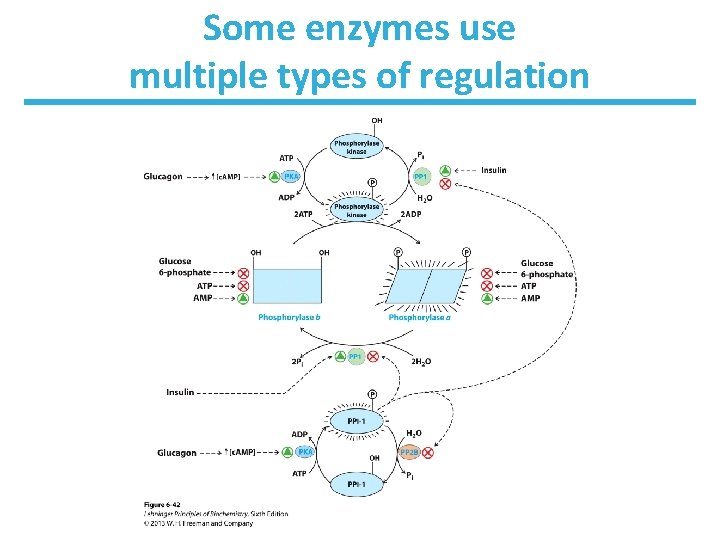
Some enzymes use multiple types of regulation
Chapter 6: Summary In this chapter, we learned: • • • why nature needs enzyme catalysis how enzymes can accelerate chemical reactions how to perform and analyze kinetic studies how to characterize enzyme inhibitors how enzyme activity can be regulated
- Slides: 44