
Chapter 6 Emotional Health and WellBeing BIOPSYCHOSOCIAL MODEL
Chapter 6: Emotional Health and Well-Being BIOPSYCHOSOCIAL MODEL OF WELL-BEING
Biopsychosocial Model: Biological Factors Disease Microorganisms Vaccines Limitations of looking to biology alone to explain well-being: More than just physical explanations of illness Problem (dysfunction) based
Biopsychosocial Model: Psychological Factors Emotions Immune system via nervous system Emotional impacts on health Negative/positive emotions Health behaviors
Biopsychosocial Model: Sociological Factors Socioeconomic status and Income Family and culture (shared behaviors)
Measuring Health-Related Quality of Life (HRQOL) • Broad outcome measures designed to measure physical, emotional, and social dimensions of health (Mc. Dowell & Newell, 1996). • No one definition of HRQOL is agreed upon, but generally assessed with generic measures (e. g. , Short-Form 36) or disease-specific measures (e. g. , Quality of Life in Epilepsy Scale-10 (Ware & Sherbourne, 1992; Cramer et al. , 1996).
Core Healthy Days Measures 1. Would you say that in general your health is excellent, very good, fair, or poor? 2. Now thinking about your physical health, which includes physical illness and injury, for how many days during the past 30 days was your physical health not good? 3. Now thinking about your mental health, which includes stress, depression, and problems with emotions, for how many days during the past 30 days was your mental health not good? 4. During the past 30 days, for about how many days did poor physical or mental health keep you from doing your usual activities, such as selfcare, work, or recreation?
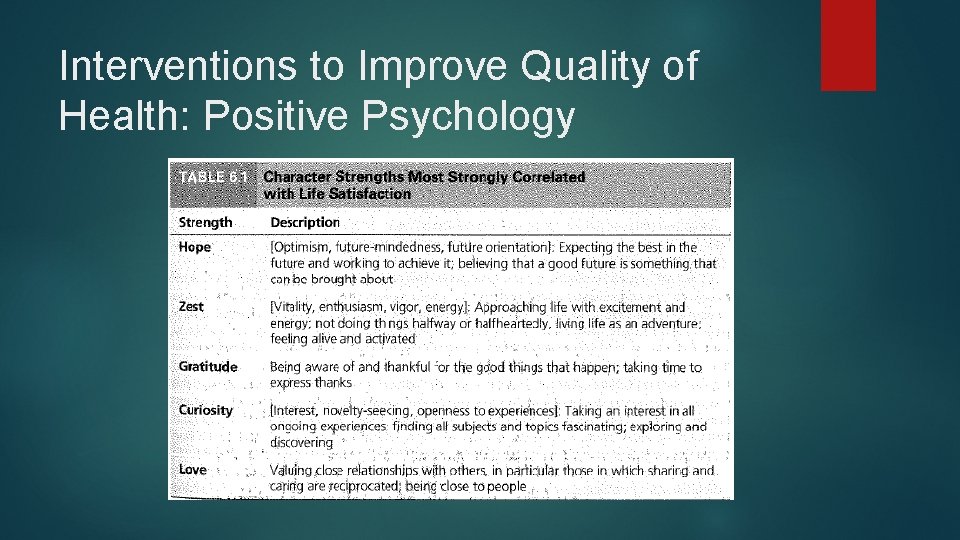
Interventions to Improve Quality of Health: Positive Psychology
- Slides: 7