
CHAPTER 6 Elements and the Periodic Table 6
CHAPTER 6 Elements and the Periodic Table 6. 1 The Periodic Table
Are you made of star dust? The Big Bang produced hydrogen and helium and a tiny bit of lithium 2 6. 1 The Periodic Table
Are you made of star dust? Other elements were created in the cores of exploding stars 3 6. 1 The Periodic Table
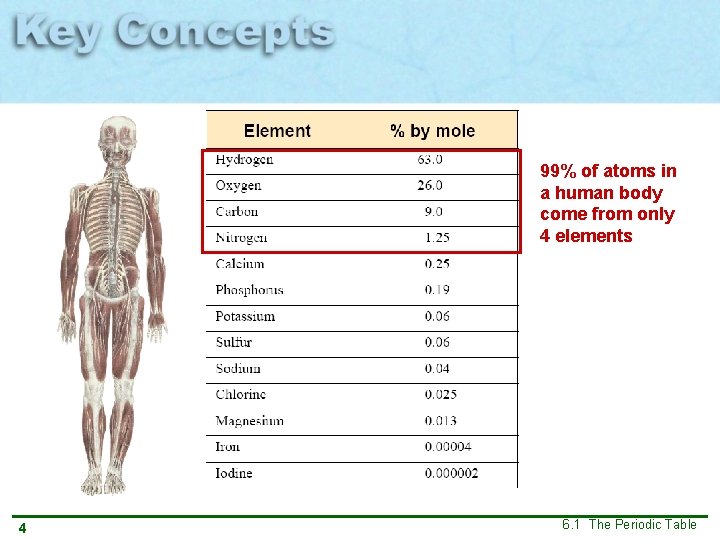
99% of atoms in a human body come from only 4 elements 4 6. 1 The Periodic Table
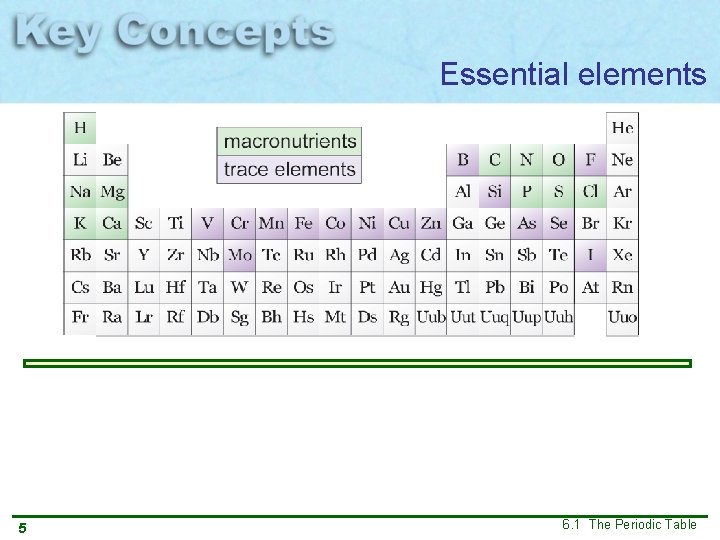
Essential elements 5 6. 1 The Periodic Table
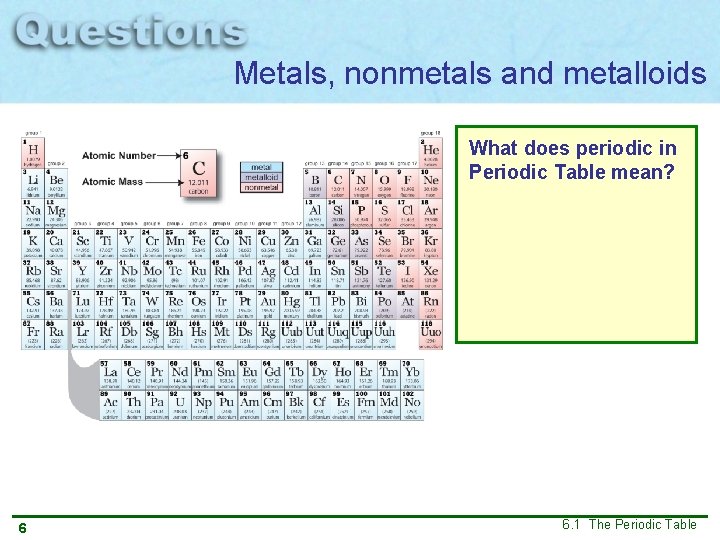
Metals, nonmetals and metalloids What does periodic in Periodic Table mean? 6 6. 1 The Periodic Table
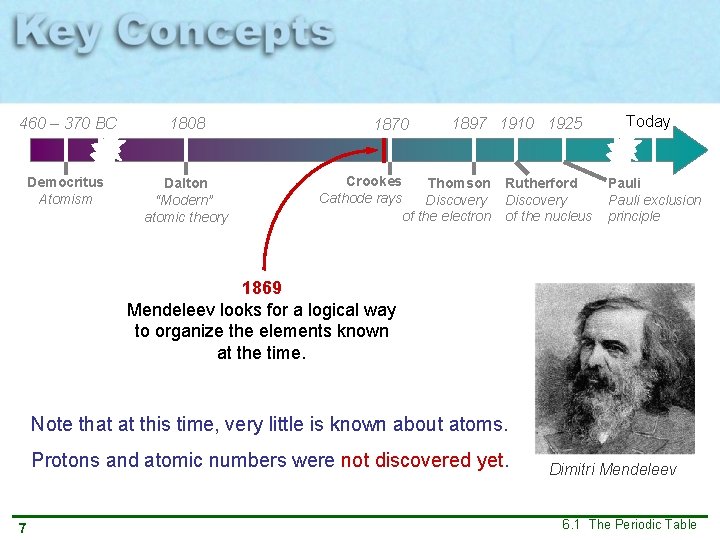
460 – 370 BC 1808 Democritus Atomism Dalton “Modern” atomic theory 1870 1897 1910 1925 Crookes Thomson Cathode rays Discovery of the electron Rutherford Discovery of the nucleus Today Pauli exclusion principle 1869 Mendeleev looks for a logical way to organize the elements known at the time. Note that at this time, very little is known about atoms. Protons and atomic numbers were not discovered yet. 7 Dimitri Mendeleev 6. 1 The Periodic Table
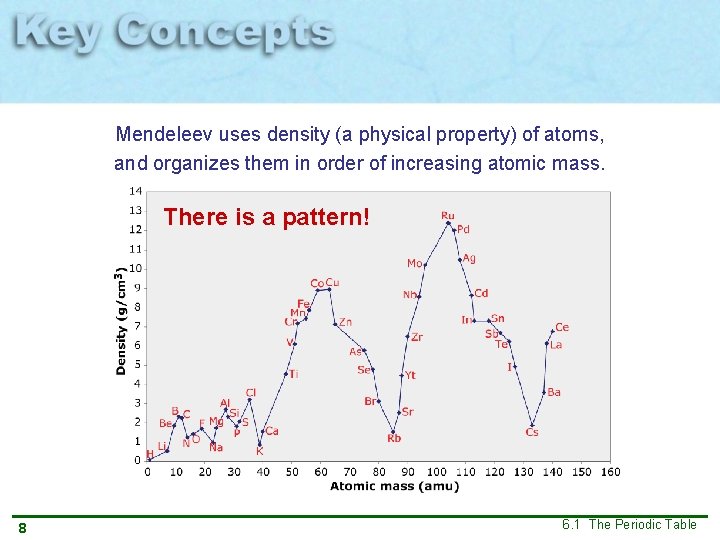
Mendeleev uses density (a physical property) of atoms, and organizes them in order of increasing atomic mass. There is a pattern! 8 6. 1 The Periodic Table
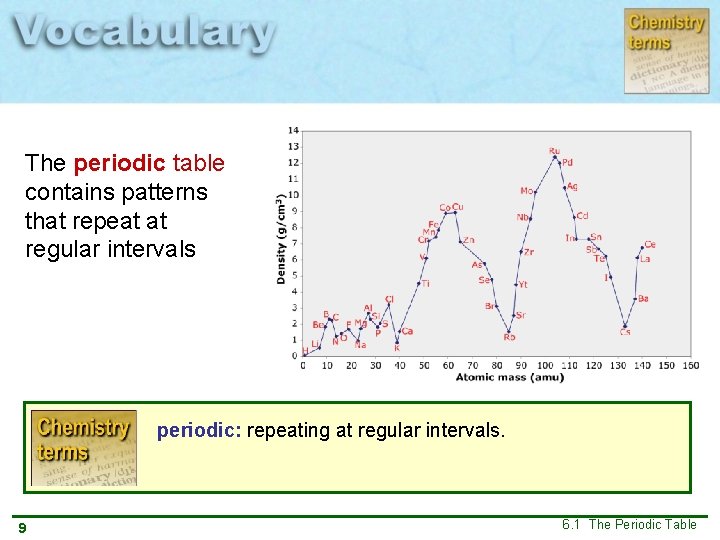
The periodic table contains patterns that repeat at regular intervals periodic: repeating at regular intervals. 9 6. 1 The Periodic Table
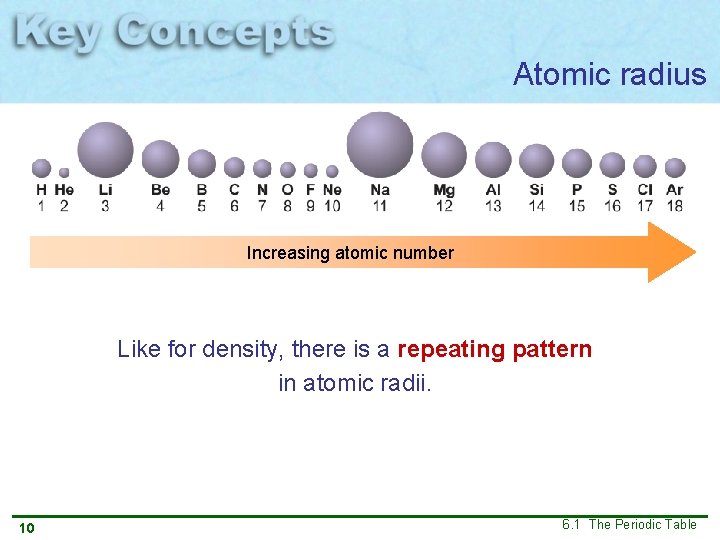
Atomic radius Increasing atomic number Like for density, there is a repeating pattern in atomic radii. 10 6. 1 The Periodic Table
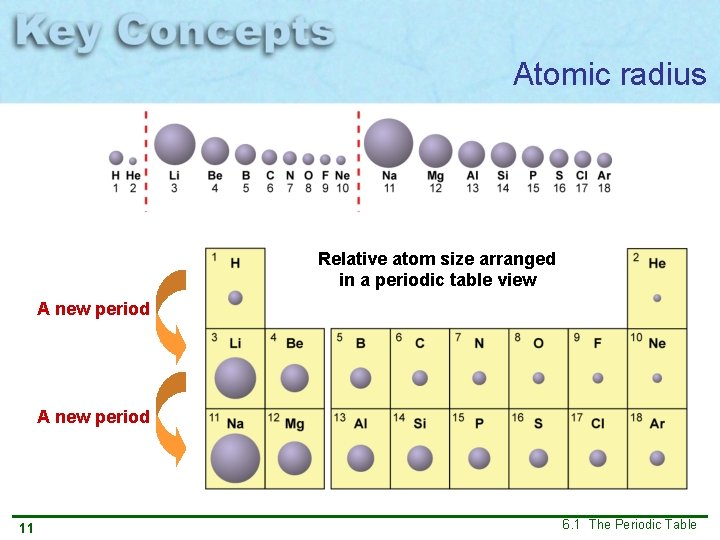
Atomic radius Relative atom size arranged in a periodic table view A new period 11 6. 1 The Periodic Table
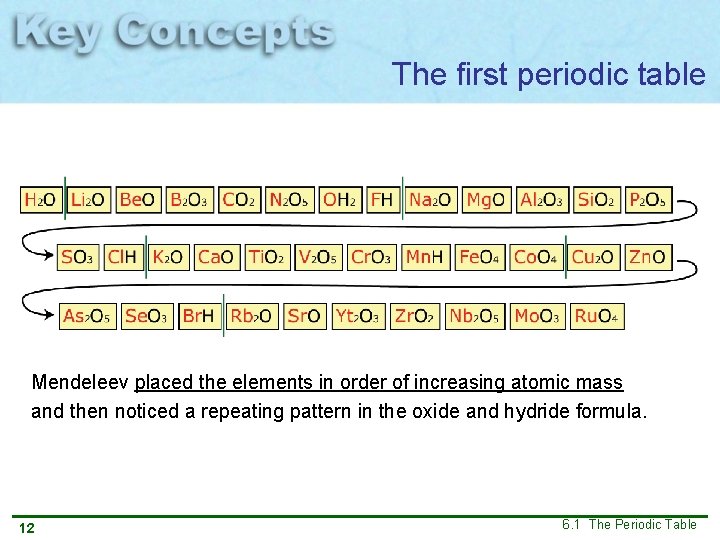
The first periodic table Mendeleev placed the elements in order of increasing atomic mass and then noticed a repeating pattern in the oxide and hydride formula. 12 6. 1 The Periodic Table
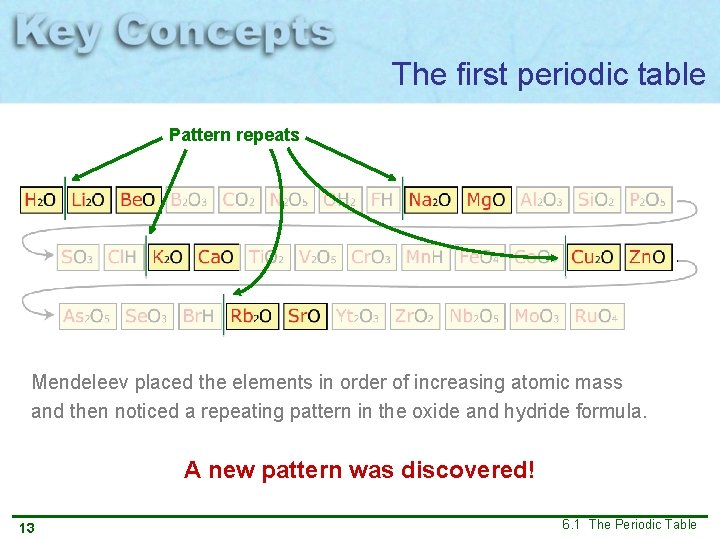
The first periodic table Pattern repeats Mendeleev placed the elements in order of increasing atomic mass and then noticed a repeating pattern in the oxide and hydride formula. A new pattern was discovered! 13 6. 1 The Periodic Table
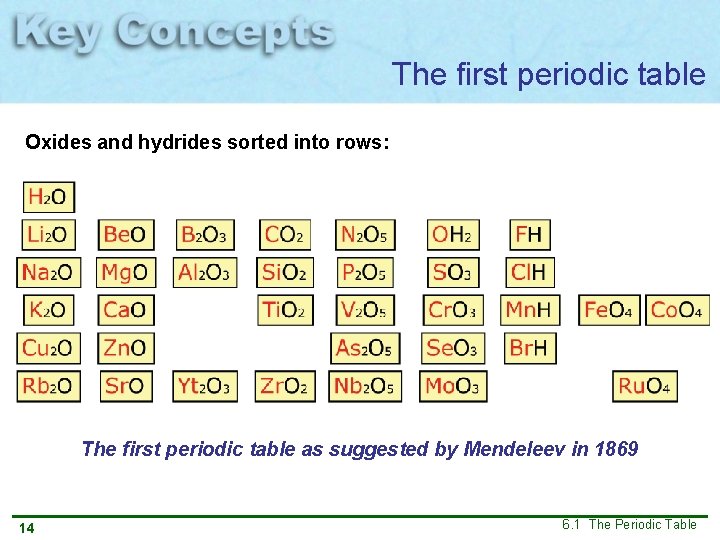
The first periodic table Oxides and hydrides sorted into rows: The first periodic table as suggested by Mendeleev in 1869 14 6. 1 The Periodic Table
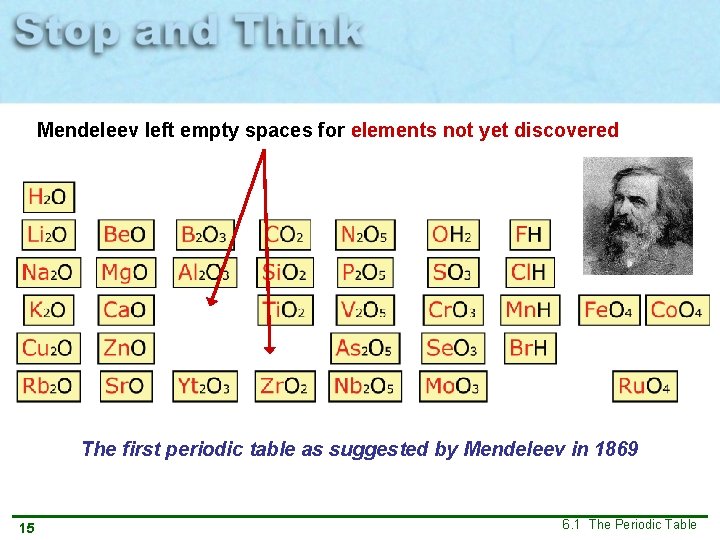
Mendeleev left empty spaces for elements not yet discovered The first periodic table as suggested by Mendeleev in 1869 15 6. 1 The Periodic Table
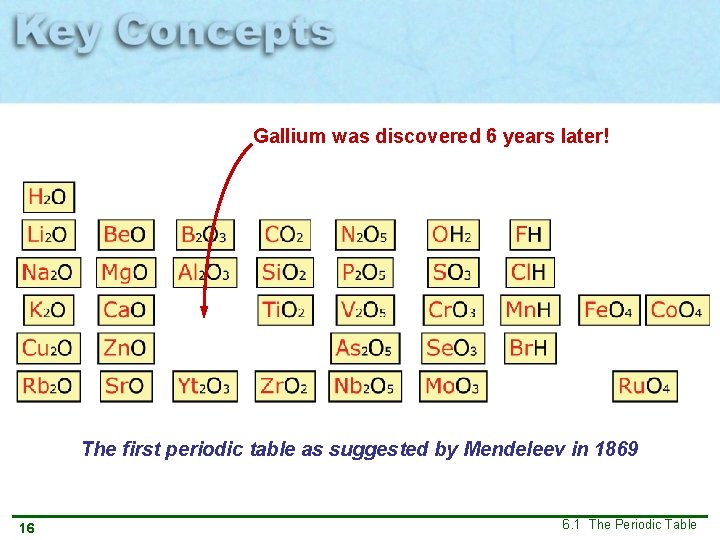
Gallium was discovered 6 years later! The first periodic table as suggested by Mendeleev in 1869 16 6. 1 The Periodic Table
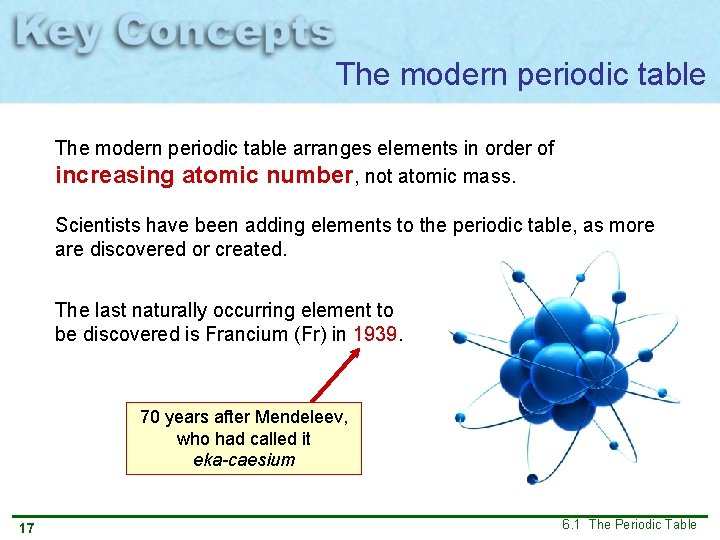
The modern periodic table arranges elements in order of increasing atomic number, not atomic mass. Scientists have been adding elements to the periodic table, as more are discovered or created. The last naturally occurring element to be discovered is Francium (Fr) in 1939. 70 years after Mendeleev, who had called it eka-caesium 17 6. 1 The Periodic Table
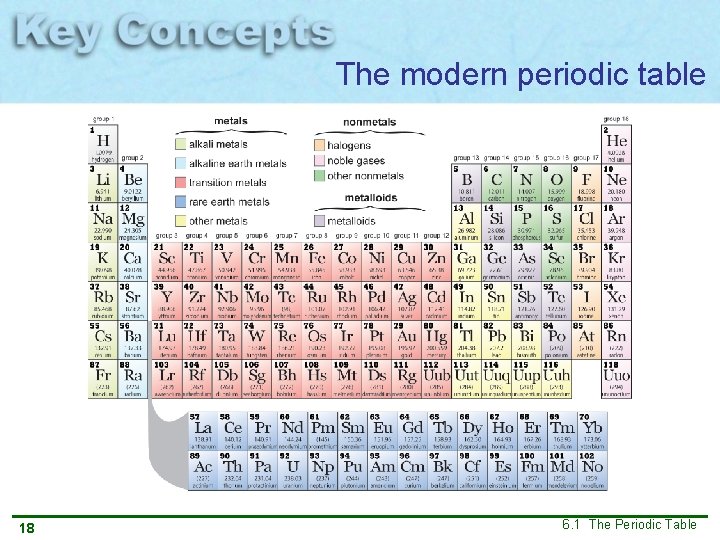
The modern periodic table 18 6. 1 The Periodic Table
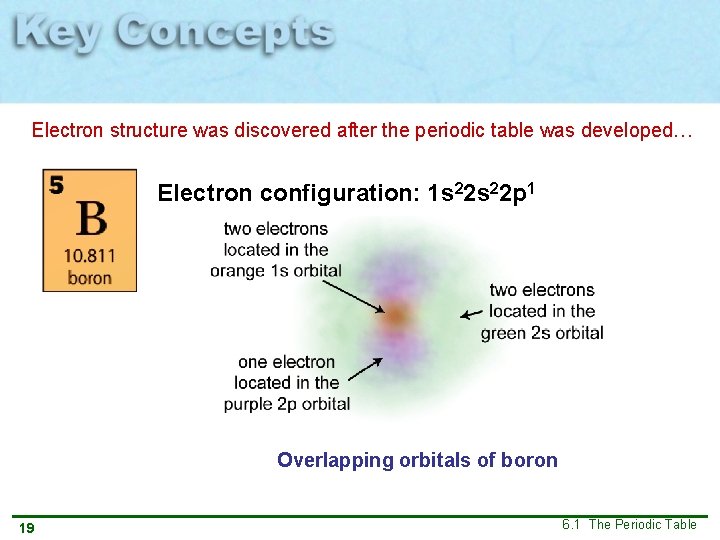
Electron structure was discovered after the periodic table was developed… Electron configuration: 1 s 22 p 1 Overlapping orbitals of boron 19 6. 1 The Periodic Table
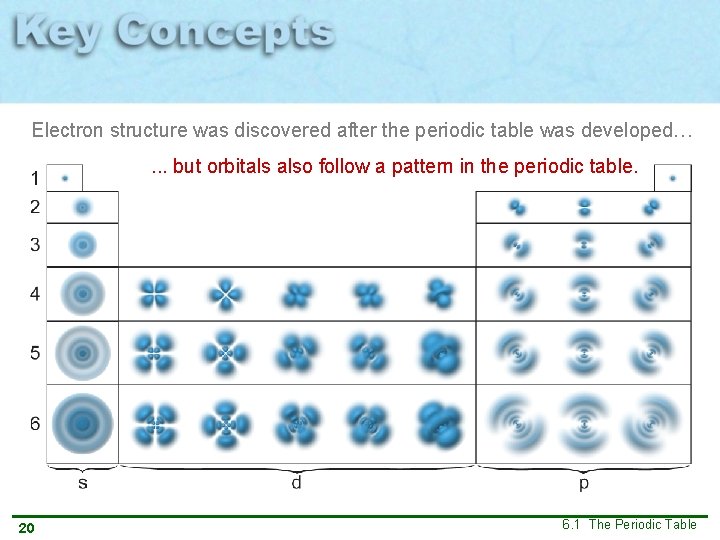
Electron structure was discovered after the periodic table was developed…. . . but orbitals also follow a pattern in the periodic table. 20 6. 1 The Periodic Table
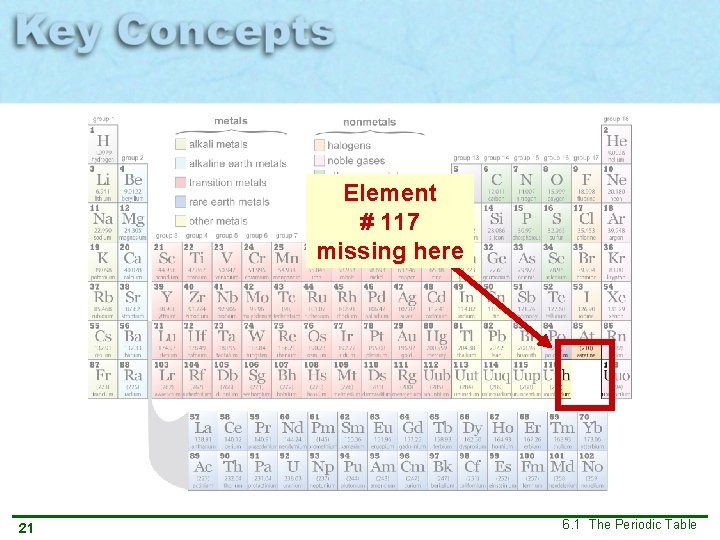
Element # 117 missing here 21 6. 1 The Periodic Table
2009 -2010 Element #117 was discovered through a Russian-US collaboration. The discovery still needs to be confirmed. It is temporarily named ununseptium (Uus). Discoveries are made all the time! 22 6. 1 The Periodic Table
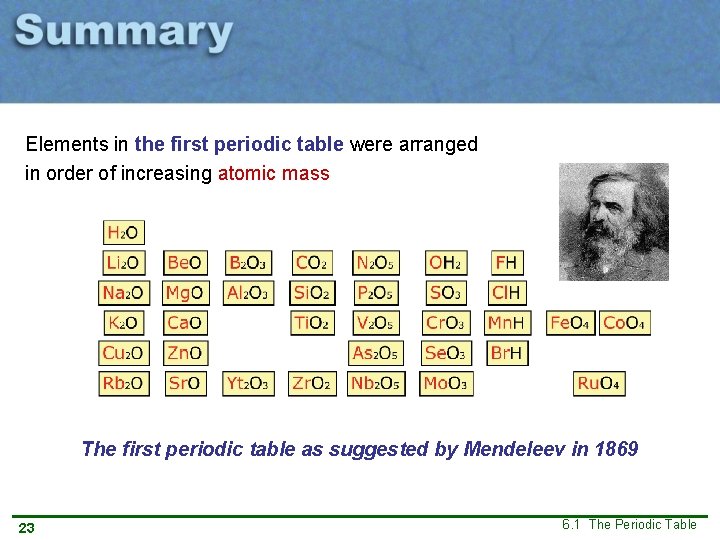
Elements in the first periodic table were arranged in order of increasing atomic mass The first periodic table as suggested by Mendeleev in 1869 23 6. 1 The Periodic Table
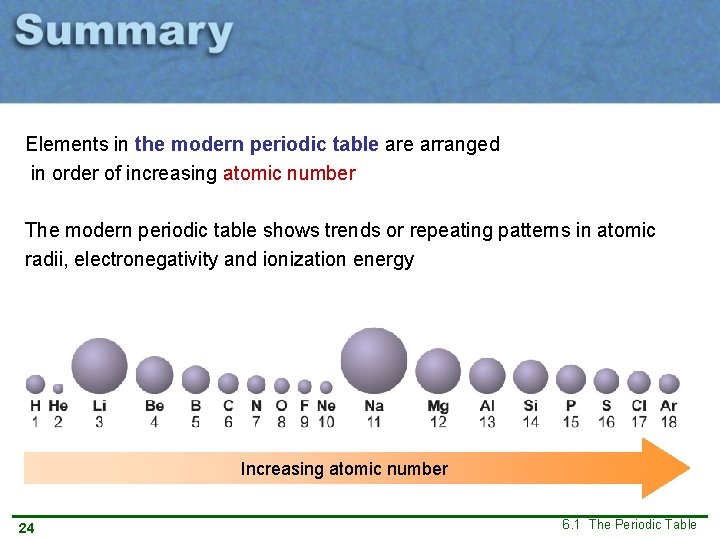
Elements in the modern periodic table arranged in order of increasing atomic number The modern periodic table shows trends or repeating patterns in atomic radii, electronegativity and ionization energy Increasing atomic number 24 6. 1 The Periodic Table
- Slides: 24