
Chapter 6 Electronic Structure of Atoms Why is
![Exceptions n n n n Ti = [Ar] 4 s 2 3 d 2](https://slidetodoc.com/presentation_image_h2/939cf5ae808073b3ff696b135adbaa34/image-55.jpg "Exceptions n n n n Ti = [Ar] 4 s 2 3 d 2")
![More exceptions n n n Lanthanum La: [Xe] 6 s 2 5 d 1](https://slidetodoc.com/presentation_image_h2/939cf5ae808073b3ff696b135adbaa34/image-56.jpg "More exceptions n n n Lanthanum La: [Xe] 6 s 2 5 d 1")
- Slides: 80
Chapter 6 Electronic Structure of Atoms
Why is the electron structure important? n n n When atoms react it is the electrons of the atom that interact. The electron structure is the arrangement of electrons within the atom. Much of our understanding of the electronic structure of atoms comes from analysis of light emitted or absorbed by substances
Light n n Light is a type of electromagnetic radiation. Electromagnetic radiation carries energy through space (aka radiant energy). Electromagnetic radiation moves at the speed of light. Many different kinds of electromagnetic radiation. Goes back to the “wave theory” of electron movement.
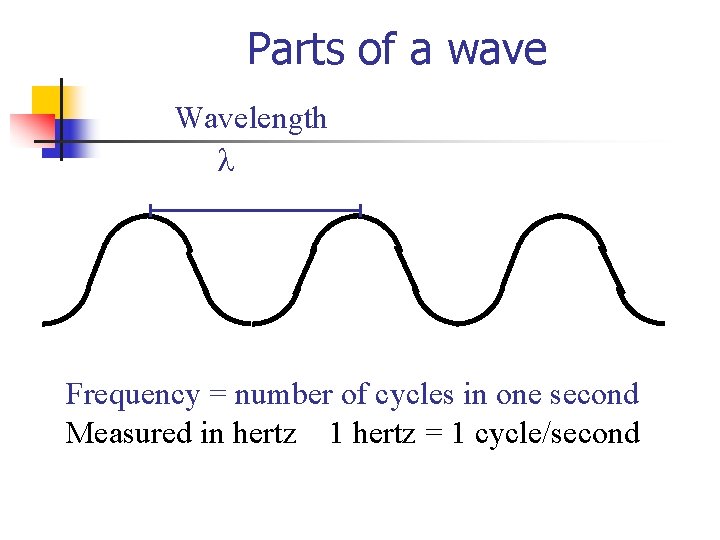
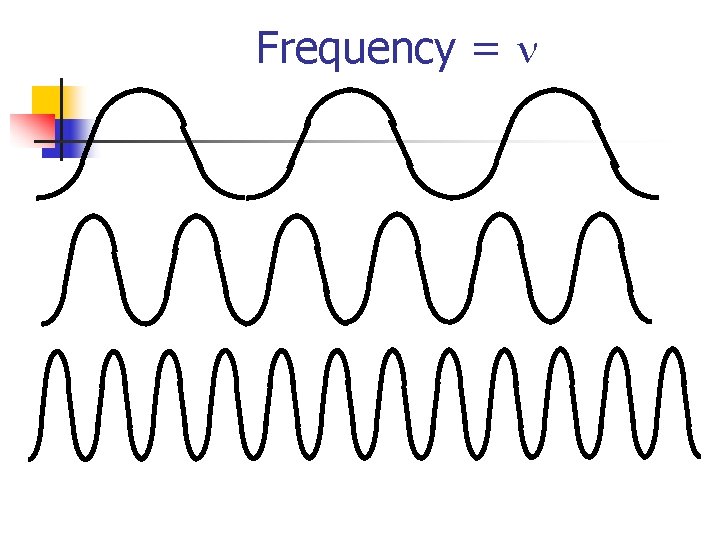
Parts of a wave Wavelength l Frequency = number of cycles in one second Measured in hertz 1 hertz = 1 cycle/second
Frequency = n
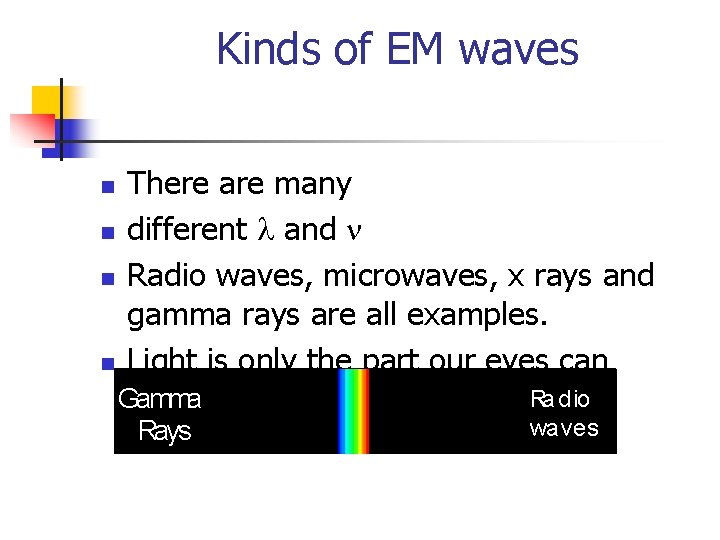
Kinds of EM waves There are many n different l and n n Radio waves, microwaves, x rays and gamma rays are all examples. n Light is only the part our eyes can Radio Gamma detect. n Rays waves
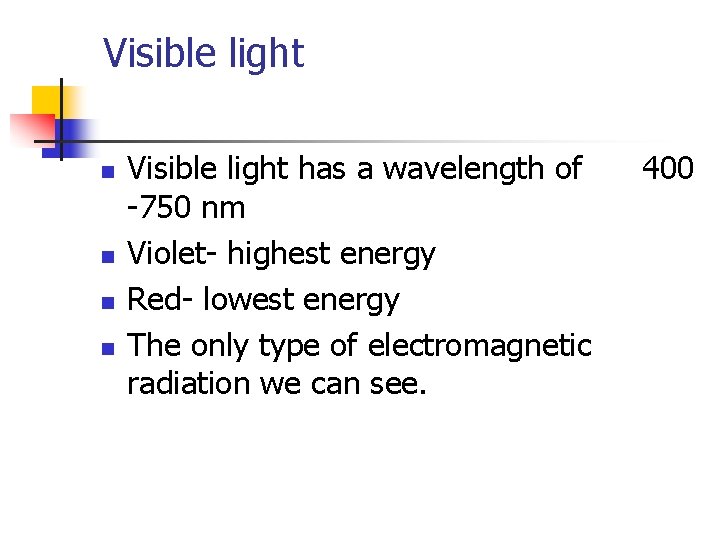
Visible light n n Visible light has a wavelength of -750 nm Violet- highest energy Red- lowest energy The only type of electromagnetic radiation we can see. 400
The speed of light n n Because all electromagnetic energy moves at the speed of light, wavelength and frequency must be related (inversely) C= in a vacuum is 2. 998 x 108 m/s c = ln The many different properties of electromagnetic radiation come from the different wavelengths.
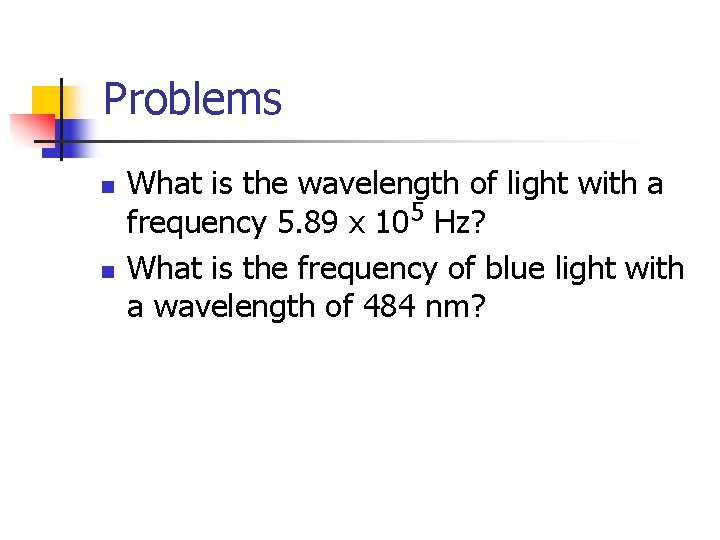
Problems n n What is the wavelength of light with a frequency 5. 89 x 105 Hz? What is the frequency of blue light with a wavelength of 484 nm?
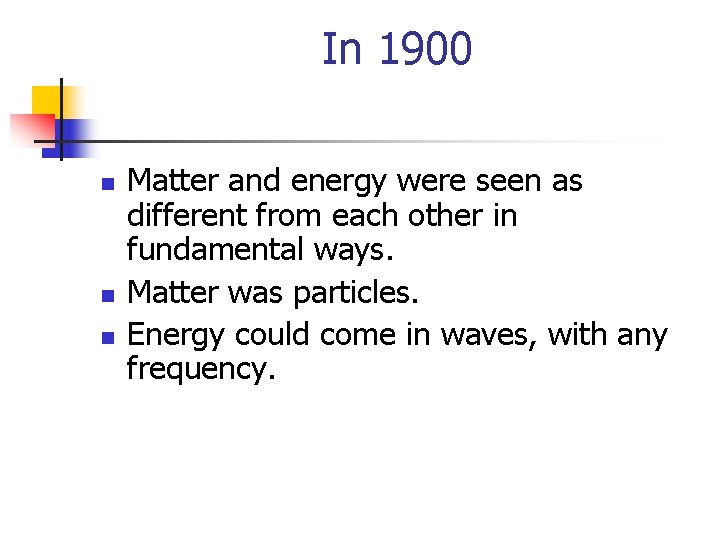
In 1900 n n n Matter and energy were seen as different from each other in fundamental ways. Matter was particles. Energy could come in waves, with any frequency.
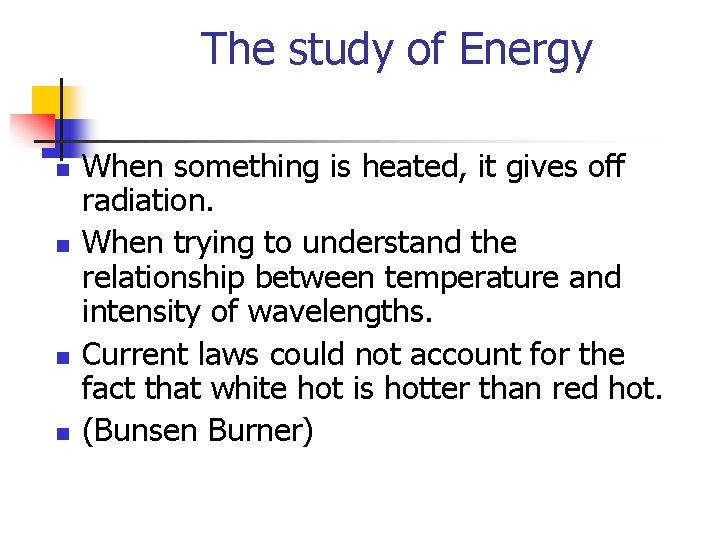
The study of Energy n n When something is heated, it gives off radiation. When trying to understand the relationship between temperature and intensity of wavelengths. Current laws could not account for the fact that white hot is hotter than red hot. (Bunsen Burner)
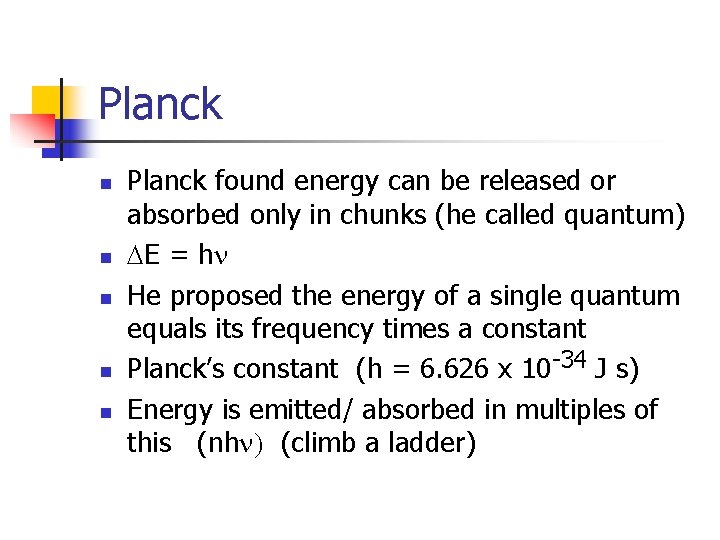
Planck n n n Planck found energy can be released or absorbed only in chunks (he called quantum) DE = hn He proposed the energy of a single quantum equals its frequency times a constant Planck’s constant (h = 6. 626 x 10 -34 J s) Energy is emitted/ absorbed in multiples of this (nhn) (climb a ladder)
Einstein’s Theory of Light n n n Used Planck’s quantum theory to explain the photoelectric effect. Photoelectric Effect- (shining a light on a piece of metal causes the metal to emit electrons, each metal requires a specific frequency to get it started) Said electromagnetic radiation is quantized in particles called photons. Energy of light dependent on frequency High frequency (short wavelengths) x-rays- high energy photons able to cause tissue damage
A Photon n n Each photon has energy = hn = hc/l Combine this with E = mc 2 You get the apparent mass of a photon. m = h / (lc) This is why you wear a lead shield when you have an x-ray, but not when you use your microwave!
Is light a wave, or is it made of particles? n n n Both!! Dual Nature of light This dual nature also true for matter
Matter as a wave n n n Using the velocity v instead of the wavelength n we get. De Broglie’s equation l = h/mv Can calculate the wavelength of an object.
Examples n n The laser light of a CD is 7. 80 x 102 m. What is the frequency of this light? What is the energy of a photon of this light? What is the apparent mass of a photon of this light? What is the energy of a mole of these photons?
What is the wavelength? n n of an electron with a mass of 9. 11 x 10 -31 kg traveling at 1. 0 x 107 m/s? Of a softball with a mass of 0. 10 kg moving at 125 mi/hr?
Spectrum n n The range of frequencies present in light. White light has a continuous spectrum. All the colors are possible. A rainbow.
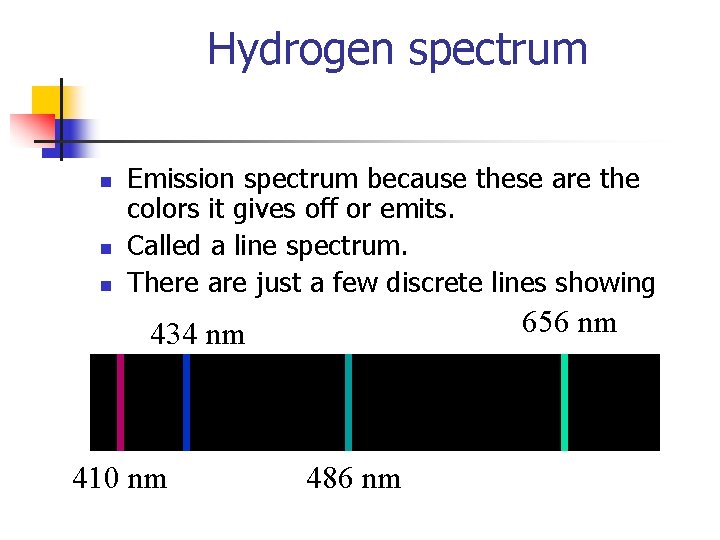
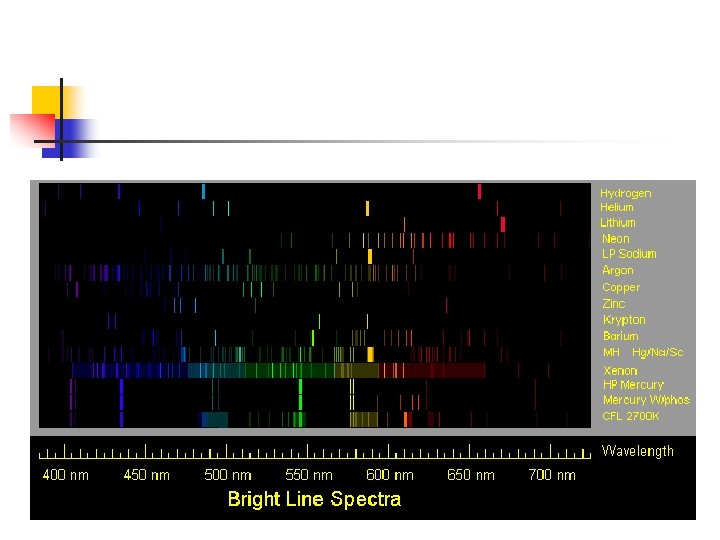
Hydrogen spectrum n n n Emission spectrum because these are the colors it gives off or emits. Called a line spectrum. There are just a few discrete lines showing 656 nm 434 nm 410 nm 486 nm
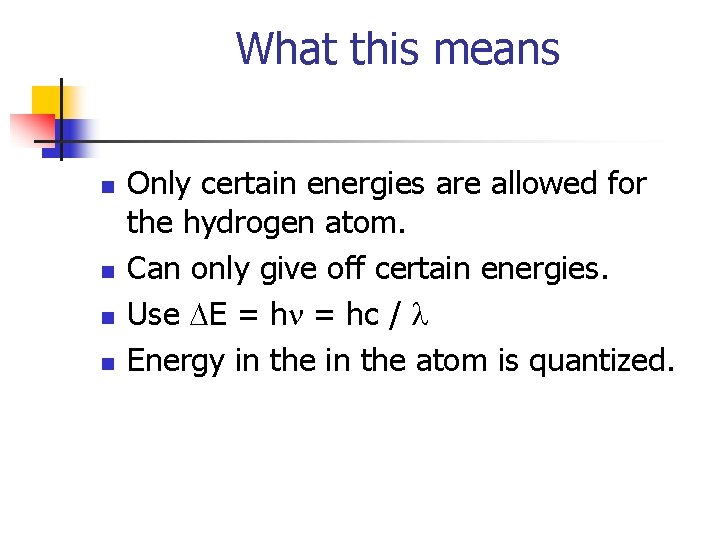
What this means n n Only certain energies are allowed for the hydrogen atom. Can only give off certain energies. Use DE = hn = hc / l Energy in the atom is quantized.
Niels Bohr n n Developed the quantum model of the hydrogen atom. He said the atom was like a solar system. The electrons were attracted to the nucleus because of opposite charges. Didn’t fall in to the nucleus because it was moving around.
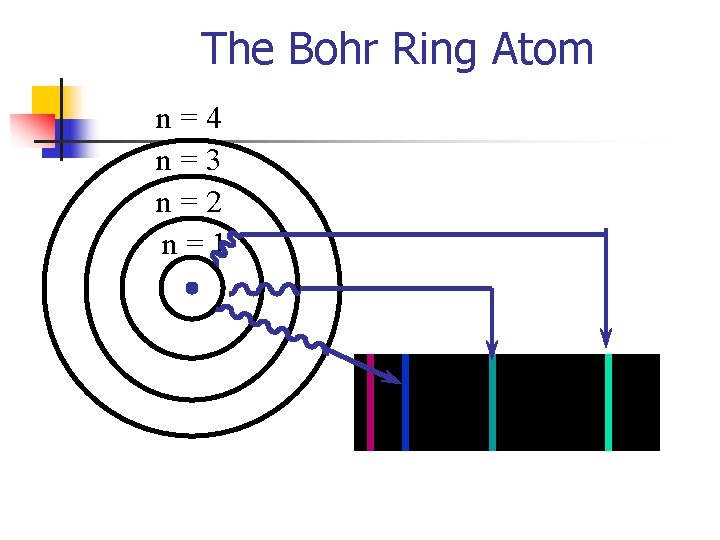
The Bohr Ring Atom n n n He didn’t know why but only certain energies were allowed. He called these allowed energies energy levels. Putting Energy into the atom moved the electron away from the nucleus. From ground state to excited state. When it returns to ground state it gives off light of a certain energy.
The Bohr Ring Atom n=4 n=3 n=2 n=1
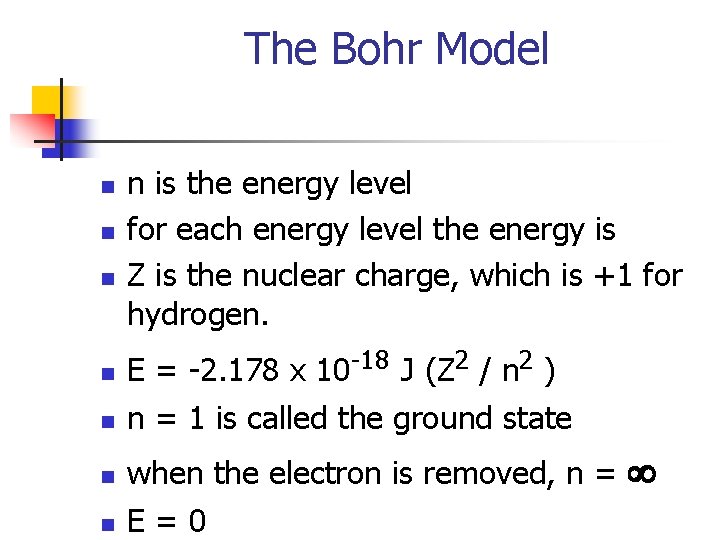
The Bohr Model n n is the energy level for each energy level the energy is Z is the nuclear charge, which is +1 for hydrogen. n E = -2. 178 x 10 -18 J (Z 2 / n 2 ) n = 1 is called the ground state n when the electron is removed, n = n E=0 n ¥
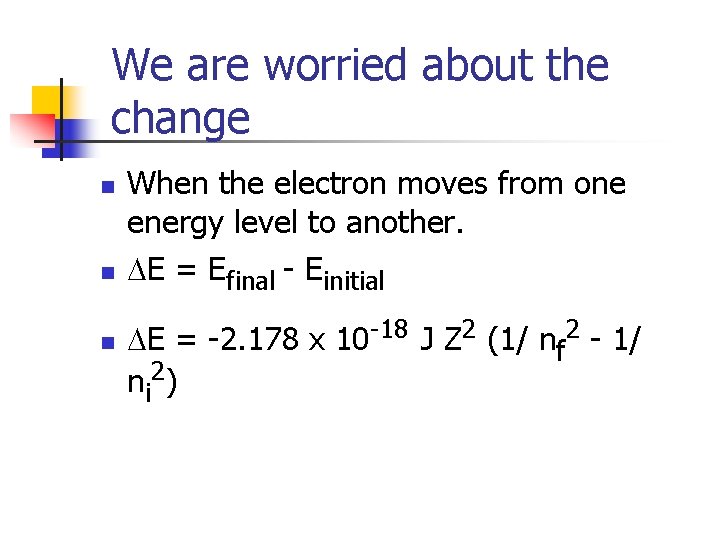
We are worried about the change n n n When the electron moves from one energy level to another. DE = Efinal - Einitial DE = -2. 178 x 10 -18 J Z 2 (1/ nf 2 - 1/ n i 2 )
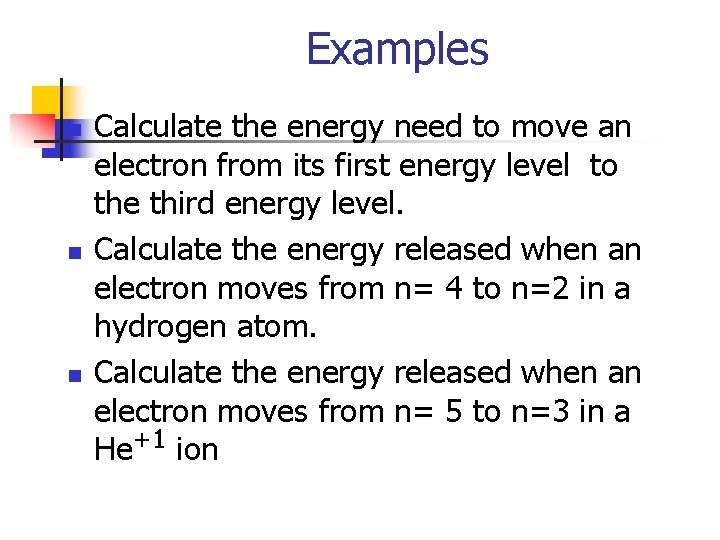
Examples n n n Calculate the energy need to move an electron from its first energy level to the third energy level. Calculate the energy released when an electron moves from n= 4 to n=2 in a hydrogen atom. Calculate the energy released when an electron moves from n= 5 to n=3 in a He+1 ion
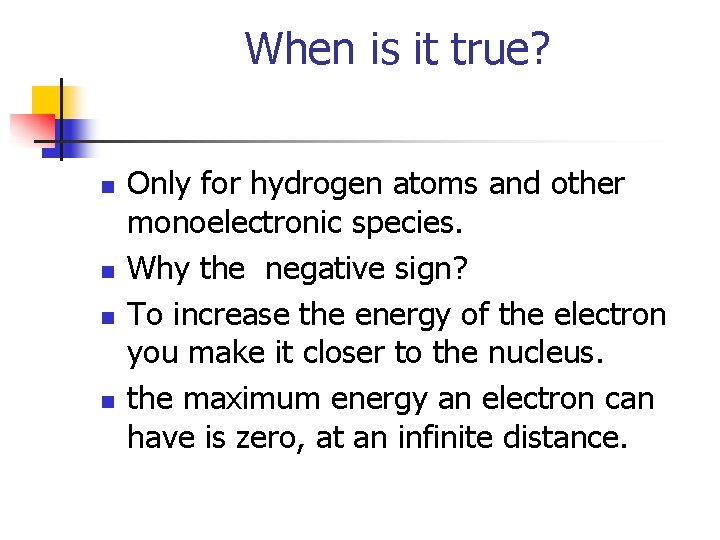
When is it true? n n Only for hydrogen atoms and other monoelectronic species. Why the negative sign? To increase the energy of the electron you make it closer to the nucleus. the maximum energy an electron can have is zero, at an infinite distance.
The Bohr Model n n Doesn’t work. Only works for hydrogen atoms. Electrons don’t move in circles. The quantization of energy is right, but not because they are circling like planets.
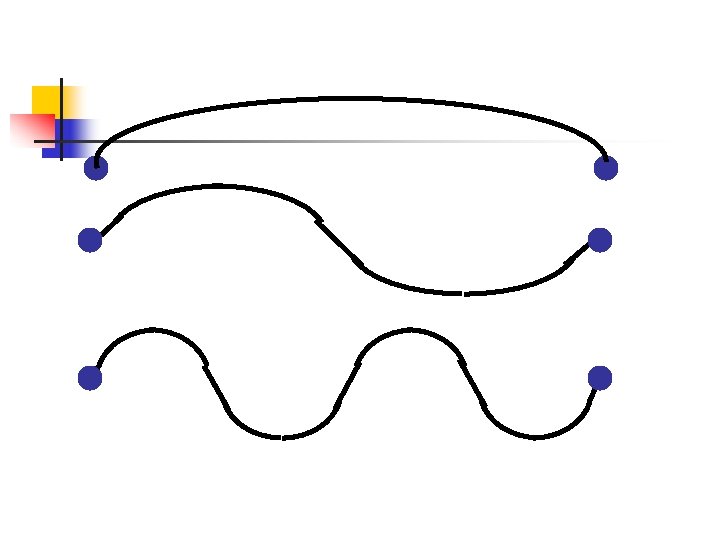
The Quantum Mechanical Model n n A totally new approach. De Broglie said matter could be like a wave. De Broglie said they were like standing waves. The vibrations of a stringed instrument.
What’s possible? n n There are only certain allowed waves. In the atom there are certain allowed waves called electrons. 1925 Erwin Schroedinger described the wave function of the electron. Much math but what is important are the solution.
Schroedinger’s Equation n Solutions to the equation are called orbitals. These are not Bohr orbits. Each solution is tied to a certain energy. These are the energy levels.
There is a limit to what we can know n n n We can’t know how the electron is moving or how it gets from one energy level to another. The Heisenberg Uncertainty Principle. There is a limit to how well we can know both the position and the momentum of an object.
Quantum Numbers n n n There are many solutions to Schroedinger’s equation (n, l, ml) Principal quantum number (n) size and energy of of an orbital. Has integer values >0
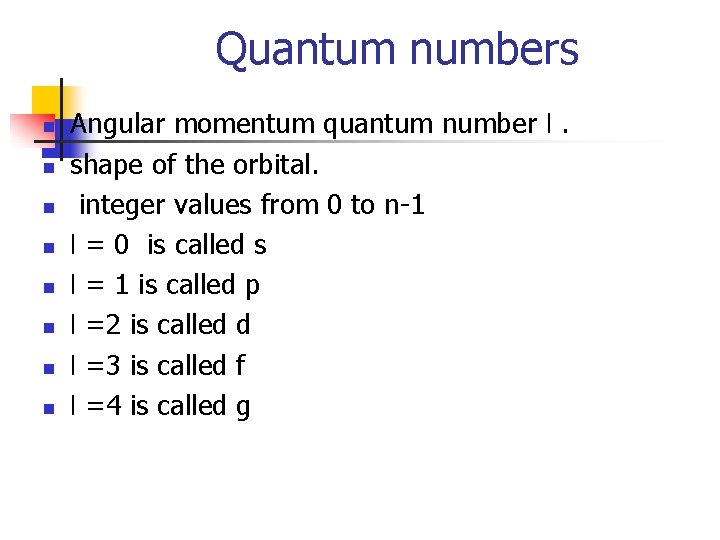
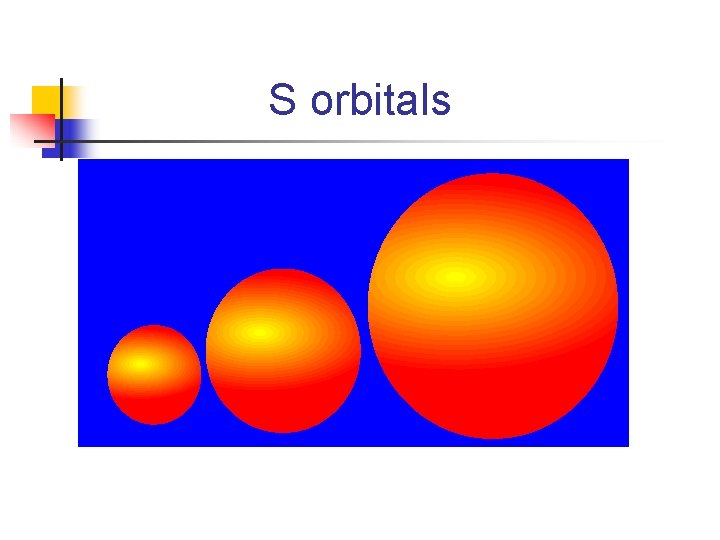
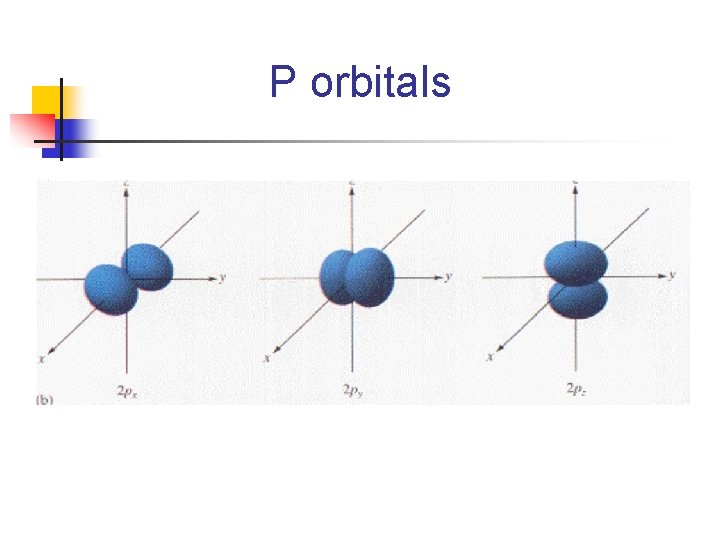
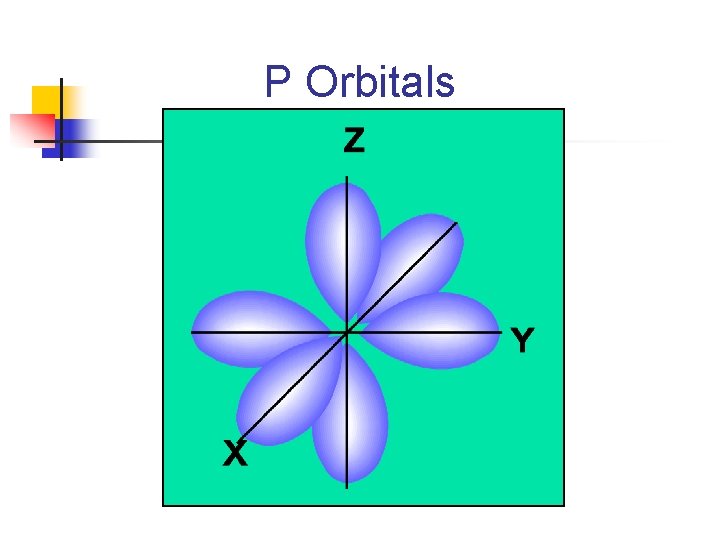
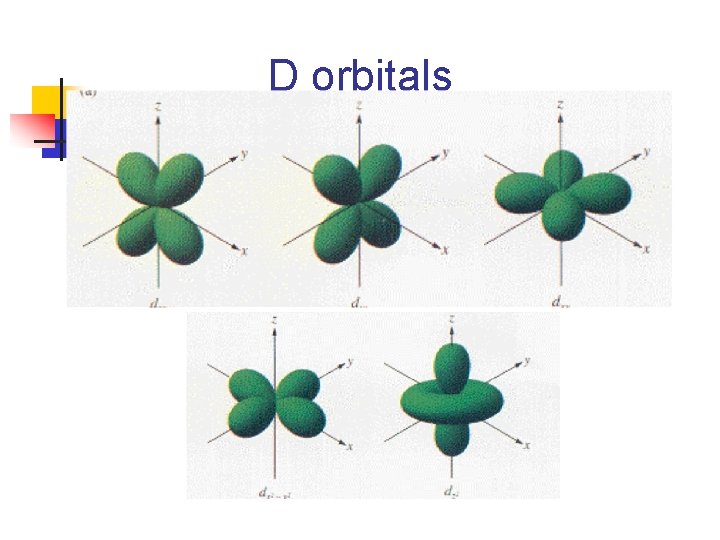
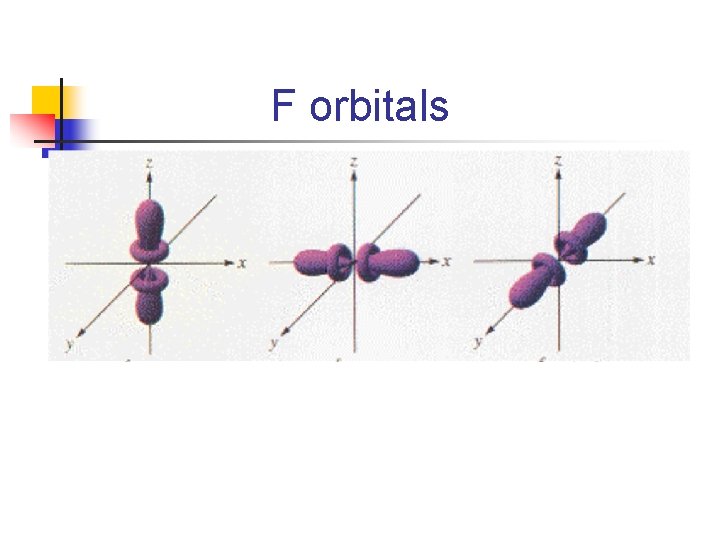
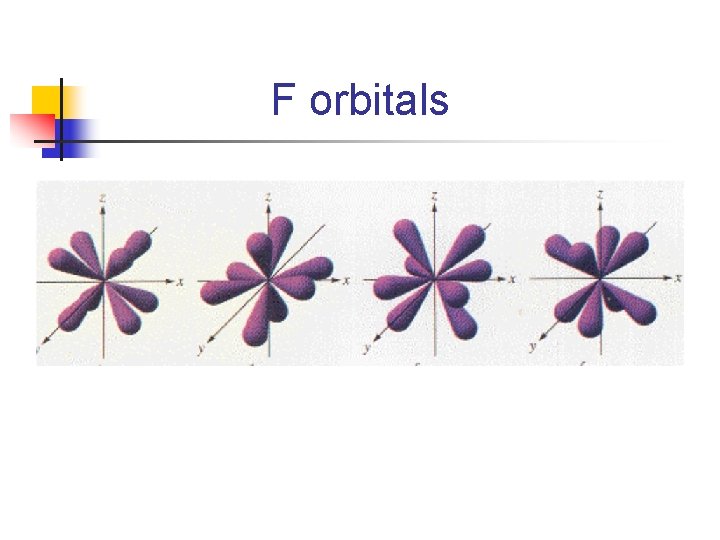
Quantum numbers n n n n Angular momentum quantum number l. shape of the orbital. integer values from 0 to n-1 l = 0 is called s l = 1 is called p l =2 is called d l =3 is called f l =4 is called g
S orbitals
P orbitals
P Orbitals
D orbitals
F orbitals
F orbitals
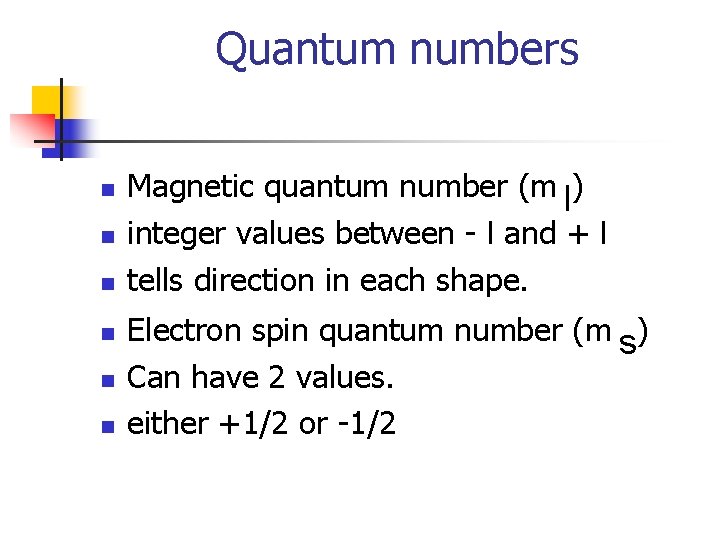
Quantum numbers n n n Magnetic quantum number (m l) integer values between - l and + l tells direction in each shape. Electron spin quantum number (m s) Can have 2 values. either +1/2 or -1/2
Polyelectronic Atoms n n n More than one electron. three energy contributions. The kinetic energy of moving electrons. The potential energy of the attraction between the nucleus and the electrons. The potential energy from repulsion of electrons.
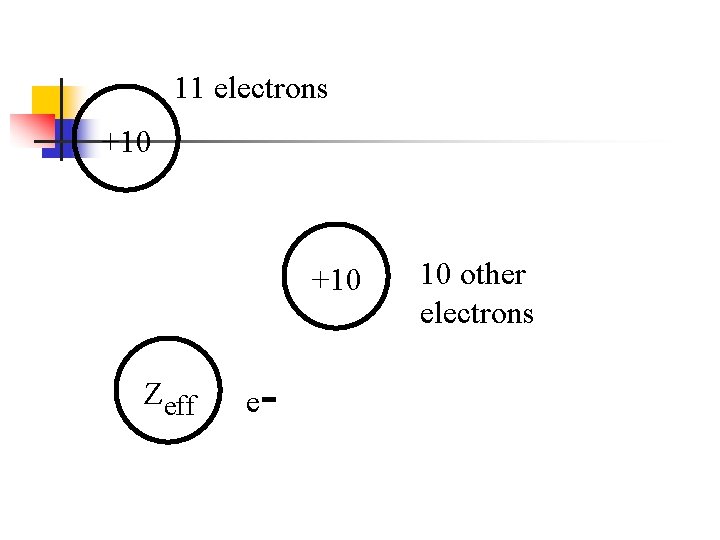
Polyelectronic atoms n n Can’t solve Schroedinger’s equation exactly. Difficulty is repulsion of other electrons. Solution is to treat each electron as if it were effected by the net field of charge from the attraction of the nucleus and the repulsion of the electrons. Effective nuclear charge
11 electrons +10 Zeff e - 10 other electrons
The Periodic Table n n Developed independently by German Julius Lothar Meyer and Russian Dmitri Mendeleev (1870”s). Didn’t know much about atom. Put in columns by similar properties. Predicted properties of missing elements.
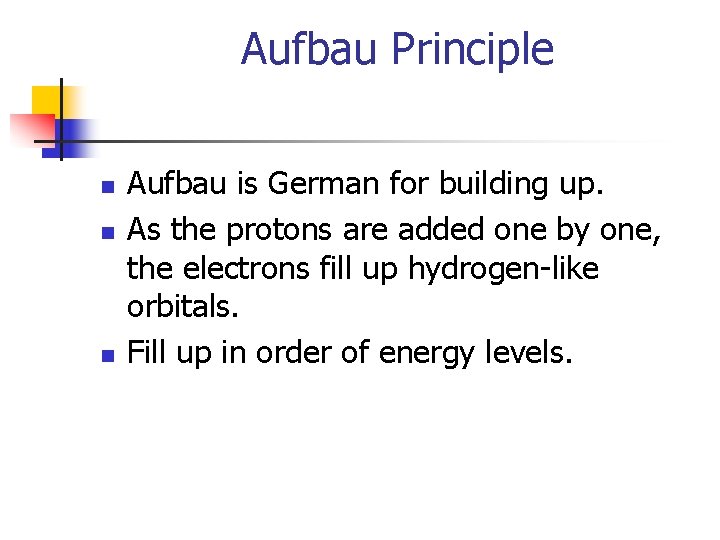
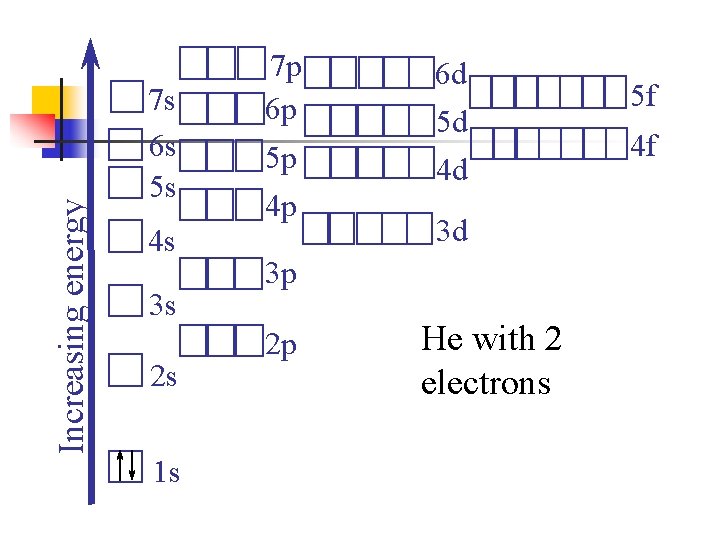
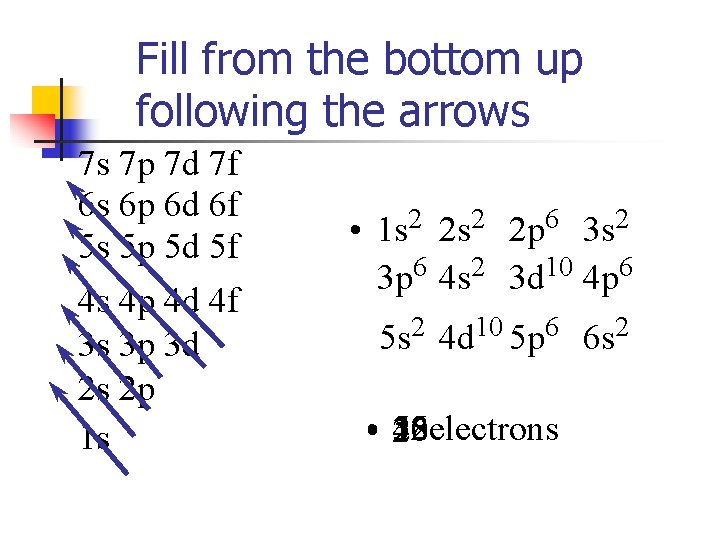
Aufbau Principle n n n Aufbau is German for building up. As the protons are added one by one, the electrons fill up hydrogen-like orbitals. Fill up in order of energy levels.
Increasing energy 7 s 6 s 5 s 4 s 3 s 2 s 1 s 7 p 6 p 5 p 4 p 6 d 5 d 4 d 3 d 3 p 2 p He with 2 electrons 5 f 4 f
More on Electron Configuration
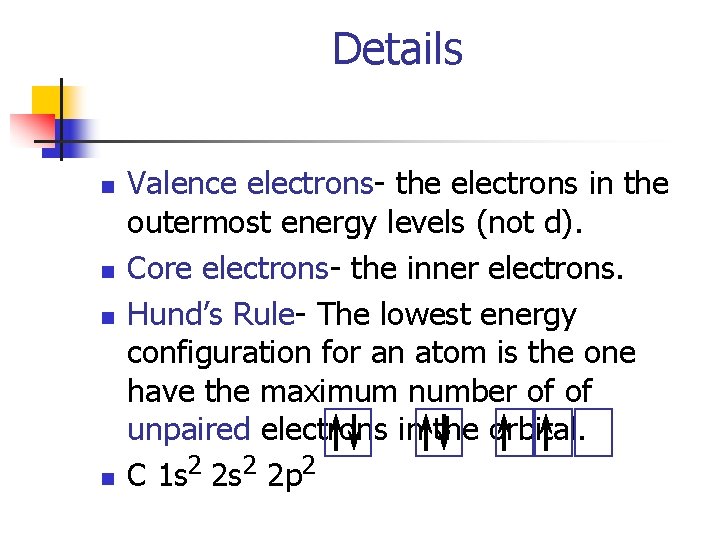
Details n n Valence electrons- the electrons in the outermost energy levels (not d). Core electrons- the inner electrons. Hund’s Rule- The lowest energy configuration for an atom is the one have the maximum number of of unpaired electrons in the orbital. C 1 s 2 2 p 2
Fill from the bottom up following the arrows 7 s 7 p 7 d 7 f 6 s 6 p 6 d 6 f 5 s 5 p 5 d 5 f 4 s 4 p 4 d 4 f 3 s 3 p 3 d 2 s 2 p 1 s • 2 1 s 2 2 s 6 2 p 2 3 s 6 3 p 2 4 s 10 3 d 6 4 p 2 5 s 10 6 4 d 5 p 56 • 38 20 electrons 4212 2 6 s
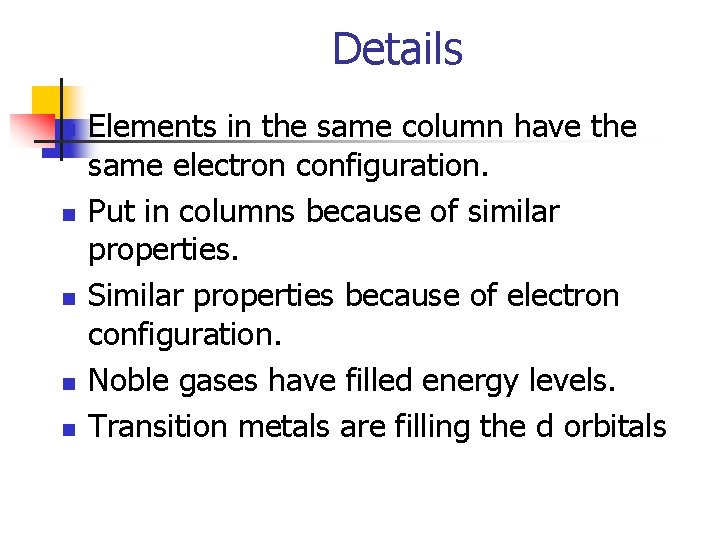
Details n n n Elements in the same column have the same electron configuration. Put in columns because of similar properties. Similar properties because of electron configuration. Noble gases have filled energy levels. Transition metals are filling the d orbitals
Exceptions n n n n Ti = [Ar] 4 s 2 3 d 2 V = [Ar] 4 s 2 3 d 3 Cr = [Ar] 4 s 1 3 d 5 Mn = [Ar] 4 s 2 3 d 5 Half filled orbitals. Scientists aren’t sure of why it happens same for Cu [Ar] 4 s 1 3 d 10
More exceptions n n n Lanthanum La: [Xe] 6 s 2 5 d 1 Cerium Ce: [Xe] 6 s 2 4 f 1 5 d 1 Promethium Pr: [Xe] 6 s 2 4 f 3 5 d 0 Gadolinium Gd: [Xe] 6 s 2 4 f 7 5 d 1 Lutetium Pr: [Xe] 6 s 2 4 f 14 5 d 1 We’ll just pretend that all except Cu and Cr follow the rules.
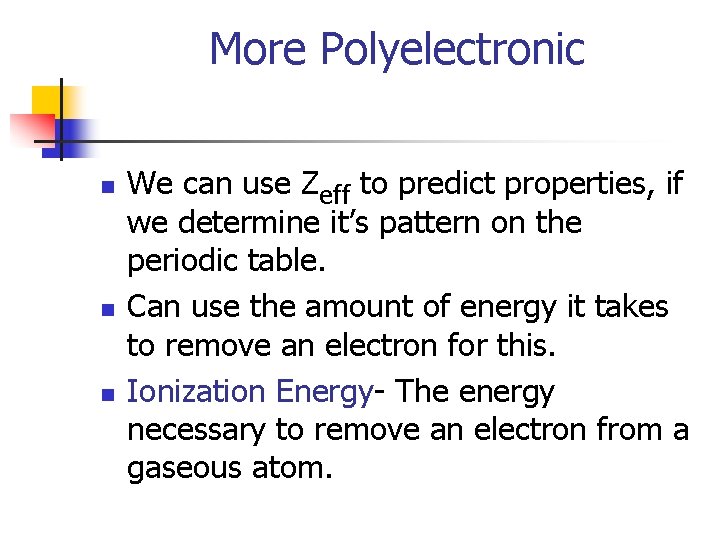
More Polyelectronic n n n We can use Zeff to predict properties, if we determine it’s pattern on the periodic table. Can use the amount of energy it takes to remove an electron for this. Ionization Energy- The energy necessary to remove an electron from a gaseous atom.
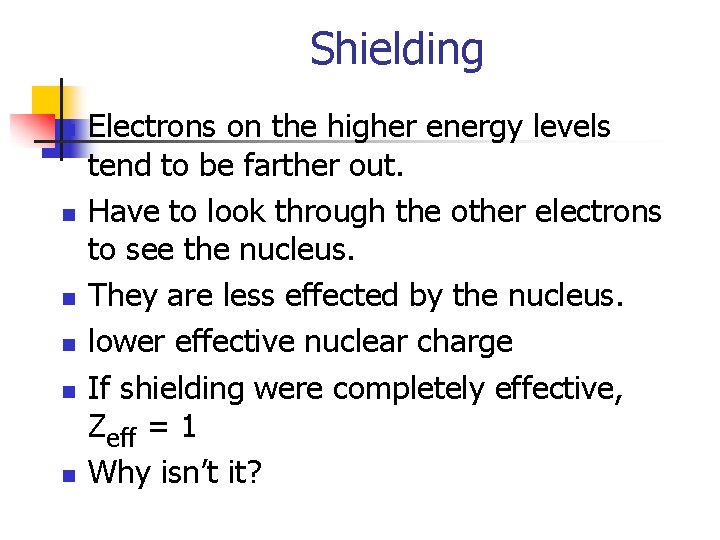
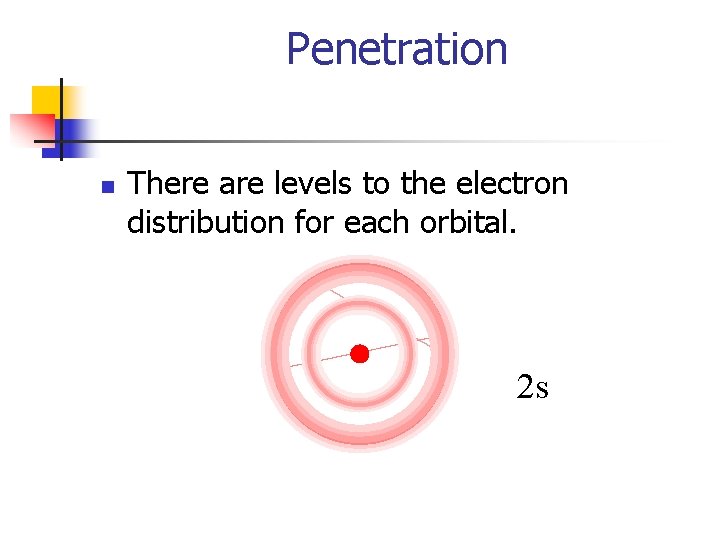
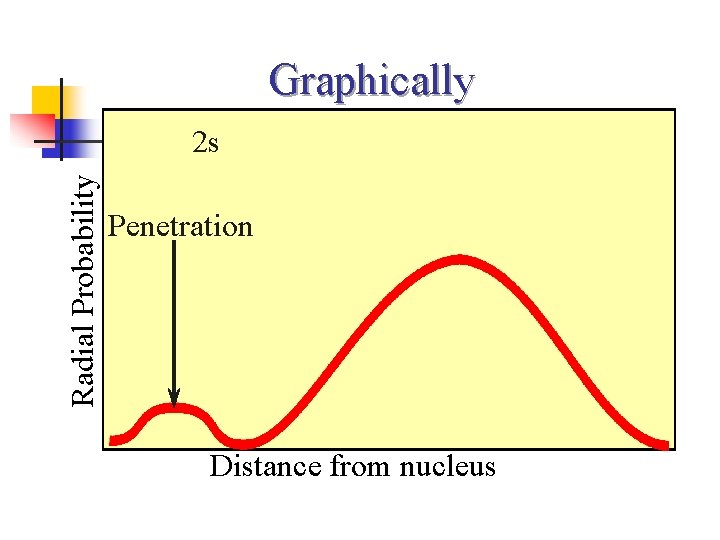
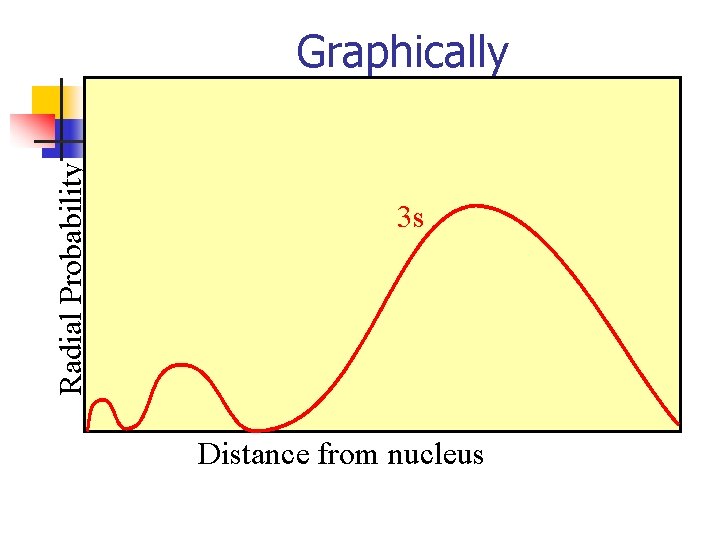
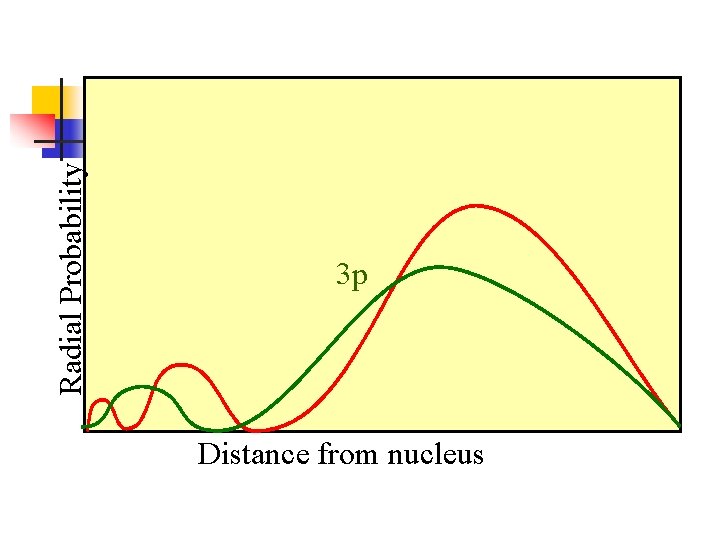
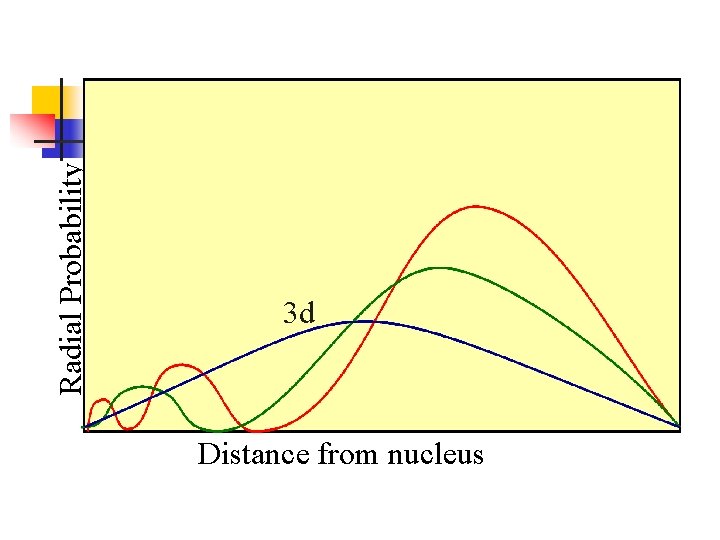
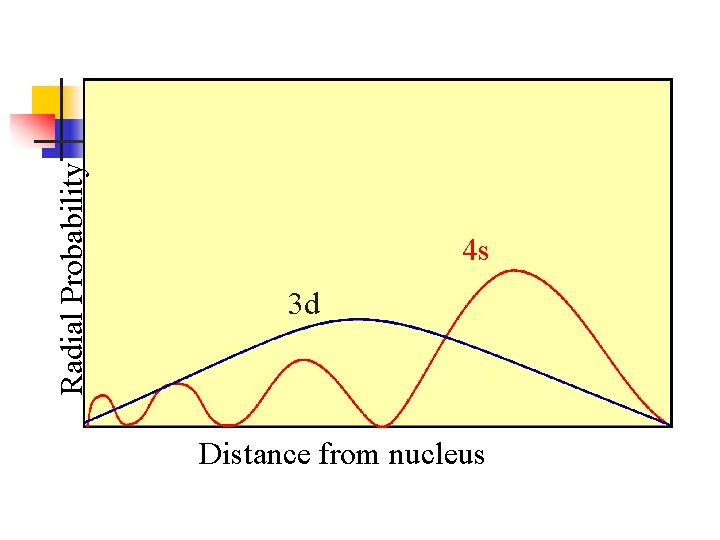
Shielding n n n Electrons on the higher energy levels tend to be farther out. Have to look through the other electrons to see the nucleus. They are less effected by the nucleus. lower effective nuclear charge If shielding were completely effective, Zeff = 1 Why isn’t it?
Penetration n There are levels to the electron distribution for each orbital. 2 s
Graphically Radial Probability 2 s Penetration Distance from nucleus
Radial Probability Graphically 3 s Distance from nucleus
Radial Probability 3 p Distance from nucleus
Radial Probability 3 d Distance from nucleus
Radial Probability 4 s 3 d Distance from nucleus
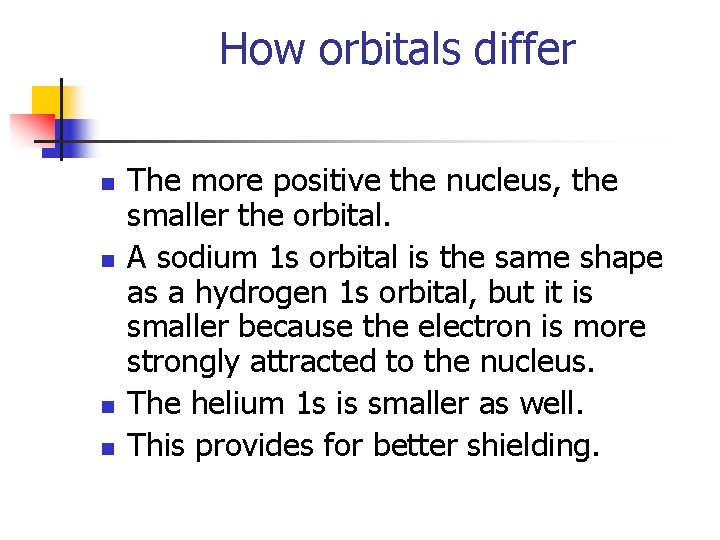
How orbitals differ n n The more positive the nucleus, the smaller the orbital. A sodium 1 s orbital is the same shape as a hydrogen 1 s orbital, but it is smaller because the electron is more strongly attracted to the nucleus. The helium 1 s is smaller as well. This provides for better shielding.
Periodic Trends n n n Ionization energy the energy required to remove an electron form a gaseous atom Highest energy electron removed first. First ionization energy (I 1) is that required to remove the first electron. Second ionization energy (I 2) - the second electron etc.
Trends in ionization energy n for Mg • • • n n I 1 = 735 k. J/mole I 2 = 1445 k. J/mole I 3 = 7730 k. J/mole The effective nuclear charge increases as you remove electrons. It takes much more energy to remove a core electron than a valence electron because there is less shielding.
Explain this trend n For Al • • I 1 I 2 I 3 I 4 = = 580 k. J/mole 1815 k. J/mole 2740 k. J/mole 11, 600 k. J/mole
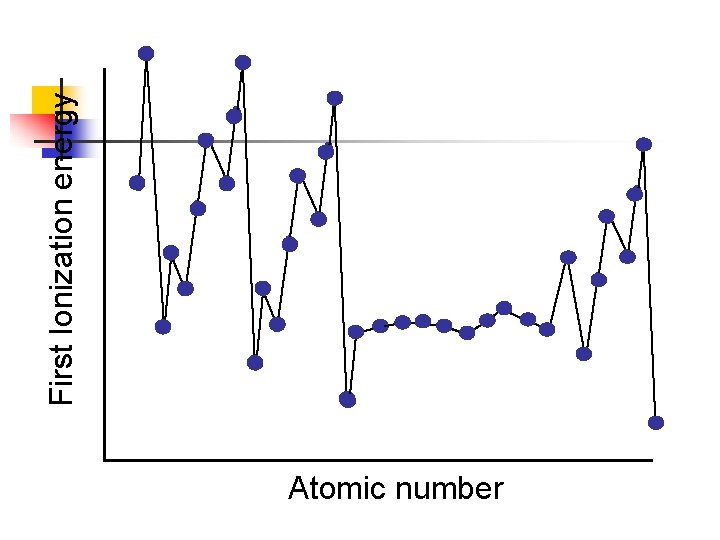
Across a Period n n n Generally from left to right, I 1 increases because there is a greater nuclear charge with the same shielding. As you go down a group I 1 decreases because electrons are farther away.
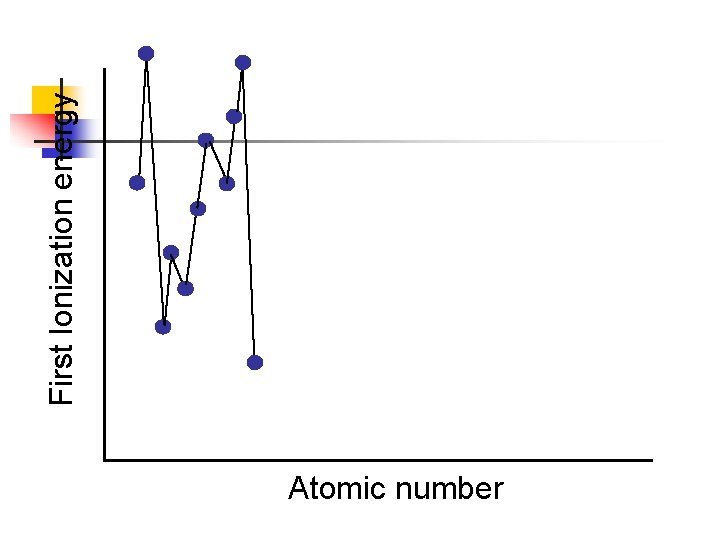
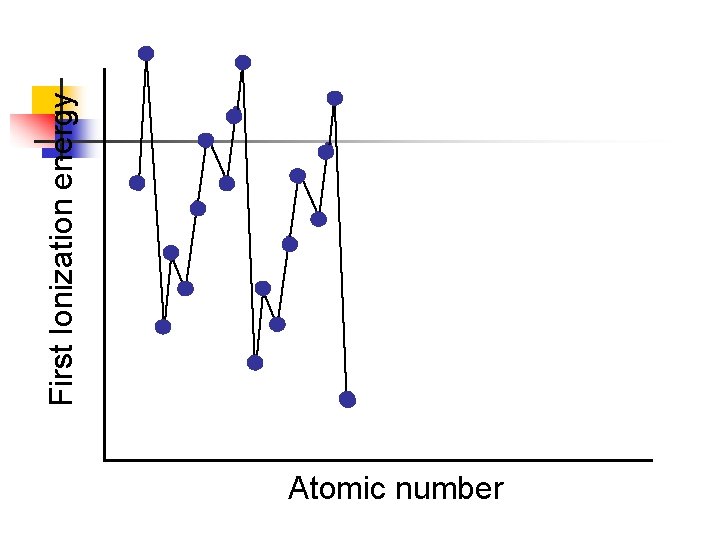
It is not that simple n n n Zeff changes as you go across a period, so will I 1 Half filled and filled orbitals are harder to remove electrons from. here’s what it looks like.
Atomic number First Ionization energy
Atomic number First Ionization energy
Atomic number First Ionization energy
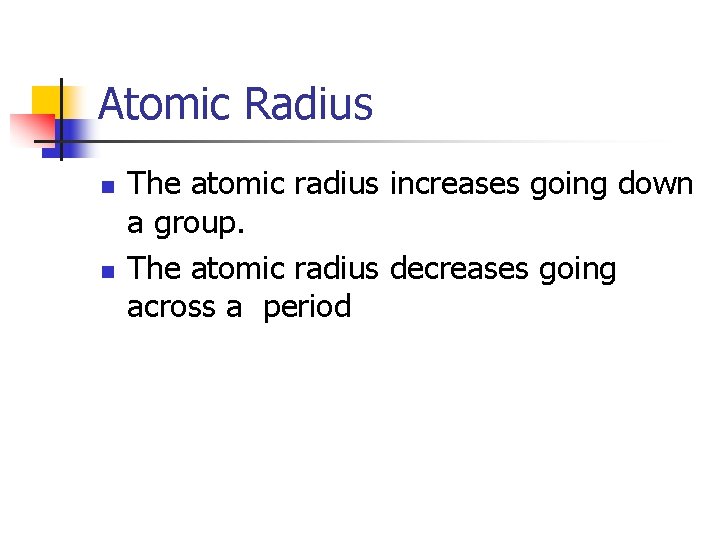
Atomic Radius n n The atomic radius increases going down a group. The atomic radius decreases going across a period
Electron Affinities n n Non metals have the most negative electron affinity. (Release the most energy when they gain an electron, thus becoming more stable) Metals have the least negative (sometimes 0) electron affinity because they don’t become more stable or lose energy when they gain an electron
Parts of the Periodic Table
The information it hides n n n Know the special groups It is the number and type of valence electrons that determine an atoms chemistry. You can get the electron configuration from it. Metals lose electrons have the lowest IE Non metals- gain electrons most negative electron affinities.
The Alkali Metals n n n Doesn’t include hydrogen- it behaves as a non-metal decrease in IE increase in radius Decrease in density decrease in melting point Behave as reducing agents
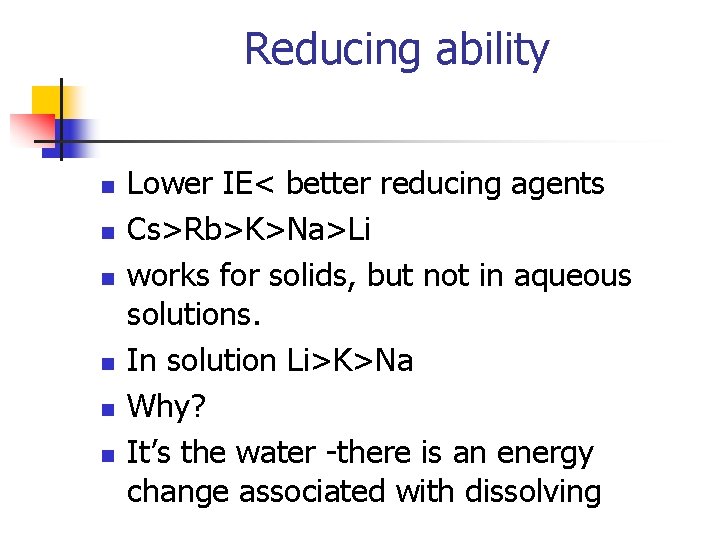
Reducing ability n n n Lower IE< better reducing agents Cs>Rb>K>Na>Li works for solids, but not in aqueous solutions. In solution Li>K>Na Why? It’s the water -there is an energy change associated with dissolving
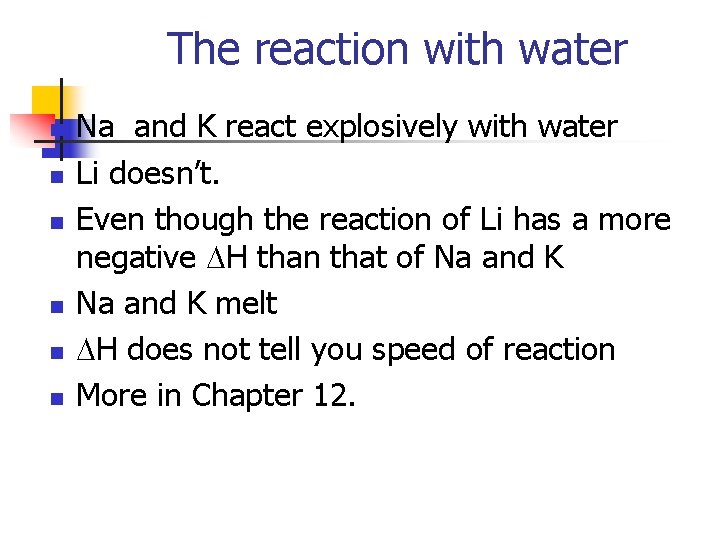
The reaction with water n n n Na and K react explosively with water Li doesn’t. Even though the reaction of Li has a more negative DH than that of Na and K melt DH does not tell you speed of reaction More in Chapter 12.