
Chapter 6 Electricity 6 1 Electric Charge Positive

- Slides: 34
Chapter 6 – Electricity
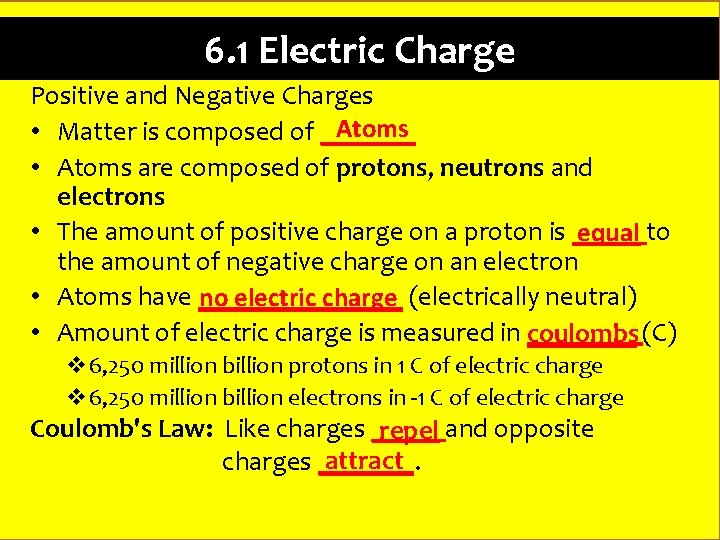
6. 1 Electric Charge Positive and Negative Charges Atoms • Matter is composed of _______ • Atoms are composed of protons, neutrons and electrons • The amount of positive charge on a proton is _____ equal to the amount of negative charge on an electron • Atoms have ________ no electric charge (electrically neutral) • Amount of electric charge is measured in coulombs ____ (C) v 6, 250 million billion protons in 1 C of electric charge v 6, 250 million billion electrons in -1 C of electric charge Coulomb's Law: Like charges _____ repel and opposite attract charges _______.
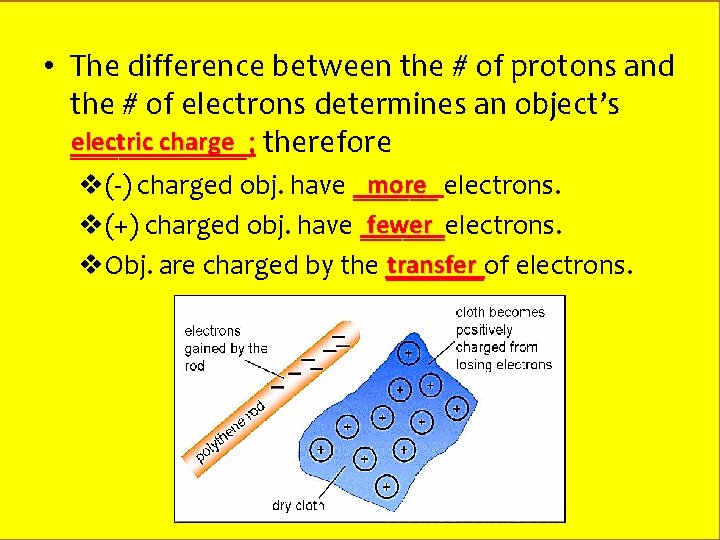
• The difference between the # of protons and the # of electrons determines an object’s electric charge therefore ______; more electrons. v(-) charged obj. have ______ fewer v(+) charged obj. have ______electrons. transfer electrons. v. Obj. are charged by the _______of
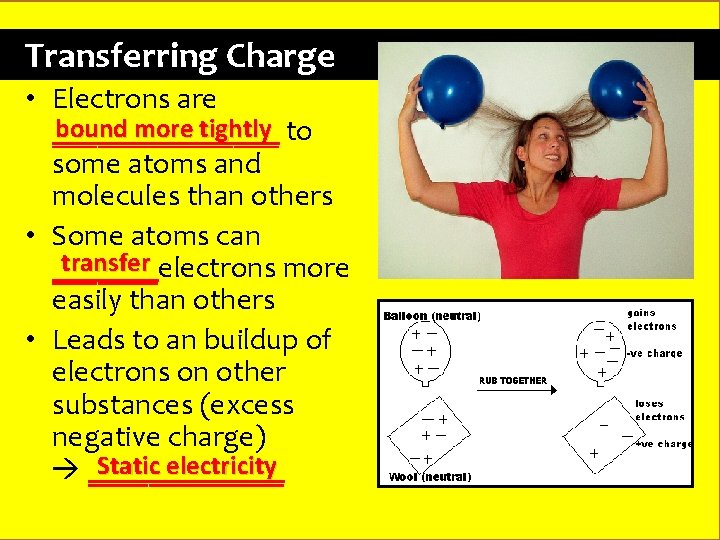
Transferring Charge • Electrons are bound more tightly to ________ some atoms and molecules than others • Some atoms can transfer _______electrons more easily than others • Leads to an buildup of electrons on other substances (excess negative charge) Static electricity _______
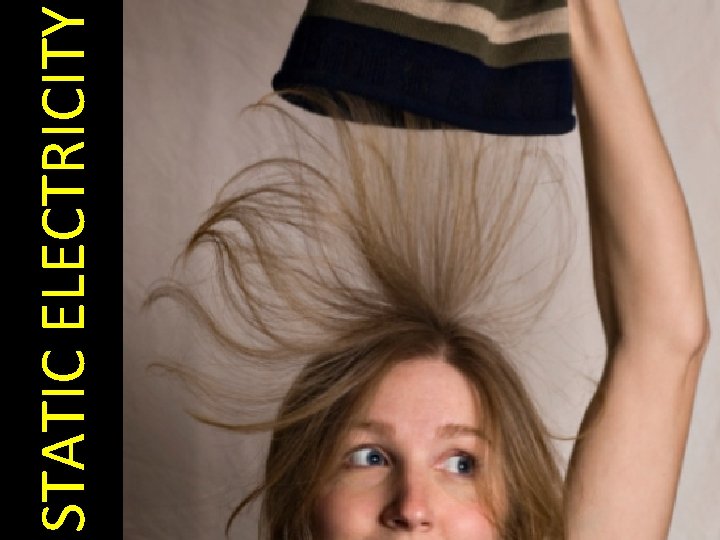
STATIC ELECTRICITY
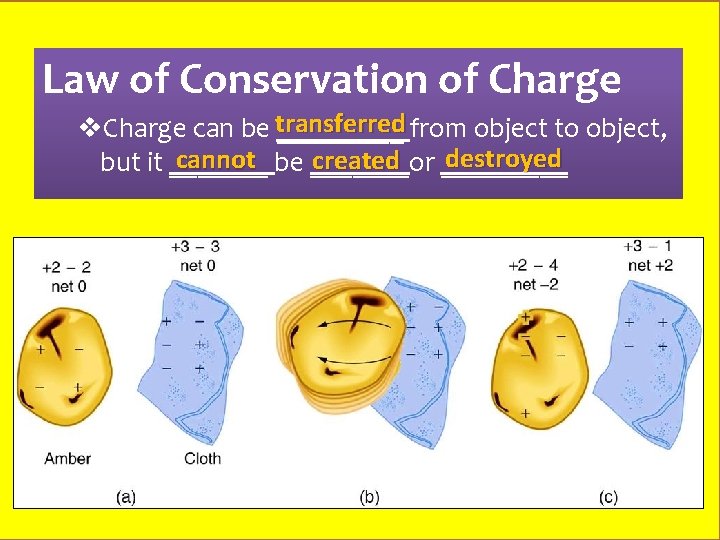
Law of Conservation of Charge v. Charge can be transferred _____ from object to object, destroyed cannot be _______or created _____ but it _______
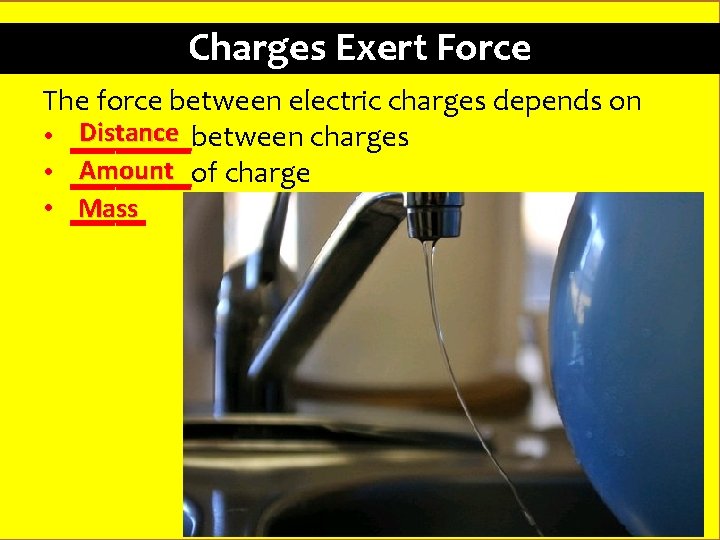
Charges Exert Force The force between electric charges depends on Distance • ____between charges Amount • ____of charge Mass • _____
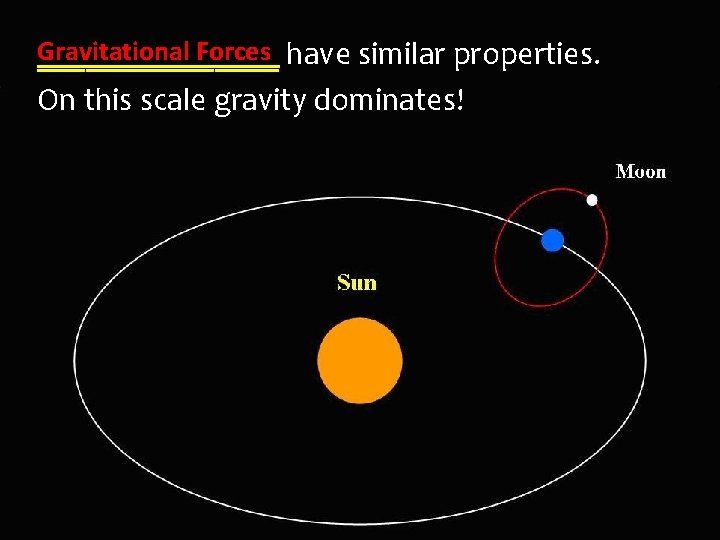
Gravitational Forces have similar properties. ________ On this scale gravity dominates!
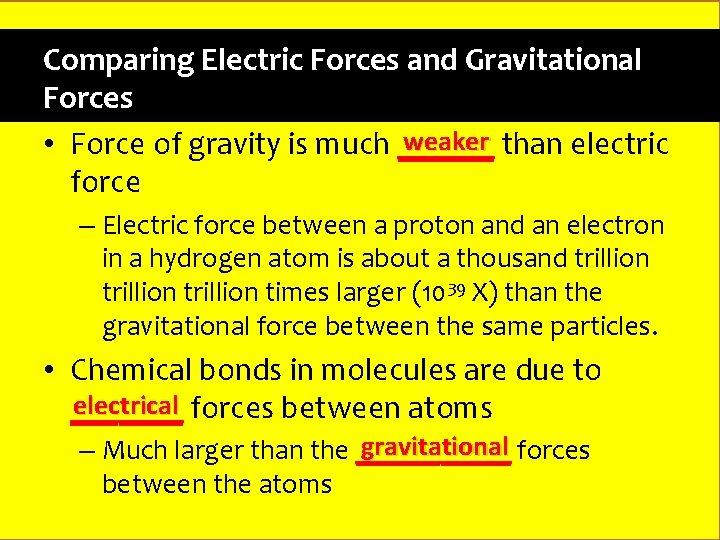
Comparing Electric Forces and Gravitational Forces weaker than electric • Force of gravity is much ______ force – Electric force between a proton and an electron in a hydrogen atom is about a thousand trillion times larger (1039 X) than the gravitational force between the same particles. • Chemical bonds in molecules are due to electrical forces between atoms _______ gravitational forces – Much larger than the ______ between the atoms
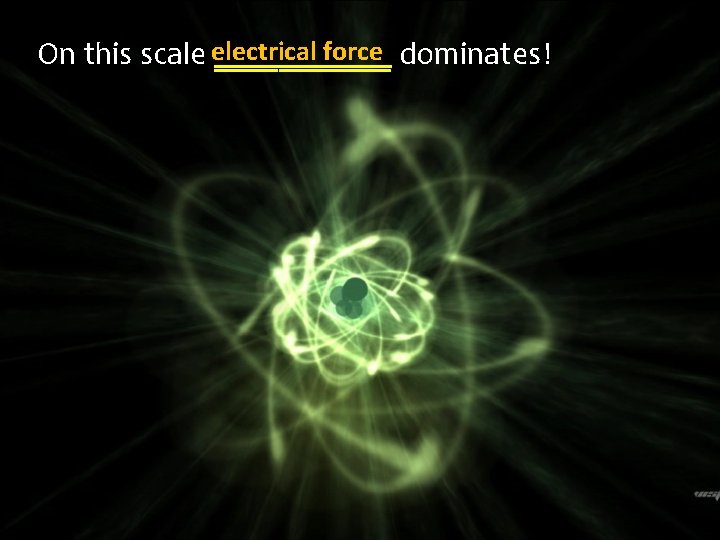
force dominates! On this scale electrical ______
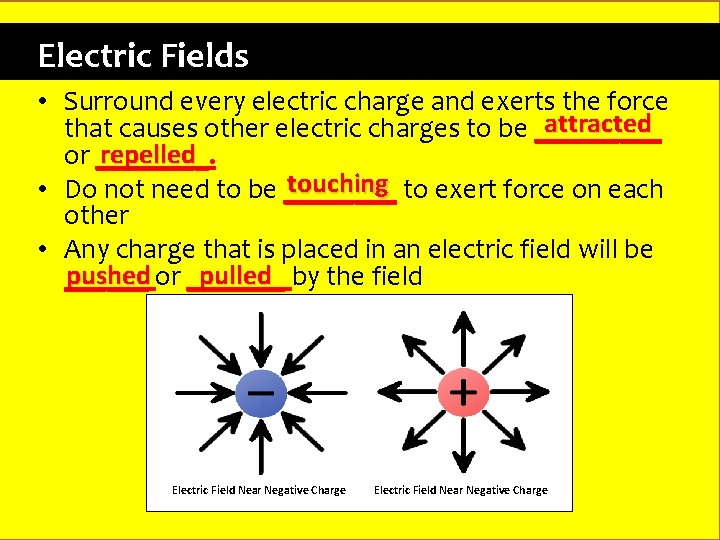
Electric Fields • Surround every electric charge and exerts the force attracted that causes other electric charges to be _____ repelled or ____. touching to exert force on each • Do not need to be ____ other • Any charge that is placed in an electric field will be pushed or _______ pulled by the field ______ Electric Field Near Negative Charge
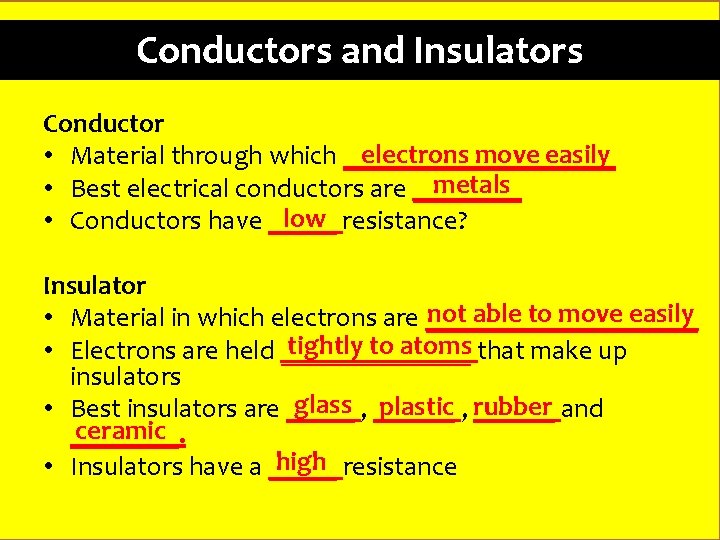
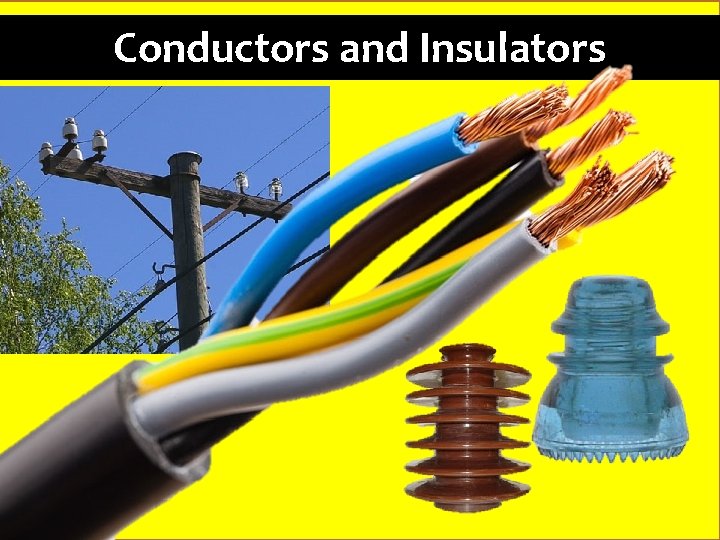
Conductors and Insulators Conductor electrons move easily • Material through which __________ metals • Best electrical conductors are ____ low resistance? • Conductors have _____ Insulator not able to move easily • Material in which electrons are __________ tightly to atoms that make up • Electrons are held _______ insulators glass , ______ plastic , rubber • Best insulators are ______ and ceramic ____. high resistance • Insulators have a _____
Conductors and Insulators
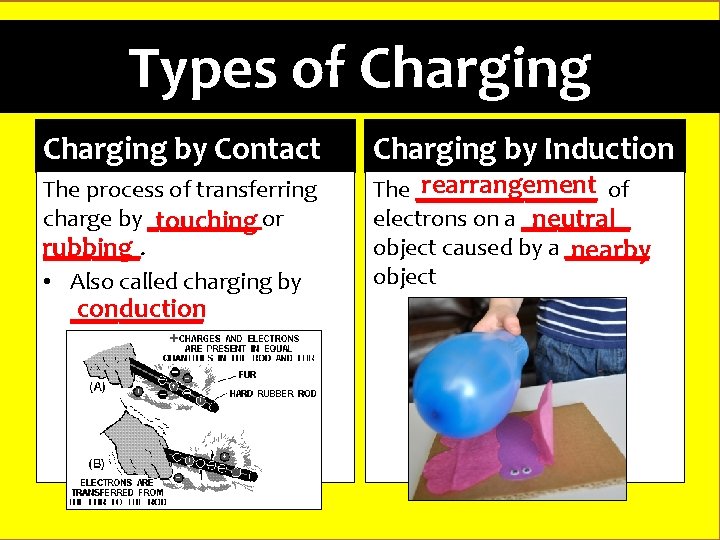
Types of Charging by Contact The process of transferring charge by _____ touching or ____. rubbing • Also called charging by conduction ______ Charging by Induction rearrangement of The ________ electrons on a _____ neutral object caused by a _______ nearby object
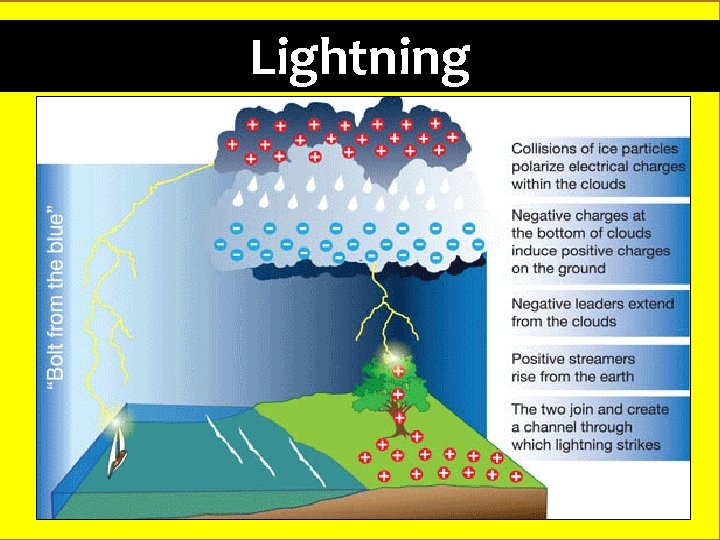
Lightning
6. 1 Summary • 2 types of electric charges are (+) & (-). • Like charges repel, unlike charges attract. • On molecular level, electric force is stronger than gravitational force • Electric force acts through electric fields. • Electric fields surround charged objects. Any charged object that enters a region with an electric field experiences an electric force. • Electrons move easily through conductors • Electrons do not move easily through insulators
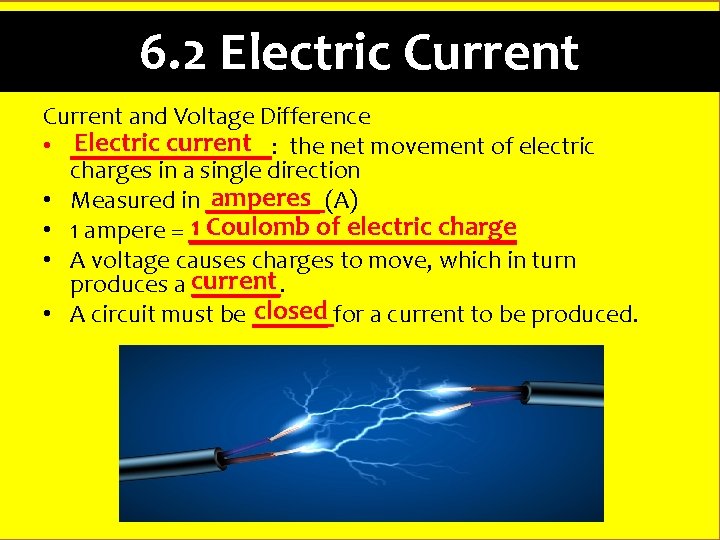
6. 2 Electric Current and Voltage Difference Electric current the net movement of electric • ________: charges in a single direction amperes (A) • Measured in _____ 1 Coulomb of electric charge • 1 ampere = _____________ • A voltage causes charges to move, which in turn produces a current _______. closed for a current to be produced. • A circuit must be ______
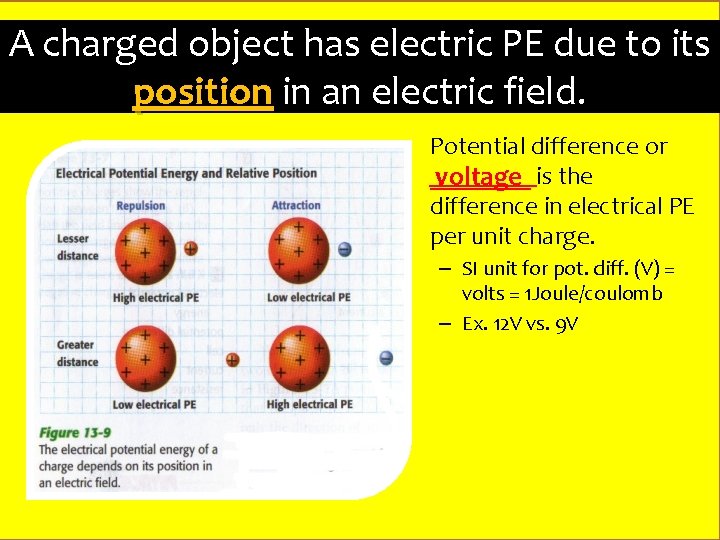
A charged object has electric PE due to its position in an electric field. Potential difference or ____ voltage is the difference in electrical PE per unit charge. – SI unit for pot. diff. (V) = volts = 1 Joule/coulomb – Ex. 12 V vs. 9 V
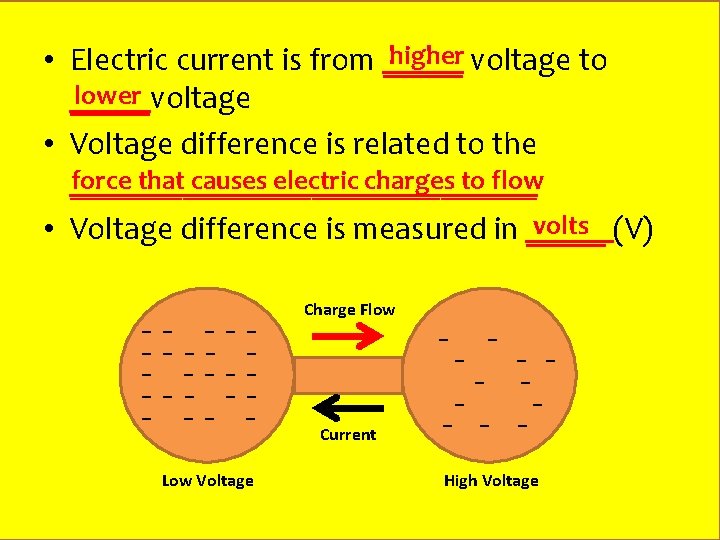
higher voltage to • Electric current is from _____ lower _____voltage • Voltage difference is related to the force that causes electric charges to flow _______________ volts (V) • Voltage difference is measured in _____ _ _ _ _ _ _ Charge Flow _ Current Low Voltage _ _ _ High Voltage
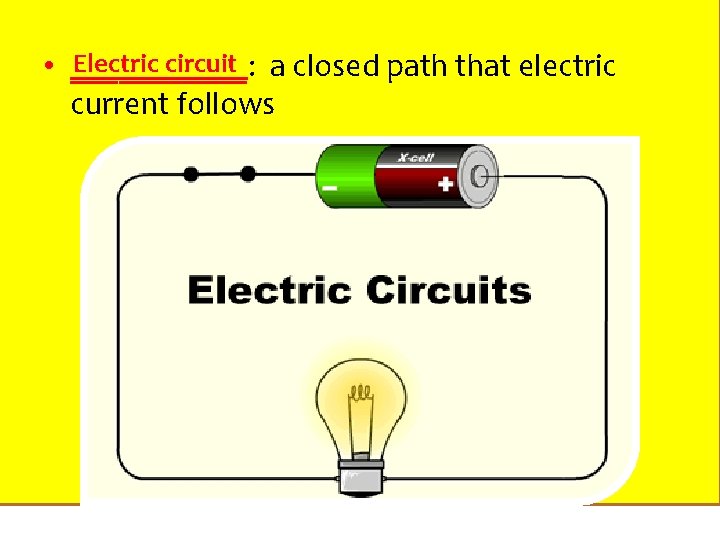
Electric circuit a closed path that electric • ______: current follows
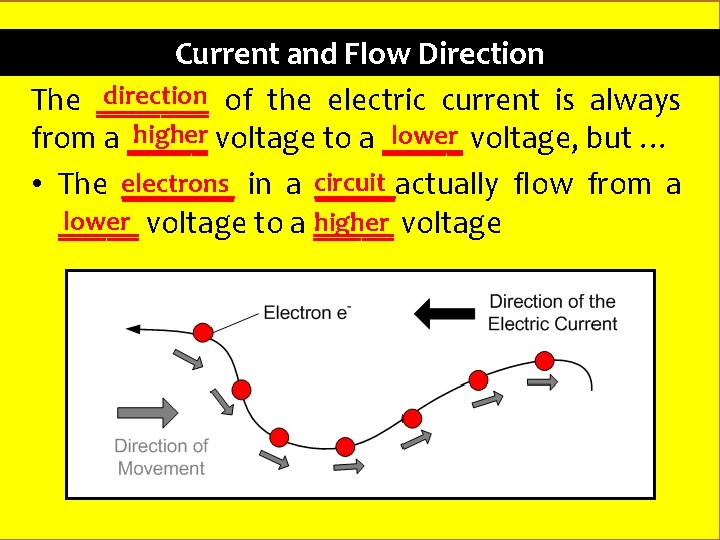
Current and Flow Direction direction of the electric current is always The _______ higher voltage to a _____ lower voltage, but … from a _____ • The electrons _______ in a circuit _____actually flow from a lower voltage to a _____ higher voltage _____
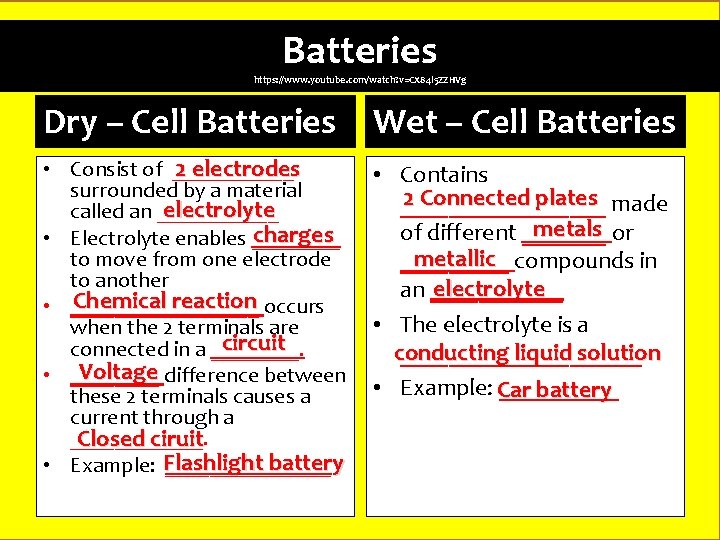
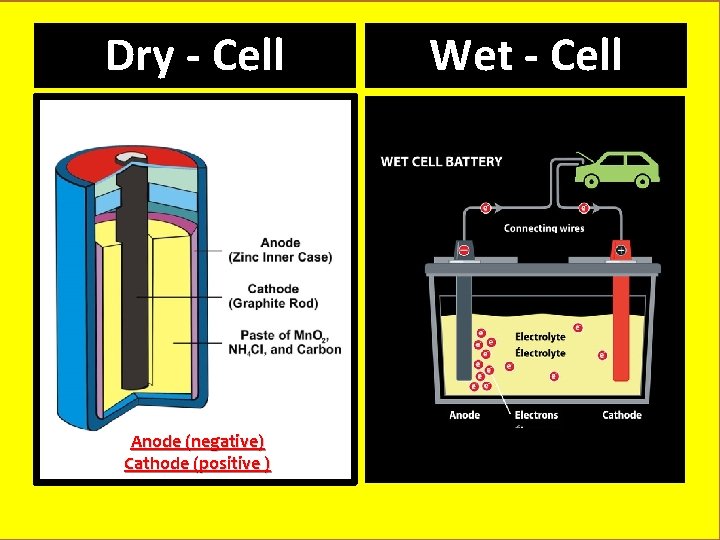
Batteries https: //www. youtube. com/watch? v=CX 84 l 5 ZZHVg Dry – Cell Batteries Wet – Cell Batteries 2 electrodes • Consist of ______ surrounded by a material electrolyte called an ______ charges • Electrolyte enables ____ to move from one electrode to another Chemical reaction occurs • _________ when the 2 terminals are circuit connected in a ____. Voltage difference between • ____ these 2 terminals causes a current through a ______. Closed ciruit battery • Example: Flashlight ________ • Contains 2 Connected plates made _________ metals or of different _______ metallic compounds in _____ electrolyte an ______ • The electrolyte is a c__________ onducting liquid solution • Example: Car _____ battery
Dry - Cell Anode (negative) Cathode (positive ) Wet - Cell
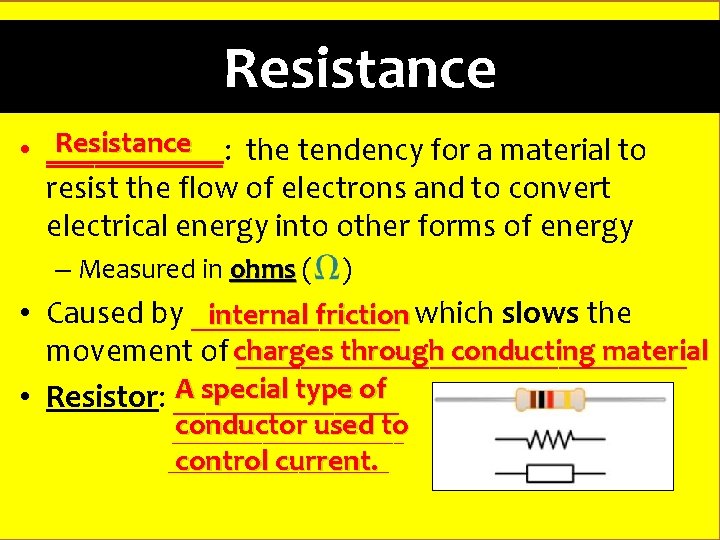
Resistance • ______: the tendency for a material to resist the flow of electrons and to convert electrical energy into other forms of energy – Measured in ohms ( ) • Caused by _______ internal friction which slows the harges through conducting material movement of c______________ A special type of • Resistor: _______ conductor used to ____________ control current.
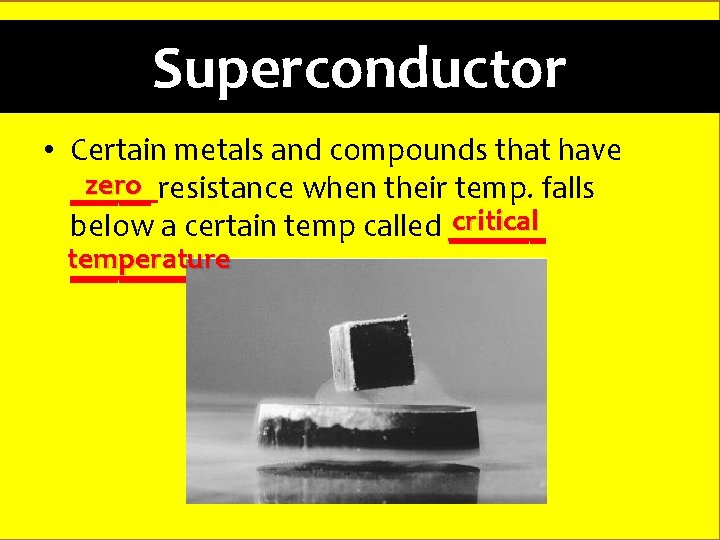
Superconductor • Certain metals and compounds that have zero resistance when their temp. falls _____ critical below a certain temp called ______ temperature _____.
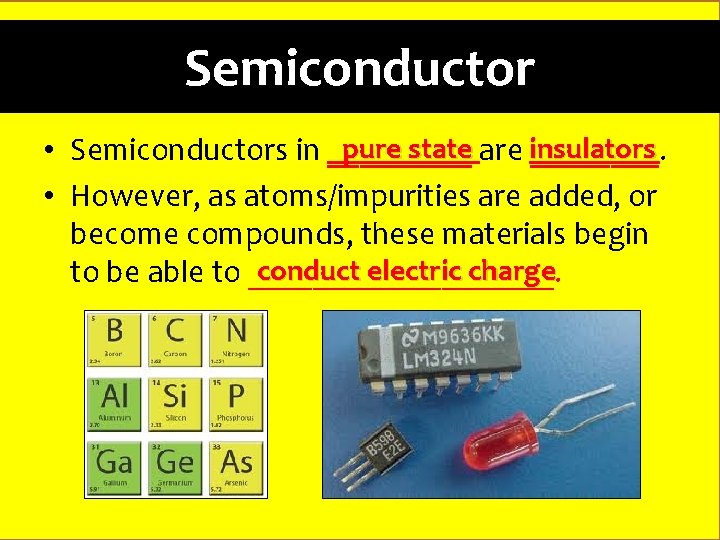
Semiconductor pure state are insulators • Semiconductors in _____. • However, as atoms/impurities are added, or become compounds, these materials begin conduct electric charge to be able to __________.
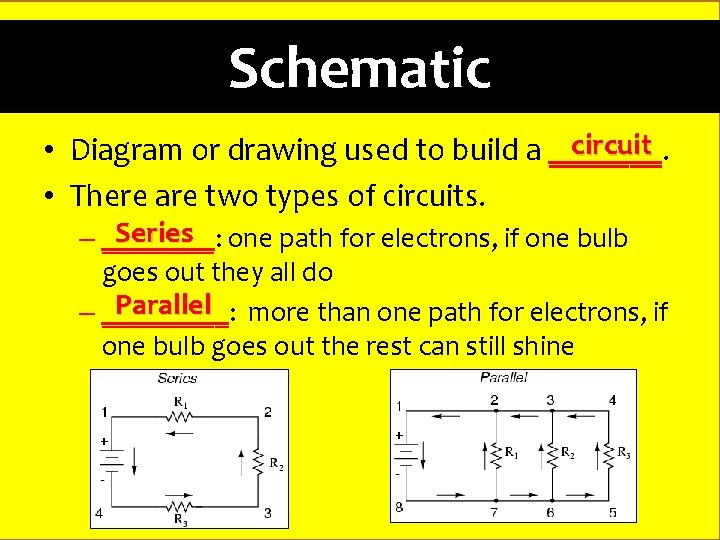
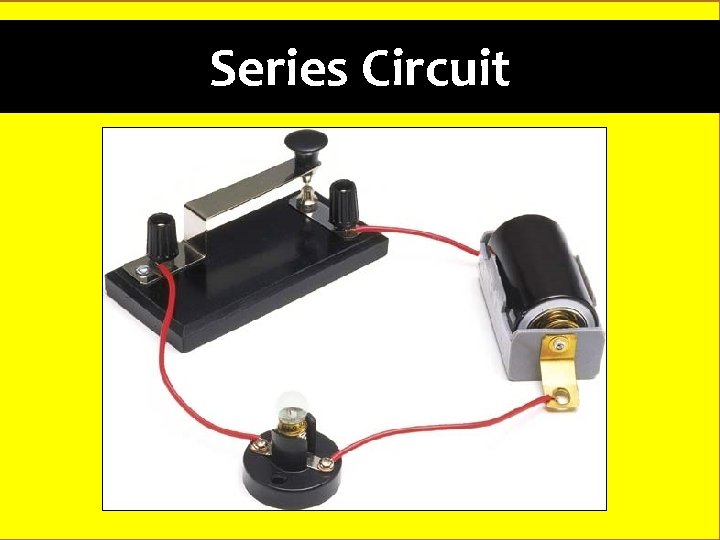
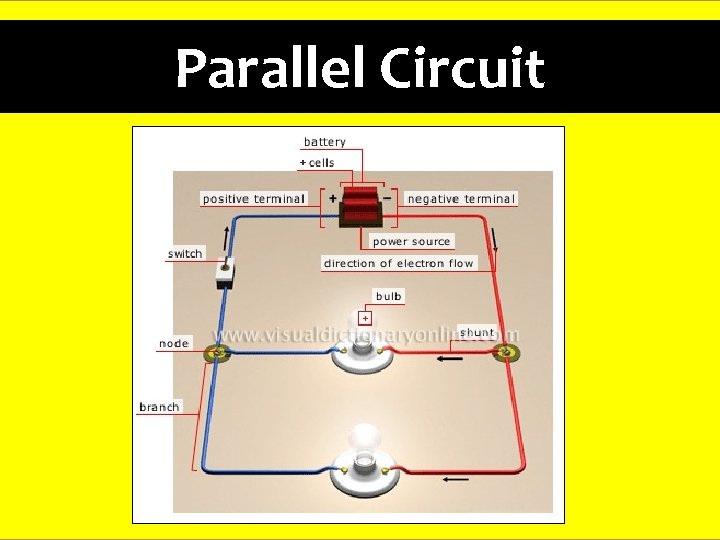
Schematic circuit • Diagram or drawing used to build a _______. • There are two types of circuits. Series one path for electrons, if one bulb – ____: goes out they all do Parallel more than one path for electrons, if – _____: one bulb goes out the rest can still shine
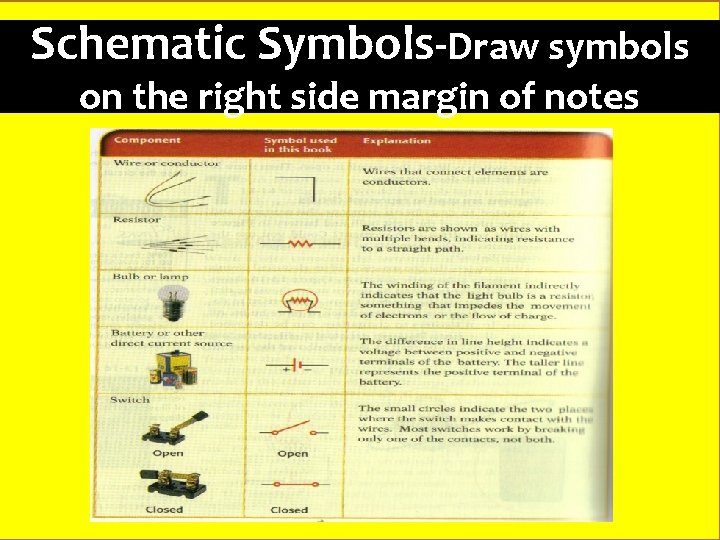
Schematic Symbols-Draw symbols on the right side margin of notes
Series Circuit
Parallel Circuit
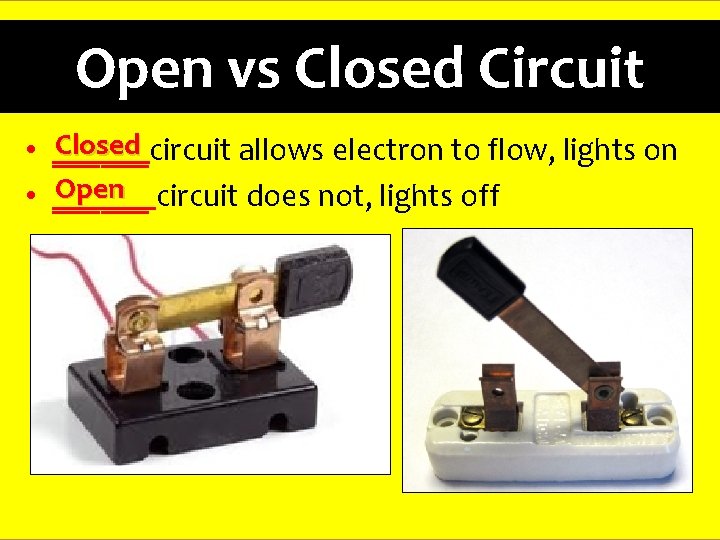
Open vs Closed Circuit • • Closed ______circuit allows electron to flow, lights on Open circuit does not, lights off ______
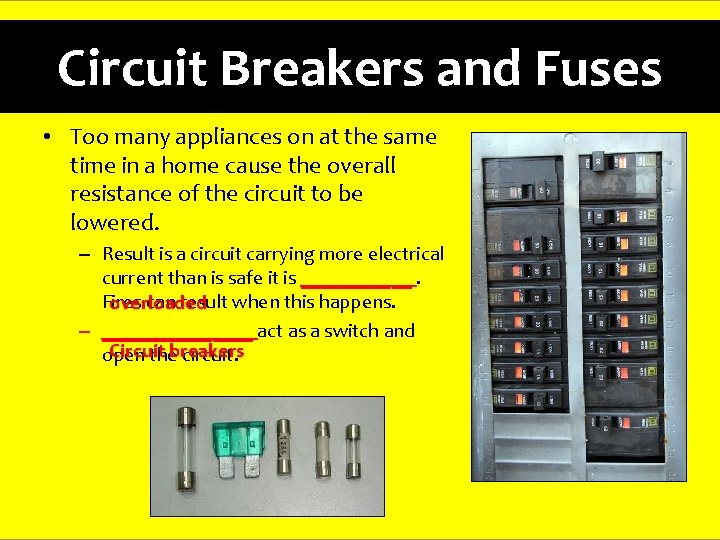
Circuit Breakers and Fuses • Too many appliances on at the same time in a home cause the overall resistance of the circuit to be lowered. – Result is a circuit carrying more electrical current than is safe it is ______. Fires can result when this happens. overloaded – ________ act as a switch and Circuit open thebreakers circuit.
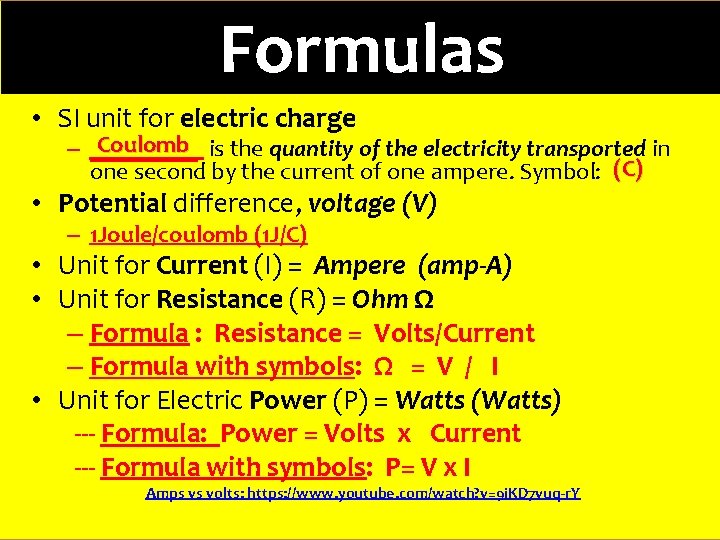
Formulas • SI unit for electric charge Coulomb is the quantity of the electricity transported in – _____ one second by the current of one ampere. Symbol: (C) • Potential difference, voltage (V) – 1 Joule/coulomb (1 J/C) • Unit for Current (I) = Ampere (amp-A) • Unit for Resistance (R) = Ohm Ω – Formula : Resistance = Volts/Current – Formula with symbols: Ω = V / I • Unit for Electric Power (P) = Watts (Watts) --- Formula: Power = Volts x Current --- Formula with symbols: P= V x I Amps vs volts: https: //www. youtube. com/watch? v=9 i. KD 7 vuq-r. Y