
Chapter 6 Deviance and Social Control What is
- Slides: 25
Chapter 6 Deviance and Social Control
What is Deviance? • Relative Deviance • What is Deviant to Some is not Deviant to Others • “Deviance” is Nonjudgmental Term – A Neutral Term • Stigma © 2013 Pearson Education, Inc. All rights reserved.
Norms Make Social Life Possible • Makes Behavior Predictable • No Norms - Social Chaos • Social Control – Group’s Formal and Informal Means of Enforcing Norms © 2013 Pearson Education, Inc. All rights reserved.
Sanctions • Negative Sanctions – Frowns/gossip breaking folkways; imprisonment/capital punishment for violating Mores • Positive Sanctions – From smiles to formal awards – Are used to reward people for conforming to norms © 2013 Pearson Education, Inc. All rights reserved.
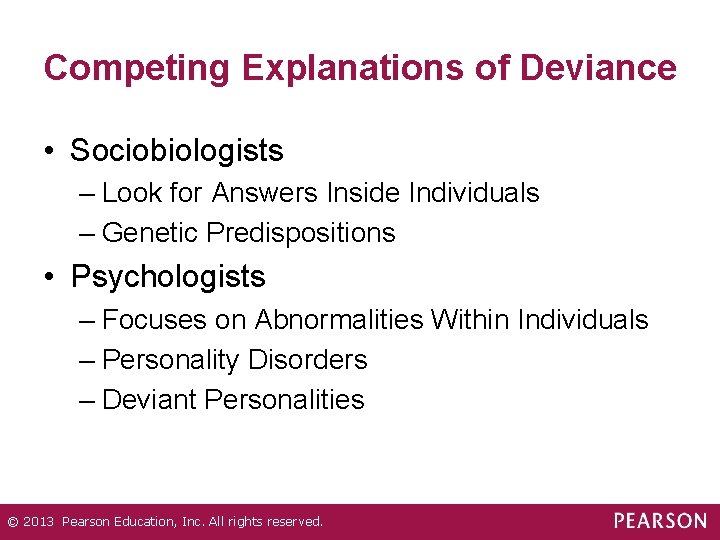
Competing Explanations of Deviance • Sociobiologists – Look for Answers Inside Individuals – Genetic Predispositions • Psychologists – Focuses on Abnormalities Within Individuals – Personality Disorders – Deviant Personalities © 2013 Pearson Education, Inc. All rights reserved.
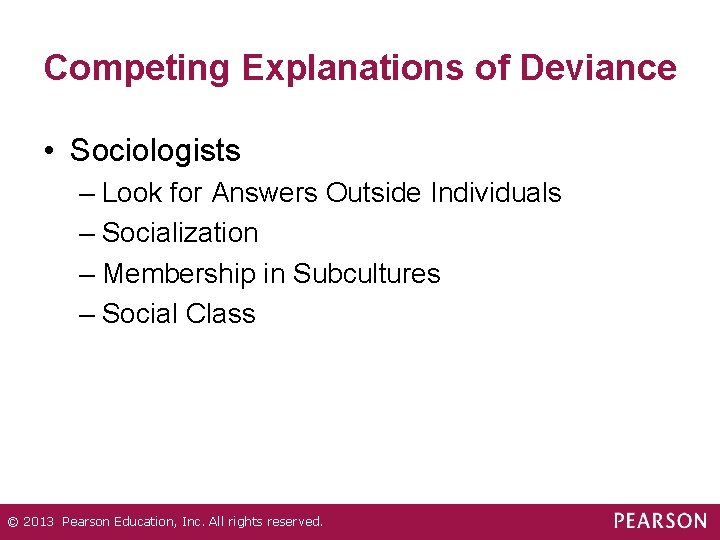
Competing Explanations of Deviance • Sociologists – Look for Answers Outside Individuals – Socialization – Membership in Subcultures – Social Class © 2013 Pearson Education, Inc. All rights reserved.
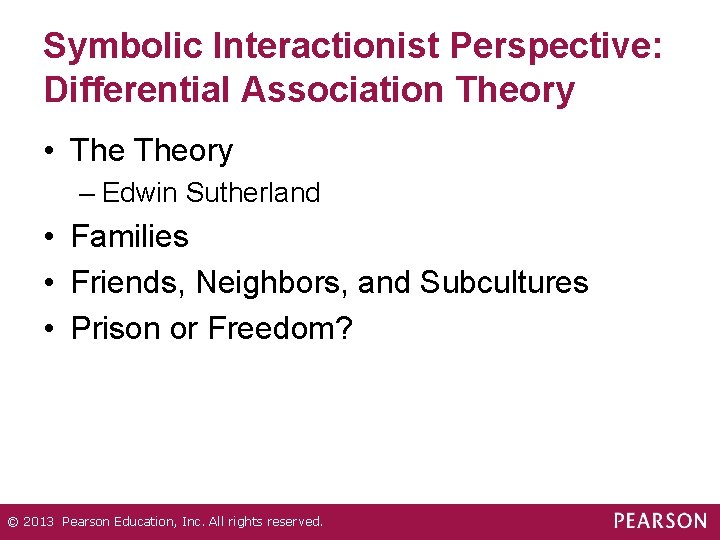
Symbolic Interactionist Perspective: Differential Association Theory • Theory – Edwin Sutherland • Families • Friends, Neighbors, and Subcultures • Prison or Freedom? © 2013 Pearson Education, Inc. All rights reserved.
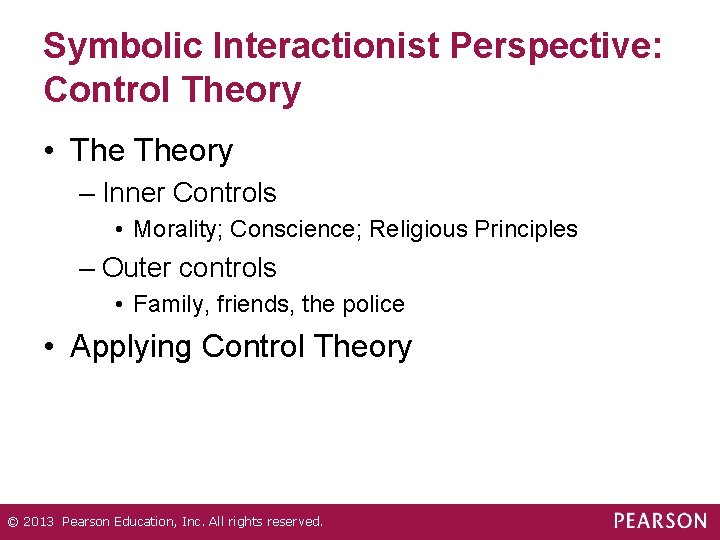
Symbolic Interactionist Perspective: Control Theory • Theory – Inner Controls • Morality; Conscience; Religious Principles – Outer controls • Family, friends, the police • Applying Control Theory © 2013 Pearson Education, Inc. All rights reserved.
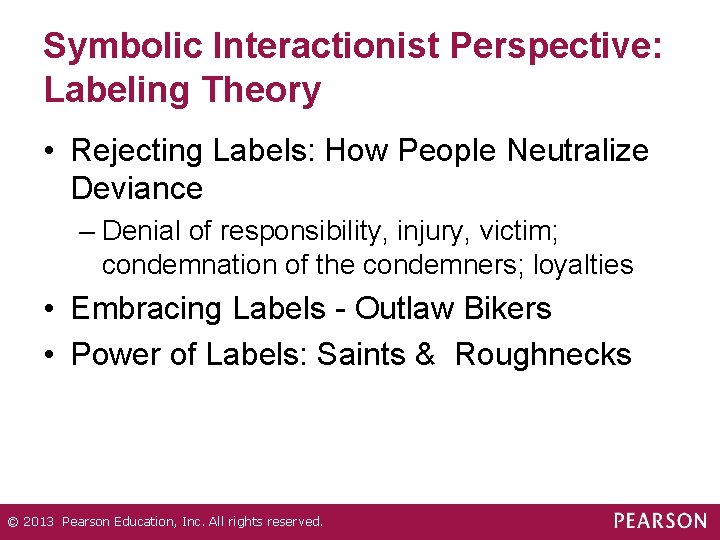
Symbolic Interactionist Perspective: Labeling Theory • Rejecting Labels: How People Neutralize Deviance – Denial of responsibility, injury, victim; condemnation of the condemners; loyalties • Embracing Labels - Outlaw Bikers • Power of Labels: Saints & Roughnecks © 2013 Pearson Education, Inc. All rights reserved.
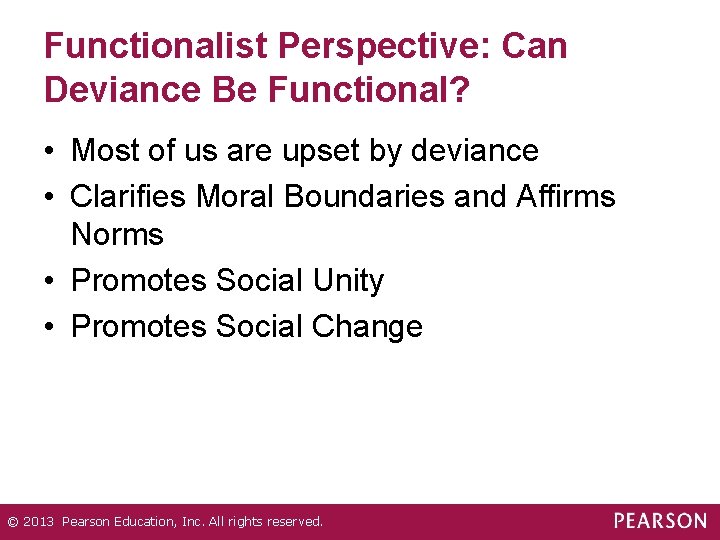
Functionalist Perspective: Can Deviance Be Functional? • Most of us are upset by deviance • Clarifies Moral Boundaries and Affirms Norms • Promotes Social Unity • Promotes Social Change © 2013 Pearson Education, Inc. All rights reserved.
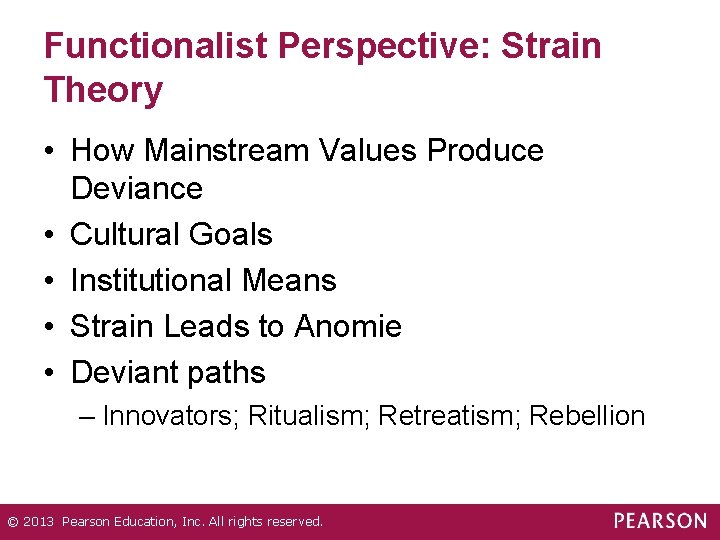
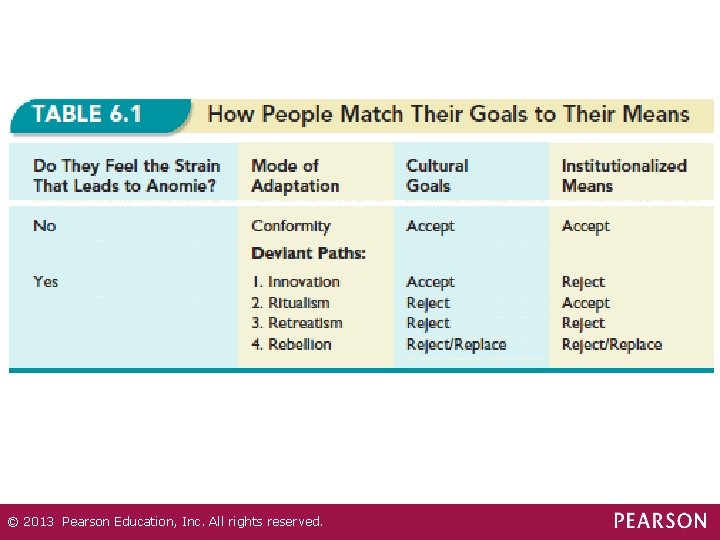
Functionalist Perspective: Strain Theory • How Mainstream Values Produce Deviance • Cultural Goals • Institutional Means • Strain Leads to Anomie • Deviant paths – Innovators; Ritualism; Retreatism; Rebellion © 2013 Pearson Education, Inc. All rights reserved.
© 2013 Pearson Education, Inc. All rights reserved.
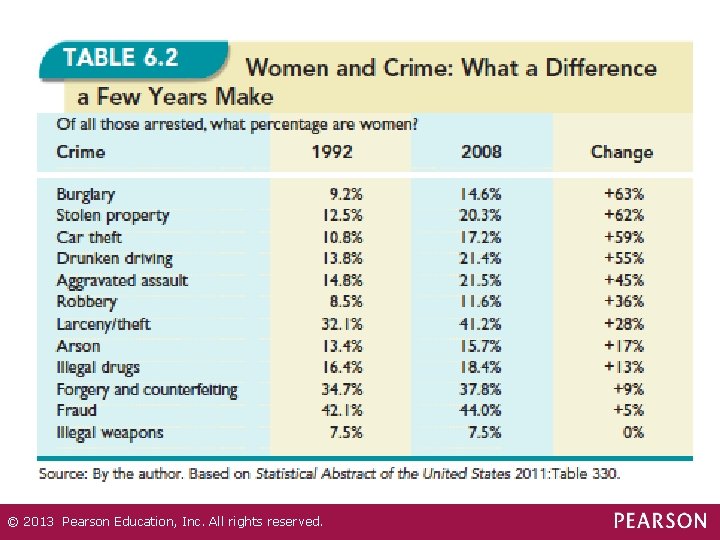
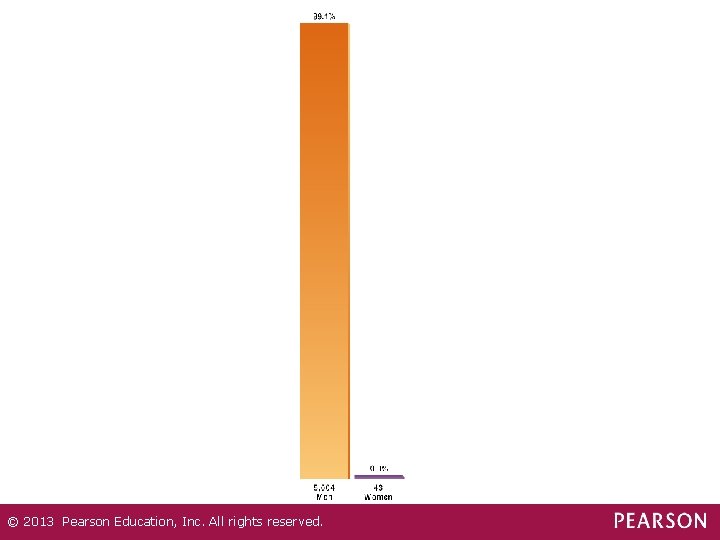
Functionalist Perspective: Illegitimate Opportunity Structures • Social Class Produces Distinct Styles of Crime • Street Crime • White-Collar Crime – Corporations as Criminals • Gender and Crime © 2013 Pearson Education, Inc. All rights reserved.
© 2013 Pearson Education, Inc. All rights reserved.
The Conflict Perspective • Class, Crime, and the Criminal Justice System • The Criminal Justice System as an Instrument of Oppression – Conflict theorists regard power & social inequality as main characteristics of society © 2013 Pearson Education, Inc. All rights reserved.
© 2013 Pearson Education, Inc. All rights reserved.
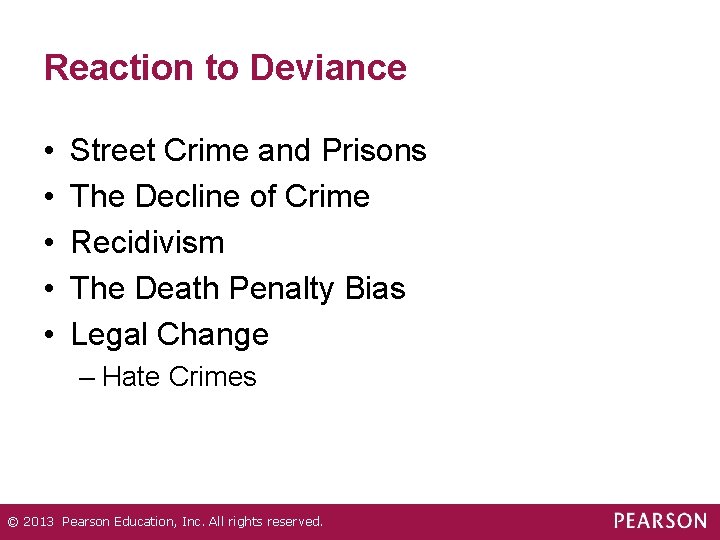
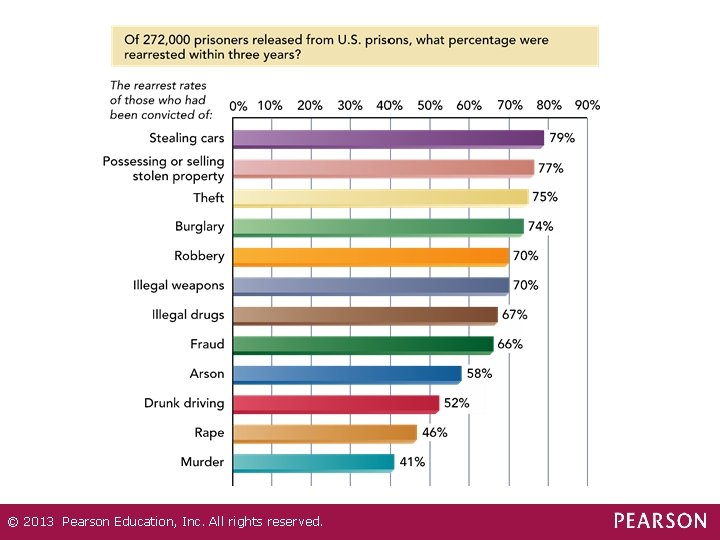
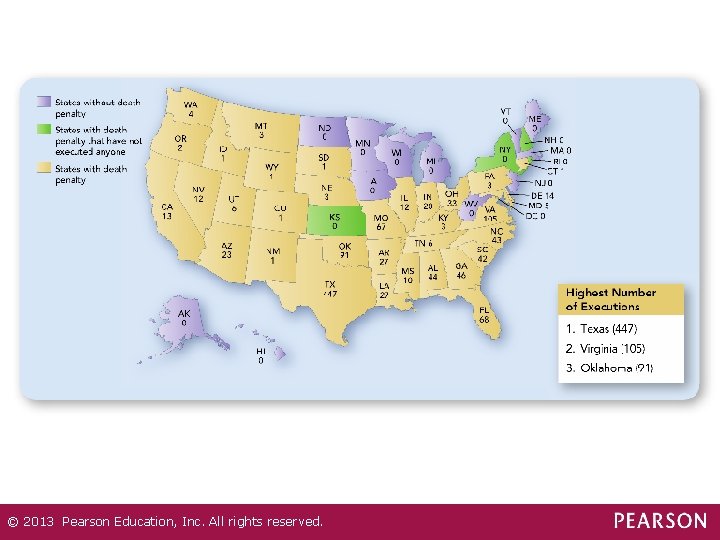
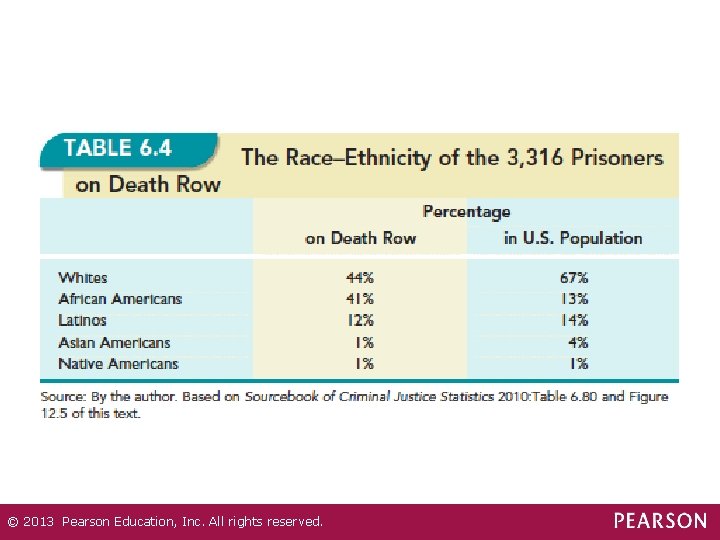
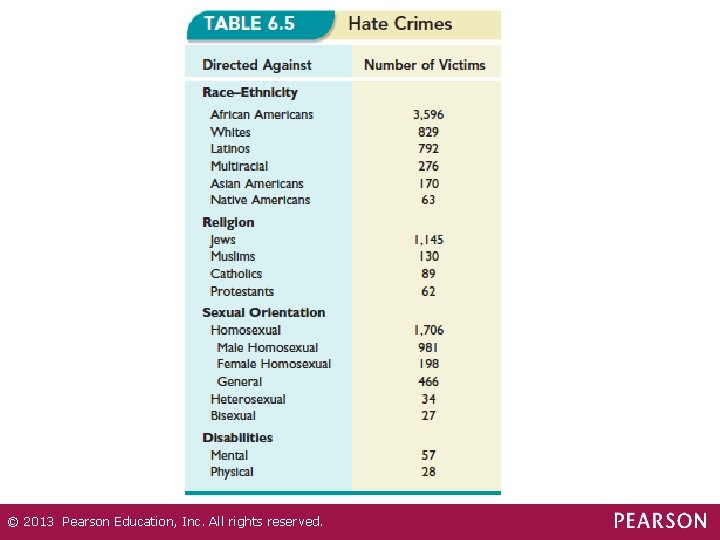
Reaction to Deviance • • • Street Crime and Prisons The Decline of Crime Recidivism The Death Penalty Bias Legal Change – Hate Crimes © 2013 Pearson Education, Inc. All rights reserved.
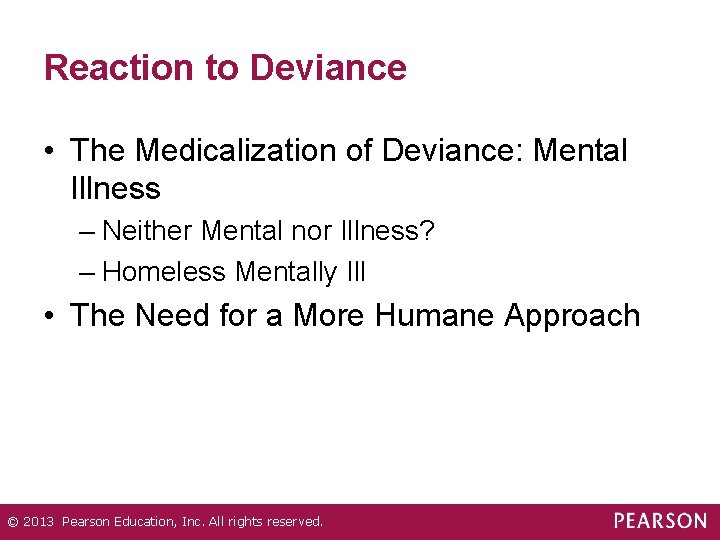
Reaction to Deviance • The Medicalization of Deviance: Mental Illness – Neither Mental nor Illness? – Homeless Mentally Ill • The Need for a More Humane Approach © 2013 Pearson Education, Inc. All rights reserved.
© 2013 Pearson Education, Inc. All rights reserved.
© 2013 Pearson Education, Inc. All rights reserved.
© 2013 Pearson Education, Inc. All rights reserved.
© 2013 Pearson Education, Inc. All rights reserved.
© 2013 Pearson Education, Inc. All rights reserved.
© 2013 Pearson Education, Inc. All rights reserved.
© 2013 Pearson Education, Inc. All rights reserved.