
Chapter 6 Consumer Behavior Mc GrawHill Education All
Chapter 6 Consumer Behavior ©Mc. Graw-Hill Education. All rights reserved. Authorized only for instructor use in the classroom. No reproduction or further distribution permitted without the prior written consent of Mc. Graw-Hill Education.

Learning Objectives Learning Objective 6. 1 Articulate the steps in the consumer buying process. Learning Objective 6. 2 Describe the difference between functional and psychological needs. Learning Objective 6. 3 Describe factors that affect information search. Learning Objective 6. 4 Discuss postpurchase outcomes. Learning Objective 6. 5 List the factors that affect the consumer decision process. Learning Objective 6. 6 Describe how involvement influences the consumer decision process. © Mc. Graw-Hill Education 2
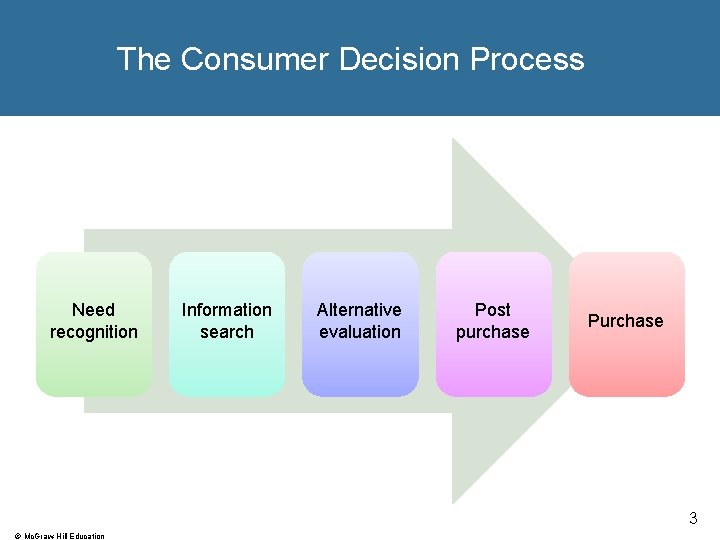
The Consumer Decision Process Need recognition Information search Alternative evaluation Post purchase Purchase 3 © Mc. Graw-Hill Education
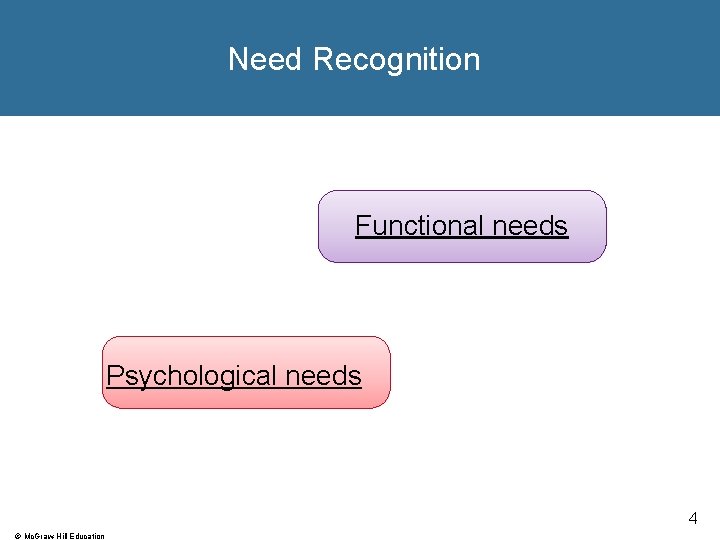
Need Recognition Functional needs Psychological needs 4 © Mc. Graw-Hill Education
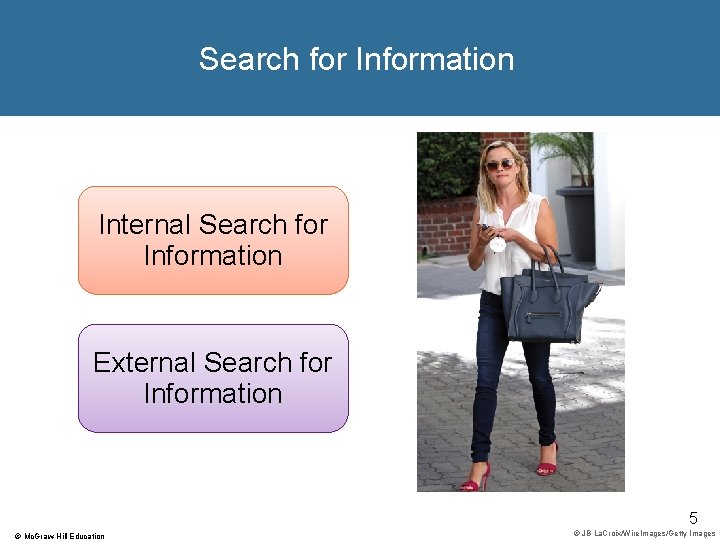
Search for Information Internal Search for Information External Search for Information 5 © Mc. Graw-Hill Education © JB La. Croix/Wire. Images/Getty Images
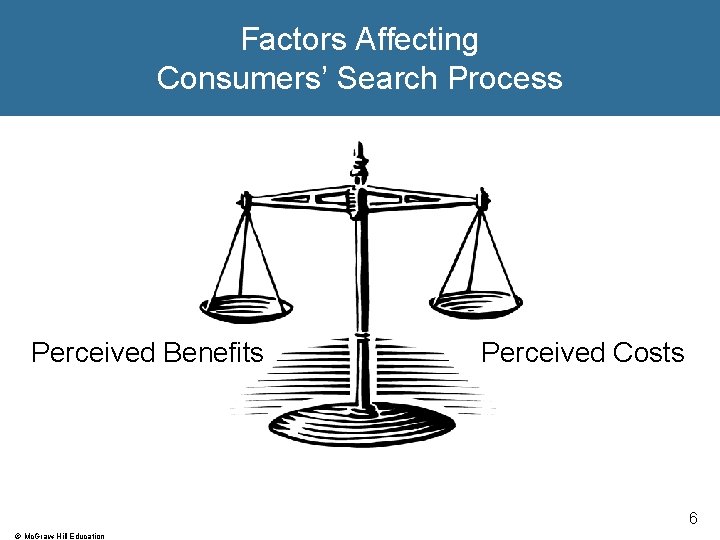
Factors Affecting Consumers’ Search Process Perceived Benefits Perceived Costs 6 © Mc. Graw-Hill Education
The Locus of Control Internal Locus of Control = more search activities External Locus of Control = fate, external factors 7 © Mc. Graw-Hill Education
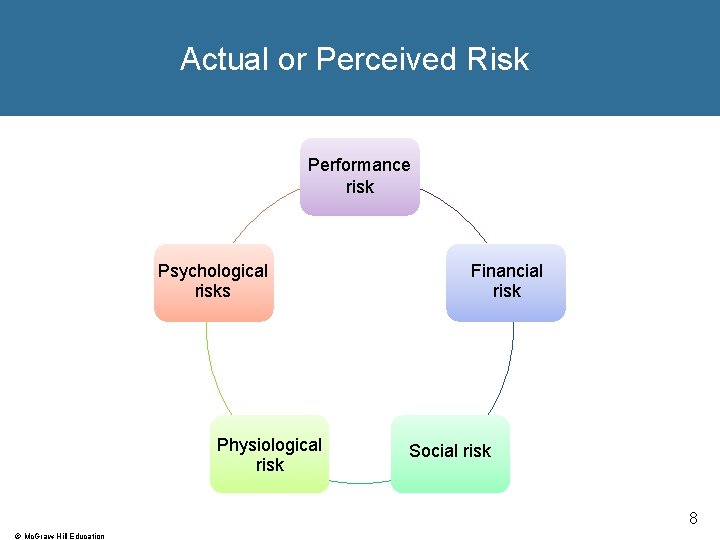
Actual or Perceived Risk Performance risk Psychological risks Physiological risk Financial risk Social risk 8 © Mc. Graw-Hill Education

Evaluation of Alternatives: Attribute Sets Universal Retrieval Evoked 9 © Mc. Graw-Hill Education
Evaluation of Alternatives: Evaluate Criteria Evaluative Criteria Determinant Attributes What are some of the features of a vacation that would be in your evaluative criteria? 10 © Mc. Graw-Hill Education Digital Vision/Getty Images
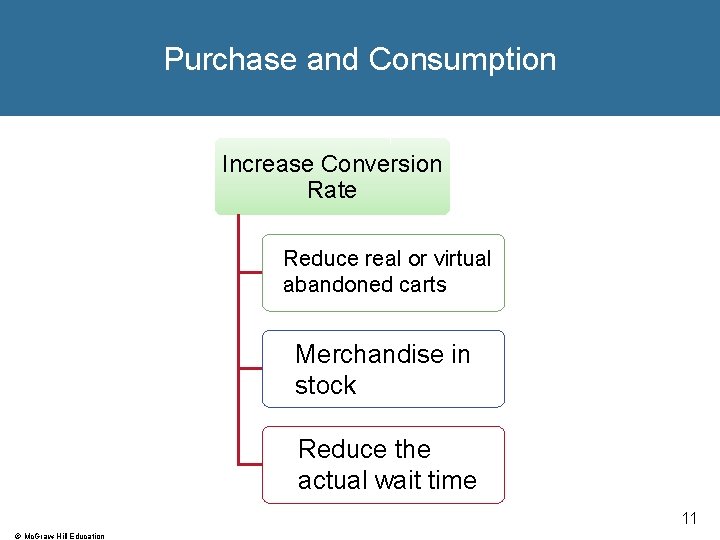
Purchase and Consumption Increase Conversion Rate Reduce real or virtual abandoned carts Merchandise in stock Reduce the actual wait time 11 © Mc. Graw-Hill Education
Postpurchase Customer Satisfaction 1. Build realistic expectations. 2. Demonstrate correct product use. 3. Stand behind the product or service. 4. Encourage customer feedback. 5. Make contact with customers and thank them for their support. 12 © Mc. Graw-Hill Education
Postpurchase Cognitive Dissonance Firms attempt to reduce dissonance by reinforcing the decision. Thank you letters, congratulations letters, quality ratings 13 © Mc. Graw-Hill Education
Postpurchase Customer Loyalty Marketers attempt to solidify a loyal relationship. Firms use analytics software and customer relationship management (CRM) programs to acquire and retain loyal customers. 14 © Mc. Graw-Hill Education
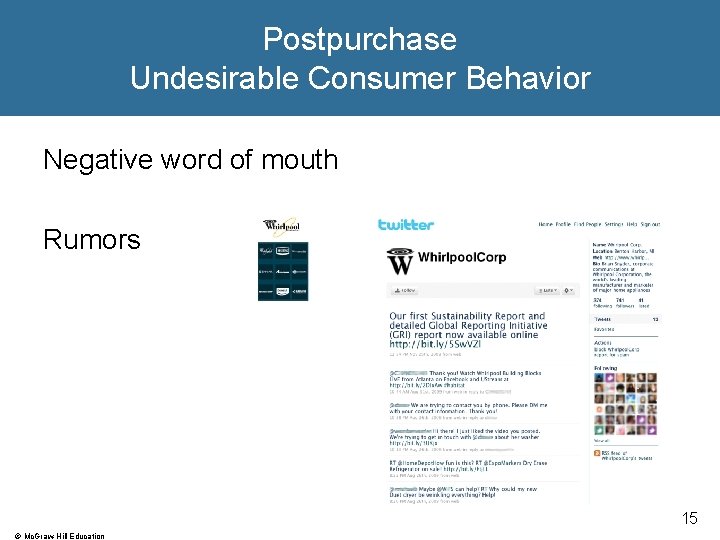
Postpurchase Undesirable Consumer Behavior Negative word of mouth Rumors 15 © Mc. Graw-Hill Education
PROGRESS CHECK (1 of 3) 1. Name the five stages in the consumer decision process. 2. What is the difference between a need and a want? 3. Distinguish between functional and psychological needs. 4. What are the various types of perceived risk? 5. What are the differences between compensatory and noncompensatory decision rules? 6. How do firms enhance postpurchase satisfaction and reduce cognitive dissonance? 16 © Mc. Graw-Hill Education
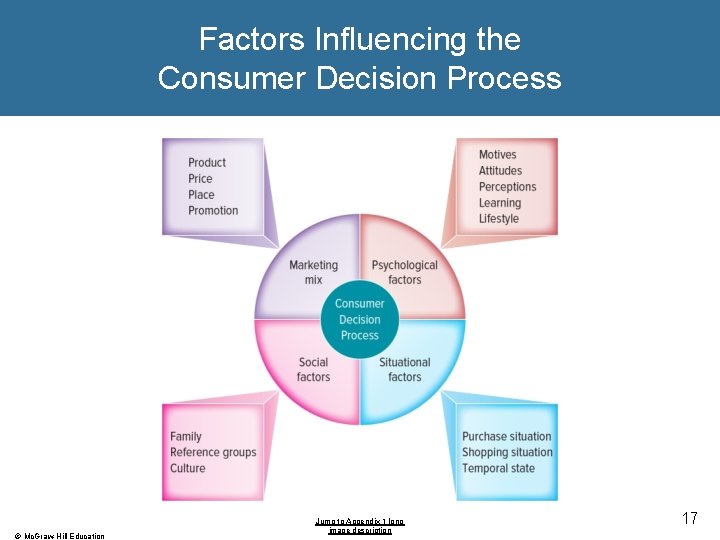
Factors Influencing the Consumer Decision Process © Mc. Graw-Hill Education Jump to Appendix 1 long image description 17
PROGRESS CHECK (2 of 3) 1. What are some examples of specific needs suggested by Maslow’s hierarchy of needs? 2. Which social factors likely have the most influence on (a) the purchase of a new outfit for a job interview and (b) the choice of a college to attend? 3. List some of the tactics stores can use to influence consumers’ decision processes. 18 © Mc. Graw-Hill Education
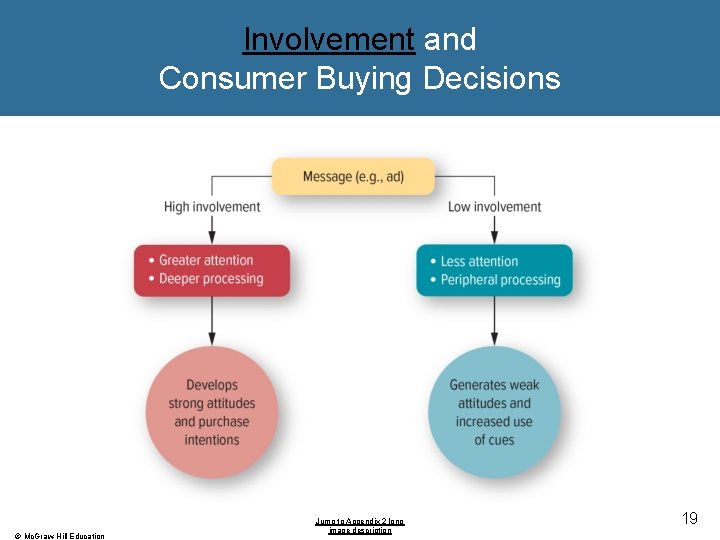
Involvement and Consumer Buying Decisions © Mc. Graw-Hill Education Jump to Appendix 2 long image description 19
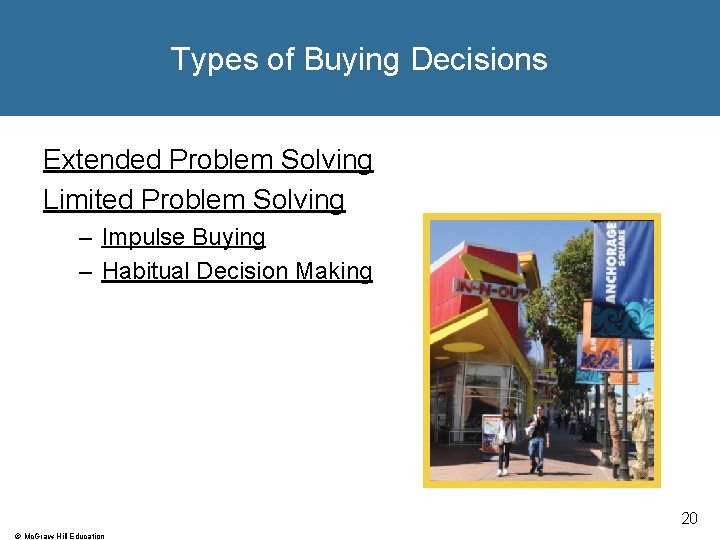
Types of Buying Decisions Extended Problem Solving Limited Problem Solving – Impulse Buying – Habitual Decision Making 20 © Mc. Graw-Hill Education
PROGRESS CHECK (3 of 3) 1. How do low- versus high-involvement consumers process the information in an advertisement? 2. What is the difference between extended versus limited problem solving? 21 © Mc. Graw-Hill Education
Marketing Chapter 6 The End ©Mc. Graw-Hill Education. All rights reserved. Authorized only for instructor use in the classroom. No reproduction or further distribution permitted without the prior written consent of Mc. Graw-Hill Education.
- Slides: 22