
Chapter 6 Communication Integration and Homeostasis the control


- Slides: 32
Chapter 6 ◦Communication, Integration and Homeostasis
the control of homeostasis and communication The sensors, integrating centers, and targets of physiological control systems are described in the context of reflex control pathways, which vary from simple to complex. • Functional control systems require efficient communication that uses various combinations of chemical and electrical signals. • Those signals that cannot enter the cell must use membrane receptor proteins and signal transduction to transfer their information into the cell.
6. 1 Cell-to-Cell Communication • There are four methods of cell -to-cell communication: 1. Autocrine 2. Gap Junctions direct cytoplasmic transfer through gap junctions 3. Paracrine- local chemical communication 4. long-distance communication – hormones affecting distant cells
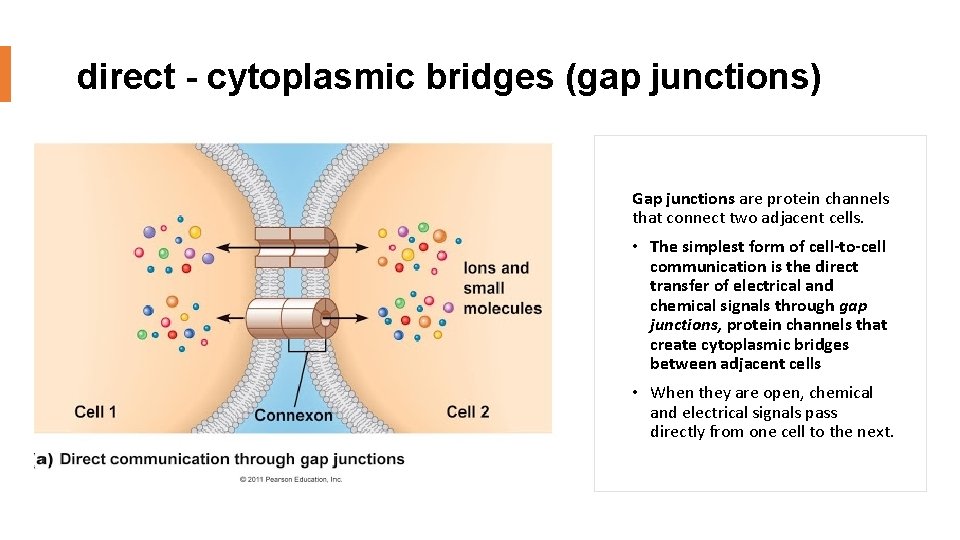
direct - cytoplasmic bridges (gap junctions) Gap junctions are protein channels that connect two adjacent cells. • The simplest form of cell-to-cell communication is the direct transfer of electrical and chemical signals through gap junctions, protein channels that create cytoplasmic bridges between adjacent cells • When they are open, chemical and electrical signals pass directly from one cell to the next.
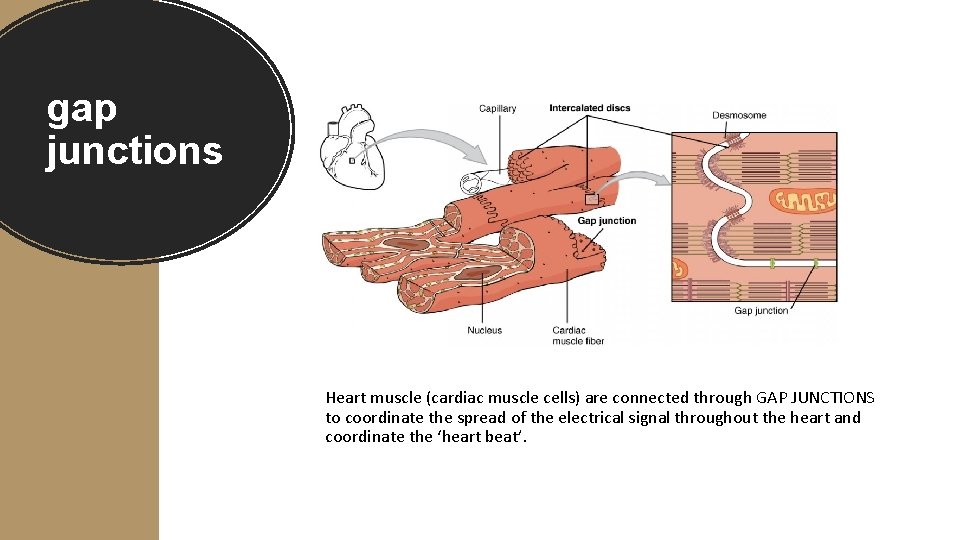
gap junctions Heart muscle (cardiac muscle cells) are connected through GAP JUNCTIONS to coordinate the spread of the electrical signal throughout the heart and coordinate the ‘heart beat’.
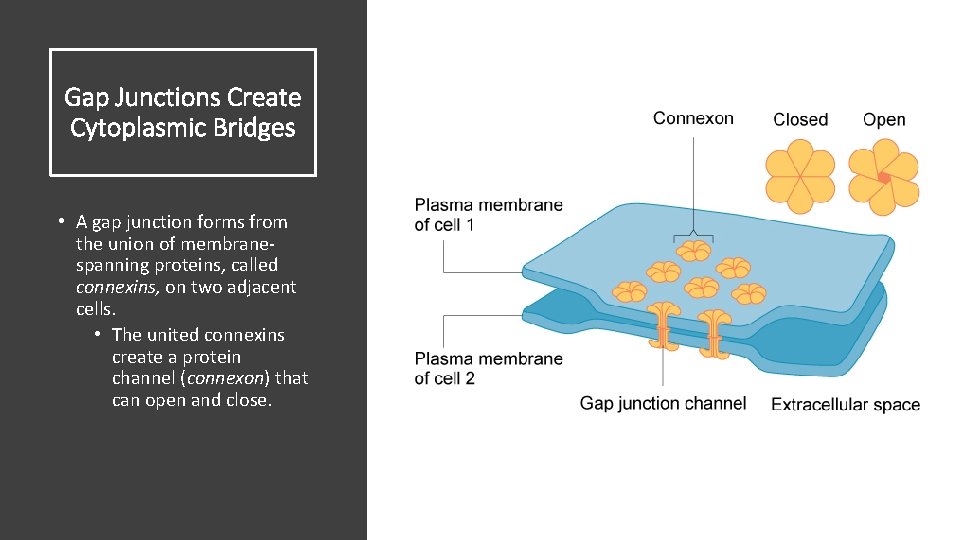
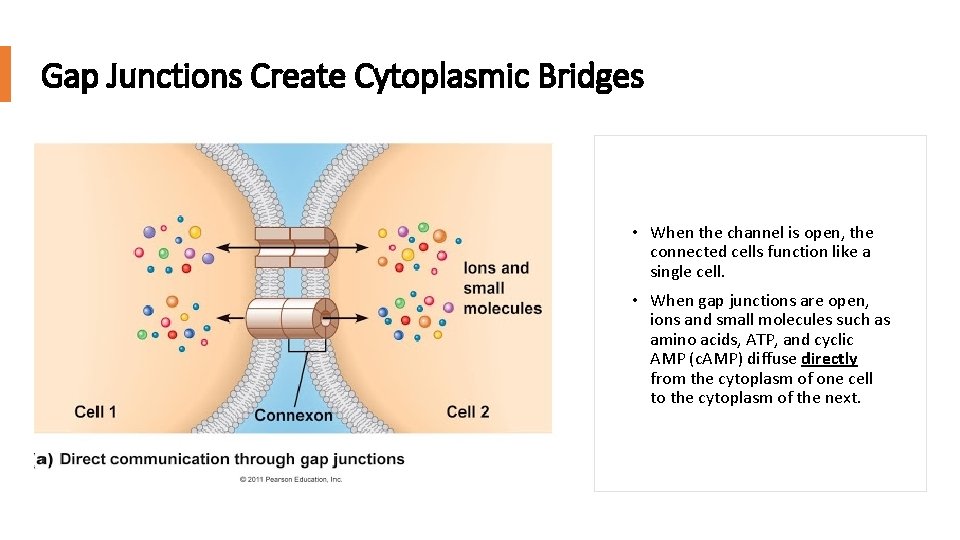
Gap Junctions Create Cytoplasmic Bridges • A gap junction forms from the union of membranespanning proteins, called connexins, on two adjacent cells. • The united connexins create a protein channel (connexon) that can open and close.
Gap Junctions Create Cytoplasmic Bridges • When the channel is open, the connected cells function like a single cell. • When gap junctions are open, ions and small molecules such as amino acids, ATP, and cyclic AMP (c. AMP) diffuse directly from the cytoplasm of one cell to the cytoplasm of the next.
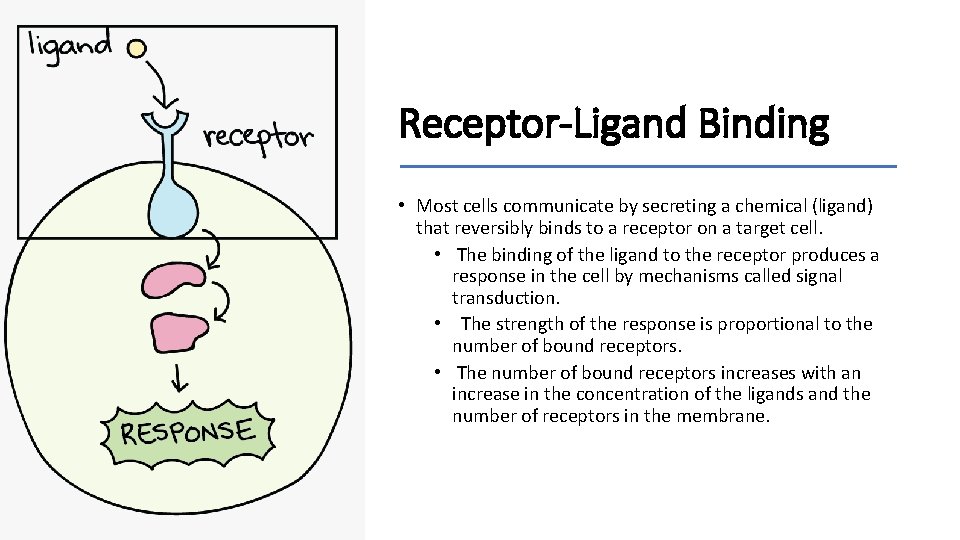
Receptor-Ligand Binding • Most cells communicate by secreting a chemical (ligand) that reversibly binds to a receptor on a target cell. • The binding of the ligand to the receptor produces a response in the cell by mechanisms called signal transduction. • The strength of the response is proportional to the number of bound receptors. • The number of bound receptors increases with an increase in the concentration of the ligands and the number of receptors in the membrane.
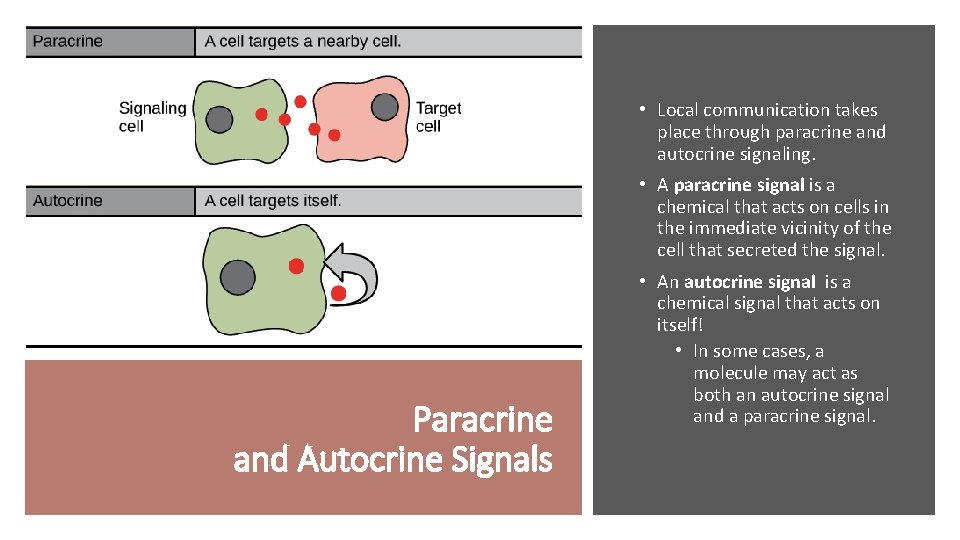
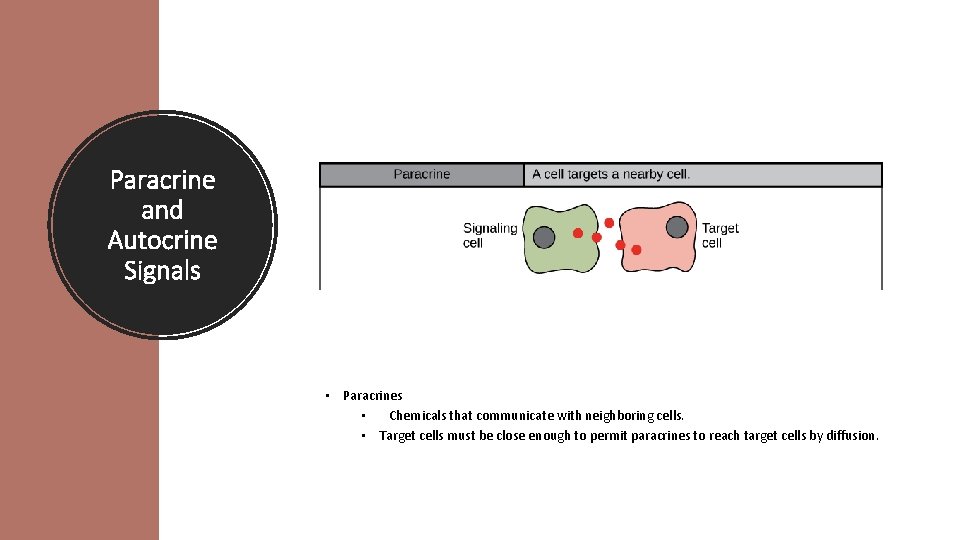
• Local communication takes place through paracrine and autocrine signaling. • A paracrine signal is a chemical that acts on cells in the immediate vicinity of the cell that secreted the signal. Paracrine and Autocrine Signals • An autocrine signal is a chemical signal that acts on itself! • In some cases, a molecule may act as both an autocrine signal and a paracrine signal.
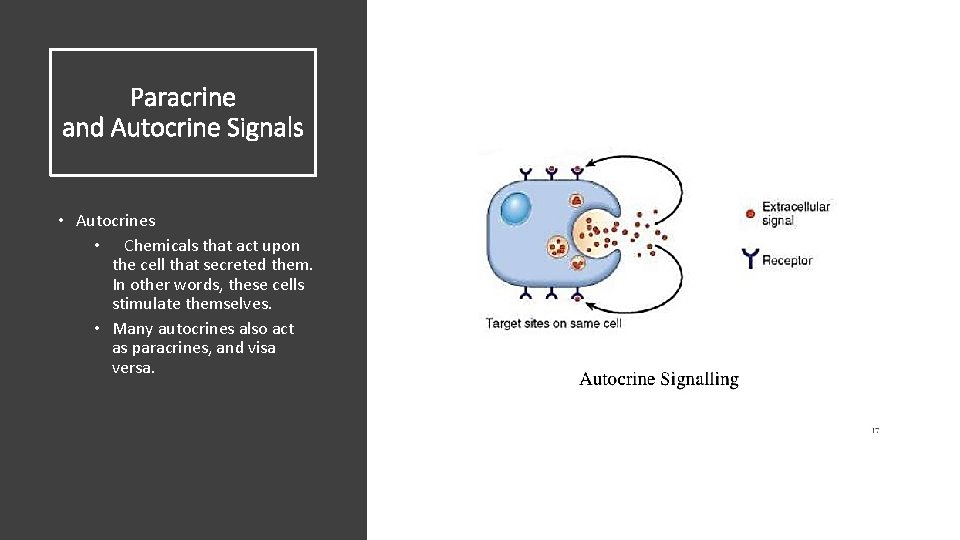
Paracrine and Autocrine Signals • Autocrines • Chemicals that act upon the cell that secreted them. In other words, these cells stimulate themselves. • Many autocrines also act as paracrines, and visa versa.
Paracrine and Autocrine Signals • Paracrines • Chemicals that communicate with neighboring cells. • Target cells must be close enough to permit paracrines to reach target cells by diffusion.
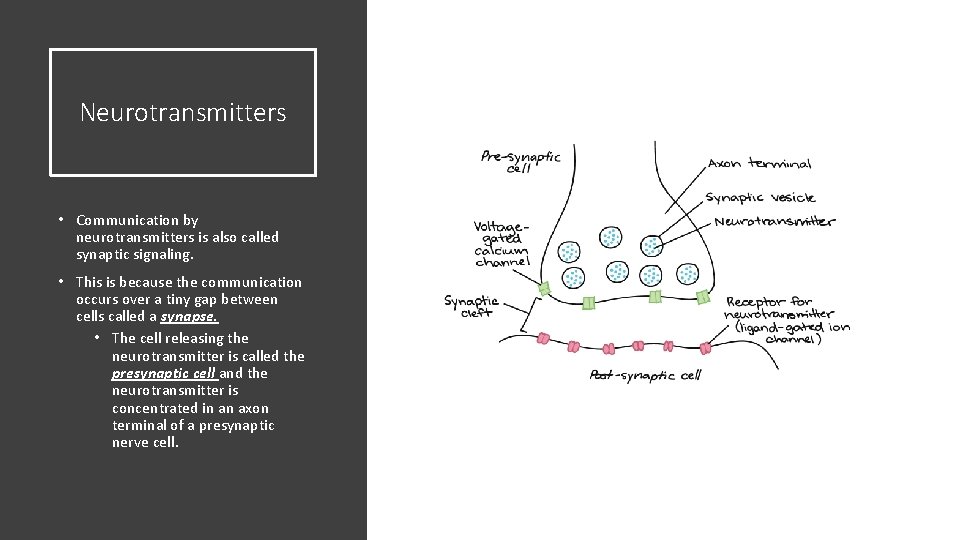
Neurotransmitters • Communication by neurotransmitters is also called synaptic signaling. • This is because the communication occurs over a tiny gap between cells called a synapse. • The cell releasing the neurotransmitter is called the presynaptic cell and the neurotransmitter is concentrated in an axon terminal of a presynaptic nerve cell.
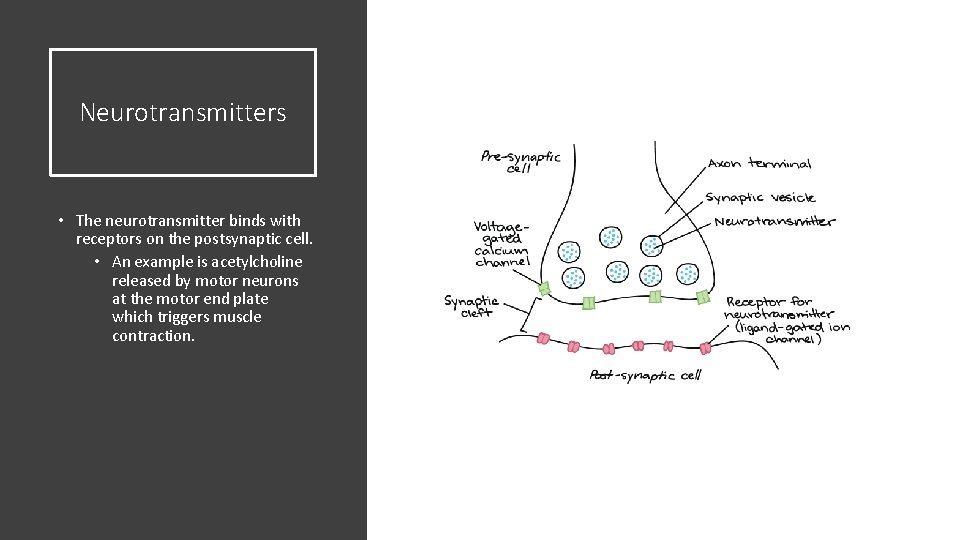
Neurotransmitters • The neurotransmitter binds with receptors on the postsynaptic cell. • An example is acetylcholine released by motor neurons at the motor end plate which triggers muscle contraction.
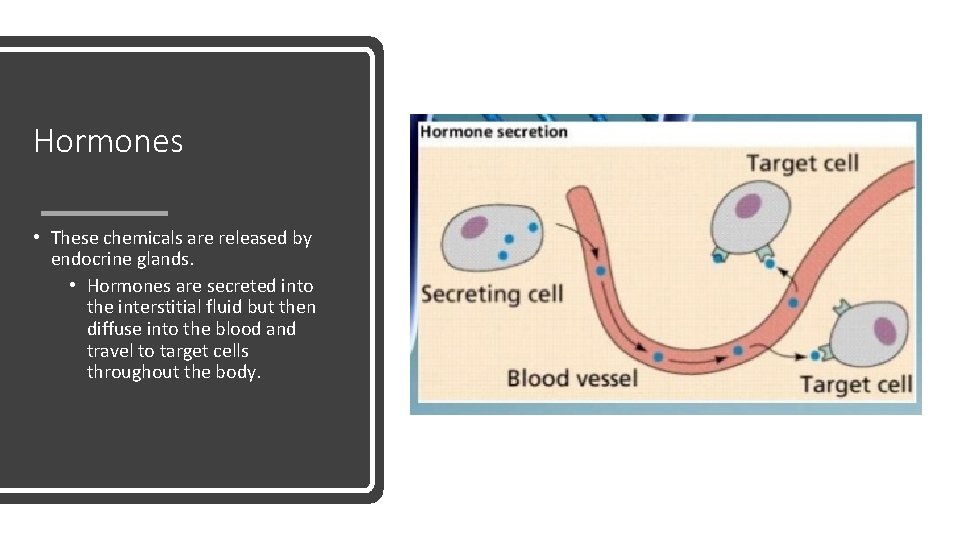
Hormones • These chemicals are released by endocrine glands. • Hormones are secreted into the interstitial fluid but then diffuse into the blood and travel to target cells throughout the body.
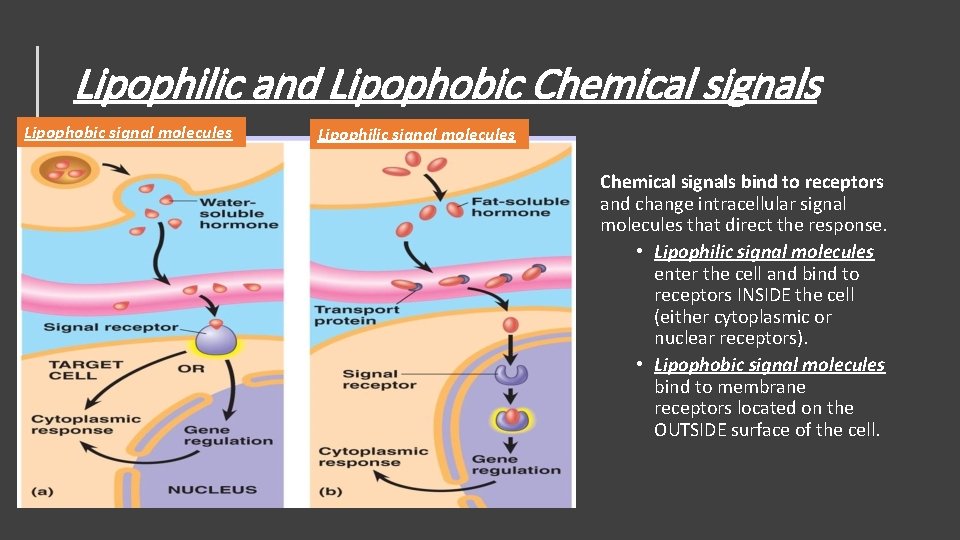
Lipophilic and Lipophobic Chemical signals Lipophobic signal molecules Lipophilic signal molecules Chemical signals bind to receptors and change intracellular signal molecules that direct the response. • Lipophilic signal molecules enter the cell and bind to receptors INSIDE the cell (either cytoplasmic or nuclear receptors). • Lipophobic signal molecules bind to membrane receptors located on the OUTSIDE surface of the cell.
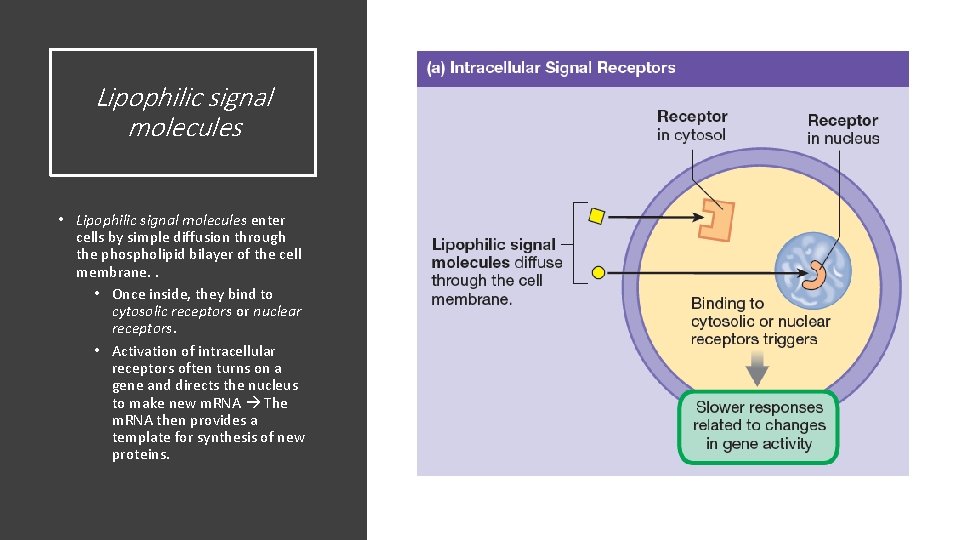
Lipophilic signal molecules • Lipophilic signal molecules enter cells by simple diffusion through the phospholipid bilayer of the cell membrane. . • Once inside, they bind to cytosolic receptors or nuclear receptors. • Activation of intracellular receptors often turns on a gene and directs the nucleus to make new m. RNA The m. RNA then provides a template for synthesis of new proteins.
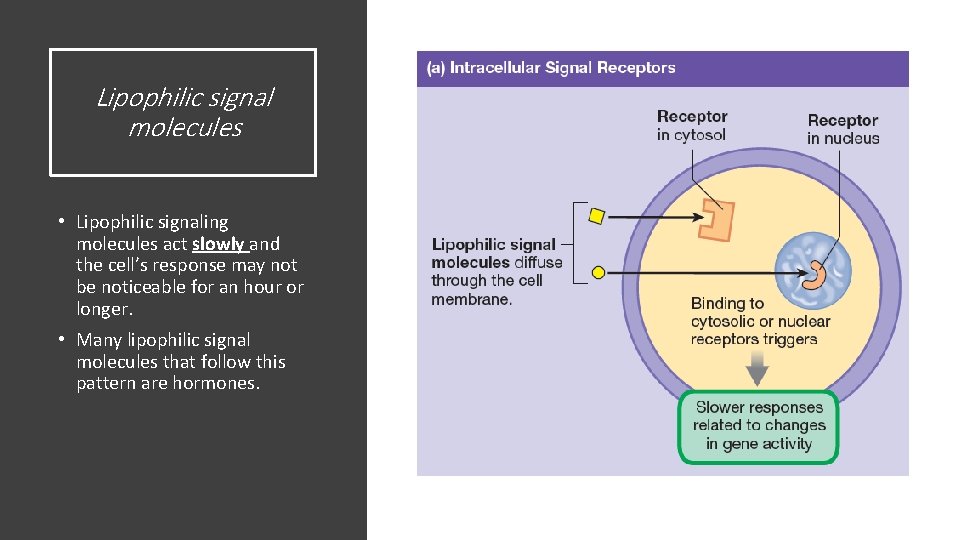
Lipophilic signal molecules • Lipophilic signaling molecules act slowly and the cell’s response may not be noticeable for an hour or longer. • Many lipophilic signal molecules that follow this pattern are hormones.
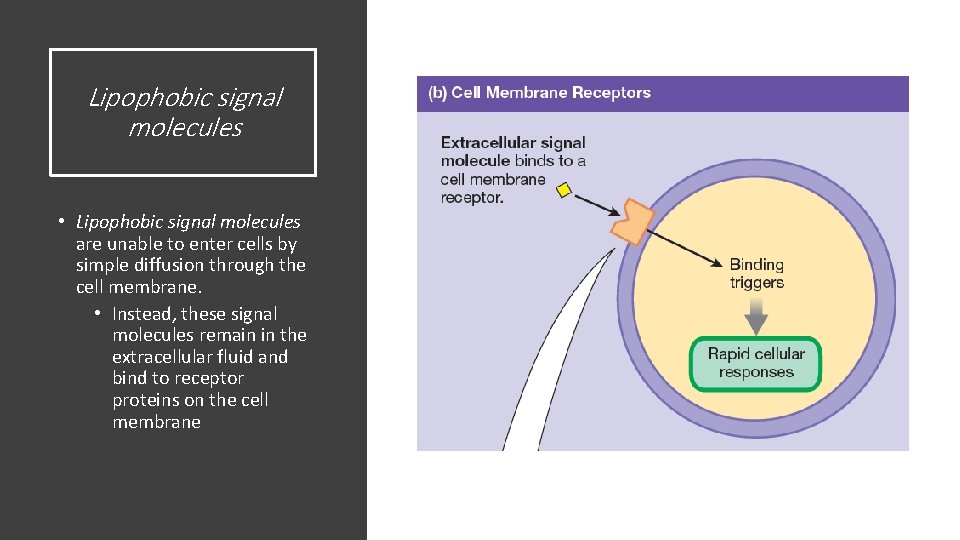
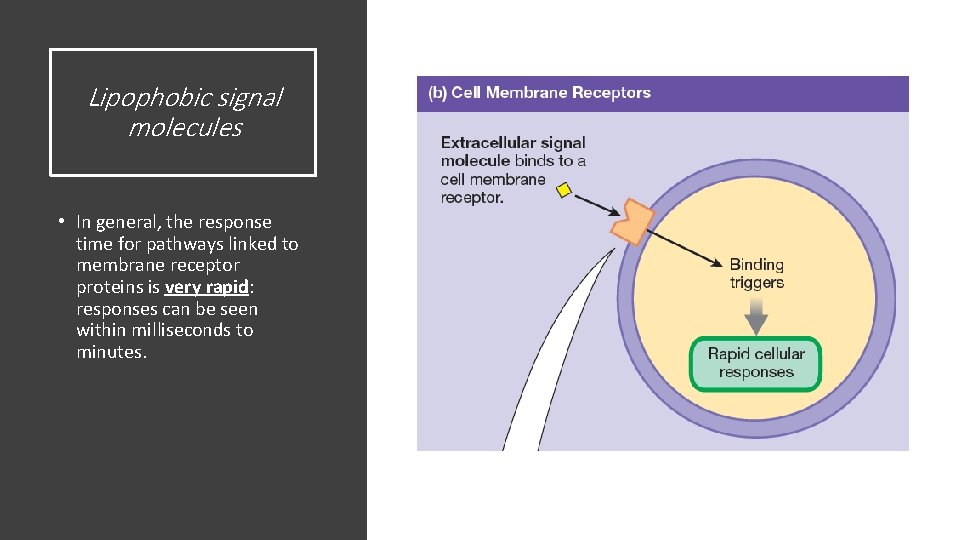
Lipophobic signal molecules • Lipophobic signal molecules are unable to enter cells by simple diffusion through the cell membrane. • Instead, these signal molecules remain in the extracellular fluid and bind to receptor proteins on the cell membrane
Lipophobic signal molecules • In general, the response time for pathways linked to membrane receptor proteins is very rapid: responses can be seen within milliseconds to minutes.
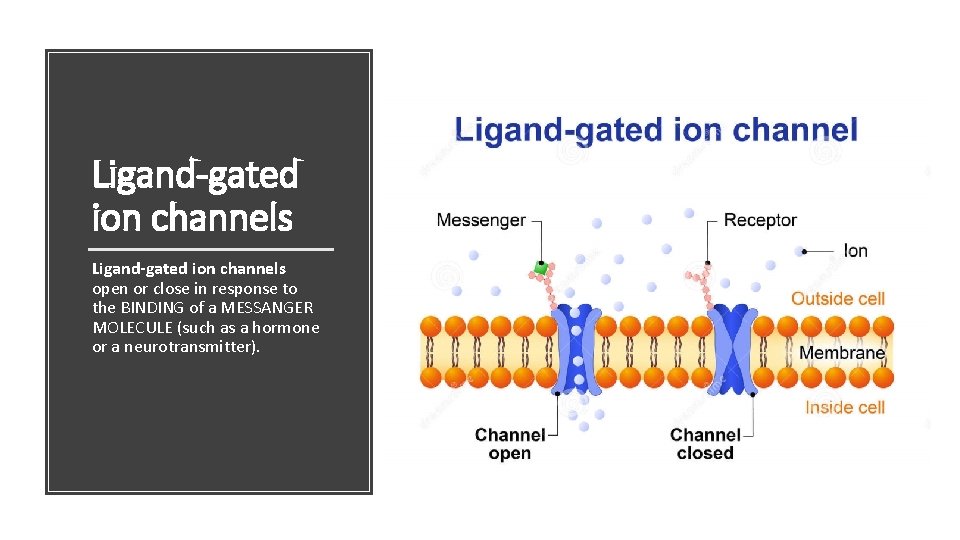
Ligand-gated ion channels open or close in response to the BINDING of a MESSANGER MOLECULE (such as a hormone or a neurotransmitter).
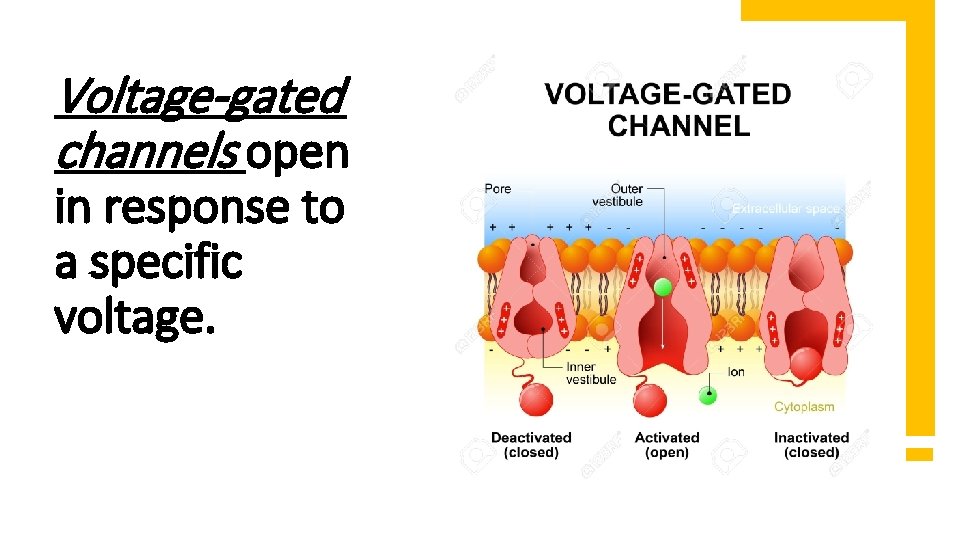
Voltage-gated channels open in response to a specific voltage.
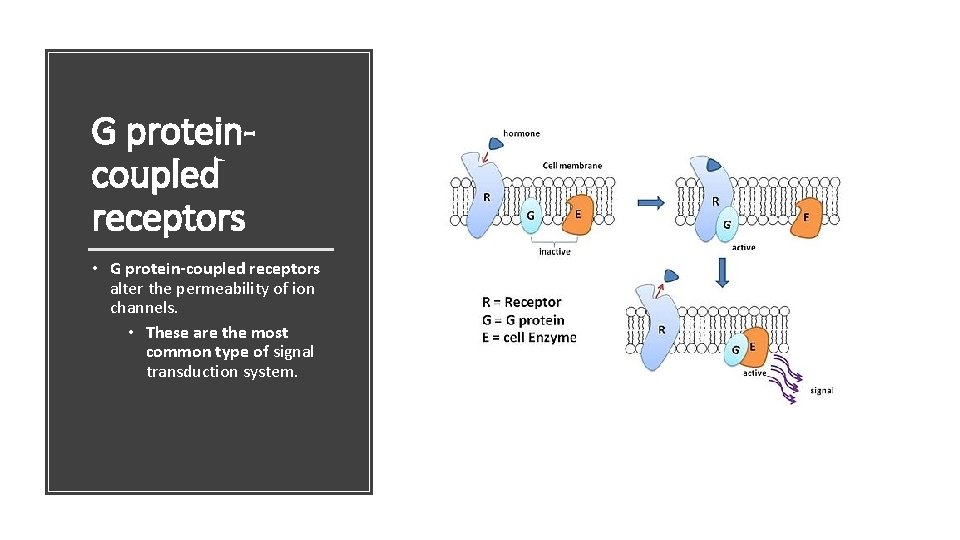
G proteincoupled receptors • G protein-coupled receptors alter the permeability of ion channels. • These are the most common type of signal transduction system.
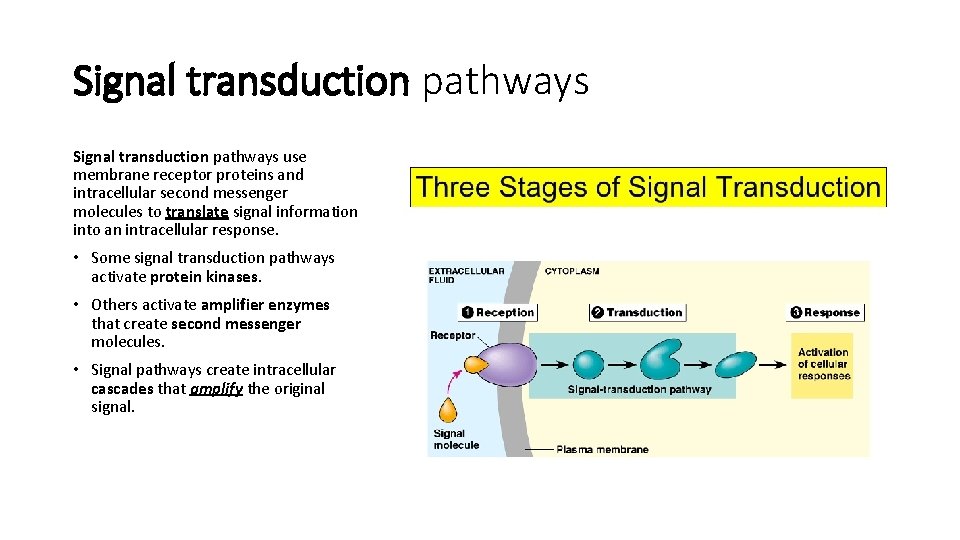
Signal transduction pathways use membrane receptor proteins and intracellular second messenger molecules to translate signal information into an intracellular response. • Some signal transduction pathways activate protein kinases. • Others activate amplifier enzymes that create second messenger molecules. • Signal pathways create intracellular cascades that amplify the original signal.
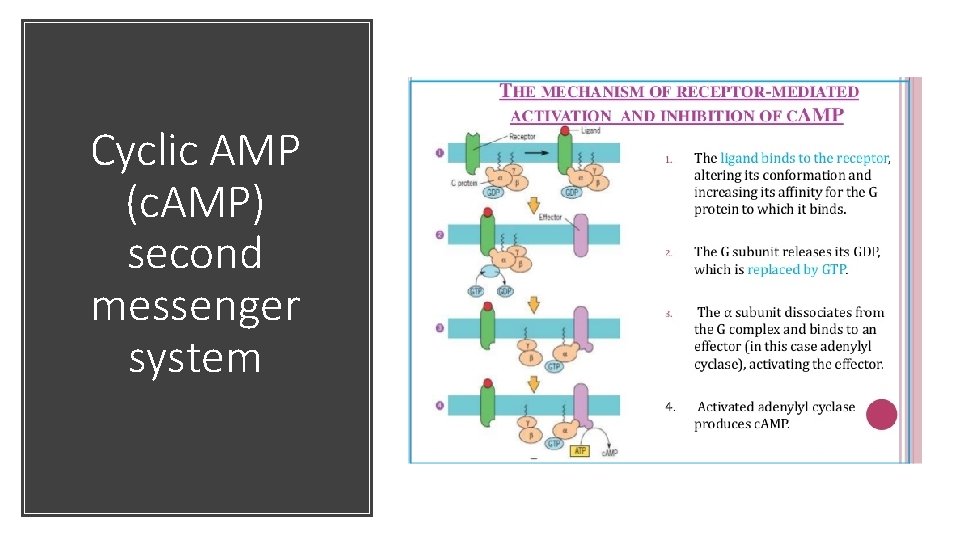
Cyclic AMP (c. AMP) second messenger system
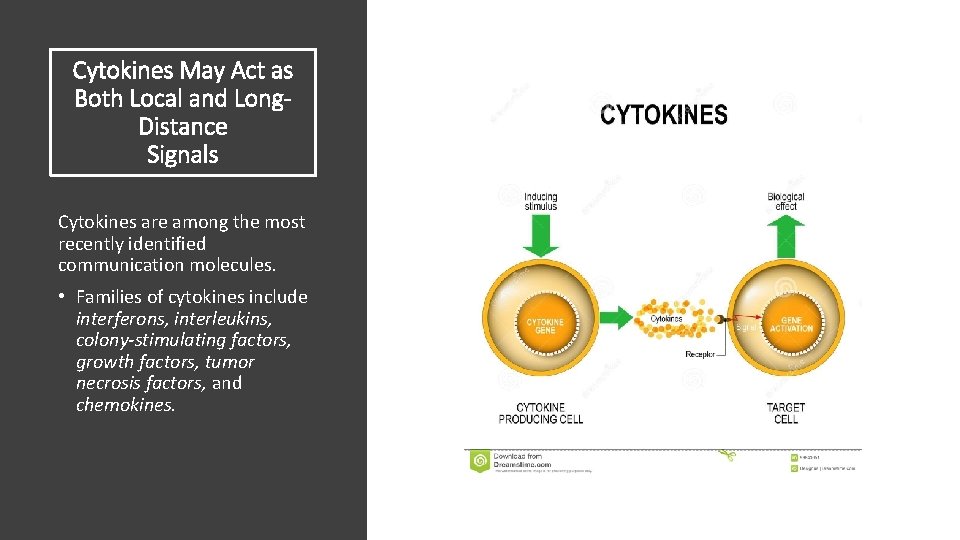
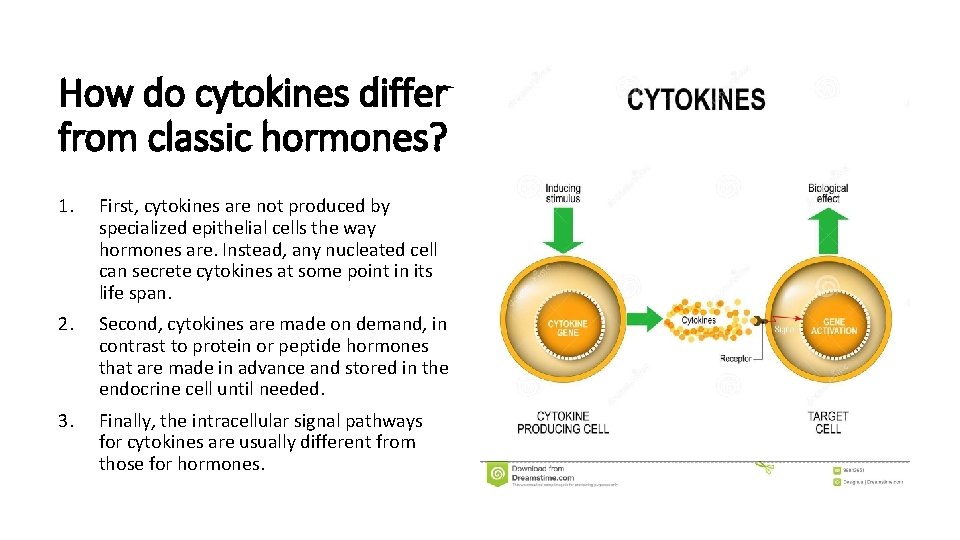
Cytokines are regulatory peptides that control cell development, differentiation, and the immune response. They serve as both local and long-distance signals.
Cytokines May Act as Both Local and Long. Distance Signals Cytokines are among the most recently identified communication molecules. • Families of cytokines include interferons, interleukins, colony-stimulating factors, growth factors, tumor necrosis factors, and chemokines.
How do cytokines differ from classic hormones? 1. First, cytokines are not produced by specialized epithelial cells the way hormones are. Instead, any nucleated cell can secrete cytokines at some point in its life span. 2. Second, cytokines are made on demand, in contrast to protein or peptide hormones that are made in advance and stored in the endocrine cell until needed. 3. Finally, the intracellular signal pathways for cytokines are usually different from those for hormones.
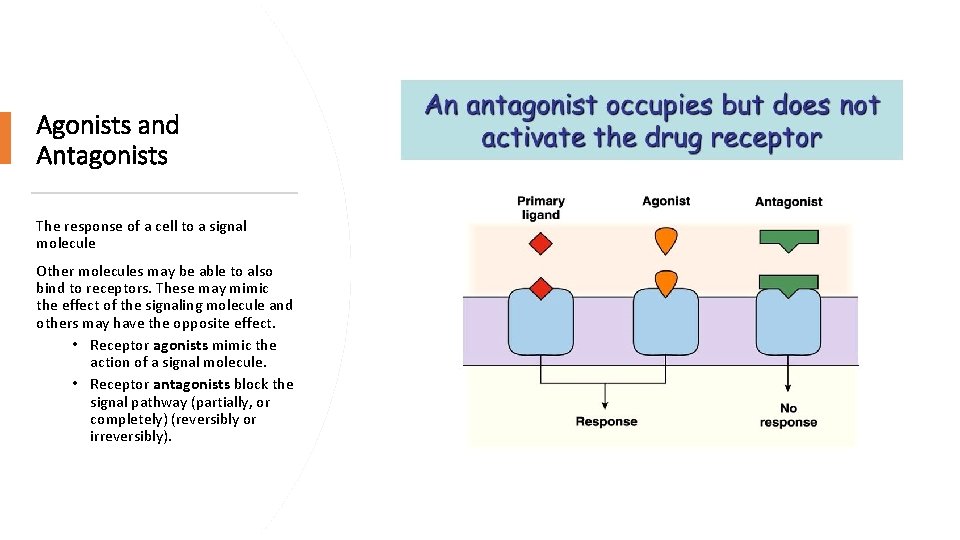
Agonists and Antagonists The response of a cell to a signal molecule Other molecules may be able to also bind to receptors. These may mimic the effect of the signaling molecule and others may have the opposite effect. • Receptor agonists mimic the action of a signal molecule. • Receptor antagonists block the signal pathway (partially, or completely) (reversibly or irreversibly).
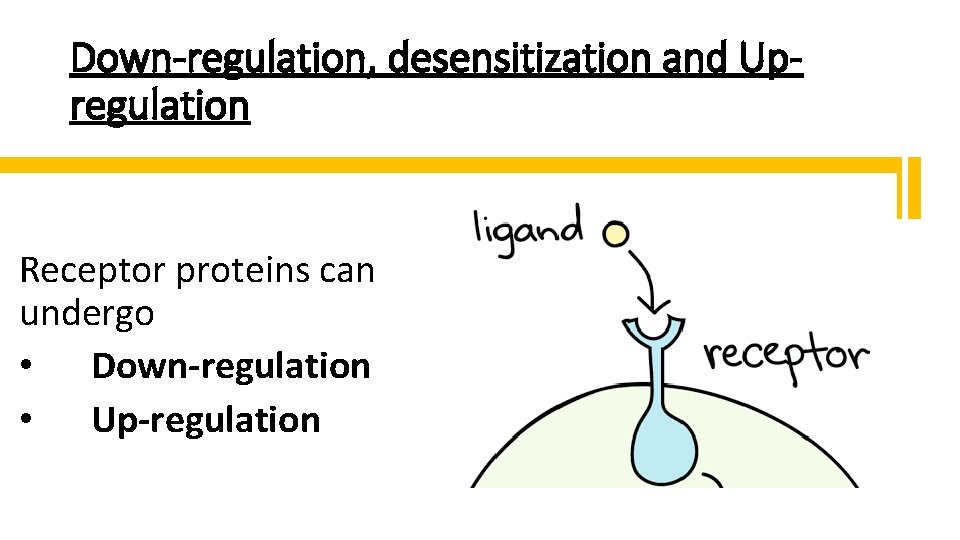
Down-regulation, desensitization and Upregulation Receptor proteins can undergo • Down-regulation • Up-regulation
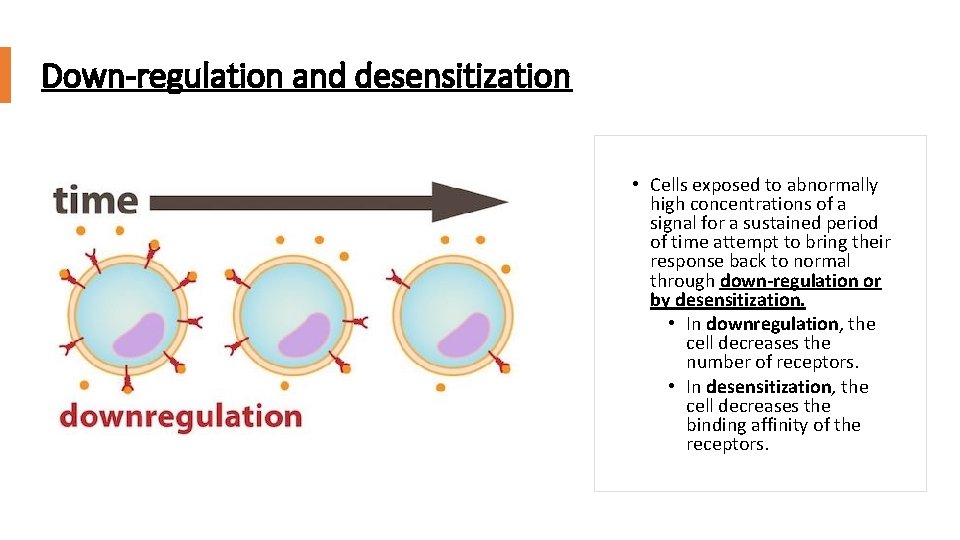
Down-regulation and desensitization • Cells exposed to abnormally high concentrations of a signal for a sustained period of time attempt to bring their response back to normal through down-regulation or by desensitization. • In downregulation, the cell decreases the number of receptors. • In desensitization, the cell decreases the binding affinity of the receptors.
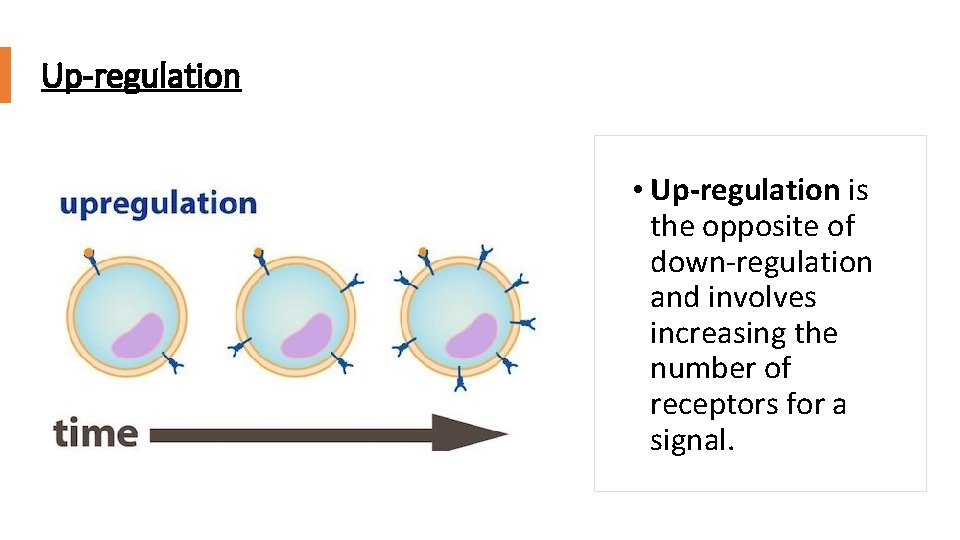
Up-regulation • Up-regulation is the opposite of down-regulation and involves increasing the number of receptors for a signal.
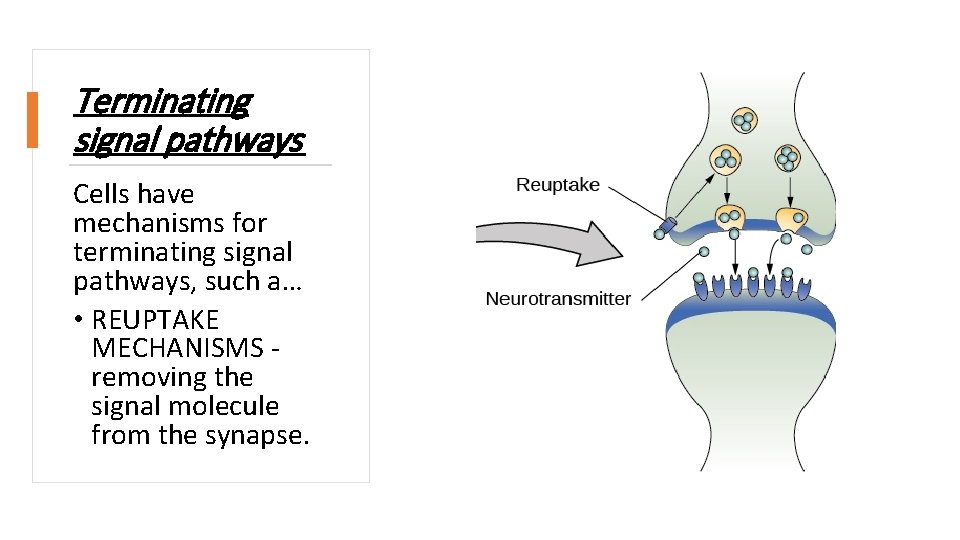
Terminating signal pathways Cells have mechanisms for terminating signal pathways, such a… • REUPTAKE MECHANISMS removing the signal molecule from the synapse.