
Chapter 6 Client Layers of the Optical Layer

- Slides: 23
Chapter 6 Client Layers of the Optical Layer A. In the backbone networks a. Synchronous Optical Network (SONET)/ Synchronous Digital Hierachy (SDH) b. Internet Protocol (IP) c. Asyuchronous Transfer Mode (ATM) B. In the metro networks a. Gigabit Ethernet b. Fiber channel 1
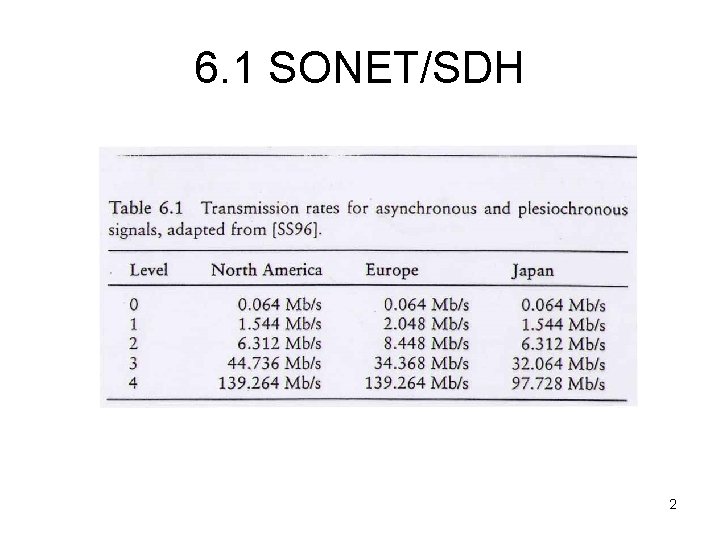
6. 1 SONET/SDH 2
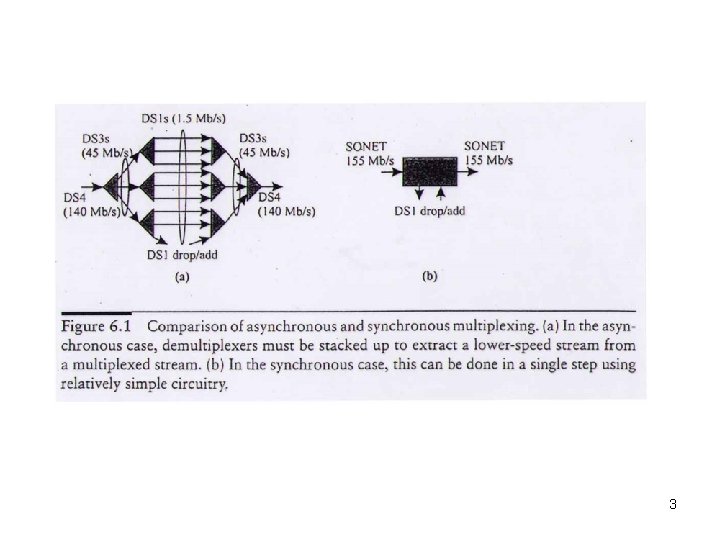
3
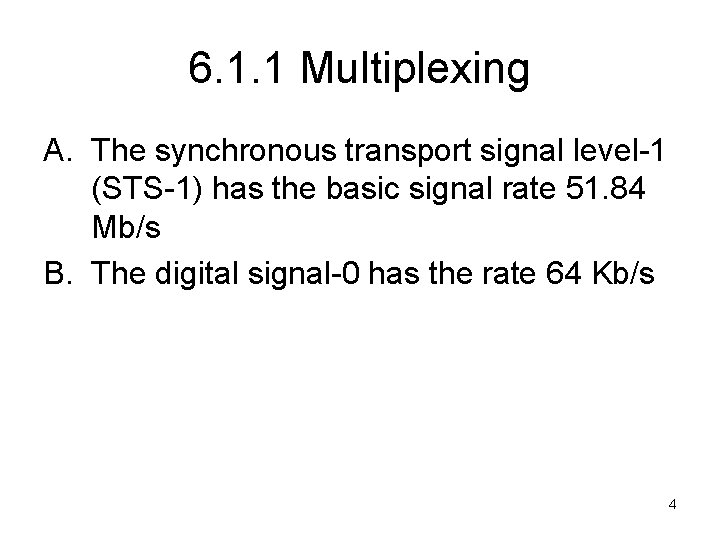
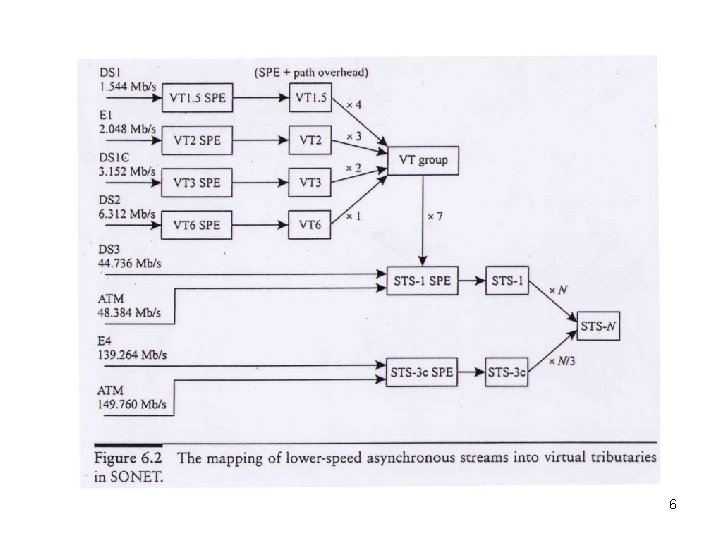
6. 1. 1 Multiplexing A. The synchronous transport signal level-1 (STS-1) has the basic signal rate 51. 84 Mb/s B. The digital signal-0 has the rate 64 Kb/s 4
6. 1. 1 Multiplexing STM-1 (synchronous transport module-1) has the rate 155. 52 Mb/s which is the same as STS-3 5
6
7
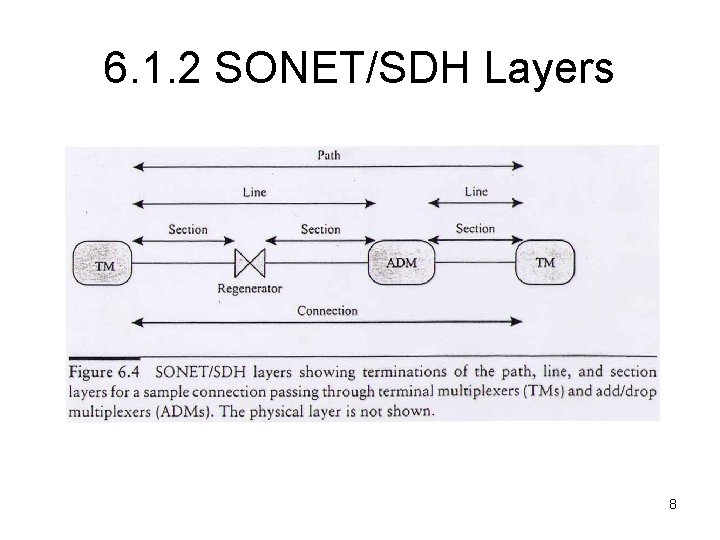
6. 1. 2 SONET/SDH Layers 8
The path layer is responsible for end-to-end connections. The line layer is terminated at each intermediate line terminal (TM) or add/drop multiplexer (ADM). The line layer multiplexes a number of path layer connections onto a single link between two modes. The physical layer is responsible for actual transmission of bits across the fiber. 9
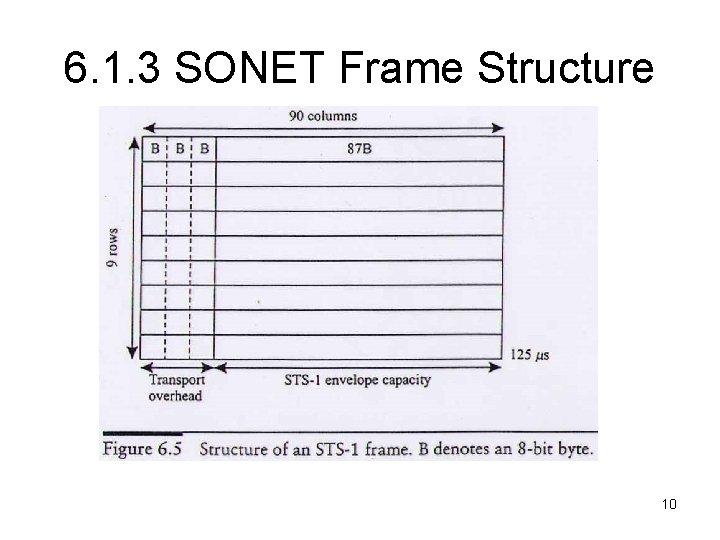
6. 1. 3 SONET Frame Structure 10
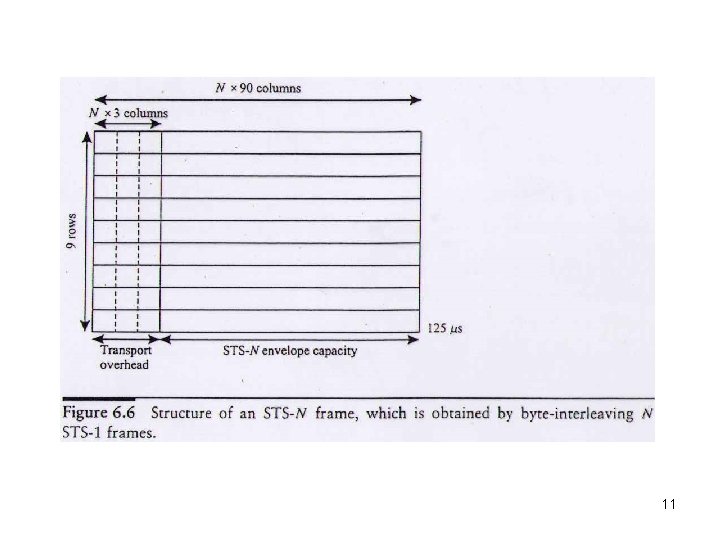
11
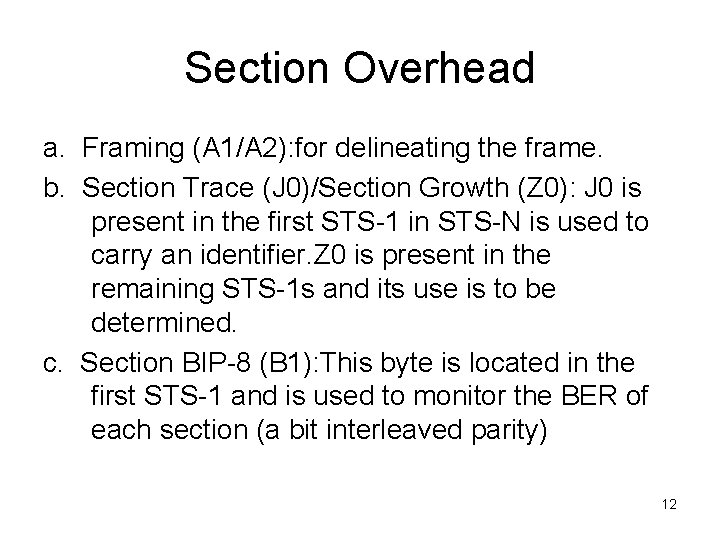
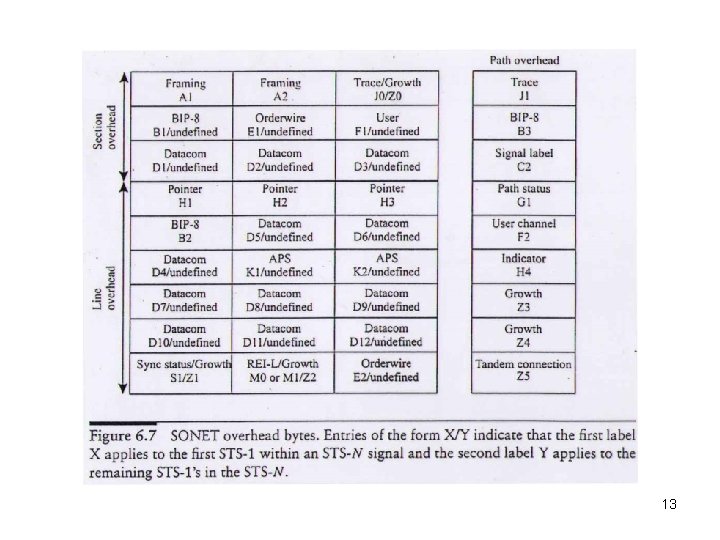
Section Overhead a. Framing (A 1/A 2): for delineating the frame. b. Section Trace (J 0)/Section Growth (Z 0): J 0 is present in the first STS-1 in STS-N is used to carry an identifier. Z 0 is present in the remaining STS-1 s and its use is to be determined. c. Section BIP-8 (B 1): This byte is located in the first STS-1 and is used to monitor the BER of each section (a bit interleaved parity) 12
13
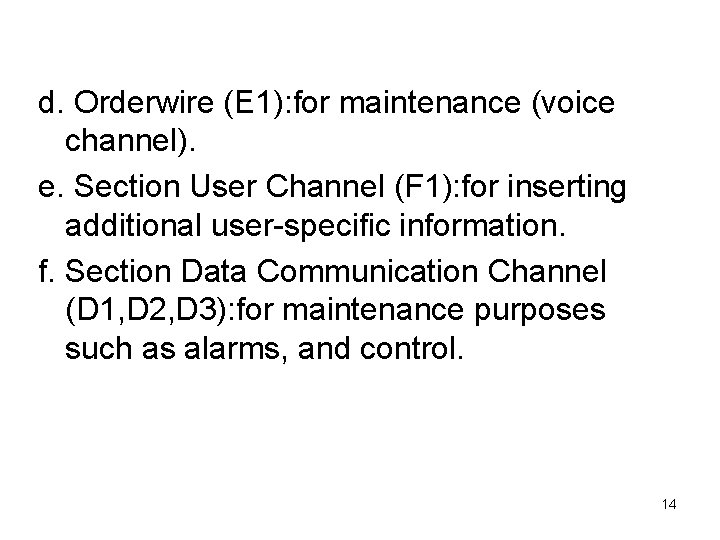
d. Orderwire (E 1): for maintenance (voice channel). e. Section User Channel (F 1): for inserting additional user-specific information. f. Section Data Communication Channel (D 1, D 2, D 3): for maintenance purposes such as alarms, and control. 14
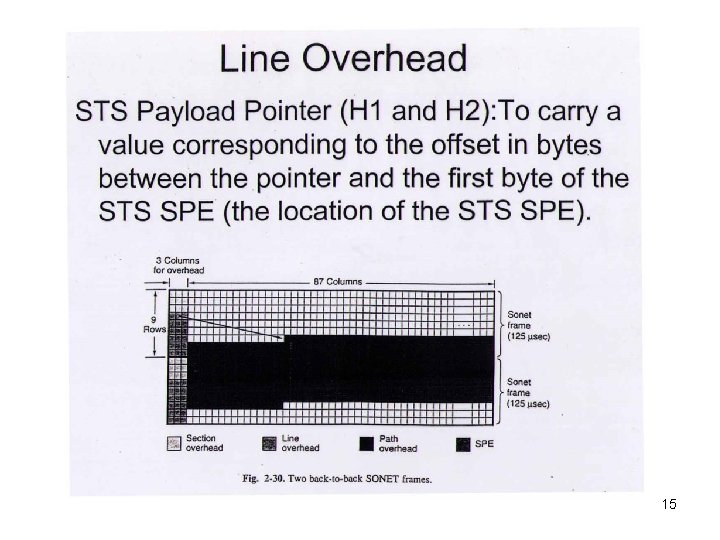
15
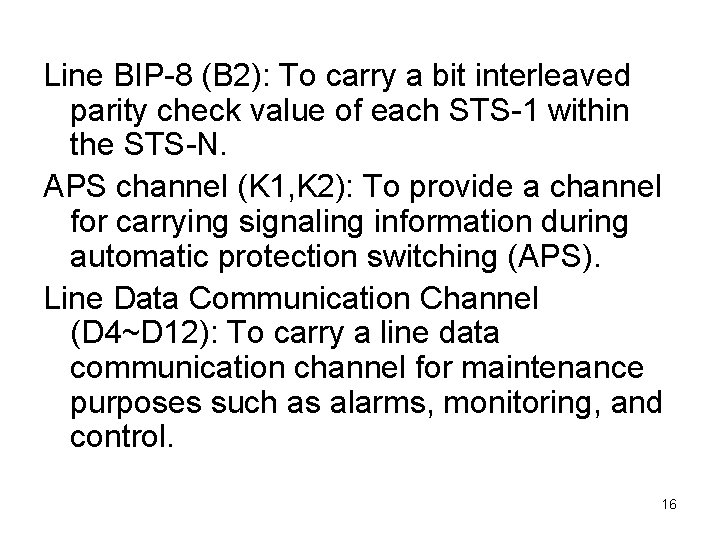
Line BIP-8 (B 2): To carry a bit interleaved parity check value of each STS-1 within the STS-N. APS channel (K 1, K 2): To provide a channel for carrying signaling information during automatic protection switching (APS). Line Data Communication Channel (D 4~D 12): To carry a line data communication channel for maintenance purposes such as alarms, monitoring, and control. 16
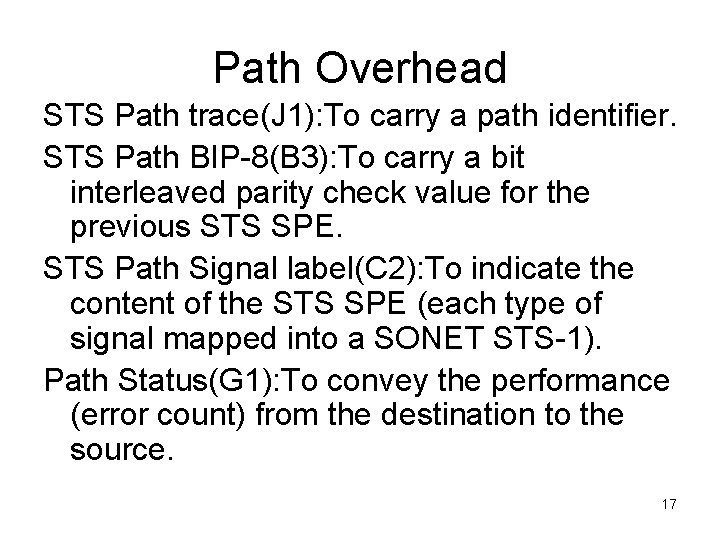
Path Overhead STS Path trace(J 1): To carry a path identifier. STS Path BIP-8(B 3): To carry a bit interleaved parity check value for the previous STS SPE. STS Path Signal label(C 2): To indicate the content of the STS SPE (each type of signal mapped into a SONET STS-1). Path Status(G 1): To convey the performance (error count) from the destination to the source. 17
18
19
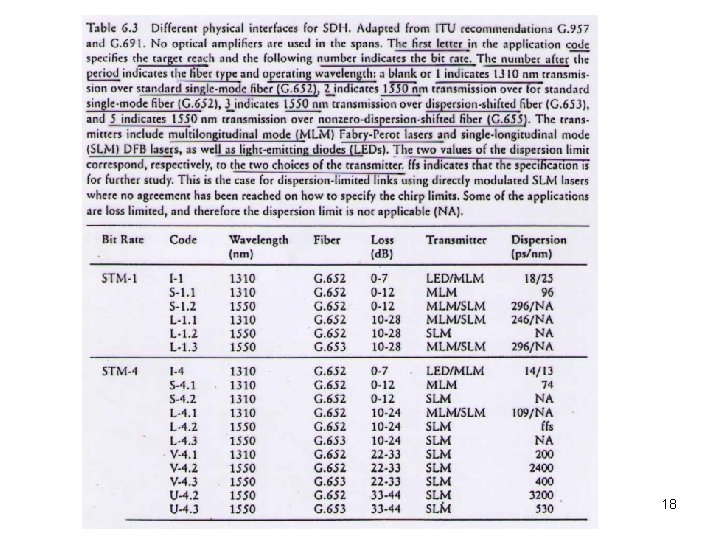
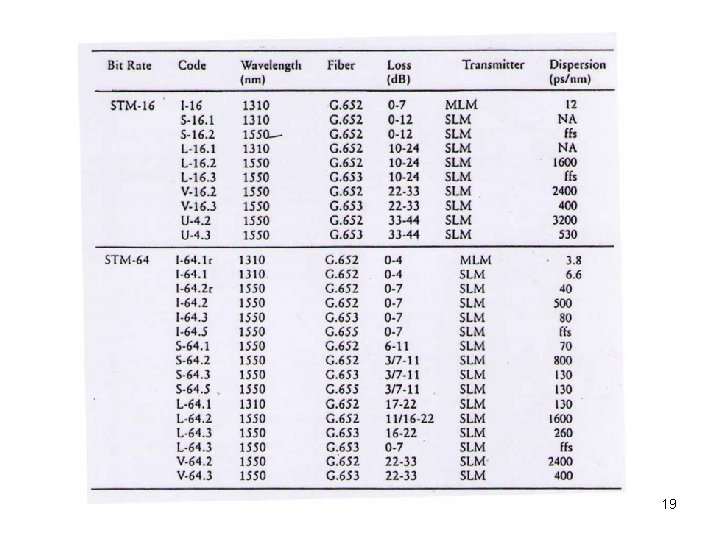
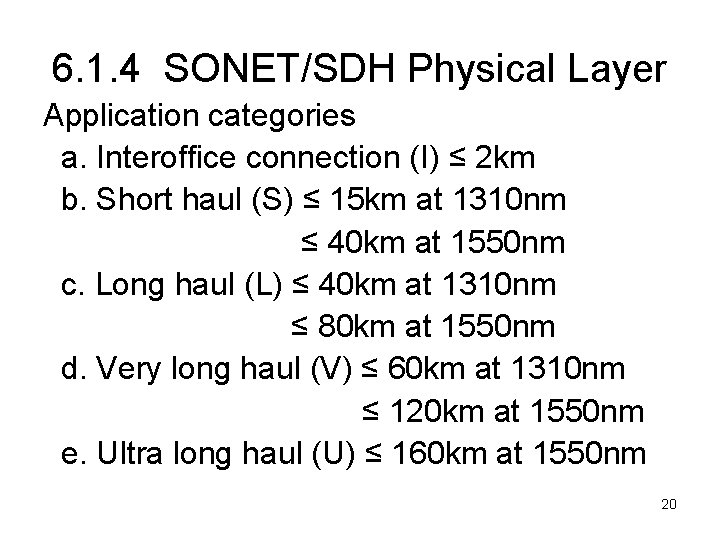
6. 1. 4 SONET/SDH Physical Layer Application categories a. Interoffice connection (I) ≤ 2 km b. Short haul (S) ≤ 15 km at 1310 nm ≤ 40 km at 1550 nm c. Long haul (L) ≤ 40 km at 1310 nm ≤ 80 km at 1550 nm d. Very long haul (V) ≤ 60 km at 1310 nm ≤ 120 km at 1550 nm e. Ultra long haul (U) ≤ 160 km at 1550 nm 20
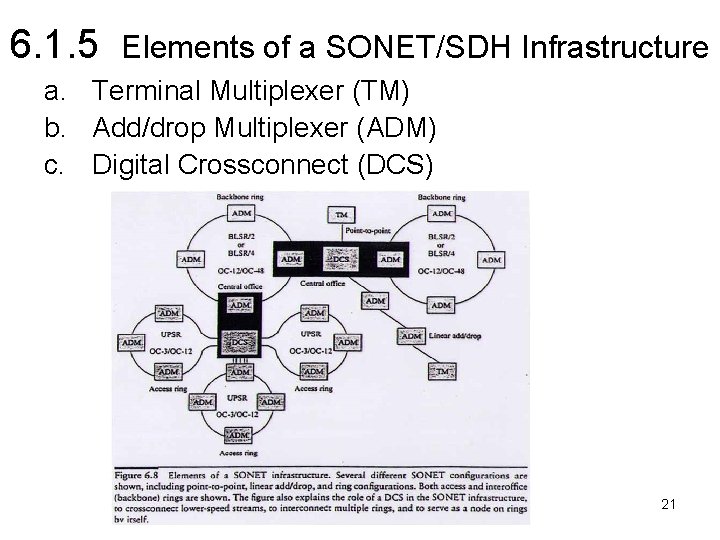
6. 1. 5 Elements of a SONET/SDH Infrastructure a. Terminal Multiplexer (TM) b. Add/drop Multiplexer (ADM) c. Digital Crossconnect (DCS) 21
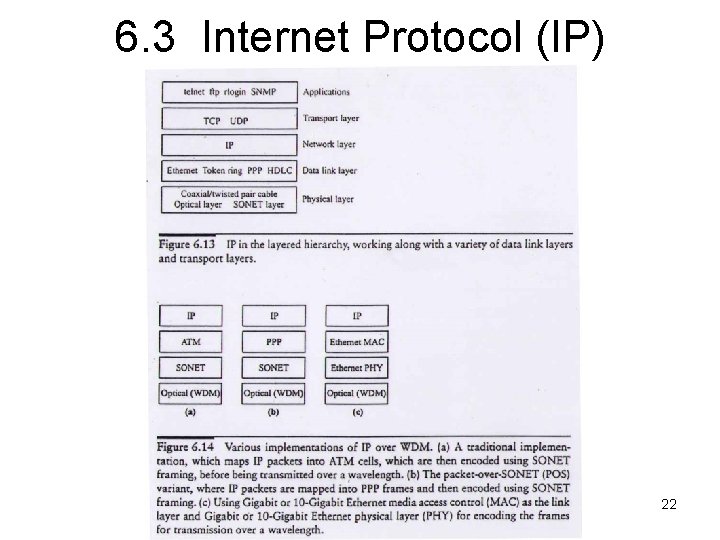
6. 3 Internet Protocol (IP) 22
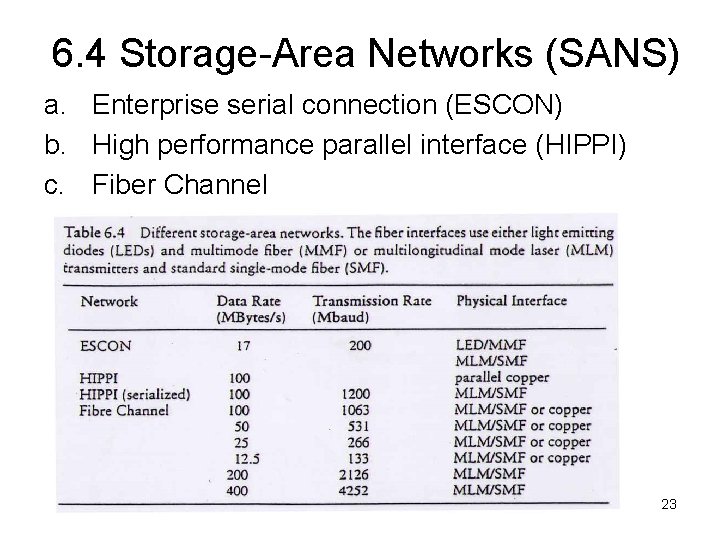
6. 4 Storage-Area Networks (SANS) a. Enterprise serial connection (ESCON) b. High performance parallel interface (HIPPI) c. Fiber Channel 23