
Chapter 6 Chemical Reactions Section 4 Aqueous Solutions
- Slides: 20
Chapter 6: Chemical Reactions Section 4: Aqueous Solutions
Learning Goals �Determine if a compound is soluble.
Aqueous Solutions �A compound is soluble in a particular liquid if it dissolves in that liquid. �A compound is insoluble if it does not dissolve in the liquid.
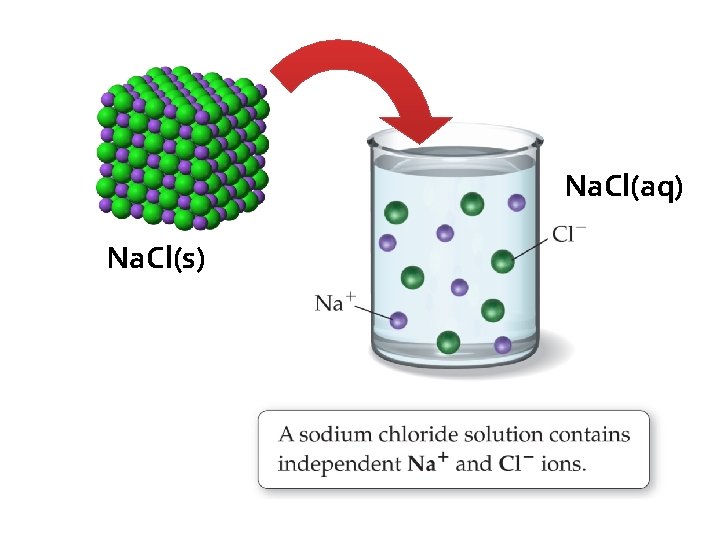
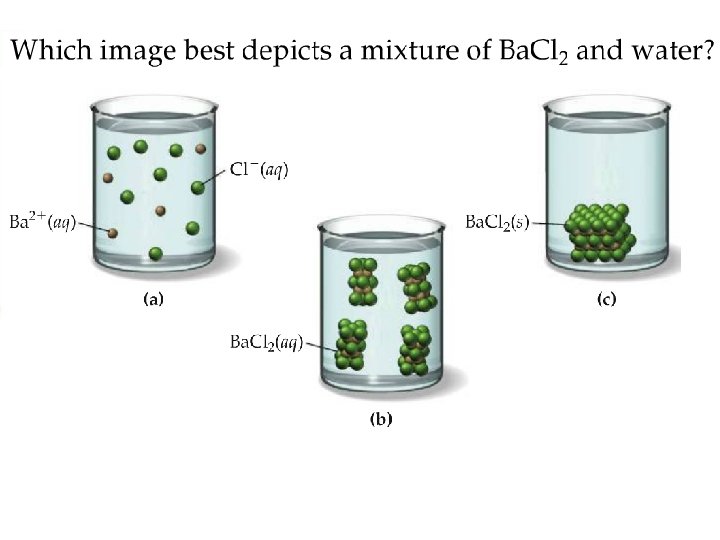
Aqueous Solutions �An aqueous solution is a homogeneous mixture of a substance with water. When ionic compounds dissolve in water, they usually dissociate into their component ions.
Na. Cl(aq) Na. Cl(s)
Aqueous Solutions �A sodium chloride solution, Na. Cl(aq), does not contain any Na. Cl units. Only dissolved Na+ ions and Cl− ions are present. �Substances (such as Na. Cl) that completely dissociate into ions in solution are called strong electrolytes.
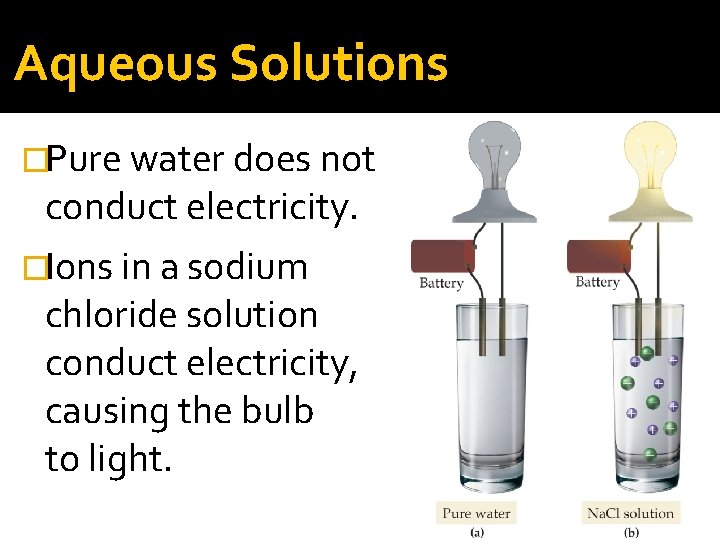
Aqueous Solutions �Pure water does not conduct electricity. �Ions in a sodium chloride solution conduct electricity, causing the bulb to light.
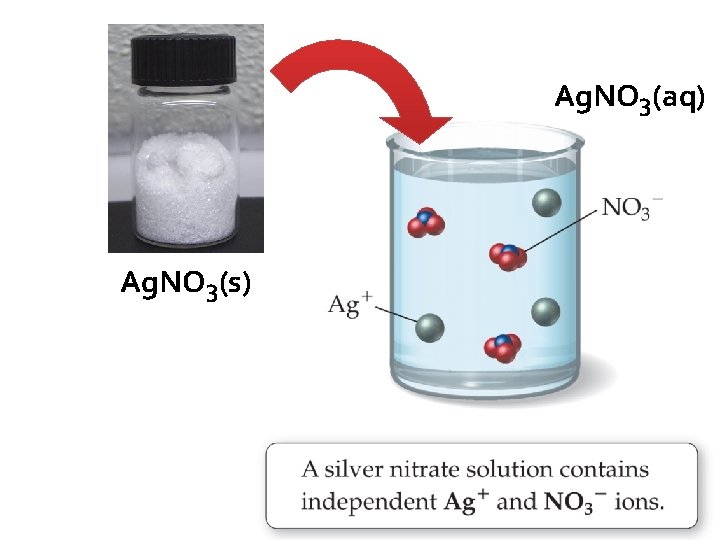
Ag. NO 3(aq) Ag. NO 3(s)
Aqueous Solutions �Ag. NO 3(aq) is a strong electrolyte solution. �When compounds containing polyatomic ions such as NO 3− dissolve, the polyatomic ions dissolve as intact units.
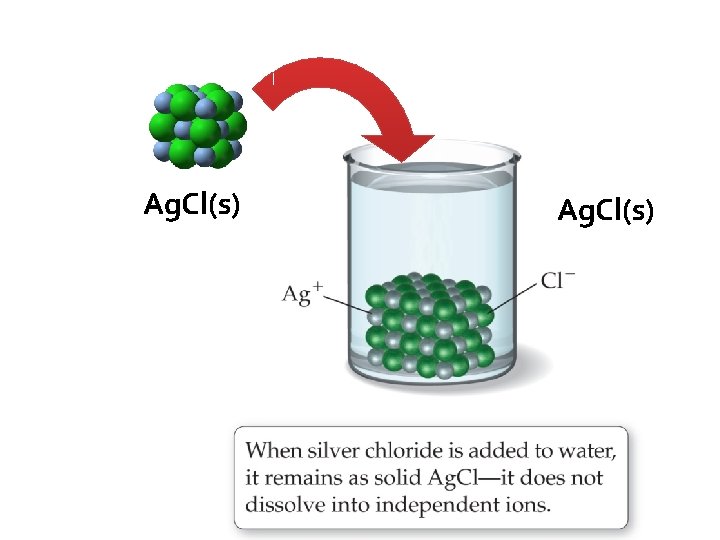
Ag. Cl(s)
Aqueous Solutions �Not all ionic compounds dissolve in water. Ag. Cl does not dissolve in water. It does not dissolve into independent ions.
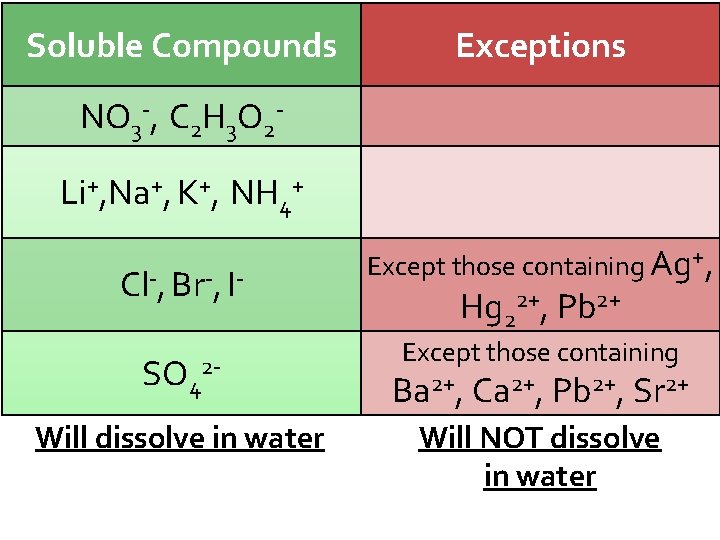
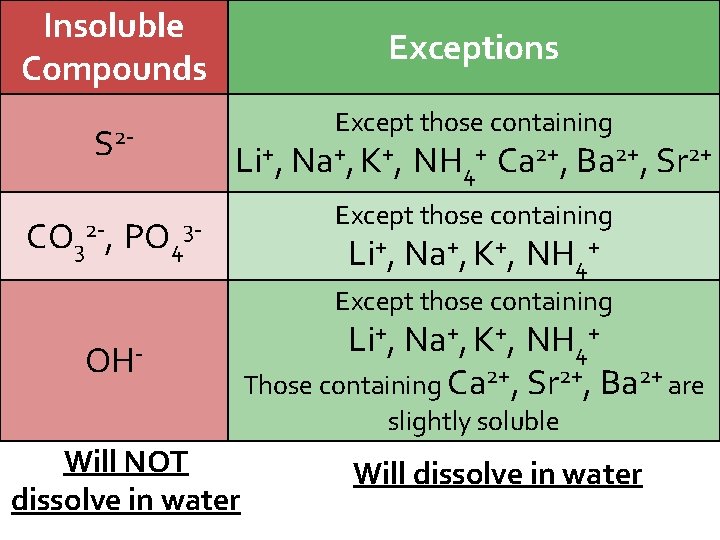
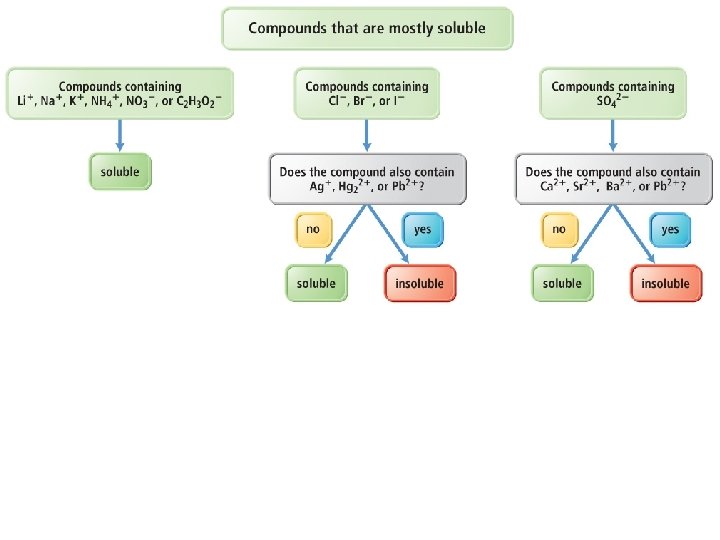
Solubility Rules �A compound is soluble in a particular liquid if it dissolves in that liquid; a compound is insoluble if it does not dissolve in the liquid. �For ionic compounds, empirical rules of solubility have been deduced from observations of many compounds.
Soluble Compounds Exceptions NO 3 -, C 2 H 3 O 2 Li+, Na+, K+, NH 4+ Cl-, Br-, ISO 4 2 - Will dissolve in water Except those containing Ag+, Hg 22+, Pb 2+ Except those containing Ba 2+, Ca 2+, Pb 2+, Sr 2+ Will NOT dissolve in water
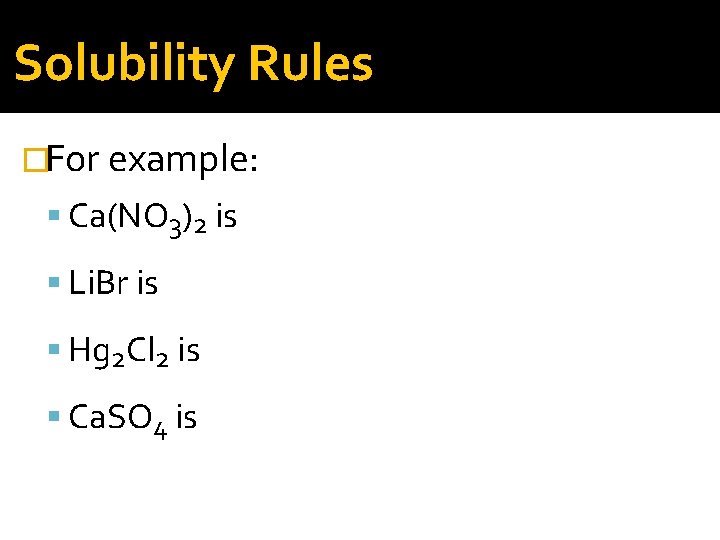
Solubility Rules �For example: Ca(NO 3)2 is soluble Li. Br is soluble Hg 2 Cl 2 is insoluble Ca. SO 4 is insoluble
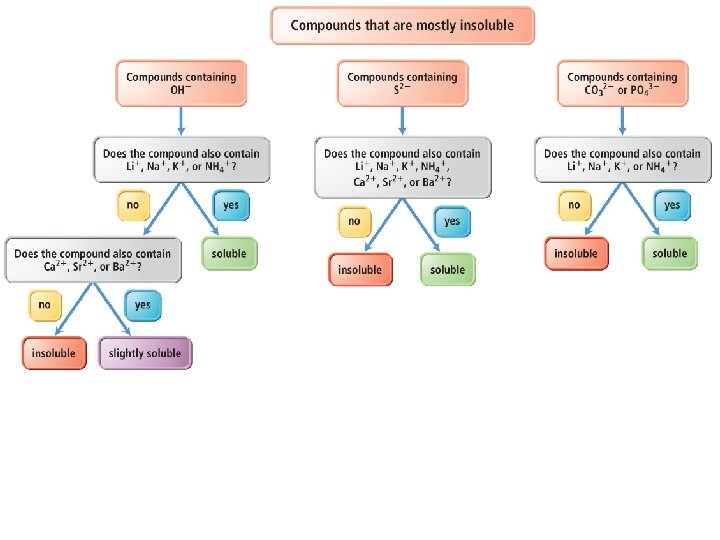
Insoluble Compounds S 2 - Exceptions Except those containing Li+, Na+, K+, NH 4+ Ca 2+, Ba 2+, Sr 2+ CO 32 -, PO 43 - Except those containing Li+, Na+, K+, NH 4+ Except those containing OH- Li+, Na+, K+, NH 4+ Those containing Ca 2+, Sr 2+, Ba 2+ are slightly soluble Will NOT dissolve in water Will dissolve in water
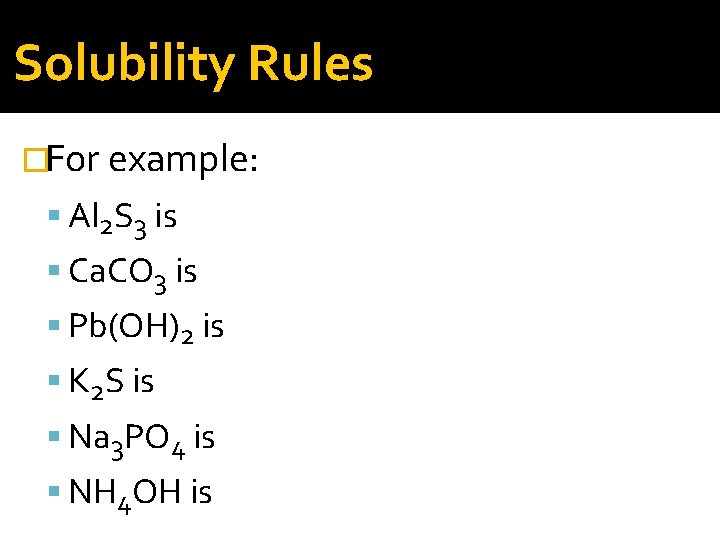
Solubility Rules �For example: Al 2 S 3 is insoluble Ca. CO 3 is insoluble Pb(OH)2 is insoluble K 2 S is soluble Na 3 PO 4 is soluble NH 4 OH is soluble
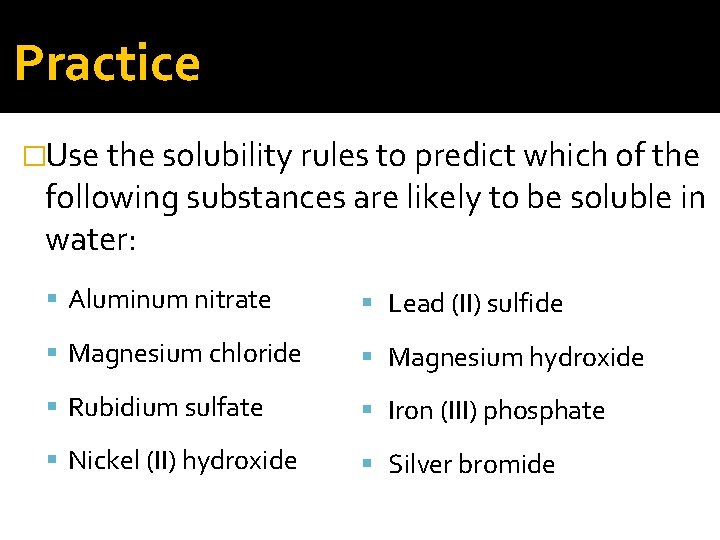
Practice �Use the solubility rules to predict which of the following substances are likely to be soluble in water: Aluminum nitrate Lead (II) sulfide Magnesium chloride Magnesium hydroxide Rubidium sulfate Iron (III) phosphate Nickel (II) hydroxide Silver bromide