
Chapter 6 Chemical Reactions An Introduction 1 Signs
- Slides: 36
Chapter 6 Chemical Reactions: An Introduction 1
Signs of a Chemical Reaction Evolution of heat and light l Formation of a gas l Formation of a precipitate l Color change l 2
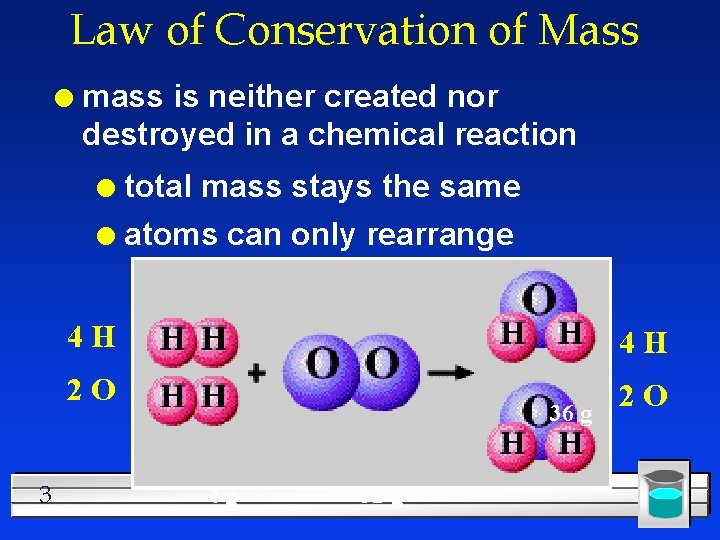
Law of Conservation of Mass l mass is neither created nor destroyed in a chemical reaction total mass stays the same l atoms can only rearrange l 3 4 H 4 H 2 O 2 O 36 g 4 g 32 g
All chemical reactions have two parts l Reactants - the substances you start with l Products- the substances you end up with l The reactants turn into the products. l Reactants Products l 4
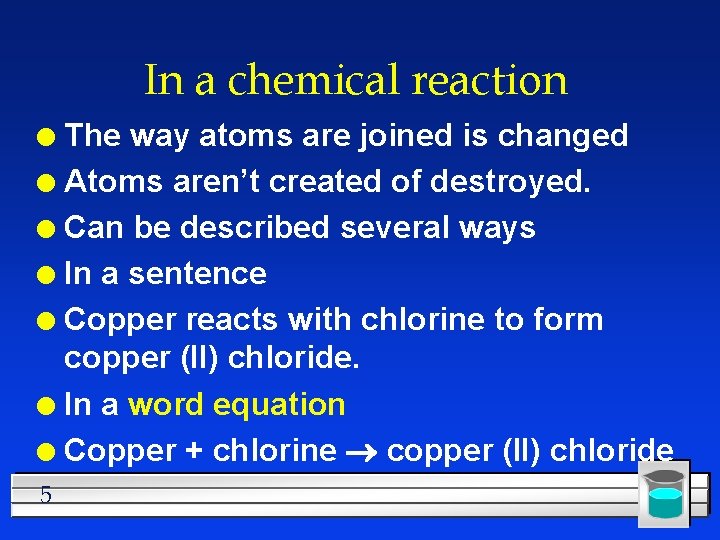
In a chemical reaction The way atoms are joined is changed l Atoms aren’t created of destroyed. l Can be described several ways l In a sentence l Copper reacts with chlorine to form copper (II) chloride. l In a word equation l Copper + chlorine copper (II) chloride l 5
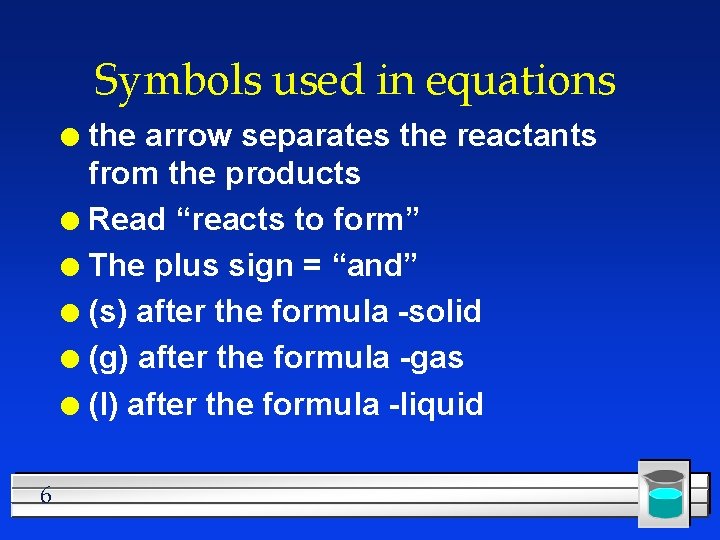
Symbols used in equations the arrow separates the reactants from the products l Read “reacts to form” l The plus sign = “and” l (s) after the formula -solid l (g) after the formula -gas l (l) after the formula -liquid l 6
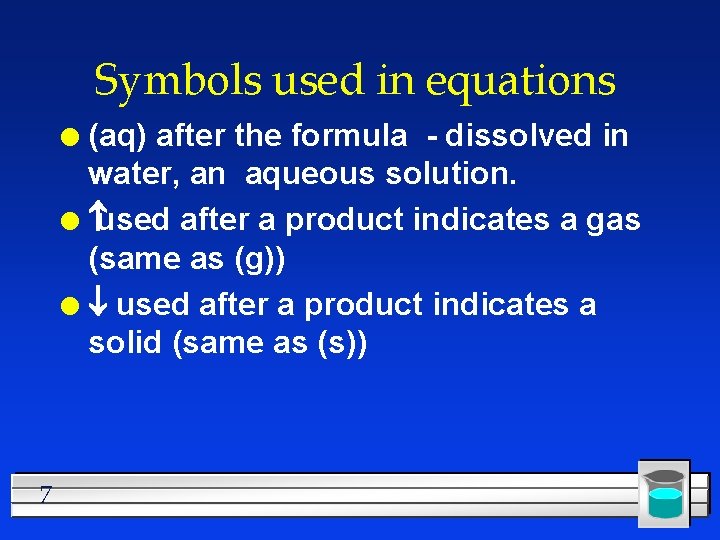
Symbols used in equations (aq) after the formula - dissolved in water, an aqueous solution. l used after a product indicates a gas (same as (g)) l ¯ used after a product indicates a solid (same as (s)) l 7
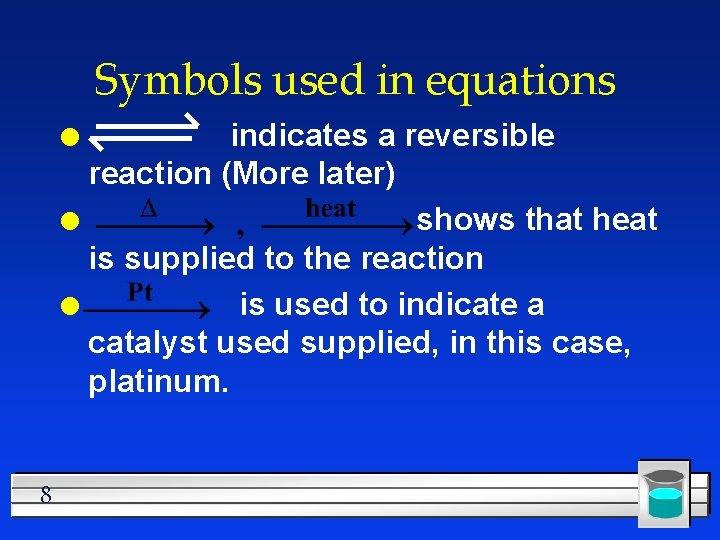
Symbols used in equations indicates a reversible reaction (More later) l shows that heat is supplied to the reaction l is used to indicate a catalyst used supplied, in this case, platinum. l 8
What is a catalyst? A substance that speeds up a reaction without being changed by the reaction. l Enzymes are biological or protein catalysts. l 9
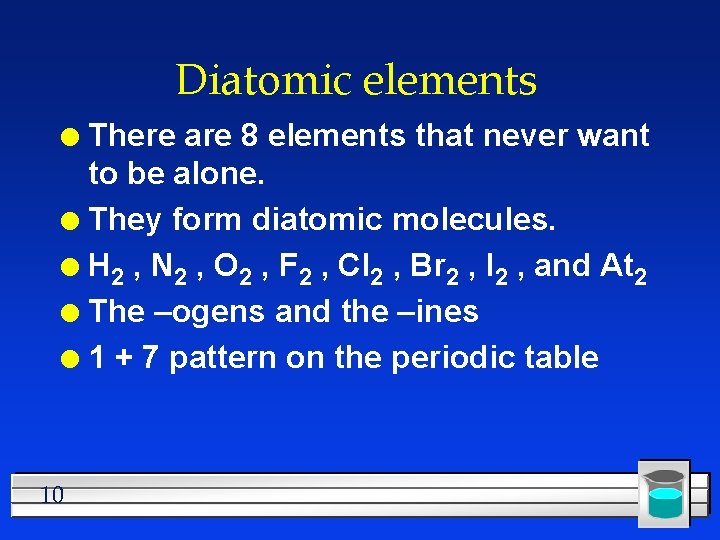
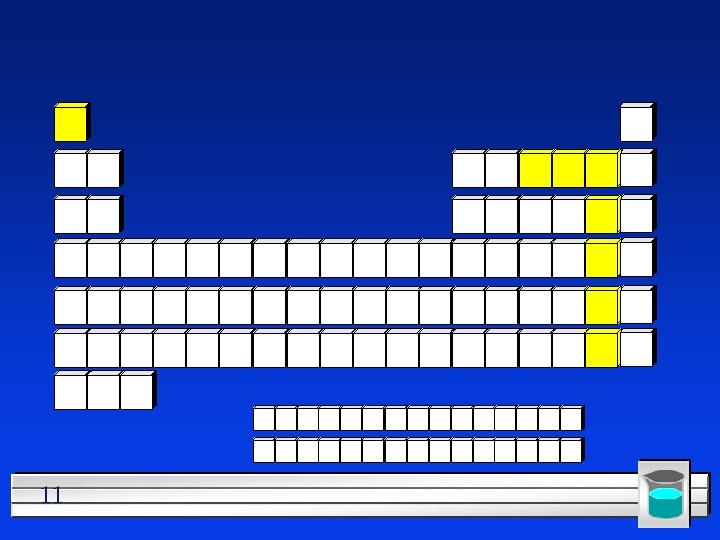
Diatomic elements There are 8 elements that never want to be alone. l They form diatomic molecules. l H 2 , N 2 , O 2 , F 2 , Cl 2 , Br 2 , I 2 , and At 2 l The –ogens and the –ines l 1 + 7 pattern on the periodic table l 10
11
Skeleton Equation Uses formulas and symbols to describe a reaction l doesn’t indicate how many. l All chemical equations are sentences that describe reactions. l 12
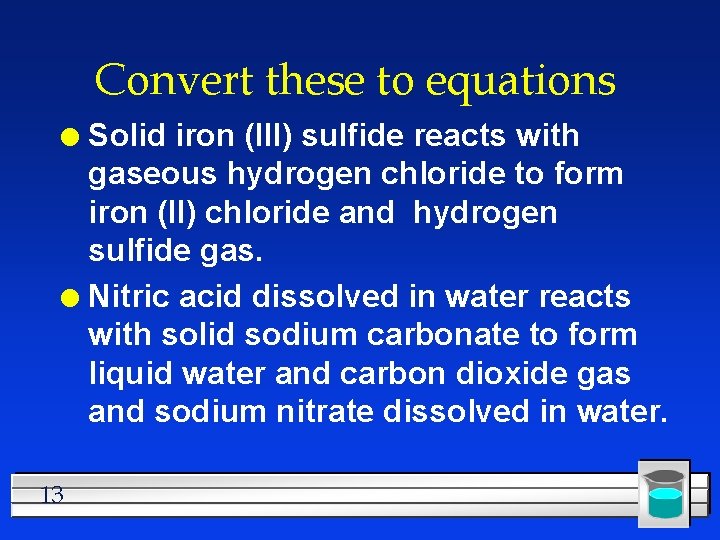
Convert these to equations Solid iron (III) sulfide reacts with gaseous hydrogen chloride to form iron (II) chloride and hydrogen sulfide gas. l Nitric acid dissolved in water reacts with solid sodium carbonate to form liquid water and carbon dioxide gas and sodium nitrate dissolved in water. l 13
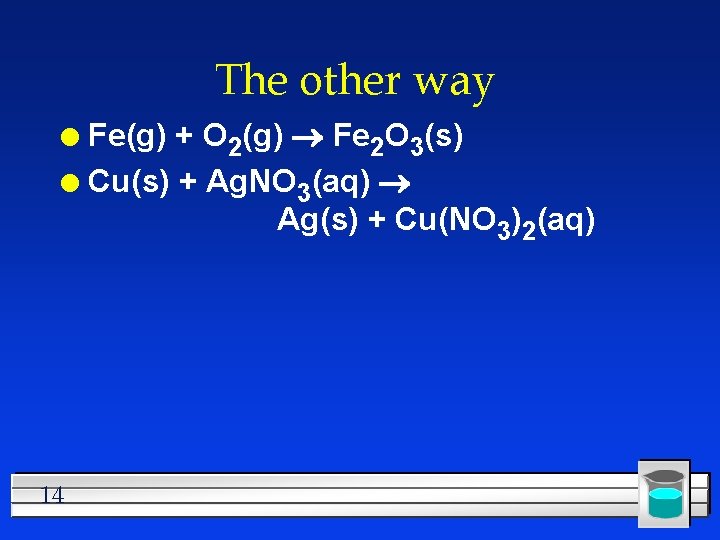
The other way Fe(g) + O 2(g) Fe 2 O 3(s) l Cu(s) + Ag. NO 3(aq) Ag(s) + Cu(NO 3)2(aq) l 14
Balancing Chemical Equations 15
Balanced Equation Atoms can’t be created or destroyed l All the atoms we start with we must end up with l A balanced equation has the same number of each element on both sides of the equation. l 16
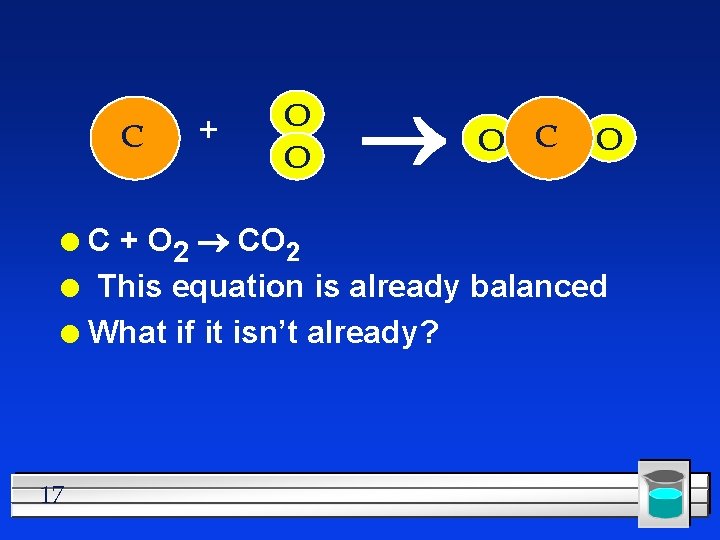
C + O O O C + O 2 CO 2 l This equation is already balanced l What if it isn’t already? l 17
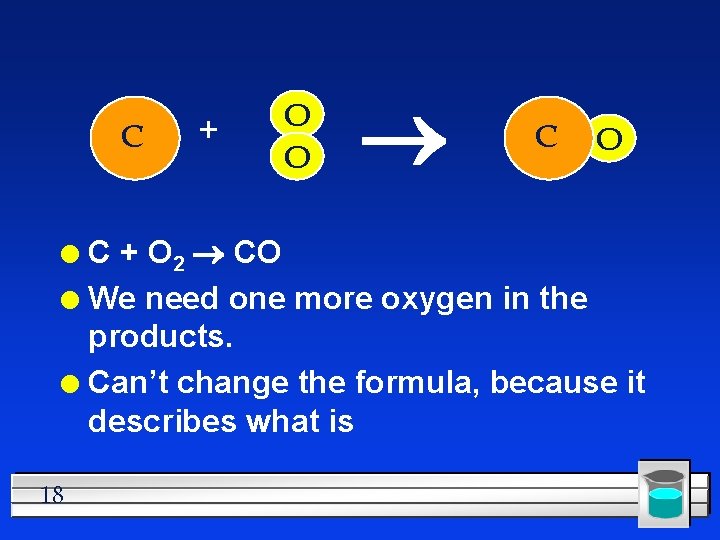
C + O O C + O 2 CO l We need one more oxygen in the products. l Can’t change the formula, because it describes what is l 18
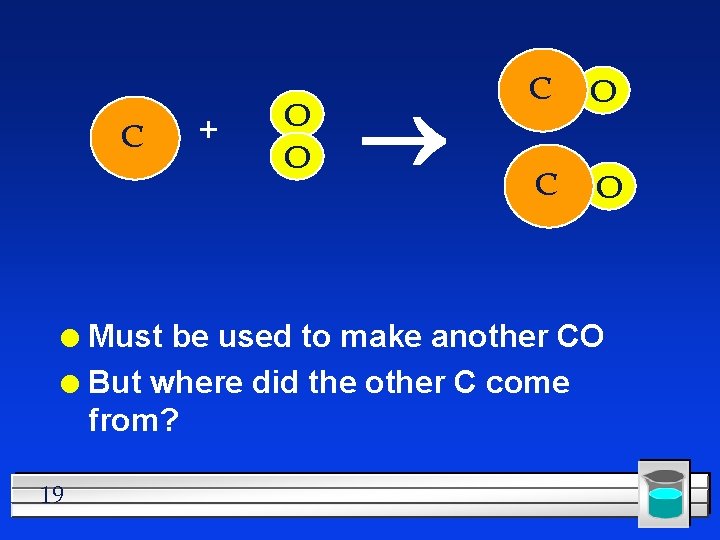
C + O O C O Must be used to make another CO l But where did the other C come from? l 19
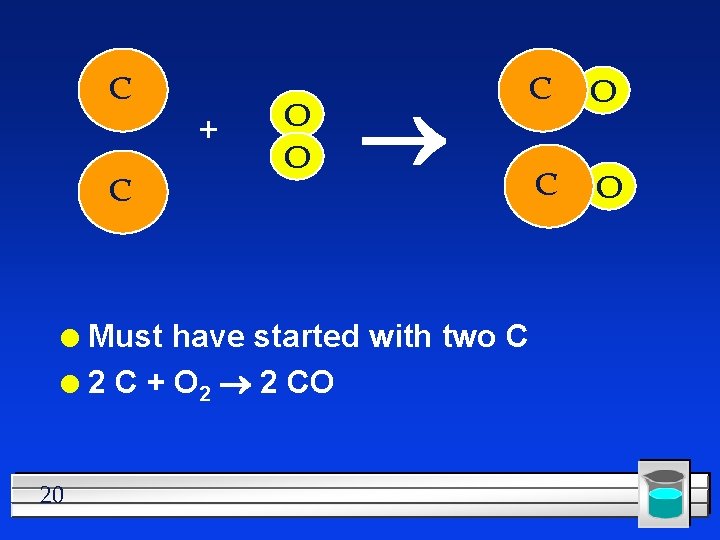
C + C O O Must have started with two C l 2 C + O 2 2 CO l 20 C O
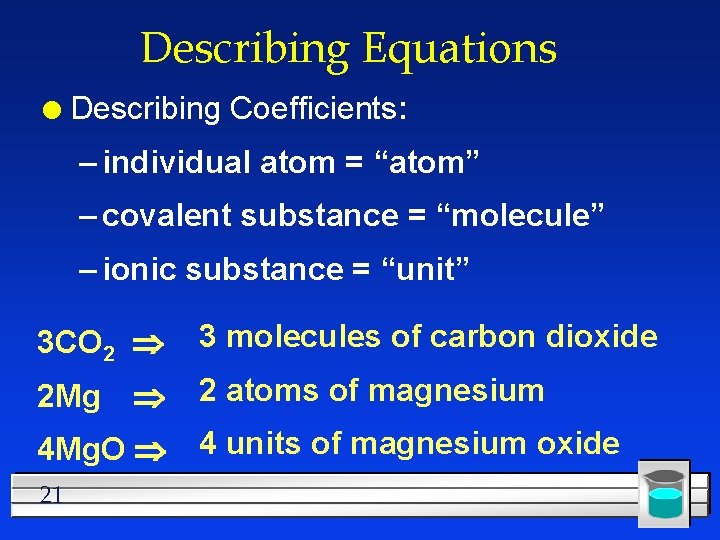
Describing Equations l Describing Coefficients: – individual atom = “atom” – covalent substance = “molecule” – ionic substance = “unit” 3 CO 2 2 Mg 4 Mg. O 21 3 molecules of carbon dioxide 2 atoms of magnesium 4 units of magnesium oxide
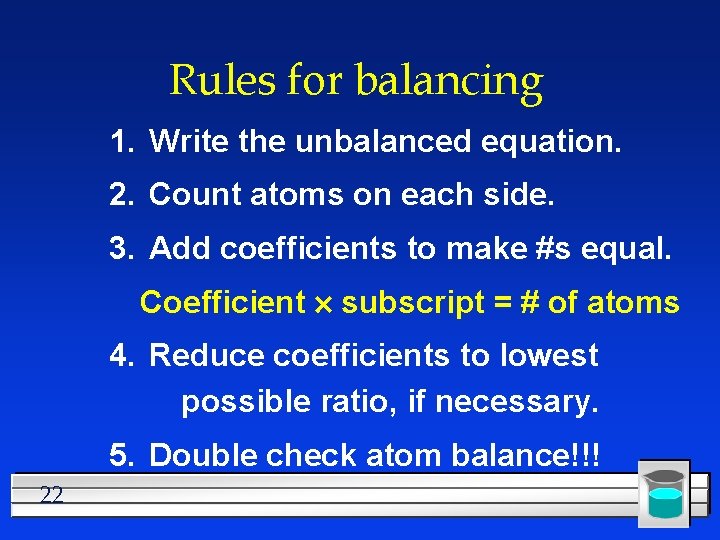
Rules for balancing 1. Write the unbalanced equation. 2. Count atoms on each side. 3. Add coefficients to make #s equal. Coefficient subscript = # of atoms 4. Reduce coefficients to lowest possible ratio, if necessary. 5. Double check atom balance!!! 22
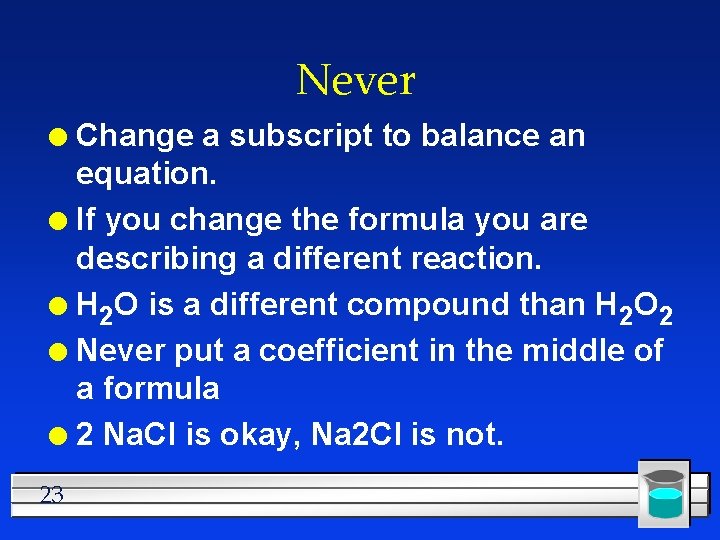
Never Change a subscript to balance an equation. l If you change the formula you are describing a different reaction. l H 2 O is a different compound than H 2 O 2 l Never put a coefficient in the middle of a formula l 2 Na. Cl is okay, Na 2 Cl is not. l 23
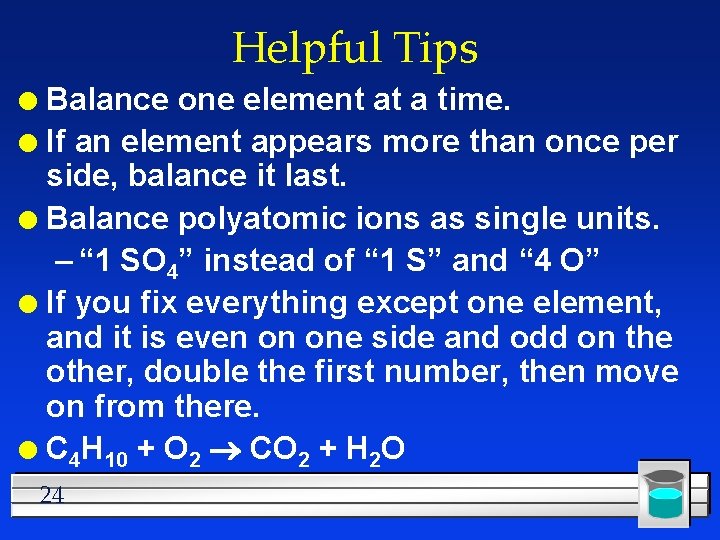
Helpful Tips Balance one element at a time. l If an element appears more than once per side, balance it last. l Balance polyatomic ions as single units. – “ 1 SO 4” instead of “ 1 S” and “ 4 O” l If you fix everything except one element, and it is even on one side and odd on the other, double the first number, then move on from there. l C 4 H 10 + O 2 CO 2 + H 2 O l 24
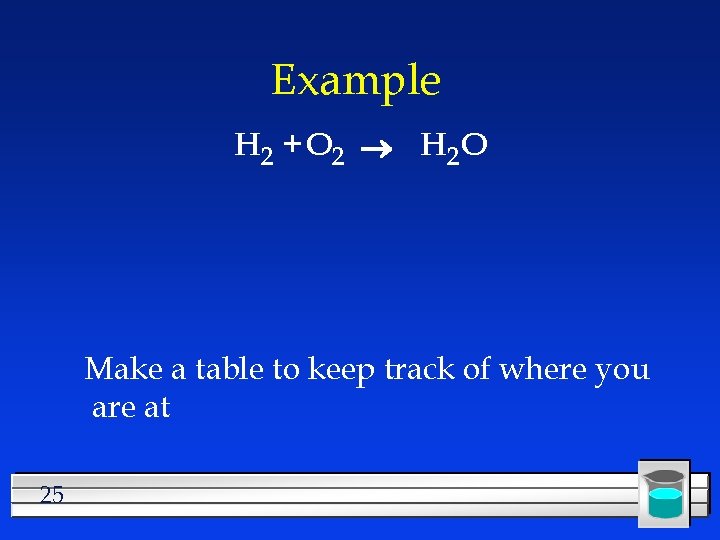
Example H 2 + O 2 H 2 O Make a table to keep track of where you are at 25
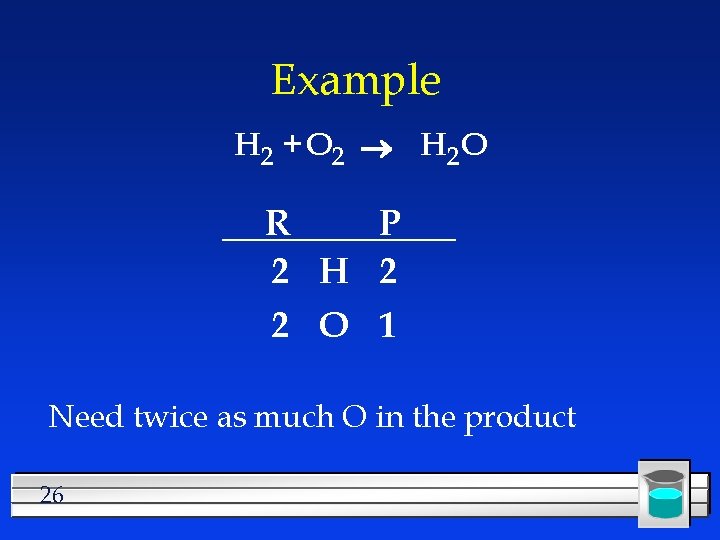
Example H 2 + O 2 H 2 O R P 2 H 2 2 O 1 Need twice as much O in the product 26
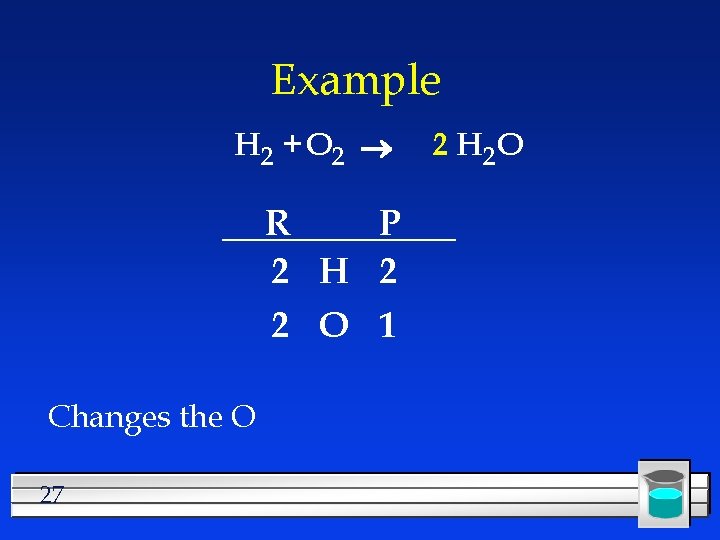
Example H 2 + O 2 R P 2 H 2 2 O 1 Changes the O 27 2 H 2 O
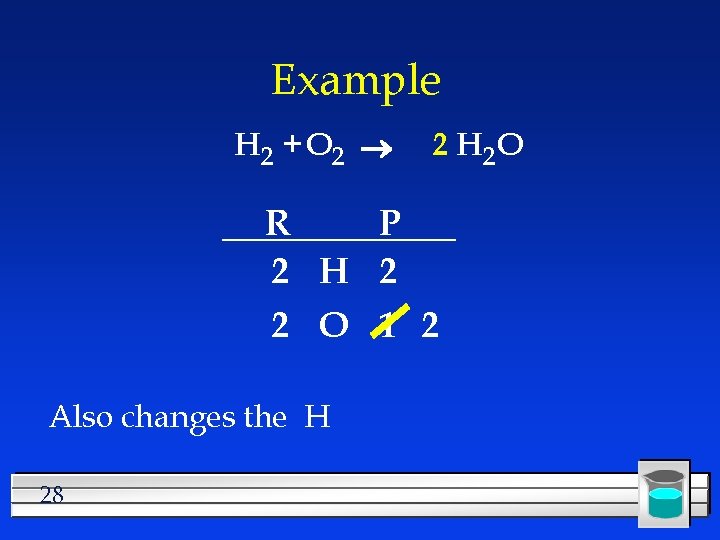
Example H 2 + O 2 2 H 2 O R P 2 H 2 2 O 1 2 Also changes the H 28
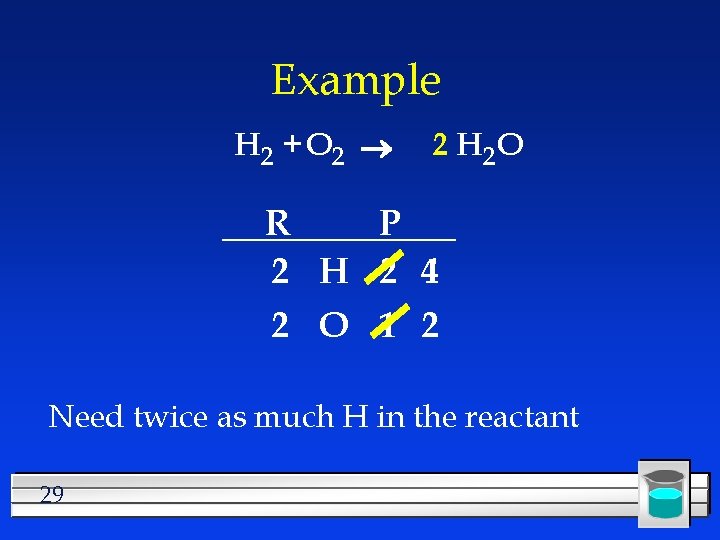
Example H 2 + O 2 2 H 2 O R P 2 H 2 4 2 O 1 2 Need twice as much H in the reactant 29
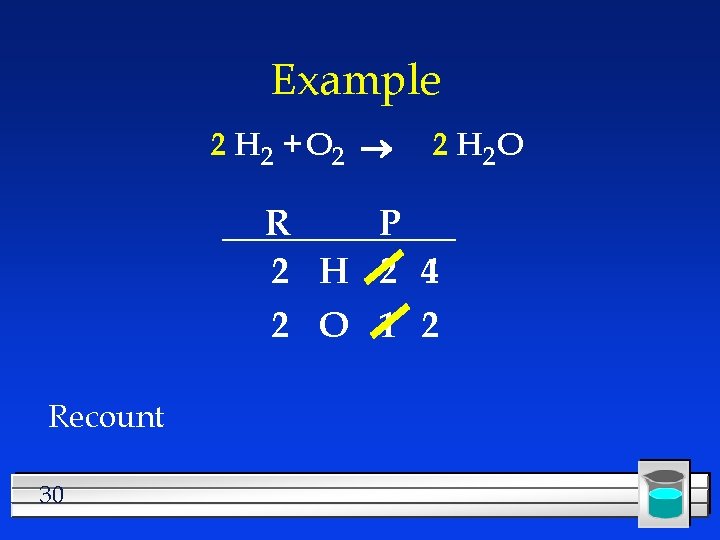
Example 2 H 2 + O 2 2 H 2 O R P 2 H 2 4 2 O 1 2 Recount 30
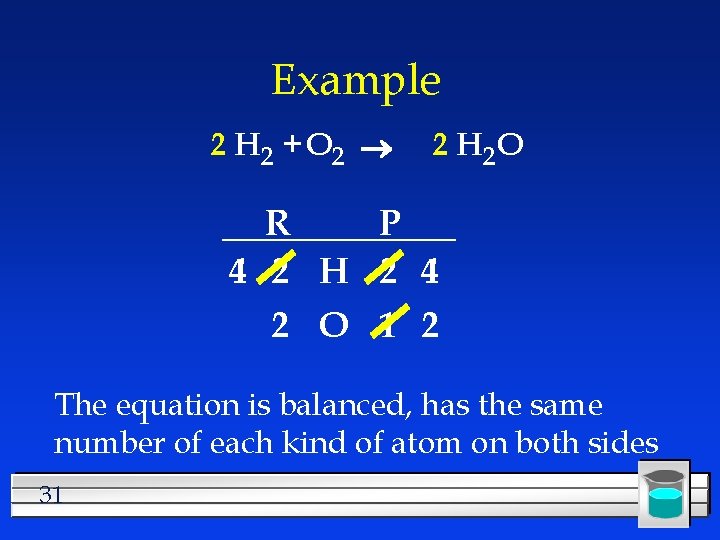
Example 2 H 2 + O 2 2 H 2 O R P 4 2 H 2 4 2 O 1 2 The equation is balanced, has the same number of each kind of atom on both sides 31
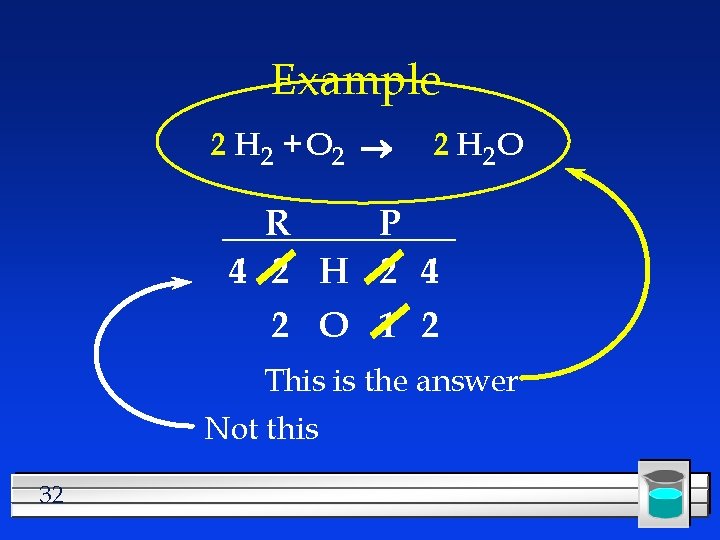
Example 2 H 2 + O 2 2 H 2 O R P 4 2 H 2 4 2 O 1 2 This is the answer Not this 32
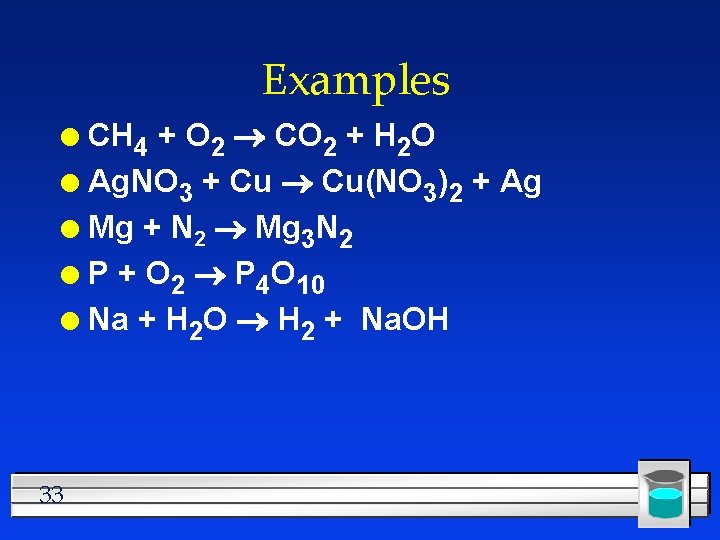
Examples CH 4 + O 2 CO 2 + H 2 O l Ag. NO 3 + Cu Cu(NO 3)2 + Ag l Mg + N 2 Mg 3 N 2 l P + O 2 P 4 O 10 l Na + H 2 O H 2 + Na. OH l 33
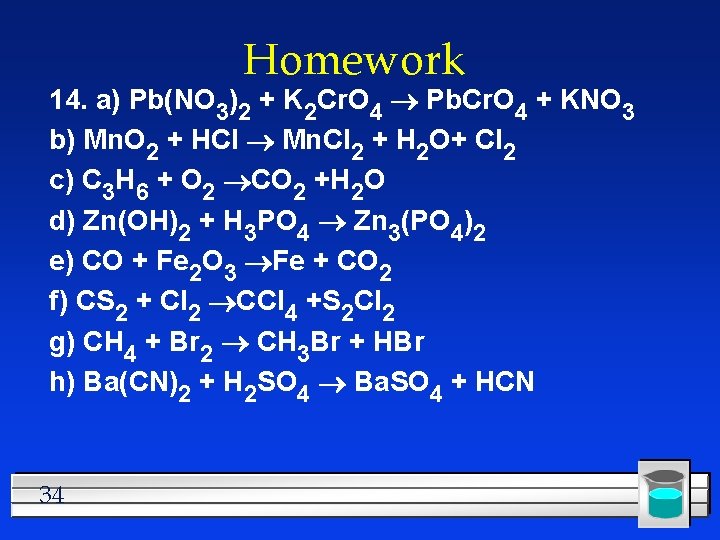
Homework 14. a) Pb(NO 3)2 + K 2 Cr. O 4 Pb. Cr. O 4 + KNO 3 b) Mn. O 2 + HCl Mn. Cl 2 + H 2 O+ Cl 2 c) C 3 H 6 + O 2 CO 2 +H 2 O d) Zn(OH)2 + H 3 PO 4 Zn 3(PO 4)2 e) CO + Fe 2 O 3 Fe + CO 2 f) CS 2 + Cl 2 CCl 4 +S 2 Cl 2 g) CH 4 + Br 2 CH 3 Br + HBr h) Ba(CN)2 + H 2 SO 4 Ba. SO 4 + HCN 34
Chapter 6 Summary 35
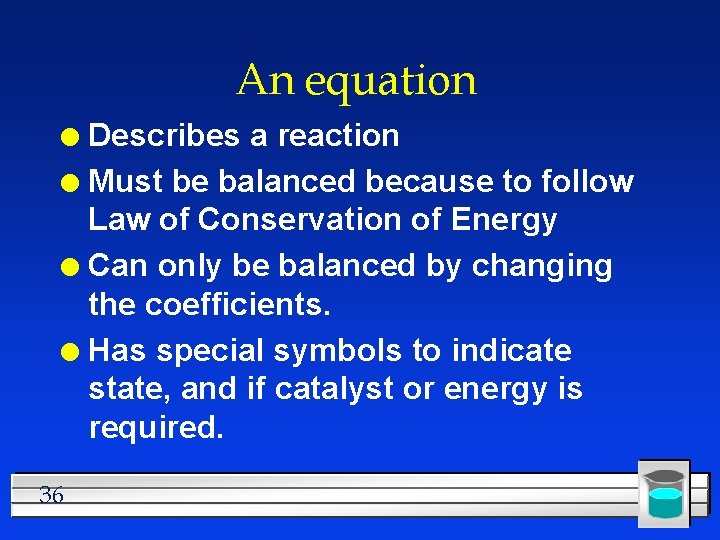
An equation Describes a reaction l Must be balanced because to follow Law of Conservation of Energy l Can only be balanced by changing the coefficients. l Has special symbols to indicate state, and if catalyst or energy is required. l 36