
Chapter 6 Challenges to Effective Policing What are













- Slides: 60
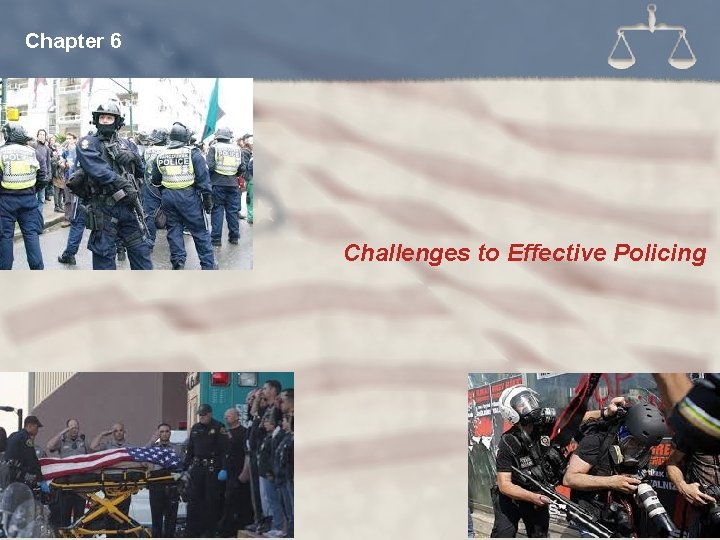
Chapter 6 Challenges to Effective Policing
What are Police Challenges List top ten challenges police officers face
Rodney King Incident https: //www. youtube. com/watch? v =sb 1 Wyw. Ip. Ut. Y
Recruitment and Training Becoming a Police Officer l Most agencies require at a minimum that a police officer: n Be a U. S. Citizen n Not have been convicted of a felony n Have or be eligible to have a driver’s license in the state where the department is located l n Be at least twenty-one years of age n Meet weight and eyesight requirements Beyond these minimum requirements, police departments usually engage in extensive background checks and require certain physical attributes in applicants. l Some departments require applicants to take a polygraph exam in conjunction with the background check
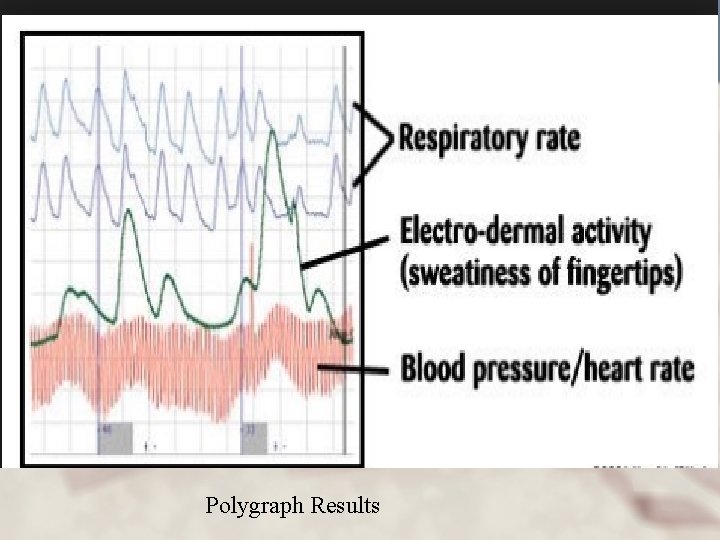
Polygraph Results
Polygraph Exam https: //www. youtube. com/watch? v =po_DCBGEx. P 4
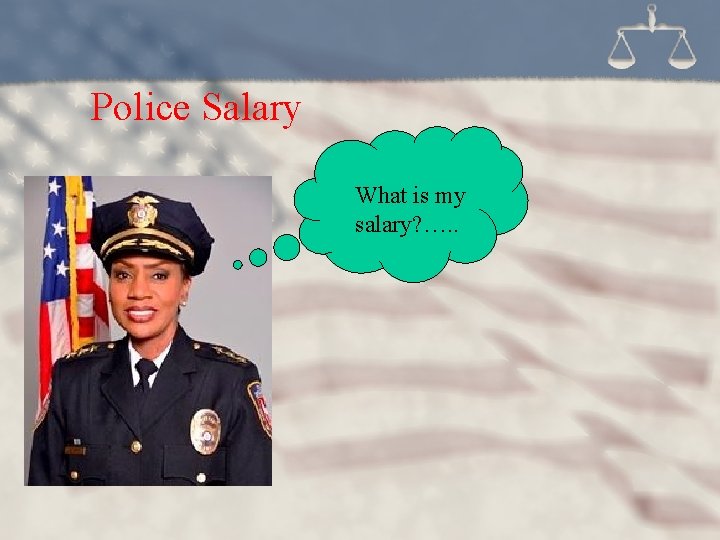
Police Salary What is my salary? …. .
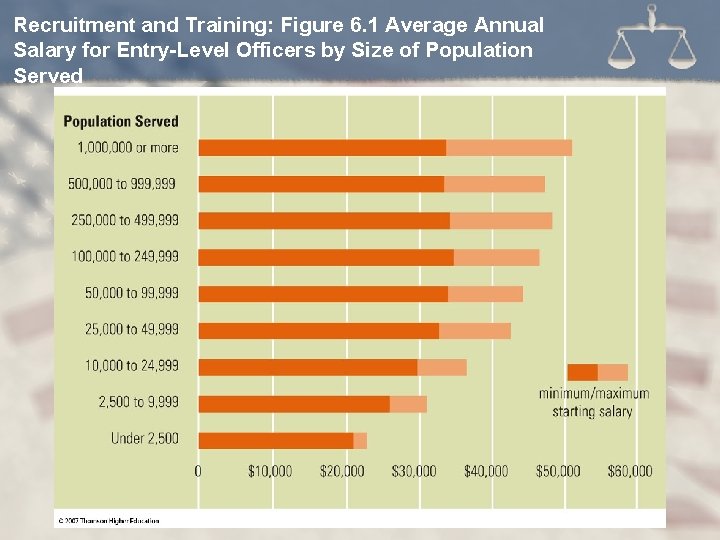
Recruitment and Training: Figure 6. 1 Average Annual Salary for Entry-Level Officers by Size of Population Served
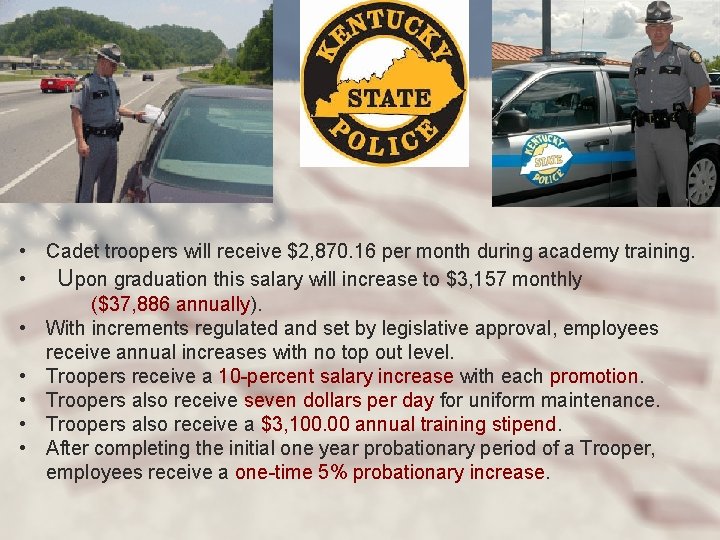
• Cadet troopers will receive $2, 870. 16 per month during academy training. • Upon graduation this salary will increase to $3, 157 monthly ($37, 886 annually). • With increments regulated and set by legislative approval, employees receive annual increases with no top out level. • Troopers receive a 10 -percent salary increase with each promotion. • Troopers also receive seven dollars per day for uniform maintenance. • Troopers also receive a $3, 100. 00 annual training stipend. • After completing the initial one year probationary period of a Trooper, employees receive a one-time 5% probationary increase.
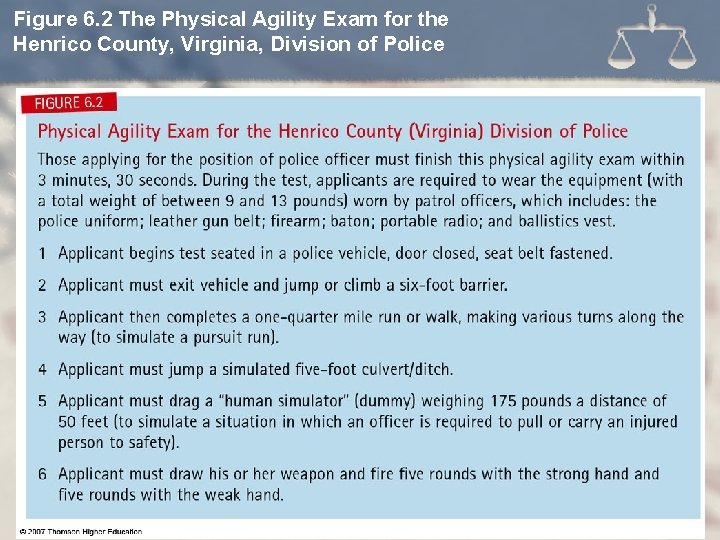
Figure 6. 2 The Physical Agility Exam for the Henrico County, Virginia, Division of Police
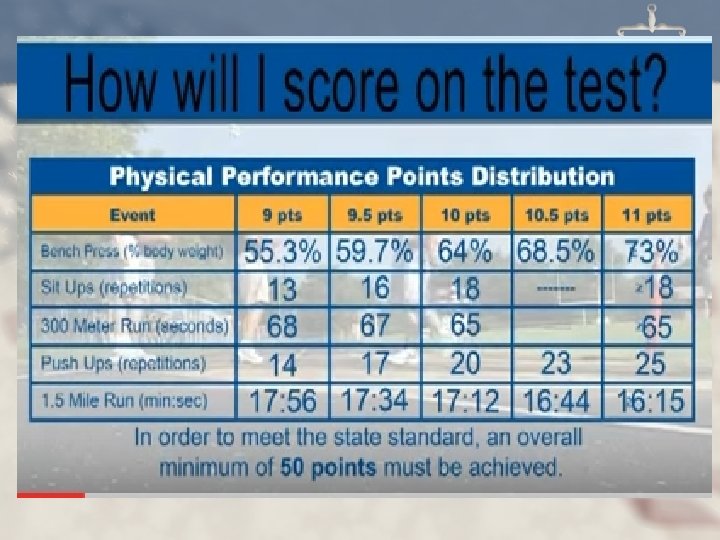
FIT Test https: //www. youtube. com/watch? v =o. SGXo. Zc. H 19 A
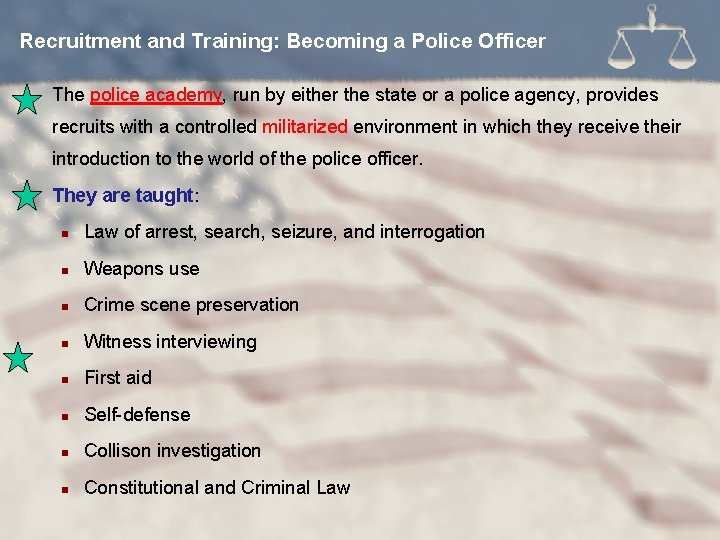
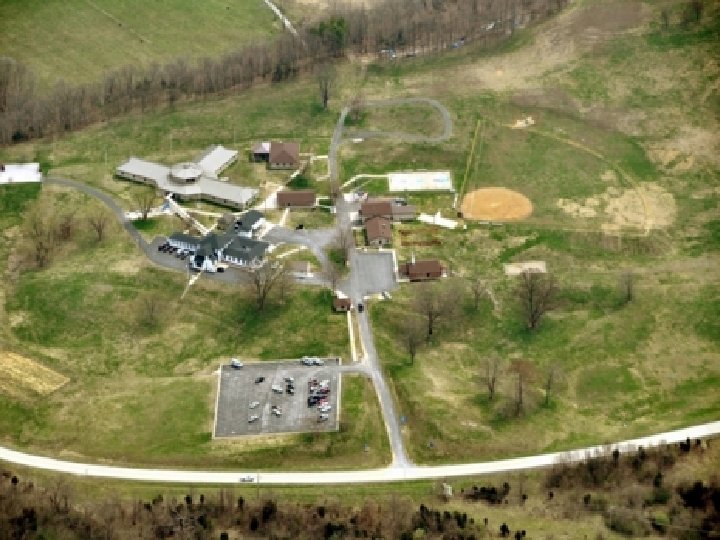
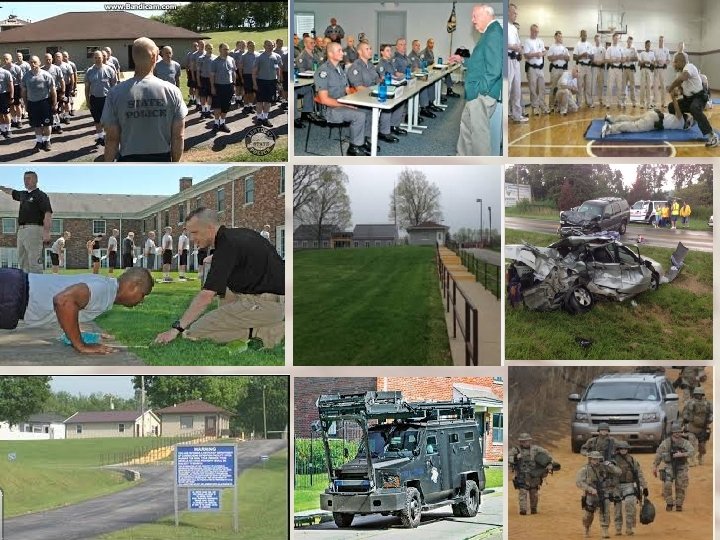
Recruitment and Training: Becoming a Police Officer l The police academy, run by either the state or a police agency, provides recruits with a controlled militarized environment in which they receive their introduction to the world of the police officer. l They are taught: n Law of arrest, search, seizure, and interrogation n Weapons use n Crime scene preservation n Witness interviewing n First aid n Self-defense n Collison investigation n Constitutional and Criminal Law
Oakland Police 172 nd Basic Academy Class Video https: //www. youtube. com/watch? v =Vwdw 5 P_Kt-0
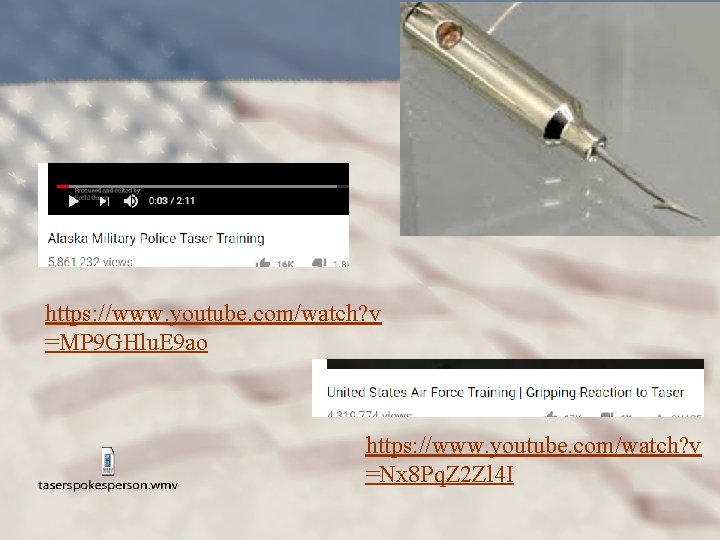
https: //www. youtube. com/watch? v =MP 9 GHlu. E 9 ao https: //www. youtube. com/watch? v =Nx 8 Pq. Z 2 Zl 4 I
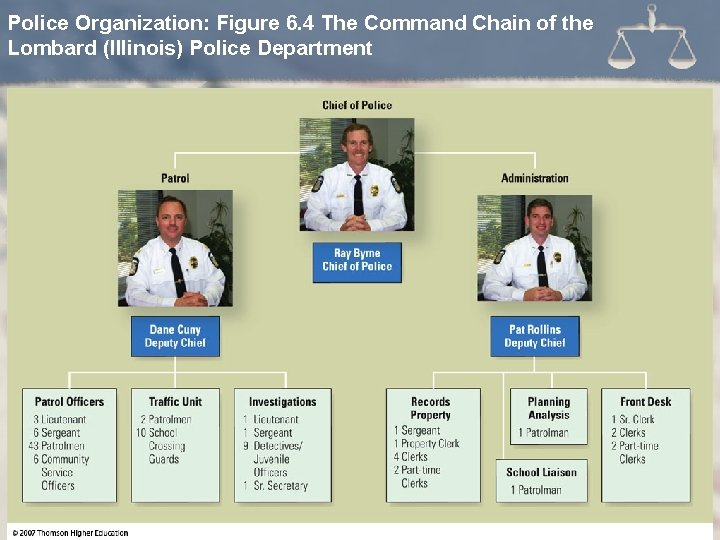
Police Organization: Figure 6. 4 The Command Chain of the Lombard (Illinois) Police Department
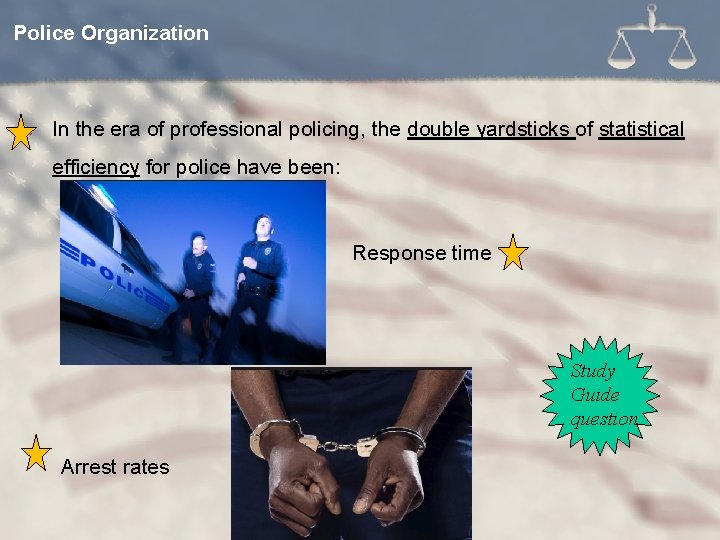
Police Organization l In the era of professional policing, the double yardsticks of statistical efficiency for police have been: Response time Study Guide question Arrest rates
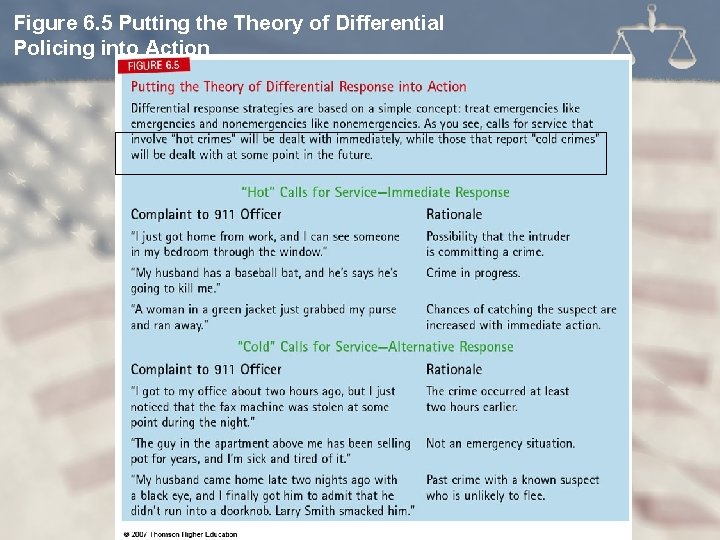
Figure 6. 5 Putting the Theory of Differential Policing into Action
Refocusing on the Community l Community policing is a police “philosophy” that emphasizes community support for and cooperation with the police in preventing crime. l Community policing stresses a police role that is less centralized (reactive) and more proactive than reform era policing strategies.
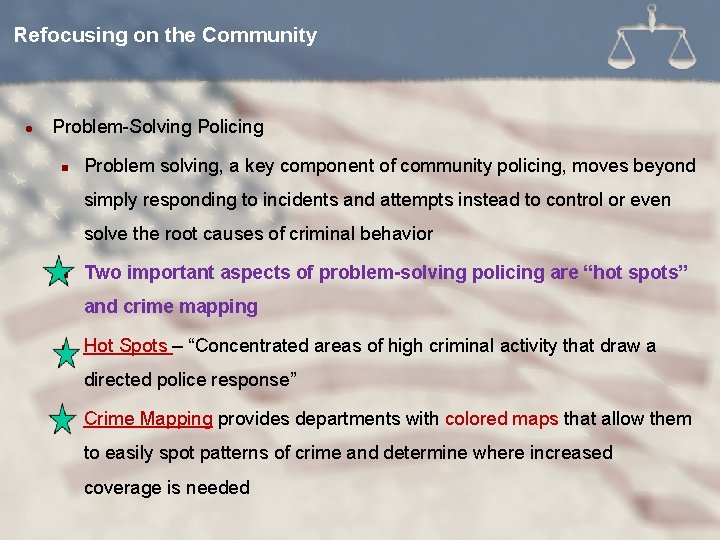
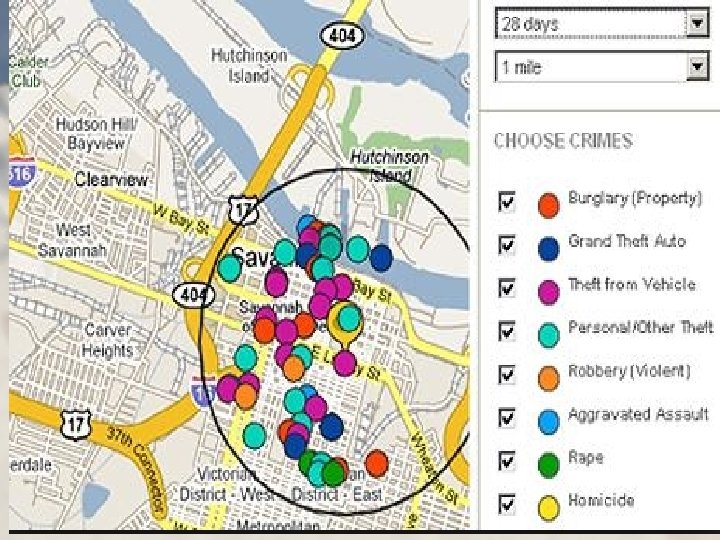
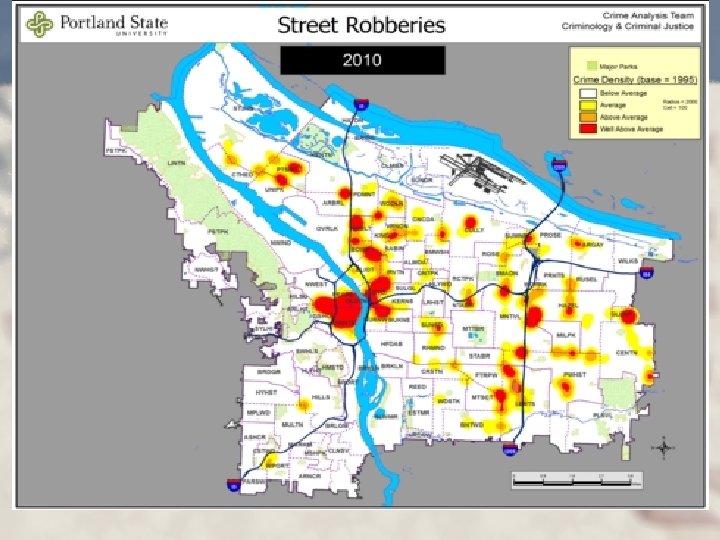
Refocusing on the Community l Problem-Solving Policing n Problem solving, a key component of community policing, moves beyond simply responding to incidents and attempts instead to control or even solve the root causes of criminal behavior n Two important aspects of problem-solving policing are “hot spots” and crime mapping n Hot Spots – “Concentrated areas of high criminal activity that draw a directed police response” n Crime Mapping provides departments with colored maps that allow them to easily spot patterns of crime and determine where increased coverage is needed
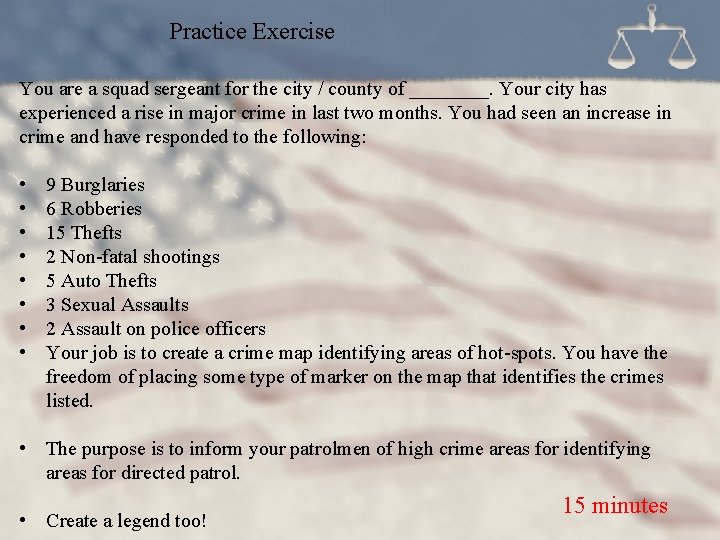
Practice Exercise You are a squad sergeant for the city / county of ____. Your city has experienced a rise in major crime in last two months. You had seen an increase in crime and have responded to the following: • • 9 Burglaries 6 Robberies 15 Thefts 2 Non-fatal shootings 5 Auto Thefts 3 Sexual Assaults 2 Assault on police officers Your job is to create a crime map identifying areas of hot-spots. You have the freedom of placing some type of marker on the map that identifies the crimes listed. • The purpose is to inform your patrolmen of high crime areas for identifying areas for directed patrol. • Create a legend too! 15 minutes
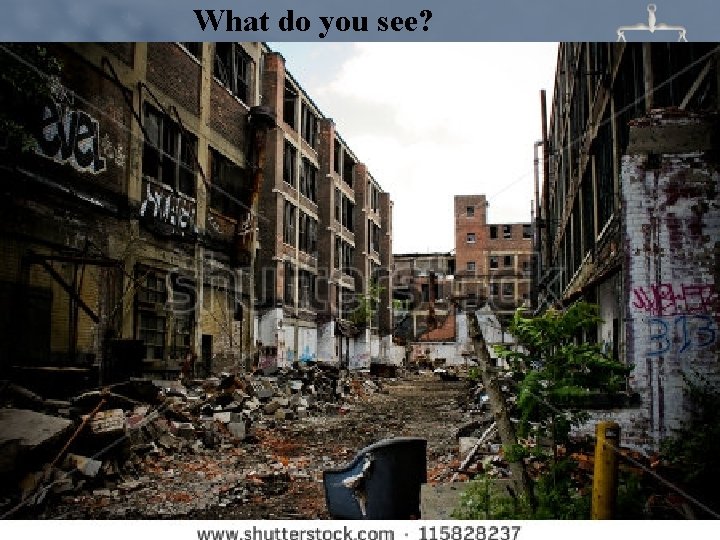
What do you see?
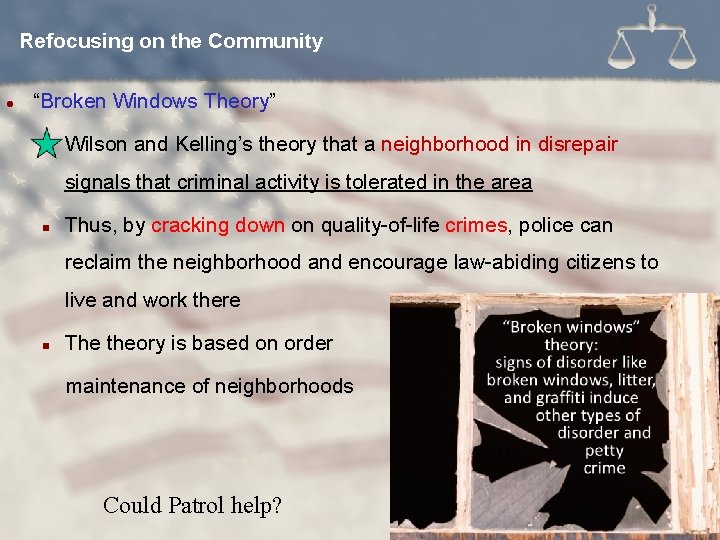
Refocusing on the Community l “Broken Windows Theory” n Wilson and Kelling’s theory that a neighborhood in disrepair signals that criminal activity is tolerated in the area n Thus, by cracking down on quality-of-life crimes, police can reclaim the neighborhood and encourage law-abiding citizens to live and work there n The theory is based on order maintenance of neighborhoods Could Patrol help?
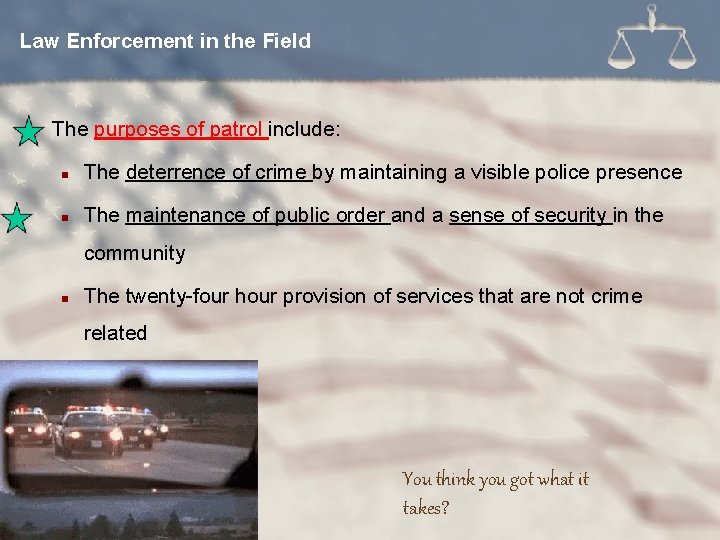
Law Enforcement in the Field l The purposes of patrol include: n The deterrence of crime by maintaining a visible police presence n The maintenance of public order and a sense of security in the community n The twenty-four hour provision of services that are not crime related You think you got what it takes?
Trooper for a Day https: //www. youtube. com/watch? v =x 6 AB 8 LBQp. Ko
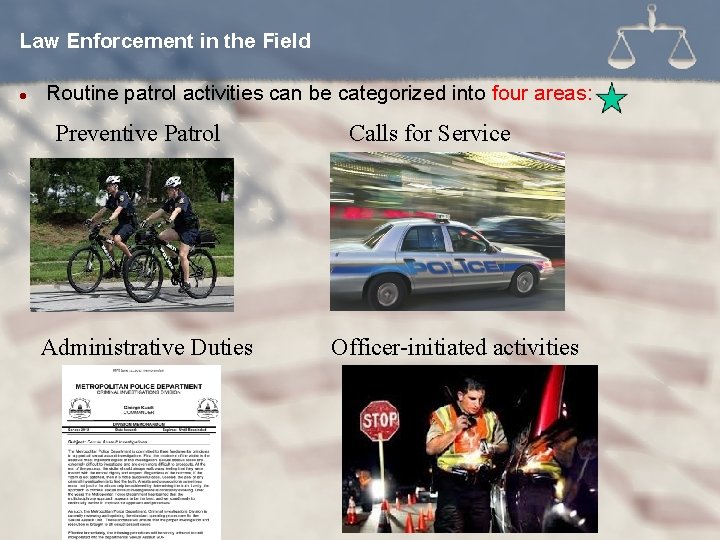
Law Enforcement in the Field l Routine patrol activities can be categorized into four areas: Preventive Patrol Administrative Duties Calls for Service Officer-initiated activities
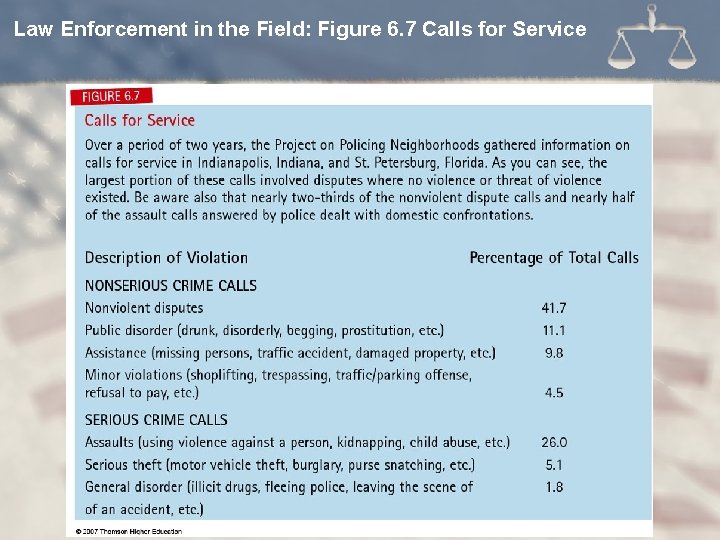
Law Enforcement in the Field: Figure 6. 7 Calls for Service
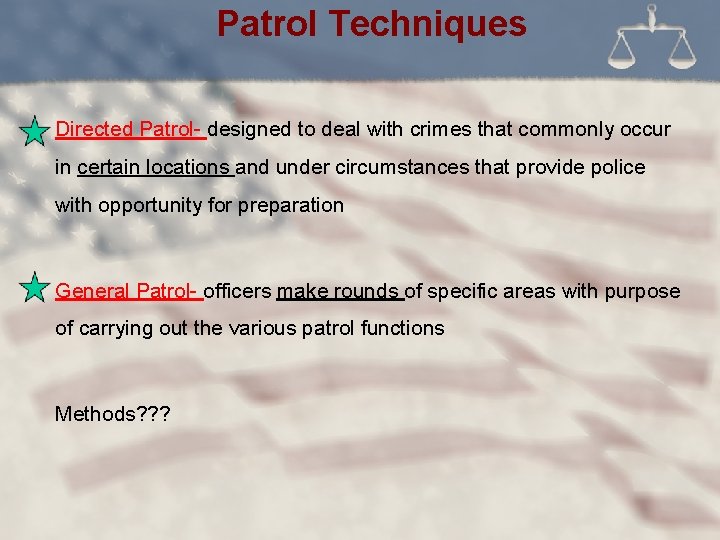
Patrol Techniques Directed Patrol- designed to deal with crimes that commonly occur in certain locations and under circumstances that provide police with opportunity for preparation General Patrol- officers make rounds of specific areas with purpose of carrying out the various patrol functions Methods? ? ?
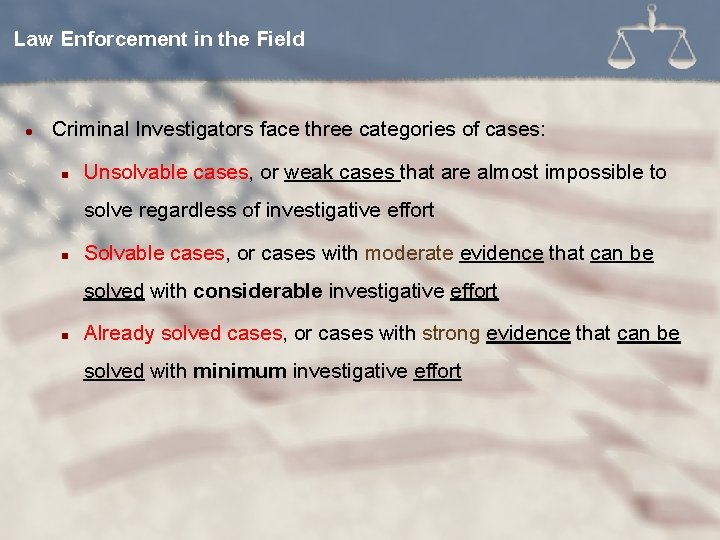
Law Enforcement in the Field l Criminal Investigators face three categories of cases: n Unsolvable cases, or weak cases that are almost impossible to solve regardless of investigative effort n Solvable cases, or cases with moderate evidence that can be solved with considerable investigative effort n Already solved cases, or cases with strong evidence that can be solved with minimum investigative effort
“Us Versus Them”: Issues in Modern Policing l Certain forms of corruption have been endemic to police work since its inception, including: n Bribery, in which the officer accepts money or other forms of payment in exchange for “favors” n Shakedowns, in which an officer attempts to coerce money or goods from a citizen or criminal n Mooching, in which the officer accepts free “gifts” in return for favorable treatment of the gift giver
Kentucky Line of Duty Deaths as of 10/31/2018 https: //www. odmp. org/search? state =kentucky&cause=Gunfire
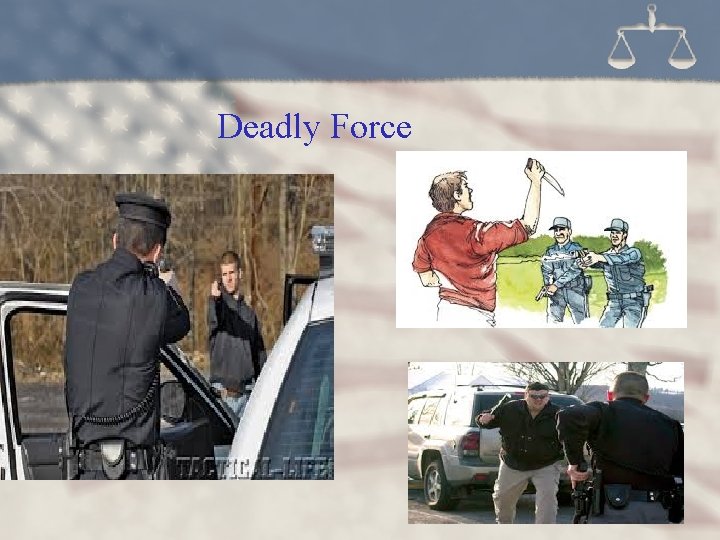
Deadly Force
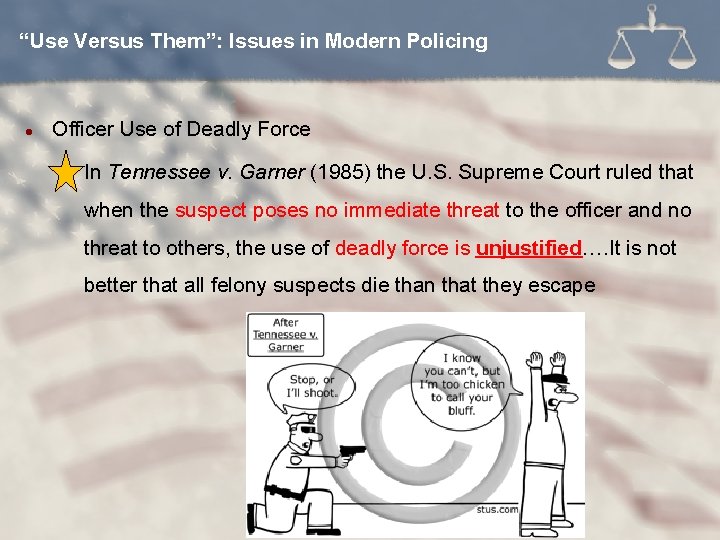
“Use Versus Them”: Issues in Modern Policing l Officer Use of Deadly Force n In Tennessee v. Garner (1985) the U. S. Supreme Court ruled that when the suspect poses no immediate threat to the officer and no threat to others, the use of deadly force is unjustified…. It is not better that all felony suspects die than that they escape
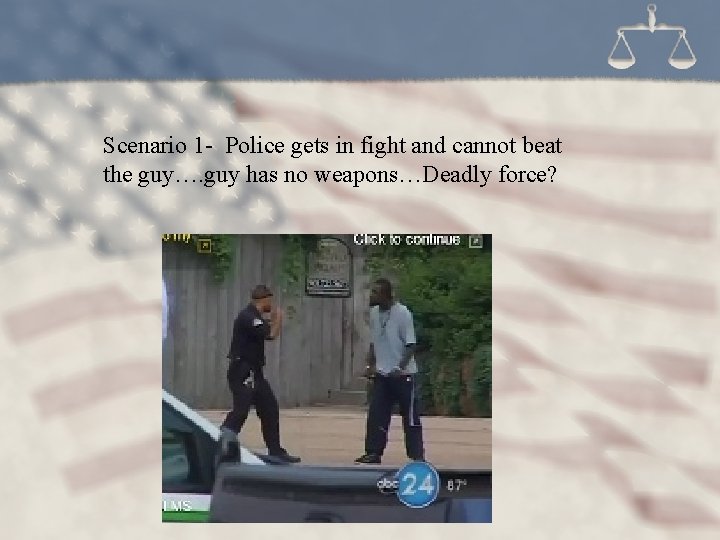
Scenario 1 - Police gets in fight and cannot beat the guy…. guy has no weapons…Deadly force?
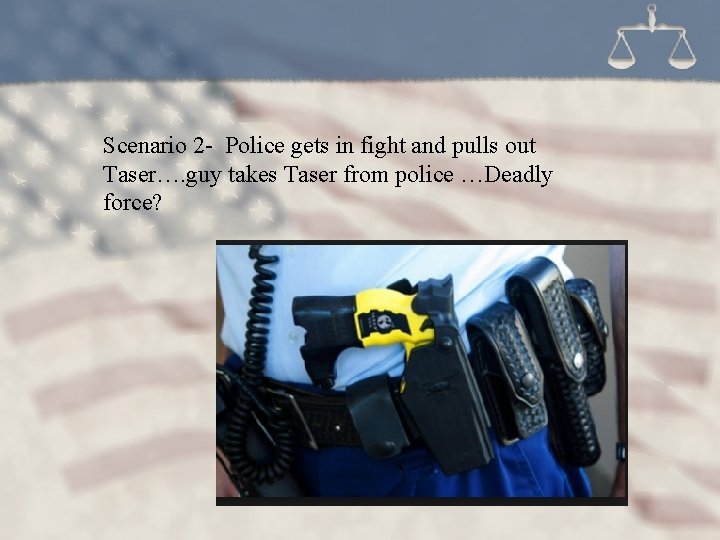
Scenario 2 - Police gets in fight and pulls out Taser…. guy takes Taser from police …Deadly force?
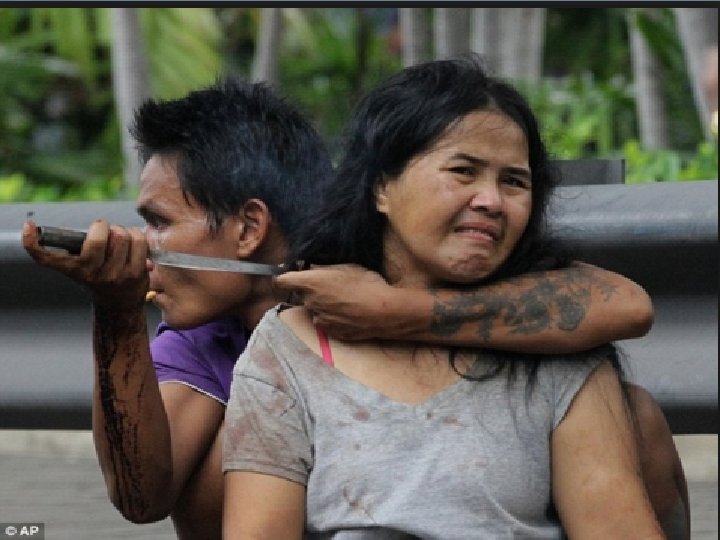
Scenario 3 - girl is holding another girl hostage with knife to head…. . Deadly force?
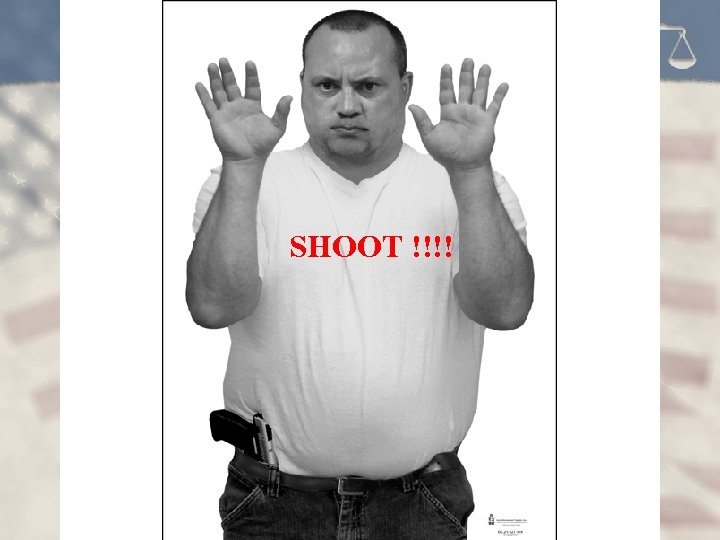
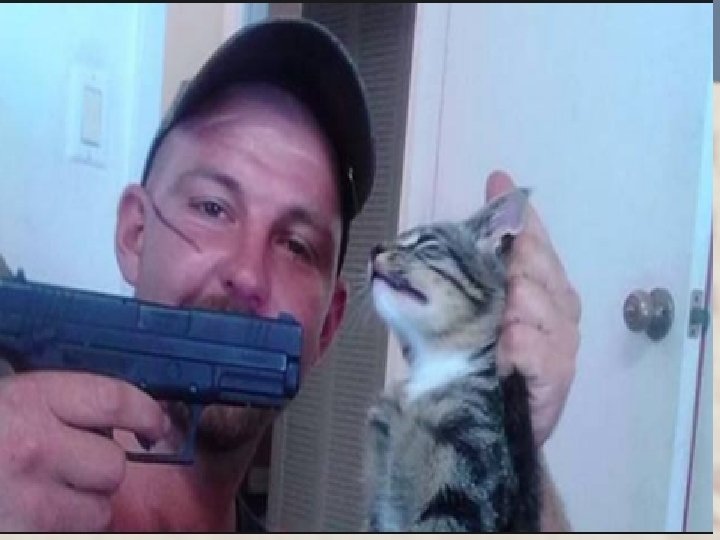
Shoot or No-Shoot You have 3/10 of a second to shout: SHOOT OR NO SHOOT
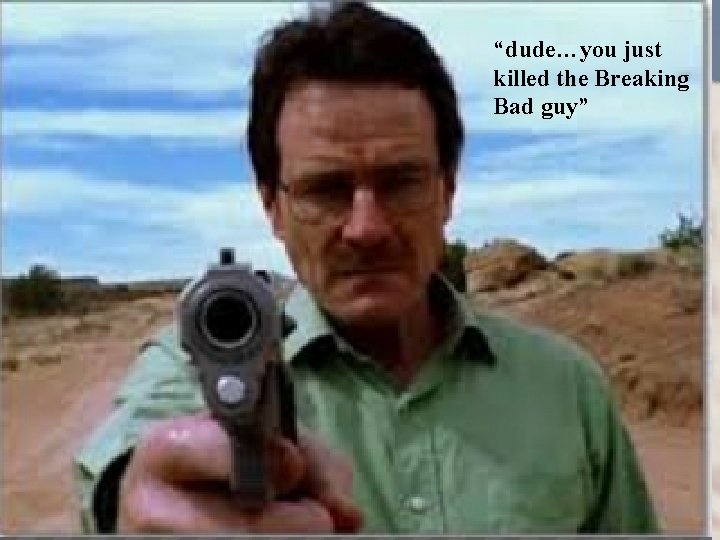
“dude…you just killed the Breaking Bad guy”
SHOOT !!!!
Shoot or no shoot scenarios (shorter video) https: //www. youtube. com/watch? v =gdl. Oi. IM 4 P 9 Q
Shoot or no shoot scenarios 12: 13 https: //www. youtube. com/watch? v =b. ANG 61 j_Em. U
Shoot or No-shoot 8: 46 https: //www. youtube. com/watch? v =ob 4 b. ZWFz 41 o