
CHAPTER 6 CELLS 1 Light Microscopes Light microscopes
- Slides: 71
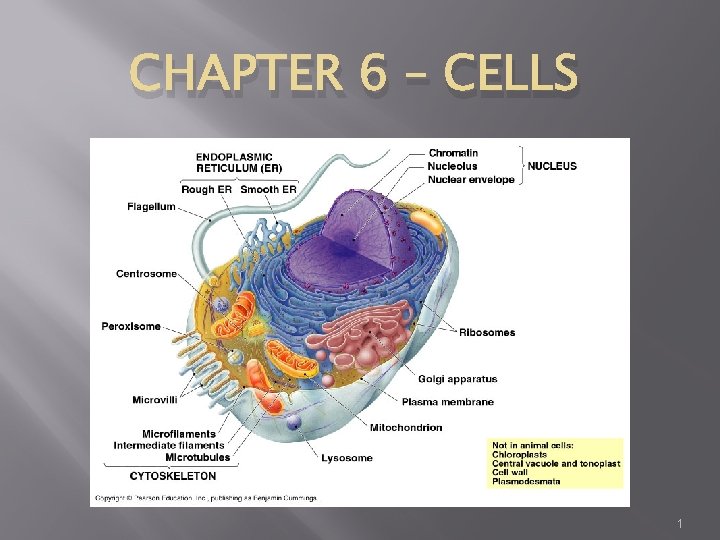
CHAPTER 6 – CELLS 1
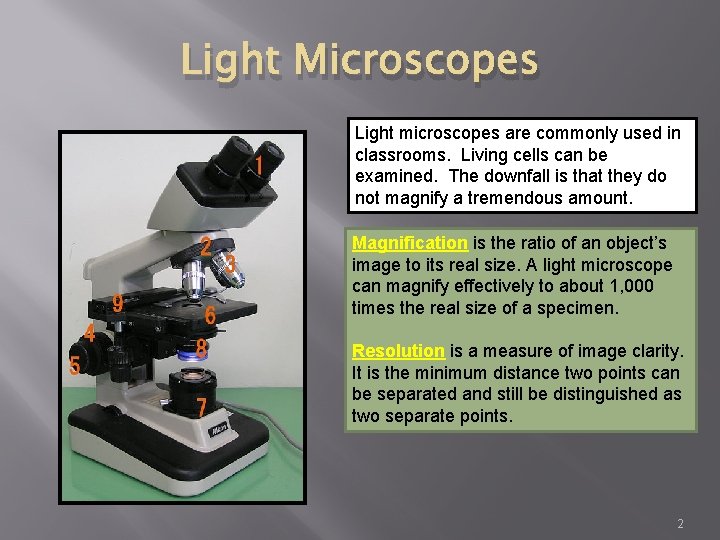
Light Microscopes Light microscopes are commonly used in classrooms. Living cells can be examined. The downfall is that they do not magnify a tremendous amount. Magnification is the ratio of an object’s image to its real size. A light microscope can magnify effectively to about 1, 000 times the real size of a specimen. Resolution is a measure of image clarity. It is the minimum distance two points can be separated and still be distinguished as two separate points. 2
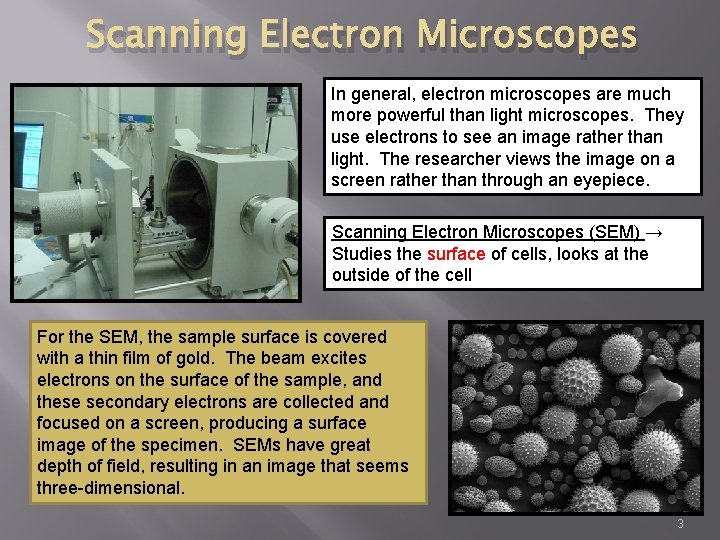
Scanning Electron Microscopes In general, electron microscopes are much more powerful than light microscopes. They use electrons to see an image rather than light. The researcher views the image on a screen rather than through an eyepiece. Scanning Electron Microscopes (SEM) → Studies the surface of cells, looks at the outside of the cell For the SEM, the sample surface is covered with a thin film of gold. The beam excites electrons on the surface of the sample, and these secondary electrons are collected and focused on a screen, producing a surface image of the specimen. SEMs have great depth of field, resulting in an image that seems three-dimensional. 3
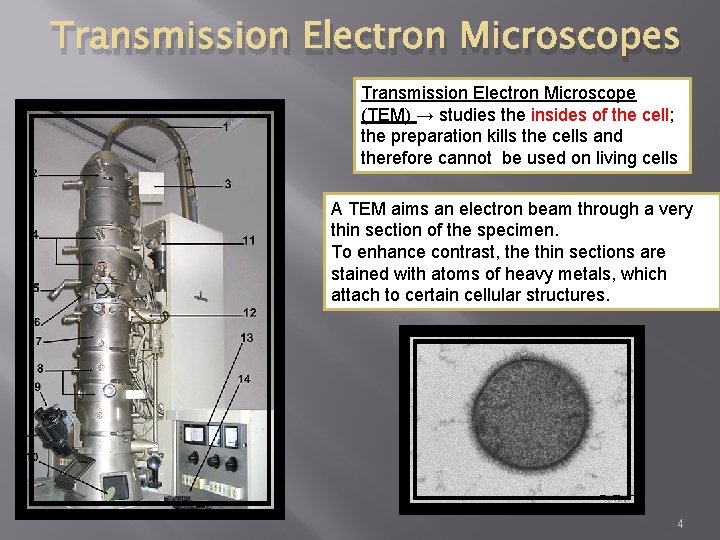
Transmission Electron Microscopes Transmission Electron Microscope (TEM) → studies the insides of the cell; the preparation kills the cells and therefore cannot be used on living cells A TEM aims an electron beam through a very thin section of the specimen. To enhance contrast, the thin sections are stained with atoms of heavy metals, which attach to certain cellular structures. 4
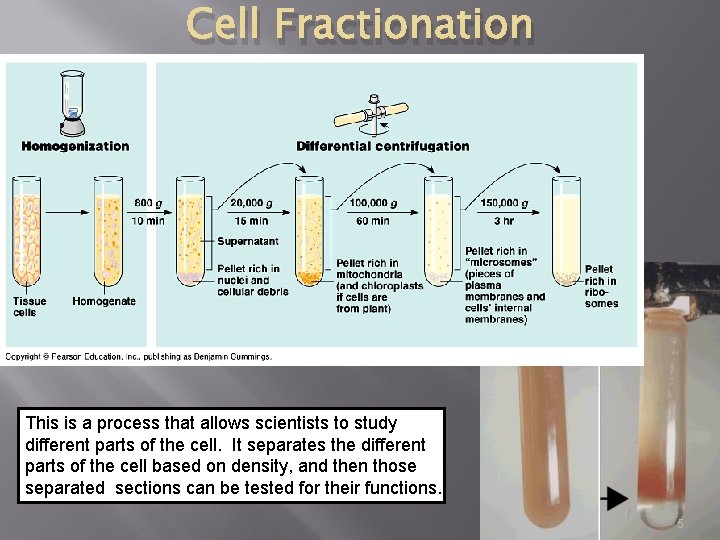
Cell Fractionation This is a process that allows scientists to study different parts of the cell. It separates the different parts of the cell based on density, and then those separated sections can be tested for their functions. 5
ALL cells have… � � Plasma membrane selective barrier (more on this later…) Cytosol clear jelly-like stuff that is made up of mostly water and enzymes and the organelles are suspended in this � Cytoplasm In Prokaryotes, the whole interior In Eukaryotes, the region between the nucleus and plasma membrane (cytosol and organelles) � � Ribosomes site of protein synthesis Chromosomes genetic information � In Prokaryotes, this is in the NUCLEOID REGION � In Eukaryotes, this is in the NUCLEUS 6
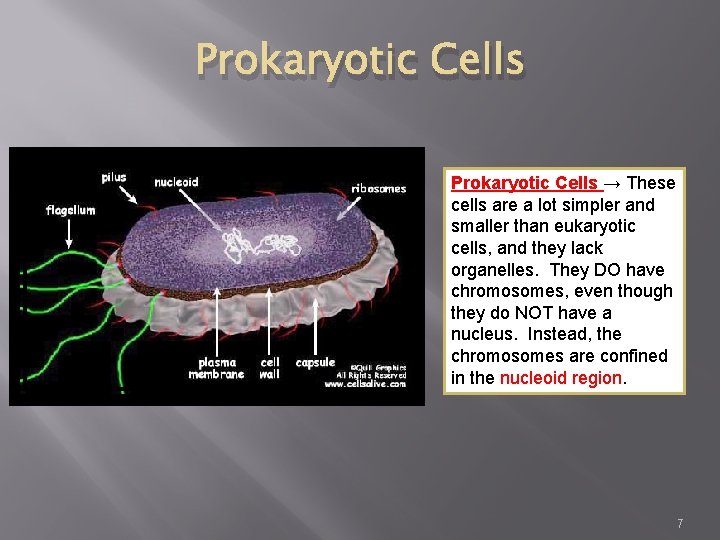
Prokaryotic Cells → These cells are a lot simpler and smaller than eukaryotic cells, and they lack organelles. They DO have chromosomes, even though they do NOT have a nucleus. Instead, the chromosomes are confined in the nucleoid region. 7
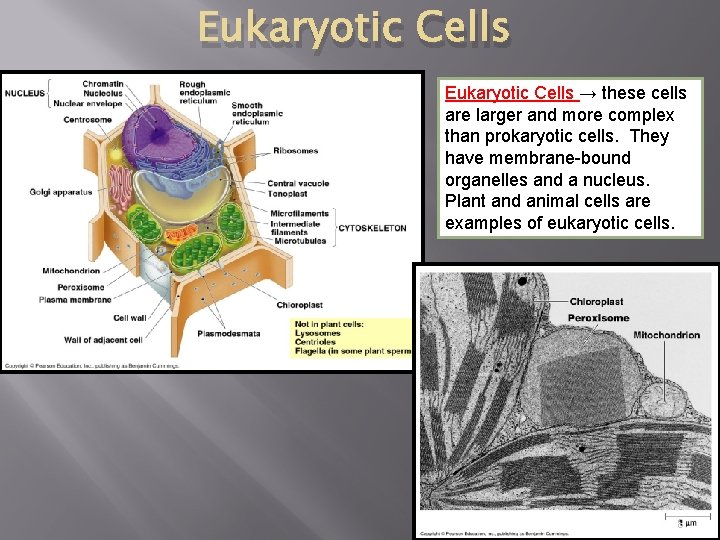
Eukaryotic Cells → these cells are larger and more complex than prokaryotic cells. They have membrane-bound organelles and a nucleus. Plant and animal cells are examples of eukaryotic cells. 8
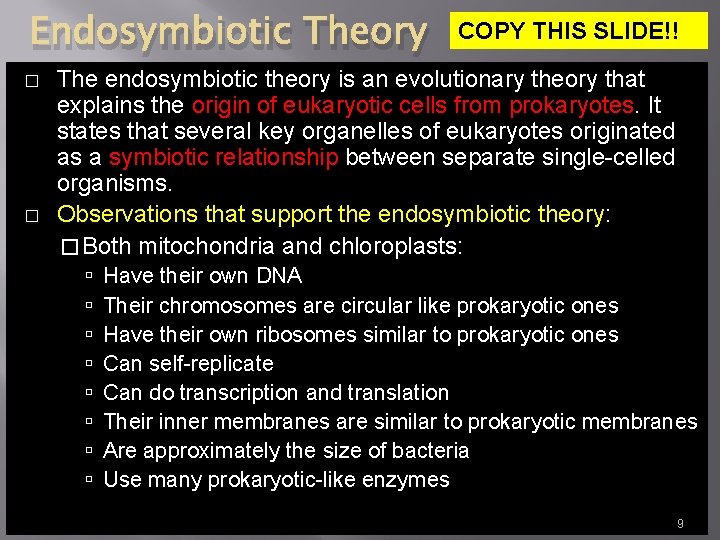
Endosymbiotic Theory � � COPY THIS SLIDE!! The endosymbiotic theory is an evolutionary theory that explains the origin of eukaryotic cells from prokaryotes. It states that several key organelles of eukaryotes originated as a symbiotic relationship between separate single-celled organisms. Observations that support the endosymbiotic theory: � Both mitochondria and chloroplasts: Have their own DNA Their chromosomes are circular like prokaryotic ones Have their own ribosomes similar to prokaryotic ones Can self-replicate Can do transcription and translation Their inner membranes are similar to prokaryotic membranes Are approximately the size of bacteria Use many prokaryotic-like enzymes 9
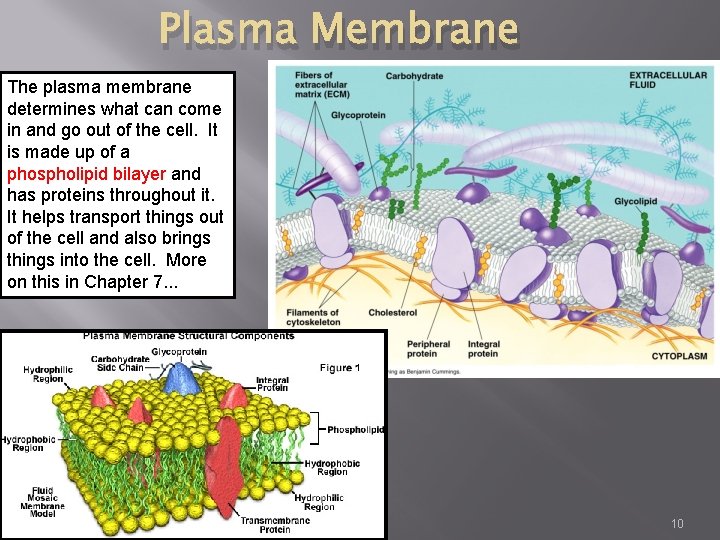
Plasma Membrane The plasma membrane determines what can come in and go out of the cell. It is made up of a phospholipid bilayer and has proteins throughout it. It helps transport things out of the cell and also brings things into the cell. More on this in Chapter 7. . . 10
Cell Size � � The logistics of carrying out cellular metabolism set limits on cell size. If a cell gets too big, it will not be able to transport out waste quickly enough, and the cell will be poisoned. As a cell increases in size, its volume increases faster than its surface area. So, smaller objects have a higher ratio of Surface Area to Volume than larger cells. (Some cells have features that increase their surface area like folding or microvilli) Eukaryotic cells are typically much larger than prokaryotic cells. Larger organisms do not generally have larger cells than smaller organisms, simply more cells. 11
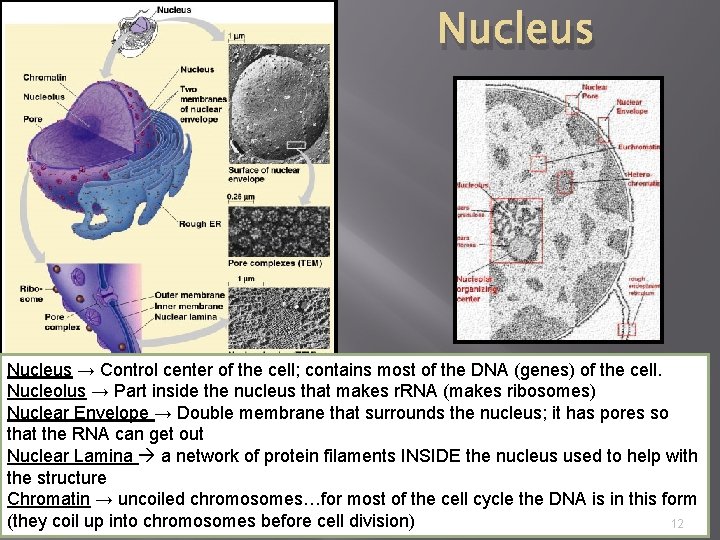
Nucleus → Control center of the cell; contains most of the DNA (genes) of the cell. Nucleolus → Part inside the nucleus that makes r. RNA (makes ribosomes) Nuclear Envelope → Double membrane that surrounds the nucleus; it has pores so that the RNA can get out Nuclear Lamina a network of protein filaments INSIDE the nucleus used to help with the structure Chromatin → uncoiled chromosomes…for most of the cell cycle the DNA is in this form (they coil up into chromosomes before cell division) 12
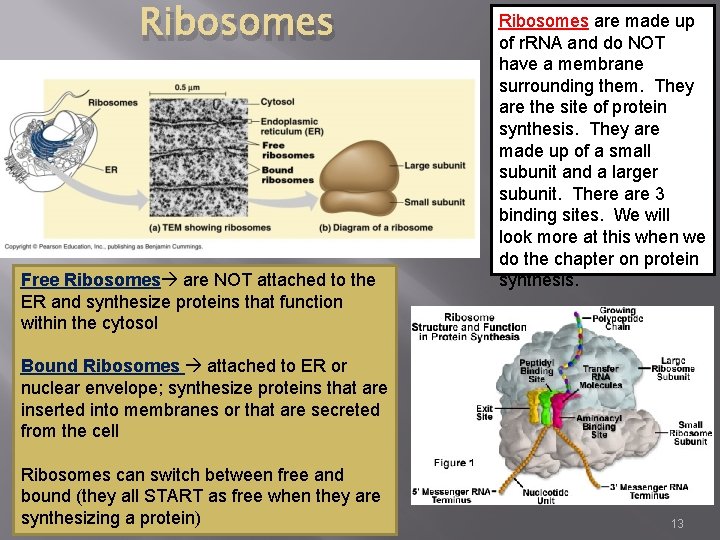
Ribosomes Free Ribosomes are NOT attached to the ER and synthesize proteins that function within the cytosol Ribosomes are made up of r. RNA and do NOT have a membrane surrounding them. They are the site of protein synthesis. They are made up of a small subunit and a larger subunit. There are 3 binding sites. We will look more at this when we do the chapter on protein synthesis. Bound Ribosomes attached to ER or nuclear envelope; synthesize proteins that are inserted into membranes or that are secreted from the cell Ribosomes can switch between free and bound (they all START as free when they are synthesizing a protein) 13
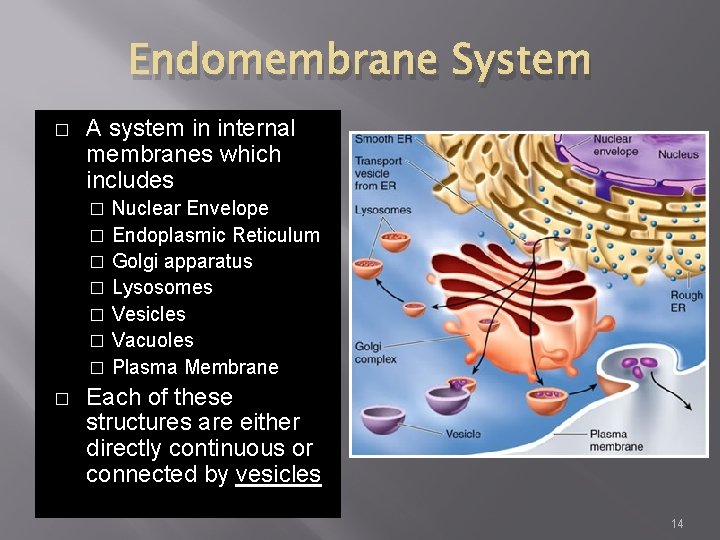
Endomembrane System � A system in internal membranes which includes Nuclear Envelope � Endoplasmic Reticulum � Golgi apparatus � Lysosomes � Vesicles � Vacuoles � Plasma Membrane � � Each of these structures are either directly continuous or connected by vesicles 14
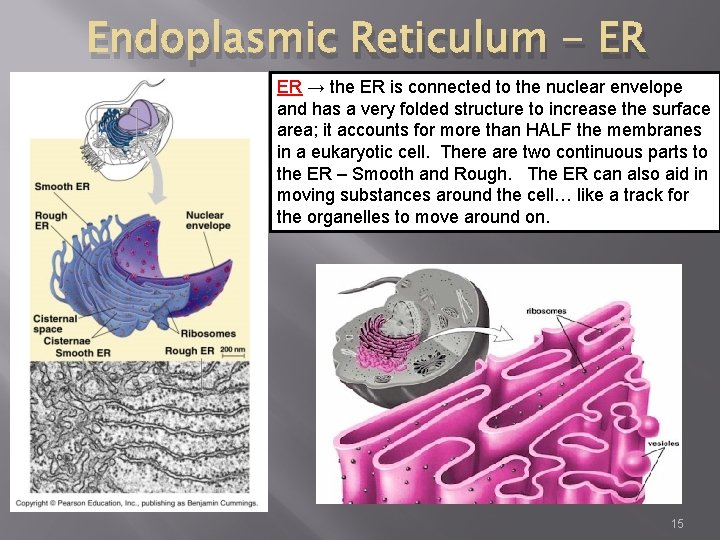
Endoplasmic Reticulum - ER ER → the ER is connected to the nuclear envelope and has a very folded structure to increase the surface area; it accounts for more than HALF the membranes in a eukaryotic cell. There are two continuous parts to the ER – Smooth and Rough. The ER can also aid in moving substances around the cell… like a track for the organelles to move around on. 15
Smooth vs. Rough ER Cells that have high levels of smooth ER can be used for lipid/hormone synthesis or detoxification - Smooth ER → lacks ribosomes; function = makes lipids (hormones, steroids); detoxifies drugs and alcohol, breaks down carbs; stores calcium ions - In the smooth ER of the liver, enzymes help detoxify poisons and drugs such as alcohol and barbiturates. Frequent use of these drugs leads to the proliferation of smooth ER in liver cells, increasing the rate of detoxification. This proliferation of smooth ER increases tolerance to the target and other drugs, so higher doses are required to achieve the same effect. - Stores calcium ions which is very important in muscle cells! - Rough ER → lined with ribosomes; function = makes secretory proteins and makes membranes; LOTS of Rough ER in cells that secrete proteins. - As a polypeptide chain grows from a bound ribosome, it is threaded into the ER lumen through a pore formed by a protein complex in the ER membrane. - As the new polypeptide enters the ER lumen, it folds into its native shape. - Most secretory polypeptides are glycoproteins (proteins and carbs) - Secretory proteins are packaged in transport vesicles that can carry proteins from one part of the cell to another. 16
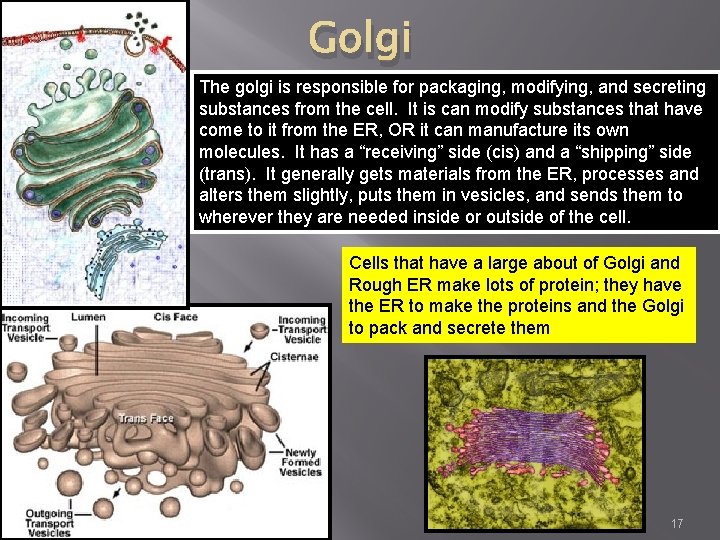
Golgi The golgi is responsible for packaging, modifying, and secreting substances from the cell. It is can modify substances that have come to it from the ER, OR it can manufacture its own molecules. It has a “receiving” side (cis) and a “shipping” side (trans). It generally gets materials from the ER, processes and alters them slightly, puts them in vesicles, and sends them to wherever they are needed inside or outside of the cell. Cells that have a large about of Golgi and Rough ER make lots of protein; they have the ER to make the proteins and the Golgi to pack and secrete them 17
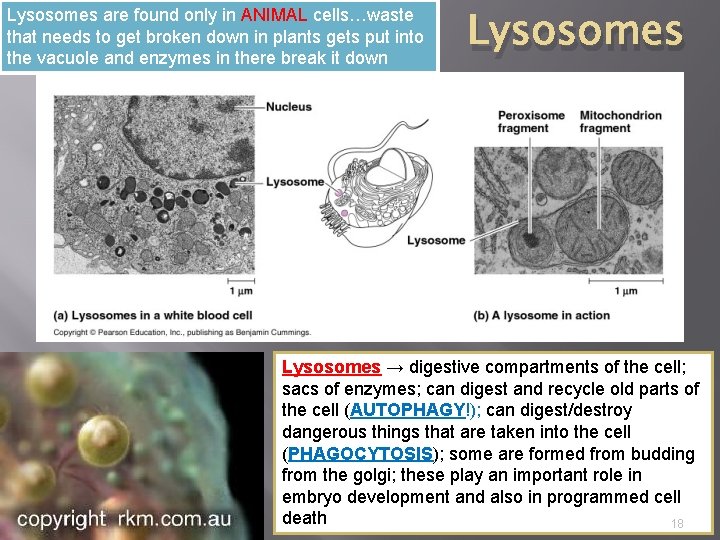
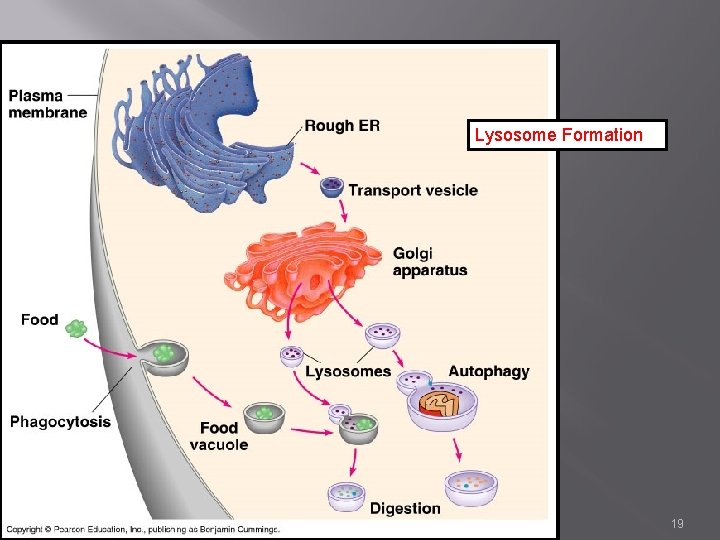
Lysosomes are found only in ANIMAL cells…waste that needs to get broken down in plants gets put into the vacuole and enzymes in there break it down Lysosomes → digestive compartments of the cell; sacs of enzymes; can digest and recycle old parts of the cell (AUTOPHAGY!); can digest/destroy dangerous things that are taken into the cell (PHAGOCYTOSIS); some are formed from budding from the golgi; these play an important role in embryo development and also in programmed cell death 18
Lysosome Formation 19
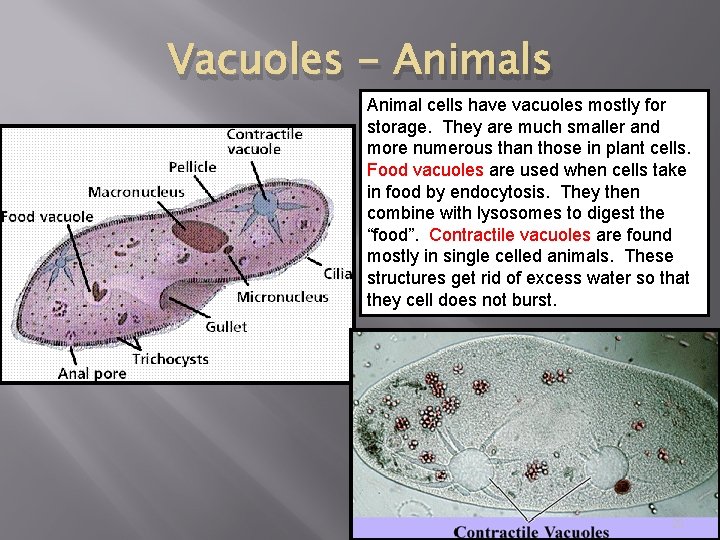
Vacuoles - Animals Animal cells have vacuoles mostly for storage. They are much smaller and more numerous than those in plant cells. Food vacuoles are used when cells take in food by endocytosis. They then combine with lysosomes to digest the “food”. Contractile vacuoles are found mostly in single celled animals. These structures get rid of excess water so that they cell does not burst. 20
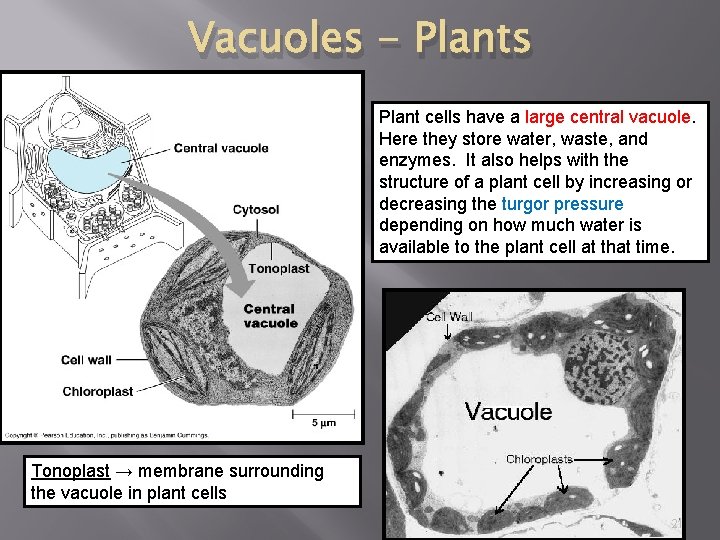
Vacuoles - Plants Plant cells have a large central vacuole. Here they store water, waste, and enzymes. It also helps with the structure of a plant cell by increasing or decreasing the turgor pressure depending on how much water is available to the plant cell at that time. Tonoplast → membrane surrounding the vacuole in plant cells 21
Energy Organelles � � Mitochondria site of cellular respiration, use oxygen to generate ATP by extracting energy from sugars, fats, and other fuels Chloroplasts found in plants and algae, site of photosynthesis; they convert solar energy to chemical energy by absorbing sunshine and using it to synthesize new organic compounds such as sugars from CO 2 and H 2 O The endosymbiont theory states that an early ancestor of eukaryotic cells engulfed an oxygen-using non-photosynthetic prokaryotic cell. Over the course of evolution, the host cell and its endosymbiont merged into a single organism, a eukaryotic cell with a mitochondrion. There is considerable evidence to support the endosymbiont theory for the origin of mitochondria and chloroplasts: - They both have double membranes - They both contain ribosomes and their own DNA - They both grow and reproduce on their own 22
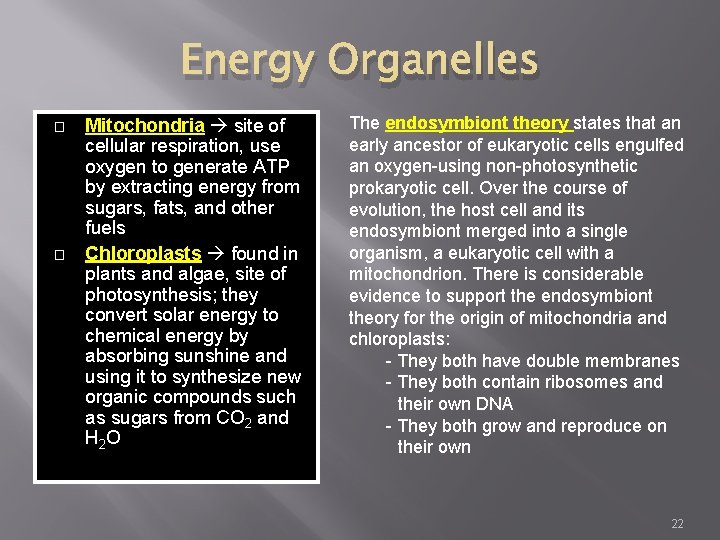
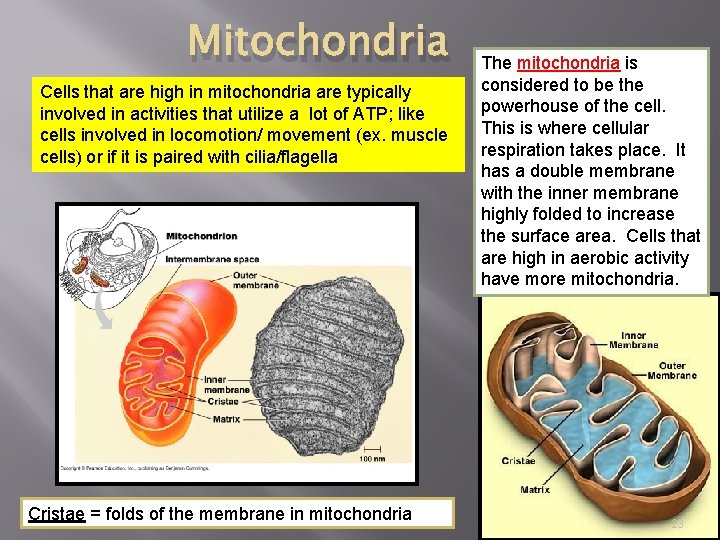
Mitochondria Cells that are high in mitochondria are typically involved in activities that utilize a lot of ATP; like cells involved in locomotion/ movement (ex. muscle cells) or if it is paired with cilia/flagella Cristae = folds of the membrane in mitochondria The mitochondria is considered to be the powerhouse of the cell. This is where cellular respiration takes place. It has a double membrane with the inner membrane highly folded to increase the surface area. Cells that are high in aerobic activity have more mitochondria. 23
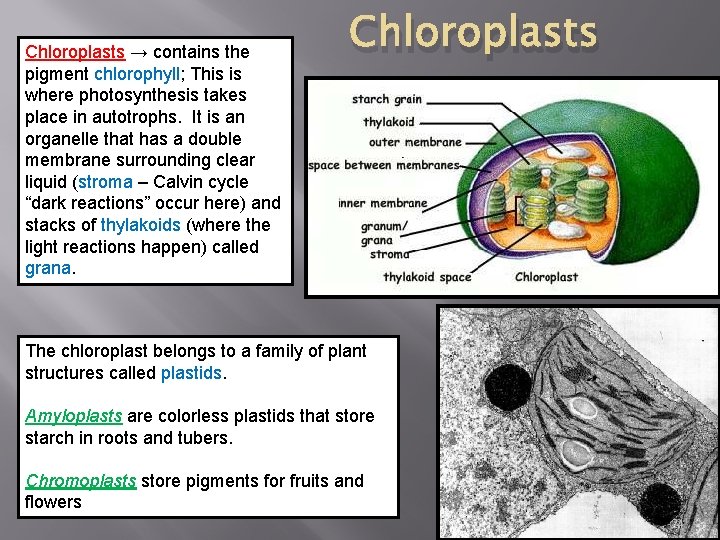
Chloroplasts → contains the pigment chlorophyll; This is where photosynthesis takes place in autotrophs. It is an organelle that has a double membrane surrounding clear liquid (stroma – Calvin cycle “dark reactions” occur here) and stacks of thylakoids (where the light reactions happen) called grana. Chloroplasts The chloroplast belongs to a family of plant structures called plastids. Amyloplasts are colorless plastids that store starch in roots and tubers. Chromoplasts store pigments for fruits and flowers 24
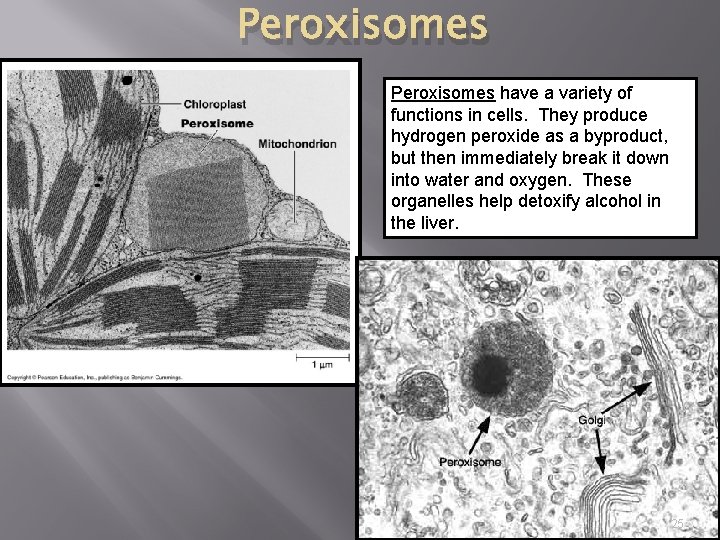
Peroxisomes have a variety of functions in cells. They produce hydrogen peroxide as a byproduct, but then immediately break it down into water and oxygen. These organelles help detoxify alcohol in the liver. 25
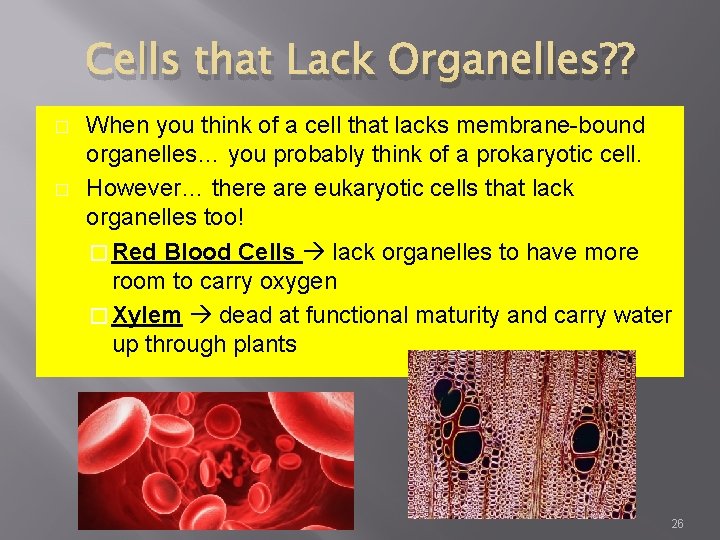
Cells that Lack Organelles? ? � � When you think of a cell that lacks membrane-bound organelles… you probably think of a prokaryotic cell. However… there are eukaryotic cells that lack organelles too! � Red Blood Cells lack organelles to have more room to carry oxygen � Xylem dead at functional maturity and carry water up through plants 26
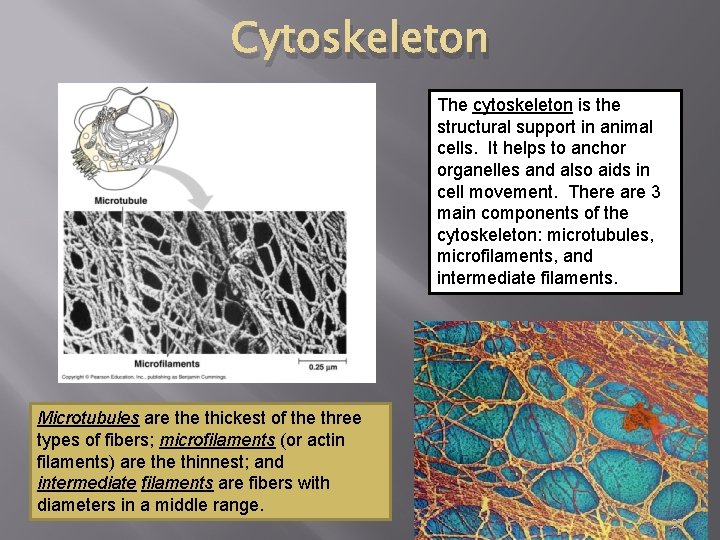
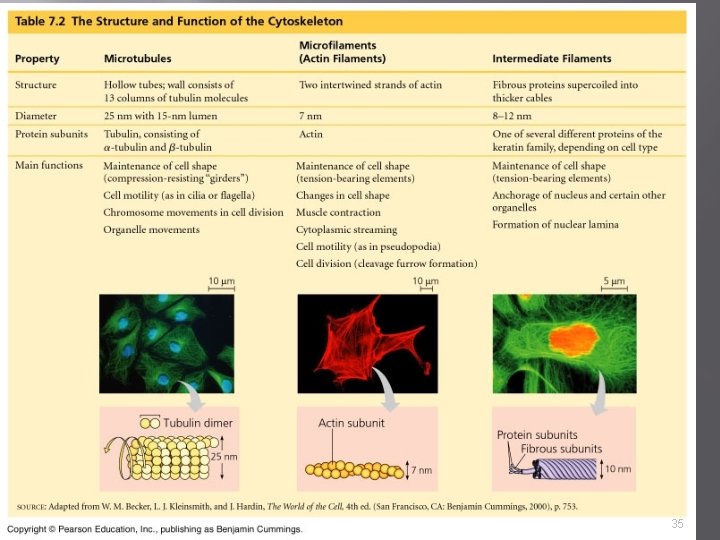
Cytoskeleton The cytoskeleton is the structural support in animal cells. It helps to anchor organelles and also aids in cell movement. There are 3 main components of the cytoskeleton: microtubules, microfilaments, and intermediate filaments. Microtubules are thickest of the three types of fibers; microfilaments (or actin filaments) are thinnest; and intermediate filaments are fibers with diameters in a middle range. 27
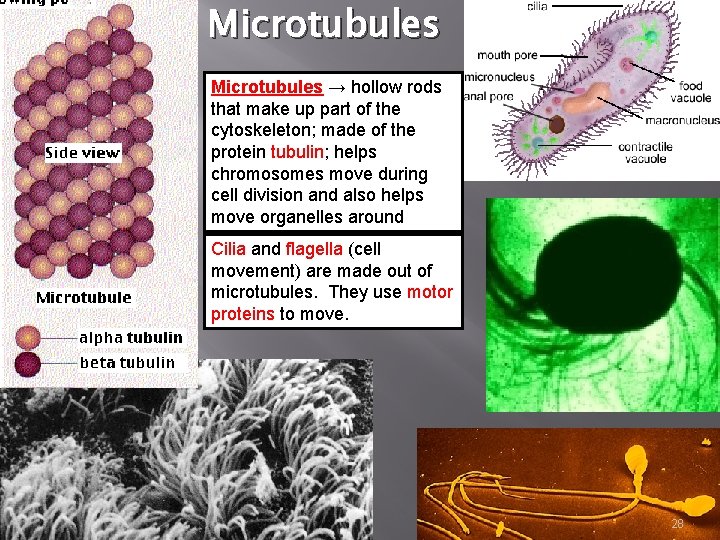
Microtubules → hollow rods that make up part of the cytoskeleton; made of the protein tubulin; helps chromosomes move during cell division and also helps move organelles around Cilia and flagella (cell movement) are made out of microtubules. They use motor proteins to move. 28
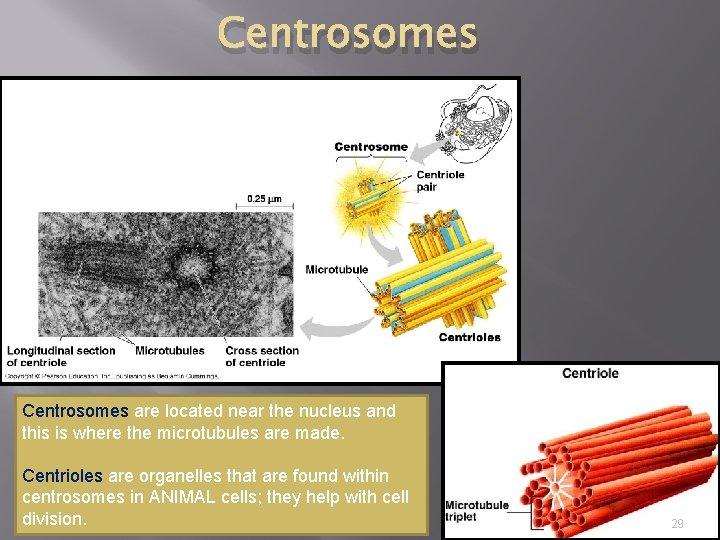
Centrosomes are located near the nucleus and this is where the microtubules are made. Centrioles are organelles that are found within centrosomes in ANIMAL cells; they help with cell division. 29
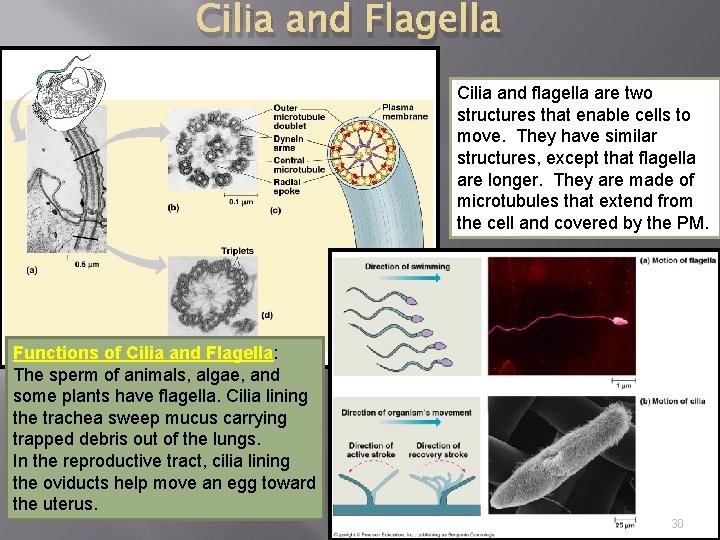
Cilia and Flagella Cilia and flagella are two structures that enable cells to move. They have similar structures, except that flagella are longer. They are made of microtubules that extend from the cell and covered by the PM. Functions of Cilia and Flagella: The sperm of animals, algae, and some plants have flagella. Cilia lining the trachea sweep mucus carrying trapped debris out of the lungs. In the reproductive tract, cilia lining the oviducts help move an egg toward the uterus. 30
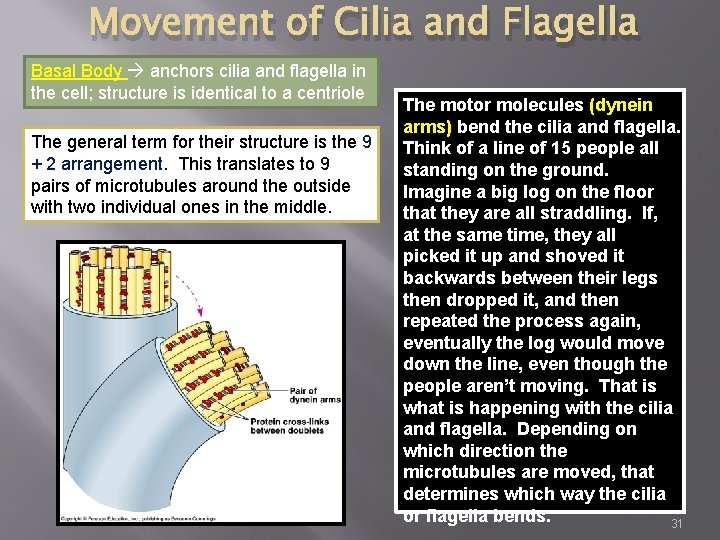
Movement of Cilia and Flagella Basal Body anchors cilia and flagella in the cell; structure is identical to a centriole The general term for their structure is the 9 + 2 arrangement. This translates to 9 pairs of microtubules around the outside with two individual ones in the middle. The motor molecules (dynein arms) bend the cilia and flagella. Think of a line of 15 people all standing on the ground. Imagine a big log on the floor that they are all straddling. If, at the same time, they all picked it up and shoved it backwards between their legs then dropped it, and then repeated the process again, eventually the log would move down the line, even though the people aren’t moving. That is what is happening with the cilia and flagella. Depending on which direction the microtubules are moved, that determines which way the cilia or flagella bends. 31
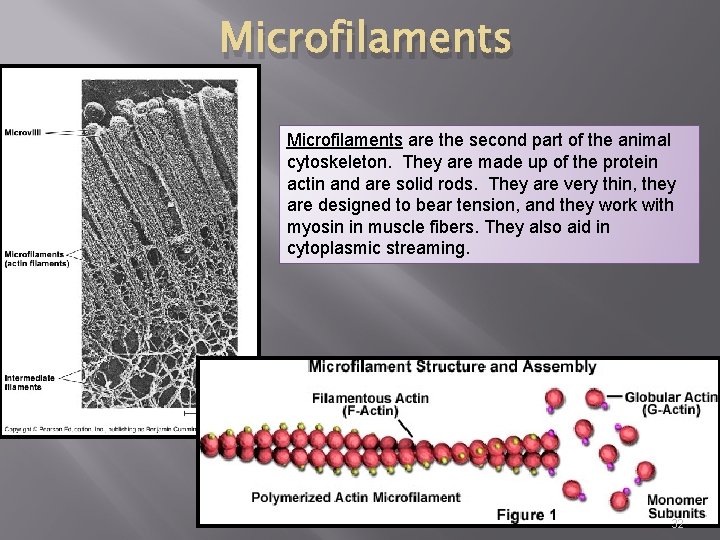
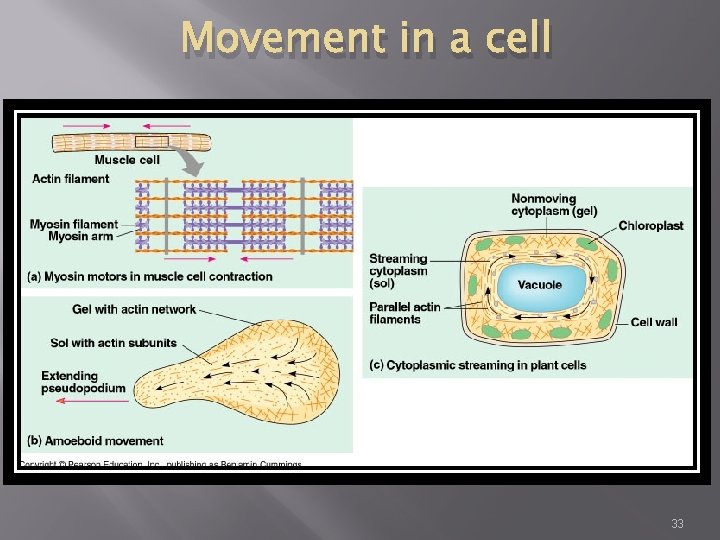
Microfilaments are the second part of the animal cytoskeleton. They are made up of the protein actin and are solid rods. They are very thin, they are designed to bear tension, and they work with myosin in muscle fibers. They also aid in cytoplasmic streaming. 32
Movement in a cell 33
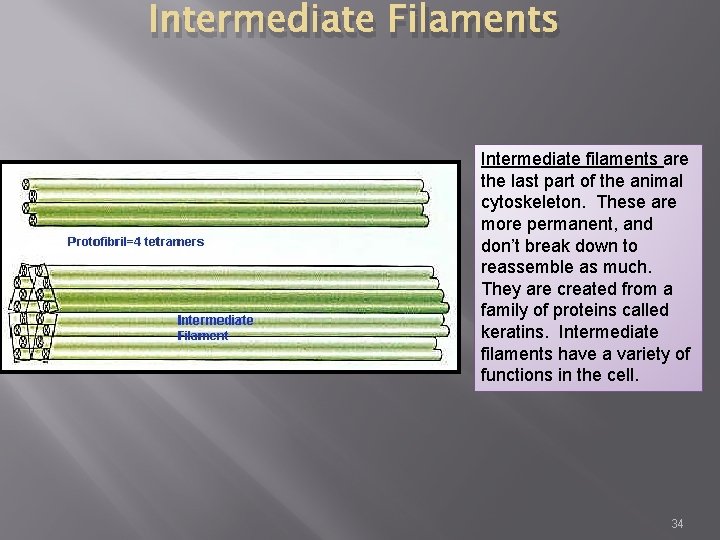
Intermediate Filaments Intermediate filaments are the last part of the animal cytoskeleton. These are more permanent, and don’t break down to reassemble as much. They are created from a family of proteins called keratins. Intermediate filaments have a variety of functions in the cell. 34
35
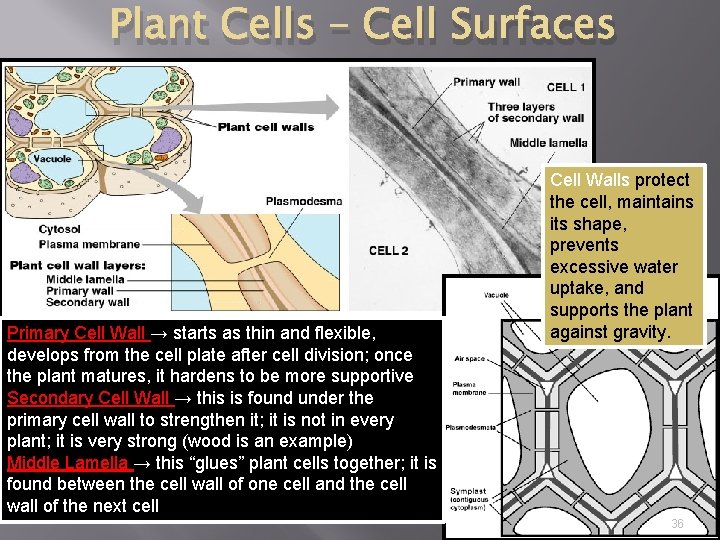
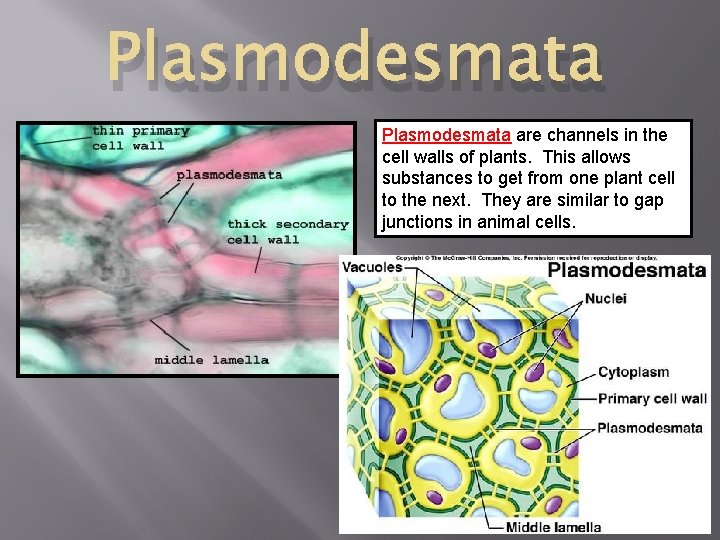
Plant Cells – Cell Surfaces Primary Cell Wall → starts as thin and flexible, develops from the cell plate after cell division; once the plant matures, it hardens to be more supportive Secondary Cell Wall → this is found under the primary cell wall to strengthen it; it is not in every plant; it is very strong (wood is an example) Middle Lamella → this “glues” plant cells together; it is found between the cell wall of one cell and the cell wall of the next cell Cell Walls protect the cell, maintains its shape, prevents excessive water uptake, and supports the plant against gravity. 36
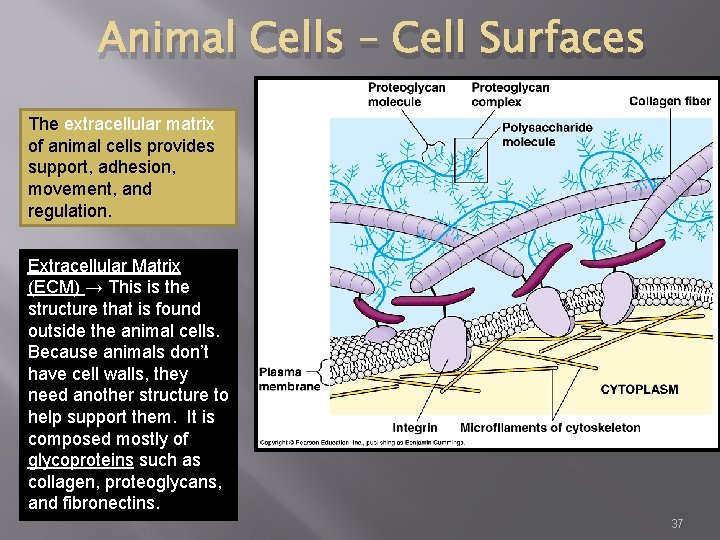
Animal Cells – Cell Surfaces The extracellular matrix of animal cells provides support, adhesion, movement, and regulation. Extracellular Matrix (ECM) → This is the structure that is found outside the animal cells. Because animals don’t have cell walls, they need another structure to help support them. It is composed mostly of glycoproteins such as collagen, proteoglycans, and fibronectins. 37
Plasmodesmata are channels in the cell walls of plants. This allows substances to get from one plant cell to the next. They are similar to gap junctions in animal cells. 38
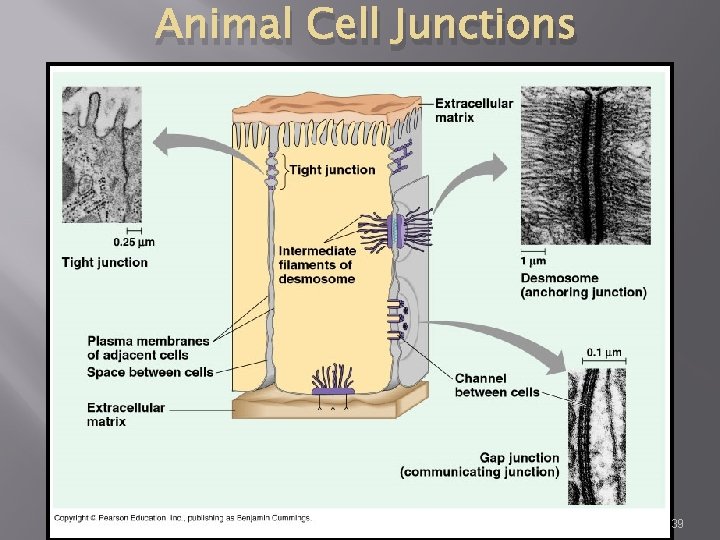
Animal Cell Junctions 39
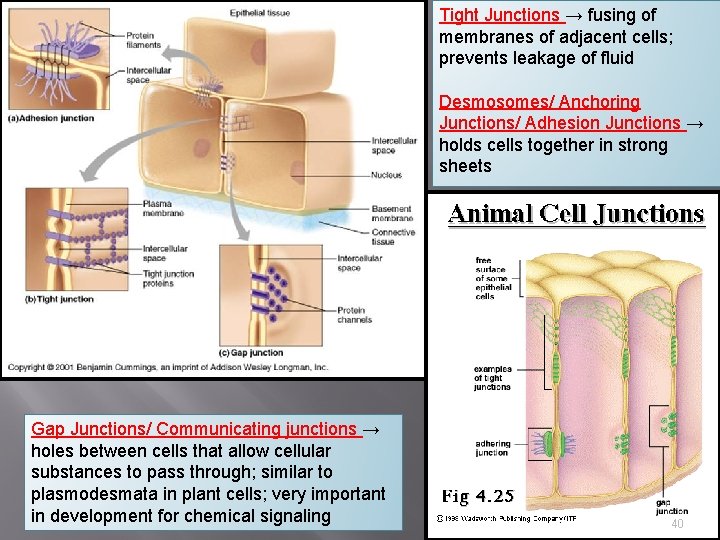
Tight Junctions → fusing of membranes of adjacent cells; prevents leakage of fluid Desmosomes/ Anchoring Junctions/ Adhesion Junctions → holds cells together in strong sheets Gap Junctions/ Communicating junctions → holes between cells that allow cellular substances to pass through; similar to plasmodesmata in plant cells; very important in development for chemical signaling 40
CHAPTER 7 – MEMBRANE STRUCTURE AND FUNCTION 41
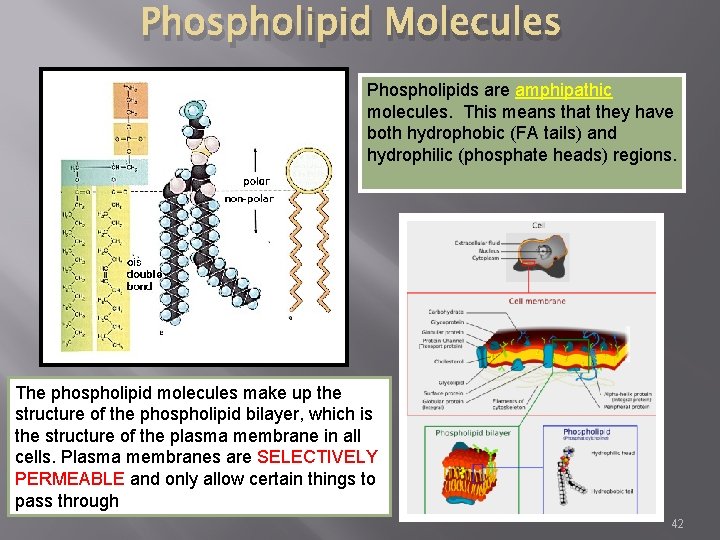
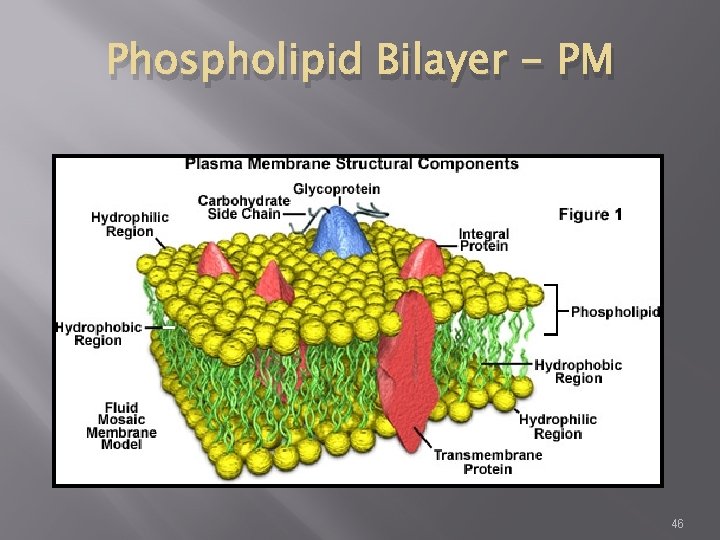
Phospholipid Molecules Phospholipids are amphipathic molecules. This means that they have both hydrophobic (FA tails) and hydrophilic (phosphate heads) regions. The phospholipid molecules make up the structure of the phospholipid bilayer, which is the structure of the plasma membrane in all cells. Plasma membranes are SELECTIVELY PERMEABLE and only allow certain things to pass through 42
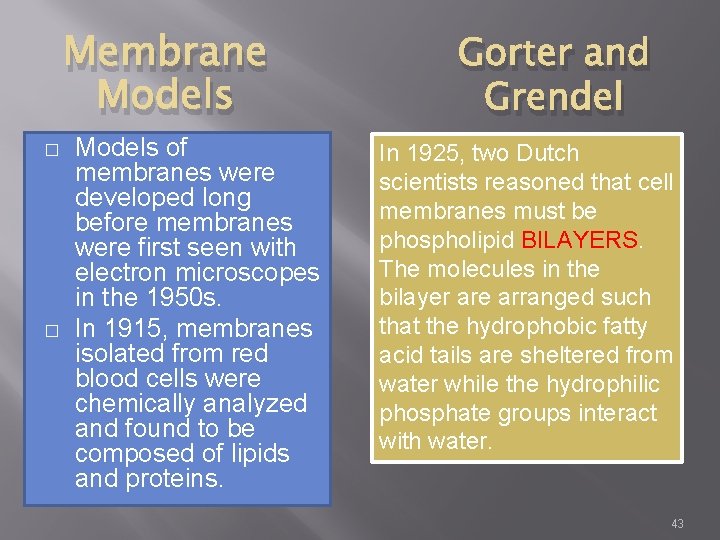
Membrane Models � � Models of membranes were developed long before membranes were first seen with electron microscopes in the 1950 s. In 1915, membranes isolated from red blood cells were chemically analyzed and found to be composed of lipids and proteins. Gorter and Grendel In 1925, two Dutch scientists reasoned that cell membranes must be phospholipid BILAYERS. The molecules in the bilayer are arranged such that the hydrophobic fatty acid tails are sheltered from water while the hydrophilic phosphate groups interact with water. 43
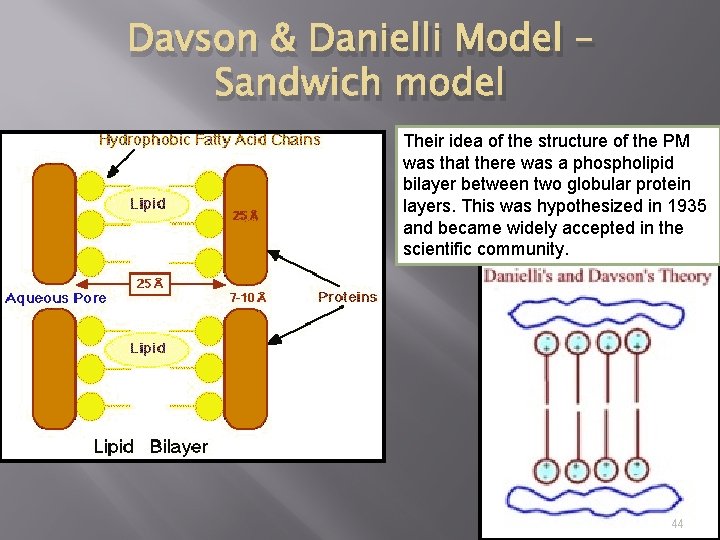
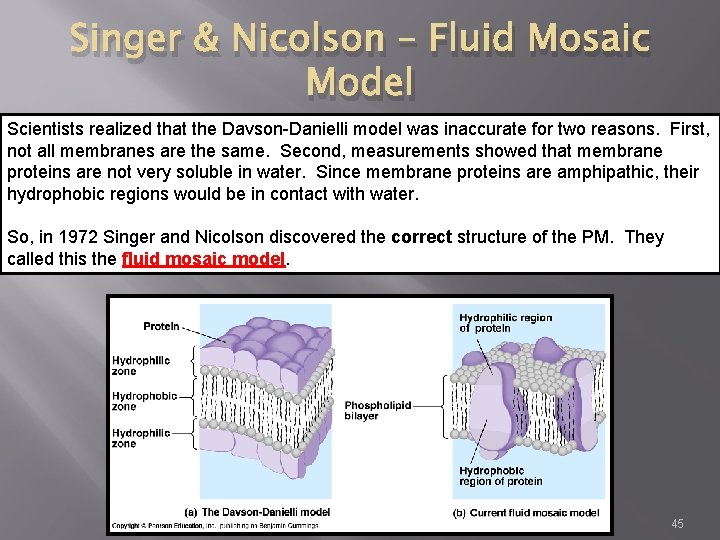
Davson & Danielli Model – Sandwich model Their idea of the structure of the PM was that there was a phospholipid bilayer between two globular protein layers. This was hypothesized in 1935 and became widely accepted in the scientific community. 44
Singer & Nicolson – Fluid Mosaic Model Scientists realized that the Davson-Danielli model was inaccurate for two reasons. First, not all membranes are the same. Second, measurements showed that membrane proteins are not very soluble in water. Since membrane proteins are amphipathic, their hydrophobic regions would be in contact with water. So, in 1972 Singer and Nicolson discovered the correct structure of the PM. They called this the fluid mosaic model. 45
Phospholipid Bilayer - PM 46
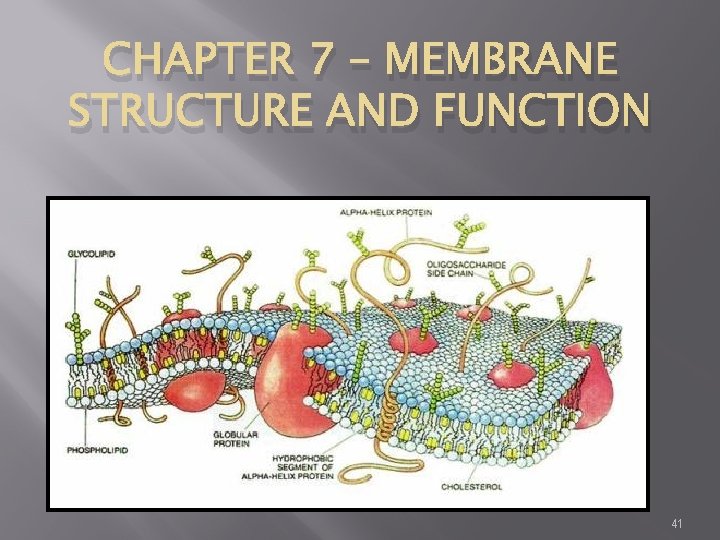
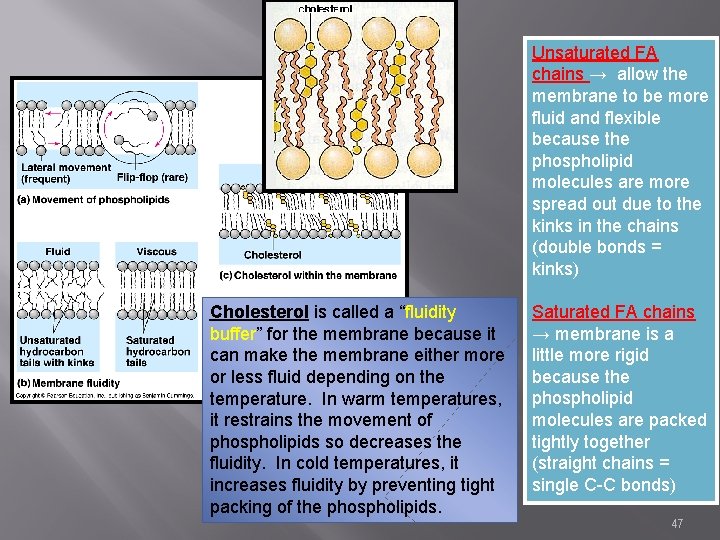
Unsaturated FA chains → allow the membrane to be more fluid and flexible because the phospholipid molecules are more spread out due to the kinks in the chains (double bonds = kinks) Cholesterol is called a “fluidity buffer” for the membrane because it can make the membrane either more or less fluid depending on the temperature. In warm temperatures, it restrains the movement of phospholipids so decreases the fluidity. In cold temperatures, it increases fluidity by preventing tight packing of the phospholipids. Saturated FA chains → membrane is a little more rigid because the phospholipid molecules are packed tightly together (straight chains = single C-C bonds) 47
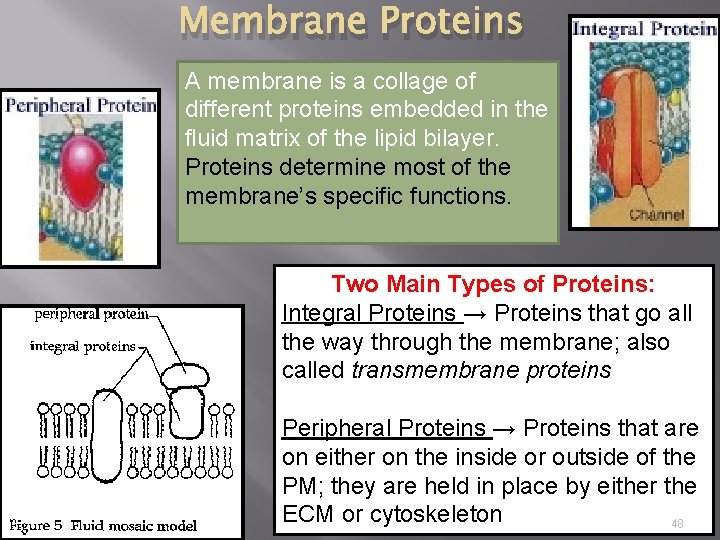
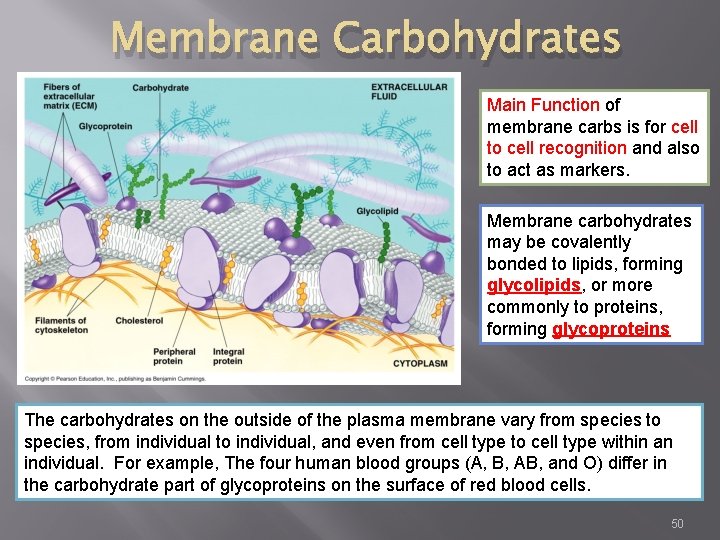
Membrane Proteins A membrane is a collage of different proteins embedded in the fluid matrix of the lipid bilayer. Proteins determine most of the membrane’s specific functions. Two Main Types of Proteins: Integral Proteins → Proteins that go all the way through the membrane; also called transmembrane proteins Peripheral Proteins → Proteins that are on either on the inside or outside of the PM; they are held in place by either the ECM or cytoskeleton 48
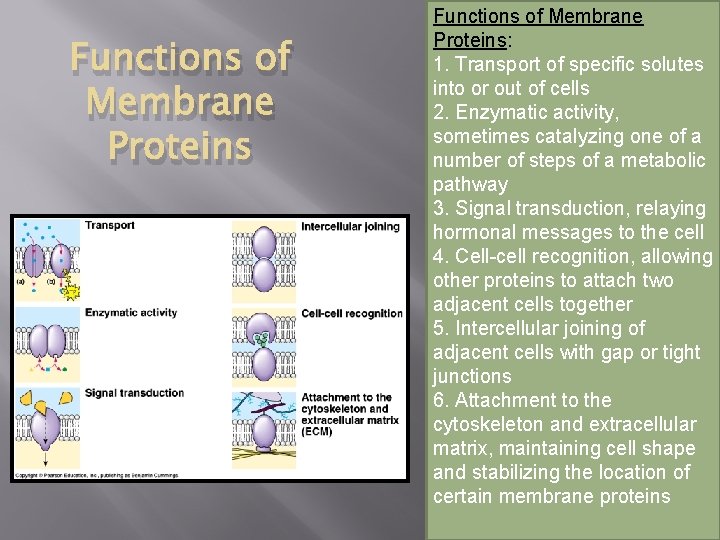
Functions of Membrane Proteins: 1. Transport of specific solutes into or out of cells 2. Enzymatic activity, sometimes catalyzing one of a number of steps of a metabolic pathway 3. Signal transduction, relaying hormonal messages to the cell 4. Cell-cell recognition, allowing other proteins to attach two adjacent cells together 5. Intercellular joining of adjacent cells with gap or tight junctions 6. Attachment to the cytoskeleton and extracellular matrix, maintaining cell shape and stabilizing the location of certain membrane proteins 49
Membrane Carbohydrates Main Function of membrane carbs is for cell to cell recognition and also to act as markers. Membrane carbohydrates may be covalently bonded to lipids, forming glycolipids, or more commonly to proteins, forming glycoproteins The carbohydrates on the outside of the plasma membrane vary from species to species, from individual to individual, and even from cell type to cell type within an individual. For example, The four human blood groups (A, B, AB, and O) differ in the carbohydrate part of glycoproteins on the surface of red blood cells. 50
Membranes have distinct inside and outside faces � � � The inside and outside faces of membranes may differ in lipid composition. Each protein in the membrane has a directional orientation in the membrane. The asymmetrical arrangement of proteins, lipids, and their associated carbohydrates in the plasma membrane is determined as the membrane is built by the endoplasmic reticulum (ER) and Golgi apparatus. 51
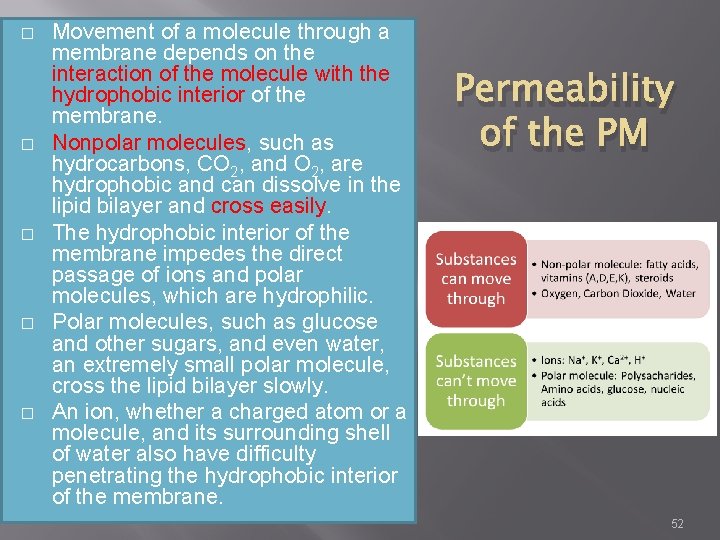
� � � Movement of a molecule through a membrane depends on the interaction of the molecule with the hydrophobic interior of the membrane. Nonpolar molecules, such as hydrocarbons, CO 2, and O 2, are hydrophobic and can dissolve in the lipid bilayer and cross easily. The hydrophobic interior of the membrane impedes the direct passage of ions and polar molecules, which are hydrophilic. Polar molecules, such as glucose and other sugars, and even water, an extremely small polar molecule, cross the lipid bilayer slowly. An ion, whether a charged atom or a molecule, and its surrounding shell of water also have difficulty penetrating the hydrophobic interior of the membrane. Permeability of the PM 52
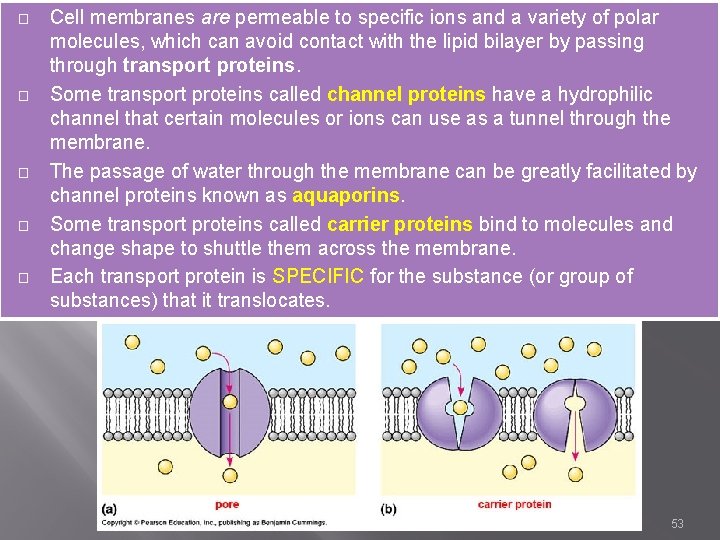
� � � Cell membranes are permeable to specific ions and a variety of polar molecules, which can avoid contact with the lipid bilayer by passing through transport proteins. Some transport proteins called channel proteins have a hydrophilic channel that certain molecules or ions can use as a tunnel through the membrane. The passage of water through the membrane can be greatly facilitated by channel proteins known as aquaporins. Some transport proteins called carrier proteins bind to molecules and change shape to shuttle them across the membrane. Each transport protein is SPECIFIC for the substance (or group of substances) that it translocates. 53
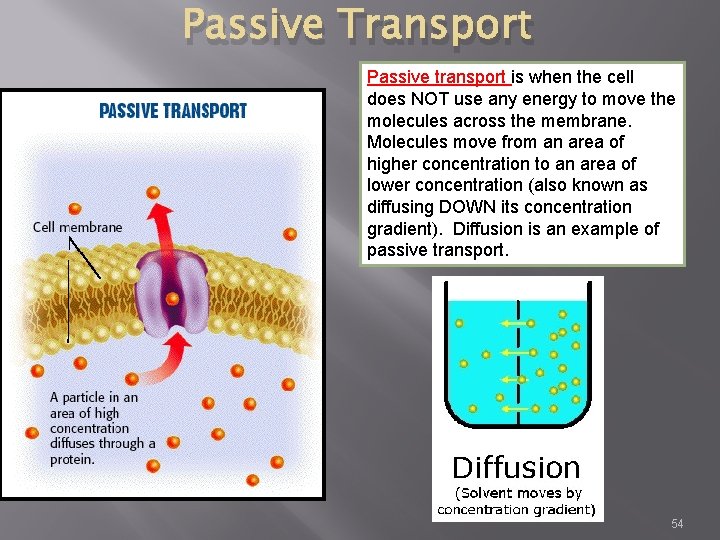
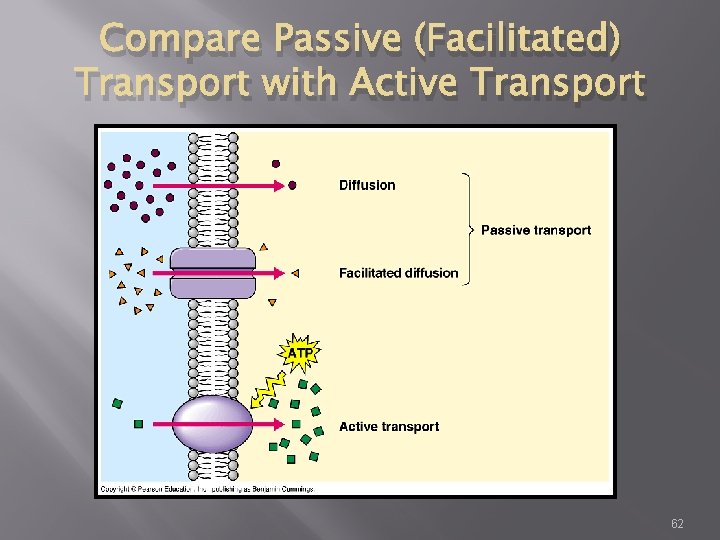
Passive Transport Passive transport is when the cell does NOT use any energy to move the molecules across the membrane. Molecules move from an area of higher concentration to an area of lower concentration (also known as diffusing DOWN its concentration gradient). Diffusion is an example of passive transport. 54
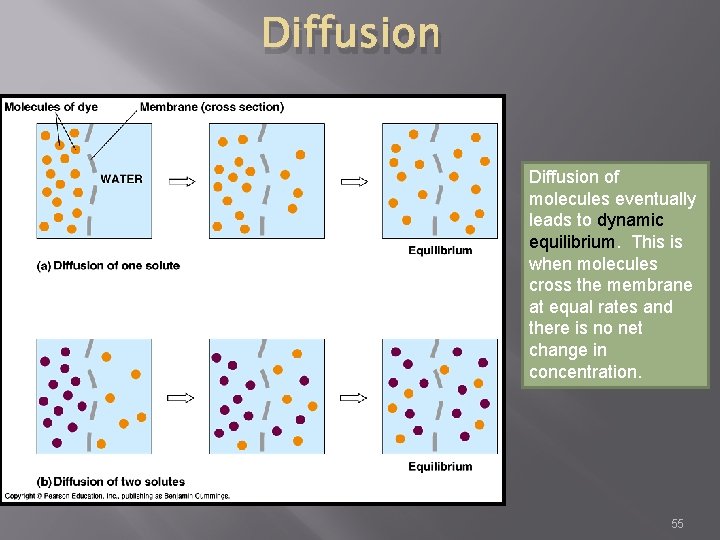
Diffusion of molecules eventually leads to dynamic equilibrium. This is when molecules cross the membrane at equal rates and there is no net change in concentration. 55
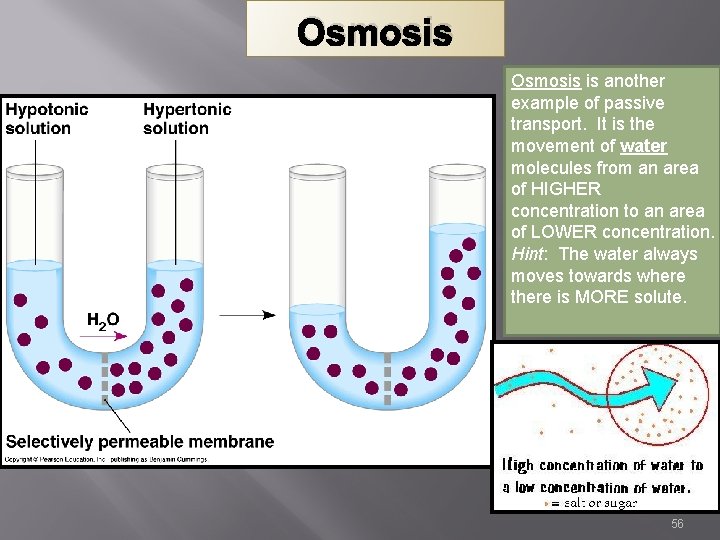
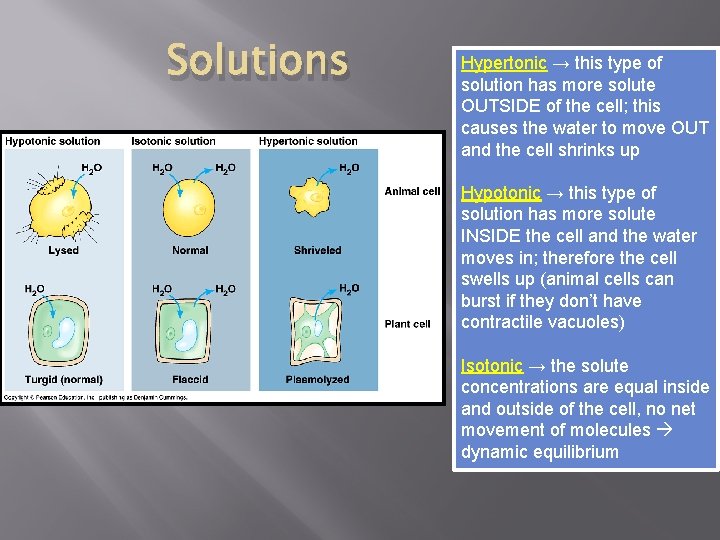
Osmosis is another example of passive transport. It is the movement of water molecules from an area of HIGHER concentration to an area of LOWER concentration. Hint: The water always moves towards where there is MORE solute. 56
Solutions Hypertonic → this type of solution has more solute OUTSIDE of the cell; this causes the water to move OUT and the cell shrinks up Hypotonic → this type of solution has more solute INSIDE the cell and the water moves in; therefore the cell swells up (animal cells can burst if they don’t have contractile vacuoles) Isotonic → the solute concentrations are equal inside and outside of the cell, no net movement of molecules dynamic equilibrium
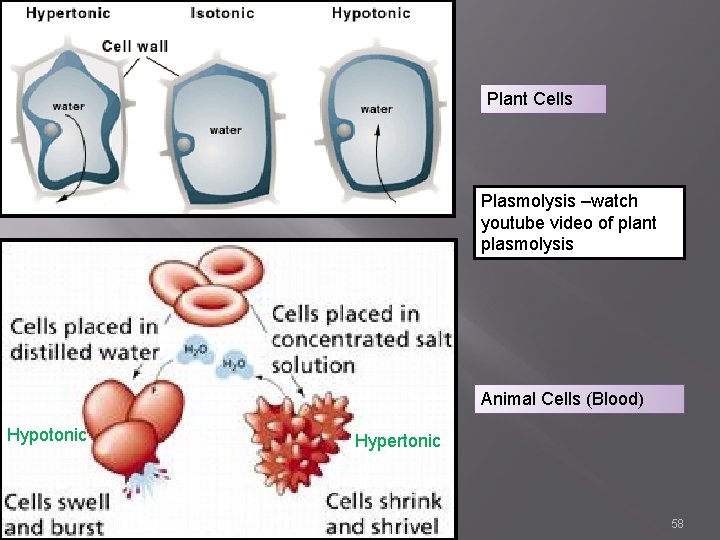
Plant Cells Plasmolysis –watch youtube video of plant plasmolysis Animal Cells (Blood) Hypotonic Hypertonic 58
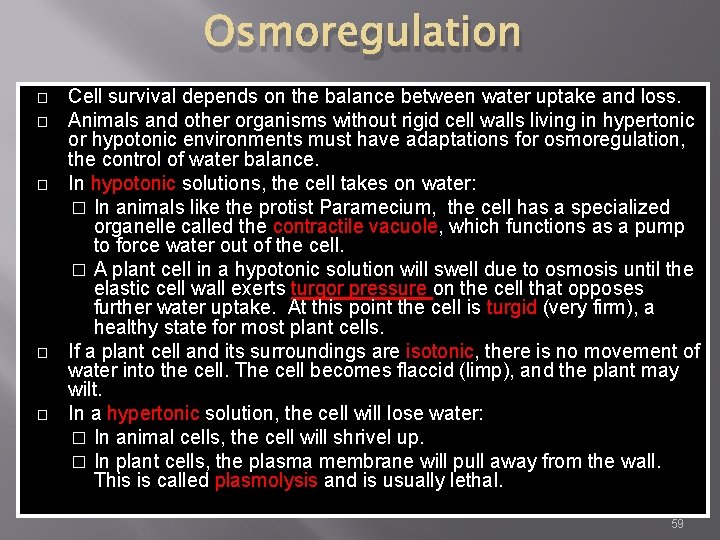
Osmoregulation � � � Cell survival depends on the balance between water uptake and loss. Animals and other organisms without rigid cell walls living in hypertonic or hypotonic environments must have adaptations for osmoregulation, the control of water balance. In hypotonic solutions, the cell takes on water: � In animals like the protist Paramecium, the cell has a specialized organelle called the contractile vacuole, which functions as a pump to force water out of the cell. � A plant cell in a hypotonic solution will swell due to osmosis until the elastic cell wall exerts turgor pressure on the cell that opposes further water uptake. At this point the cell is turgid (very firm), a healthy state for most plant cells. If a plant cell and its surroundings are isotonic, there is no movement of water into the cell. The cell becomes flaccid (limp), and the plant may wilt. In a hypertonic solution, the cell will lose water: � In animal cells, the cell will shrivel up. � In plant cells, the plasma membrane will pull away from the wall. This is called plasmolysis and is usually lethal. 59
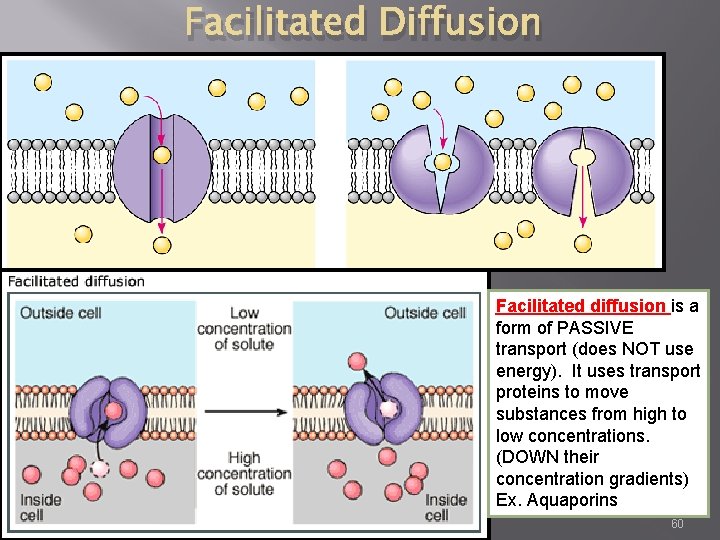
Facilitated Diffusion Facilitated diffusion is a form of PASSIVE transport (does NOT use energy). It uses transport proteins to move substances from high to low concentrations. (DOWN their concentration gradients) Ex. Aquaporins 60
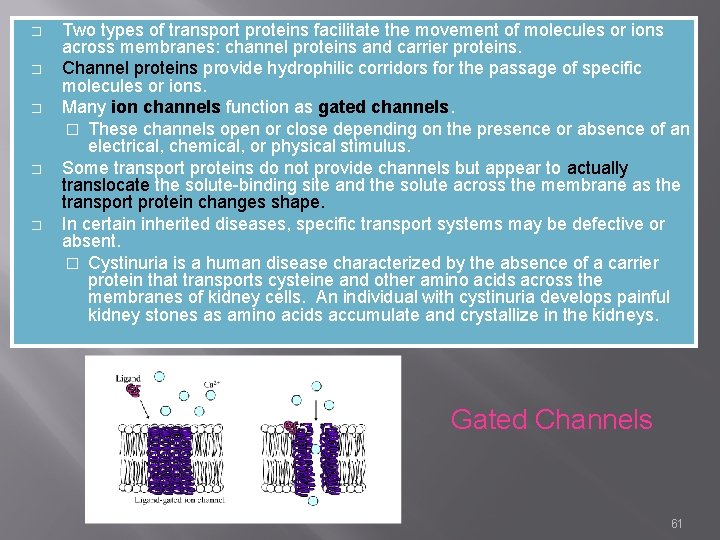
� � � Two types of transport proteins facilitate the movement of molecules or ions across membranes: channel proteins and carrier proteins. Channel proteins provide hydrophilic corridors for the passage of specific molecules or ions. Many ion channels function as gated channels. � These channels open or close depending on the presence or absence of an electrical, chemical, or physical stimulus. Some transport proteins do not provide channels but appear to actually translocate the solute-binding site and the solute across the membrane as the transport protein changes shape. In certain inherited diseases, specific transport systems may be defective or absent. � Cystinuria is a human disease characterized by the absence of a carrier protein that transports cysteine and other amino acids across the membranes of kidney cells. An individual with cystinuria develops painful kidney stones as amino acids accumulate and crystallize in the kidneys. Gated Channels 61
Compare Passive (Facilitated) Transport with Active Transport 62
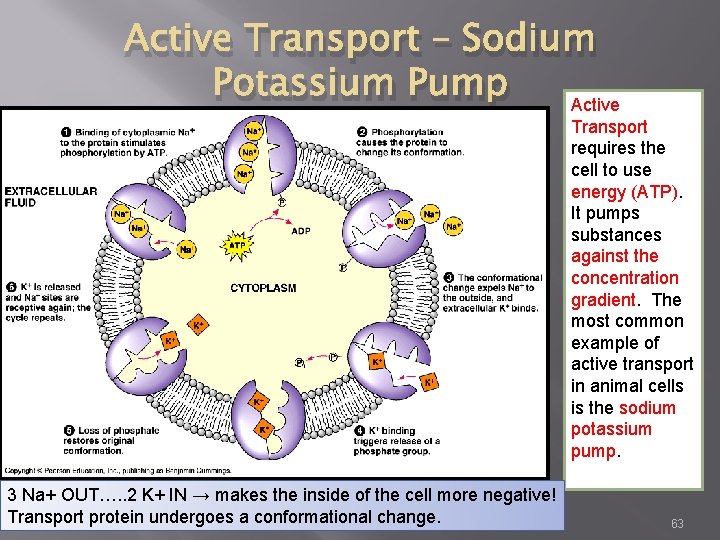
Active Transport – Sodium Potassium Pump Active Transport requires the cell to use energy (ATP). It pumps substances against the concentration gradient. The most common example of active transport in animal cells is the sodium potassium pump. 3 Na+ OUT…. . 2 K+ IN → makes the inside of the cell more negative! Transport protein undergoes a conformational change. 63
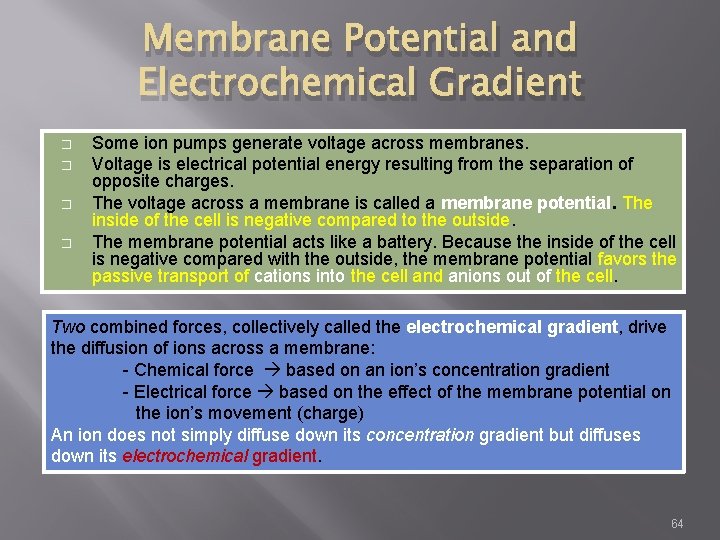
Membrane Potential and Electrochemical Gradient � � Some ion pumps generate voltage across membranes. Voltage is electrical potential energy resulting from the separation of opposite charges. The voltage across a membrane is called a membrane potential. The inside of the cell is negative compared to the outside. The membrane potential acts like a battery. Because the inside of the cell is negative compared with the outside, the membrane potential favors the passive transport of cations into the cell and anions out of the cell. Two combined forces, collectively called the electrochemical gradient, drive the diffusion of ions across a membrane: - Chemical force based on an ion’s concentration gradient - Electrical force based on the effect of the membrane potential on the ion’s movement (charge) An ion does not simply diffuse down its concentration gradient but diffuses down its electrochemical gradient. 64
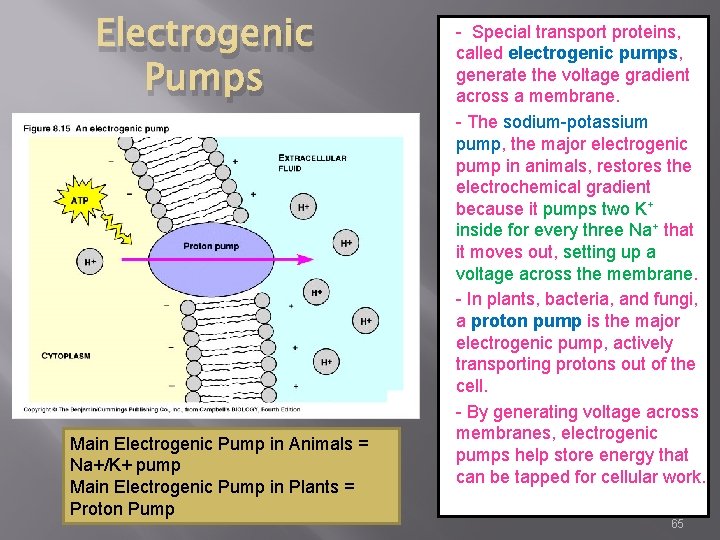
Electrogenic Pumps Main Electrogenic Pump in Animals = Na+/K+ pump Main Electrogenic Pump in Plants = Proton Pump - Special transport proteins, called electrogenic pumps, generate the voltage gradient across a membrane. - The sodium-potassium pump, the major electrogenic pump in animals, restores the electrochemical gradient because it pumps two K+ inside for every three Na+ that it moves out, setting up a voltage across the membrane. - In plants, bacteria, and fungi, a proton pump is the major electrogenic pump, actively transporting protons out of the cell. - By generating voltage across membranes, electrogenic pumps help store energy that can be tapped for cellular work. 65
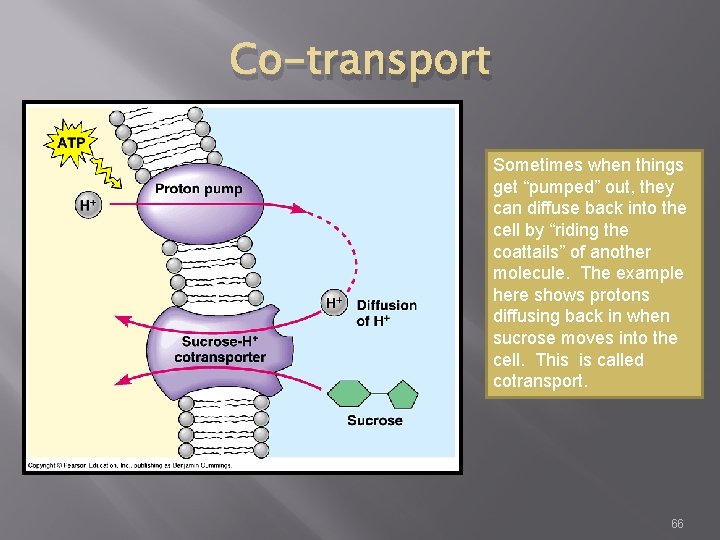
Co-transport Sometimes when things get “pumped” out, they can diffuse back into the cell by “riding the coattails” of another molecule. The example here shows protons diffusing back in when sucrose moves into the cell. This is called cotransport. 66
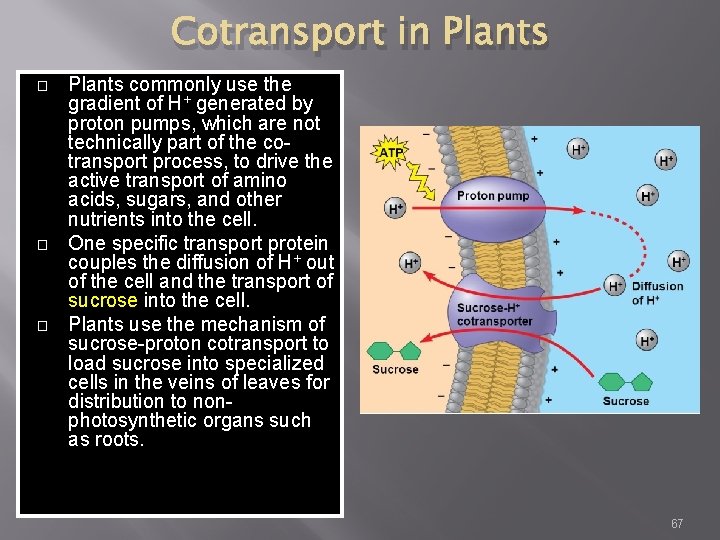
Cotransport in Plants � � � Plants commonly use the gradient of H+ generated by proton pumps, which are not technically part of the cotransport process, to drive the active transport of amino acids, sugars, and other nutrients into the cell. One specific transport protein couples the diffusion of H+ out of the cell and the transport of sucrose into the cell. Plants use the mechanism of sucrose-proton cotransport to load sucrose into specialized cells in the veins of leaves for distribution to nonphotosynthetic organs such as roots. 67
Cotransport in Animals � � An understanding of cotransport proteins, osmosis, and water balance in animal cells has helped scientists develop effective treatments for the dehydration that results from diarrhea, a serious problem in developing countries where intestinal parasites are prevalent. Patients are given a solution to drink that contains a high concentration of glucose and salt. The solutes are taken up by cotransport proteins on the intestinal cell surface and passed through the cells into the blood. The resulting increase in the solute concentration of the blood causes a flow of water from the intestine through the intestinal cells into the blood, rehydrating the patient. 68
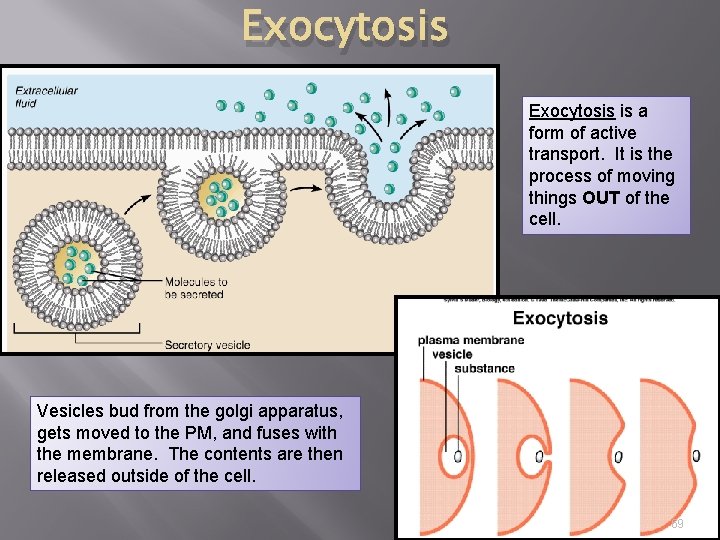
Exocytosis is a form of active transport. It is the process of moving things OUT of the cell. Vesicles bud from the golgi apparatus, gets moved to the PM, and fuses with the membrane. The contents are then released outside of the cell. 69
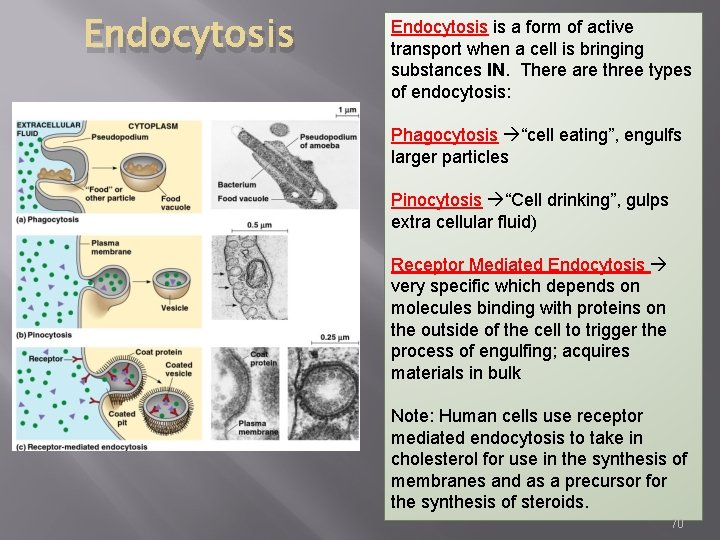
Endocytosis is a form of active transport when a cell is bringing substances IN. There are three types of endocytosis: Phagocytosis “cell eating”, engulfs larger particles Pinocytosis “Cell drinking”, gulps extra cellular fluid) Receptor Mediated Endocytosis very specific which depends on molecules binding with proteins on the outside of the cell to trigger the process of engulfing; acquires materials in bulk Note: Human cells use receptor mediated endocytosis to take in cholesterol for use in the synthesis of membranes and as a precursor for the synthesis of steroids. 70
Additions to study for Chapter 6/7 Test � � � � Cell to cell recognition in ECM oligosaccharides (SHORT polysaccharide chains); glycolipids/glycoproteins Endomembrane system example: ER vesicles golgi PM Ribosomes made in the nucleolus…. but NOT FUNCTIONAL until they leave and meet up with a small/large counterpart; found in the rough ER, cytoplasm, mitochondria, chloroplast Cell Walls main component = cellulose; found in plant cells and some prokaryotic cells (bacteria); cannot do endocytosis (phagocytosis/pinocytosis) but can do exocytosis Gated channels can open with electrical stimulation or chemical attachment Cell membrane small/hydrophobic molecules can pass easily (ex. CO 2); both sides are very different (NOT identical); made up of phospholipid molecules and proteins Integral proteins transmembrane; attach to ECM and cytoskeleton; communicate with the inside (can transmit signals); do NOT make enzymes 71