
Chapter 6 Capturing Solar Energy Photosynthesis Thylakoid Structure
- Slides: 13
Chapter 6 Capturing Solar Energy: Photosynthesis
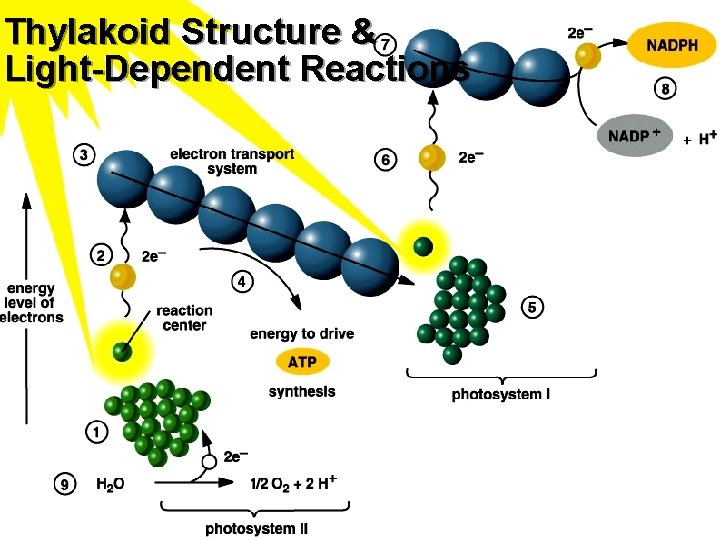
Thylakoid Structure & Light-Dependent Reactions
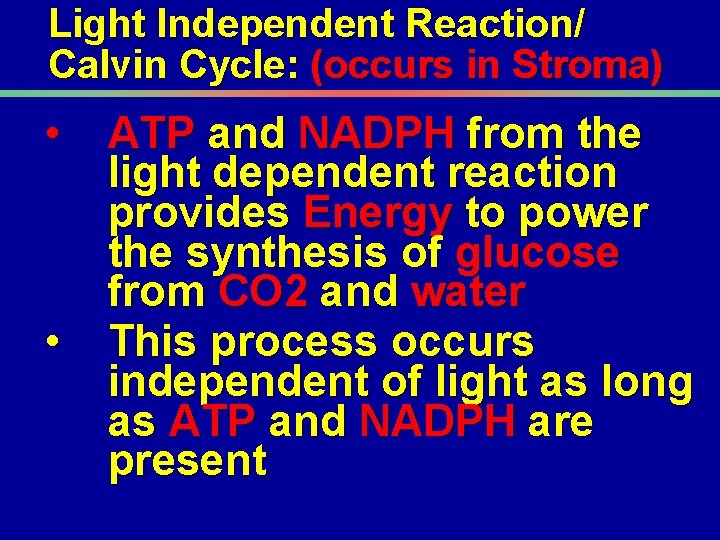
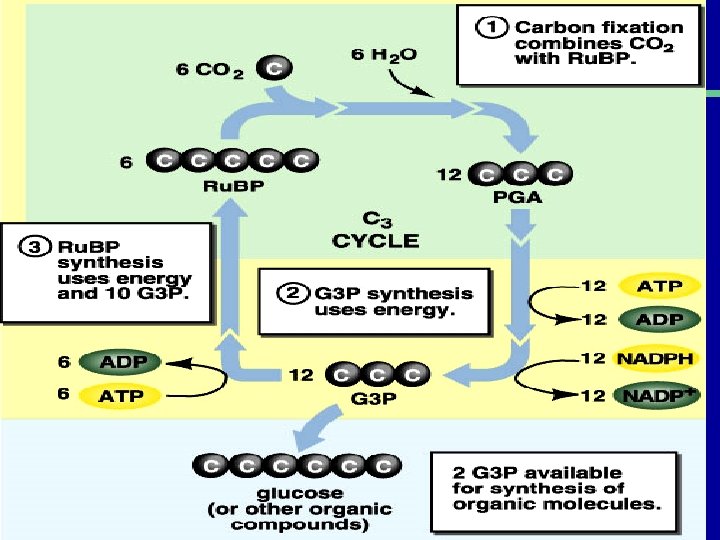
Light Independent Reaction/ Calvin Cycle: (occurs in Stroma) • • ATP and NADPH from the light dependent reaction provides Energy to power the synthesis of glucose from CO 2 and water This process occurs independent of light as long as ATP and NADPH are present
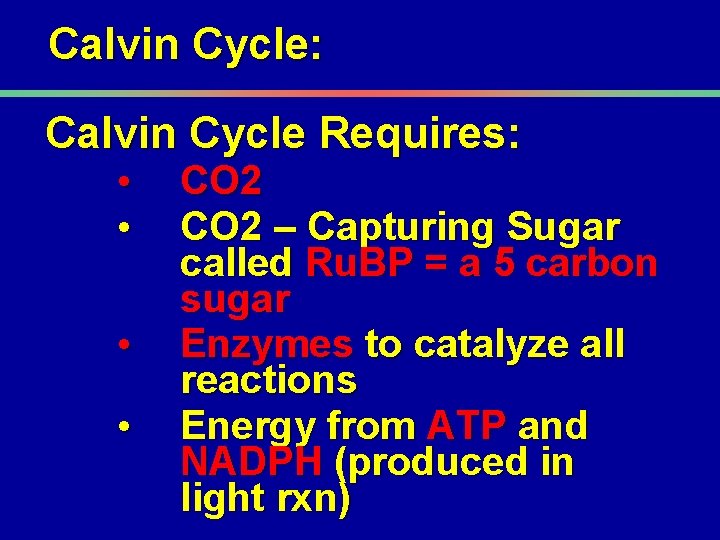
Calvin Cycle: Calvin Cycle Requires: • • CO 2 – Capturing Sugar called Ru. BP = a 5 carbon sugar Enzymes to catalyze all reactions Energy from ATP and NADPH (produced in light rxn)
Calvin Cycle is a - Three Step Cycle: 1. 2. 3. Carbon Fixation Synthesis of G 3 P Regeneration of Ru. BP
Calvin Cycle Steps: 1. Carbon Fixation • Begins and ends with 6 RUBP a 5 Carbon sugar • Enzymes combine 6 RUBP molecules with 6 CO 2 from atmosphere to form 12 (3 carbon molecules of PGA)
Calvin Cycle Steps: 2. Synthesis of G 3 P • Energy donated by ATP and NADPH is used to convert PGA to G 3 P
Calvin Cycle Steps: 3. Regeneration of Ru. BP • • ATP is used to turn G 3 P into RUBP which is used at the start of carbon fixation Remaining G 3 P molecules will be used to synthesis glucose
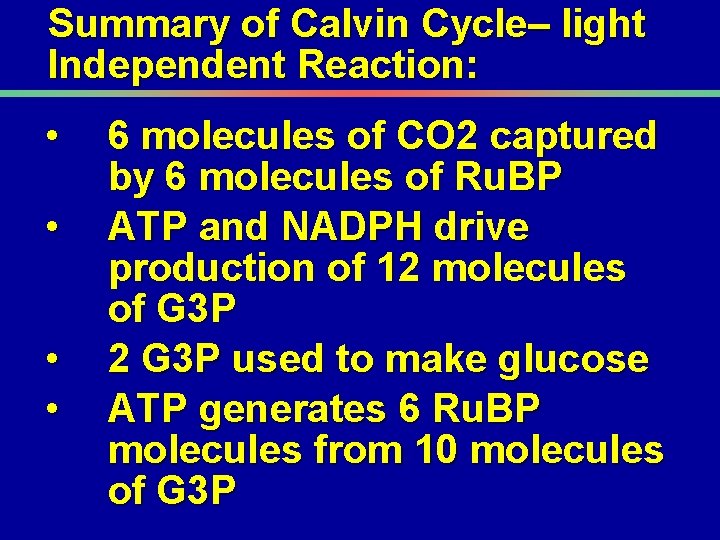
Summary of Calvin Cycle– light Independent Reaction: • • 6 molecules of CO 2 captured by 6 molecules of Ru. BP ATP and NADPH drive production of 12 molecules of G 3 P 2 G 3 P used to make glucose ATP generates 6 Ru. BP molecules from 10 molecules of G 3 P
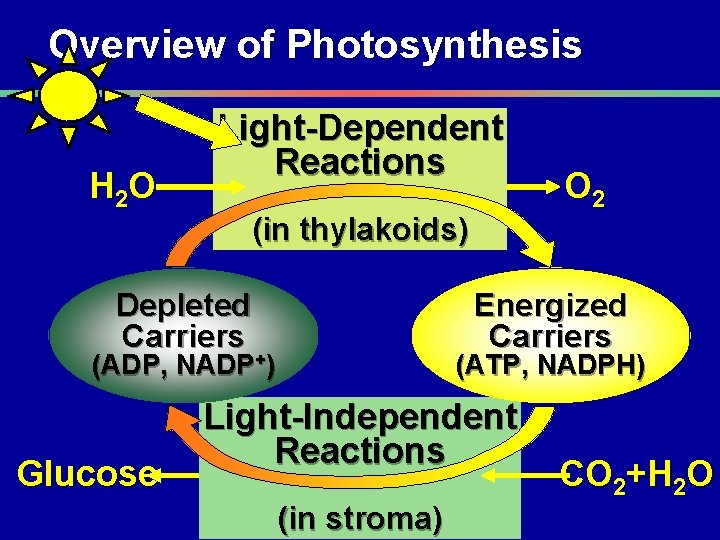
Overview of Photosynthesis H 2 O Light-Dependent Reactions (in thylakoids) Depleted Carriers Energized Carriers (ADP, NADP+) Glucose O 2 (ATP, NADPH) Light-Independent Reactions (in stroma) CO 2+H 2 O
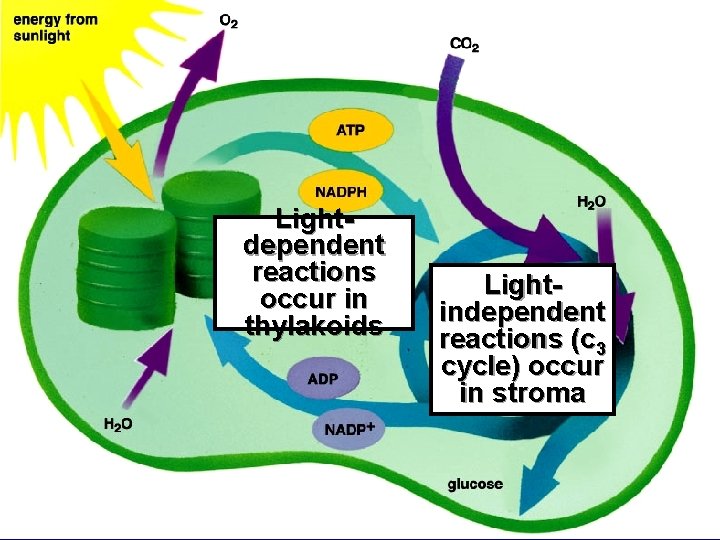
A Summary of Photosynthesis Lightdependent reactions occur in thylakoids Lightindependent reactions (c 3 cycle) occur in stroma
The End of Photosynthesis Chapter 8