
Chapter 6 Body and Behavior The Nervous System
Chapter 6 - Body and Behavior
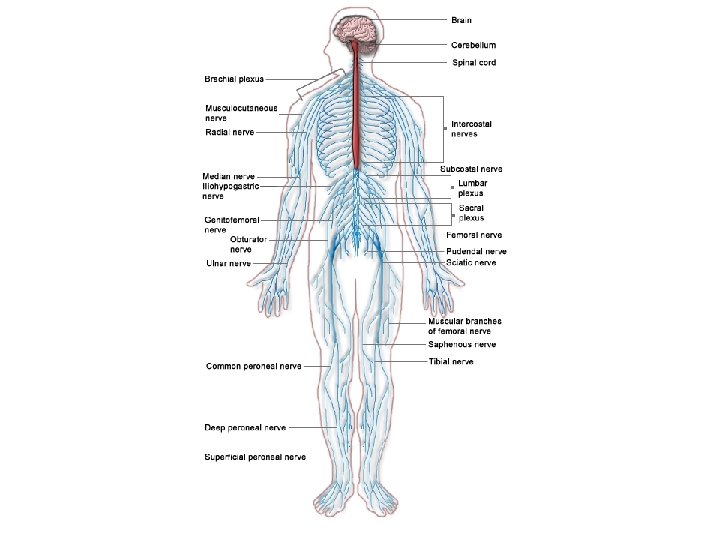
The Nervous System • Controls emotions, thinking, movements, and behavior • Two Parts – Central Nervous System (CNS)- brain and spinal cord – Peripheral Nervous System (PNS)- smaller nerves that reach other parts of the body
Voluntary and Involuntary Activities • Peripheral Nervous System: a. Somatic Nervous System (SNS)- voluntary activities b. Autonomic Nervous System (ANS)- involuntary activities – • – • Sympathetic- prepares for emergencies or strenuous activity Increases HR and BP, suspends digestion Parasympathetic- conserves energy and enhances recovery from strenuous activity Reduces HR and BP

Neurons • Long, thin, cells of nerve tissue along which messages travel to and from the brain • Transmission occurs when neurons are stimulated past a minimum point and emit a signal – All-or-none principle- neurons fire at full length only
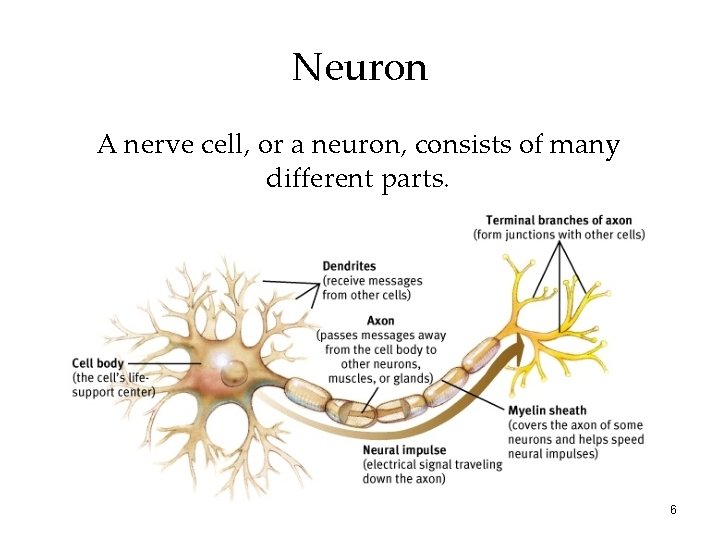
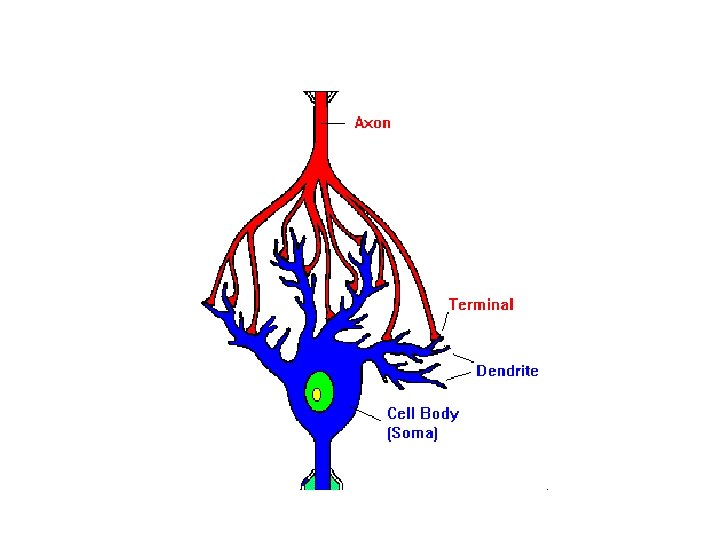
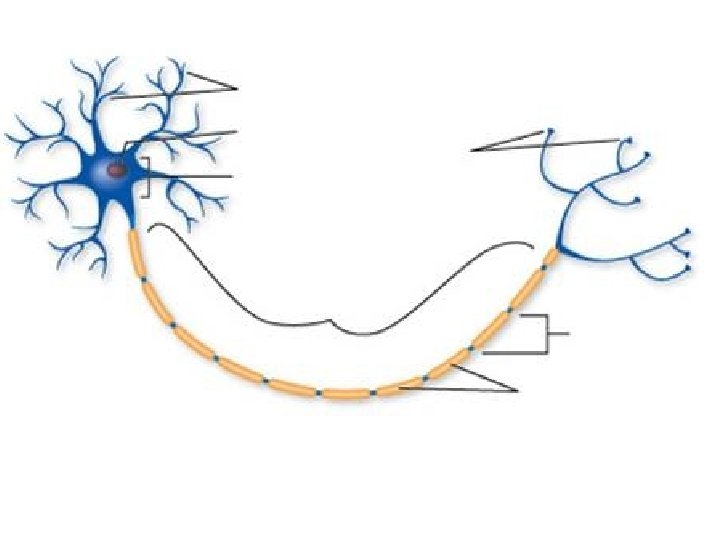
Neuron A nerve cell, or a neuron, consists of many different parts. 6
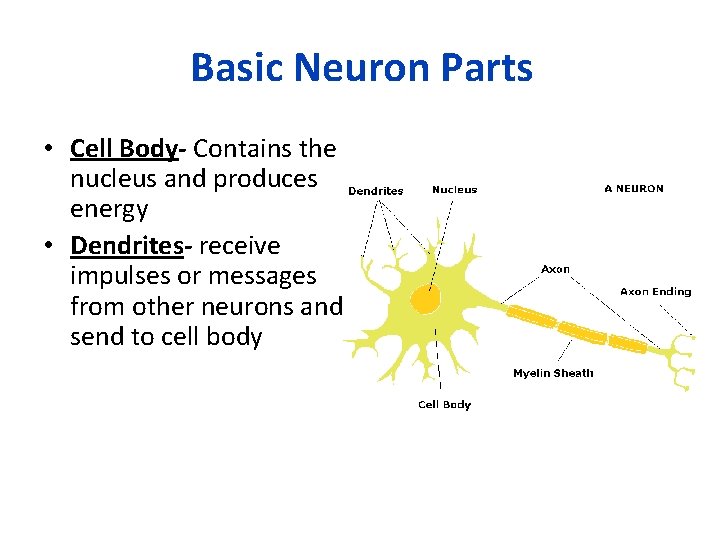
Basic Neuron Parts • Cell Body- Contains the nucleus and produces energy • Dendrites- receive impulses or messages from other neurons and send to cell body
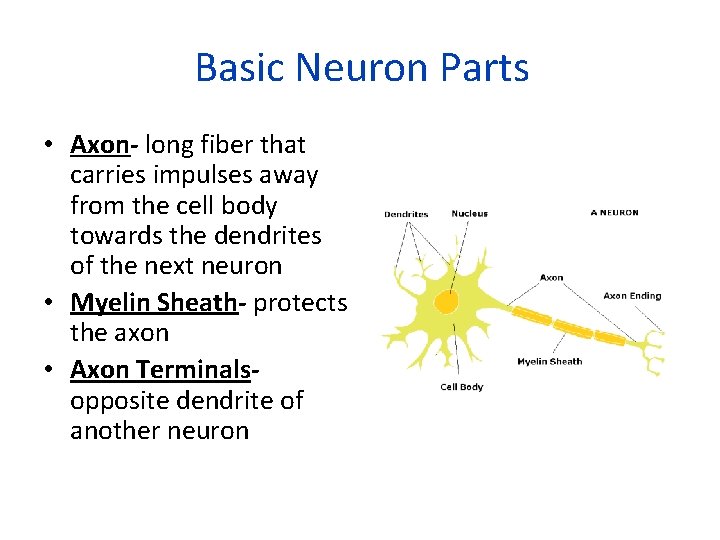
Basic Neuron Parts • Axon- long fiber that carries impulses away from the cell body towards the dendrites of the next neuron • Myelin Sheath- protects the axon • Axon Terminalsopposite dendrite of another neuron

Basic Neuron Parts
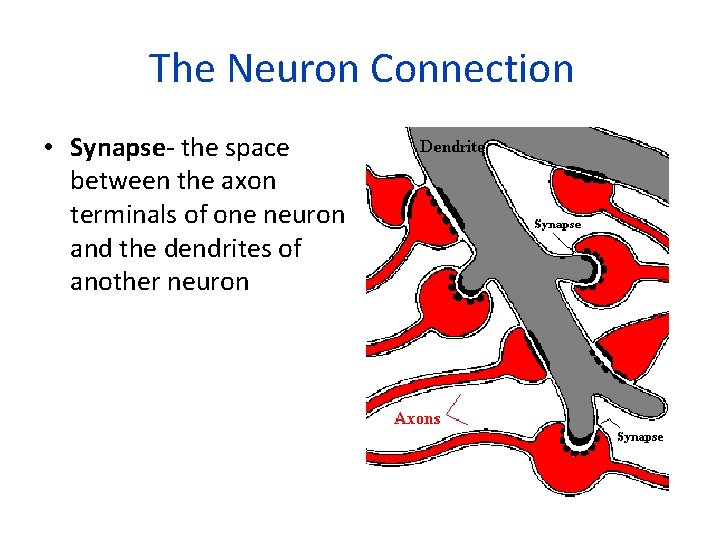
The Neuron Connection • Synapse- the space between the axon terminals of one neuron and the dendrites of another neuron
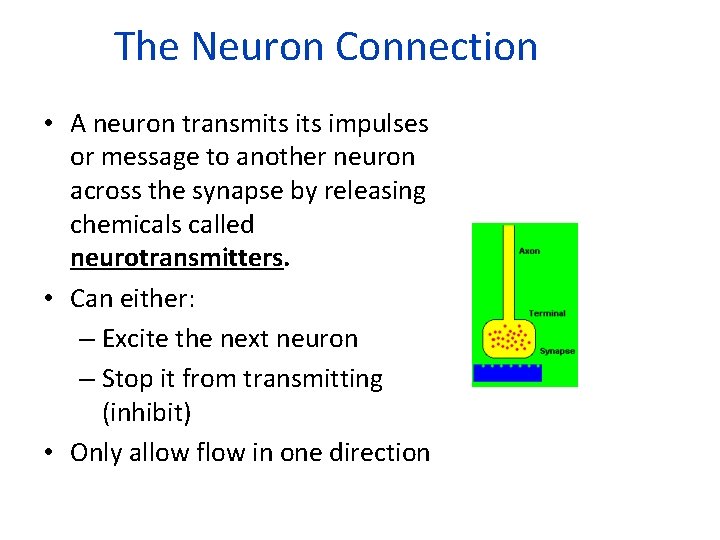
The Neuron Connection • A neuron transmits impulses or message to another neuron across the synapse by releasing chemicals called neurotransmitters. • Can either: – Excite the next neuron – Stop it from transmitting (inhibit) • Only allow flow in one direction
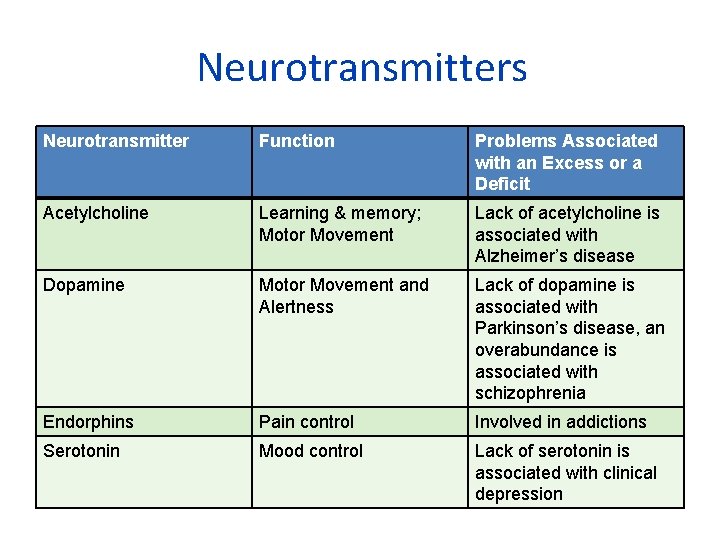
Neurotransmitters Neurotransmitter Function Problems Associated with an Excess or a Deficit Acetylcholine Learning & memory; Motor Movement Lack of acetylcholine is associated with Alzheimer’s disease Dopamine Motor Movement and Alertness Lack of dopamine is associated with Parkinson’s disease, an overabundance is associated with schizophrenia Endorphins Pain control Involved in addictions Serotonin Mood control Lack of serotonin is associated with clinical depression
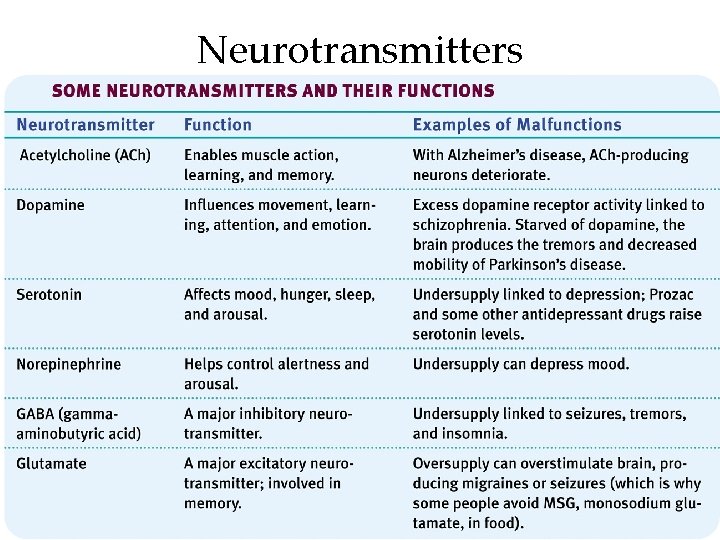
Neurotransmitters 14
Neurotransmitters • Norepinephrine- involved with memory and learning • Endorphins- inhibit pain- “inside morphine” • Too much or too little is linked to certain diseases – Undersupply of acetylcholine (memory and movement)- Alzheimer's – Oversupply of dopamine (learning, emotional arousal)- Schizophrenia – Undersupply of dopamine- Parkinson’s disease – Undersupply of norepinephrine and serotonin- depression
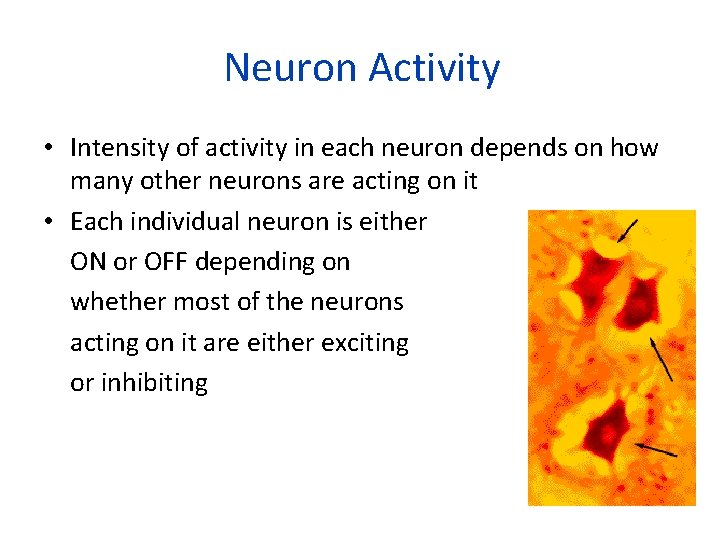
Neuron Activity • Intensity of activity in each neuron depends on how many other neurons are acting on it • Each individual neuron is either ON or OFF depending on whether most of the neurons acting on it are either exciting or inhibiting
Neuron Activity • Afferent neurons- relay messages from the sense organs to the brain – ARRIVE AT THE BRAIN (sensory pathways) • Efferent neurons- relay messages from brain to glands and muscles – EXIT THE BRAIN (motor pathways) • Interneurons- carry impulses between neurons
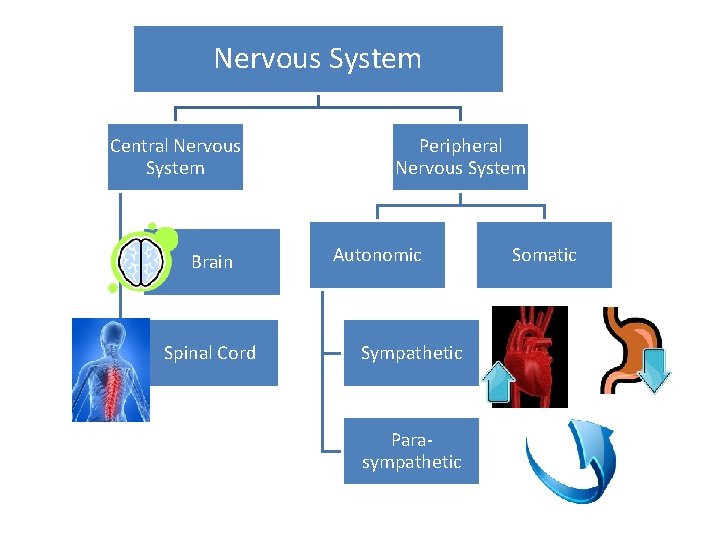
Nervous System Central Nervous System Brain Spinal Cord Peripheral Nervous System Autonomic Sympathetic Parasympathetic Somatic
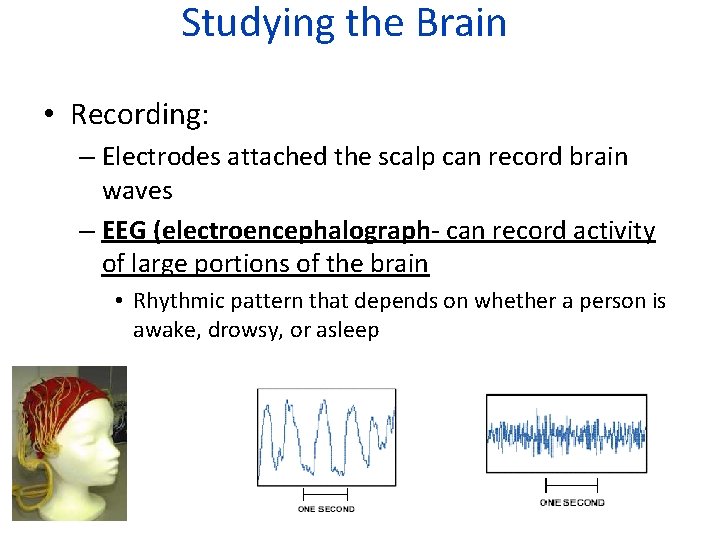
Studying the Brain • Recording: – Electrodes attached the scalp can record brain waves – EEG (electroencephalograph- can record activity of large portions of the brain • Rhythmic pattern that depends on whether a person is awake, drowsy, or asleep
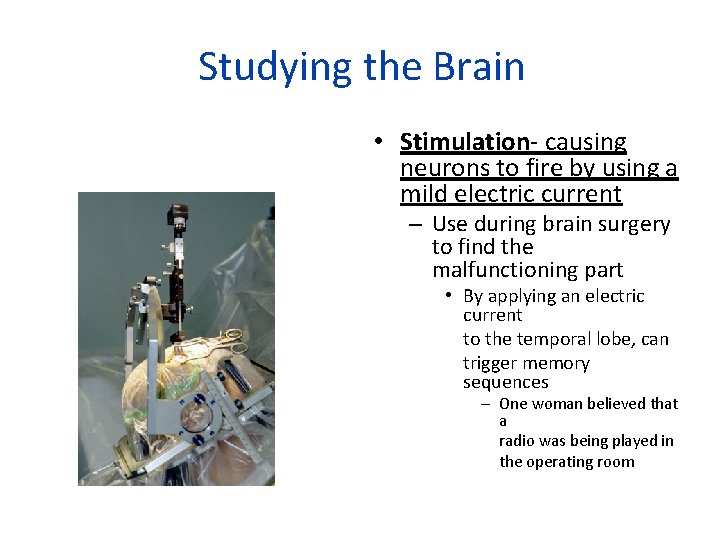
Studying the Brain • Stimulation- causing neurons to fire by using a mild electric current – Use during brain surgery to find the malfunctioning part • By applying an electric current to the temporal lobe, can trigger memory sequences – One woman believed that a radio was being played in the operating room
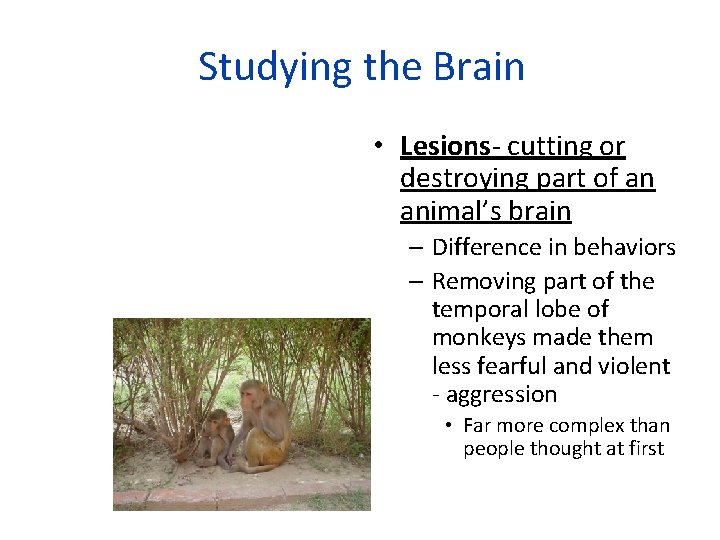
Studying the Brain • Lesions- cutting or destroying part of an animal’s brain – Difference in behaviors – Removing part of the temporal lobe of monkeys made them less fearful and violent - aggression • Far more complex than people thought at first
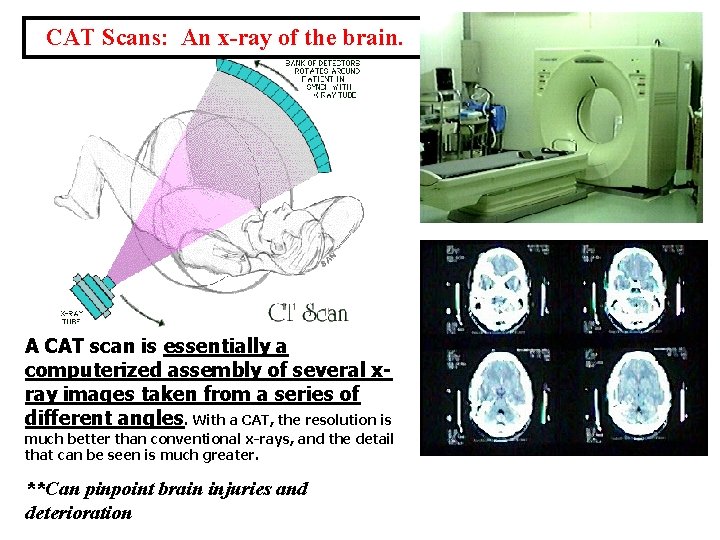
CAT Scans: An x-ray of the brain. A CAT scan is essentially a computerized assembly of several xray images taken from a series of different angles. With a CAT, the resolution is much better than conventional x-rays, and the detail that can be seen is much greater. **Can pinpoint brain injuries and deterioration
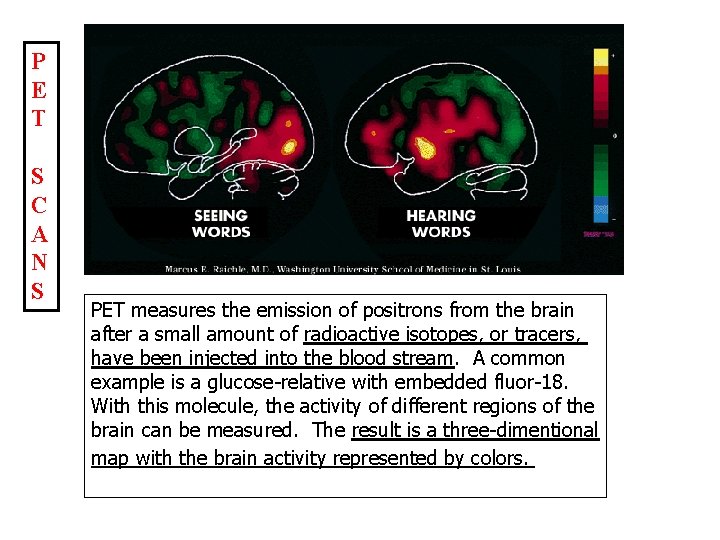
P E T S C A N S PET measures the emission of positrons from the brain after a small amount of radioactive isotopes, or tracers, have been injected into the blood stream. A common example is a glucose-relative with embedded fluor-18. With this molecule, the activity of different regions of the brain can be measured. The result is a three-dimentional map with the brain activity represented by colors.
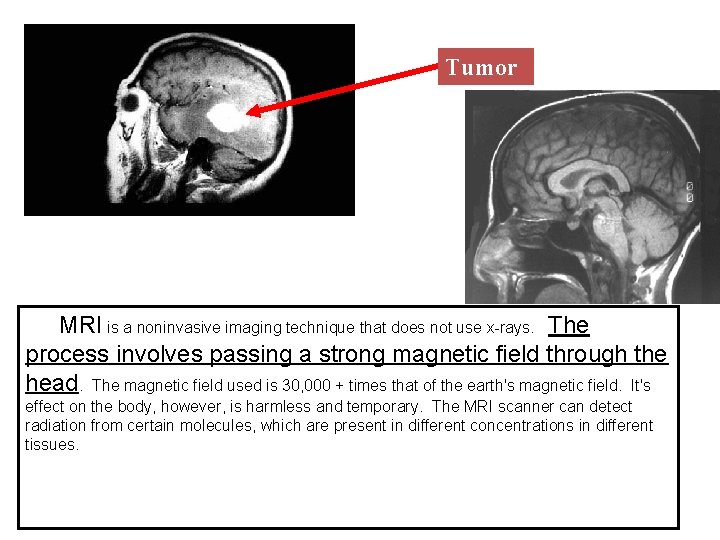
Tumor MRI is a noninvasive imaging technique that does not use x-rays. The process involves passing a strong magnetic field through the head. The magnetic field used is 30, 000 + times that of the earth's magnetic field. It's effect on the body, however, is harmless and temporary. The MRI scanner can detect radiation from certain molecules, which are present in different concentrations in different tissues.
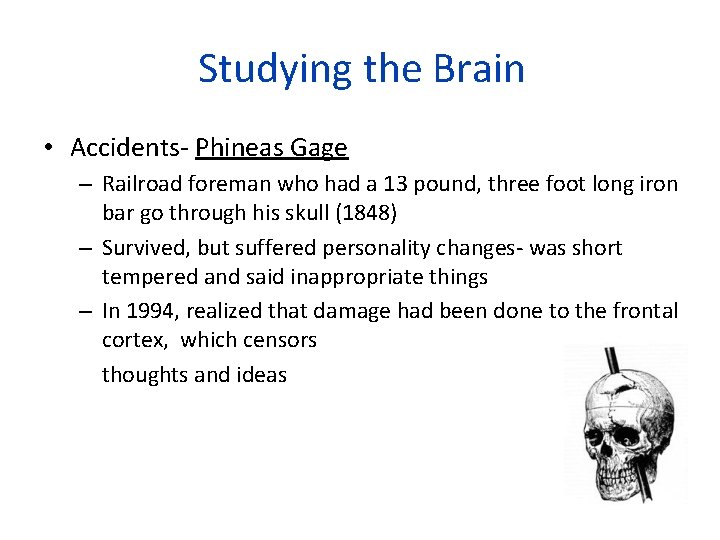
Studying the Brain • Accidents- Phineas Gage – Railroad foreman who had a 13 pound, three foot long iron bar go through his skull (1848) – Survived, but suffered personality changes- was short tempered and said inappropriate things – In 1994, realized that damage had been done to the frontal cortex, which censors thoughts and ideas
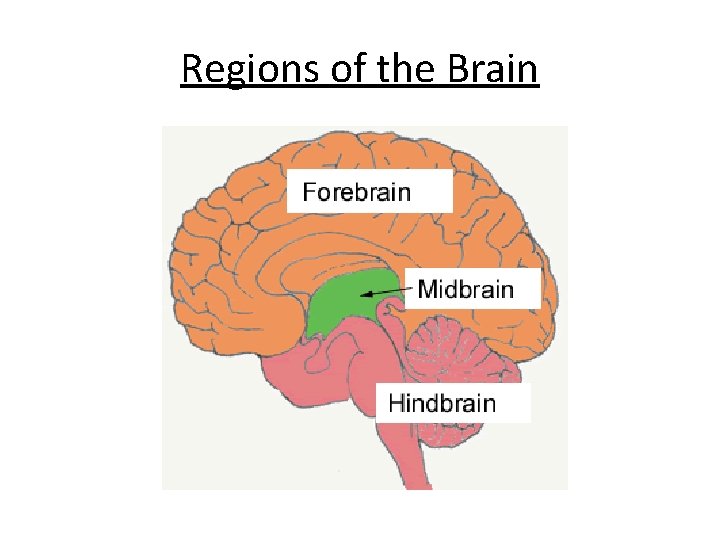
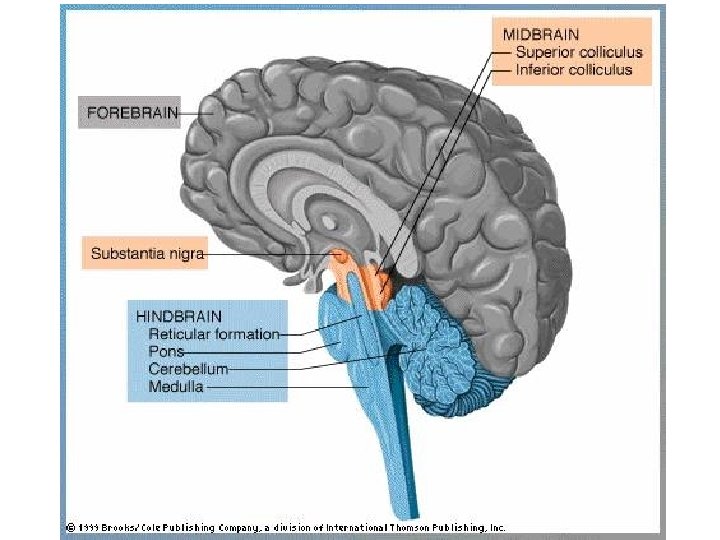
Regions of the Brain
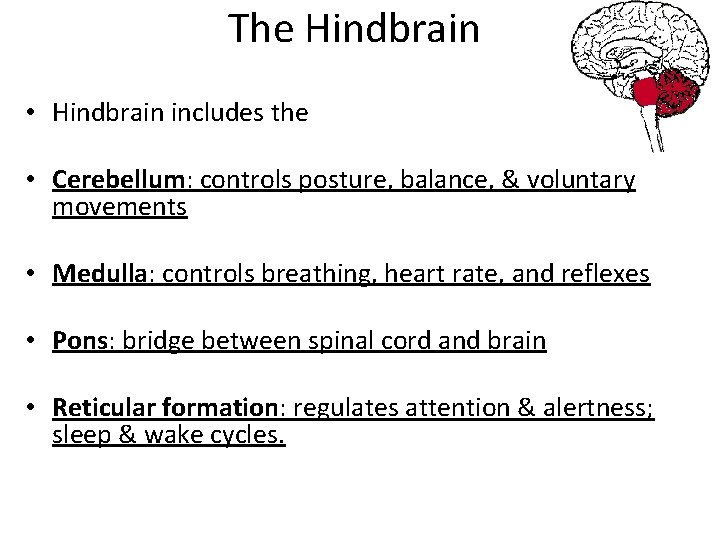
The Hindbrain • Hindbrain includes the • Cerebellum: controls posture, balance, & voluntary movements • Medulla: controls breathing, heart rate, and reflexes • Pons: bridge between spinal cord and brain • Reticular formation: regulates attention & alertness; sleep & wake cycles.
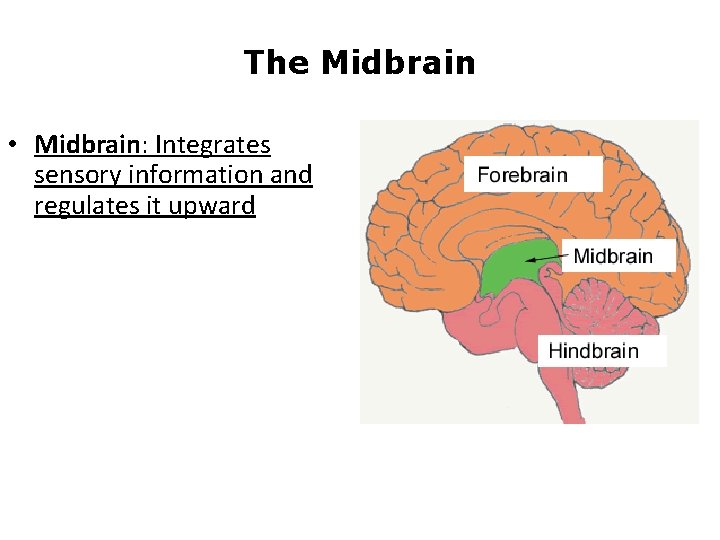
The Midbrain • Midbrain: Integrates sensory information and regulates it upward
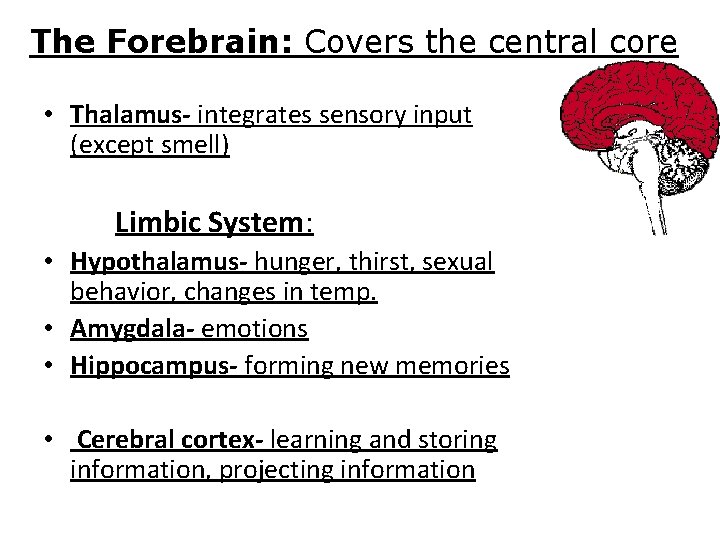
The Forebrain: Covers the central core • Thalamus- integrates sensory input (except smell) Limbic System: • Hypothalamus- hunger, thirst, sexual behavior, changes in temp. • Amygdala- emotions • Hippocampus- forming new memories • Cerebral cortex- learning and storing information, projecting information
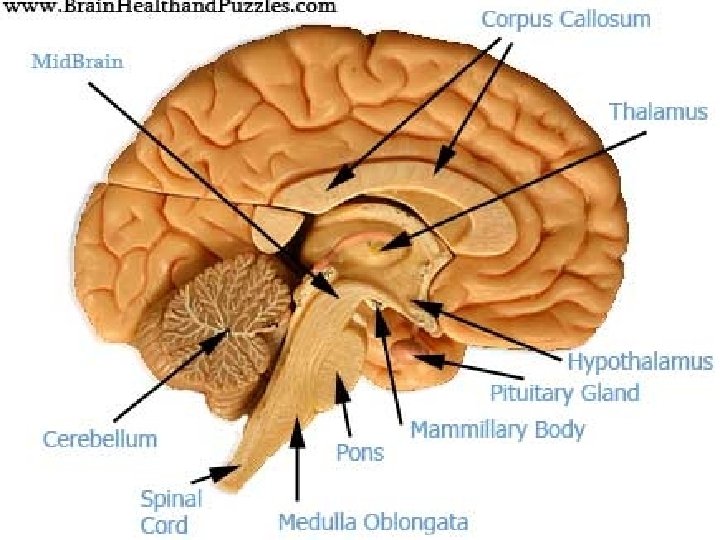
The Three Brains: Forebrain • Thalamus- integrates sensory input (except smell) • Hypothalamus- hunger, thirst, sexual behavior, changes in temp. • Cerebral cortex- learning and storing information, projecting information • Limbic System- core of forebrainincludes above and: • Amygdala- violent emotions • Hippocampus- forming new memories
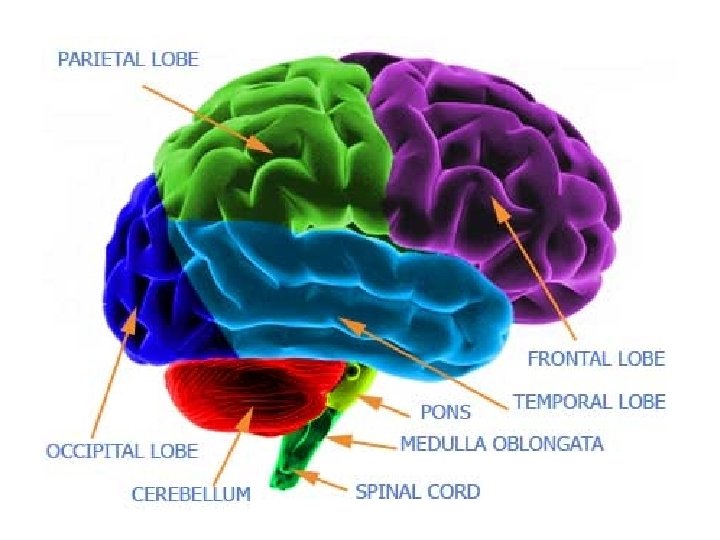
• Includes the • Cerebellum- posture, balance, voluntary movements • Medulla- breathing, heart rate, reflexes • Pons- bridge between spinal cord and brain, also helps in sleep
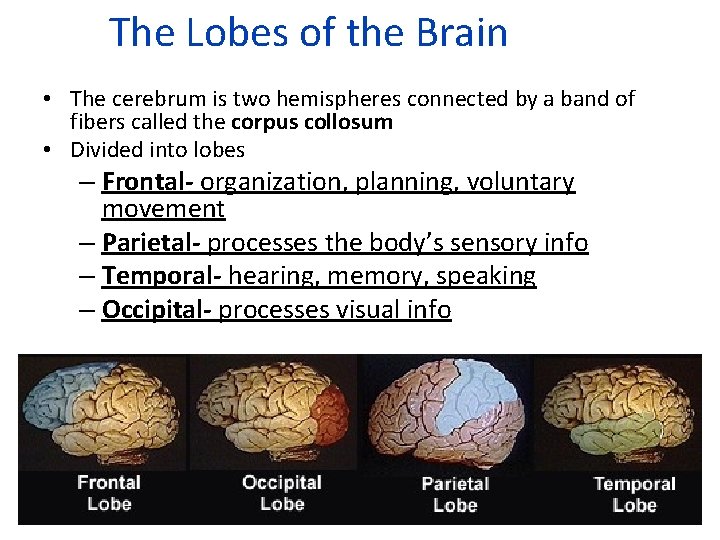
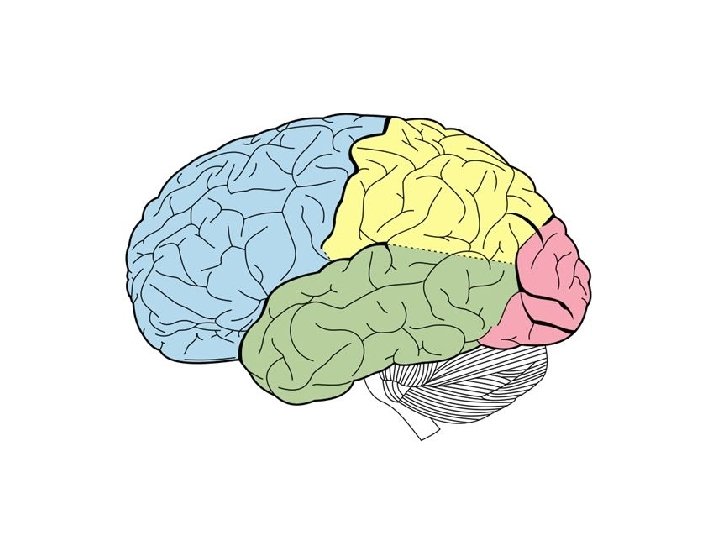
The Lobes of the Brain • The cerebrum is two hemispheres connected by a band of fibers called the corpus collosum • Divided into lobes – Frontal- organization, planning, voluntary movement – Parietal- processes the body’s sensory info – Temporal- hearing, memory, speaking – Occipital- processes visual info
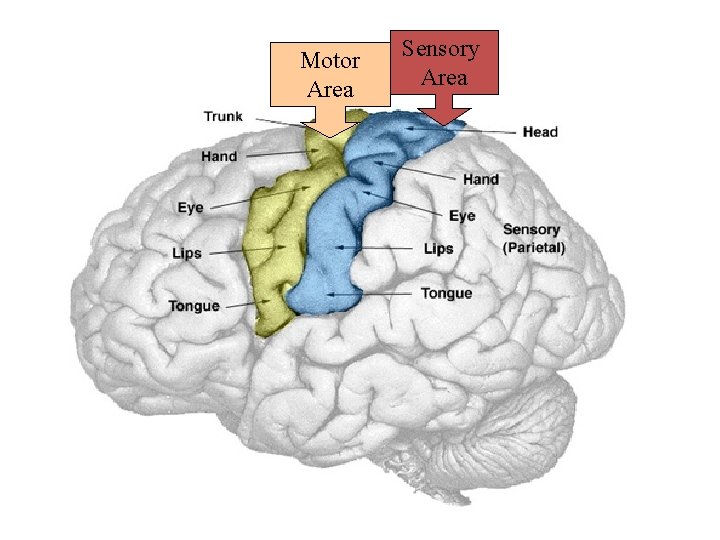
Motor Area Sensory Area
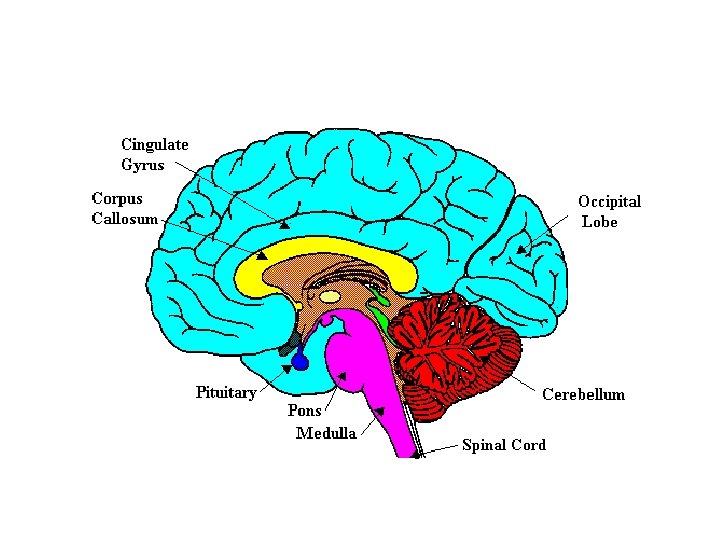
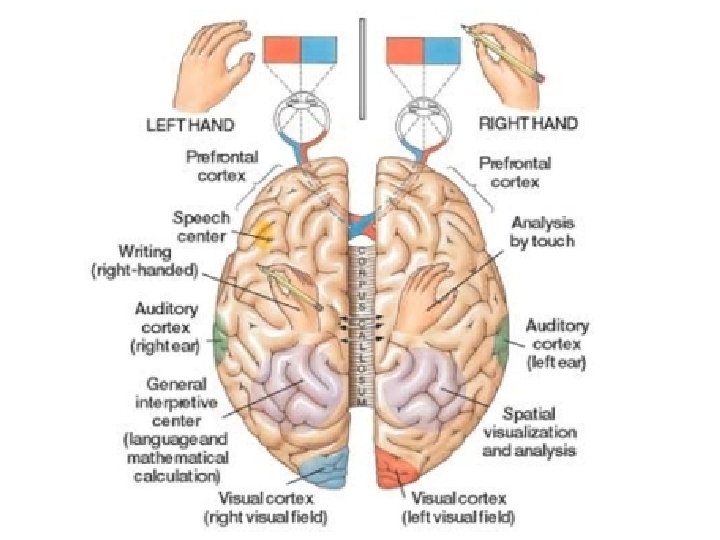
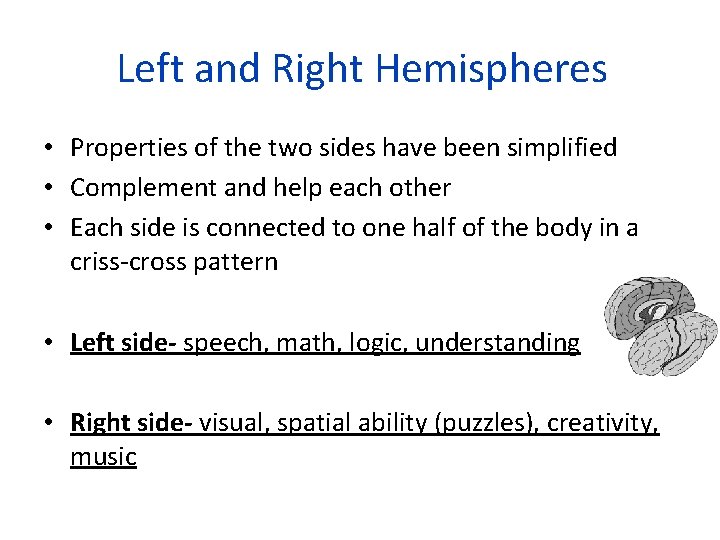
Left and Right Hemispheres • Properties of the two sides have been simplified • Complement and help each other • Each side is connected to one half of the body in a criss-cross pattern • Left side- speech, math, logic, understanding • Right side- visual, spatial ability (puzzles), creativity, music
Split Brain Operations • When people are prone to grand mal seizures, separating the brain hemispheres will make them less severe • Side effects: seem normal • … but, if a man whose brain has been split holds a ball in his right hand, he will be able to say it is a ball, but in his left hand, he will not be able to say what it is. Information cannot cross to the speech center in the left hemisphere
The Brain’s Plasticity The brain is sculpted by our genes but also by our experiences. Plasticity refers to the brain’s ability to modify itself after some type of injury or illness. 44
The Endocrine System • A chemical communication system that uses hormones to send chemical messages through the bloodstream – Produced in the endocrine glands – Site specific – Released directly into the bloodstream – Affect growth, metabolic processes, determine gender, secreting during stress, influence mood and drives
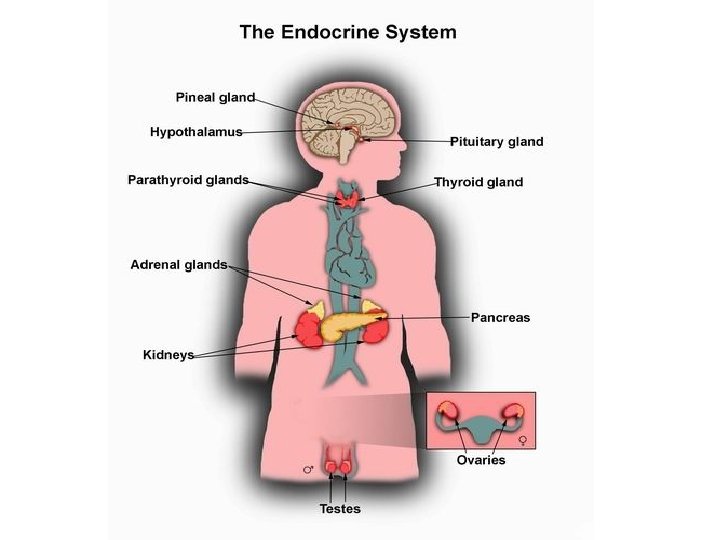
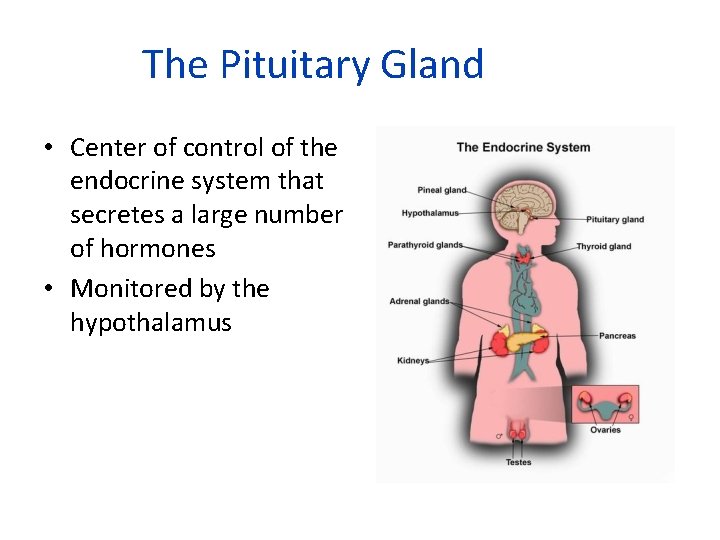
The Pituitary Gland • Center of control of the endocrine system that secretes a large number of hormones • Monitored by the hypothalamus
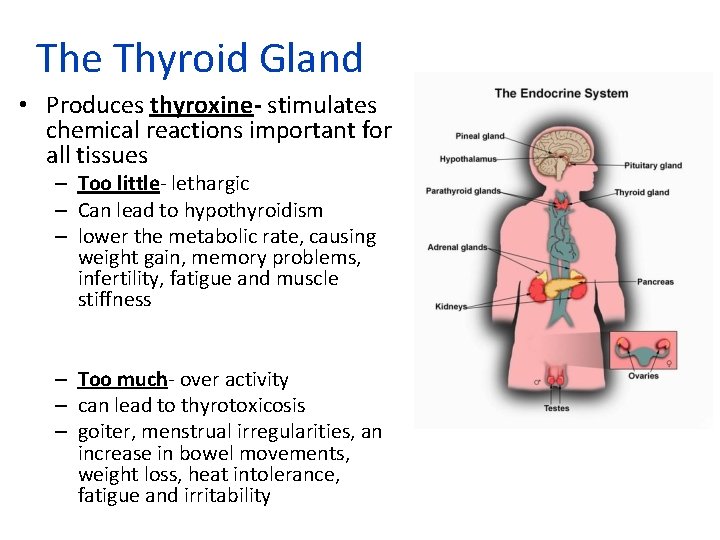
The Thyroid Gland • Produces thyroxine- stimulates chemical reactions important for all tissues – Too little- lethargic – Can lead to hypothyroidism – lower the metabolic rate, causing weight gain, memory problems, infertility, fatigue and muscle stiffness – Too much- over activity – can lead to thyrotoxicosis – goiter, menstrual irregularities, an increase in bowel movements, weight loss, heat intolerance, fatigue and irritability
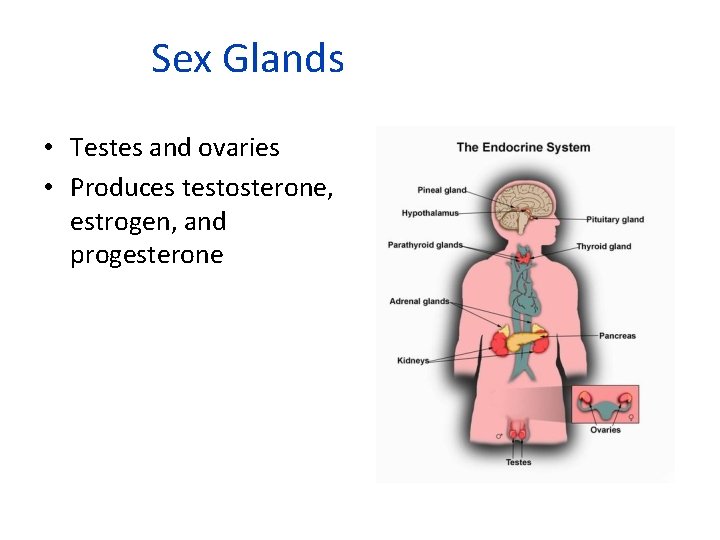
Sex Glands • Testes and ovaries • Produces testosterone, estrogen, and progesterone
Hormones vs. Neurotransmitters • The same chemical (norepinephrine) can be used as both – Neurotransmitter- released right beside the cell it will excite or inhibit – Hormone- released into the blood and diffused throughout the body
Heredity and Environment • Heredity- the genetic transmission of characteristics from parents to offspring • Genes- the basic units of heredity, can interact with environment to cause behavior • Nature vs. Nurture – Galton- success runs in families – Watson- “give me a dozen healthy infants and I’ll guarantee to take any one at random and train him to be any specialist I might select”
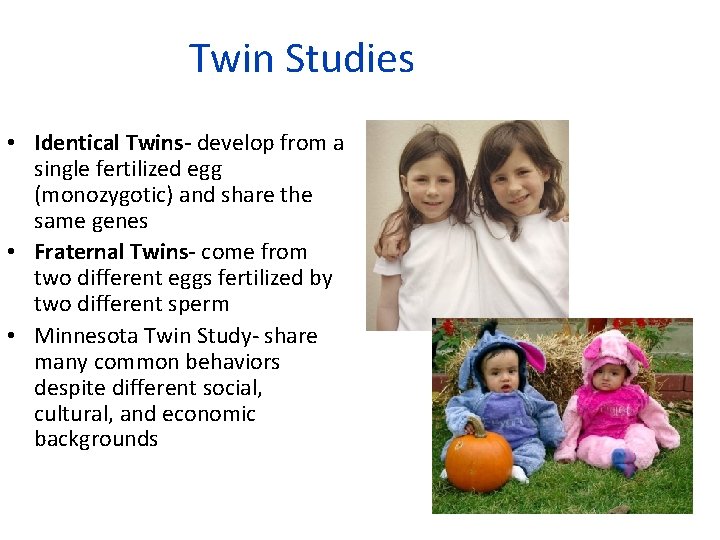
Twin Studies • Identical Twins- develop from a single fertilized egg (monozygotic) and share the same genes • Fraternal Twins- come from two different eggs fertilized by two different sperm • Minnesota Twin Study- share many common behaviors despite different social, cultural, and economic backgrounds
- Slides: 49