
CHAPTER 6 Biomes and Aquatic Ecosystems Lesson 6
CHAPTER 6 Biomes and Aquatic Ecosystems
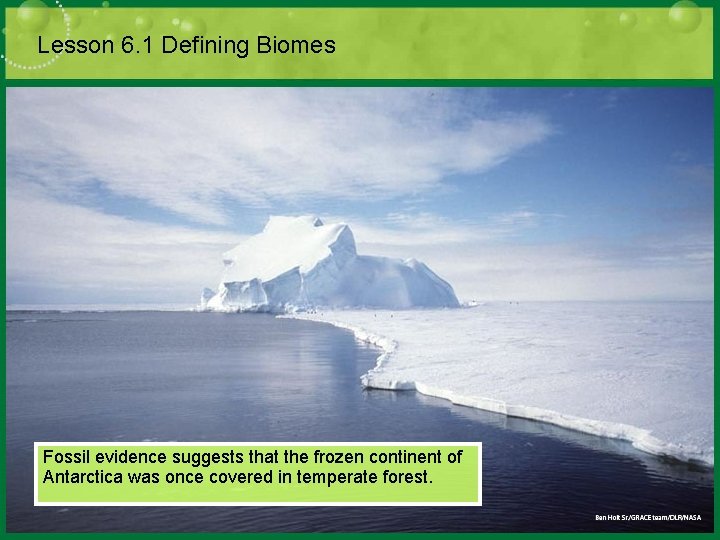
Lesson 6. 1 Defining Biomes Fossil evidence suggests that the frozen continent of Antarctica was once covered in temperate forest.
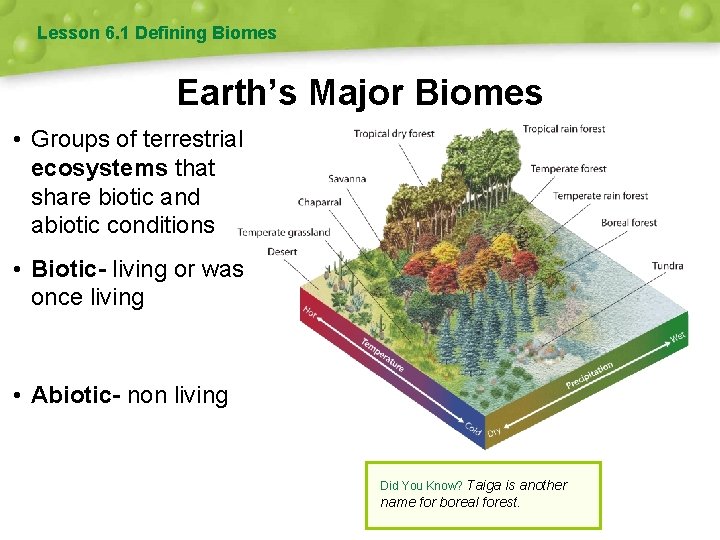
Lesson 6. 1 Defining Biomes Earth’s Major Biomes • Groups of terrestrial ecosystems that share biotic and abiotic conditions • Biotic- living or was once living • Abiotic- non living Did You Know? Taiga is another name for boreal forest.
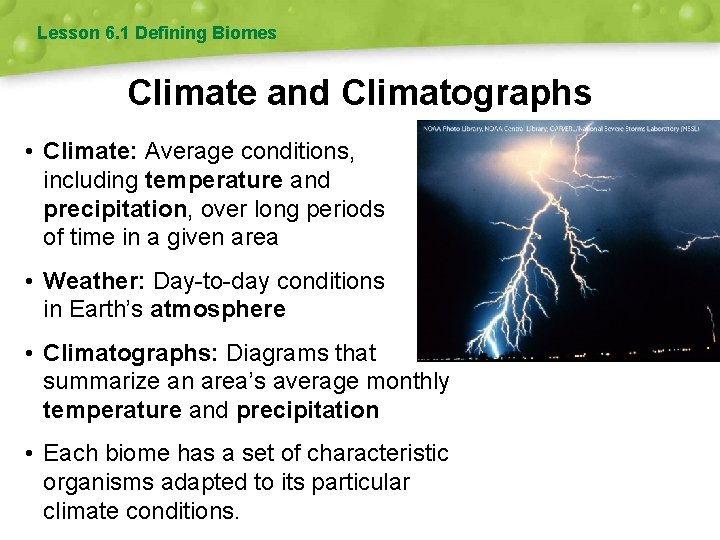
Lesson 6. 1 Defining Biomes Climate and Climatographs • Climate: Average conditions, including temperature and precipitation, over long periods of time in a given area • Weather: Day-to-day conditions in Earth’s atmosphere • Climatographs: Diagrams that summarize an area’s average monthly temperature and precipitation • Each biome has a set of characteristic organisms adapted to its particular climate conditions.
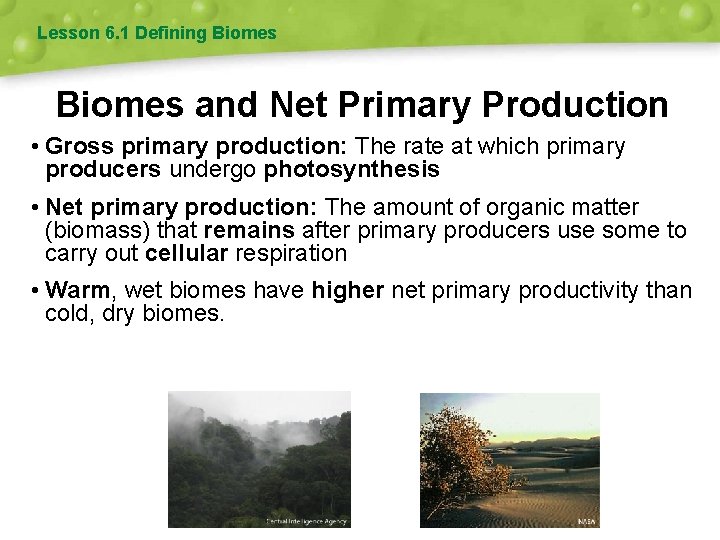
Lesson 6. 1 Defining Biomes and Net Primary Production • Gross primary production: The rate at which primary producers undergo photosynthesis • Net primary production: The amount of organic matter (biomass) that remains after primary producers use some to carry out cellular respiration • Warm, wet biomes have higher net primary productivity than cold, dry biomes.
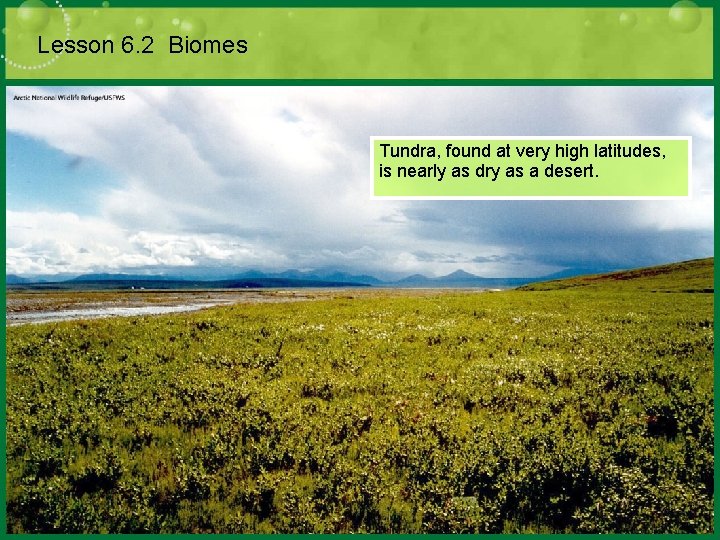
Lesson 6. 2 Biomes Tundra, found at very high latitudes, is nearly as dry as a desert.
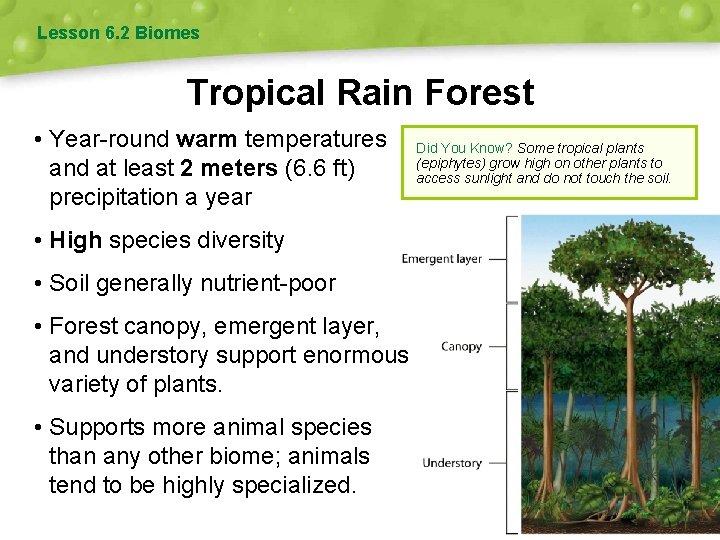
Lesson 6. 2 Biomes Tropical Rain Forest • Year-round warm temperatures and at least 2 meters (6. 6 ft) precipitation a year • High species diversity • Soil generally nutrient-poor • Forest canopy, emergent layer, and understory support enormous variety of plants. • Supports more animal species than any other biome; animals tend to be highly specialized. Did You Know? Some tropical plants (epiphytes) grow high on other plants to access sunlight and do not touch the soil.
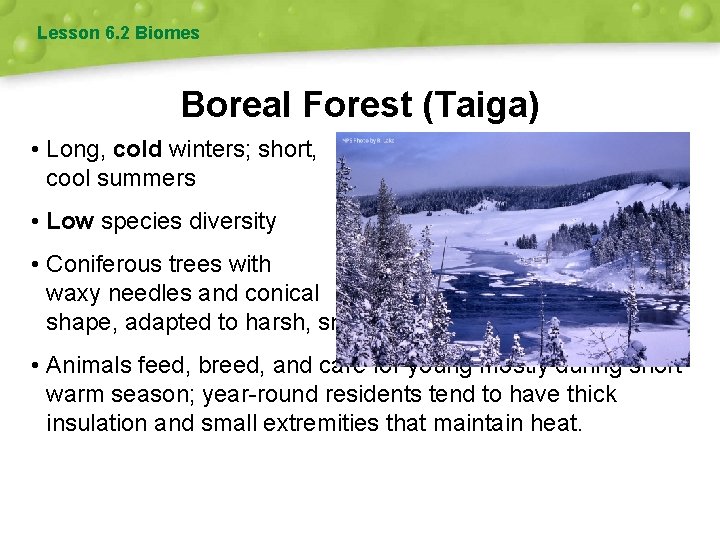
Lesson 6. 2 Biomes Boreal Forest (Taiga) • Long, cold winters; short, cool summers • Low species diversity • Coniferous trees with waxy needles and conical shape, adapted to harsh, snowy conditions are common. • Animals feed, breed, and care for young mostly during short warm season; year-round residents tend to have thick insulation and small extremities that maintain heat.
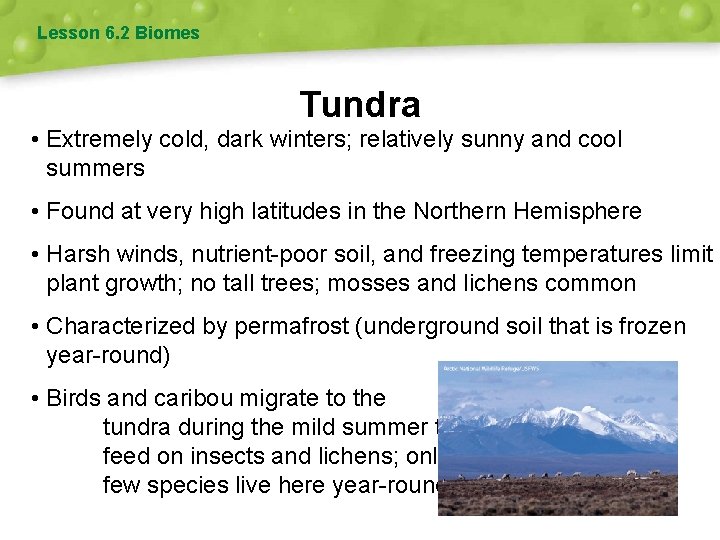
Lesson 6. 2 Biomes Tundra • Extremely cold, dark winters; relatively sunny and cool summers • Found at very high latitudes in the Northern Hemisphere • Harsh winds, nutrient-poor soil, and freezing temperatures limit plant growth; no tall trees; mosses and lichens common • Characterized by permafrost (underground soil that is frozen year-round) • Birds and caribou migrate to the tundra during the mild summer to feed on insects and lichens; only a few species live here year-round.

Lesson 6. 2 Biomes Polar Ice and Mountains • Not classified as biomes • No land under polar ice in Northern Hemisphere; ice sits atop Antarctica in Southern Hemisphere • Very few plants; most life is in surrounding ocean • Mountain communities change with elevation, similar to how biome communities change with latitude.
What conditions and organisms characterize the world’s terrestrial ecosystems?
1. What conditions and organisms characterize the world’s terrestrial ecosystems? Temperature and precipitation characterize the ecosystems. Those biomes with higher temperatures and more precipitation have more species diversity than those with colder and dryer climates.
2. What adaptations help organisms live in specific habitats? 3. Why does more agricultural land come from grasslands more than other biomes?
2. What adaptations help organisms live in specific habitats? Adaptations such as color of skin/fur can help an organism blend in to their surrounding. 3. Why does more agricultural land come from grasslands more than other biomes? Agriculture land comes from grasslands because there are optimal conditions such as sunlight and warmer temperatures.
- Slides: 14