
Chapter 6 Aspects of the DOT Hazardous Materials
- Slides: 16
Chapter 6 Aspects of the DOT Hazardous Materials Regulations The following is a few selected topics from Chapter 6 with primary focus on air transportation.
DOT requires Shipping Papers • Remember “DOT” = Department of Transportation • Basic Description of Shipping Paper includes: – Proper shipping name (including technical name, when applicable) – Hazard class or division – Identification number – Packing group (when applicable) – Total quantity by mass, volume, or as otherwise appropriate
Shipping Paper Shippers and carriers must certify that the materials are: – properly classified – described – packaged – marked – labeled – in proper condition for transportation.
Location of a Shipping Paper During Transit • Aircraft – Must give proper description of hazardous material consignment – Must be provided to the pilot in command – Must be kept in the cockpit during transit • In the event of an airplane malfunction or emergency, pilot must give notification of hazardous materials on the plane.
Transporting Hazardous Materials By Passenger-Carrying Aircraft or Railcar, Cargo Aircraft, or Watercraft • Quantity limits established for each type of transporting method • Maximum quantity limits for passenger-carrying aircraft—entries in column 9 A of Hazardous Materials Table • Maximum quantity limits for cargo aircraft—entries in column 9 B of Table • Hazardous Materials Table is shown in textbook, Table 6. 1
DOT Labeling Requirements • Material authorized solely for transport on cargo aircraft must display the CARGO AIRCRAFT ONLY label in addition to any other required labels.
Responding to Incidents Involving Hazardous Materials • DOT Emergency Response Guidebook – Primary reference source book for first-onthe-scene – Readily available to all in the transportation industry
DOT Emergency Response Guidebook Basic information to use guidebook: • Identification numbers are catalogued on yellow-bordered pages. • Names of materials are listed alphabetically with their identification number on the bluebordered pages. • Each identification number is referenced to one of 172 guide numbers on the orange-bordered pages.
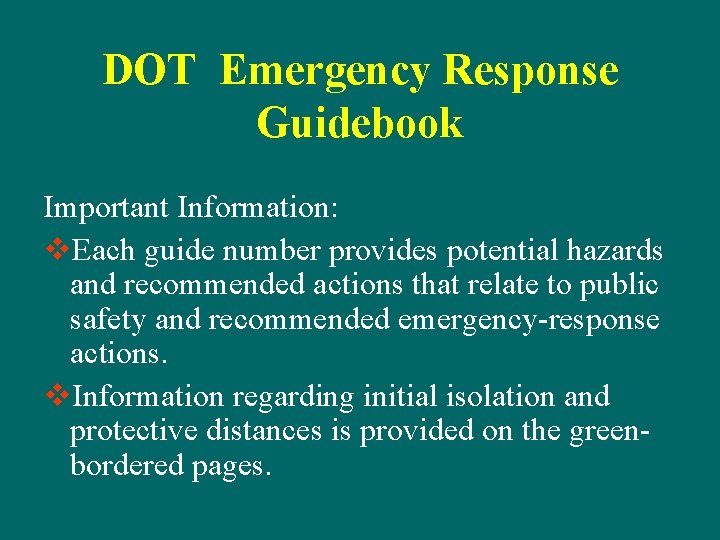
DOT Emergency Response Guidebook Important Information: v. Each guide number provides potential hazards and recommended actions that relate to public safety and recommended emergency-response actions. v. Information regarding initial isolation and protective distances is provided on the greenbordered pages.
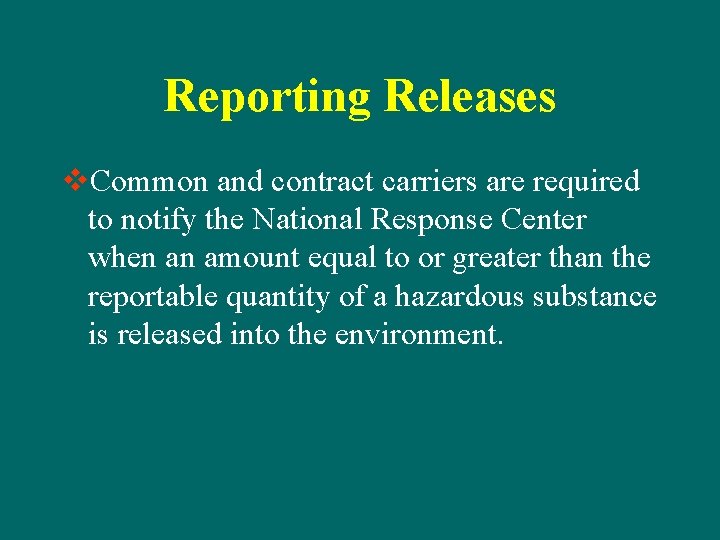
Reporting Releases v. Common and contract carriers are required to notify the National Response Center when an amount equal to or greater than the reportable quantity of a hazardous substance is released into the environment.
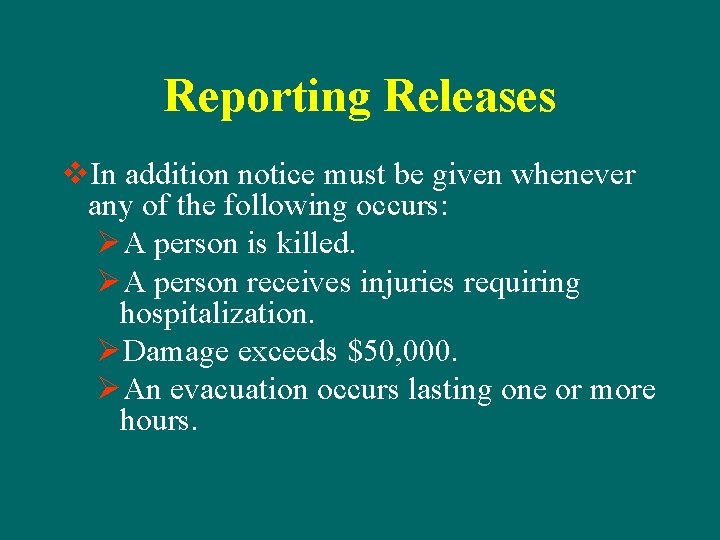
Reporting Releases v. In addition notice must be given whenever any of the following occurs: ØA person is killed. ØA person receives injuries requiring hospitalization. ØDamage exceeds $50, 000. ØAn evacuation occurs lasting one or more hours.
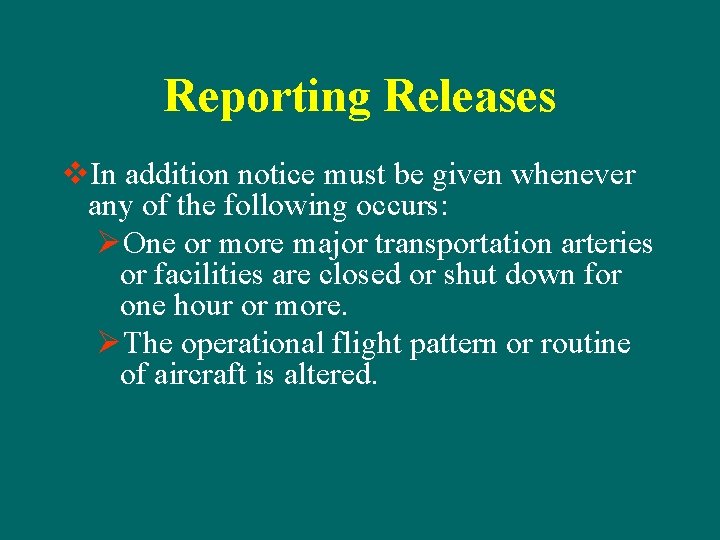
Reporting Releases v. In addition notice must be given whenever any of the following occurs: ØOne or more major transportation arteries or facilities are closed or shut down for one hour or more. ØThe operational flight pattern or routine of aircraft is altered.
Reporting Releases v. In addition notice must be given whenever any of the following occurs: ØFire, breakage, spillage, or suspected radioactive contamination occurs involving the shipment or one or more radioactive materials.
Reporting Releases v. In addition notice must be given whenever any of the following occurs: ØFire, breakage, spillage, or suspected radioactive contamination occurs involving the shipment or one or more infectious materials or etiologic agents.
National Response Center • Initial contact by phone: (800)424 -8802 or (202)426 -2675
National Response Center • Follow up report in writing: – Director, Office of Hazardous Materials Regulation, Materials Transportation Bureau, Department of Transportation, Washington, D. C. 20590