
Chapter 6 Anger How to Moderate Hot Buttons
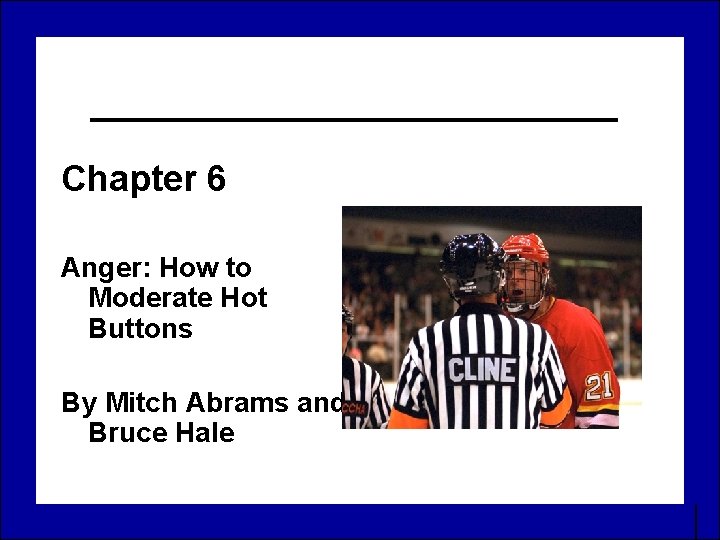
Chapter 6 Anger: How to Moderate Hot Buttons By Mitch Abrams and Bruce Hale
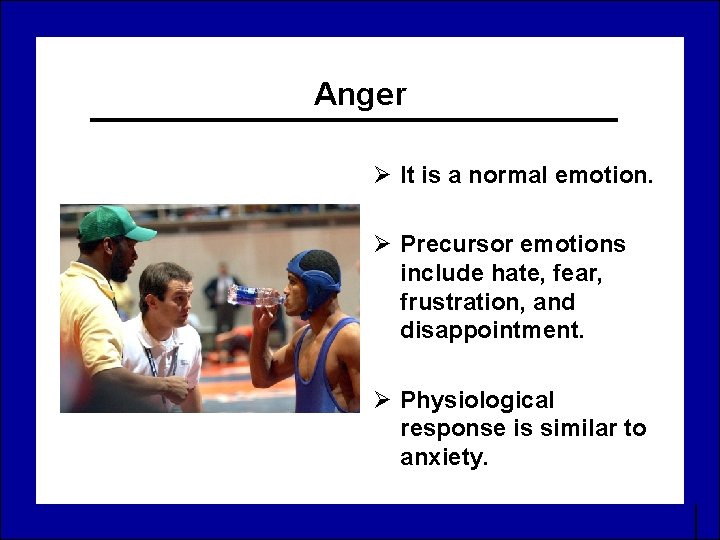
Anger Ø It is a normal emotion. Ø Precursor emotions include hate, fear, frustration, and disappointment. Ø Physiological response is similar to anxiety.
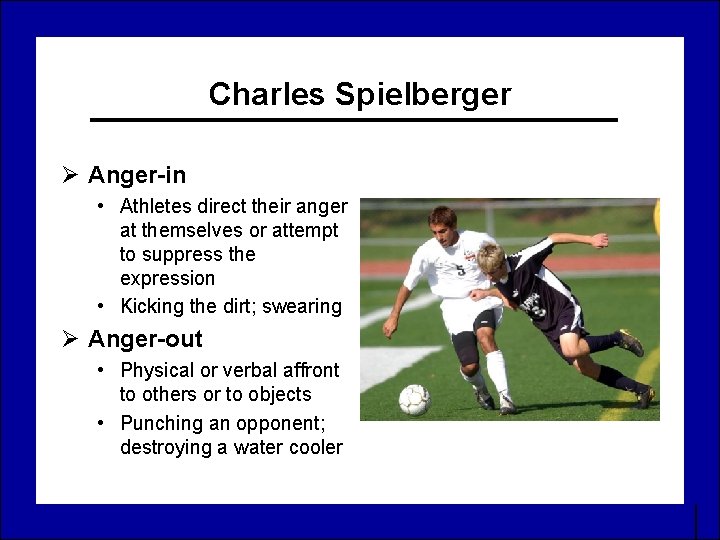
Charles Spielberger Ø Anger-in • Athletes direct their anger at themselves or attempt to suppress the expression • Kicking the dirt; swearing Ø Anger-out • Physical or verbal affront to others or to objects • Punching an opponent; destroying a water cooler
Types of Violence Ø Hostile • Intent to harm an opponent • Spontaneous or planned • Spontaneous violence usually accompanied by anger • Planned hostile violence is deeply troubling (continued)
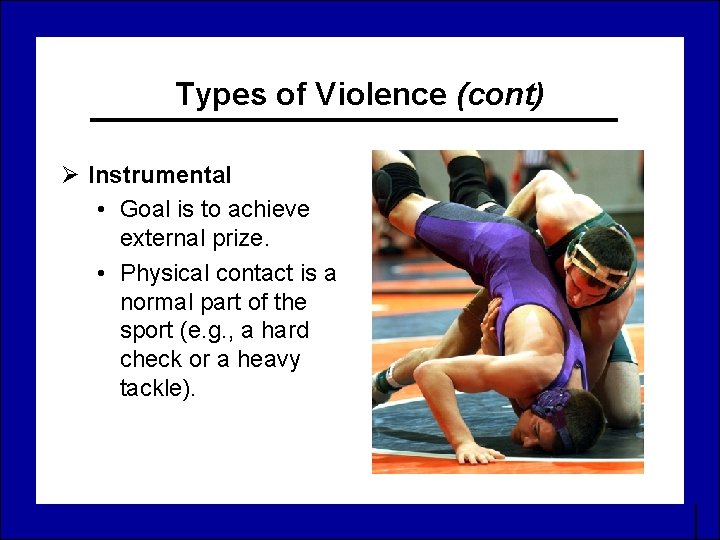
Types of Violence (cont) Ø Instrumental • Goal is to achieve external prize. • Physical contact is a normal part of the sport (e. g. , a hard check or a heavy tackle).
NFL: National Felons League? Ø Is planned hostile violence in sport criminal? Ø NHL: Marty Mc. Sorley striking Donald Brashear in the head from behind with his stick Ø NHL: Todd Bertuzzi punching Steve Moore and breaking his neck Ø NFL: Bill Romanowski punching Marcus Williams at practice and breaking his orbital bone, leaving him partially blind
The Myth of the Violent Athlete Ø Research is equivocal; There is little strong evidence that athletes are more violent than nonathletes in life away from the playing field. Ø Why does the image of violent athletes persist?
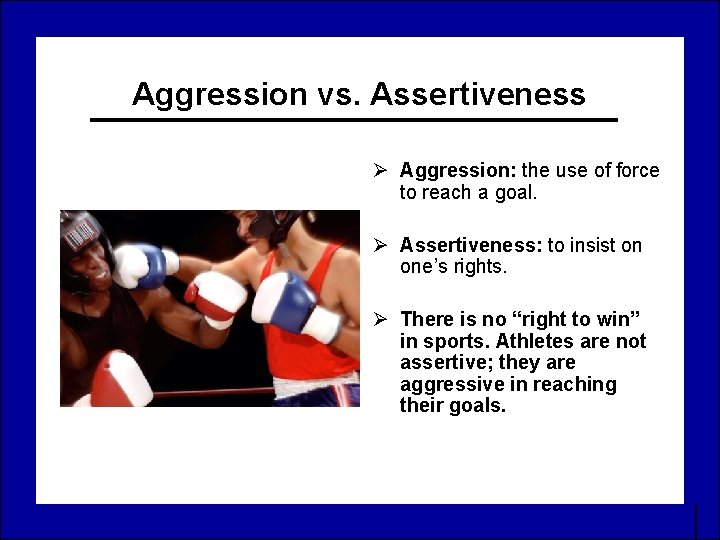
Aggression vs. Assertiveness Ø Aggression: the use of force to reach a goal. Ø Assertiveness: to insist on one’s rights. Ø There is no “right to win” in sports. Athletes are not assertive; they are aggressive in reaching their goals.
Instinct Theory Ø Freud, Konrad Lorenz. Ø Man = animal. Ø Aggression is an inborn drive like sex, hunger. Ø Catharsis: purging of pent-up aggression.
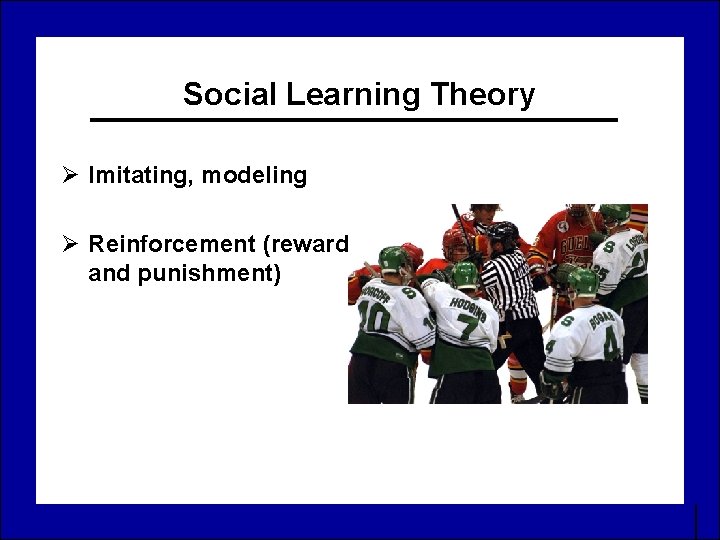
Social Learning Theory Ø Imitating, modeling Ø Reinforcement (reward and punishment)
Aggression and Performance Ø Bill Morgan: Athletes tend to have lower anger levels. Ø Yuri Hanin: Anger-in especially has deleterious effects on concentration and focus. Ø Associated with increases in physiological arousal: • It may move a player out of IZOF. • Many coaches believe that angry players are more aroused and play better. Ø Aggressive behaviors in sport hurt performance. Also, aggression does not cathartically release anger.
Aggression and Performance: Research Needed Ø Can anger-management programs be effective in sports? • Awareness training • Role playing Ø Can anger facilitate arousal or enhance an aggressive attitude in sports such as weightlifting, football, boxing, or rugby?
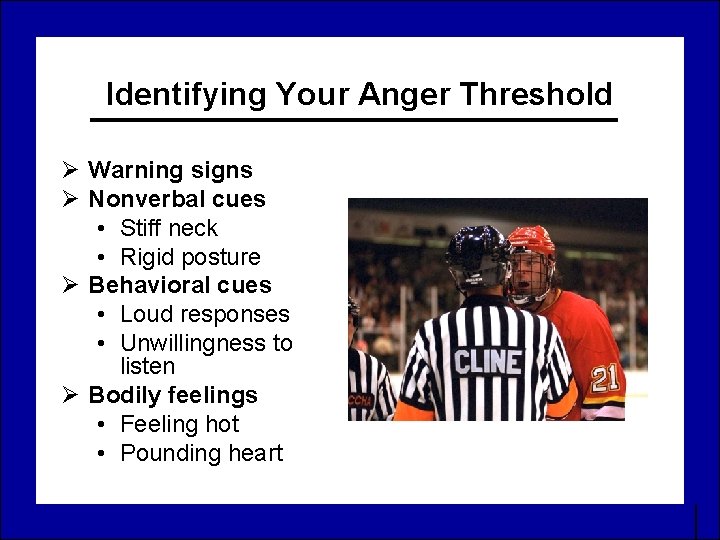
Identifying Your Anger Threshold Ø Warning signs Ø Nonverbal cues • Stiff neck • Rigid posture Ø Behavioral cues • Loud responses • Unwillingness to listen Ø Bodily feelings • Feeling hot • Pounding heart
Developing Awareness Ø Hassle log Ø Identify situational cues Ø Feedback from others Ø Hostility bias: the tendency to perceive neutral stimuli as provocative
Measuring Anger in Sport Ø No sport-specific measures exist Ø Spielberger’s State. Trait Anger Expression Inventory (STAXI): 44 -item selfreport Ø The POMS
Measurement Ø Bredemeier Athletic Aggression Inventory Ø Sport Aggression Inventory Ø Scale of Children’s Action Tendencies Ø Measure aggressive intent, not anger or violence
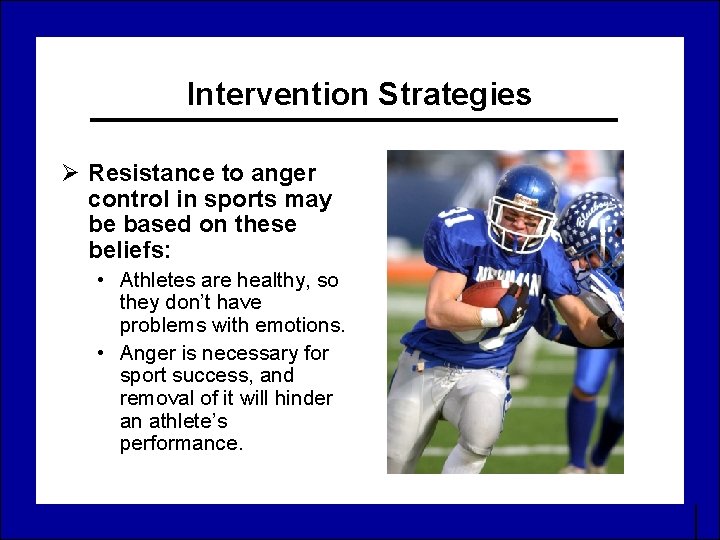
Intervention Strategies Ø Resistance to anger control in sports may be based on these beliefs: • Athletes are healthy, so they don’t have problems with emotions. • Anger is necessary for sport success, and removal of it will hinder an athlete’s performance.
Physiological Interventions Ø Relaxation Ø Imagery Ø Music
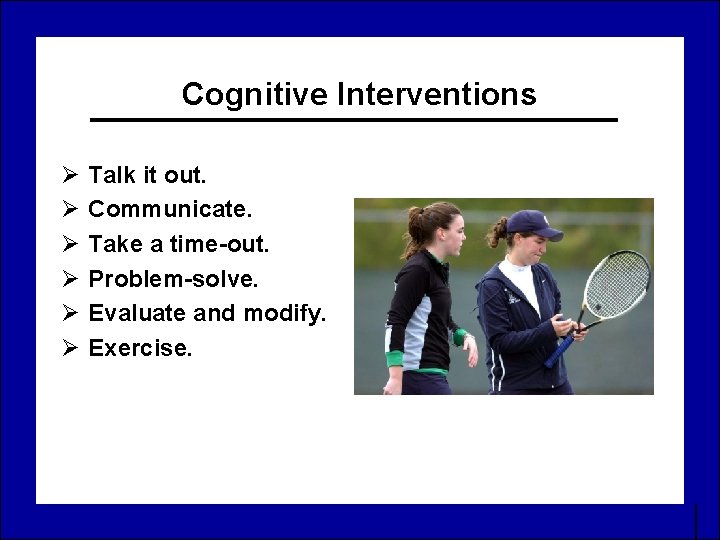
Cognitive Interventions Ø Ø Ø Talk it out. Communicate. Take a time-out. Problem-solve. Evaluate and modify. Exercise.
Implementing Anger-Management Training Ø Ø Ø Individual interventions Privacy, more comfortable Group sessions With peers Modeling Team-building
The Role of the Coach Ø Modeling anger and violence sends the message that losing control is OK. Ø Coaches who instruct players to act aggressively promote angry aggression. Ø Coaches who fail to discipline athletes involved in assaults and violent behavior send the message that violence is acceptable. • Model anger control. • Set team rules and codes of conduct. • Be proactive.
- Slides: 21