
Chapter 6 AED Public Access Defibrillation Sudden cardiac
Chapter 6 AED
Public Access Defibrillation • Sudden cardiac death is an unresolved health crisis. • CPR and defibrillation improve chance for survival. • Automated external defibrillators (AEDs) must be used in first few minutes following cardiac arrest. • Public access defibrillation (PAD) laws have helped make AEDs available.
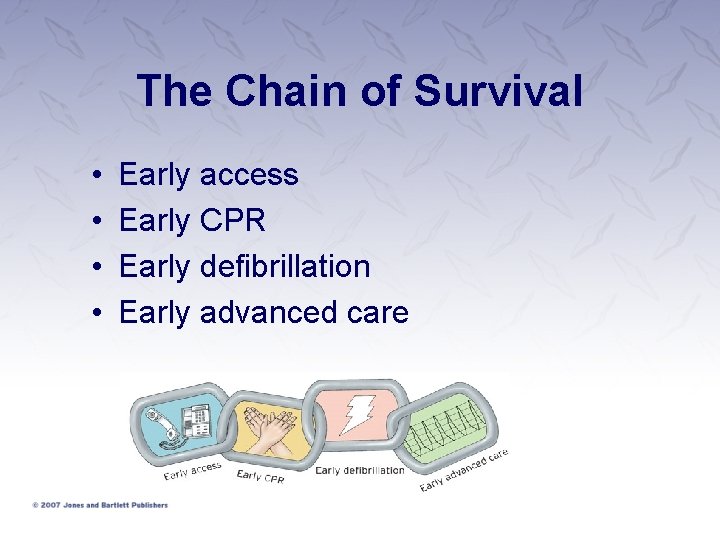
The Chain of Survival • • Early access Early CPR Early defibrillation Early advanced care
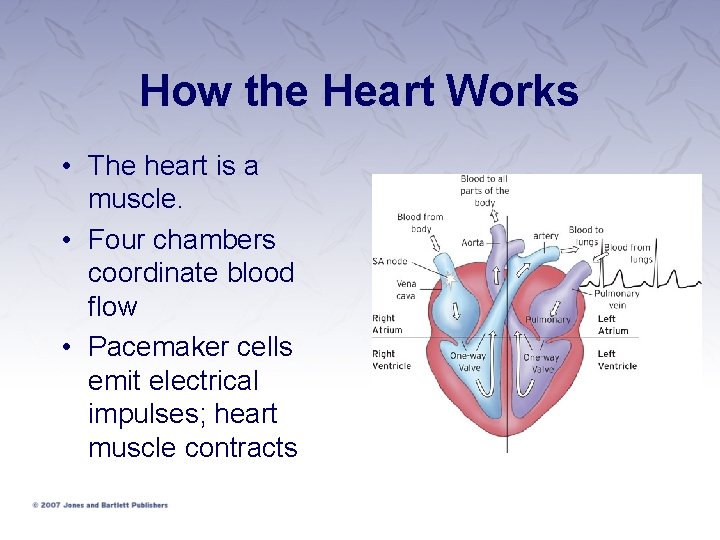
How the Heart Works • The heart is a muscle. • Four chambers coordinate blood flow • Pacemaker cells emit electrical impulses; heart muscle contracts

When Normal Electrical Activity Is Interrupted (1 of 2) • Ventricular fibrillation (V-fib) • Most common abnormal heart rhythm in cases of sudden cardiac arrest in adults • Chaotic electrical activity that causes loss of circulation
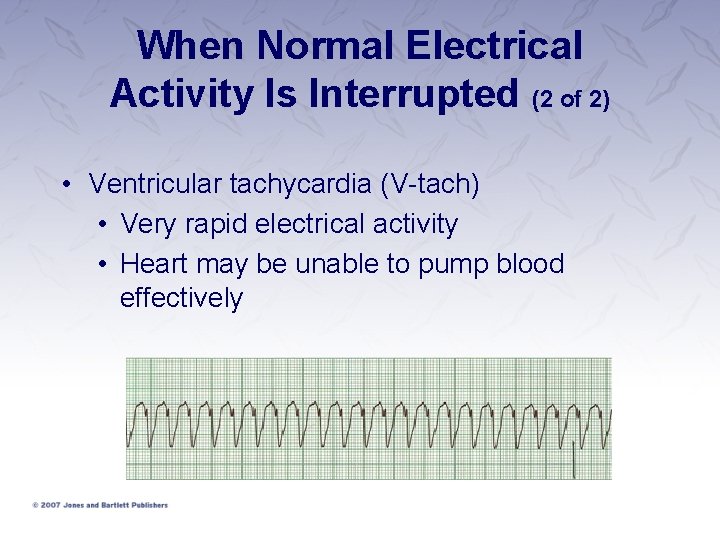
When Normal Electrical Activity Is Interrupted (2 of 2) • Ventricular tachycardia (V-tach) • Very rapid electrical activity • Heart may be unable to pump blood effectively
Care for Cardiac Arrest • CPR must be started until defibrillator is available. • V-fib and V-tach can be corrected with defibrillation, but time is critical. • For every minute that defibrillation is delayed, victim’s chance for survival decreases by 7% to 10%. • CPR is initial care until defibrillator is available.
About AEDs (1 of 2) • Electronic device that: • Analyzes the heart rhythm • Determines and advises need to shock • Delivers electrical shock to the victim in cardiac arrest • Reestablishes a heart rhythm that will generate a pulse
About AEDs (2 of 2) • Common elements • On/off button • Cable and pads (electrodes) • Analysis capability • Defibrillation capability • Prompts to guide you • Battery operation for portability

Using an AED (1 of 2) • Turn the unit on. • Apply AED pads to bare chest and the cable to the AED.
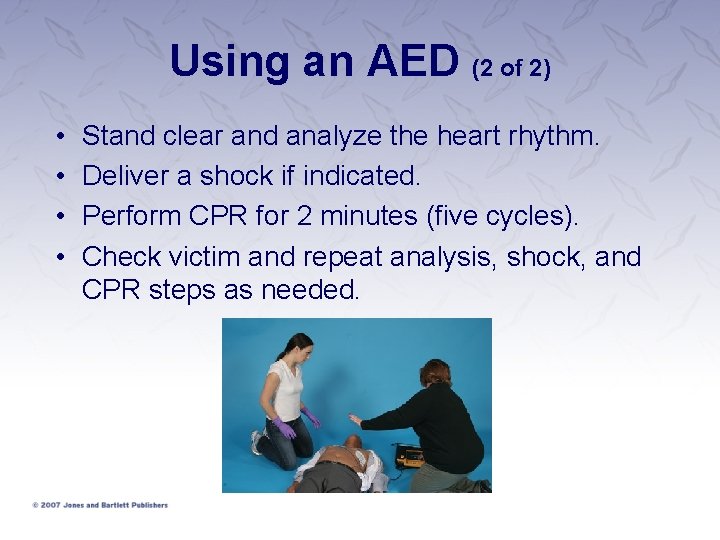
Using an AED (2 of 2) • • Stand clear and analyze the heart rhythm. Deliver a shock if indicated. Perform CPR for 2 minutes (five cycles). Check victim and repeat analysis, shock, and CPR steps as needed.
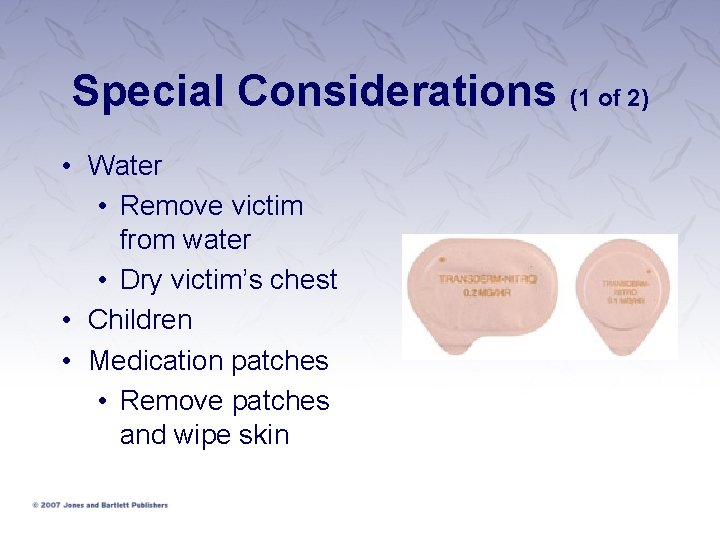
Special Considerations (1 of 2) • Water • Remove victim from water • Dry victim’s chest • Children • Medication patches • Remove patches and wipe skin
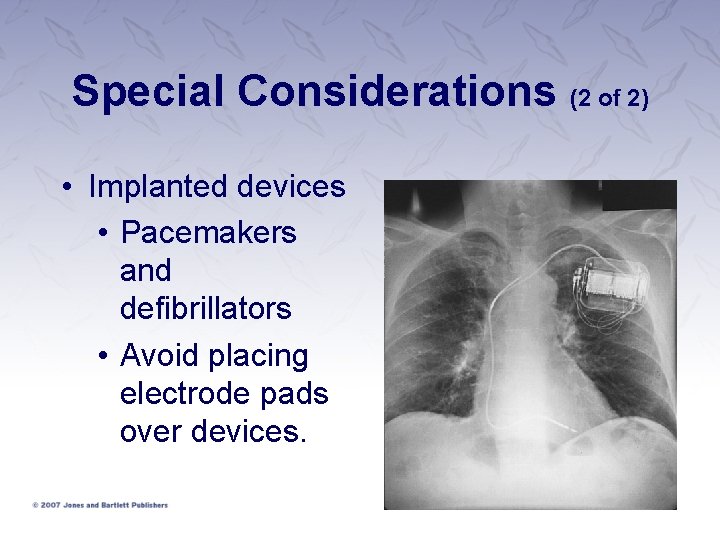
Special Considerations (2 of 2) • Implanted devices • Pacemakers and defibrillators • Avoid placing electrode pads over devices.
AED Maintenance • Preventive maintenance checks are recommended by manufacturers. • The AED will automatically perform periodic self-tests, but it should be checked daily to ensure properation. • Check expiration and replacement dates on electrode pads and batteries.
- Slides: 14