
CHAPTER 6 A TOUR OF THE CELL q
- Slides: 25
CHAPTER 6 A TOUR OF THE CELL
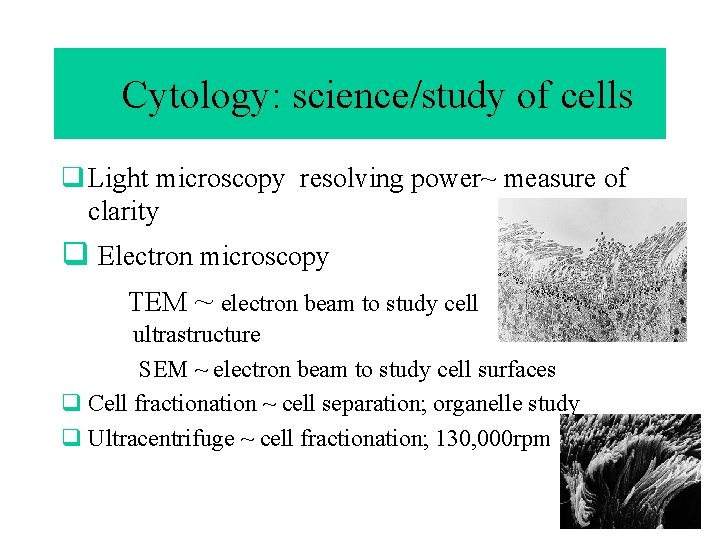
q. Cytology: science/study of cells q Light microscopy resolving power~ measure of clarity q Electron microscopy TEM ~ electron beam to study cell ultrastructure SEM ~ electron beam to study cell surfaces q Cell fractionation ~ cell separation; organelle study q Ultracentrifuge ~ cell fractionation; 130, 000 rpm
A cell is a living unit greater than the sum of its parts • While the cell has many structures that have specific functions, they must work together.
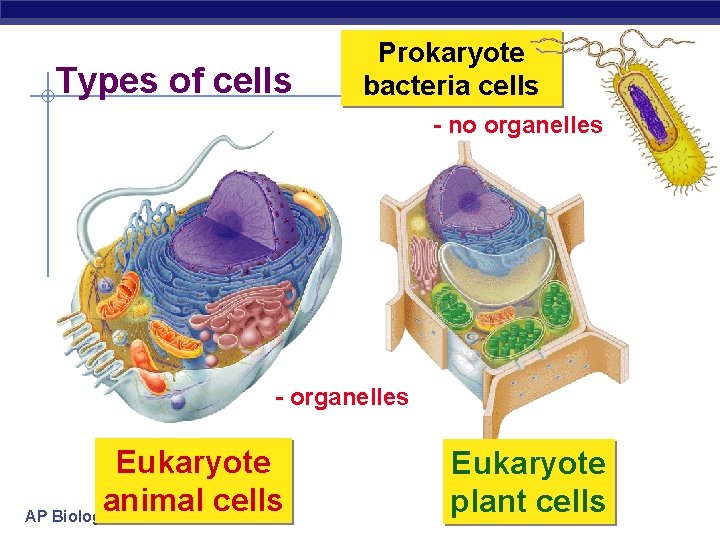
Types of cells Prokaryote bacteria cells - no organelles - organelles Eukaryote animal cells AP Biology Eukaryote plant cells
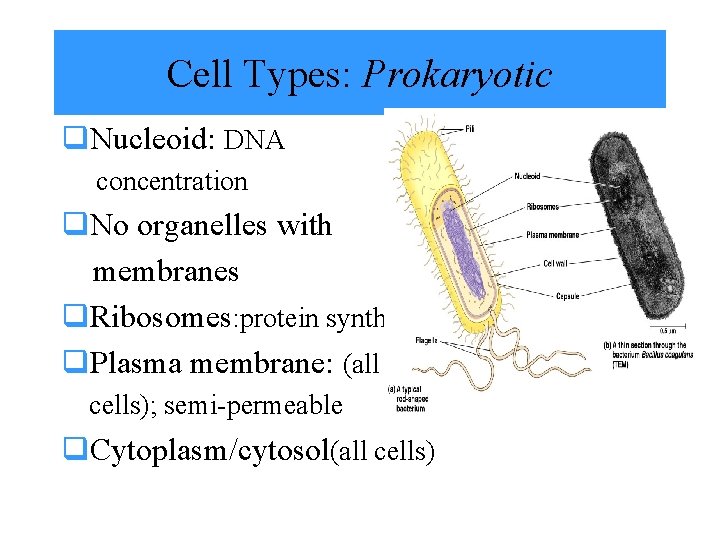
Cell Types: Prokaryotic q. Nucleoid: DNA concentration q. No organelles with membranes q. Ribosomes: protein synthesis q. Plasma membrane: (all cells); semi-permeable q. Cytoplasm/cytosol(all cells)
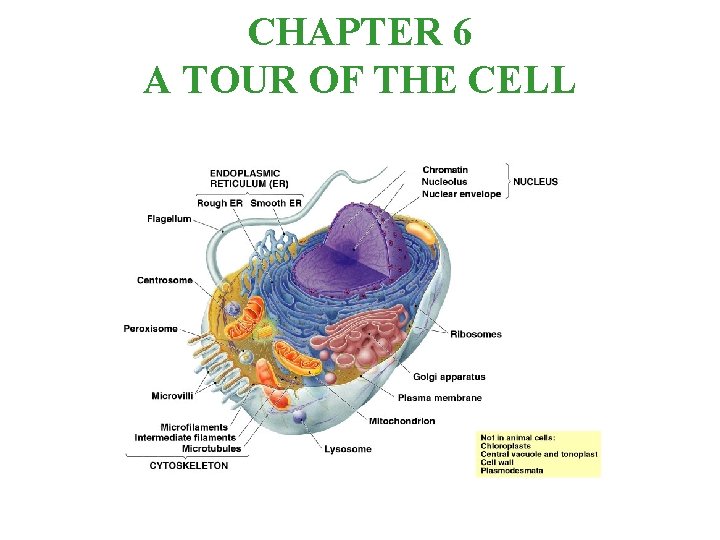
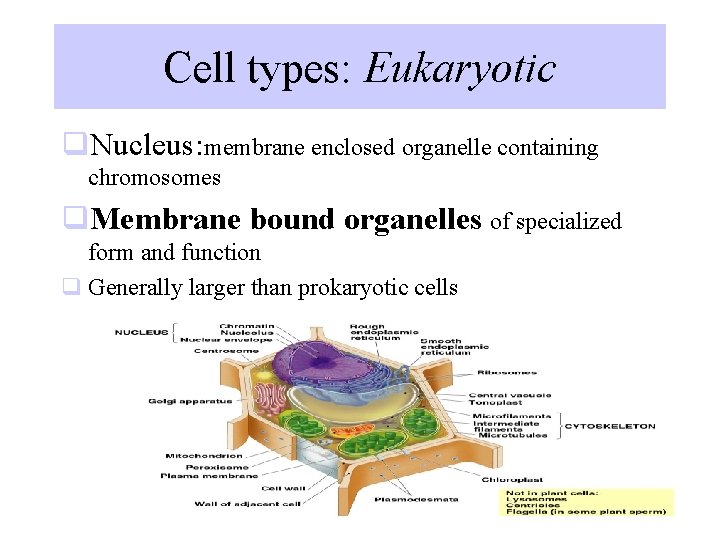
Cell types: Eukaryotic q. Nucleus: membrane enclosed organelle containing chromosomes q. Membrane bound organelles of specialized form and function q Generally larger than prokaryotic cells
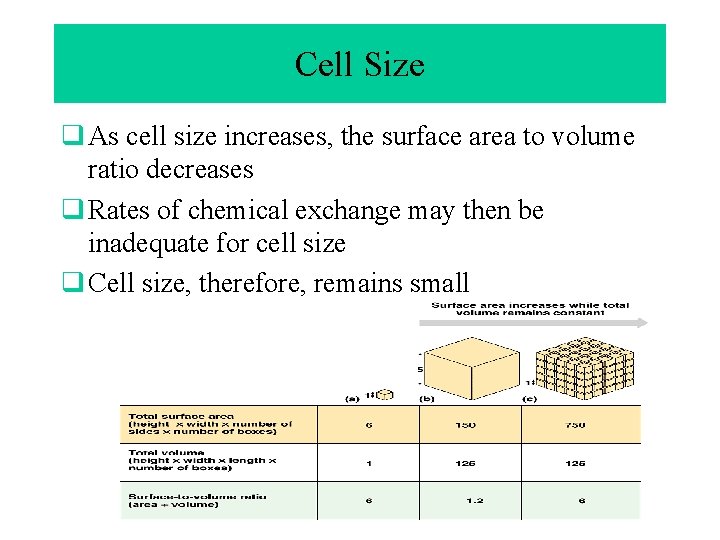
Cell Size q As cell size increases, the surface area to volume ratio decreases q Rates of chemical exchange may then be inadequate for cell size q Cell size, therefore, remains small
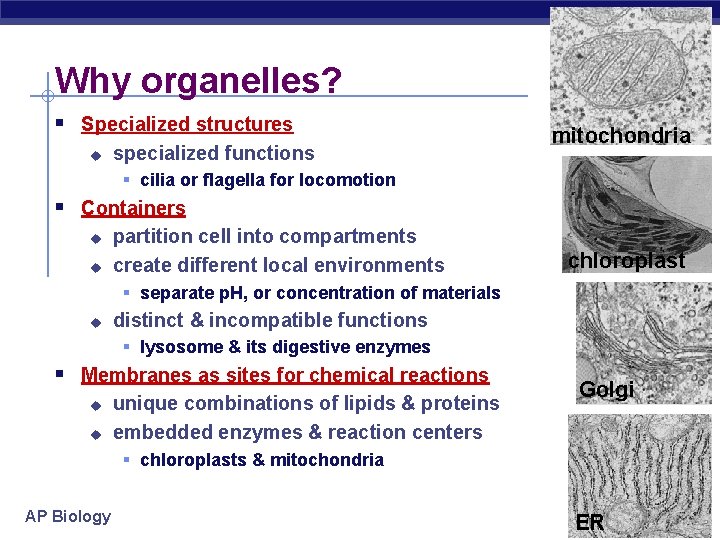
Why organelles? § Specialized structures u specialized functions mitochondria § cilia or flagella for locomotion § Containers u u partition cell into compartments create different local environments chloroplast § separate p. H, or concentration of materials u distinct & incompatible functions § lysosome & its digestive enzymes § Membranes as sites for chemical reactions u u unique combinations of lipids & proteins embedded enzymes & reaction centers Golgi § chloroplasts & mitochondria AP Biology ER
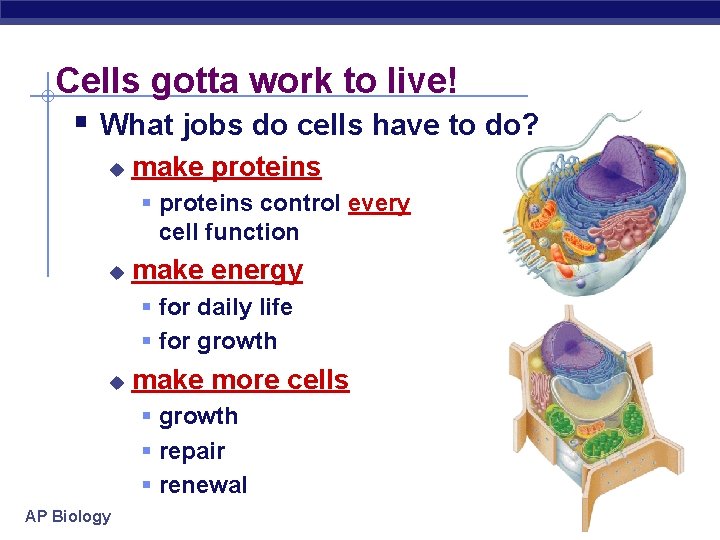
Cells gotta work to live! § What jobs do cells have to do? u make proteins § proteins control every cell function u make energy § for daily life § for growth u make more cells § growth § repair § renewal AP Biology
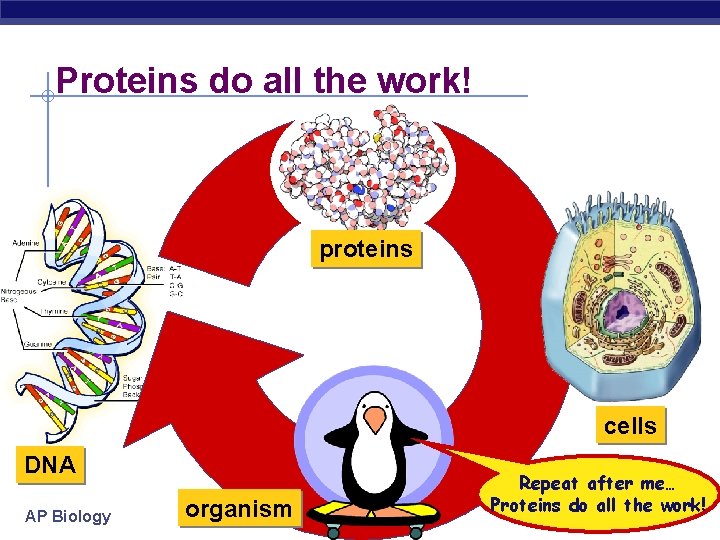
Proteins do all the work! proteins cells DNA AP Biology organism Repeat after me… Proteins do all the work!
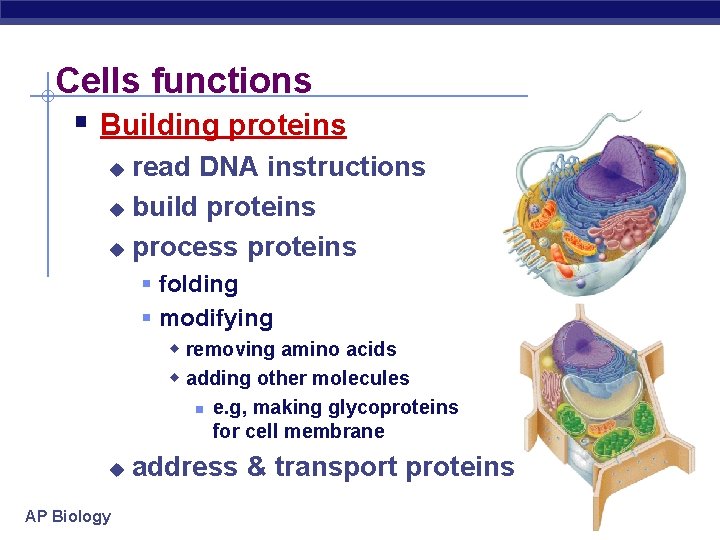
Cells functions § Building proteins read DNA instructions u build proteins u process proteins u § folding § modifying w removing amino acids w adding other molecules n u AP Biology e. g, making glycoproteins for cell membrane address & transport proteins
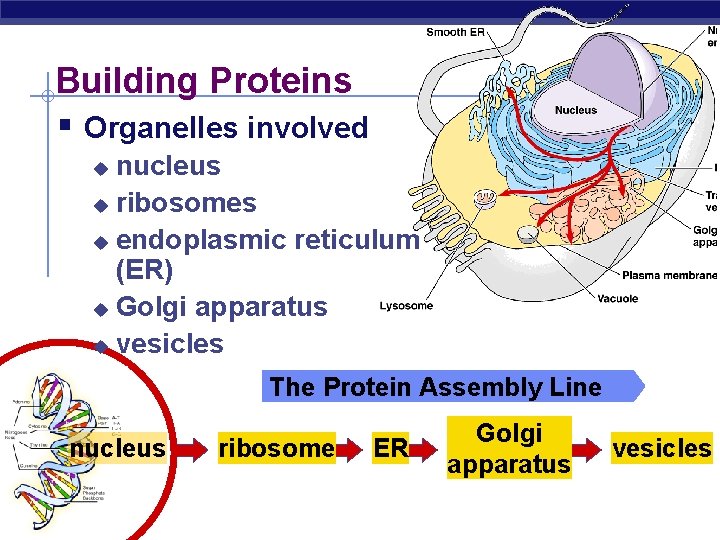
Building Proteins § Organelles involved nucleus u ribosomes u endoplasmic reticulum (ER) u Golgi apparatus u vesicles u The Protein Assembly Line nucleus AP Biology ribosome ER Golgi apparatus vesicles
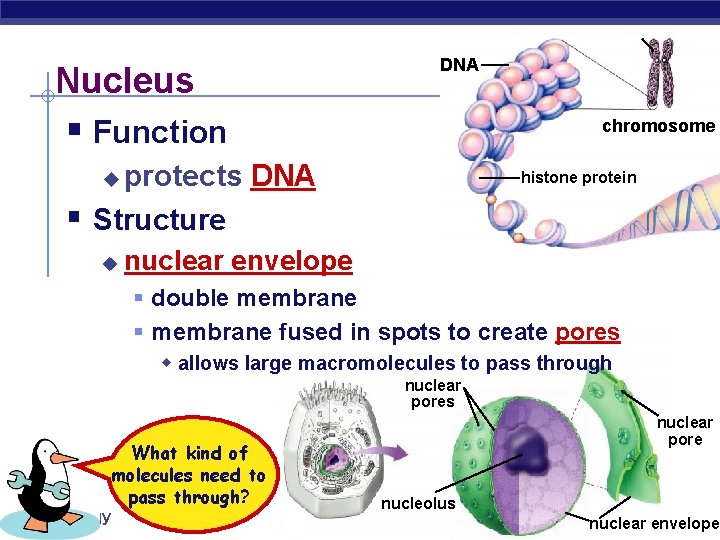
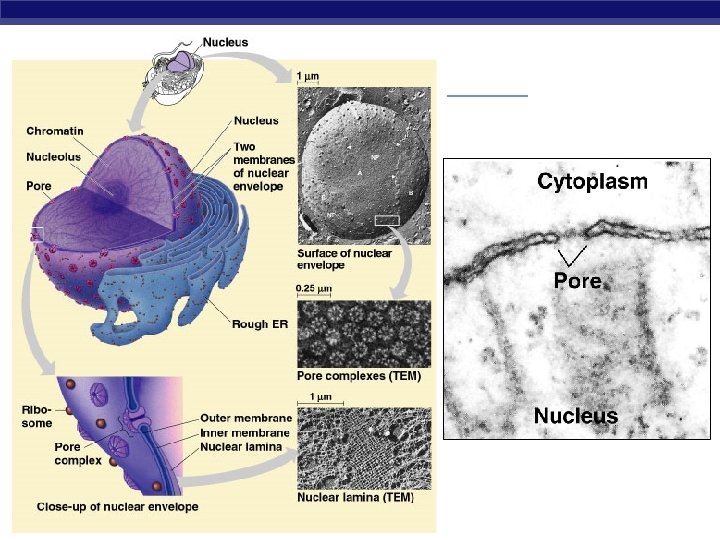
Nucleus DNA § Function chromosome protects DNA Structure histone protein u § u nuclear envelope § double membrane § membrane fused in spots to create pores w allows large macromolecules to pass through nuclear pores AP Biology What kind of molecules need to pass through? nuclear pore nucleolus nuclear envelope
AP Biology
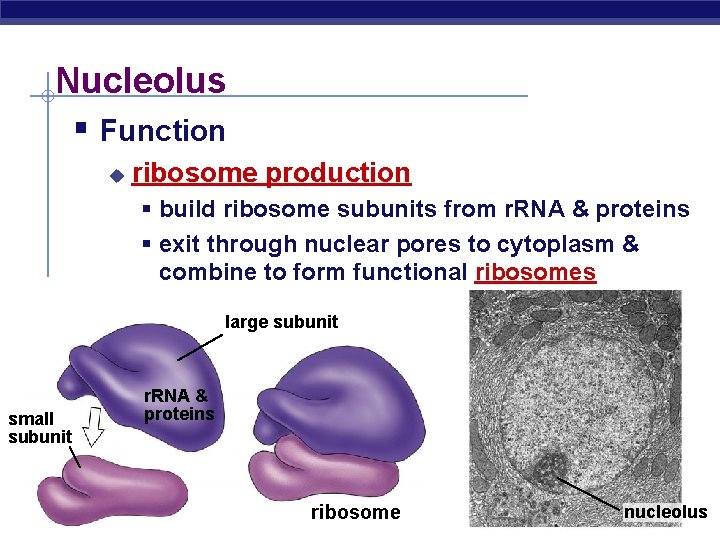
Nucleolus § Function u ribosome production § build ribosome subunits from r. RNA & proteins § exit through nuclear pores to cytoplasm & combine to form functional ribosomes large subunit small subunit AP Biology r. RNA & proteins ribosome nucleolus
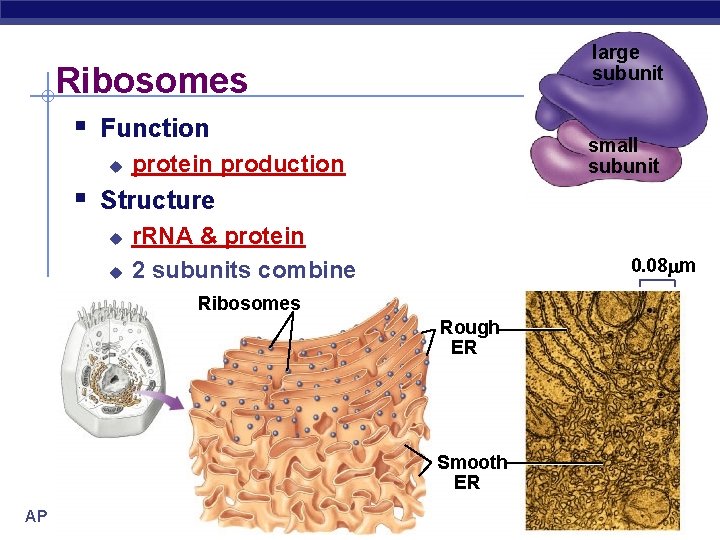
large subunit Ribosomes § Function u small subunit protein production § Structure u u r. RNA & protein 2 subunits combine 0. 08 mm Ribosomes Rough ER Smooth ER AP Biology
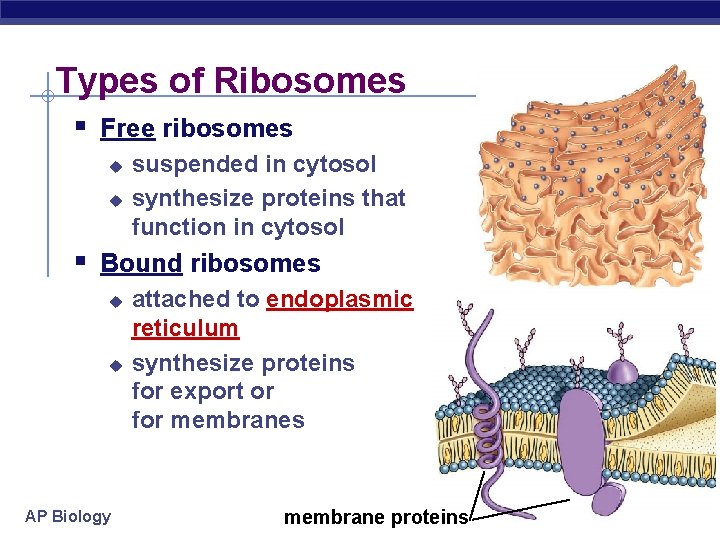
Types of Ribosomes § Free ribosomes u u suspended in cytosol synthesize proteins that function in cytosol § Bound ribosomes u u AP Biology attached to endoplasmic reticulum synthesize proteins for export or for membranes membrane proteins
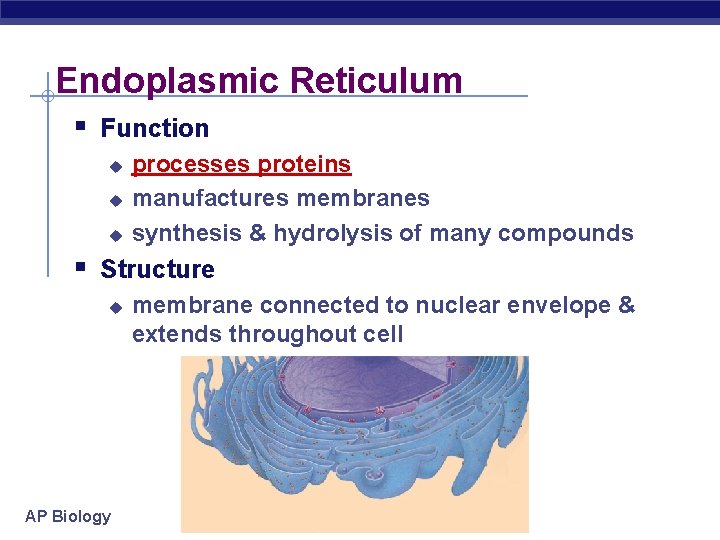
Endoplasmic Reticulum § Function u u u processes proteins manufactures membranes synthesis & hydrolysis of many compounds § Structure u AP Biology membrane connected to nuclear envelope & extends throughout cell
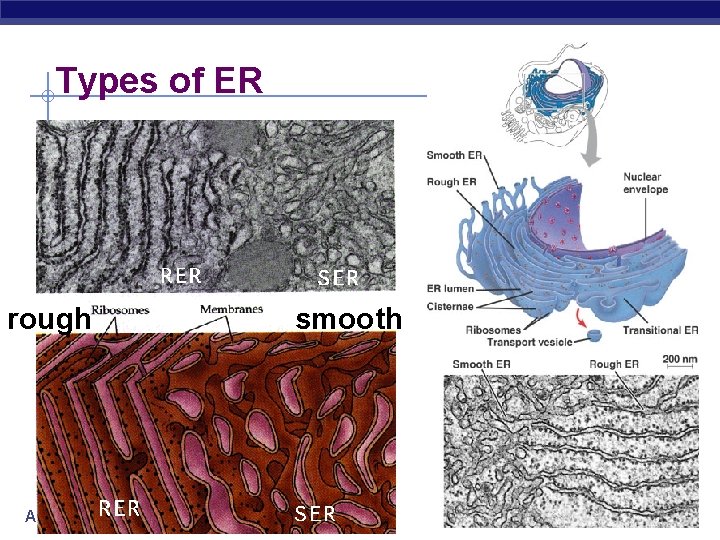
Types of ER rough AP Biology smooth
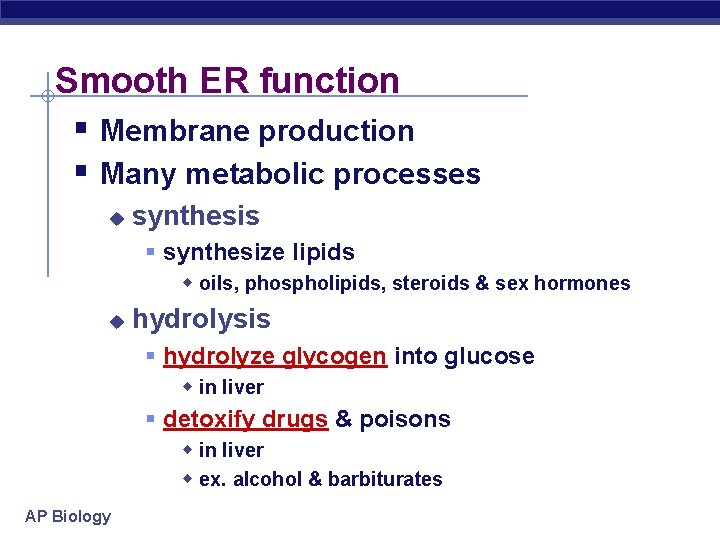
Smooth ER function § Membrane production § Many metabolic processes u synthesis § synthesize lipids w oils, phospholipids, steroids & sex hormones u hydrolysis § hydrolyze glycogen into glucose w in liver § detoxify drugs & poisons w in liver w ex. alcohol & barbiturates AP Biology
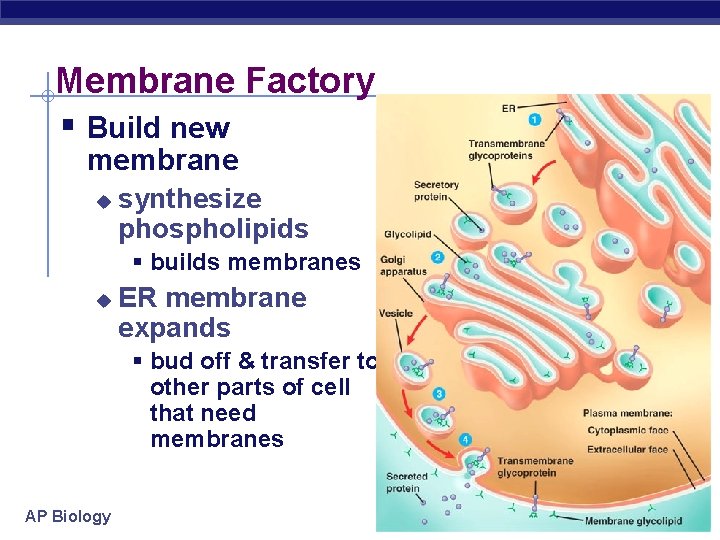
Membrane Factory § Build new membrane u synthesize phospholipids § builds membranes u ER membrane expands § bud off & transfer to other parts of cell that need membranes AP Biology
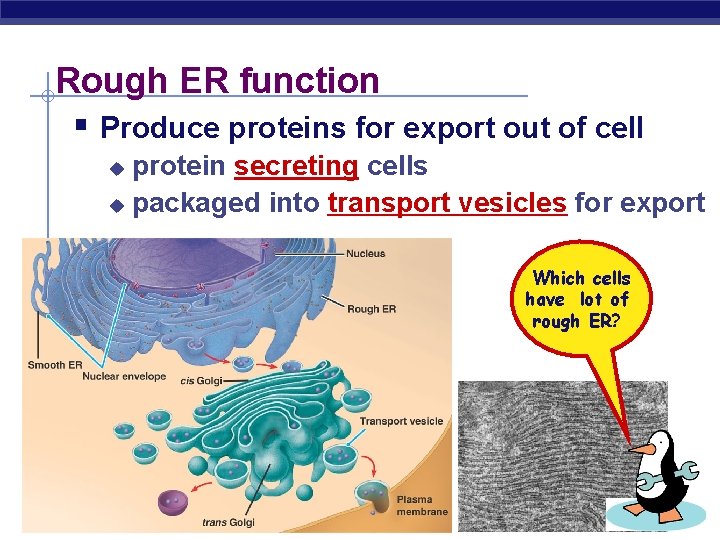
Rough ER function § Produce proteins for export out of cell protein secreting cells u packaged into transport vesicles for export u Which cells have lot of rough ER? AP Biology
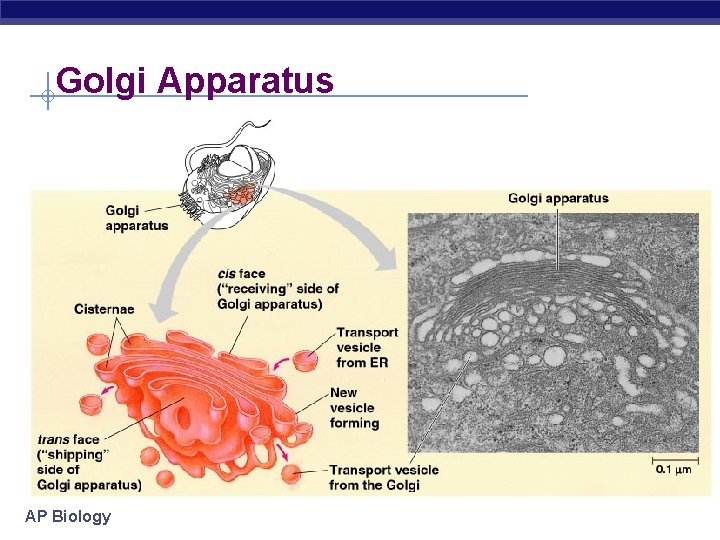
Golgi Apparatus AP Biology
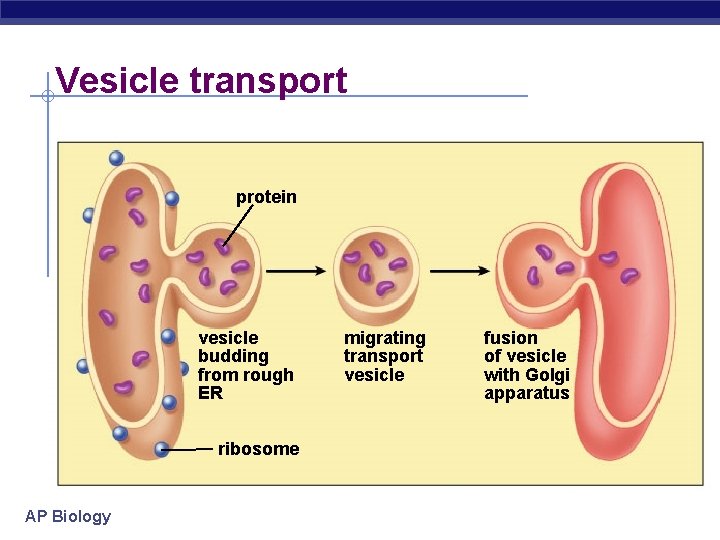
Vesicle transport protein vesicle budding from rough ER ribosome AP Biology migrating transport vesicle fusion of vesicle with Golgi apparatus
Any Questions!! AP Biology 2007 -2008