
Chapter 6 7 Photosynthesis and Respiration I ENERGY
- Slides: 24
Chapter 6 & 7 Photosynthesis and Respiration
I. ENERGY: The ability to do work § A. Why do cells need energy? 1) Active Transport 2) Cell division, growth and development 3) To make macromoleculesproteins, carbohydrates, etc. 4) To build cell parts-extra cellular membranes
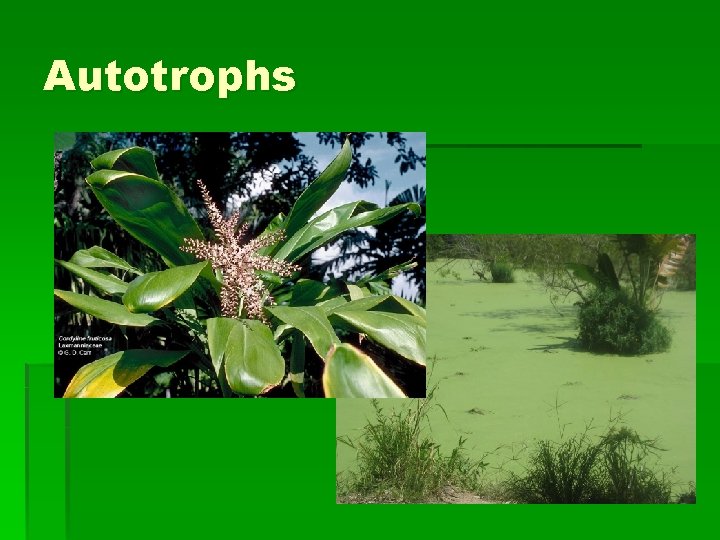
B. Two classifications of organisms based upon how they obtain energy: § 1) Autotrophs: (producers) organisms that can make their own food( glucose); example plants
Autotrophs
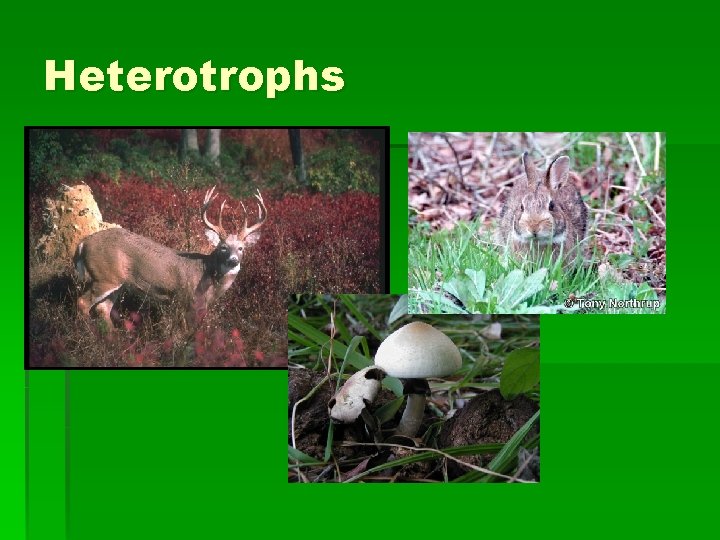
§ 2) Heterotrophs: (consumers) organisms that obtain food from other sources; example: animals and fungi
Heterotrophs
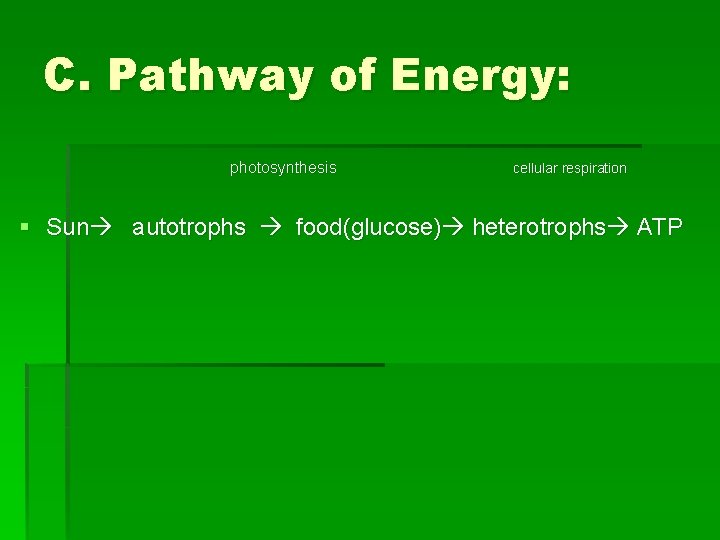
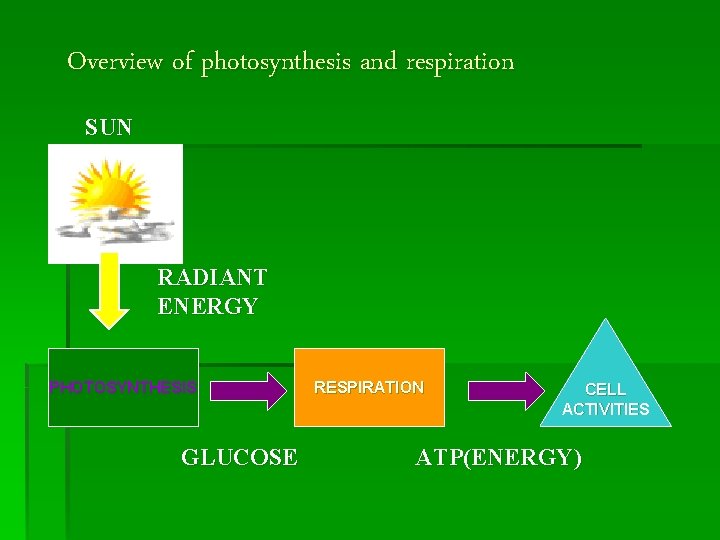
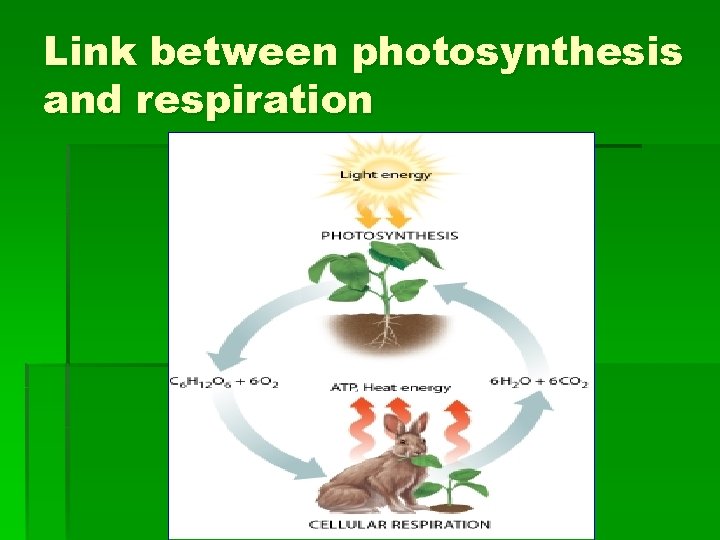
C. Pathway of Energy: photosynthesis cellular respiration § Sun autotrophs food(glucose) heterotrophs ATP
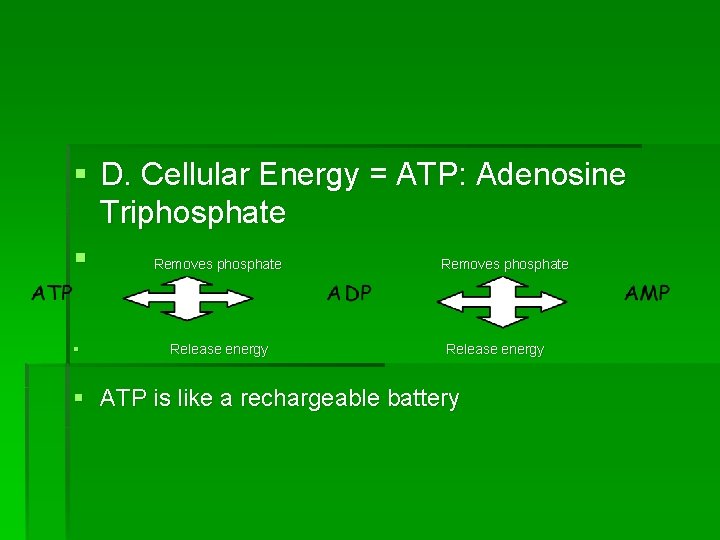
§ D. Cellular Energy = ATP: Adenosine Triphosphate § Removes phosphate § Release energy § ATP is like a rechargeable battery
Overview of photosynthesis and respiration SUN RADIANT ENERGY PHOTOSYNTHESIS GLUCOSE RESPIRATION CELL ACTIVITIES ATP(ENERGY)
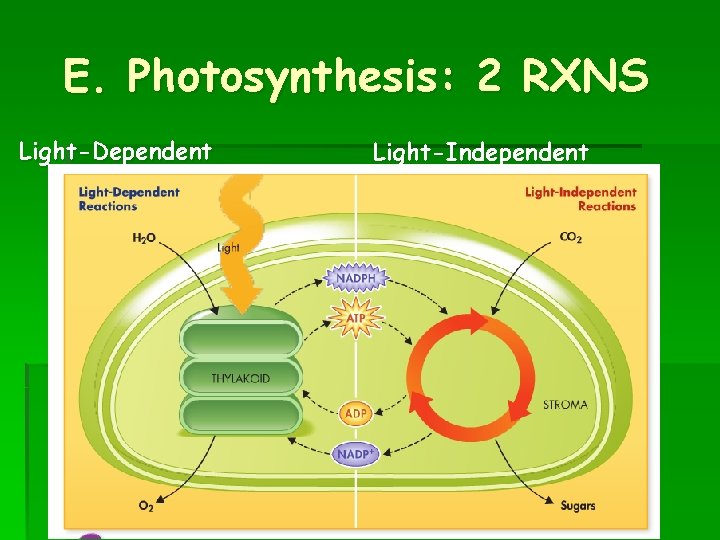
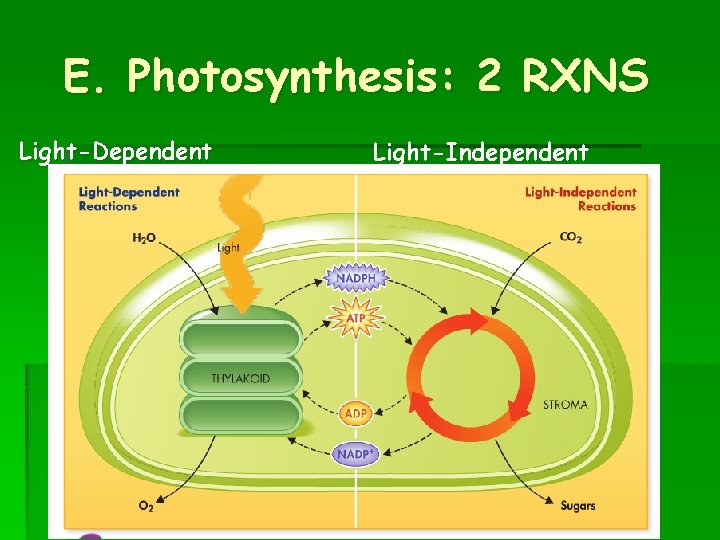
E. Photosynthesis: 2 RXNS Light-Dependent Reactions Light-Independent Reactions
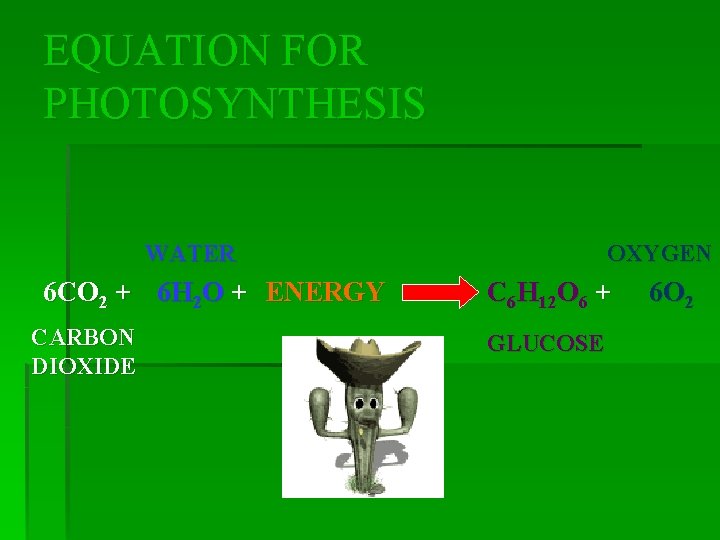
II. PHOTOSYNTHESIS: PHOTO = light SYNTHESIS = to make Process by which solar energy is converted to cellular energy (ATP) and stored food (glucose) § Overall Reaction: sunlight § 6 CO 2 + 6 H 20 C 6 H 12 O 6 + 6 O 2 chlorophyll § Occurs in the chloroplasts of plant cells § Solar E is converted by the use of pigment, molecules that absorb certain wavelengths of light and reflect (what we see) others.
§ Chlorophyll: main photosynthetic pigment, absorbs red & blue light, reflects green § Accessory pigments: § Carotenes: absorb blue & green, reflect yellow and orange. § In fall, chlorophyll is broken down so we see the colors of the accessory pigments.
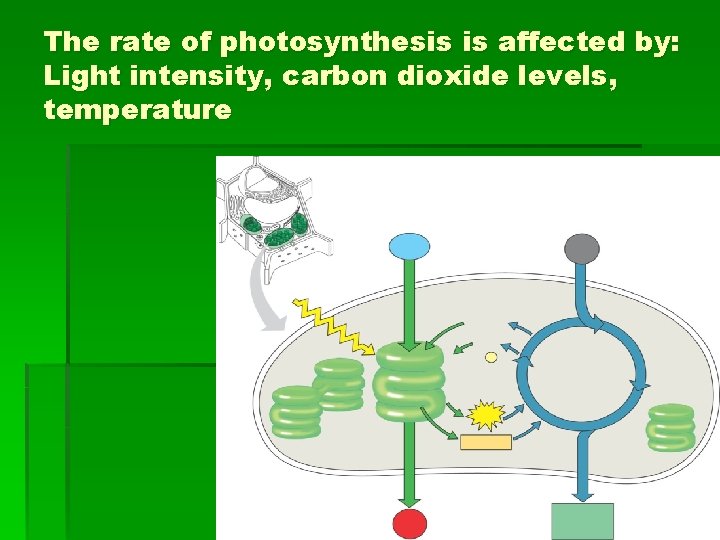
Photosynthesis consists of two phases: 1) Light Reactions: the “photo” part § Solar energy converted to cellular energy (ATP) § Chlorophyll “captures” (absorbs) light § Water is split, releasing oxygen gas § Occurs in the thylakoid membranes of the chloroplast
§ 2) Calvin Cycle: the “synthesis” part § Energy from light reactions used to “fix” CO 2 into glucose (C 6 H 12 O 6) § Occurs in the stroma of the chloroplast. § Called Dark or light independent Reactions
§ In hot dry conditions plants loose water through stomata which are small pores usually located on the undersurface of leaves § They close these to prevent water loss
The rate of photosynthesis is affected by: Light intensity, carbon dioxide levels, temperature
E. Photosynthesis: 2 RXNS Light-Dependent Reactions Light-Independent Reactions
Link between photosynthesis and respiration
EQUATION FOR PHOTOSYNTHESIS WATER 6 CO 2 + 6 H 2 O + ENERGY CARBON DIOXIDE OXYGEN C 6 H 12 O 6 + GLUCOSE 6 O 2
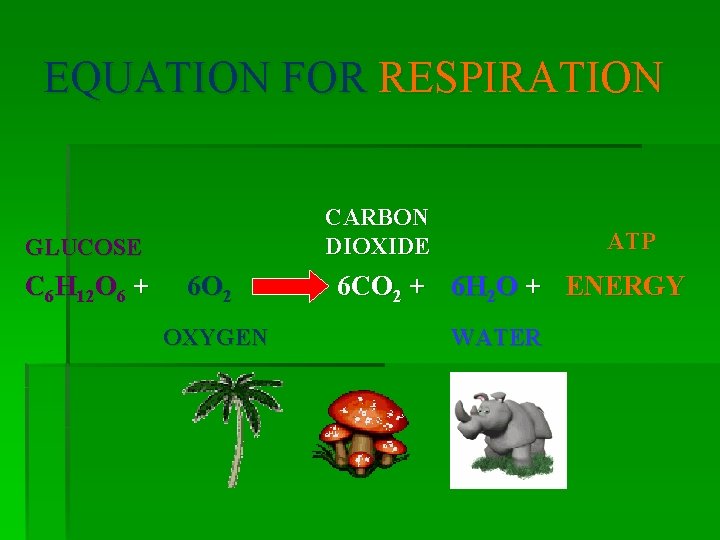
EQUATION FOR RESPIRATION CARBON DIOXIDE GLUCOSE C 6 H 12 O 6 + 6 O 2 OXYGEN ATP 6 CO 2 + 6 H 2 O + ENERGY WATER
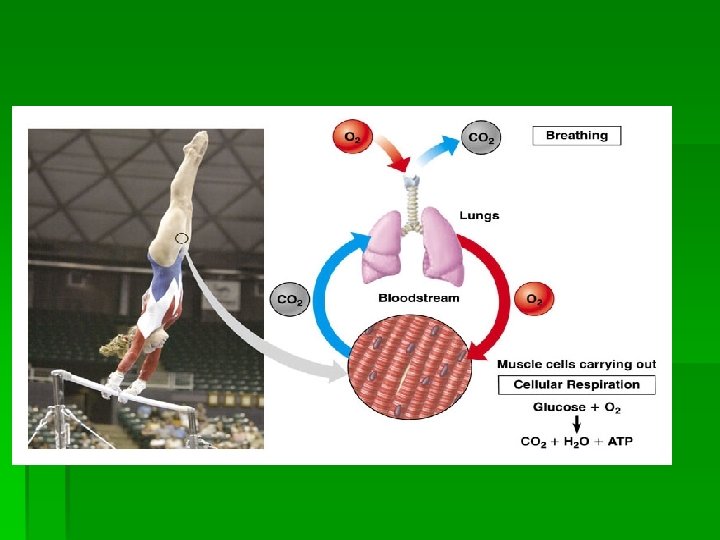
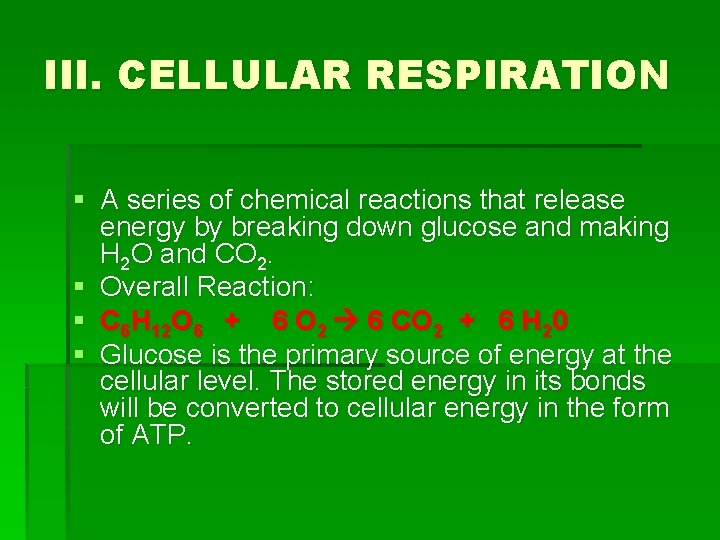
III. CELLULAR RESPIRATION § A series of chemical reactions that release energy by breaking down glucose and making H 2 O and CO 2. § Overall Reaction: § C 6 H 12 O 6 + 6 O 2 6 CO 2 + 6 H 20 § Glucose is the primary source of energy at the cellular level. The stored energy in its bonds will be converted to cellular energy in the form of ATP.
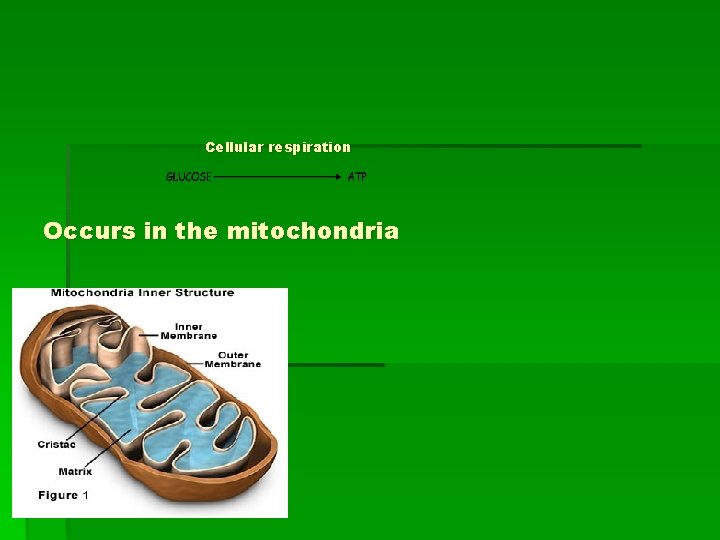
Cellular respiration Occurs in the mitochondria
PATHWAYS OF GLYCOLYSIS & RESPIRATION § Diagram