
Chapter 6 2 Water and Diffusion Waters Importance
- Slides: 17
Chapter 6. 2 Water and Diffusion
Water’s Importance l Most life processes can occur only when molecules and ions are free to move and collide with one another, and that condition exists when they are dissolved in water l Water transports materials in organisms (blood, tree sap) l Water makes up 70 - 95% of most organisms
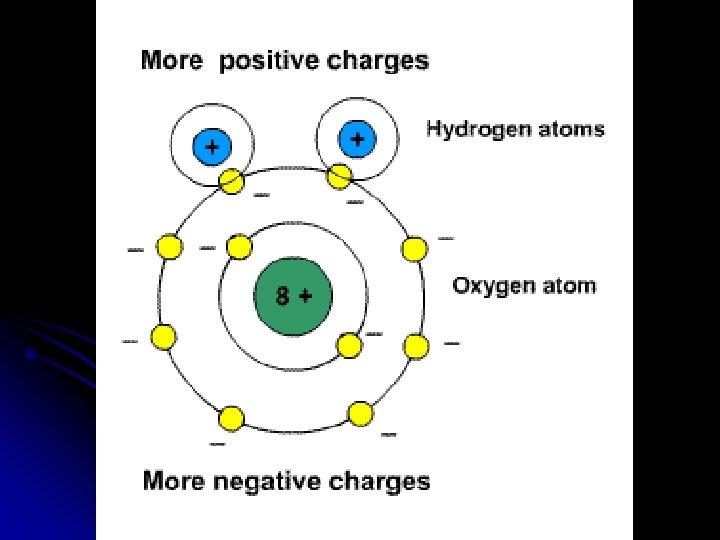
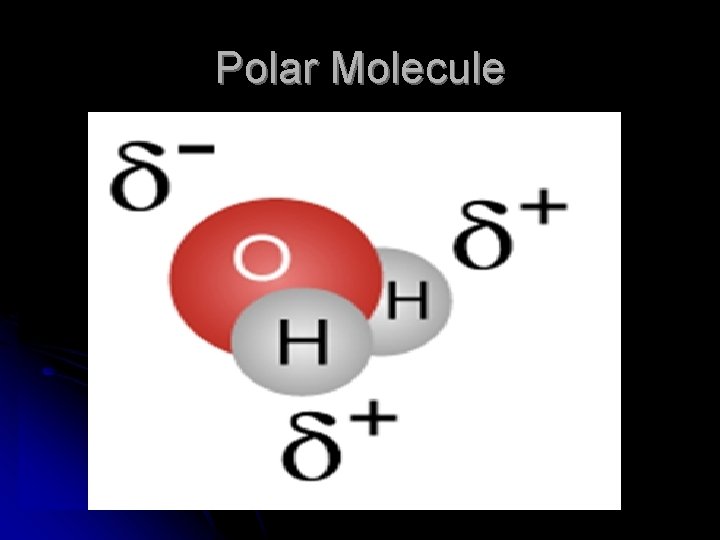
Water is Polar l A Polar Molecule is a molecule with an unequal amount distribution of charge; that is, each molecule has a positive end a negative end. l Since water is polar it can dissolve many ionic compounds like salt, and many other polar molecules, such as sugar.
Polar Molecule
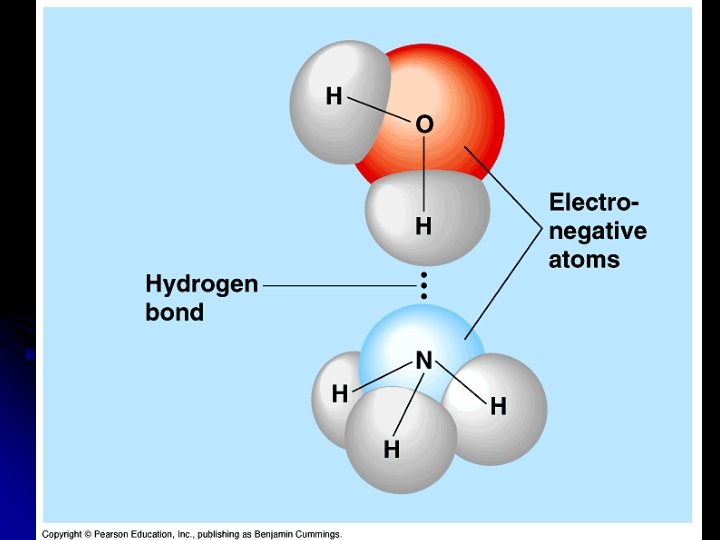
Hydrogen Bond l The attraction of positively charged hydrogen atoms in one water molecule with negatively charged oxygen atoms of another water molecule forms a hydrogen bond. l Hydrogen bond is very important to living organisms because it holds many biomolecules (like protein) together.
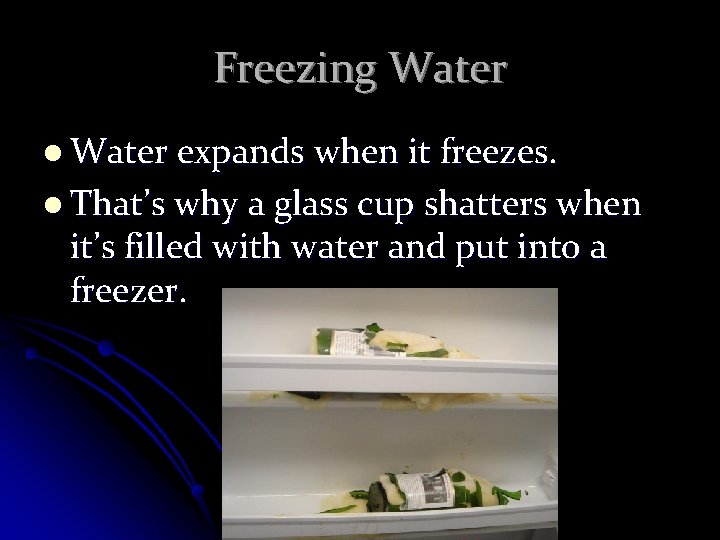
Freezing Water l Water expands when it freezes. l That’s why a glass cup shatters when it’s filled with water and put into a freezer.
Background info on Diffusion l All moving objects have energy of motion called kinetic energy. l A moving particle of matter will move in a straight line until it collides with another particle. Afterwards it, and the other particle, will rebound. l Particles are like tennis balls, they are constantly moving and colliding with each other.
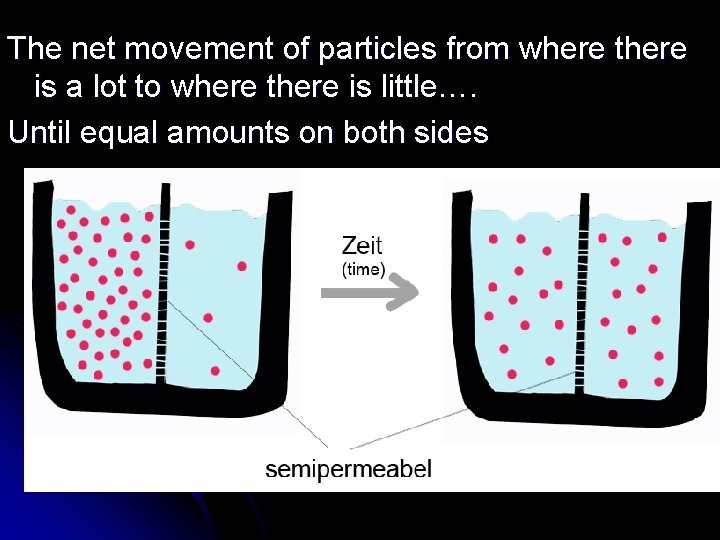
The net movement of particles from where there is a lot to where there is little…. Until equal amounts on both sides
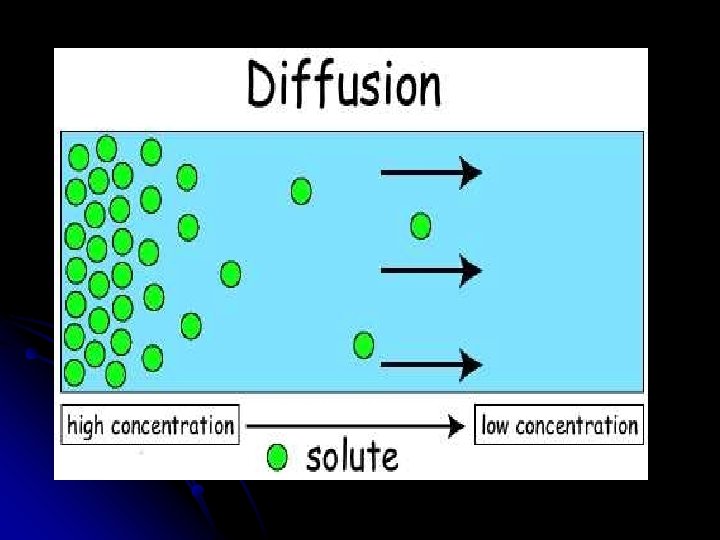
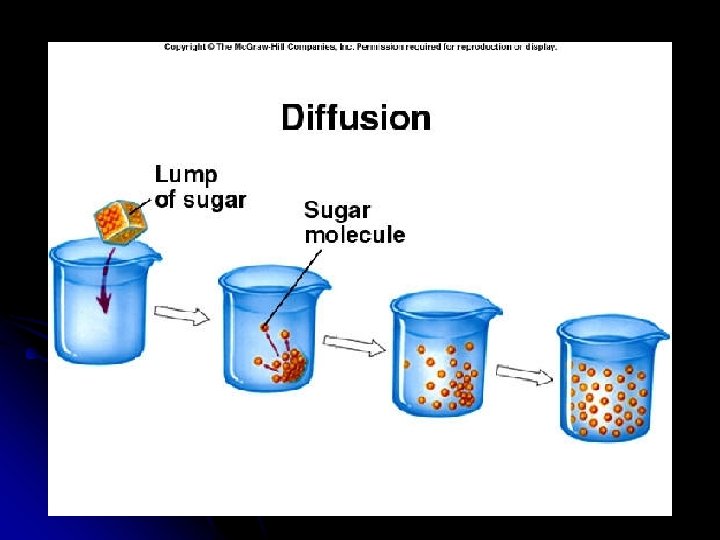
The Process of Diffusion l Diffusion: The net movement or particles from an area of higher concentration to an area of lower concentration. l Diffusion is slow because it relies on the random motion of atoms and molecules.
� Necessary to make sure nutrients and waste are delivered to the appropriate location in a cell l Three things affect the rate of diffusion: l Concentration l Temperature l Pressure
The Results of Diffusion l Molecules will continue to move randomly and collide with one another, but no further change in concentration will occur. l This is called Dynamic Equilibrium.
Diffusions in Living Systems l Diffusion in biological systems is also evident outside of the cell and can involve substance other than molecules in an aqueous environment. l Oxygen (a gas) diffuses in capillaries of the lungs because there is a greater concentration of oxygen in the air sacs of the lungs than in the capillaries.
Brownian Motion l In 1827, Scottish scientist Robert Brown was observing pollen grains that were floating in water. He noticed that the grains jerked around in the water. l That was a result of the random motion of atoms and molecules.