
Chapter 52 Population Ecology 1 What is a
- Slides: 15
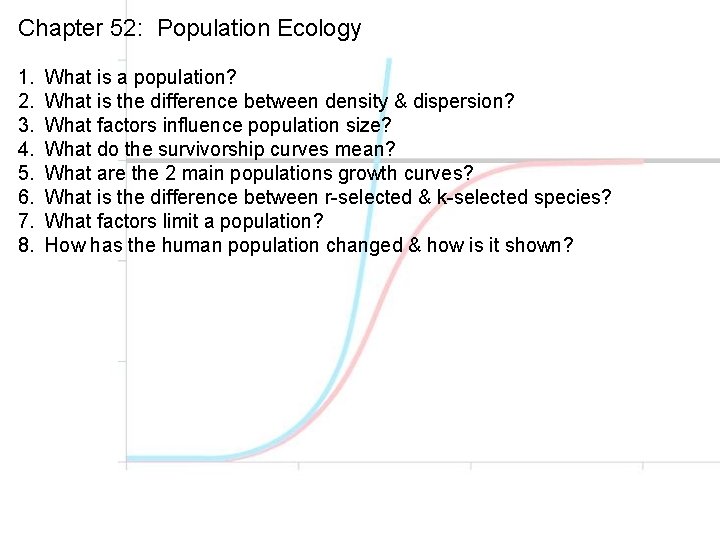
Chapter 52: Population Ecology 1. What is a population? - Individuals of a single species that occupy the same general area 2. What is the difference between density & dispersion? - Density – number of individuals per unit area or volume - Dispersion – pattern of spacing within the boundaries of population
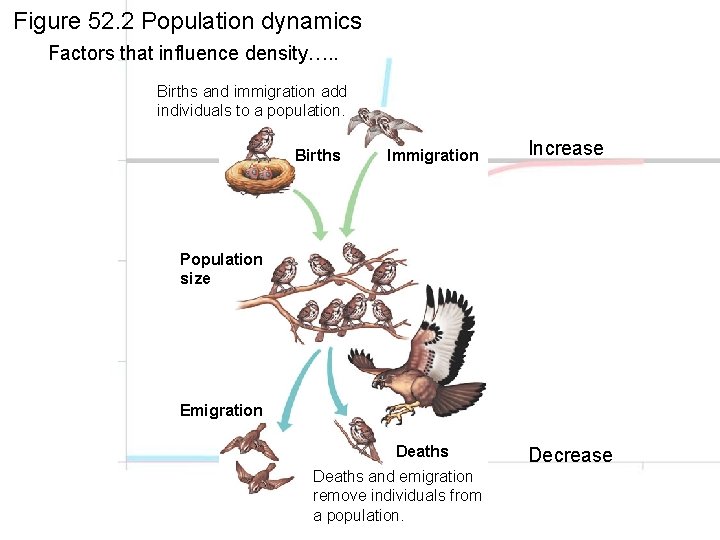
Figure 52. 2 Population dynamics Factors that influence density…. . Births and immigration add individuals to a population. Births Immigration Increase Popu. Iation size Emigration Deaths and emigration remove individuals from a population. Decrease
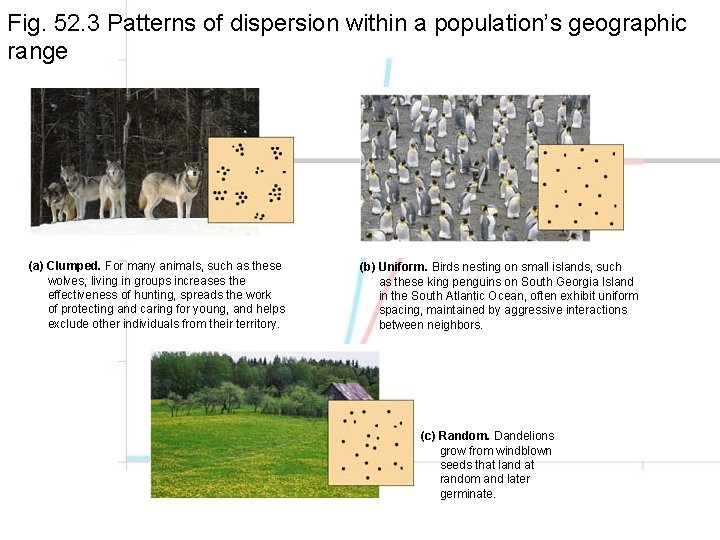
Fig. 52. 3 Patterns of dispersion within a population’s geographic range (a) Clumped. For many animals, such as these wolves, living in groups increases the effectiveness of hunting, spreads the work of protecting and caring for young, and helps exclude other individuals from their territory. (b) Uniform. Birds nesting on small islands, such as these king penguins on South Georgia Island in the South Atlantic Ocean, often exhibit uniform spacing, maintained by aggressive interactions between neighbors. (c) Random. Dandelions grow from windblown seeds that land at random and later germinate.
Chapter 52: Population Ecology 1. What is a population? - Individuals of a single species that occupy the same general area 2. What is the difference between density & dispersion? - Density – number of individuals per unit area or volume - Dispersion – pattern of spacing within the boundaries of population 3. What factors influence population size? - Birth rate – fecundity - Death rate - Generation time - Sex ratio 4. What do the survivorship curves mean?
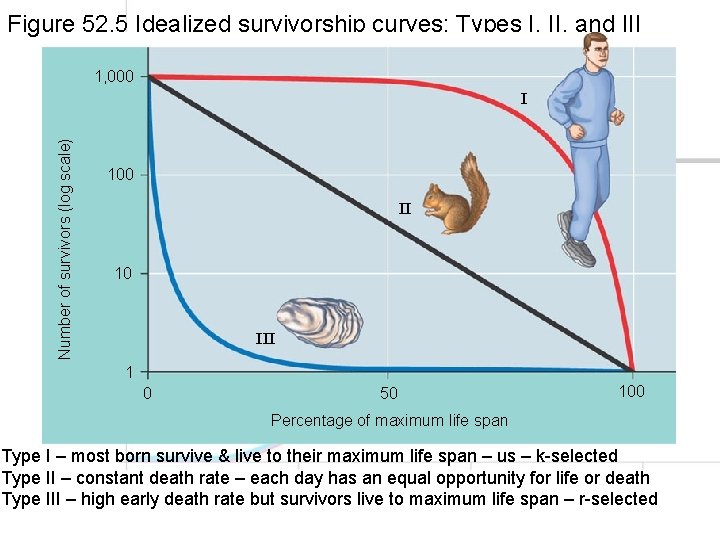
Figure 52. 5 Idealized survivorship curves: Types I, II, and III 1, 000 Number of survivors (log scale) I 100 II 10 III 1 0 50 100 Percentage of maximum life span Type I – most born survive & live to their maximum life span – us – k-selected Type II – constant death rate – each day has an equal opportunity for life or death Type III – high early death rate but survivors live to maximum life span – r-selected
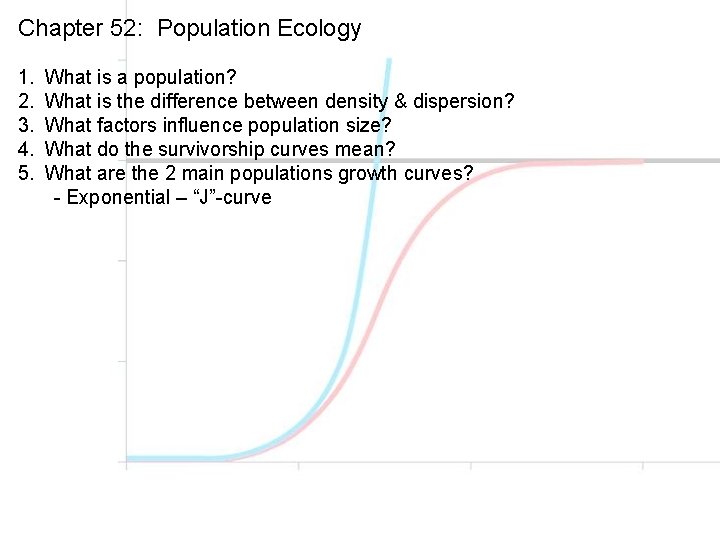
Chapter 52: Population Ecology 1. 2. 3. 4. 5. What is a population? What is the difference between density & dispersion? What factors influence population size? What do the survivorship curves mean? What are the 2 main populations growth curves? - Exponential – “J”-curve
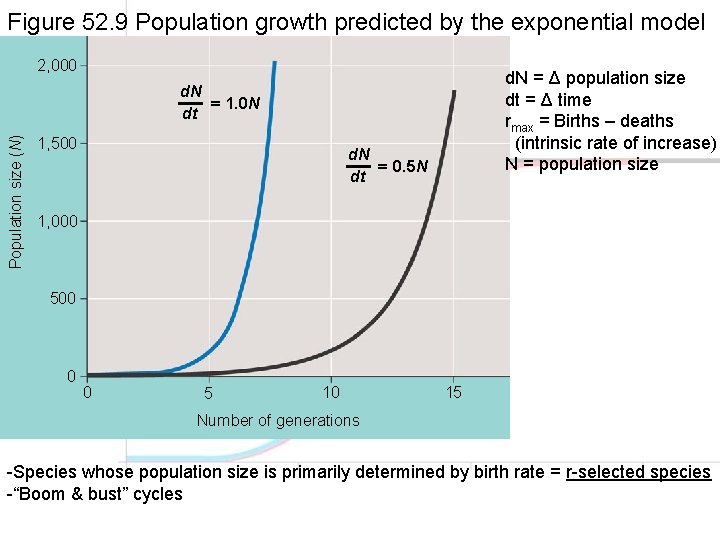
Figure 52. 9 Population growth predicted by the exponential model 2, 000 d. N = Δ population size dt = Δ time rmax = Births – deaths (intrinsic rate of increase) N = population size Population size (N) d. N 1. 0 N dt 1, 500 d. N 0. 5 N dt 1, 000 500 0 0 5 10 15 Number of generations -Species whose population size is primarily determined by birth rate = r-selected species -“Boom & bust” cycles
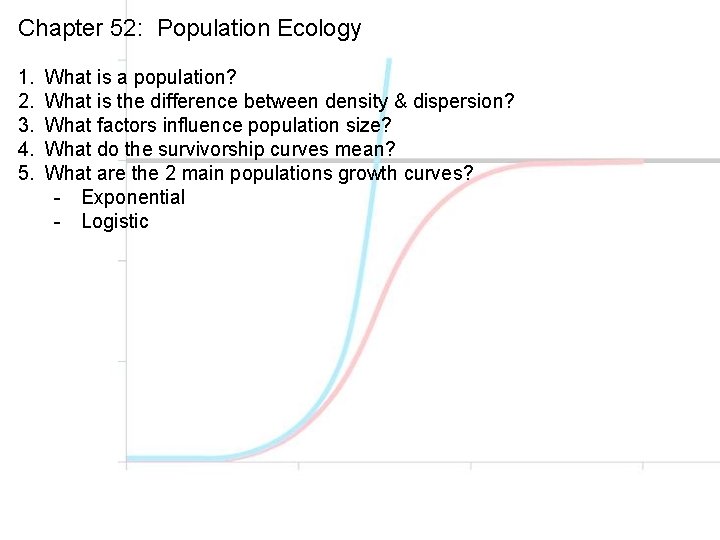
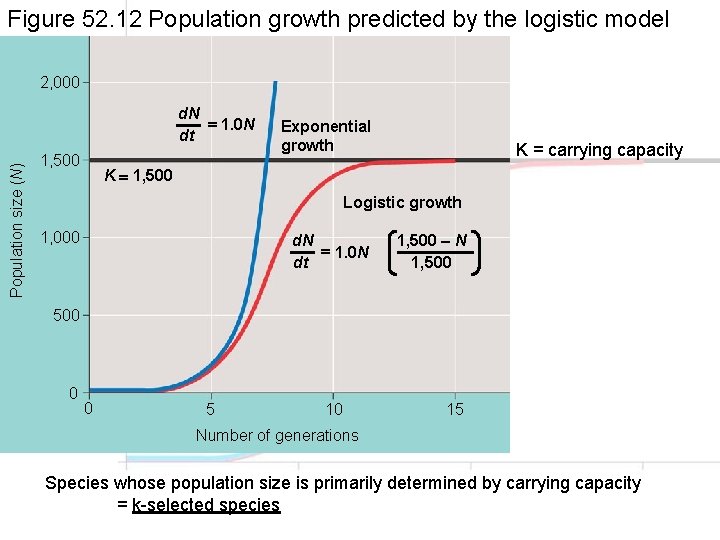
Chapter 52: Population Ecology 1. 2. 3. 4. 5. What is a population? What is the difference between density & dispersion? What factors influence population size? What do the survivorship curves mean? What are the 2 main populations growth curves? - Exponential - Logistic
Figure 52. 12 Population growth predicted by the logistic model 2, 000 Population size (N) d. N 1. 0 N dt 1, 500 Exponential growth K = carrying capacity K 1, 500 Logistic growth 1, 000 d. N 1. 0 N dt 1, 500 N 1, 500 0 0 5 10 15 Number of generations Species whose population size is primarily determined by carrying capacity = k-selected species
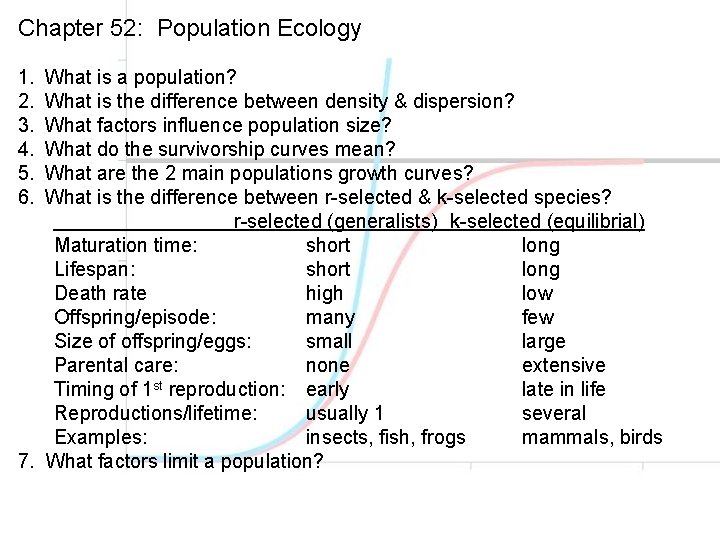
Chapter 52: Population Ecology 1. 2. 3. 4. 5. 6. What is a population? What is the difference between density & dispersion? What factors influence population size? What do the survivorship curves mean? What are the 2 main populations growth curves? What is the difference between r-selected & k-selected species? r-selected (generalists) k-selected (equilibrial) Maturation time: short long Lifespan: short long Death rate high low Offspring/episode: many few Size of offspring/eggs: small large Parental care: none extensive Timing of 1 st reproduction: early late in life Reproductions/lifetime: usually 1 several Examples: insects, fish, frogs mammals, birds 7. What factors limit a population?
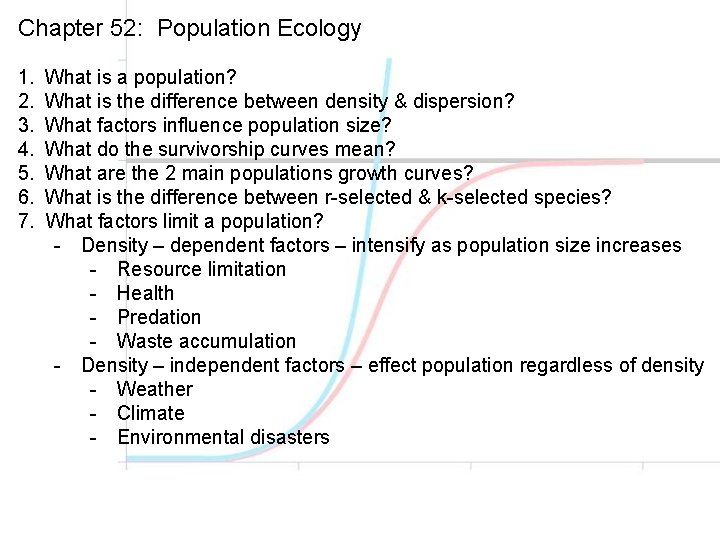
Chapter 52: Population Ecology 1. 2. 3. 4. 5. 6. 7. What is a population? What is the difference between density & dispersion? What factors influence population size? What do the survivorship curves mean? What are the 2 main populations growth curves? What is the difference between r-selected & k-selected species? What factors limit a population? - Density – dependent factors – intensify as population size increases - Resource limitation - Health - Predation - Waste accumulation - Density – independent factors – effect population regardless of density - Weather - Climate - Environmental disasters
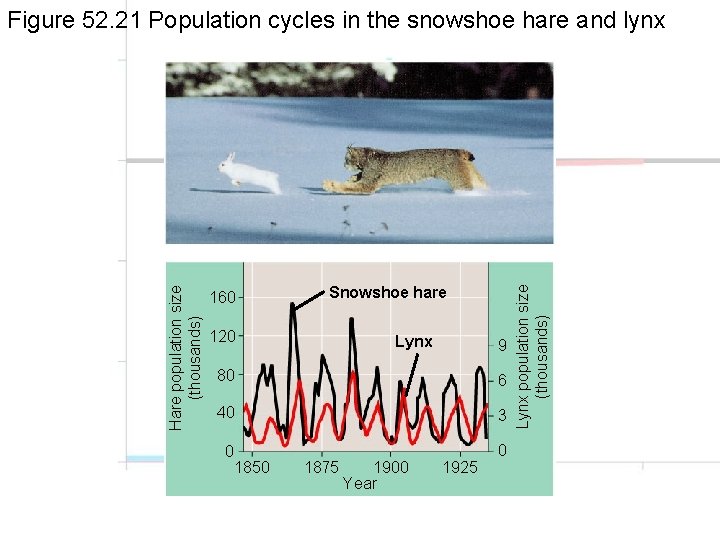
160 Snowshoe hare 120 Lynx 9 80 6 40 3 0 0 1850 1875 1900 Year 1925 Lynx population size (thousands) Hare population size (thousands) Figure 52. 21 Population cycles in the snowshoe hare and lynx
Chapter 52: Population Ecology 1. 2. 3. 4. 5. 6. 7. 8. What is a population? What is the difference between density & dispersion? What factors influence population size? What do the survivorship curves mean? What are the 2 main populations growth curves? What is the difference between r-selected & k-selected species? What factors limit a population? How has the human population changed & how is it shown?
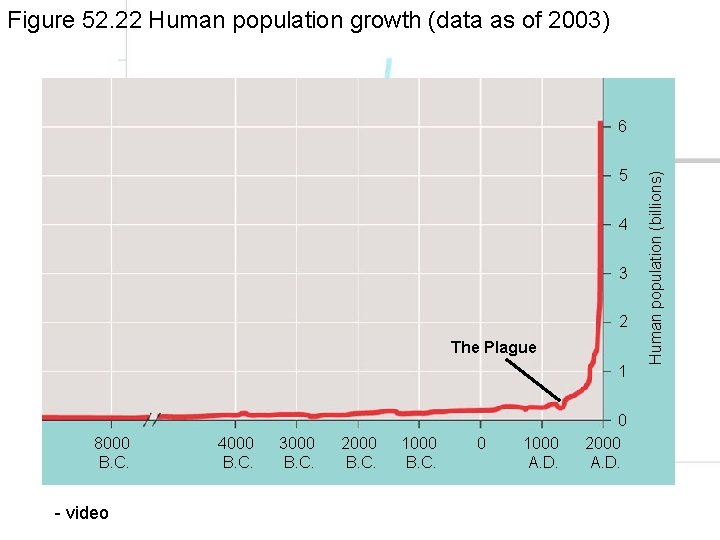
Figure 52. 22 Human population growth (data as of 2003) 5 4 3 2 The Plague 1 8000 B. C. - video 4000 B. C. 3000 B. C. 2000 B. C. 1000 B. C. 0 1000 A. D. 0 2000 A. D. Human population (billions) 6
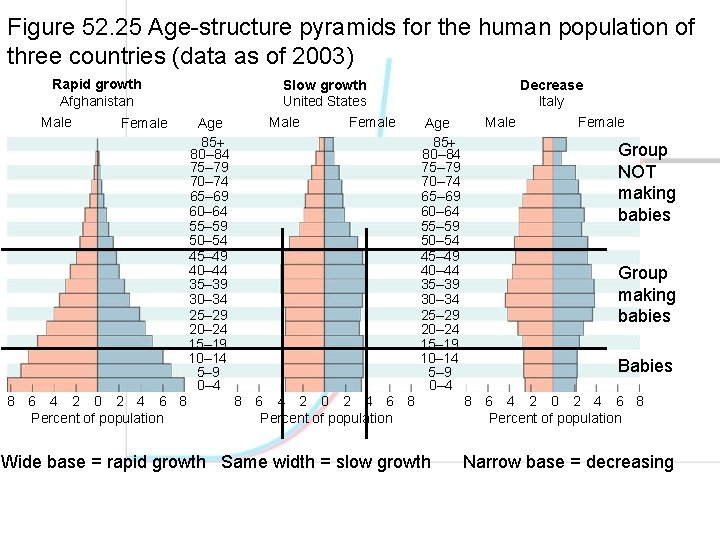
Figure 52. 25 Age-structure pyramids for the human population of three countries (data as of 2003) Rapid growth Afghanistan Male Female 8 6 4 2 0 2 4 6 8 Percent of population Age 85 80– 84 75– 79 70– 74 65– 69 60– 64 55– 59 50– 54 45– 49 40– 44 35– 39 30– 34 25– 29 20– 24 15– 19 10– 14 5– 9 0– 4 Slow growth United States Female Male Age 85 80– 84 75– 79 70– 74 65– 69 60– 64 55– 59 50– 54 45– 49 40– 44 35– 39 30– 34 25– 29 20– 24 15– 19 10– 14 5– 9 0– 4 8 6 4 2 0 2 4 6 8 Percent of population Wide base = rapid growth Same width = slow growth Decrease Italy Female Male Group NOT making babies Group making babies Babies 8 6 4 2 0 2 4 6 8 Percent of population Narrow base = decreasing