
Chapter 50 Assessment of the Ear and Hearing
- Slides: 25
Chapter 50 Assessment of the Ear and Hearing Marion Kreisel RN, MSN Adult Health NU 230 Fall 2011
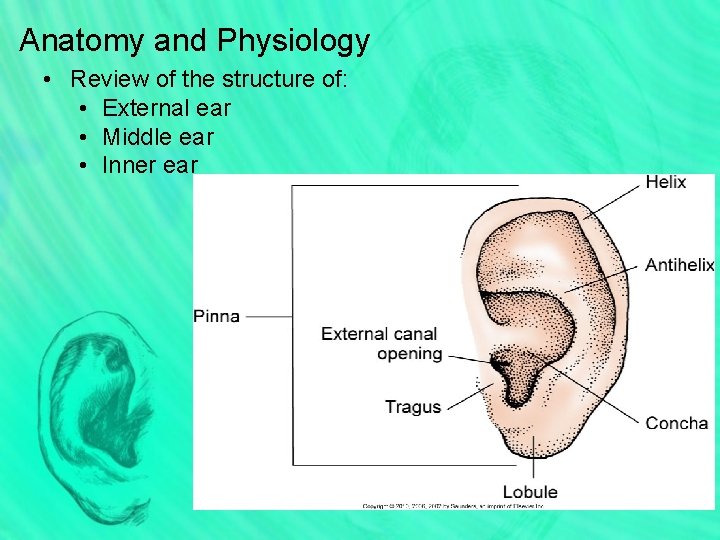
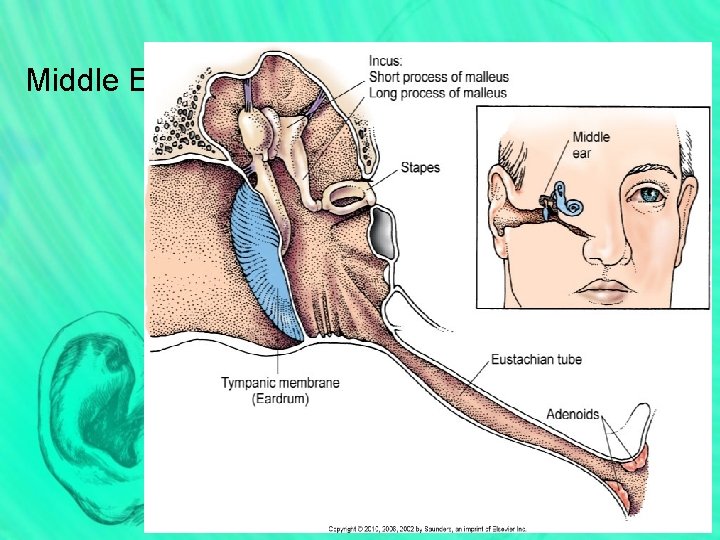
Anatomy and Physiology • Review of the structure of: • External ear • Middle ear • Inner ear
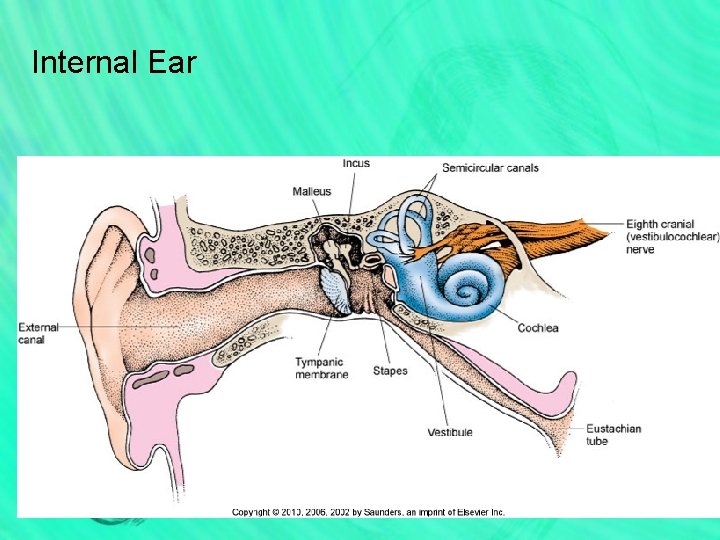
Internal Ear
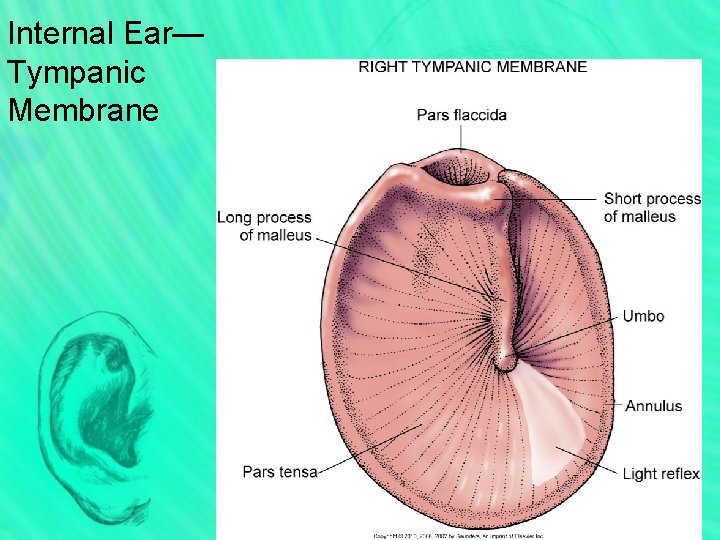
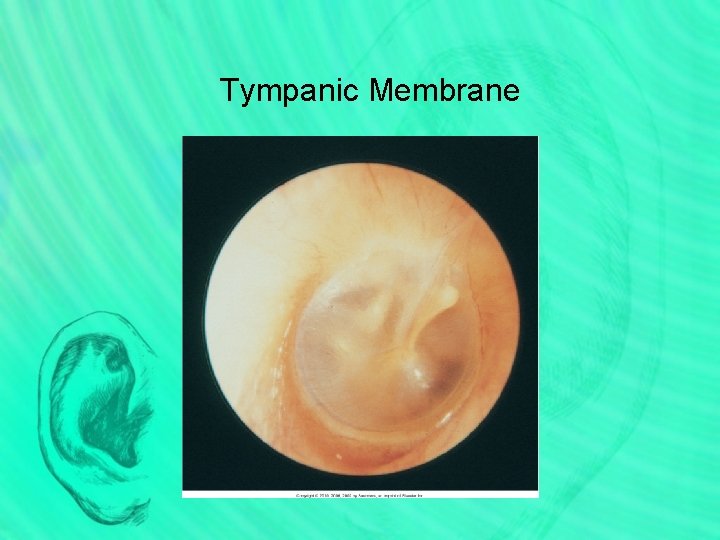
Internal Ear— Tympanic Membrane
Middle Ear
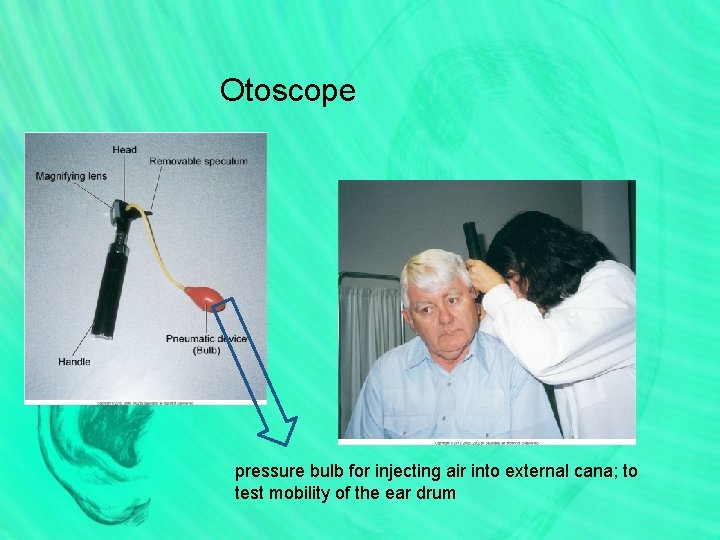
Otoscope pressure bulb for injecting air into external cana; to test mobility of the ear drum
Tympanic Membrane
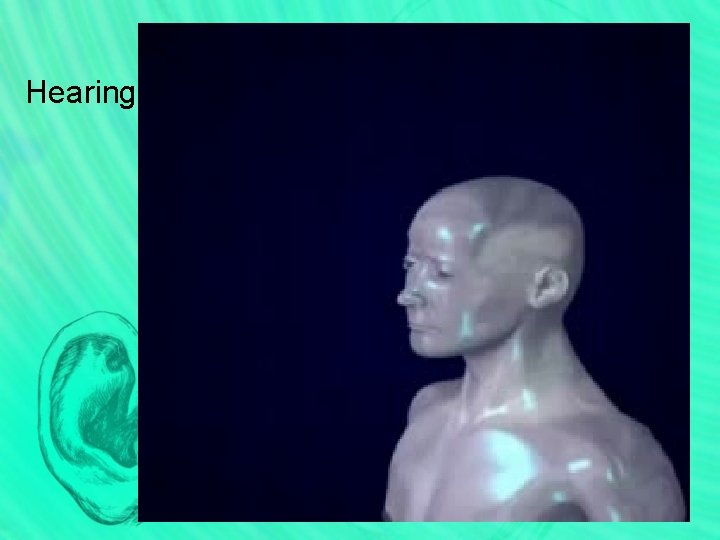
Hearing Copyright © 2010, 2006, 2002 by Saunders, an imprint of Elsevier Inc.
Ear and Hearing Changes Associated with Aging • • Drier, impacted cerumen Loss of tympanic membrane elasticity Decreased bony ossicle movement Degenerative changes of cochlea Disturbed vestibular function Diminished hearing acuity Decreased ability to hear high-frequency sounds
Assessment Techniques • Patient history • Family history and genetic risk • Current health problems: • Hyperacusis • Tinnitus • Vertigo
Physical Assessment • External ear and mastoid assessment • Otoscopic assessment
Auditory Assessment • Conductive hearing loss resulting from any physical obstruction of sound wave transmission • Sensorineural hearing loss resulting from a defect in the cochlea, the eighth cranial nerve, or the brain • Mixed conductive-sensorineural hearing loss, a profound hearing loss
Tests • • • Voice test Watch test Audioscopy Weber tuning fork test Rinne tuning fork test
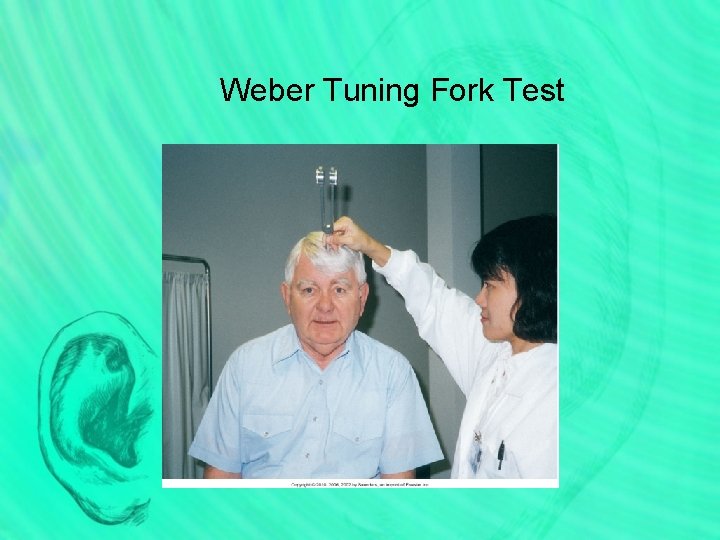
Weber Tuning Fork Test
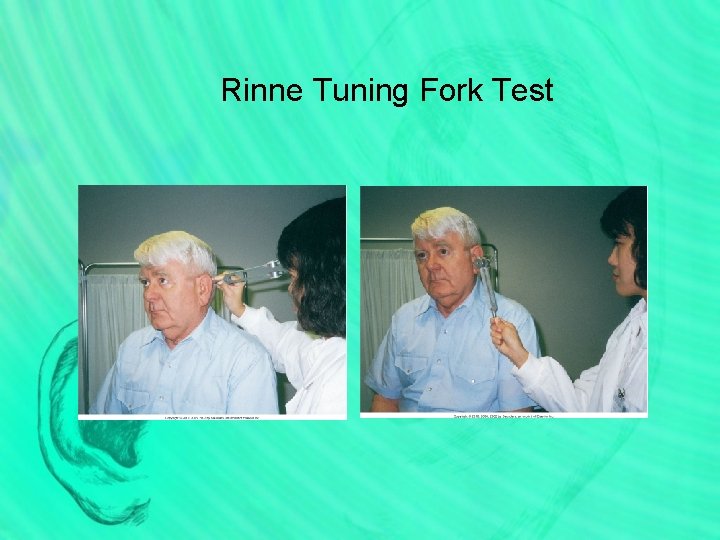
Rinne Tuning Fork Test
Diagnostic Assessment • • Laboratory tests Computed tomography Magnetic resonance imaging Auditory brainstem-evoked response Electronystagmography Caloric testing Dix-Hallpike test for vertigo
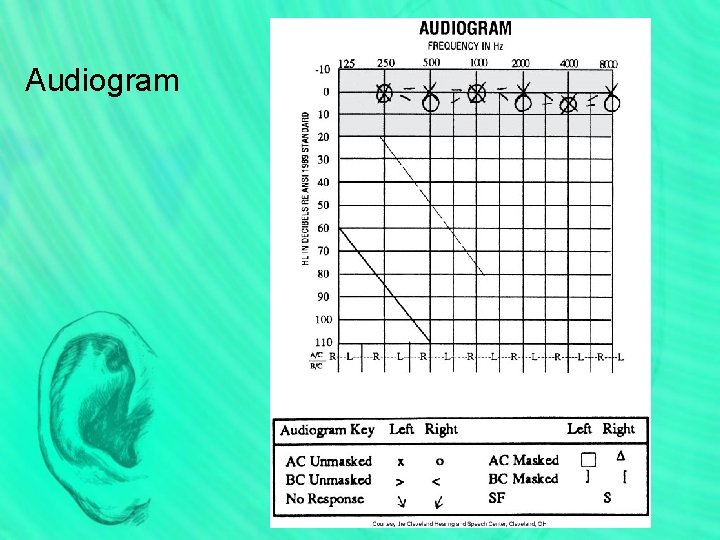
Audiometry • Frequency is the highness or lowness of tones. • Intensity is expressed in decibels. • Threshold is the lowest level of intensity at which pure tones and speech are heard. • Pure tones are generated by an audiometer to determine hearing acuity.
Audiogram
Speech Audiometry • Speech reception threshold • Speech discrimination testing • Tympanometry
Chapter 50 NCLEX TIME
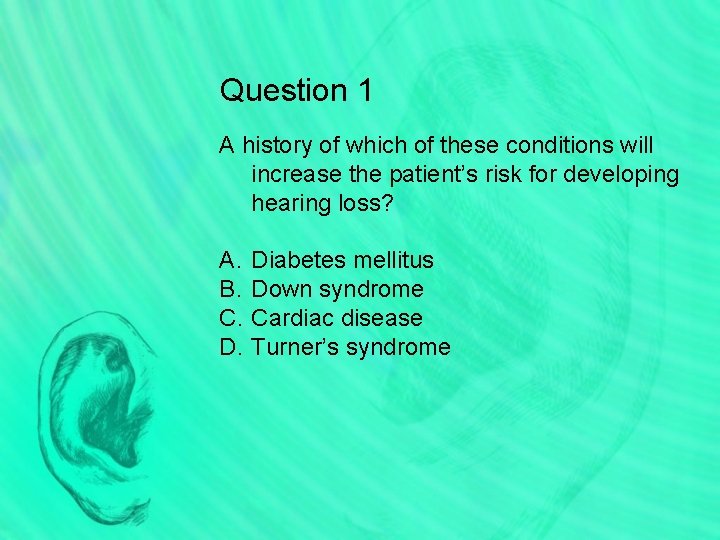
Question 1 A history of which of these conditions will increase the patient’s risk for developing hearing loss? A. B. C. D. Diabetes mellitus Down syndrome Cardiac disease Turner’s syndrome
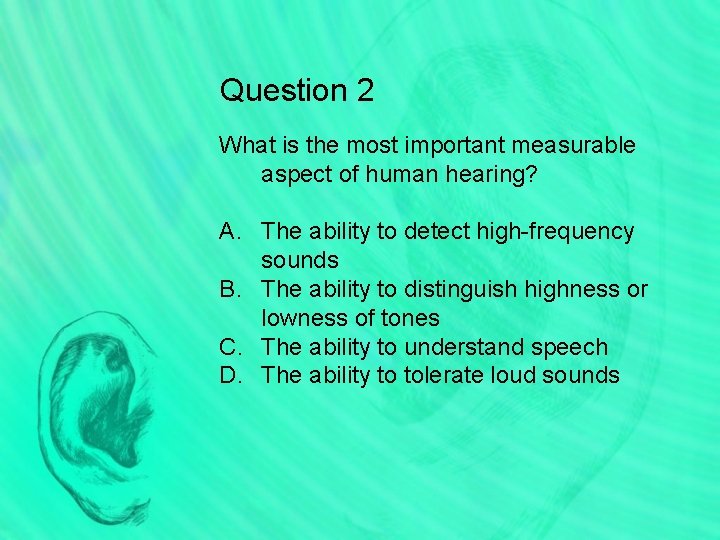
Question 2 What is the most important measurable aspect of human hearing? A. The ability to detect high-frequency sounds B. The ability to distinguish highness or lowness of tones C. The ability to understand speech D. The ability to tolerate loud sounds
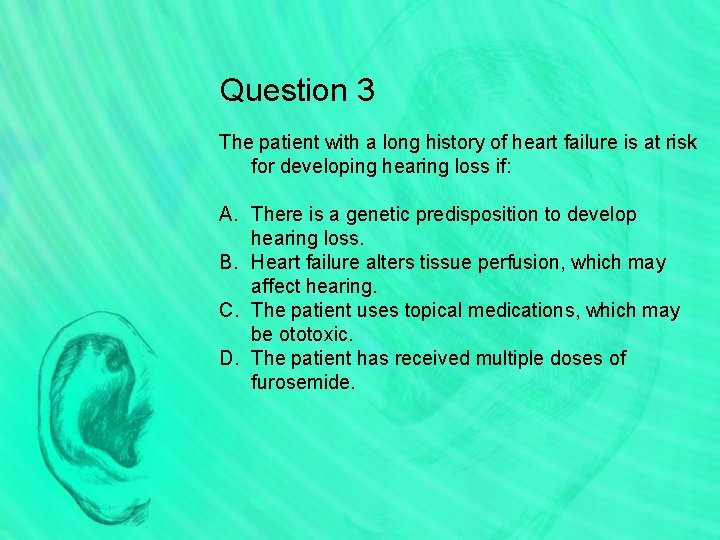
Question 3 The patient with a long history of heart failure is at risk for developing hearing loss if: A. There is a genetic predisposition to develop hearing loss. B. Heart failure alters tissue perfusion, which may affect hearing. C. The patient uses topical medications, which may be ototoxic. D. The patient has received multiple doses of furosemide.
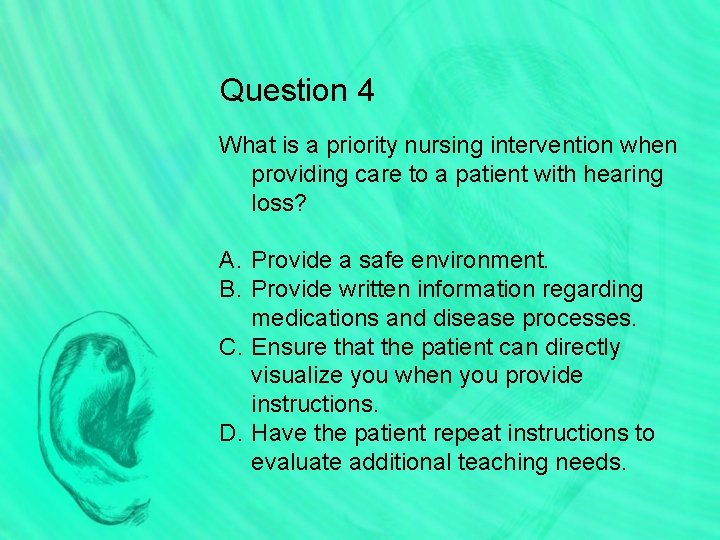
Question 4 What is a priority nursing intervention when providing care to a patient with hearing loss? A. Provide a safe environment. B. Provide written information regarding medications and disease processes. C. Ensure that the patient can directly visualize you when you provide instructions. D. Have the patient repeat instructions to evaluate additional teaching needs.
Question 5 During the physical assessment, the nurse notices that the patient’s right external ear is deformed. The nurse should: A. Ask the patient about hearing deficits. B. Ask the patient about renal or urinary tract problems. C. Speak in a lower-toned voice and ensure good visual contact with the patient. D. Ask the patient to provide information about his hearing.