
Chapter 5 Zoonotic and Vectorborne Diseases February 18
Chapter 5 Zoonotic and Vector-borne Diseases February 18, 2010
Zoonosis • An infection or infectious disease transmissible under natural conditions from vertebrate animals to humans • Methods for Transmission: – Contact with the skin – Bite or scratch from an animal – Direct inhalation or ingestion – Bite of an arthropod vector

Vector • An insect or any living carrier that transports an infectious agent from an infected individual or its wastes to a susceptible individual or its food or immediate surroundings • Examples: – Rodents (rats and mice) – Arthropods (mosquitoes, ticks, sand flies, biting midges)
Vector-Borne Diseases • • • Malaria Leishmaniasis Plague Lyme disease Rocky Mountain spotted fever West Nile Virus
Other Zoonotic Diseases • • • Monkeypox Tularemia Rabies Anthrax Psittacosis
Malaria • Found in more than 100 countries • > 40% of the world’s population at risk • Endemic regions: – – – Central and South America Africa India Southeast Asia Middle East Oceania • Annual death toll > than 1 million persons
The Cost of Malaria • Economic costs in Africa estimated at $1. 8 billion in 1995 • Lost productivity, lost earnings, and negative impacts upon travel and tourism • Direct costs: – Treatment of the disease (medicine, hospitalization) – Prevention (pesticide use)
Malaria Transmission • Transmitted by mosquitoes that carry a unicellular parasite known as a plasmodium. – – Plasmodium falciparum (Most deadly) Plasmodium vivax Plasmodium ovale Plasmodium malariae • Transmission involves the complex life cycle of mosquitoes (the vector) and human hosts (with human liver and human blood stages).
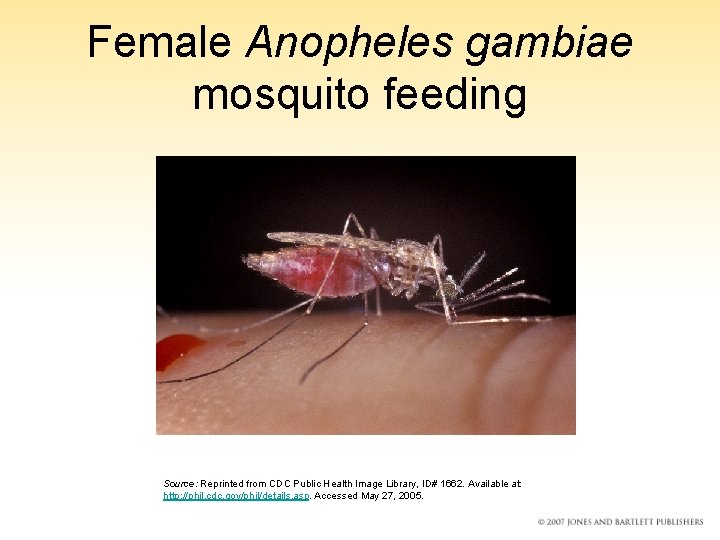
Female Anopheles gambiae mosquito feeding Source: Reprinted from CDC Public Health Image Library, ID# 1662. Available at: http: //phil. cdc. gov/phil/details. asp. Accessed May 27, 2005.
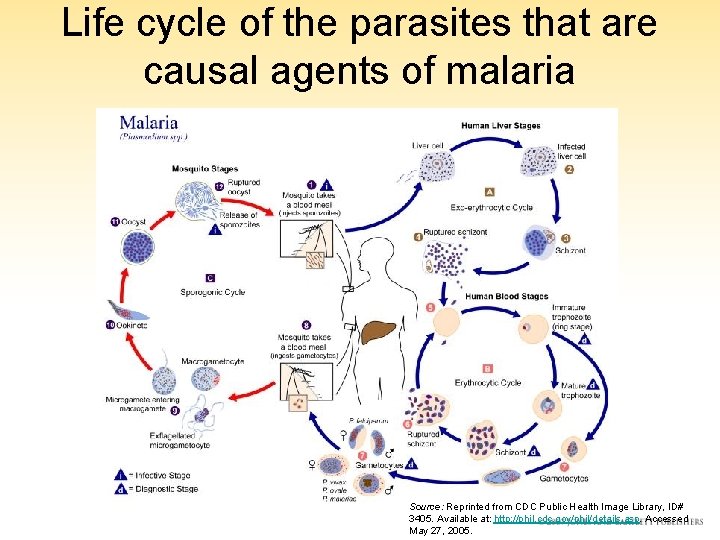
Life cycle of the parasites that are causal agents of malaria Source: Reprinted from CDC Public Health Image Library, ID# 3405. Available at: http: //phil. cdc. gov/phil/details. asp. Accessed May 27, 2005.
What Can Be Done to Control Malaria? • During mid-20 th century, malaria was all but eliminated in many countries due to the use of pesticides, particularly DDT. • Thought to be harmful to wildlife, outdoor spraying of DDT was discontinued in many developed countries. • Some countries now permit the spraying of DDT inside of homes.
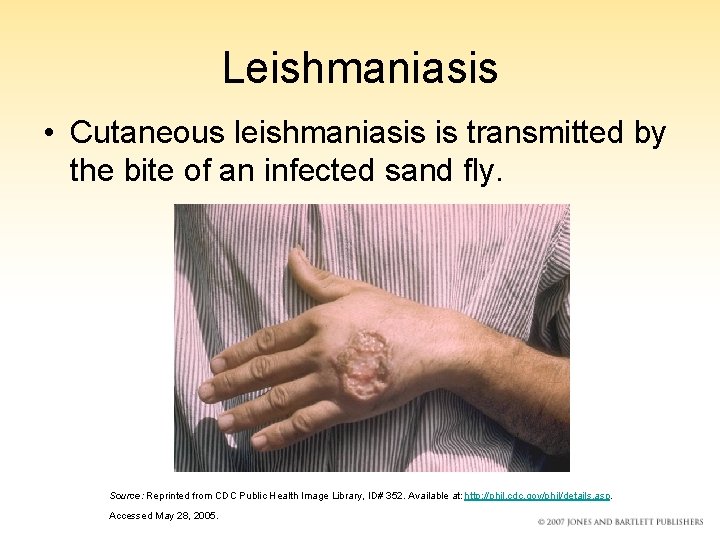
Leishmaniasis • Cutaneous leishmaniasis is transmitted by the bite of an infected sand fly. Source: Reprinted from CDC Public Health Image Library, ID# 352. Available at: http: //phil. cdc. gov/phil/details. asp. Accessed May 28, 2005.
Leishmaniasis • Reservoir for the cutaneous form of leishmaniasis = rodents. • Disease is transmitted from the reservoir to the human host by a sand fly (phlebotomus fly) • Endemic in a total of 82 countries
Environmental Factors Associated with Leishmaniasis • • Movement of humans into endemic areas Urbanization Extending agriculture into endemic areas Climate change due to global warming
Plague • Infectious agent = Bacterium Yersinia pestis • Condition that infects both animals and humans • Transmitted by flea bites harbored by rodents • Plague epidemic during the Middle Ages (the “black death”) was caused by fleas from infested rats
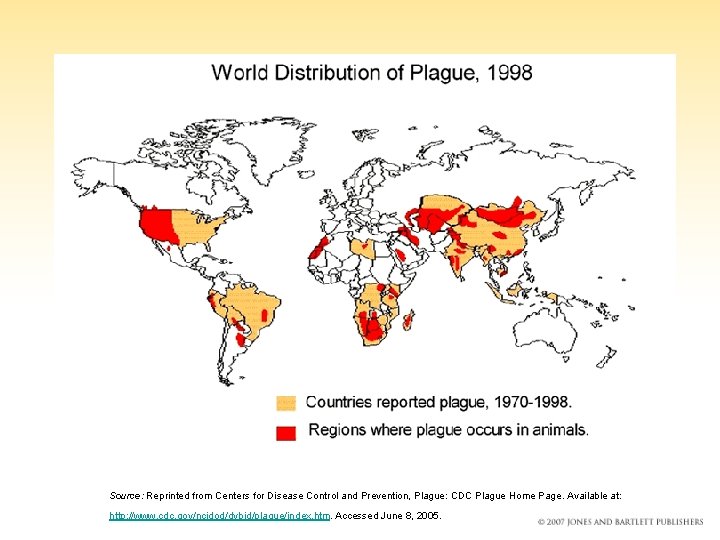
Source: Reprinted from Centers for Disease Control and Prevention, Plague: CDC Plague Home Page. Available at: http: //www. cdc. gov/ncidod/dvbid/plague/index. htm. Accessed June 8, 2005.
Lyme Disease • Condition identified in 1977 from a cluster of arthritis cases in children from Lyme, Connecticut. • Causative agent = bacterium Borrelia burgdorferi. • Disease transmitted when infected deer ticks bite human beings.
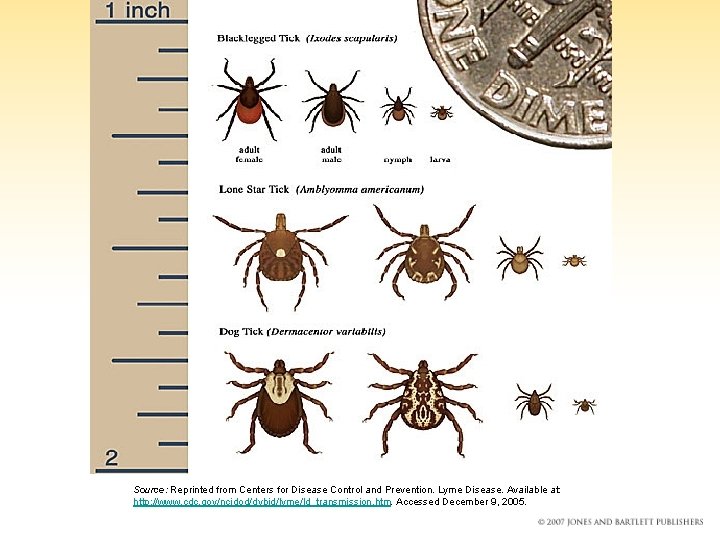
Source: Reprinted from Centers for Disease Control and Prevention. Lyme Disease. Available at: http: //www. cdc. gov/ncidod/dvbid/lyme/ld_transmission. htm. Accessed December 9, 2005.
Rocky Mountain Spotted Fever • Causal agent = Rickettsia rickettsii – a rickettsial agent. • Febrile disease (causes fever) • Case fatality rate = 25% among untreated patients • Transmitted by the bite of an infected tick
Arthropod-Borne Viral Diseases • Also known as arboviral diseases. • Viral diseases acquired when bloodfeeding arthropod vectors infect a human host. • Vectors that transmit arboviruses: – Ticks – Sand flies – Biting midges – Mosquitoes
Clinical Symptoms of Arboviral Disease 1. Acute Central Nervous System illness 2. Acute benign fevers 3. Rash 4. Hemorrhagic fevers 5. Polyarthritis
Arthropod-Borne Viral Hemorrhagic Fever (VHF) • Viruses require an animal host or insect host as a reservoir – rodents (deer mouse, and house mouse) • Viruses are limited to areas in which the host survives
Arboviral Encephalitides • Caused by virus • Produces acute inflammation of: – Sections of the brain – Spinal cord – Meninges • Etiologic agents are viruses associated with encephalitis: – St. Louis encephalitis – Western equine encephalitis
Arboviral Encephalitides • Transmitted by bite of mosquitoes from reservoir to a human host. • Reservoir for encephalitis are wild birds and small animals. • Cost = ~$150 million per year – vector control – surveillance
West Nile Virus • Mosquito-borne arboviral disease • Etiologic agent = Flavivirus • Mosquitoes = carriers that become infected when they feed on infected birds • Health effects vary from nothing to very severe illness
Emerging Zoonoses • Zoonotic diseases caused by either new agents or by known agents • Occur in locales or species that previously did not appear to be affected by these known agents
Factors Associated with the Rise of Emerging Zoonoses • Ecological changes that result from agriculture: – Deforestation – Conversion of grasslands – Irrigation • Changes in the human population & behavior – Wars – Migration – Urbanization
Emerging Zoonoses and Contributing Factors • Bacterial: – Escherichia coli O 157: H 7 (hemolytic-uremic syndrome) • Mass food processing technology allowing contamination of meat • Parasitic: – Cryptosporidium • Contaminated surface water, faulty water purification
Emerging Zoonoses and Contributing Factors • Non-conventional agent: – Bovine spongiform encephalopathy • Changes in meat rendering process • Viral: – Hantaviruses • Ecological/environmental changes • Increasing rodent contacts
Hantavirus Pulmonary Syndrome (HPS) • Causative agent = hantavirus – part of the viral family Bunyaviridae • Transmitted by inhalation – aerosolized urine and droppings from infected rodents are inhaled • Primary vectors = rodents – cotton rat, rice rat, white-footed mouse, and deer mouse.
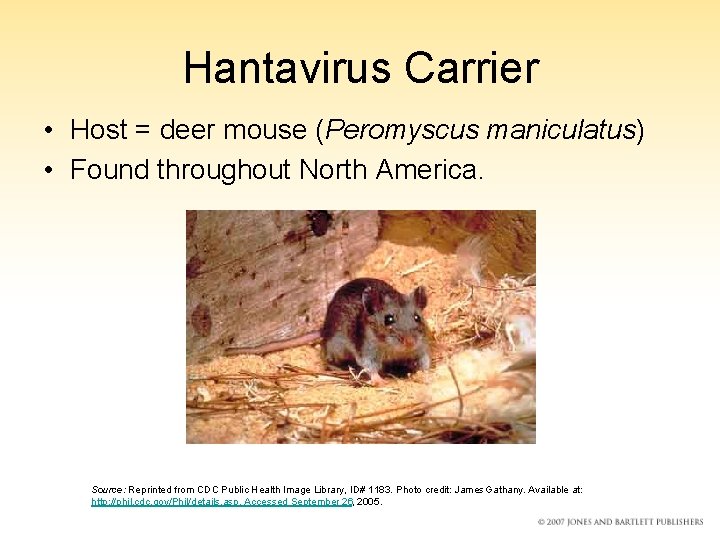
Hantavirus Carrier • Host = deer mouse (Peromyscus maniculatus) • Found throughout North America. Source: Reprinted from CDC Public Health Image Library, ID# 1183. Photo credit: James Gathany. Available at: http: //phil. cdc. gov/Phil/details. asp. Accessed September 26, 2005.
Dengue Fever • Caused by flaviviruses • Vector = Aedes aegypti mosquito. • Occurs in tropical areas – Southeast Asia – Tropical Africa – South America. • Deaths can be as high as 40 to 50% when the disease is untreated.
Dengue Fever in the U. S. • Dengue fever has been documented in the continental U. S. – Southern Texas and the southeastern states are at risk for transmission of dengue and sporadic outbreaks – Virus may be imported into the U. S. by travelers returning from endemic areas
Control of Mosquito-Borne Diseases • • • Use sentinel chickens. Drain standing water. Introduce mosquito-eating fish into ponds. Repair window screens. Wear repellents and protective clothing.
- Slides: 34