
Chapter 5 What is a verb infinitive a

Chapter 5
What is a verb infinitive? a form of a verb without person or number to walk to love to prepare
What is meant by person and number of a verb? I you he, she we they singular or plural
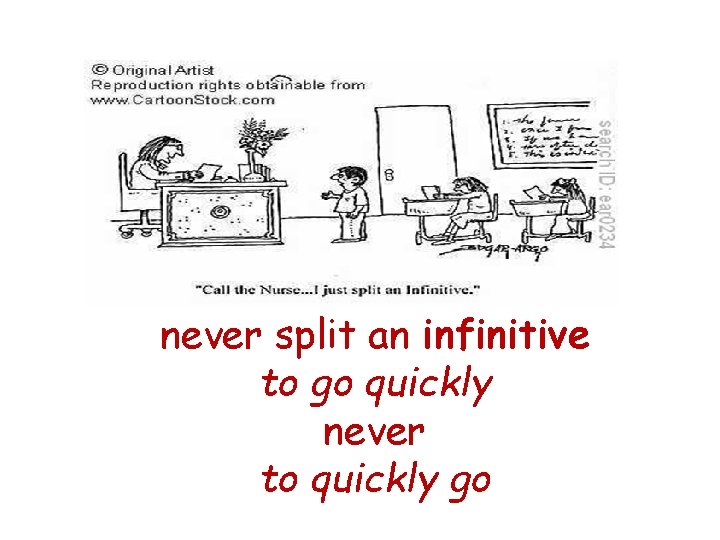
never split an infinitive to go quickly never to quickly go
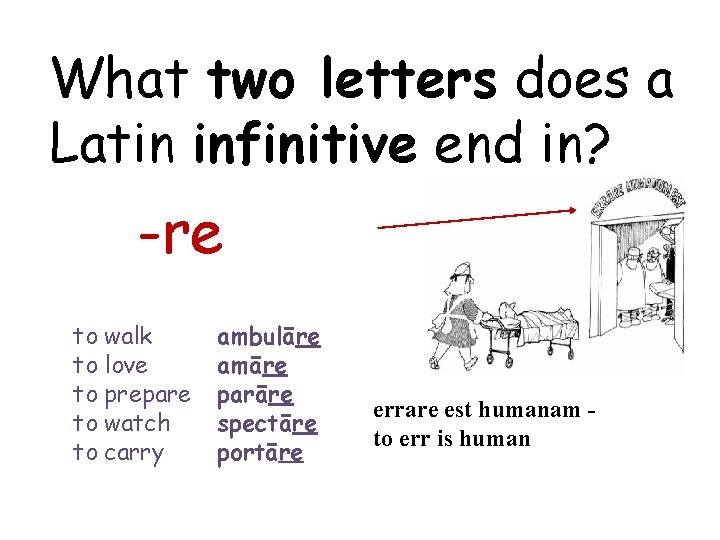
What two letters does a Latin infinitive end in? -re to walk to love to prepare to watch to carry ambulāre amāre parāre spectāre portāre errare est humanam to err is human
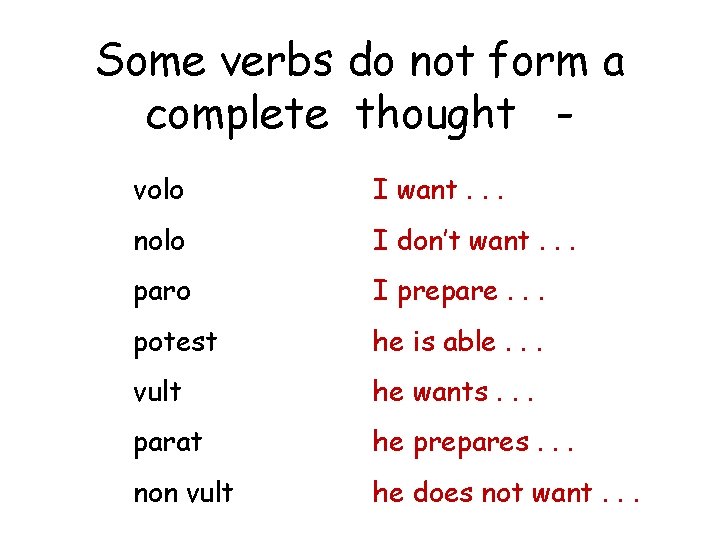
Some verbs do not form a complete thought volo I want. . . nolo I don’t want. . . paro I prepare. . . potest he is able. . . vult he wants. . . parat he prepares. . . non vult he does not want. . .
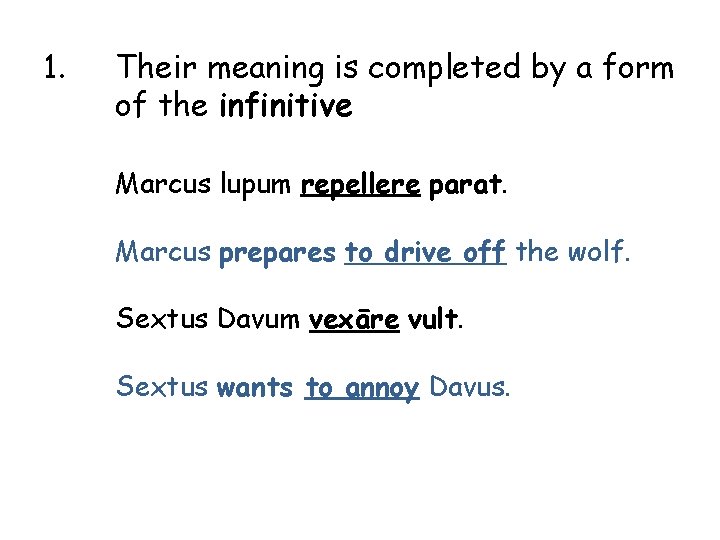
1. Their meaning is completed by a form of the infinitive Marcus lupum repellere parat. Marcus prepares to drive off the wolf. Sextus Davum vexāre vult. Sextus wants to annoy Davus.
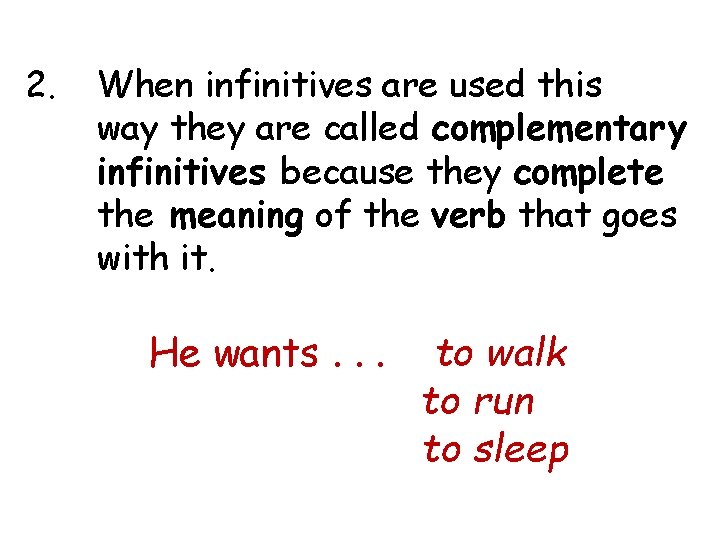
2. When infinitives are used this way they are called complementary infinitives because they complete the meaning of the verb that goes with it. He wants. . . to walk to run to sleep
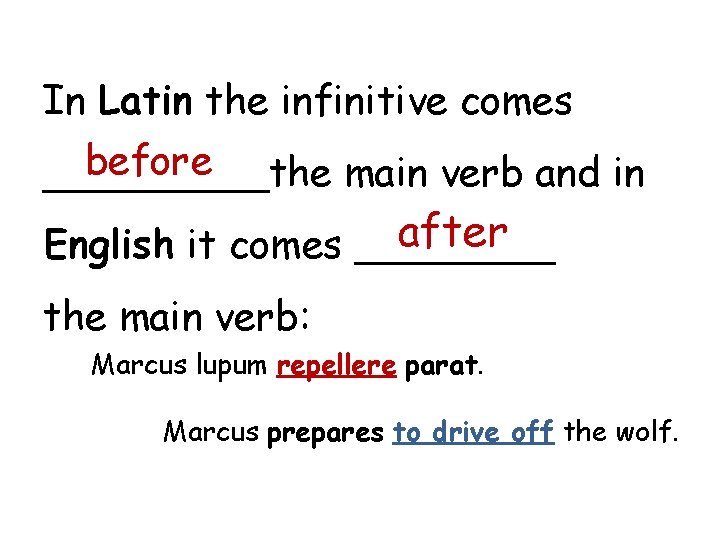
In Latin the infinitive comes before _____the main verb and in after English it comes ____ the main verb: Marcus lupum repellere parat. Marcus prepares to drive off the wolf.
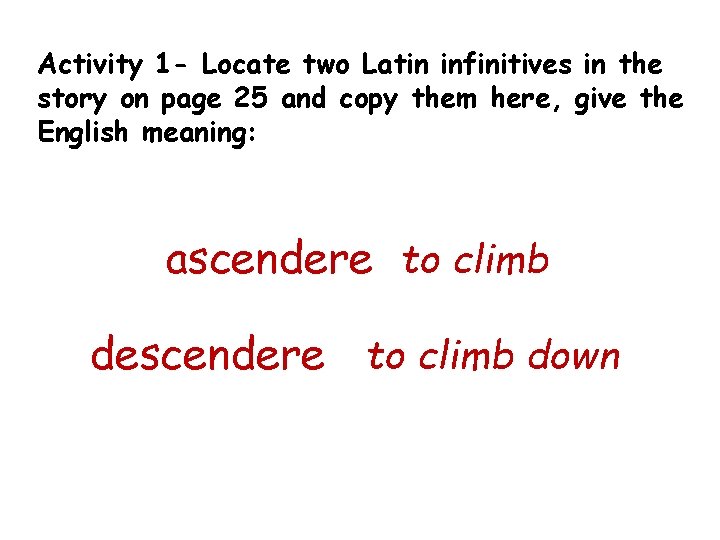
Activity 1 - Locate two Latin infinitives in the story on page 25 and copy them here, give the English meaning: ascendere to climb descendere to climb down

Activity 2 – Underline the infinitive, circle the main verb and translate into English. 1. Ego ad hortum curro (curro, I run) quod Davum vexāre volo (volo, I want). 2. Ego arborem non ascendo (ascendo, I climb) quod in rivum cadere nolo (nolo, I dont want).
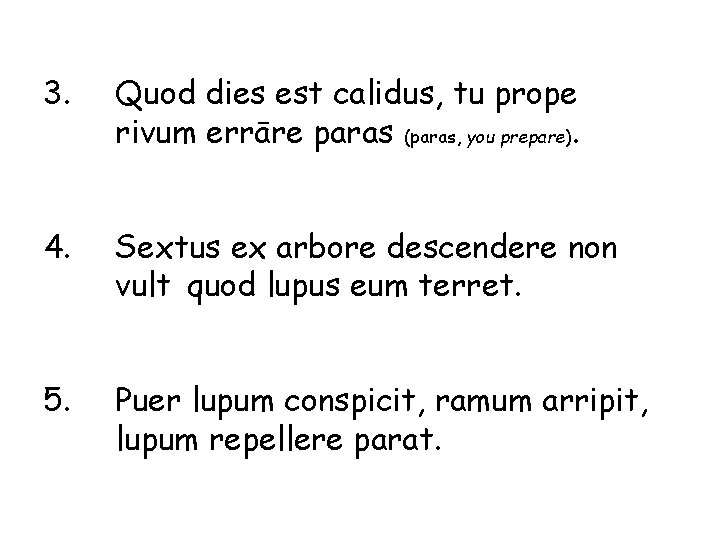
3. Quod dies est calidus, tu prope rivum errāre paras (paras, you prepare). 4. Sextus ex arbore descendere non vult quod lupus eum terret. 5. Puer lupum conspicit, ramum arripit, lupum repellere parat.
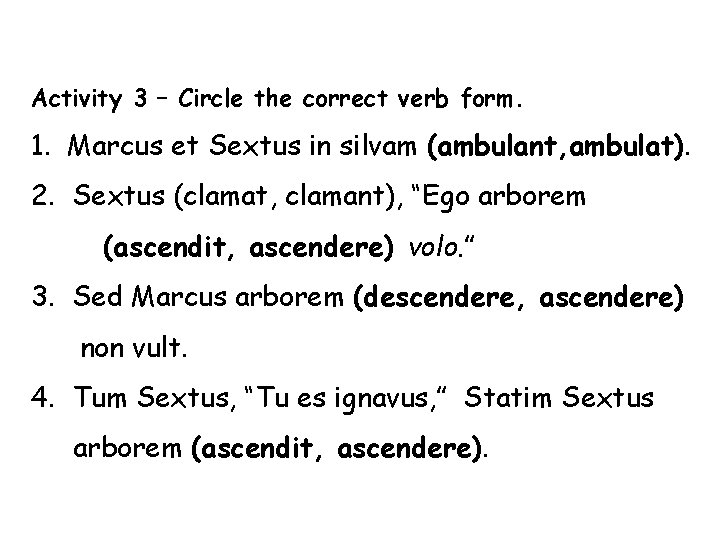
Activity 3 – Circle the correct verb form. 1. Marcus et Sextus in silvam (ambulant, ambulat). 2. Sextus (clamat, clamant), “Ego arborem (ascendit, ascendere) volo. ” 3. Sed Marcus arborem (descendere, ascendere) non vult. 4. Tum Sextus, “Tu es ignavus, ” Statim Sextus arborem (ascendit, ascendere).
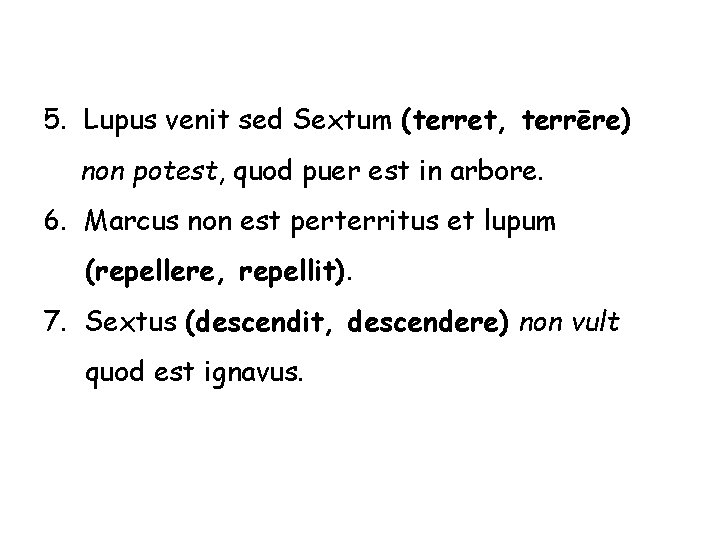
5. Lupus venit sed Sextum (terret, terrēre) non potest, quod puer est in arbore. 6. Marcus non est perterritus et lupum (repellere, repellit). 7. Sextus (descendit, descendere) non vult quod est ignavus.
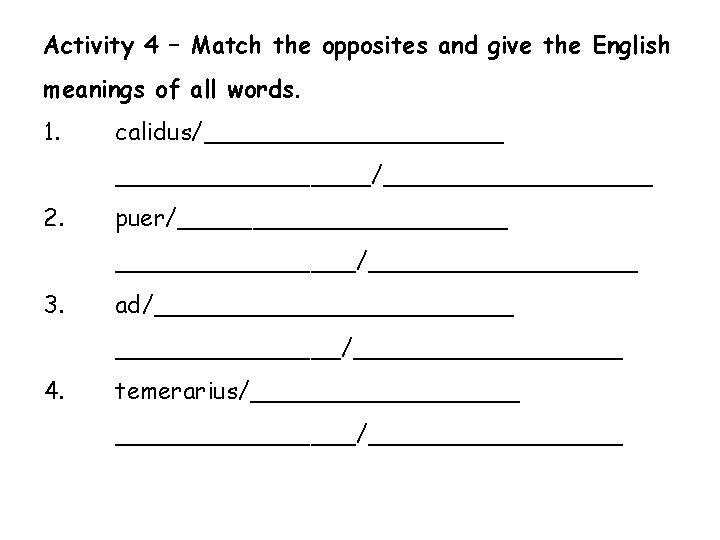
Activity 4 – Match the opposites and give the English meanings of all words. 1. calidus/__________/_________ 2. puer/___________/_________ 3. ad/____________/_________ 4. temerarius/_________/_________
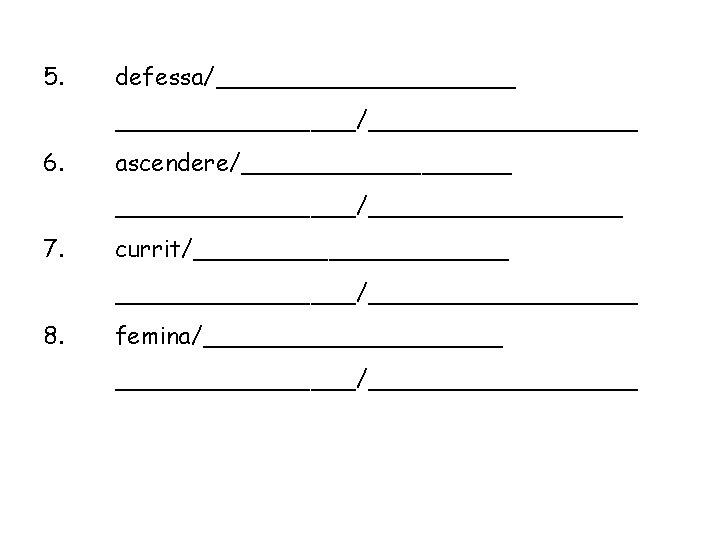
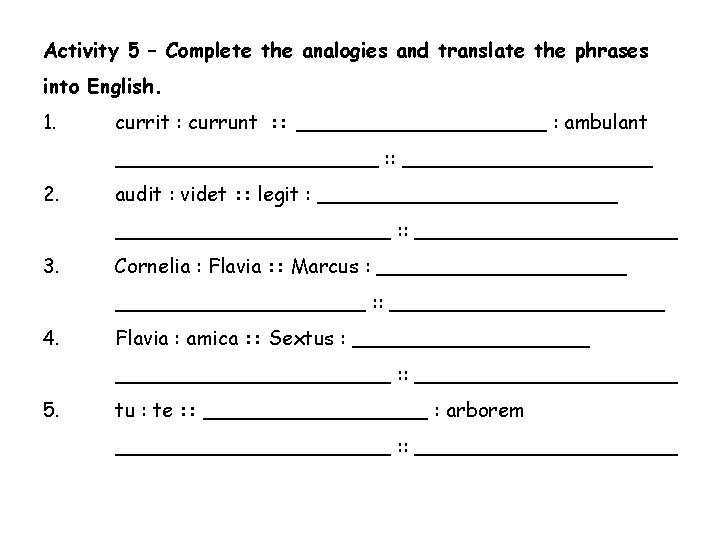
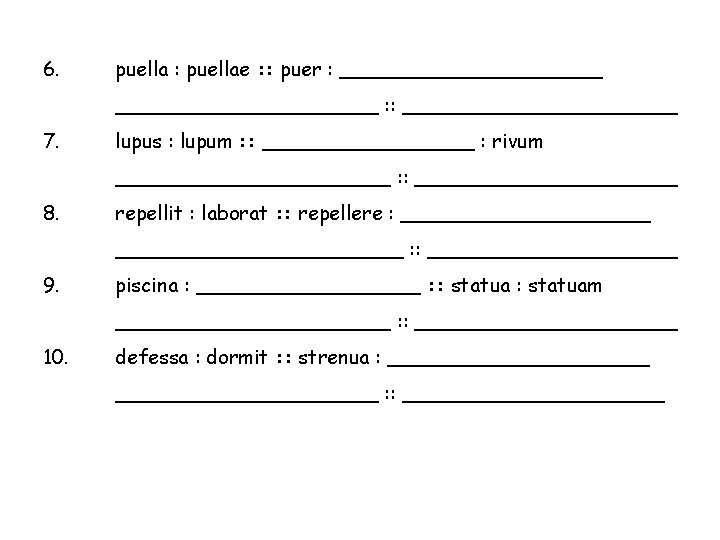
Activity 5 – Complete the analogies and translate the phrases into English. 1. currit : currunt : : __________ : ambulant ___________ : : __________ 2. audit : videt : : legit : ____________ : : ___________ 3. Cornelia : Flavia : : Marcus : ____________________ : : ___________ 4. Flavia : amica : : Sextus : ______________________ : : ___________ 5. tu : te : : _________ : arborem ___________ : : ___________
- Slides: 18