
Chapter 5 Variations in Consciousness Consciousness Personal Awareness




- Slides: 25
Chapter 5: Variations in Consciousness
Consciousness: Personal Awareness § Awareness of Internal and External Stimuli § Levels of awareness § James – stream of consciousness § Freud – unconscious § Sleep/dreaming research
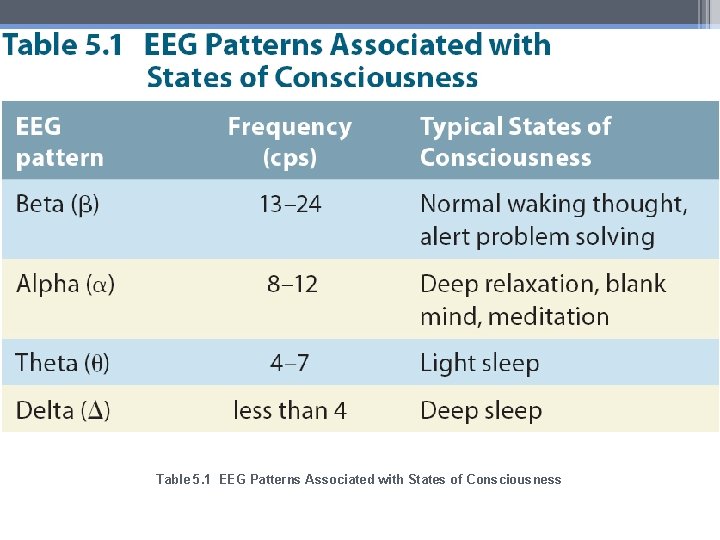
The Electroencephalograph: A Physiological Index of Consciousness § EEG – monitoring of brain electrical activity § Brain-waves § Amplitude (height) § Frequency (cycles per second) § Beta (13 -24 cps) § Alpha (8 -12 cps) § Theta (4 -7 cps) § Delta (<4 cps)
Table 5. 1 EEG Patterns Associated with States of Consciousness
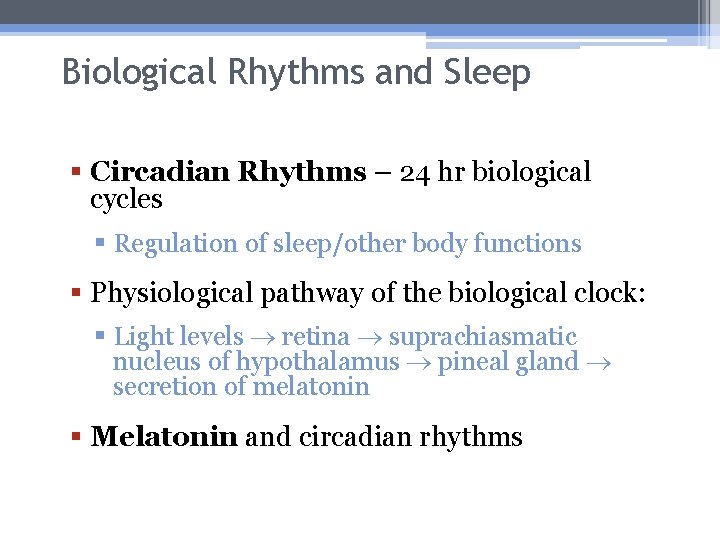
Biological Rhythms and Sleep § Circadian Rhythms – 24 hr biological cycles § Regulation of sleep/other body functions § Physiological pathway of the biological clock: § Light levels retina suprachiasmatic nucleus of hypothalamus pineal gland secretion of melatonin § Melatonin and circadian rhythms
Sleep/Waking Research § Instruments: § Electroencephalograph – brain electrical activity § Electromyograph – muscle activity § Electrooculograph – eye movements § Other bodily functions also observed
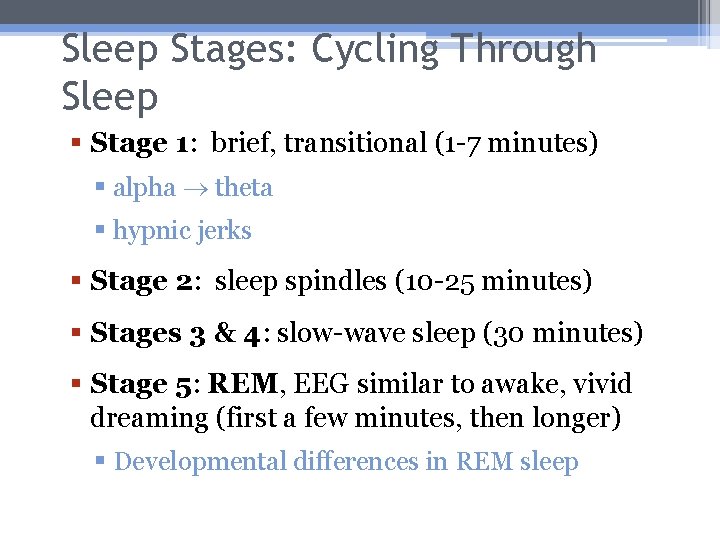
Sleep Stages: Cycling Through Sleep § Stage 1: brief, transitional (1 -7 minutes) § alpha theta § hypnic jerks § Stage 2: sleep spindles (10 -25 minutes) § Stages 3 & 4: slow-wave sleep (30 minutes) § Stage 5: REM, EEG similar to awake, vivid dreaming (first a few minutes, then longer) § Developmental differences in REM sleep
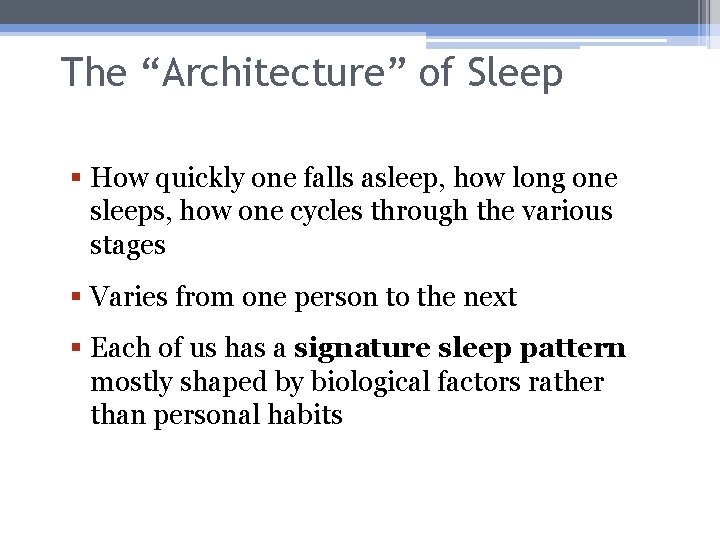
The “Architecture” of Sleep § How quickly one falls asleep, how long one sleeps, how one cycles through the various stages § Varies from one person to the next § Each of us has a signature sleep pattern mostly shaped by biological factors rather than personal habits
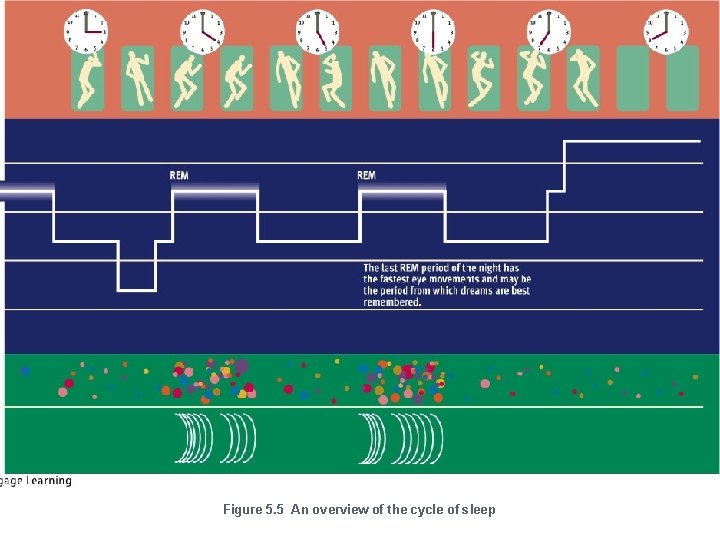
Figure 5. 5 An overview of the cycle of sleep
Figure 5. 5 An overview of the cycle of sleep
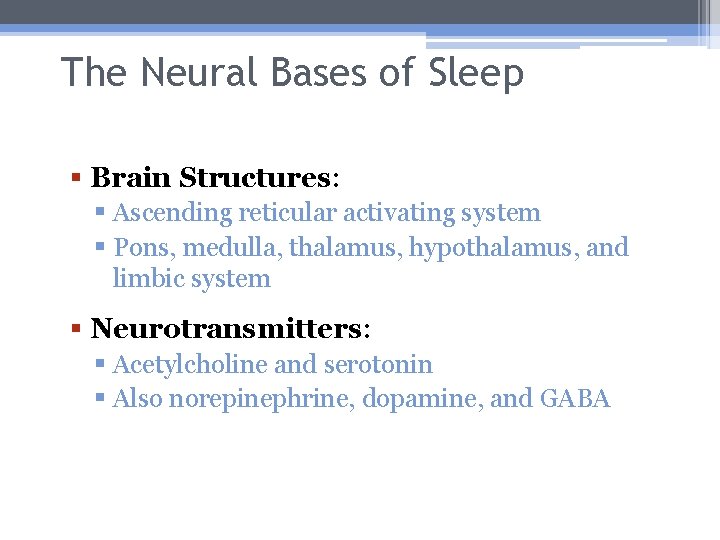
The Neural Bases of Sleep § Brain Structures: § Ascending reticular activating system § Pons, medulla, thalamus, hypothalamus, and limbic system § Neurotransmitters: § Acetylcholine and serotonin § Also norepinephrine, dopamine, and GABA
Figure 5. 8 The ascending reticular activating system (ARAS)
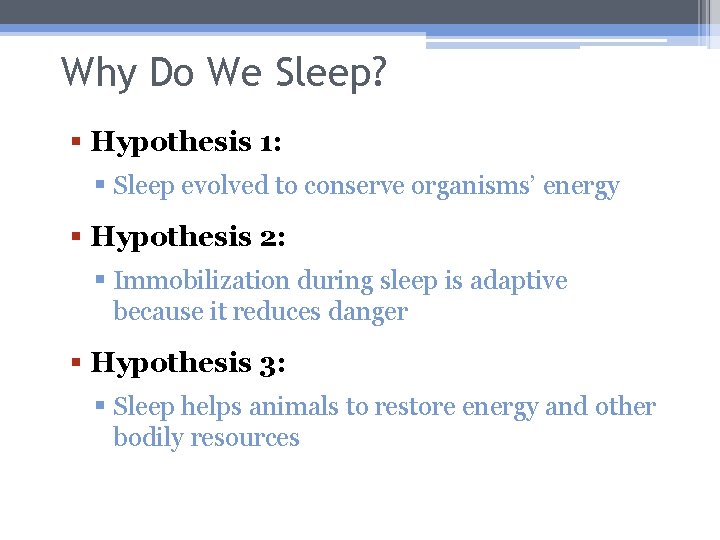
Why Do We Sleep? § Hypothesis 1: § Sleep evolved to conserve organisms’ energy § Hypothesis 2: § Immobilization during sleep is adaptive because it reduces danger § Hypothesis 3: § Sleep helps animals to restore energy and other bodily resources
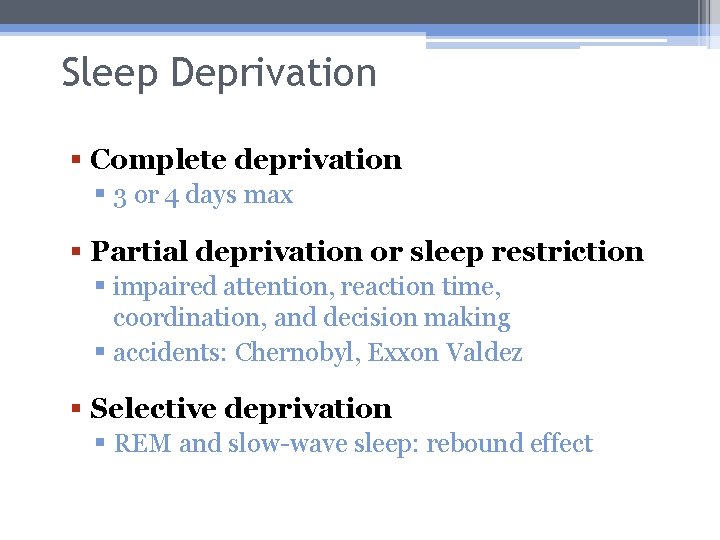
Sleep Deprivation § Complete deprivation § 3 or 4 days max § Partial deprivation or sleep restriction § impaired attention, reaction time, coordination, and decision making § accidents: Chernobyl, Exxon Valdez § Selective deprivation § REM and slow-wave sleep: rebound effect
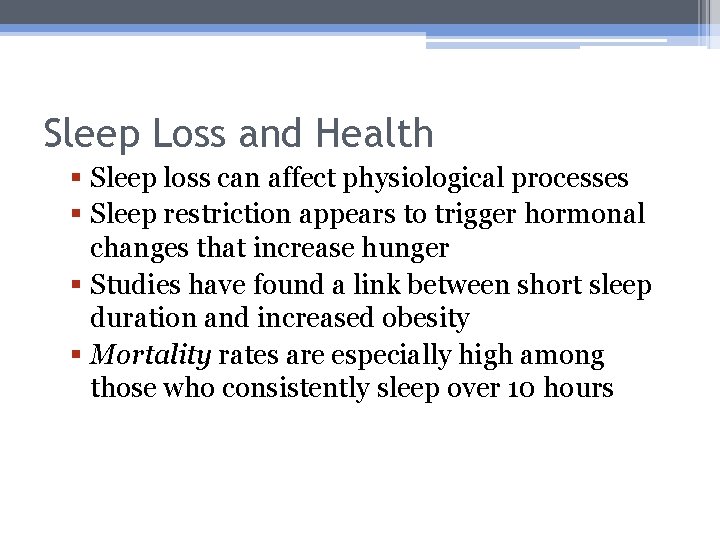
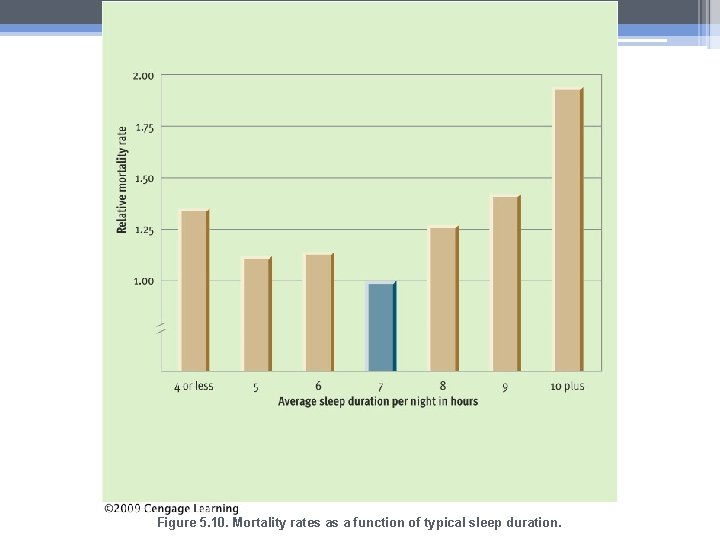
Sleep Loss and Health § Sleep loss can affect physiological processes § Sleep restriction appears to trigger hormonal changes that increase hunger § Studies have found a link between short sleep duration and increased obesity § Mortality rates are especially high among those who consistently sleep over 10 hours
Figure 5. 10. Mortality rates as a function of typical sleep duration.
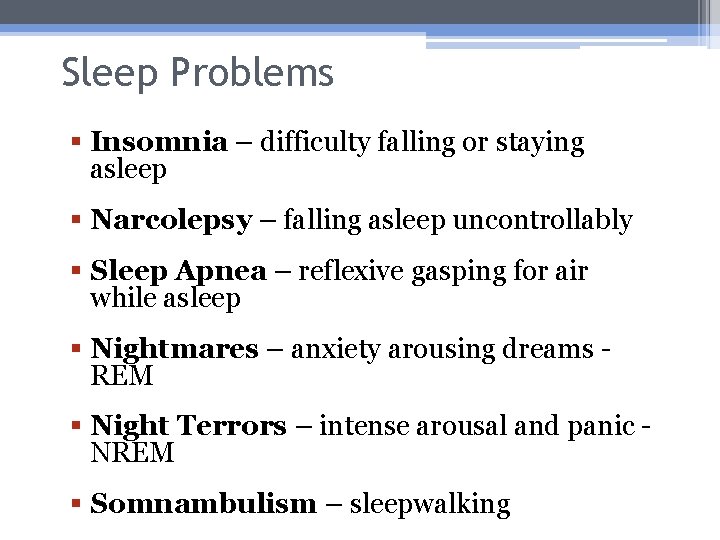
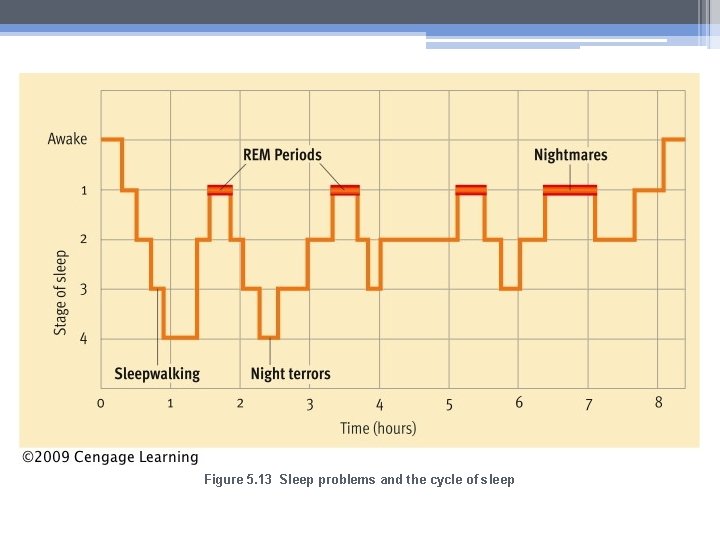
Sleep Problems § Insomnia – difficulty falling or staying asleep § Narcolepsy – falling asleep uncontrollably § Sleep Apnea – reflexive gasping for air while asleep § Nightmares – anxiety arousing dreams REM § Night Terrors – intense arousal and panic NREM § Somnambulism – sleepwalking
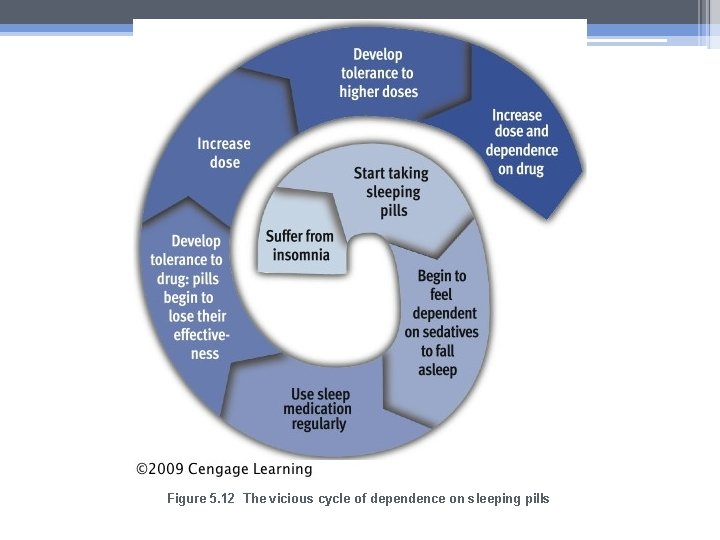
Figure 5. 12 The vicious cycle of dependence on sleeping pills
Figure 5. 13 Sleep problems and the cycle of sleep
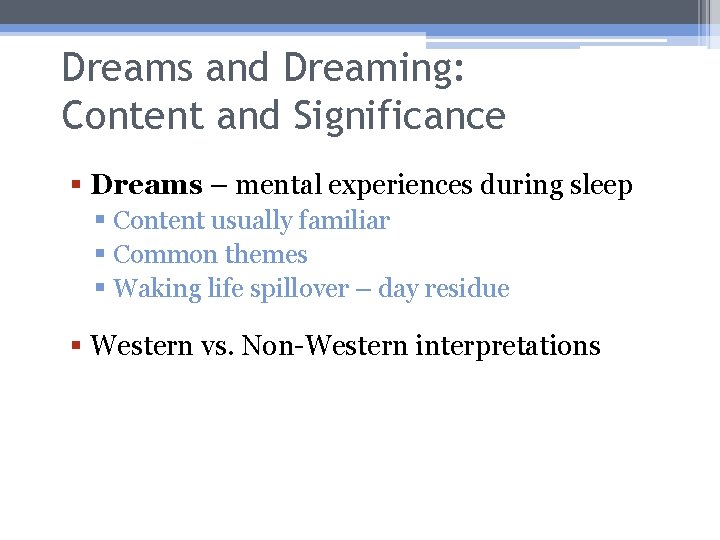
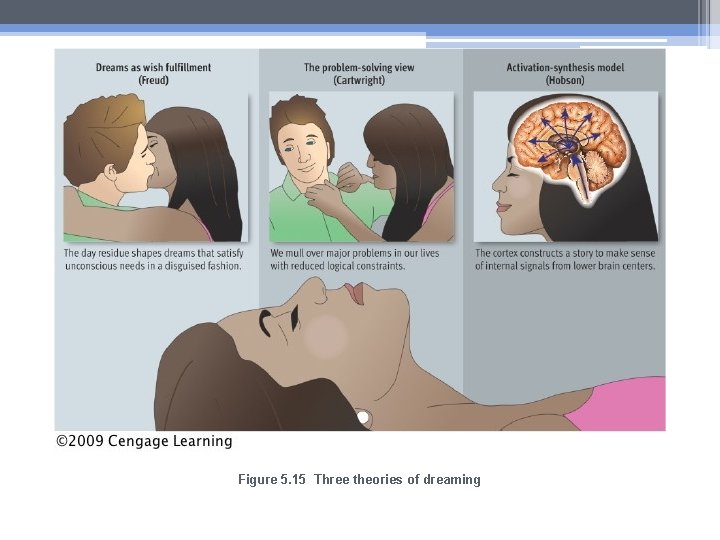
Dreams and Dreaming: Content and Significance § Dreams – mental experiences during sleep § Content usually familiar § Common themes § Waking life spillover – day residue § Western vs. Non-Western interpretations
Figure 5. 15 Three theories of dreaming
Hypnosis: Altered State of Consciousness or Role Playing? § Hypnosis = a systematic procedure that increases suggestibility § Hypnotic susceptibility: individual differences § Effects produced through hypnosis: § Anesthesia § Sensory distortions and hallucinations § Disinhibition § Posthypnotic suggestions and amnesia
Meditation § Meditation = practices that train attention to heighten awareness and bring mental processes under greater voluntary control § Yoga, Zen, transcendental meditation (TM) § Potential physiological benefits § Similar to effective relaxation procedures
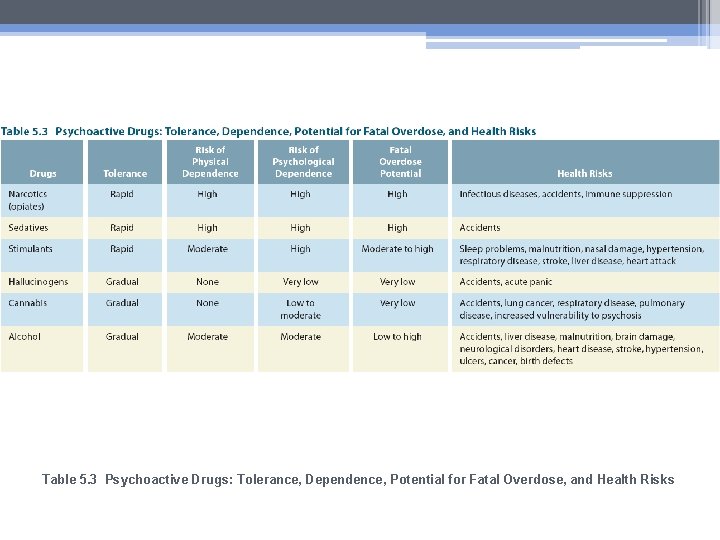
Psychoactive drugs § Narcotics (opiates) – pain relieving § Sedatives – sleep inducing § Stimulants – increase CNS activity § Hallucinogens – distort sensory and perceptual experience § Cannabis – produce mild, relaxed euphoria § Alcohol – produces relaxed euphoria, decreases inhibitions § MDMA – produces a warm, friendly euphoria
Table 5. 3 Psychoactive Drugs: Tolerance, Dependence, Potential for Fatal Overdose, and Health Risks