
Chapter 5 Types 1 Basal cell carcinoma Least

Chapter 5
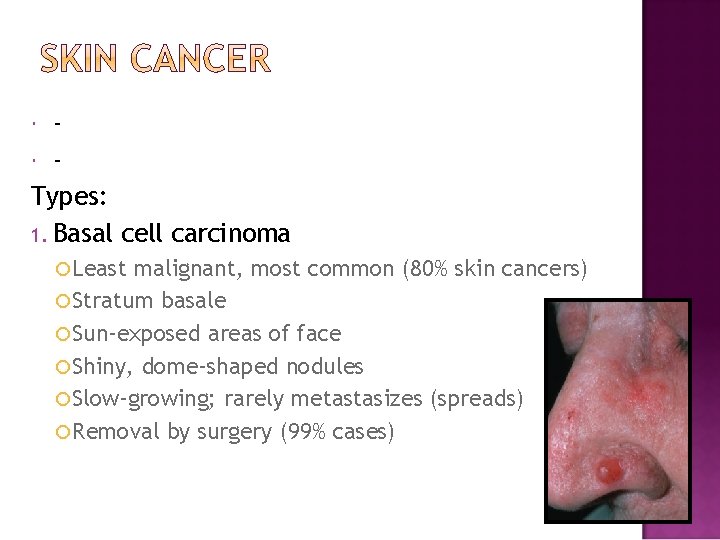
Types: 1. Basal cell carcinoma Least malignant, most common (80% skin cancers) Stratum basale Sun-exposed areas of face Shiny, dome-shaped nodules Slow-growing; rarely metastasizes (spreads) Removal by surgery (99% cases)
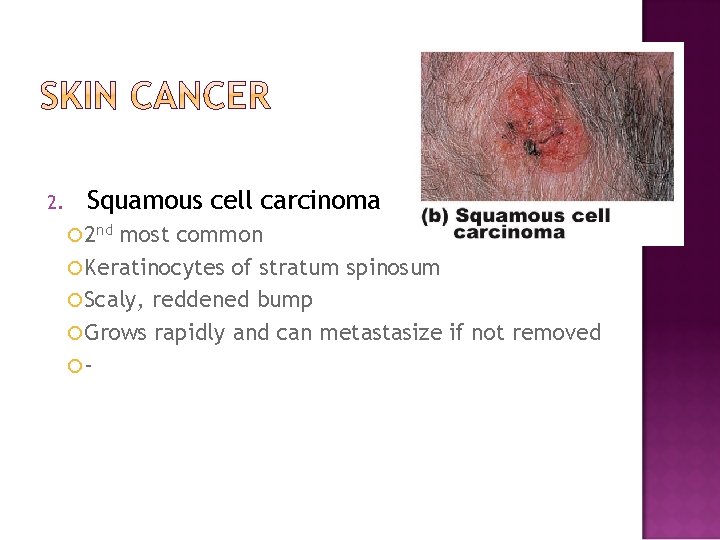
2. Squamous cell carcinoma 2 nd most common Keratinocytes of stratum spinosum Scaly, reddened bump Grows rapidly and can metastasize if not removed -
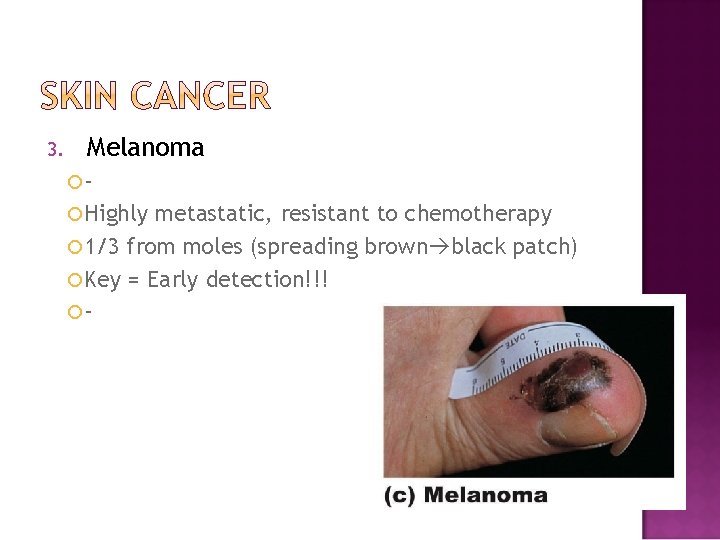
3. Melanoma Highly metastatic, resistant to chemotherapy 1/3 from moles (spreading brown black patch) Key = Early detection!!! -
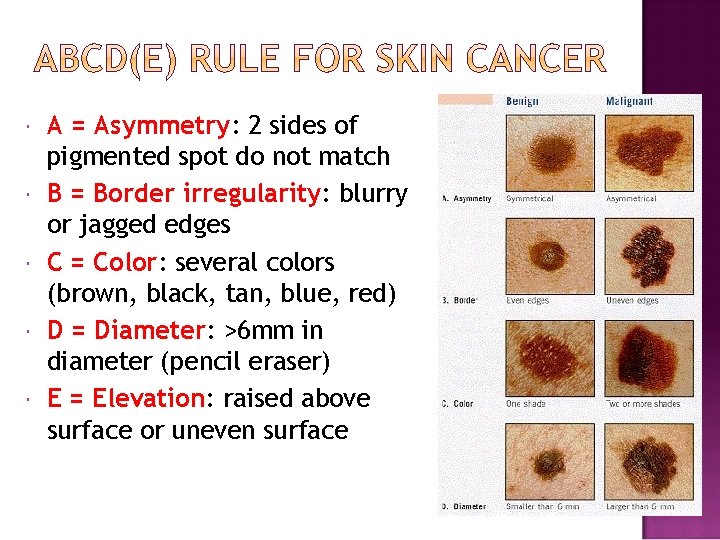
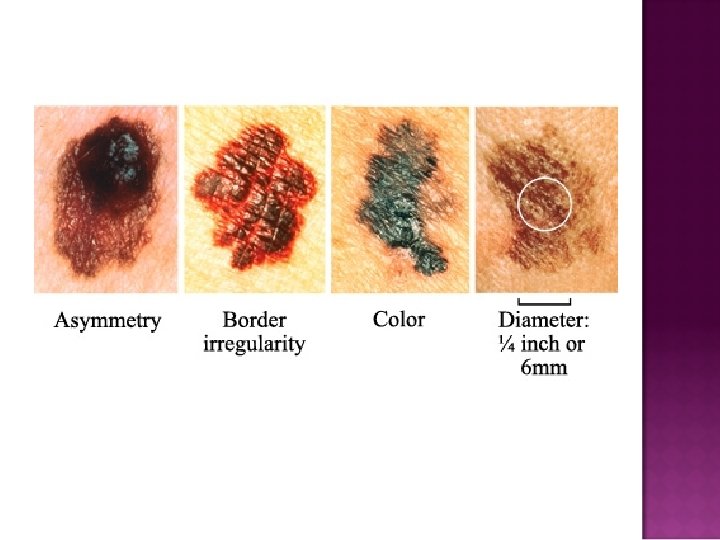
A = Asymmetry: 2 sides of pigmented spot do not match B = Border irregularity: blurry or jagged edges C = Color: several colors (brown, black, tan, blue, red) D = Diameter: >6 mm in diameter (pencil eraser) E = Elevation: raised above surface or uneven surface
Tissue damage caused by heat, electricity, radiation, chemicals Main threat: Kidney failure, circulatory shock Treatment: replace fluids via IV Rule of Nines: Nines estimating extent of burns Divide body into 11 areas Each part is 9% of total body area + 1% genital region
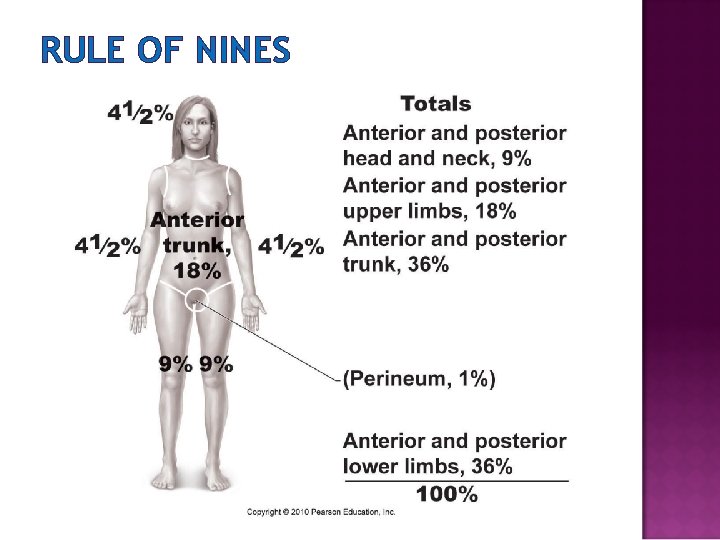
RULE OF NINES
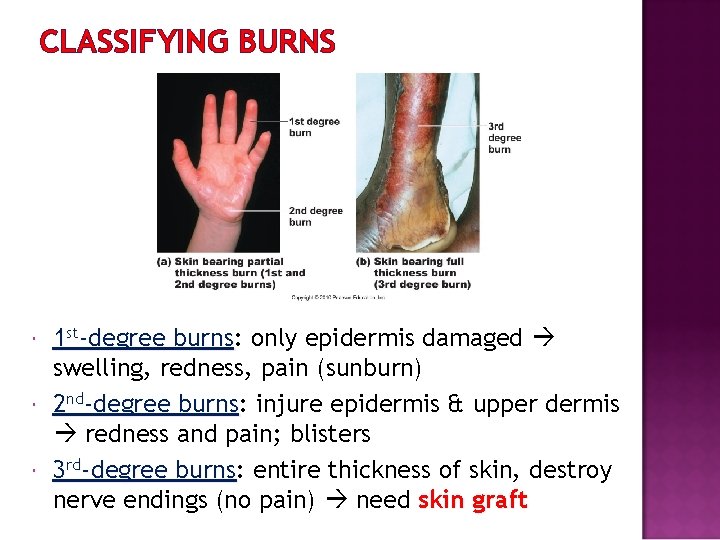
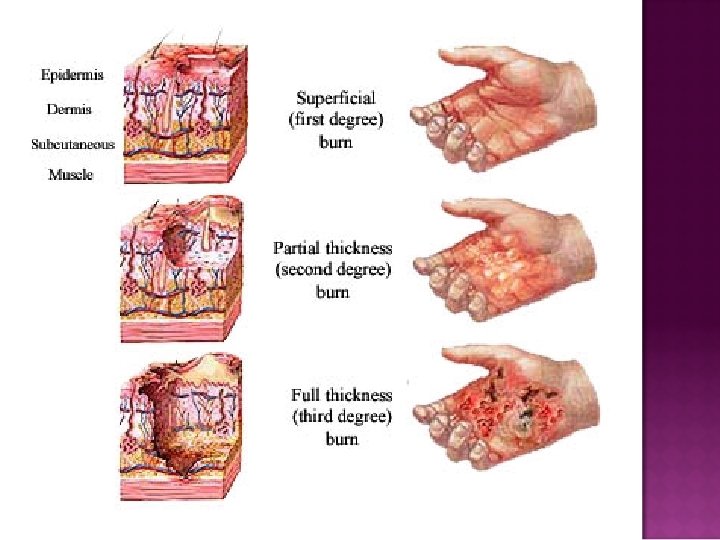
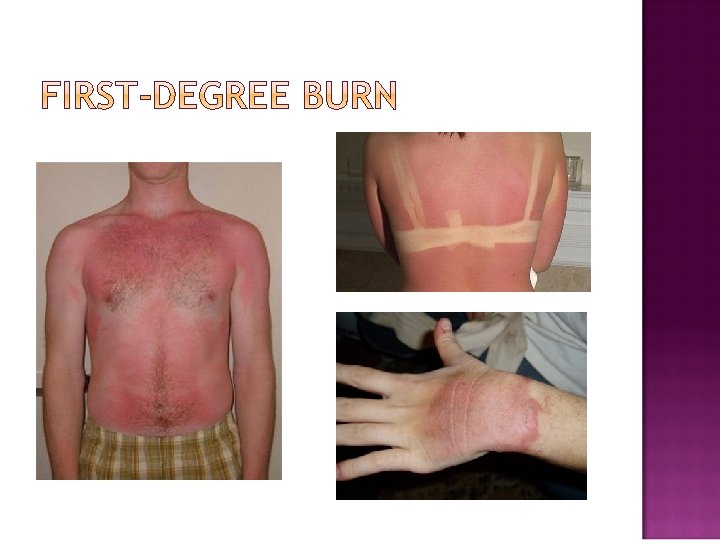
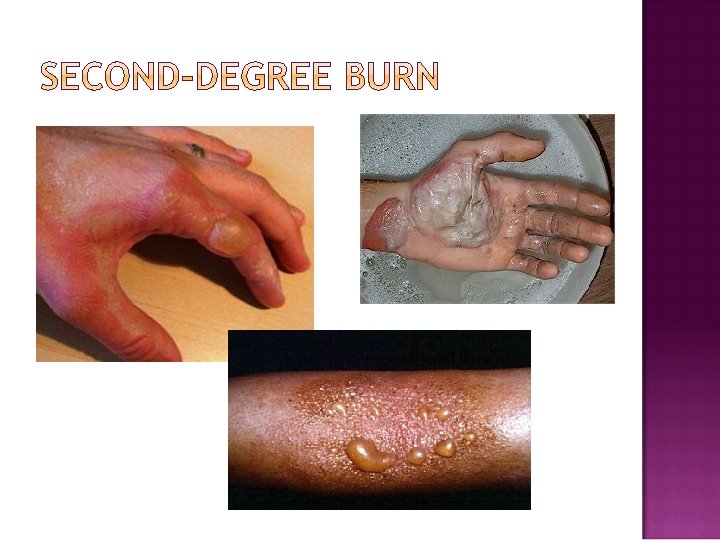
CLASSIFYING BURNS 1 st-degree burns: burns only epidermis damaged swelling, redness, pain (sunburn) 2 nd-degree burns: burns injure epidermis & upper dermis redness and pain; blisters 3 rd-degree burns: burns entire thickness of skin, destroy nerve endings (no pain) need skin graft
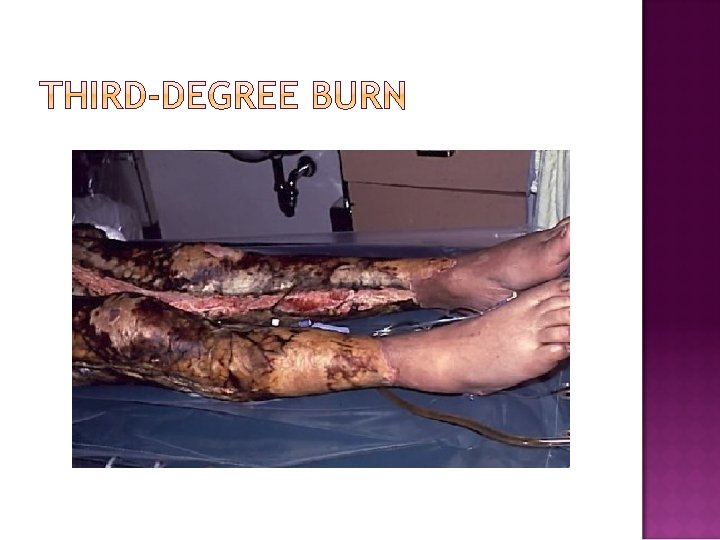
>25% of body with 2 nd degree burns >10% of body with 3 rd degree burns on face, hands, feet - -
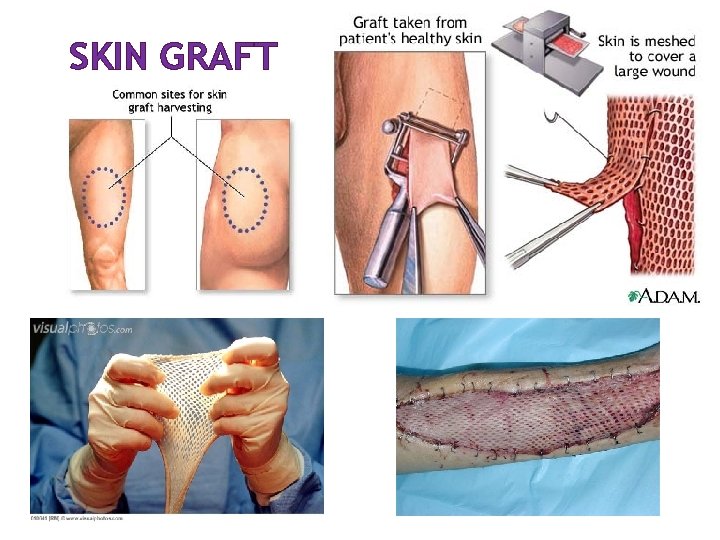
SKIN GRAFT
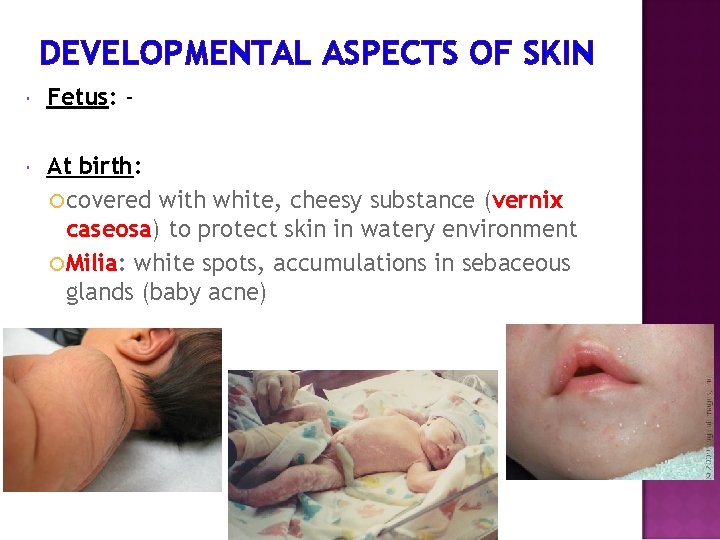
DEVELOPMENTAL ASPECTS OF SKIN Fetus: - At birth: covered with white, cheesy substance (vernix caseosa) to protect skin in watery environment Milia: white spots, accumulations in sebaceous glands (baby acne)
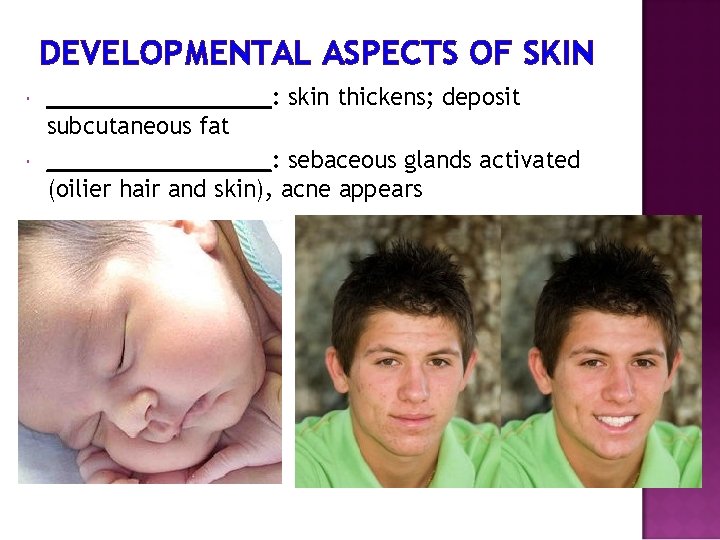
DEVELOPMENTAL ASPECTS OF SKIN ________: skin thickens; deposit subcutaneous fat ________: sebaceous glands activated (oilier hair and skin), acne appears
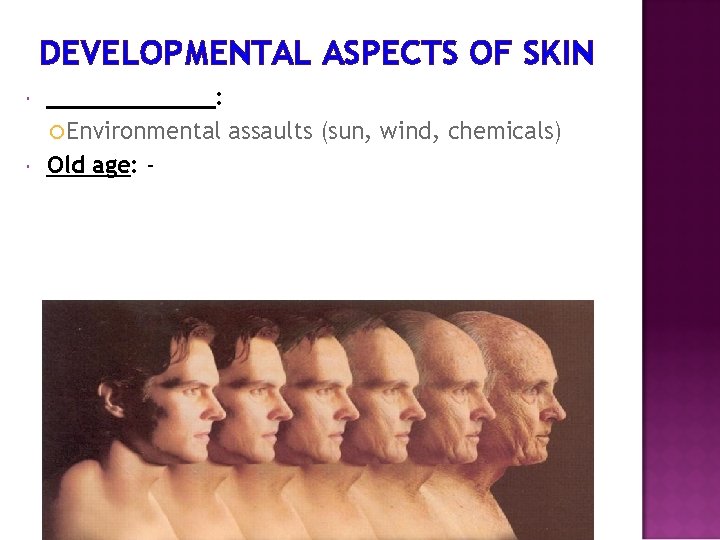
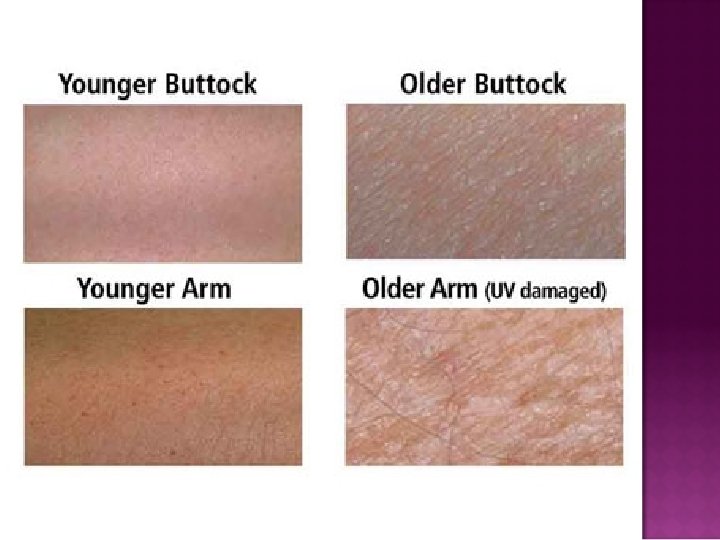
DEVELOPMENTAL ASPECTS OF SKIN ______: Environmental assaults (sun, wind, chemicals) Old age: -
- Slides: 20